Choose Durable Rubber Play Surfacing in Connecticut for Safer, Lower-Maintenance Play
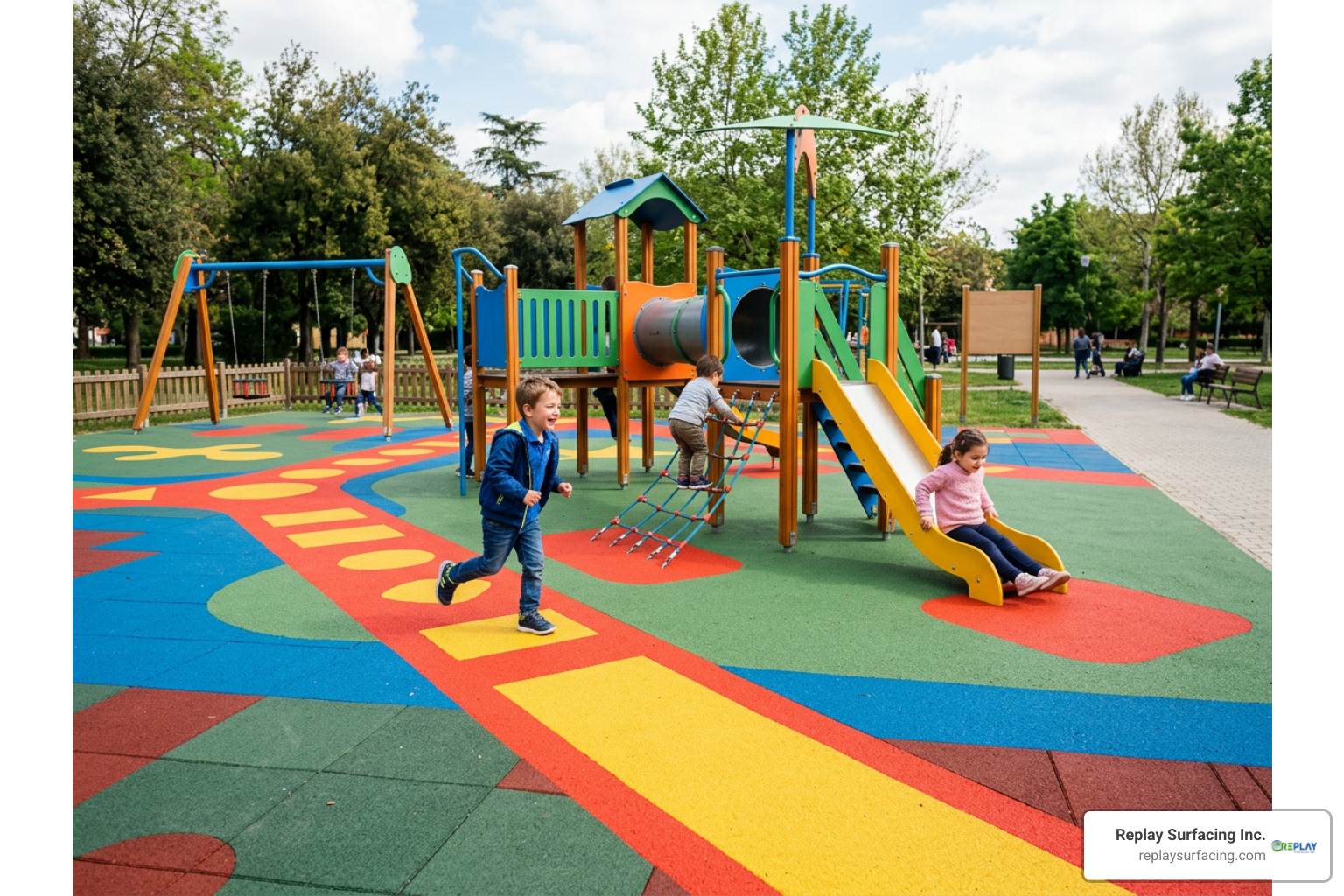
Durable rubber play surfacing is a strong choice for Connecticut playgrounds when you need dependable fall protection, easy access, and less upkeep than wood chips or sand. Choose a system tested to ASTM F1292 for the equipment’s critical fall height, install it over a stable, well-drained base, and select a surface type that fits the site:
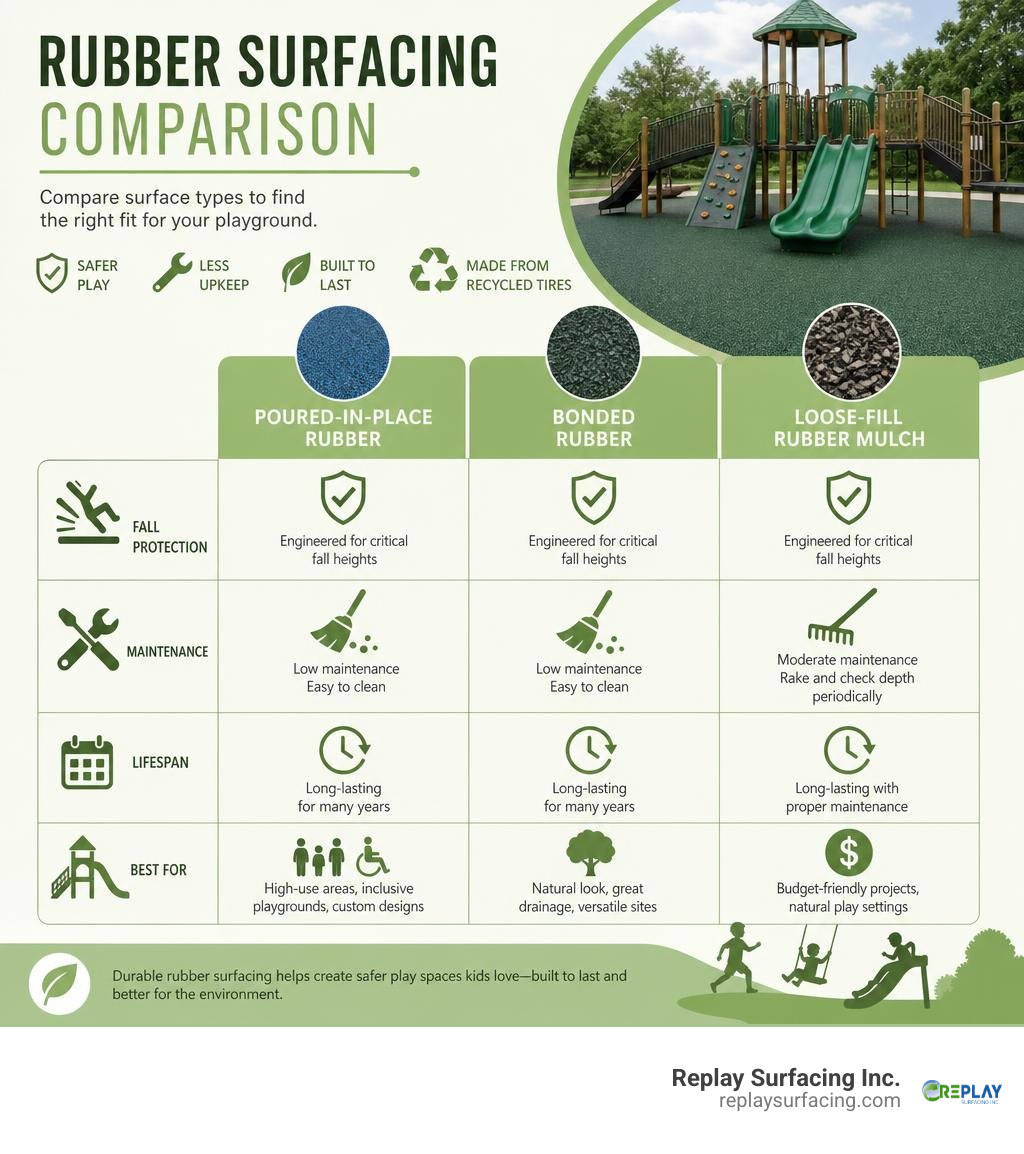
- Poured-in-place rubber: Seamless, accessible, and highly customizable.
- Bonded rubber: Durable, natural-looking texture with effective drainage.
- Loose-fill rubber mulch: A lower-cost option that needs periodic raking and depth checks.
Falls account for more than 70% of playground injuries treated in U.S. emergency blocks. The right rubber thickness, proper installation, and routine inspections help protect children while avoiding the frequent replacement common with organic loose-fill materials.
I’m Landon Olson, a mechanical engineer and MBA with experience in manufacturing, sustainability, recycling, and safety surfacing. Through Replay Surfacing, I help turn recycled tire rubber into durable rubber play surfacing designed for safer, longer-lasting play areas.
Durable rubber play surfacing terms you need:
- playground rubber safety flooring
- playground rubber surfacing contractors
- rubber mulch for play area
Why Durable Rubber Play Surfacing Outperforms Traditional Materials
Every parent knows that playtime comes with a healthy dose of boundless energy, wild imagination, and—inevitably—a few clumsy tumbles. When children leap from monkey bars or zoom down slides, the ground underneath makes all the difference. Over 200,000 children receive emergency room care annually across the United States for playground mishaps, with impact against unyielding or degraded ground accounting for over 70% of those severe incidents.
Traditional surfaces like wood mulch, pea gravel, and packed dirt simply cannot match modern safety engineering. Wood chips decompose, blow away, splinter, and harbor insects. Pea gravel shifts underfoot, hides dangerous debris like broken glass, and turns into a choking hazard for curious toddlers. More critically, loose organic materials rarely maintain the consistent depth required to absorb heavy impacts safely.
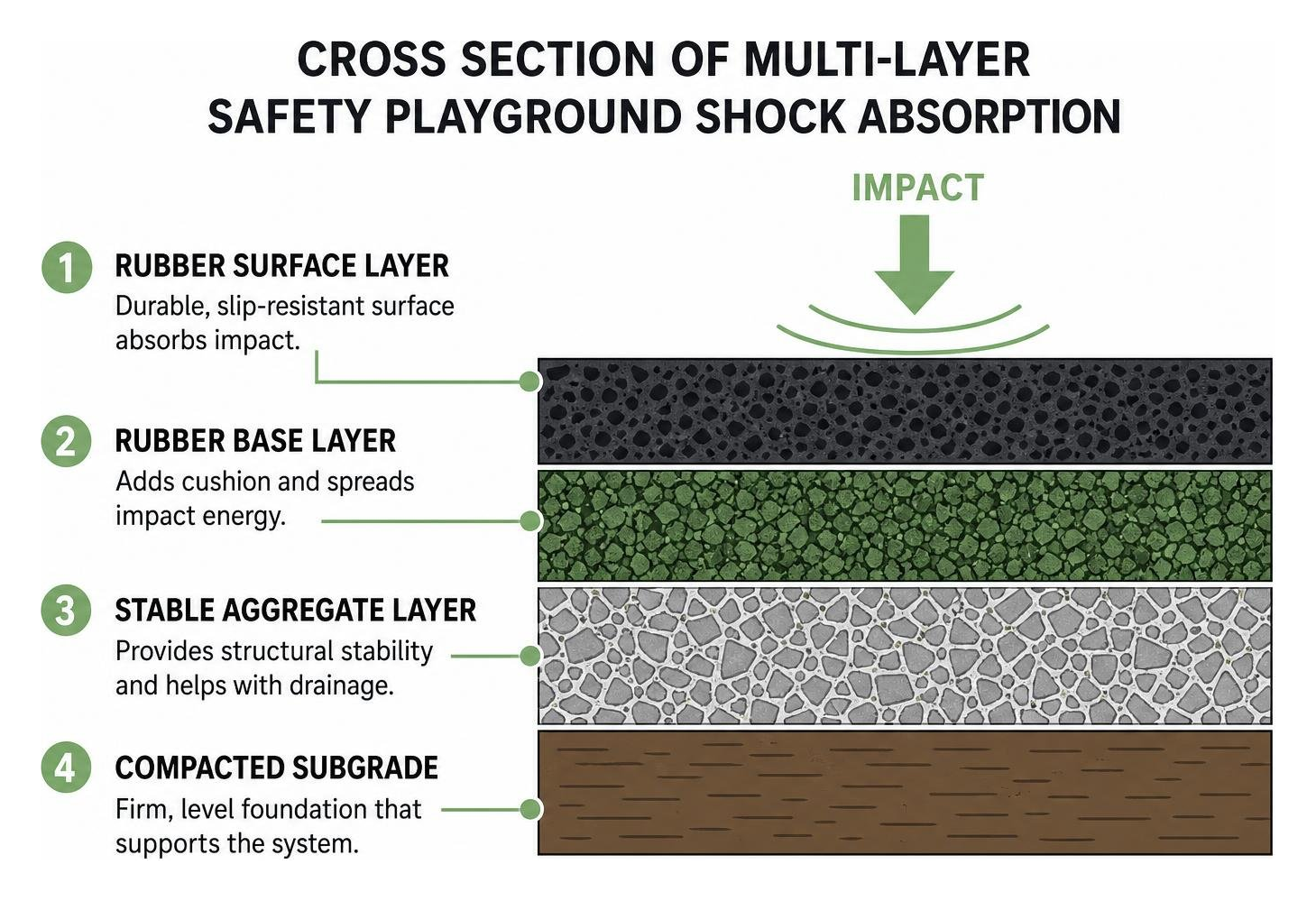
Rubber play surfacing fundamentally shifts the safety equation. Tested rigorously against ASTM F1292 (the gold-standard specification for impact attenuation of playground safety surfaces) and ASTM F1951 for Americans with Disabilities Act (ADA) accessibility, rubber systems provide tested, predictable shock absorption across every square foot. In fact, high-grade rubber play surfaces can reduce the risk of life-threatening head injuries from falls by up to 90% compared to hard, non-absorbing surfaces.
Whether designing a community play park in Raleigh, NC, updating a school playground in Indianapolis, IN, or outfitting a residential playset in Beaverton, OR, safety compliance must match equipment height. Critical Fall Height (CFH) ratings determine the necessary thickness of the surface layer. While wood mulch requires constant topping off to maintain adequate depth, solid and bonded rubber systems remain consistently in place year after year.
To explore more about keeping kids secure while they explore, review our comprehensive Safety First a Parents Guide to Playground Surfacing. Furthermore, for those navigating unique regional requirements and environmental variables in New England, our guide on How to Choose Sustainable and Safe Rubber Playground Surfacing in CT offers targeted regional insights.
Best Playground Flooring Types for Long-Term Performance
No two play spaces are identical. A community park in Charlotte, NC requires different wear resistance and traffic capacity than a shaded residential backyard in Lake Charles, LA or a preschool recreation space in Tucson, AZ. Understanding your surface options ensures you balance upfront budget, aesthetic goals, and accessibility.
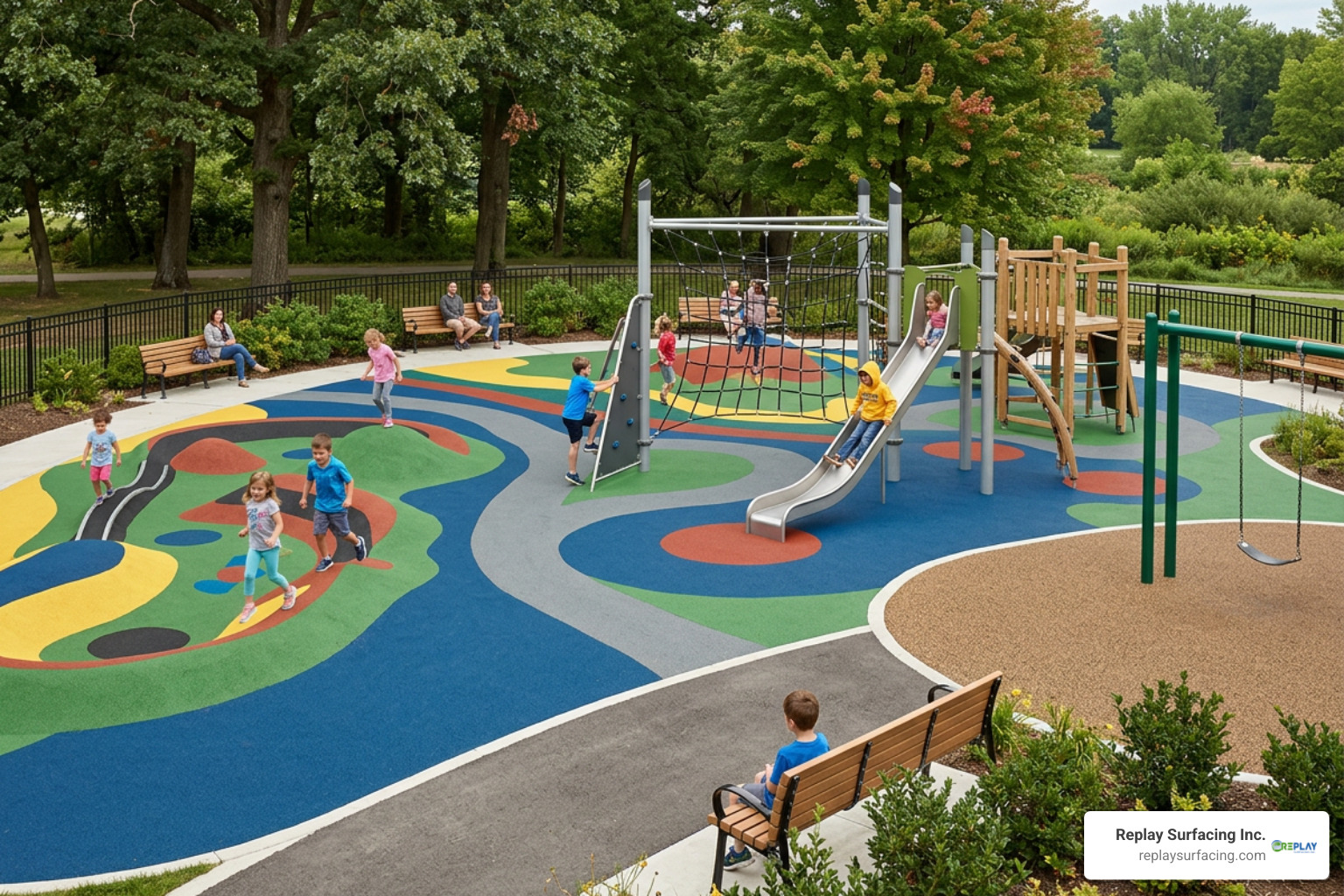
Poured-in-Place Seamless Flooring Systems
Poured-in-place (PIP) rubber represents the gold standard in premium, unitary playground surfacing. It features a two-layer system mixed and troweled on-site by certified professionals:
- Cushion/Impact Base Layer: Composed of clean, recycled tire crumb (SBR) mixed with polyurethane binder. This thick underlayment does the heavy lifting for shock attenuation.
- Top Wear Layer: A seamless 1/2-inch wear cap created from ethylene propylene diene monomer (EPDM) or thermoplastic vulcanizate (TPV) granules.
Because it is poured and finished seamlessly by hand, PIP flooring allows endless creativity. You can incorporate custom colors, playful geometric designs, hopscotch patterns, or thematic walking paths. PIP is fully ADA compliant, creating a barrier-free surface that effortlessly accommodates wheelchairs, strollers, and adaptive mobility equipment.
For high-traffic municipal parks and commercial play yards, our Rubber Flooring for Playgrounds delivers unmatched durability and universal accessibility.
Bonded Rubber Playground Surfacing
Bonded rubber provides an appealing middle ground between seamless poured-in-place surfaces and loose-fill mulch. This single-layer system combines larger shredded rubber strands with high-strength prepolymer binders, mixed and hand-troweled directly over an engineered aggregate base.
Bonded rubber delivers an organic, natural aesthetic reminiscent of a woodland trail or traditional mulch bed, but without the mess, tracking, or constant raking. It forms a unified, porous mat that drains rainwater rapidly, making it ideal for play parks in wet climates like Beaverton, OR or humid regions like Columbia, SC.
Homeowners looking for a polished look will appreciate our recommendations on Top-Rated Backyard Playground Flooring Options You Can Buy Today.
Loose-Fill Shredded Rubber Mulch
For families and organizations seeking maximum impact attenuation on an approachable budget, loose-fill rubber mulch provides extraordinary value. Made from 100% recycled tire rubber that is stripped of all wire and metal contaminants, rubber mulch creates a soft, springy landing zone that will not rot, attract termites, compact into hardpan, or freeze into solid blocks.
At a typical depth of 4 to 6 inches, shredded rubber mulch achieves some of the highest critical fall height ratings in the industry (often protecting against falls from 10 to 12 feet). Unlike wood chips that require annual replenishment due to microbial decay and wind displacement, rubber mulch lasts for over a decade.
If you want to stretch your budget while ensuring uncompromising fall safety, see our breakdown of Safe and Soft Outdoor Playground Flooring Options on a Budget.
Comparing Durable Rubber Play Surfacing Options for Families
| Surfacing Type | Upfront Cost | Installation Method | Expected Lifespan | ADA Accessibility | Ongoing Maintenance Level |
|---|---|---|---|---|---|
| Poured-in-Place (PIP) | High | Professional on-site troweling | 10–15+ Years | Excellent (Full mobility) | Low (Blowing, occasional washing) |
| Bonded Rubber | Moderate | Professional hand-troweled single layer | 8–12 Years | High (Unitary porous surface) | Low (Periodic roll-coat re-binding) |
| Loose-Fill Rubber Mulch | Low to Moderate | DIY or professional spread | 10–15 Years | Moderate (Requires containment borders) | Low to Medium (Occasional raking under swings) |
| Engineered Wood Fiber | Low (Initial) | Manual spreading | 1–2 Years | Low to Moderate (Compacts quickly) | High (Annual topping off, weed removal) |
To run the numbers for your specific site footprint and regional material logistics, consult our Rubber Surfacing Cost Ultimate Guide.
Engineering Durability: Sub-Base Preparation and Climate Resilience
A playground surface is only as resilient as the engineering beneath it. Even the highest-grade polyurethane binder and cleanest EPDM granules will fail prematurely if installed over poorly prepared, settling ground.
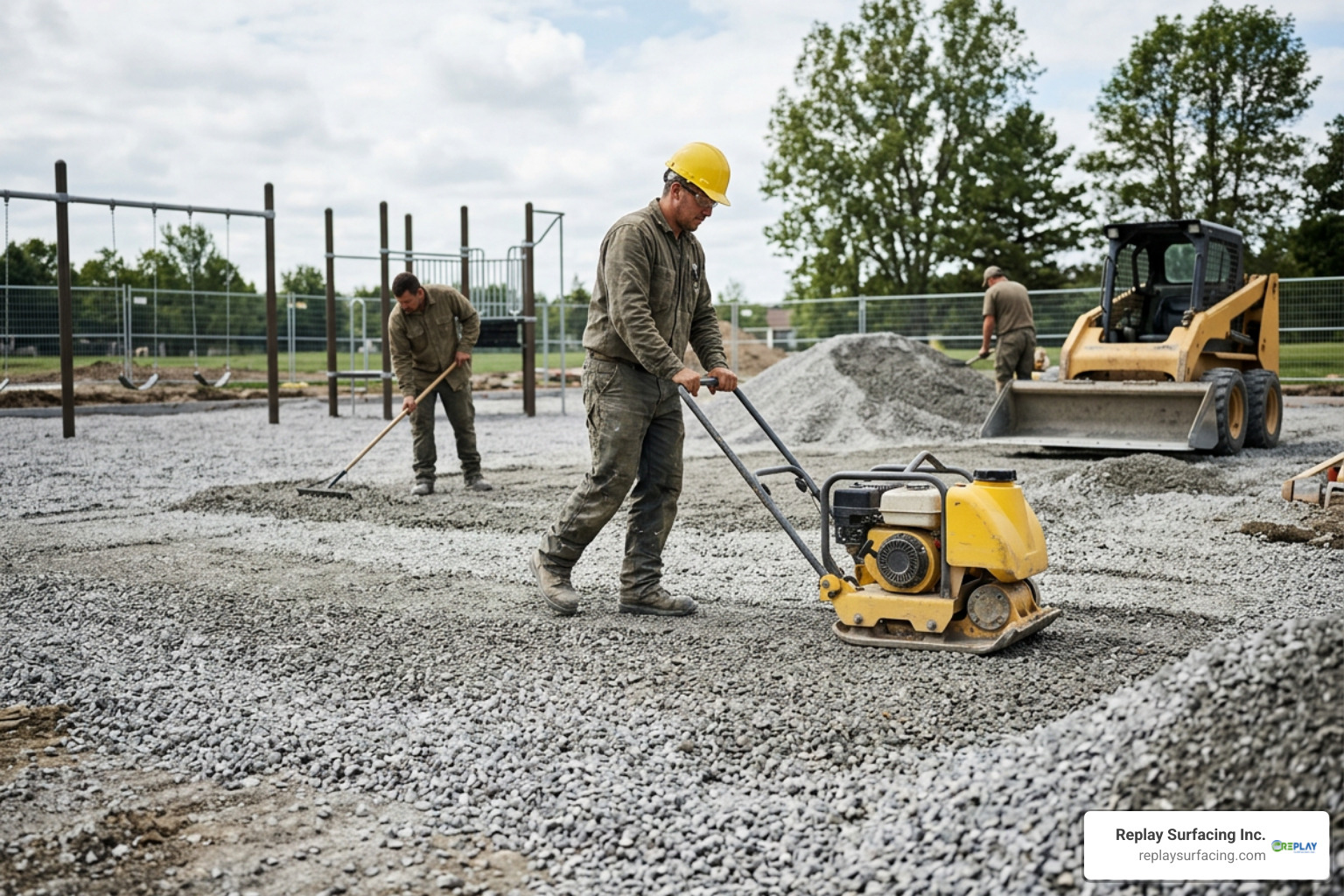
Installation Best Practices for Durable Rubber Play Surfacing
Achieving a 10 to 15-year lifespan requires strict adherence to sub-base preparation standards:
- Site Excavation & Grading: Clear all organic topsoil, tree roots, and loose debris. Slope the subgrade (typically 1–2%) away from play structures to direct groundwater runoff.
- Geotextile Weed Barrier: Lay a heavy-duty, woven commercial geotextile fabric to prevent native subsoil from mixing with the aggregate base and to stop weed growth permanently.
- Compacted Aggregate Stone Base: Install 4 to 6 inches of crushed stone (such as dynamic compacted aggregate or CA-6/3/4″ minus crushed stone) compacted to at least 95% Standard Proctor density. Concrete slabs or asphalt pads also serve as outstanding, long-term bases for commercial poured-in-place installations.
- Secure Edge Restraints: Install concrete curbing, composite timber borders, or beveled rubber transition ramps to lock the surfacing in place and eliminate tripping hazards at play perimeter edges.
For a comprehensive walkthrough on structural preparation, consult The Ultimate Guide to Professional Rubber Playground Installation.
Weather Resistance and Seasonal Maintenance
Our service locations experience virtually every climate extreme across North America:
- Freeze-Thaw Cycles (Connecticut & Indiana): Water expands by roughly 9% when freezing. Because poured and bonded rubber systems are naturally porous, precipitation drains vertically through the wear and cushion layers down into the open aggregate base before freezing. This prevents surface heaving, cracking, and water pooling.
- Intense Heat & UV Exposure (Tucson, AZ & Sanford, NC): High UV indices can cause premature surface chalking if low-grade binders are used. We utilize premium aliphatic polyurethane binders and UV-stabilized EPDM granules to preserve vibrant colors and prevent hardening under blistering southern sunshine.
- High Humidity & Deluges (Nashville, TN & Lake Charles, LA): Rubber is completely non-organic; it will not support mold, fungal decay, or bacterial growth after prolonged rainstorms.
Maintenance requirements are refreshingly minimal. Routine care involves blowing off fallen leaves, hosing down dirt or spilled drinks, and conducting seasonal safety inspections. Discover more longevity tips in our guide to Durable Playground Rubber Surfacing That Stands the Test of Time.
Frequently Asked Questions About Playground Rubber Surfaces
How thick should rubber playground surfacing be for fall protection?
The total thickness of rubber play surfacing depends directly on the Critical Fall Height (CFH) of your highest playground component (e.g., monkey bars, platform decks, or upper slide entries). In accordance with ASTM F1292 standards:
- Equipment with a 4-foot fall height typically requires a 1.5-inch to 2-inch dual-layer poured system.
- Equipment with a 6 to 8-foot fall height generally requires 2.5 to 3.5 inches of cushion base.
- Equipment with a 10-foot fall height requires 4 to 5 inches of shock-absorbing base or a minimum 6-inch settled depth of loose-fill rubber mulch.
Does recycled rubber surfacing get too hot in direct summer sunlight?
Like asphalt, concrete, and synthetic turf, rubber absorbs ambient heat in direct sunlight. In hot climates like Tucson, AZ or Charlotte, NC, dark black rubber can become uncomfortably warm during mid-day peak sun.
To mitigate heat buildup:
- Choose lighter surface granule blends (such as beige, light gray, sky blue, or terra cotta) for the top wear layer, which reflect significantly more solar radiation.
- Incorporate playground shade sails or position playsets under natural canopy trees.
- Keep a standard garden hose nearby to quickly cool the play zone before midday fun.
How long does rubber play area flooring last compared to traditional surfaces?
When professionally installed over an engineered base, poured-in-place and bonded rubber play systems last 10 to 15 years, and loose-fill rubber mulch lasts well beyond a decade without decomposing.
By comparison, wood mulch, engineered wood fiber (EWF), and bark nuggets decompose biologically within 12 to 24 months, requiring ongoing topping-off expenses, regular raking, and continuous weeding. Over a 10-year period, rubber surfacing consistently delivers a lower total cost of ownership.
Conclusion
Creating a safe, inspiring space where children can explore, build confidence, and burn off energy should not burden parents or facility directors with constant maintenance chores. By transforming discarded tires into durable, impact-absorbing safety surfacing, we divert thousands of scrap tires from local landfills while creating cleaner, safer play environments.
Whether you are planning a modern community park in Charlotte, Raleigh, or Sanford, NC; outfitting a school in Columbia, SC, Nashville, TN, or Indiana; refreshing a playground in Tucson, AZ, Beaverton, OR, or Lake Charles, LA; or constructing a family play oasis in Connecticut, our team is here to guide your project from sub-base engineering to final troweling.
Ready to build a resilient, maintenance-free play sanctuary? Discover our premium play yard rubber mulch and unitary safety surfacing solutions today.