

Understanding Heated Sidewalk Mats in Charlotte, NC: How They Work and Operate
At their core, heated sidewalk mats are heavy-duty, weather-sealed outdoor pads with integrated heating technology. Designed to withstand freezing rain, heavy snowfall, and constant foot traffic, these systems turn electrical current into reliable radiant warmth.
Most high-quality mats are manufactured using durable styrene-butadiene rubber (SBR) or flame-retardant industrial compounds engineered to endure extreme temperature swings down to -8°F or even -14°F. Inside the mat, heating elements—either traditional resistance wire circuits or advanced lightweight heating membranes—are safely encapsulated.
When plugged into a standard power outlet, the mat heats up to roughly 39°F to 44°F above the ambient outdoor temperature. This rapid thermal output allows quality mats to melt snow at an impressive rate of 1.5 to 2 inches per hour. Because heat radiates from both the top and bottom, the plug-and-play system immediately begins warming the surface it rests upon while melting whatever falls from above.
How Electric Heating Elements Melt Snow on Contact
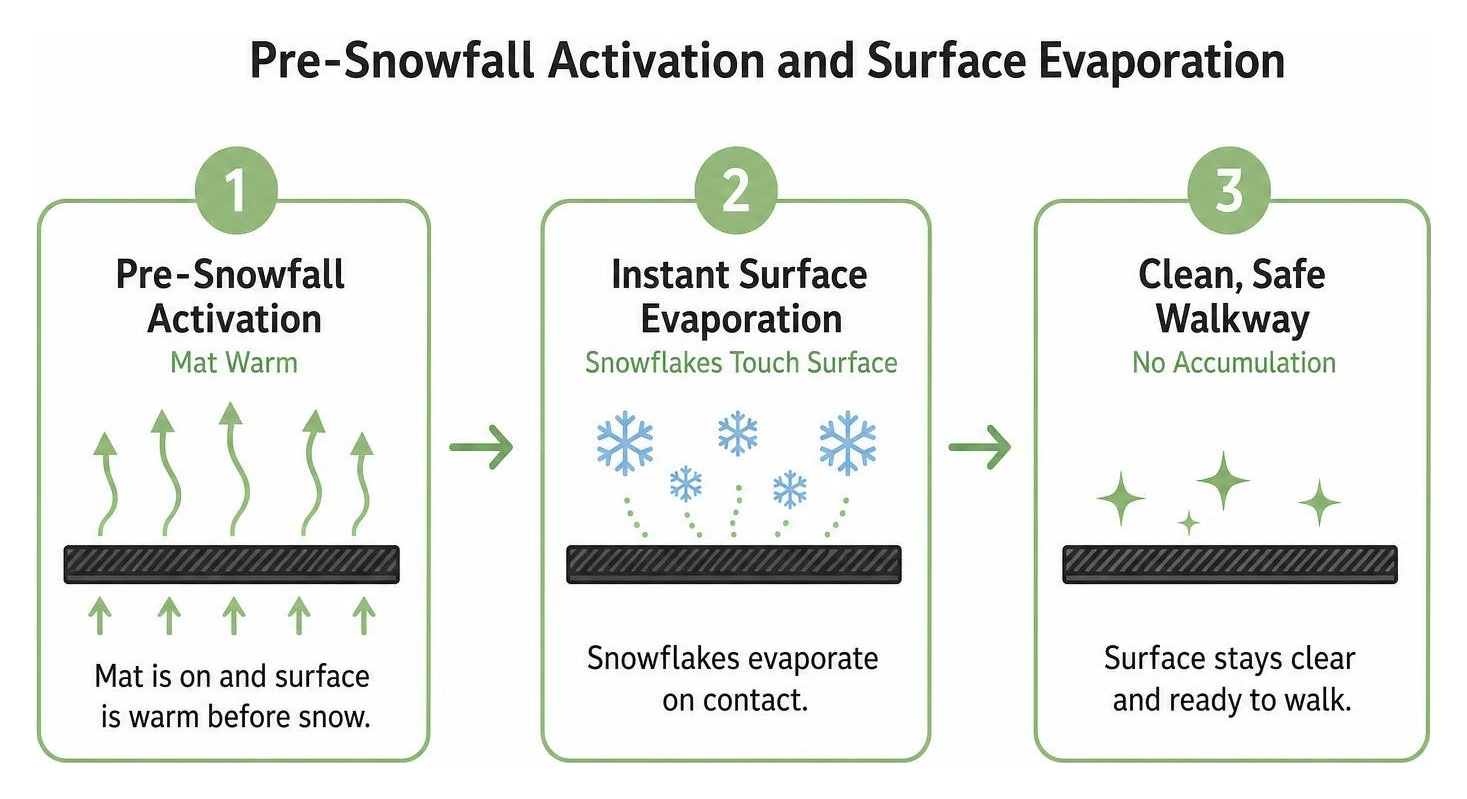
The most efficient way to use heated sidewalk mats is pre-snowfall activation. Turning your system on right as the winter storm approaches ensures that as soon as snowflakes touch the warm rubber surface, they evaporate into vapor rather than accumulating.
If turned on after several inches of snow have already fallen, the mat goes to work melting from the bottom up. Heat breaks the ice bond directly at the substrate level, melting the snow into minor water runoff. Thanks to the integrated non-slip chevron or textured tread patterns, pedestrians maintain secure mechanical traction while residual water evaporates completely.
Modern membrane heating technology can reduce product weight by up to 45% compared to older wire-embedded models, distributing heat evenly across every square inch without creating cold spots.
Selecting the Right Sizes and Connectable Heated Sidewalk Mats
Property layouts vary drastically, whether you are outfitting a cozy front stoop in Raleigh, NC, an entry pathway in Connecticut, or a commercial sidewalk in Charlotte, NC. To cover expansive areas, modular heated sidewalk mats feature watertight male and female locking connectors that allow multiple units to be linked together—often called daisy-chaining—on a single power supply.
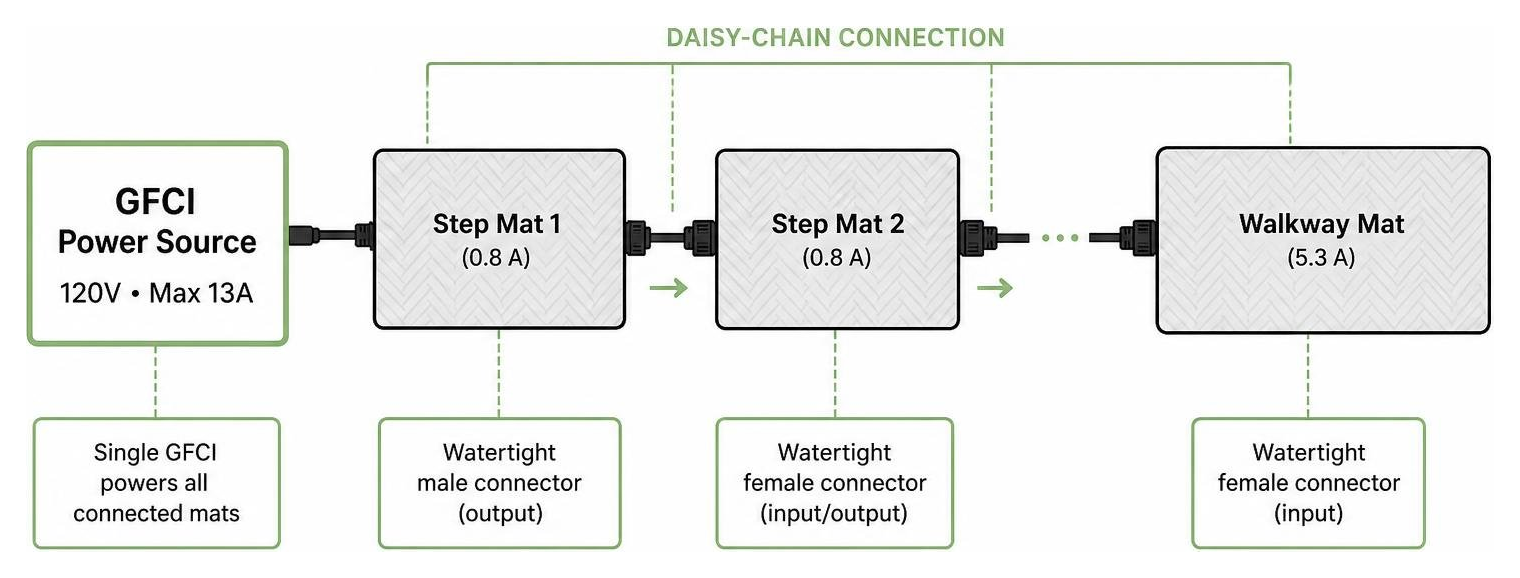
When linking mats, electrical amperage limits must be strictly calculated:
- 13-Amp Limit: Standard residential power units equipped with Ground Fault Circuit Interrupters (GFCI) typically max out at a total load of 13 amps on a 120V circuit.
- Sizing Options: Individual walkway mats come in various dimensions, such as 20″x60″, 30″x30″, and 40″x59″ (XL models).
- Industrial Scale: Larger commercial properties often opt for industrial-grade snow melting walkway mats, which are available in lengths up to 20 or 25 feet and operate across 120V, 208V, or 240V circuits.
Always check the current draw on each mat (for instance, a 600W XL mat draws about 5.3 amps) to ensure your combined chain stays safely beneath circuit thresholds.
Key Benefits vs. Traditional Snow Removal
Relying on physical shoveling and harsh de-icing chemicals presents an array of winter headaches. Manual shoveling is exhausting, time-consuming, and a leading cause of cold-weather strain and back injuries. Conversely, heated sidewalk mats work continuously without demanding manual labor.
| Feature / Method | Traditional Shoveling | Chemical De-Icers (Salt/Calcium Chloride) | Heated Sidewalk Mats |
|---|---|---|---|
| Physical Effort | High (risk of injury) | Low to Moderate | Zero (automated melting) |
| Surface Damage | Blade scrapes concrete | Causes spalling, cracking, scaling | None (gentle radiant warmth) |
| Environmental Impact | Minimal | High (damages lawn, soil, runoff) | None (zero chemical runoff) |
| Pet & Paw Safety | High | Low (chemical burns & ingestion risks) | High (safe, non-toxic tread) |
| Operational Speed | Delayed (after storm ends) | Slow in extreme cold | Continuous (melts up to 2″/hr) |
Eliminating Chemical De-Icers and Shoveling Hazards
Rock salt and chemical de-icers like calcium chloride are notorious for destroying hardscape investments. Salt penetrates microscopic pores in concrete, accelerating freeze-thaw spalling, cracking, and surface scaling. Furthermore, salt gets tracked indoors, ruins interior flooring, burns the delicate paws of pets, and pollutes surrounding soil and vegetation.
By putting down residential heated walkway mats, you eliminate the need for harsh melting chemicals altogether. These non-slip rubber mats provide reliable footing right out of the box. Whether placed along entrance steps in Charlotte, NC, or public ramps in Connecticut, they safeguard visitors against dangerous slip-and-fall incidents while keeping your surrounding environment healthy.
Energy Efficiency and Operational Costs
A common misconception is that running outdoor electric snow melting equipment is prohibitively expensive. In reality, heated sidewalk mats are surprisingly cost-effective to operate.
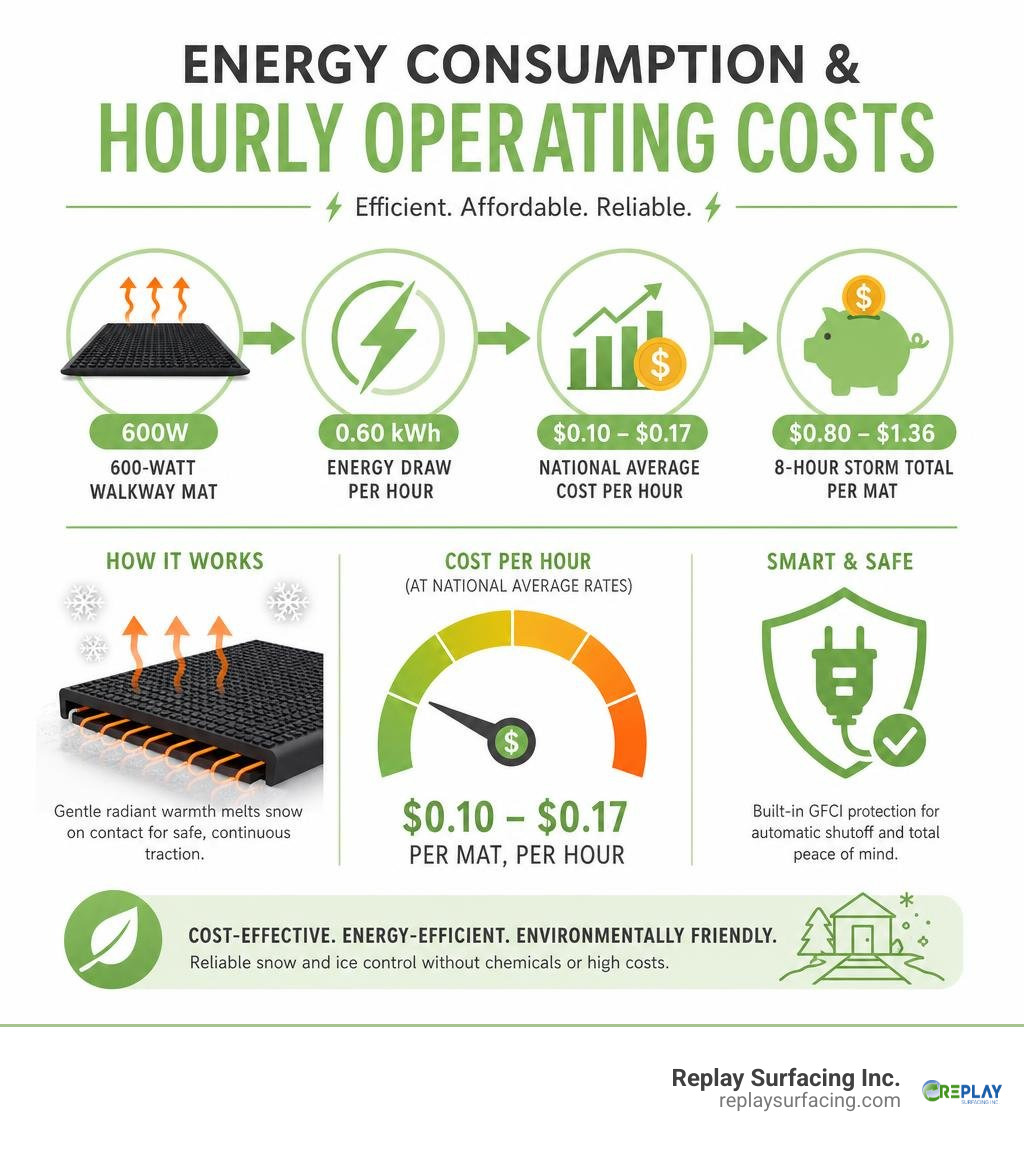
A typical XL walkway mat consuming 600 watts draws 0.60 kWh per hour. At a national average electricity rate of $0.17 per kWh, running that mat costs roughly $0.10 per hour. Even smaller step mats cost as little as $0.036 to $0.05 per hour.
To ensure absolute electrical safety, top manufacturers build Equipment Leakage Circuit Interrupters (ELCI) or GFCIs directly into the plug assembly. Fully certified to UL 499 and CSA C22.2 standards, these systems automatically shut off power if an electrical fault is detected, providing complete peace of mind during heavy rains or snowmelt.
Surface Compatibility, Safety, and Installation Guidelines
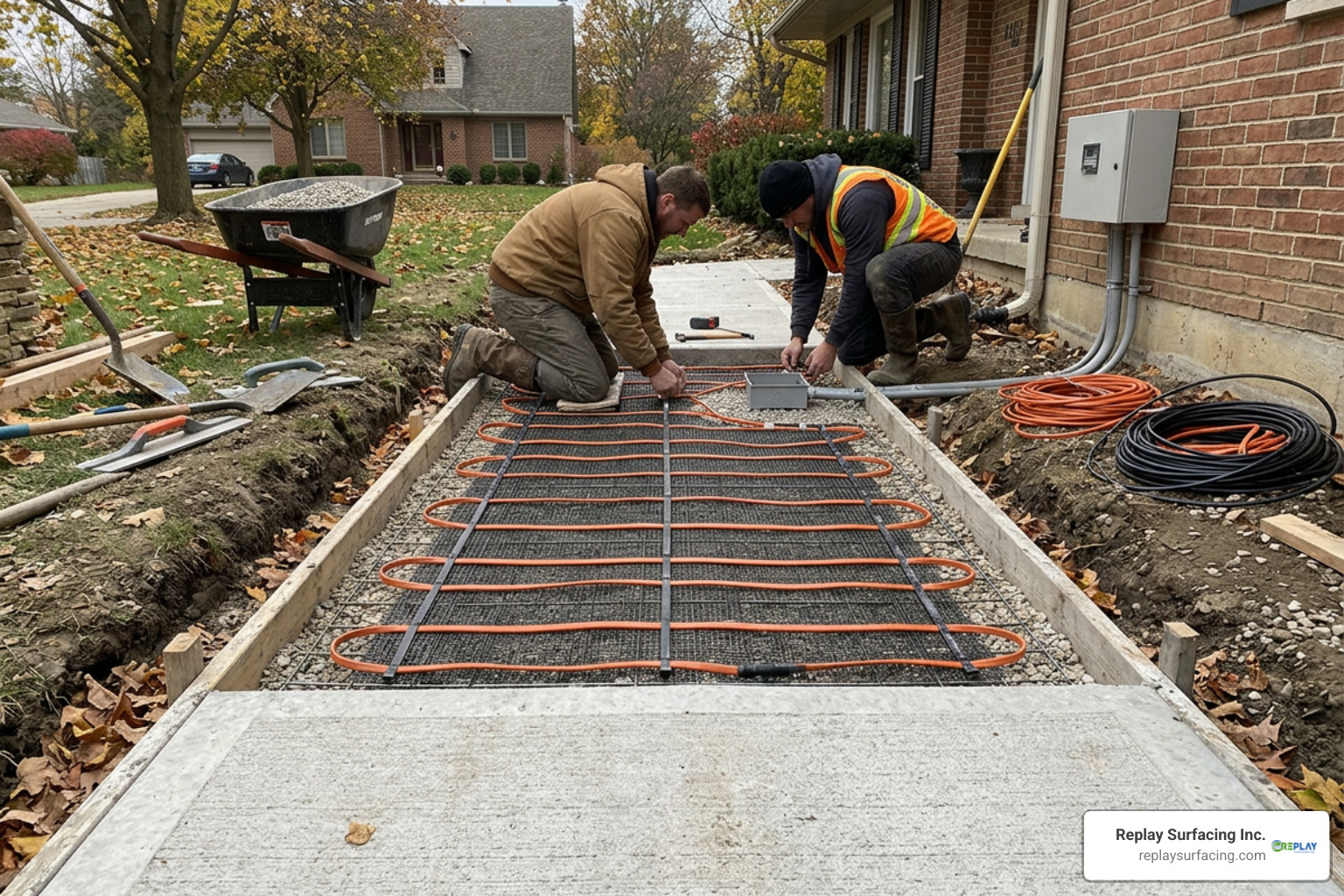
One of the greatest features of heated sidewalk mats is their versatile installation. Unlike embedded radiant heating systems that require tearing up existing hardscapes, surface-laid mats can be rolled out directly over:
- Standard poured concrete walkways
- Asphalt driveways and pathways
- Natural stone, brick, and concrete pavers
- Untreated or pressure-treated wood decks
- Artificial turf installations
This flexibility is useful across Replay Surfacing Inc. service areas, from freeze-prone Connecticut and Indiana properties to winter-weather entryways in Charlotte, Columbia, Raleigh, Sanford, Nashville, Beaverton, Tucson, and Lake Charles. For broader winter walking-surface safety context, review OSHA winter weather safety guidance, especially if you manage public, commercial, or high-traffic walkways.
Protecting Exterior Surfaces and Substrates
While heated sidewalk mats are safe for most surfaces, certain sensitive materials require careful thermal consideration. Stamped concrete, sealed concrete, composite decking, and fine stone surfaces can suffer discoloration or finish degradation if heat builds up underneath without adequate air circulation.
When installing mats on composite decks or sealed concrete, place a 1/4-inch thermal insulation barrier underneath, such as neoprene foam, polyethylene insulation, or pressure-treated plywood. This is especially helpful for mixed-surface properties in Raleigh, NC, Charlotte, NC, Columbia, SC, Nashville, TN, Beaverton, OR, and other Replay Surfacing Inc. locations where walkways may combine concrete, pavers, decks, and rubberized surfacing. If you are exploring broader property upgrades, our comprehensive guide to the complete guide to residential rubber surfacing offers valuable insights into pairing flexible rubber surfaces with winter-ready layouts.
Seasonal Storage and Maintenance for Heated Sidewalk Mats
Heated sidewalk mats are engineered to handle harsh winter weather, but giving them proper care extends their lifespan to six years or more:
- Pre-Season Inspection: Before winter arrives, inspect electrical power cords, connectors, and rubber casings for cracks or damage.
- Periodic Cleaning: During active winter use, wash away dirt, sand, and ambient debris using a mild dish detergent and a soft scrub brush. Never use aggressive solvent cleaners.
- Off-Season Storage: Once winter ends, unplug the power unit, let the mats dry completely, roll them up loosely (or lay them flat), and store them indoors away from direct summer sunlight to protect the rubber from UV degradation.
Frequently Asked Questions About Heated Sidewalk Mats
Can heated sidewalk mats be left outside all winter long?
Yes. Heavy-duty heated sidewalk mats are specifically designed to remain outdoors continuously throughout the entire winter season. Their rugged, weatherproof SBR rubber housing protects internal electronics against extreme cold, ice, and driving rain. You do not need to bring them inside between winter storms; simply switch off the power or unplug the unit during clear weather to save electricity.
Do heated sidewalk mats require a special GFCI electrical outlet?
While they plug into standard 120V (or 240V industrial) outdoor outlets, heated sidewalk mats must always be operated with GFCI or ELCI protection. Most mat packages include a dedicated inline GFCI power unit built right into the power cord. Always mount the GFCI housing vertically at least 18 inches off the ground to prevent submersion in melting slush or puddle water.
How much does it cost to run heated sidewalk mats continuously?
Operating costs depend on your local electrical rates and the size of your mat setup. Operating a standard 600W mat costs approximately $0.10 per hour based on an average rate of $0.17/kWh. To optimize your power usage, turn mats on only when snowfall is imminent or pair them with automated ambient temperature and moisture sensors.
Conclusion
Navigating treacherous winter weather across our service locations—from Charlotte and Raleigh, NC, to Tucson, AZ, Connecticut, and Beaverton, OR—doesn’t have to involve backbreaking shoveling or damaging chemical de-icers. Heated sidewalk mats deliver an efficient, environmentally clean solution that keeps high-traffic paths clear, safe, and slip-free all winter long.
At Replay Surfacing Inc., we are dedicated to converting rubber materials into durable, high-performance surfacing solutions for sports courts, playgrounds, and walkways. Combining smart seasonal snow control tools like heated sidewalk mats with our long-lasting surfacing concepts gives you total control over outdoor safety and accessibility.
Explore our specialized outdoor walkway mats to upgrade your property’s entranceways and conquer winter weather with confidence!