

Choose a Rubber Mat for Play Area Safety in Charlotte and Regional Service Areas
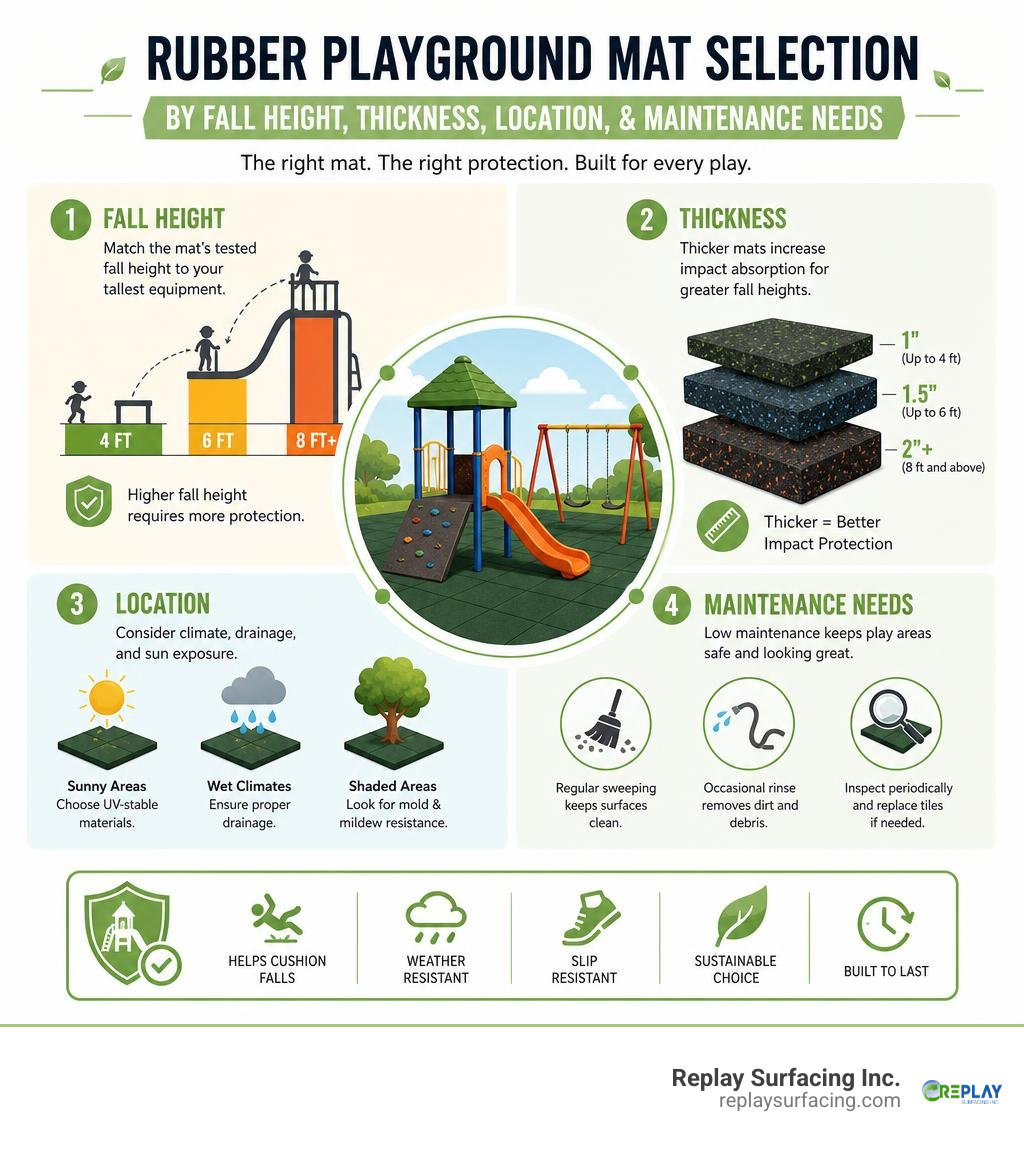
A rubber mat for play area use is a practical choice when you need a firm, stable surface that helps cushion falls, resists weather, and needs far less upkeep than loose-fill ground cover. Choose a mat or tile system with a tested critical fall height that matches your equipment, use thicker material for taller structures, and cover the full use zone around swings, slides, and climbers.
Rubber surfacing is especially useful for busy playgrounds and sports areas because it stays in place instead of scattering like wood chips. It can also support ADA-accessible routes when installed on a properly prepared, level base. With falls to the surface as the leading cause of playground injuries, impact-absorbing flooring is a meaningful safety upgrade for facilities that want a cleaner, more dependable play space.
For eco-conscious managers, recycled-rubber mats can turn scrap tires into long-wearing playground surfacing. The right product balances fall protection, drainage, traction, appearance, installation needs, and total cost over its service life.
I am Landon Olson, a mechanical engineer and the operator of Replay Surfacing, where I work with recycled-rubber products for safety-focused surfaces. My experience in manufacturing, sustainability, and safety surfacing helps inform how to select a rubber mat for play area projects that need durable, lower-maintenance protection.
Why Choose a Rubber Mat for Play Area Upgrades?
Every year, outdoor play brings immense joy to children, but it also comes with its fair share of tumble-induced tears. According to data from the CDC, over 200,000 children receive emergency department treatment annually in the United States for playground-related injuries, with falls directly to the ground surface representing the leading cause of trauma. Whether your playground is situated in a sun-drenched park in Tucson, AZ, a community center in Charlotte, NC, or a bustling schoolyard in Nashville, TN, the flooring material beneath your play equipment serves as the primary barrier against serious injury.
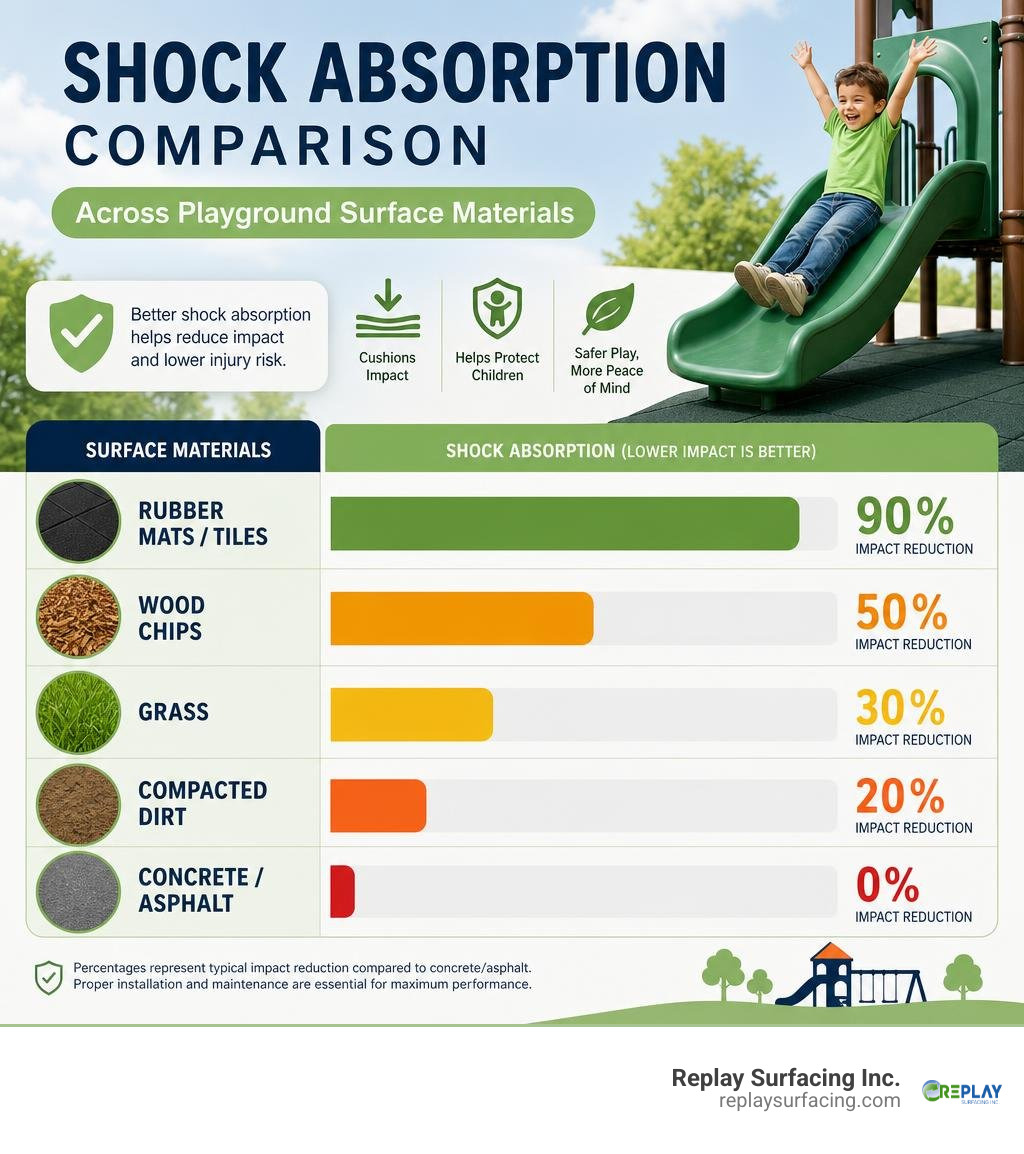
When evaluating impact protection, certified rubber playground surfaces can reduce the risk of head injuries by up to 90% compared to unyielding concrete or asphalt. Even when compared to compacted dirt or grass, rubber tiles and mats reduce impact forces by up to 70%. In fact, studies demonstrate that properly rated shock absorbing playground surfaces cut the risk of severe injuries by 50% across all play environments.
Upgrading to vulcanized or polyurethane-bonded rubber flooring provides several distinct advantages:
- Certified Fall Attenuation: Engineered critical fall height ratings reliably protect children dropping from heights ranging from 4 feet up to 10 feet (3 meters) or more, depending on thickness.
- All-Weather Traction: Textured surfaces maintain strong slip resistance in wet or humid climates, from the rainy afternoons of Beaverton, OR to the humid summers of Lake Charles, Louisiana.
- Displacement Immunity: Unlike wood mulch, pea gravel, or sand, heavy mats stay locked in place under high-velocity foot traffic and won’t kick out under swing bays.
- Full ADA Accessibility: Rubber mats provide a firm, stable surface that easily accommodates wheelchairs and strollers, meeting standard Americans with Disabilities Act requirements with slopes of 1:20 or less.
- Resilience and Longevity: Investing in tough as nails outdoor rubber mats that wont quit protects your sub-base while resisting freeze-thaw cycles in Connecticut and Indiana winters.
Top Types of Playground Rubber Mats and Surfacing

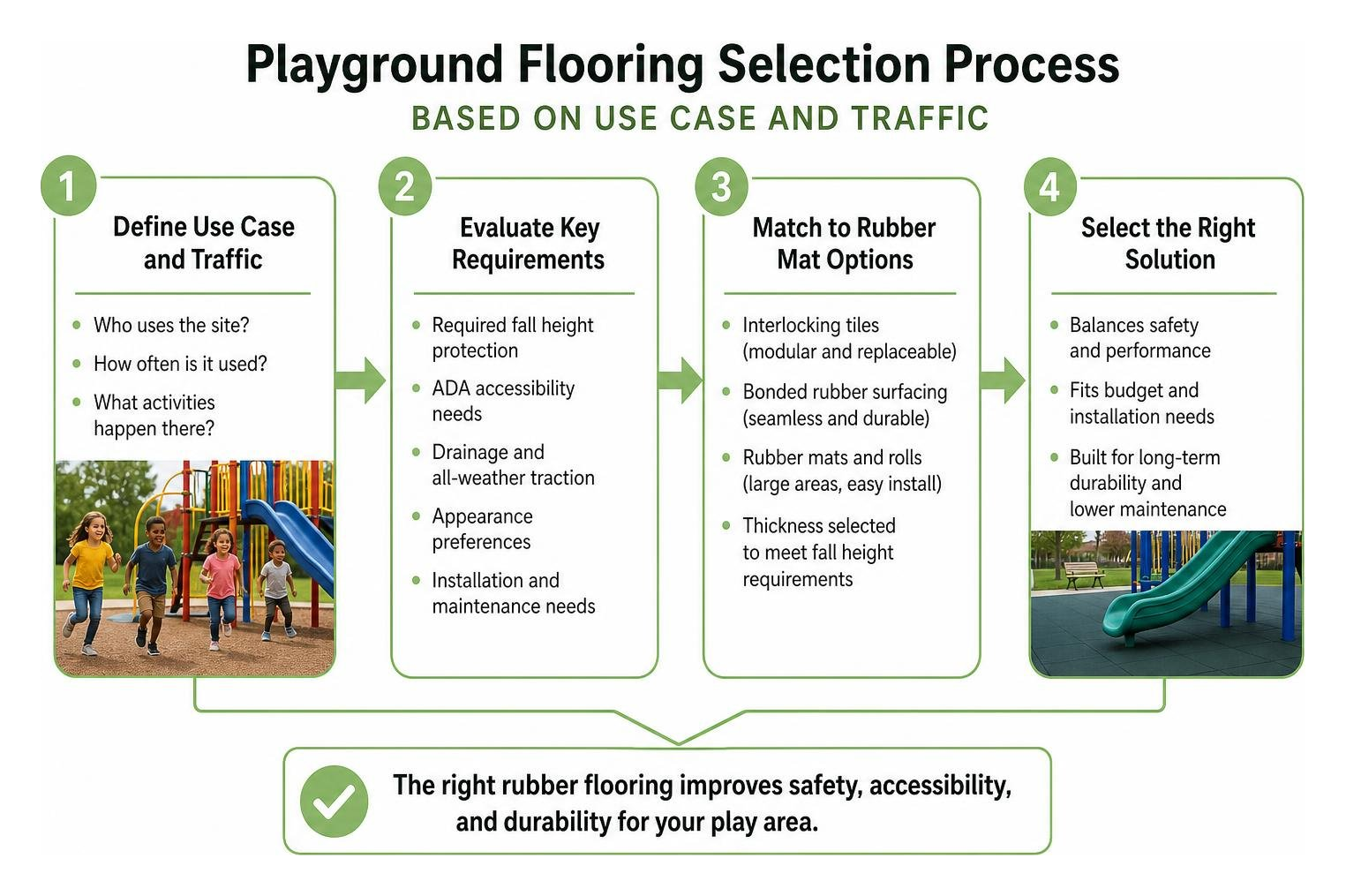
Selecting the right play area soft flooring requires matching the product’s engineering with your specific play environment. No two play areas face the exact same physical demands: a private backyard playset in Raleigh, NC has different foot-traffic patterns than a municipal playground in Columbia, SC.
Heavy-Duty Interlocking Tiles: The Versatile Rubber Mat for Play Area Setups
Modular interlocking outdoor playground tiles represent one of the most reliable and adaptable solutions on the modern market. As detailed in our playsafe interlocking tiles ultimate guide, these tiles utilize precision-molded interlocking pins or hidden puzzle-lock edges to create a unified, seamless safety surface.
Available in thicknesses from 1 inch up to 4 inches, interlocking tiles allow facility managers and homeowners alike to tackle DIY installations without heavy machinery. If a single tile experiences localized vandalism or concentrated wear, it can be popped out and replaced individually, saving substantial money over full surface tear-outs.
Beveled High-Traffic Mats: Standalone Rubber Mat for Play Area Zones
High-wear zones—specifically the landing zones beneath slide chutes and the kick-out pits under swing sets—experience rapid displacement. Installing a dedicated playset rubber mat provides targeted reinforcement exactly where children need it most.
These heavy, beveled-edge mats are designed to lay flush with existing mulch or sit independently on grass or aggregate. They help enhance safety with rubber playground mats by eliminating dangerous depressions, preventing soil erosion, and offering high-traction footing for sudden stops.
Continuous Roll Matting and Rubber Mulch Mats
For garden borders, walkways, and long running paths, rolled options provide a clean, continuous barrier. A bonded mulch mat roll delivers the earthy, textured appearance of organic ground cover while preventing weed growth and retaining a uniform look. Similarly, porous rubber mulch mats allow water to drain directly through into the soil, preventing puddles while giving kids a stable, mess-free pathway between playsets.
Comparing Rubber Mats to Alternative Playground Surfaces
When deciding on a protective surface, looking at long-term performance, maintenance requirements, and overall lifecycle cost is essential. While traditional wood chips or gravel seem inexpensive upfront, their ongoing maintenance, topping-off cycles, and injury risks quickly add up.
The following table breaks down how a modular playground ground cover rubber mat compares to alternative surfacing options:
| Surfacing Type | Typical Lifespan | Maintenance Needs | Impact Absorption | ADA Compliance | Weather Resistance |
|---|---|---|---|---|---|
| Rubber Safety Mats / Tiles | 10–15 Years | Minimal (Occasional rinse/sweep) | High (ASTM F1292 up to 10+ ft) | Fully Compliant | Excellent across all US climates |
| Poured-in-Place Rubber | 8–12 Years | Moderate (Patching high-wear zones) | High (Customizable thickness) | Fully Compliant | Very Good |
| Engineered Wood Fiber (Mulch) | 2–4 Years | High (Raking, annual top-offs) | Moderate (Declines when compacted) | Poor when displaced | Poor (Rots, molds, freezes) |
| Pea Gravel / Sand | 3–5 Years | Very High (Raking, sifting debris) | Moderate (Kicks out easily) | Non-Compliant | Poor (Shifts, hides sharps) |
| Artificial Turf with Pad | 8–10 Years | Low to Moderate (Brushing infill) | Good (Dependent on underlayment) | Fully Compliant | Good |
Opting for vulcanized recycled rubber playground flooring eliminates the recurring expense of buying replacement mulch year after year, paying for itself in reduced labor and zero material replenishment.
Essential Installation and Maintenance Best Practices
Proper installation is the key to ensuring your playground surface reaches its full 10-to-15-year operational lifespan while maintaining its certified impact attenuation.
- Sub-Base Preparation: Never lay playground tiles directly over loose, uncompacted soil. For the best long-term stability, install over a 4-inch compacted crushed stone base (such as quarry process or crushed limestone) or directly onto cured asphalt or concrete slabs.
- Slope and Drainage: Ensure the sub-base features a 1% to 2% slope to prevent water accumulation underneath the tiles. A well-designed base lets rainfall drain away cleanly, whether you are managing heavy downpours in Sanford, NC or seasonal snowmelt in Indiana.
- Tile Adhesion and Pinning: When installing playground tiles, insert the manufacturer’s dowel pins firmly into pre-drilled edge holes. For permanent commercial installations, secure the outer perimeter tiles to the concrete or asphalt base using high-strength polyurethane adhesive.
- Transition Edging: Install beveled rubber transition ramps along all exposed borders. Incorporating the best rubber playground border edging for your park eliminates trip hazards, creates smooth wheelchair access, and locks the perimeter firmly in place.
- Routine Maintenance: Rubber mats require virtually zero upkeep. Regularly remove leaves and tree debris with a standard leaf blower or broom, and rinse down stubborn dirt with a garden hose or pressure washer on a wide-fan setting.
Frequently Asked Questions About Playground Rubber Mats
What thickness is required for a residential playground rubber mat?
Rubber playground mats are manufactured in thicknesses ranging from 1 inch to 4 inches. The correct thickness depends entirely on the critical fall height of your play structure (the height of the highest accessible play surface, such as a swing beam, slide platform, or monkey bars).
As outlined in the definitive guide to non-toxic playground tiles, structures with a 4-foot fall height generally require 1.75-inch to 2-inch tiles, whereas commercial-grade playsets with fall heights between 6 and 10 feet require 3-inch to 4-inch shock-attenuating mats compliant with ASTM F1292 standards.
How long do rubber playground mats typically last outdoors?
High-density rubber playground mats typically deliver a service life of 10 to 15 years with basic maintenance. In contrast to organic wood chips that decay every 3 to 5 years, high-grade tiles incorporate premium UV inhibitors and durable polyurethane binders.
This formulation ensures they resist heavy UV degradation, extreme heat in Arizona, freezing temperatures in the Northeast, and relentless foot traffic, making them an exceptionally durable playground rubber surfacing that stands the test of time.
Are rubber play mats safe and non-toxic for small children?
Yes. High-quality recycled rubber tiles are manufactured using clean, tire-derived rubber crumb that has passed extensive mechanical separation to remove all steel belts and fiber remnants.
The raw crumb is bonded with non-toxic, MDI-based polyurethane binders that cure into an inert, odorless, and water-insoluble matrix. For complete safety criteria, review the ultimate eco-friendly rubber playground mats buying guide to ensure your surfaces meet strict VOC emissions and heavy-metal testing standards.
Conclusion
Creating a secure, vibrant play space means choosing surfacing materials that prioritize children’s safety while providing lasting durability. At Replay Surfacing Inc., we are passionate about transforming discarded tires into premium, impact-absorbing safety surfacing for backyards, daycare facilities, and municipal parks across Charlotte, Raleigh, Sanford, Columbia, Tucson, Beaverton, Lake Charles, Nashville, and throughout Indiana and Connecticut.
By diverting heavy rubber scrap from local landfills, we deliver durable, eco-friendly surfacing that prevents severe injuries and stands up to the elements year after year. Explore our complete selection of soft matting for playgrounds to design a safe, scrape-free play environment for your community today.