
Safer, Drier Playgrounds for Beaverton’s Rainy Days
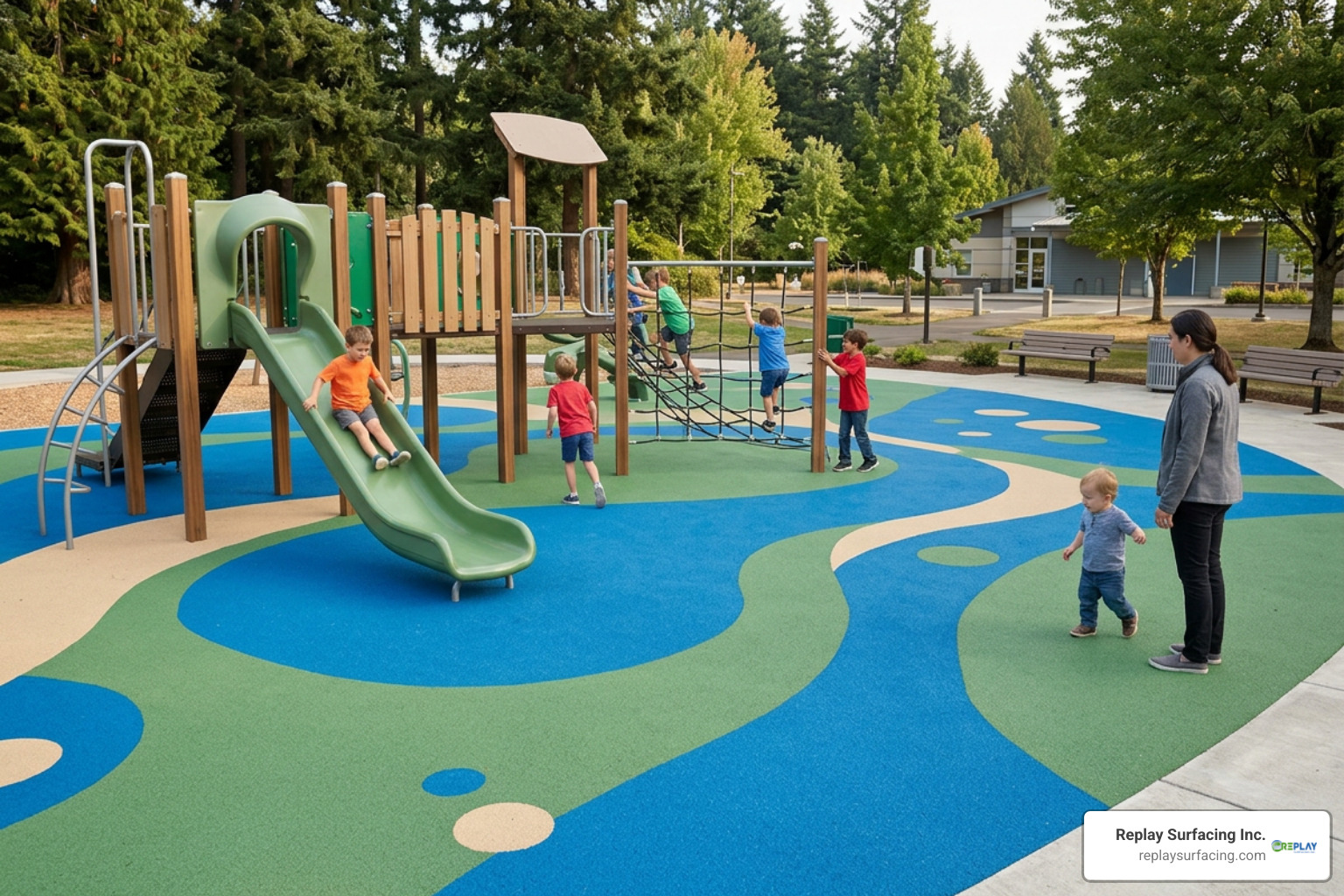
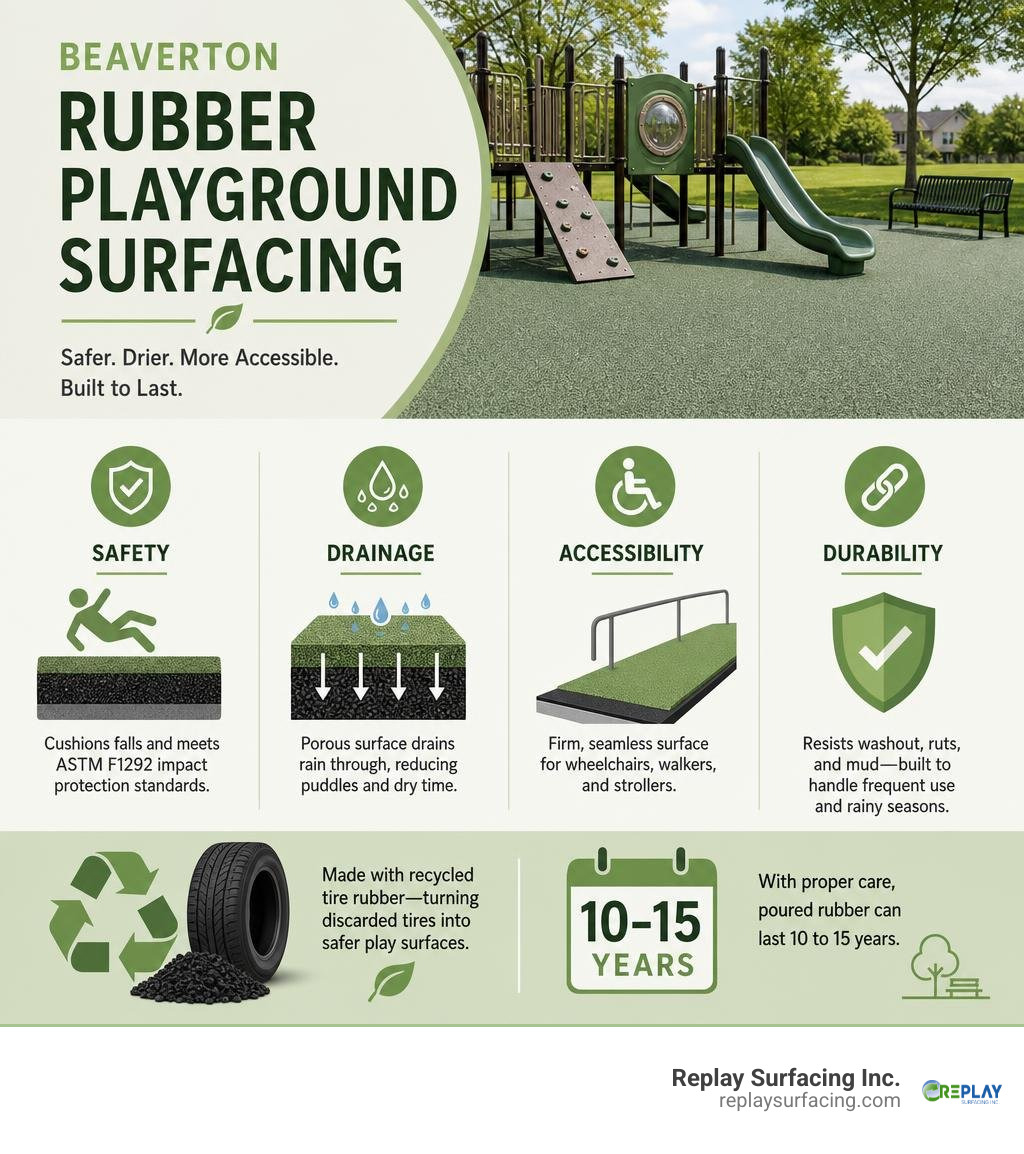
Beaverton rubber playground surfacing gives parks and schools a safer, more usable surface in wet weather. A professionally installed poured rubber system can cushion falls, drain rain through its porous structure, and create a firm, seamless route for wheelchairs, walkers, and strollers. Unlike loose wood chips or sand, it does not wash away, compact into hard spots, or turn into muddy play zones after frequent rain.
For a reliable result in Beaverton’s damp Pacific Northwest climate, choose a system designed around:
- ASTM F1292 impact protection matched to the equipment’s fall height
- A properly prepared, free-draining base beneath the rubber
- Slip-resistant, porous poured rubber for fewer puddles and quicker dry times
- Recycled rubber materials that can turn discarded tires into long-lasting play surfaces
With routine cleaning and inspections, poured rubber can serve outdoor playgrounds for roughly 10 to 15 years, while loose-fill materials often need frequent raking and replenishment. It is a practical choice for facility managers who need safer play, lower upkeep, and a cleaner-looking site through Beaverton’s rainy seasons.
I’m Landon Olson, a mechanical engineer and the operator of Replay Surfacing Inc., where I help turn recycled tire rubber into durable safety surfaces. My work in manufacturing, sustainability, and safety surfacing informs a practical approach to Beaverton rubber playground surfacing that balances fall protection, drainage, accessibility, and long-term value.
Quick look at Beaverton rubber playground surfacing:
Why Beaverton Rubber Playground Surfacing Outperforms Traditional Materials
Anyone who manages a play space in the Pacific Northwest knows the annual battle against moisture. Between October and May, traditional surfaces transform into damp, messy headaches. Wood chips turn spongy, decompose, and track dirt into classrooms or homes, while sand easily turns into muddy soup.
Selecting safe and soft outdoor playground flooring options on a budget means evaluating not only initial material costs but the ongoing labor required to keep children safe. Unitary poured rubber surfacing stays locked in place, eliminating the kick-out zones common under swings and slide exits.
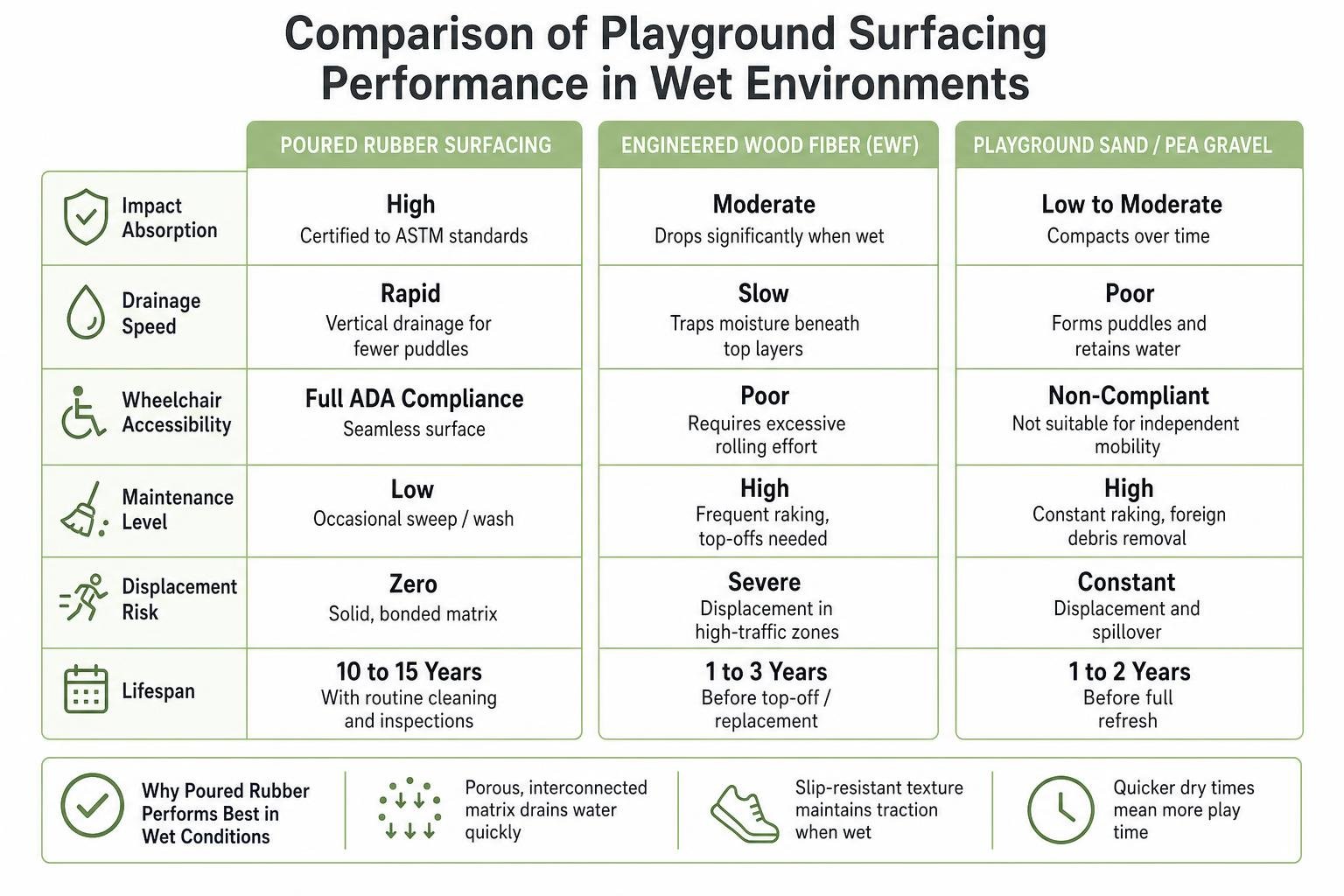
| Feature | Poured Rubber Surfacing | Engineered Wood Fiber (EWF) | Playground Sand / Pea Gravel |
|---|---|---|---|
| Impact Absorption | High, certified to ASTM standards | Moderate (drops significantly when wet) | Low to Moderate (compacts over time) |
| Drainage Speed | Rapid vertical drainage | Slow; traps moisture beneath top layers | Poor; forms puddles and retains water |
| Wheelchair Accessibility | Full ADA compliance (seamless) | Poor; requires excessive rolling effort | Non-compliant for independent mobility |
| Maintenance Level | Low (occasional sweep/wash) | High (frequent raking, top-offs) | High (constant raking, foreign debris removal) |
| Displacement Risk | Zero (solid, bonded matrix) | Severe displacement in high-traffic zones | Constant displacement and spillover |
| Lifespan | 10 to 15 years | 1 to 3 years (before top-off/replacement) | 1 to 2 years before full refresh |
Drainage and Slip Resistance of Beaverton Rubber Playground Surfacing
Poured rubber systems feature an interconnected, porous matrix that lets water flow directly through the wear layer and cushion layer into a free-draining crushed stone or asphalt base. Instead of creating standing water, the rain drains quickly, allowing kids to resume play shortly after a storm passes.
High-traction recycled rubber playground flooring retains friction even when wet. The granular texture provides steady grip for running shoes and boots, minimizing slips, skids, and falls during damp morning recess periods across Beaverton facilities.
Critical Fall Height and Safety Compliance
Safety is the top priority for every school district, municipal park agency, and community organization. Rubber playground surfacing can reduce the risk of serious head injury from falls by up to 90% compared to hard asphalt or concrete surfaces.
Every poured system is custom-tailored to meet ASTM F1292 standards for impact attenuation. Depending on the height of the playground structures, we engineer the shock-absorbing base layer to provide critical fall height ratings typically ranging from 4 to 6 feet or higher. To discover how proactive maintenance keeps these systems compliant year after year, review How to Keep Beaverton Playgrounds Safe and Sound.
Inclusive and Accessible Play Across Local Parks
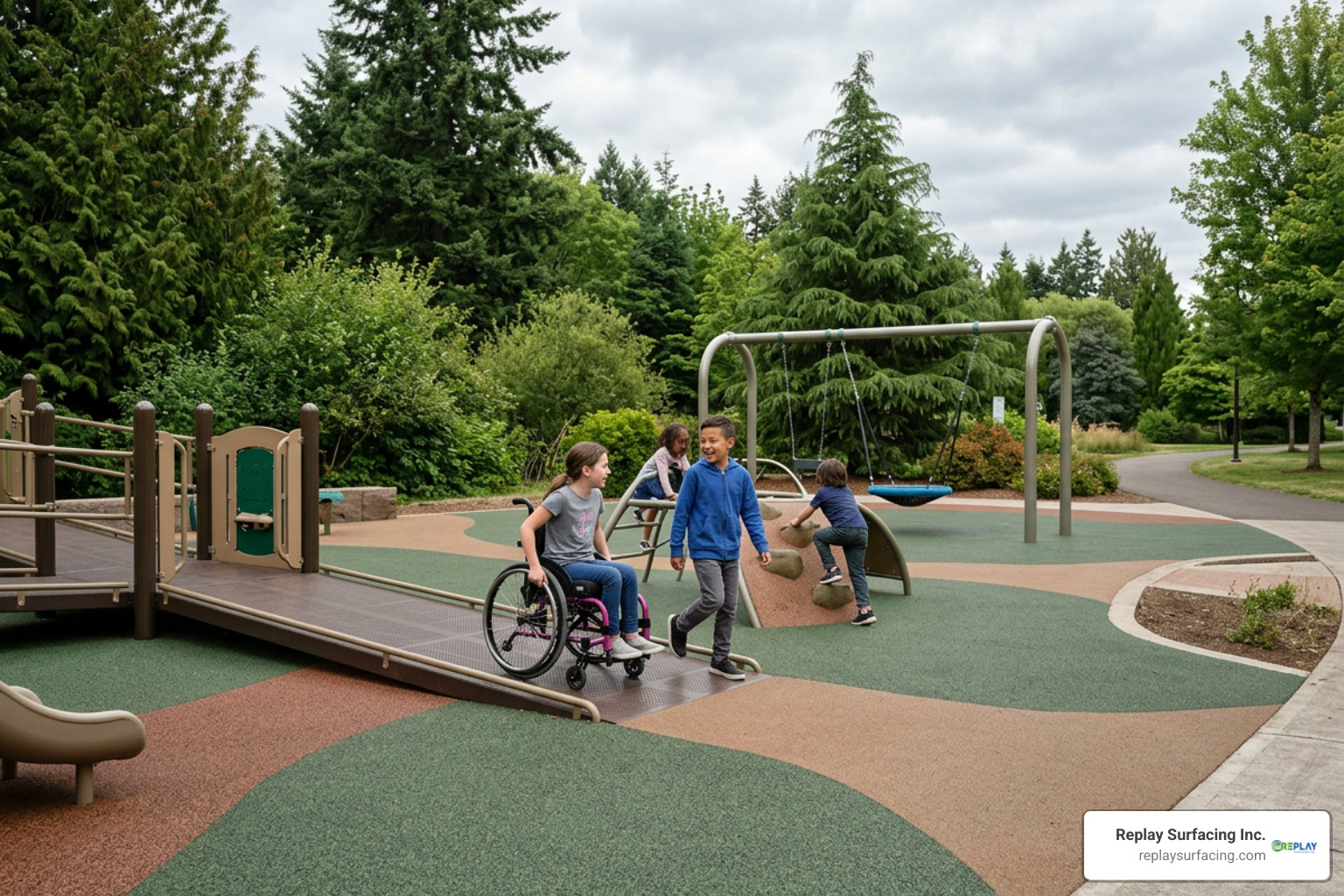
Every child deserves the freedom to play, explore, and socialize alongside their peers. Loose-fill surfacing such as wood mulch or pea gravel acts like loose sand at the beach, creating an impassable barrier for wheelchairs, walkers, strollers, and children with limited mobility.
A seamless recycled playground surface provides the firm, stable foundation required by the Americans with Disabilities Act (ADA). Because the surface is level and flush with surrounding walkways, it creates a true zero-barrier play space where children and caregivers of all abilities can move freely.
Universal Design for School and City Playgrounds
In Beaverton, Oregon, the city maintains over 50 public playgrounds, many of which use rubber surfacing to comply with ADA accessibility requirements and support universal design goals.
Modern playground surfaces also allow designers to use contrasting colors and molded shapes to assist children with visual impairments. Seamless pathways direct foot traffic between structures, while bright sensory hues define distinct play zones, sensory stations, and quiet areas.
Sustainability: Diverting Tires from Landfills
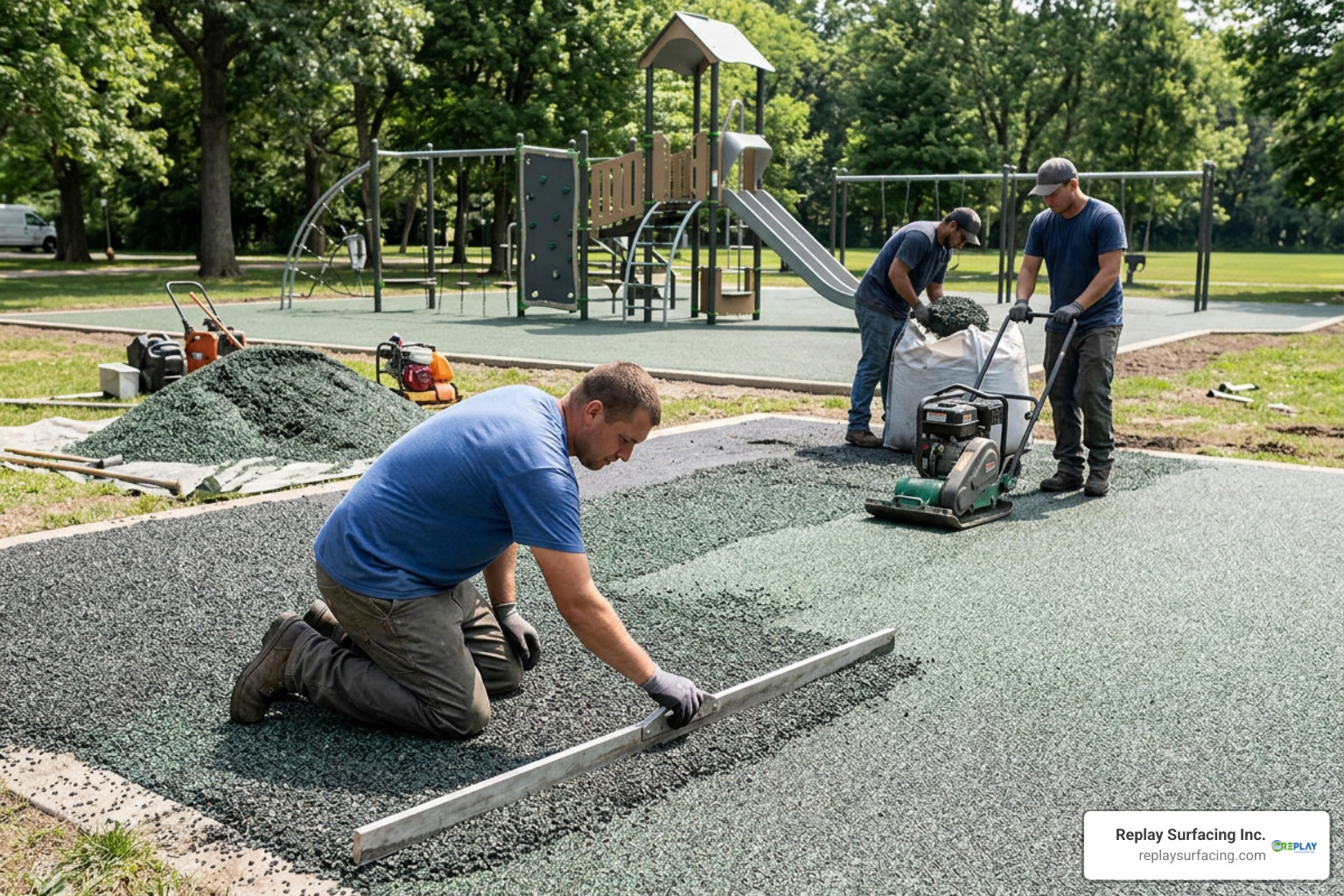
Playground construction can actively support regional recycling goals. Scrap tires represent a significant environmental challenge when discarded into landfills or left in illegal stockpiles. At Replay Surfacing, we process clean scrap tire buffings to build the thick impact-absorbing base pad of our systems.
A single average playground installation repurposes approximately 10,000 scrap tires, transforming discarded materials into high-performing safety surfaces. To see how these initiatives benefit regional communities, explore eco-friendly playgrounds in Beaverton and read more about why Beaverton parents love recycled playground surfacing.
Environmental Durability in the Pacific Northwest
The Pacific Northwest climate puts outdoor building materials to the test with continuous moisture, seasonal freeze-thaw cycles, and summer sun exposure. Poured recycled tire playground flooring stands up to these environmental stresses with exceptional durability:
- Non-Toxic Polyurethane Binders: High-strength binders lock rubber granules into place without leaching hazardous chemicals or heavy metals into surrounding soils.
- UV Stability: High-grade EPDM and TPV top-wear granules resist solar fading and surface breakdown during hot summer months.
- Mold and Mildew Resistance: Unlike decomposing wood fiber, synthetic rubber does not harbor fungal growth or attract wood-boring insects.
- Freeze-Thaw Flexibility: The elastic nature of rubber allows the system to expand and contract during cold snaps without cracking or shifting out of place.
Installation, Maintenance, and Investment
Achieving maximum performance from a rubber playground requires careful site preparation and expert craftsmanship. The installation process follows several critical phases to guarantee long-term stability and optimal drainage.
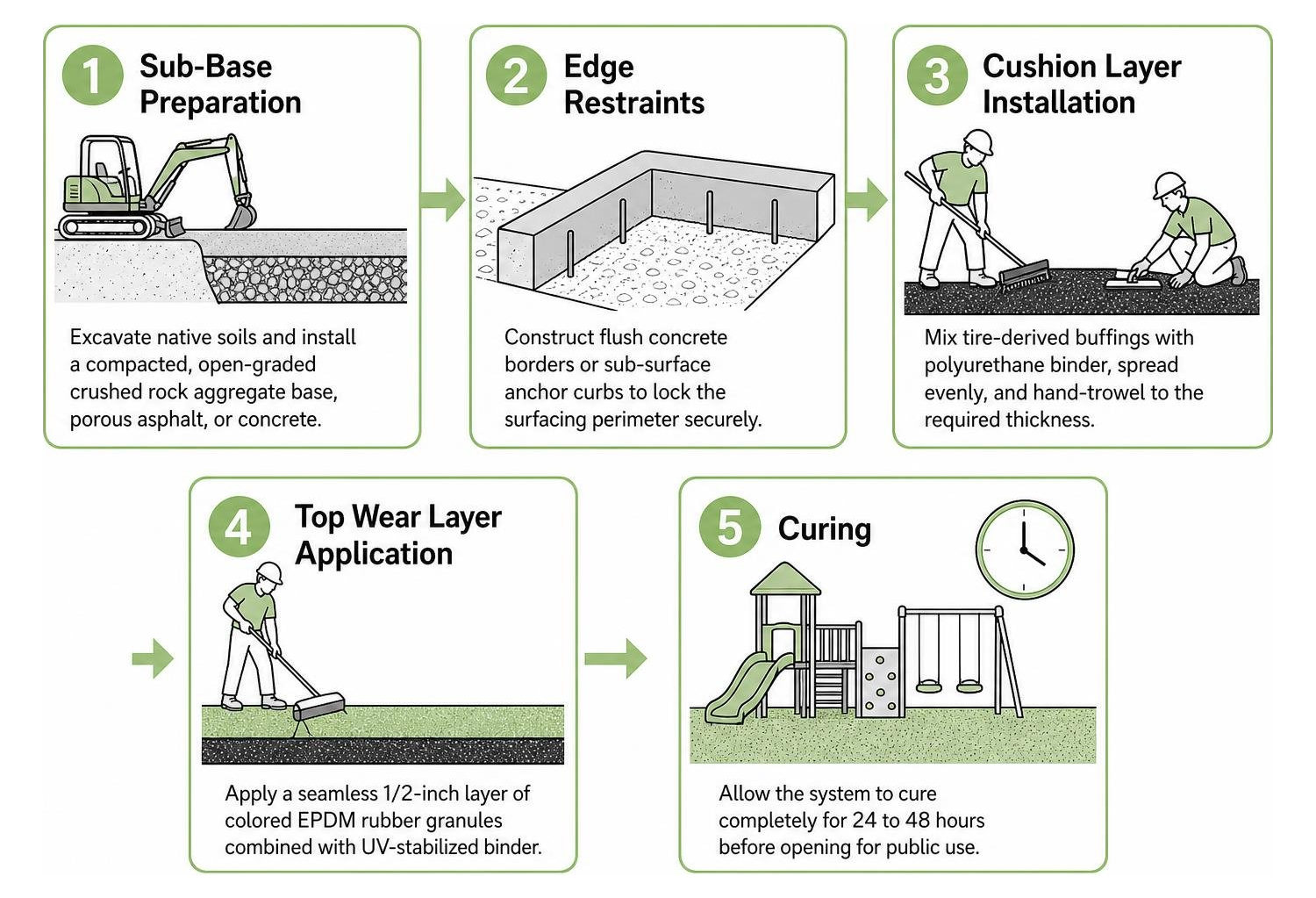
- Sub-Base Preparation: Excavating native soils and installing a compacted, open-graded crushed rock aggregate base, porous asphalt, or concrete.
- Edge Restraints: Constructing flush concrete borders or sub-surface anchor curbs to lock the surfacing perimeter securely.
- Cushion Layer Installation: Mixing tire-derived buffings with polyurethane binder, spreading the mixture evenly, and hand-troweling it to the precise thickness required for critical fall height compliance.
- Top Wear Layer Application: Applying a seamless 1/2-inch layer of colored EPDM rubber granules combined with UV-stabilized binder.
- Curing: Allowing the system to cure completely for 24 to 48 hours before opening the playground for public use.
For an exhaustive breakdown of the technical standards used by certified crews, check out The Ultimate Guide to Professional Rubber Playground Installation.
Long-Term Value and Costs of Beaverton Rubber Playground Surfacing
While poured rubber safety surfacing requires a higher upfront capital investment than loose wood mulch, its lifecycle economics often deliver superior long-term value. Traditional mulch surfaces require continuous top-offs every 12 to 24 months, extensive weekly raking to address displace spots, and frequent safety audits to fix depth deficiencies.
Rubber playground surfacing can last 10 to 15 years with proper maintenance. Routine upkeep is straightforward: blowing off fallen leaves, occasional pressure washing on low settings, and applying roll-coat rebinder treatments every few years to restore elasticity. To review detailed budget comparisons and project scoping formulas, consult our rubber surfacing cost ultimate guide.
Frequently Asked Questions About Beaverton Playgrounds
How well does poured rubber drain after heavy rains?
Poured rubber features a fully porous wear layer and shock-absorbing cushion pad. Water flows vertically through the rubber matrix and enters the free-draining aggregate or porous sub-base below. Because the surface does not trap pooling water on top, playgrounds dry quickly and remain ready for safe play even after heavy Pacific Northwest rain showers.
What is the expected lifespan of rubber playground surfacing?
With proper care and installation, a professional poured rubber playground surface lasts between 10 and 15 years. Longevity depends on local foot traffic, UV exposure, and routine maintenance such as keeping the surface clear of organic debris and re-rolling high-wear zones with binder when needed.
How do rubber surfaces improve playground accessibility?
Unlike loose wood chips, gravel, or sand, poured rubber creates a unitary, seamless, and firm surface. It complies with ADA accessibility guidelines by eliminating rolling resistance for wheelchairs, mobility scooters, and strollers. This smooth foundation allows children and family members of all physical abilities to navigate playground structures safely and independently.
Conclusion
Creating vibrant, safe, and long-lasting outdoor play environments in the Pacific Northwest requires surfacing solutions engineered for heavy rainfall and continuous community use. From reducing severe fall injuries to diverting thousands of discarded tires from regional landfills, poured rubber transforms standard parks into clean, inclusive community hubs.
Whether you are updating a school play area or building a backyard play space, our expert team at Replay Surfacing brings reliable craftsmanship and proven engineering to every project. To design a tailored, all-weather play area for your home or community, explore premium residential rubber surfacing options today.