

Playground Slide Mat Solutions Across Charlotte, Raleigh, and Our Service Areas
A playground slide mat protects the high-impact exit area where feet repeatedly hit, scrape away grass, and turn soil into mud across backyards in Charlotte, Raleigh, Tucson, and beyond. For the best result, measure the slide landing zone, clear loose debris, level the ground, and place a durable outdoor rubber mat flat beneath the slide exit. Choose a mat that extends beyond the usual landing spot and is made for outdoor exposure in your local climate.
Rubber landing mats help preserve turf, reduce erosion, and create a cleaner, more stable surface after rain. Reclaimed-rubber options are especially practical for outdoor play areas because they are durable, water-resistant, and built to handle sun exposure with minimal upkeep.
I am Landon Olson, a mechanical engineer and the operator of Replay Surfacing Inc., where I help turn recycled tire rubber into durable safety surfaces. My work with playground surfacing helps facility managers choose each playground slide mat for safer landings, lower maintenance, and less wasted material across all our regional service areas.
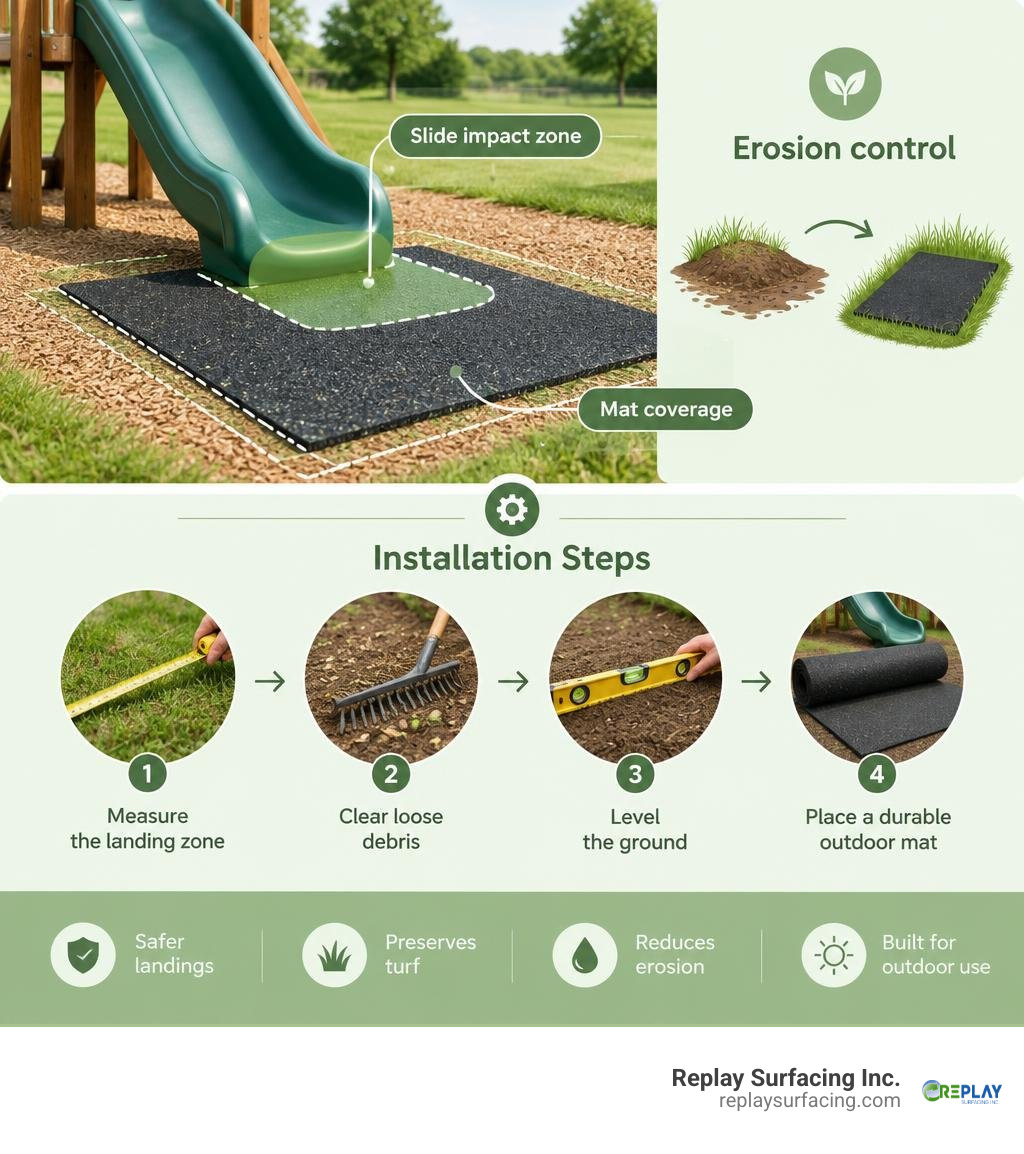
Must-know playground slide mat terms:
Why Every Backyard Needs a Heavy-Duty Playground Slide Mat
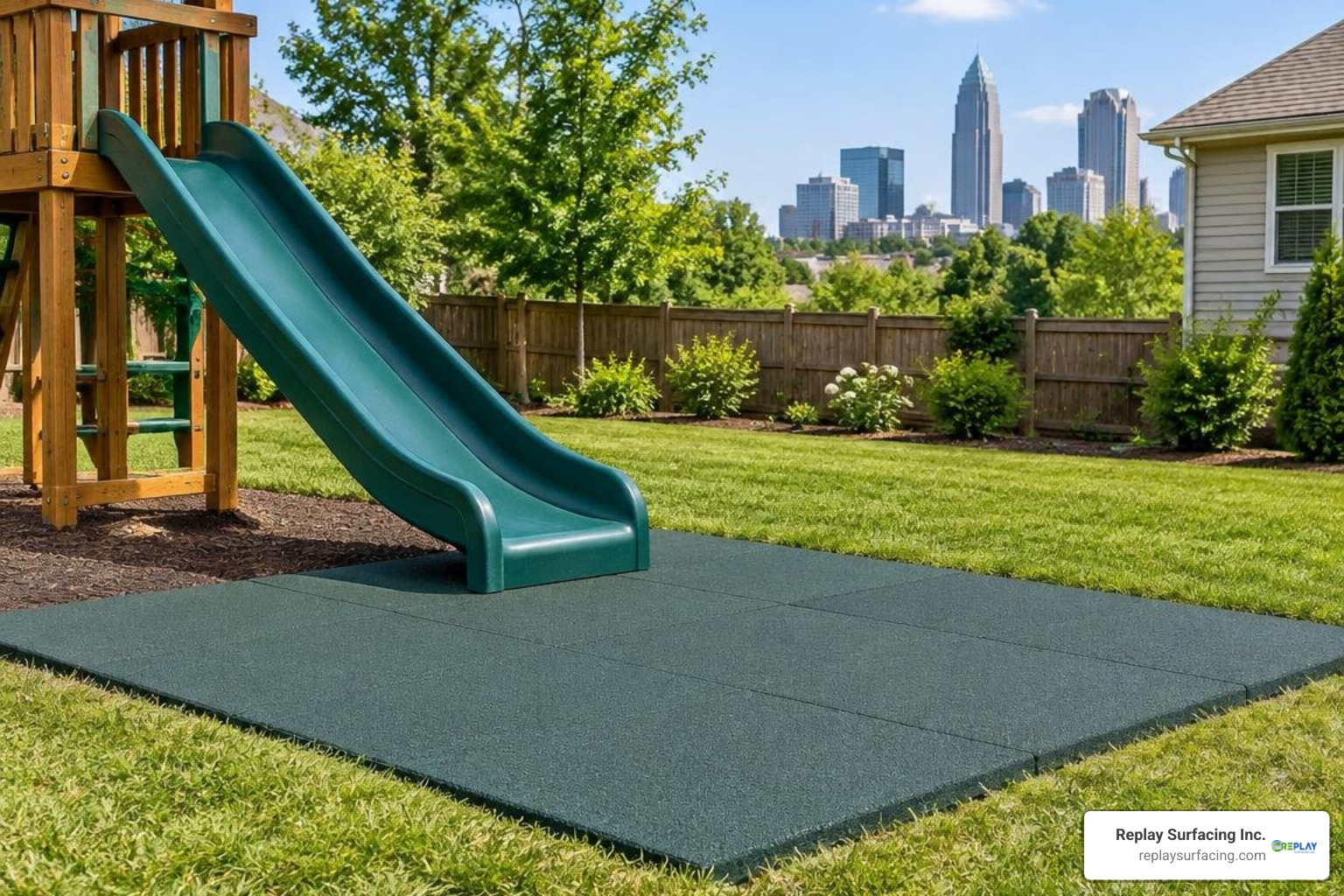
Every time kids zoom down an outdoor slide, kinetic energy meets the ground in a tight, concentrated radius. Whether children are playing under the hot summer sun in Tucson, Arizona, or navigating afternoon rain showers in Raleigh and Sanford, North Carolina, the base of the slide takes repeated punishment. Without targeted protection, constant heel strikes quickly strip grass down to bare dirt. When moisture enters the equation, that bare dirt transforms into a persistent mud puddle, leaving children with stained clothes and messy shoes every single play session.
Beyond avoiding muddy pants, installing a dedicated landing surface solves several serious safety and structural headaches. Heavy-duty rubber provides essential shock absorption, cushioning abrupt stops and preventing bruised heels. Because our surfaces feature vulcanized natural and reclaimed tire rubber, they deliver natural UV resistance that prevents cracking under blazing southern heat, alongside a watertight structure that refuses to rot or trap dampness during rainy spells in Beaverton, Oregon, or Lake Charles, Louisiana.
Unprotected landing zones also create deep ground ruts over time. These depressions collect pooling rainwater, create tripping hazards, and expose underlying playset foundations. By protecting against wear-and-tear in high-traffic zones, a quality landing surface anchors the turf, prevents erosion, and keeps play areas level and safe through every season.
How to Choose the Right Material, Size, and Density for Landing Zones
Selecting the best landing protection requires balancing material composition, overall dimensions, and structural density. Outdoor play zones demand high-density, reclaimed rubber engineered to stay firmly in place without constant readjustment, resist moisture, and hold up under repeated impact in humid climates like Columbia, South Carolina, or Nashville, Tennessee.
| Feature / Metric | Outdoor Reclaimed Rubber Mat |
|---|---|
| Primary Material | Recycled tire rubber & natural elastomers |
| Typical Density | 55–65 lbs/cu. ft. (High mass, vulcanized) |
| Weather Resilience | 100% Waterproof, UV-stable, freeze-thaw resistant |
| Impact Absorption | Consistent shock attenuation under heavy traffic |
| Maintenance Level | Occasional rinse with a garden hose |
| Typical Price Range | $20 – $40 (Single landing zone pad) |
Sizing Your Playground Slide Mat for Maximum Fall Protection
Choosing the appropriate pad dimensions depends directly on the height of your playset and the speed of the slide. A shallow toddler slide requires a smaller footprint, whereas an expansive spiral or wave slide propels energetic kids forward, demanding a longer landing trajectory.
Common standard sizes for standalone slide pads include:
- 29 in. x 32 in.: A compact, budget-friendly option priced around $30.00, ideal for smaller playsets, tight residential footprints, or bottom steps of play towers.
- 31 in. x 35 in.: An economical choice around $21.70 that fits standard backyard straight slides, covering the primary strike zone without overwhelming smaller yards.
- 36 in. x 48 in.: A generous surface priced around $35.18, delivering maximum perimeter coverage for taller slides, steeper chutes, and older kids who land with extra forward momentum.
Review our dedicated recommendations on selecting the perfect playground safety mat to ensure your footprint matches the exact velocity and layout of your backyard playset.
Eco-Friendly Materials and Safety Standards
At Replay Surfacing, we believe the safest solutions are also the most sustainable. Every year, millions of scrap tires pose significant environmental and fire hazards in landfills. By refining and vulcanizing this high-grade commercial tire rubber into smooth, resilient surfacing, we divert waste while delivering exceptional durability.
Tire rubber contains dense polymer chains designed to endure highway friction and extreme weather fluctuations. When repurposed into impact pads, it provides natural shock absorption that cushions active joints and meets rigorous ASTM International fall protection guidelines. Our comprehensive recycled rubber playground surfacing guide breaks down how high-density molded rubber absorbs impact energy, keeping play areas compliant, environmentally sound, and completely free from harsh chemical off-gassing.
Step-by-Step Guide: How to Install a Slide Landing Surface
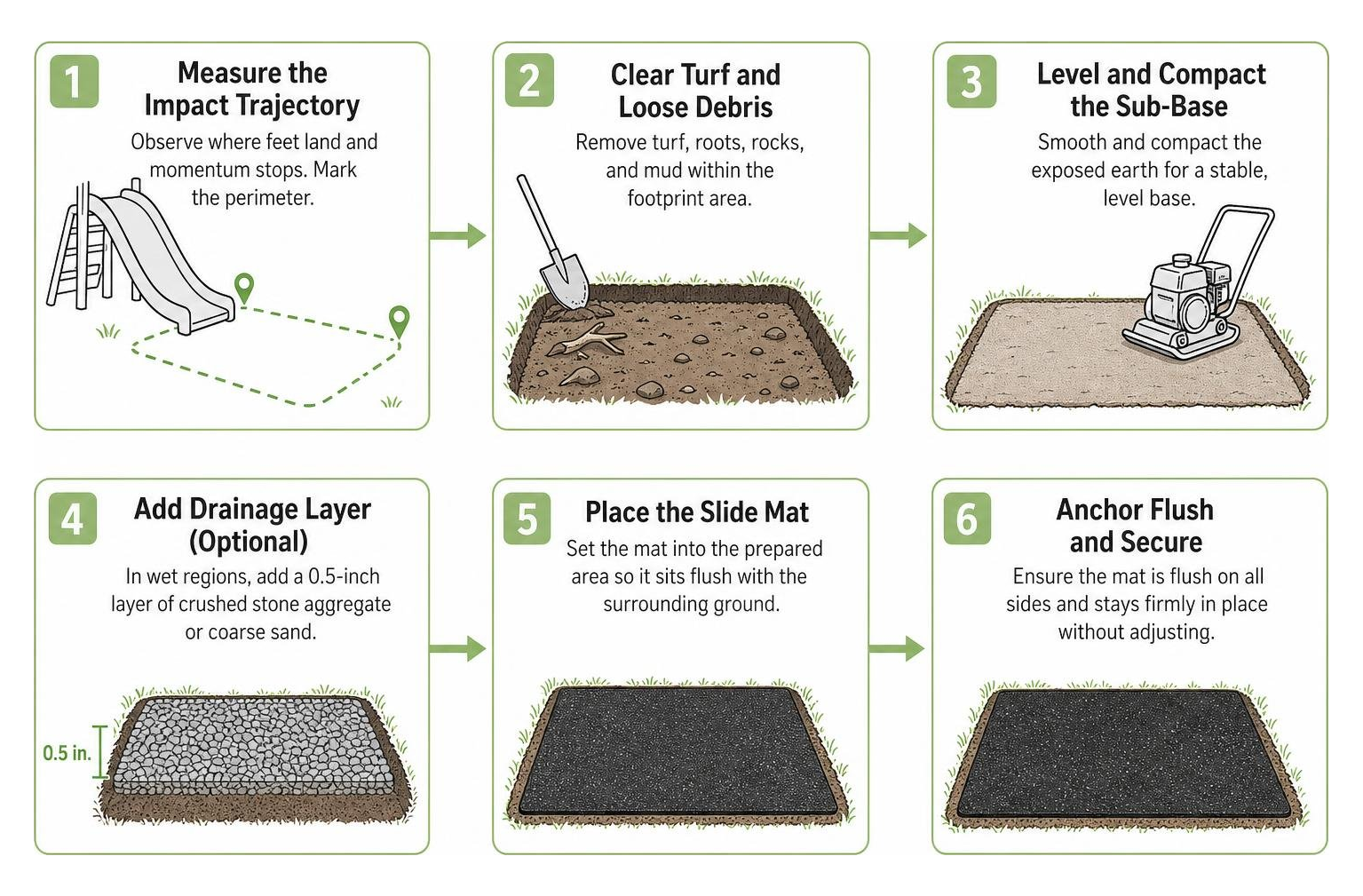
Installing a slide landing pad does not require commercial contracting equipment, but proper ground preparation ensures the mat remains flush, stable, and puddle-free. Follow these straightforward steps to anchor your mat:
- Measure the Impact Trajectory: Have your child go down the slide a few times to observe where their feet make initial contact and where their forward momentum stops. Mark this perimeter using landscape chalk or marking flags.
- Clear Turf and Loose Debris: Dig out existing turf, roots, rocks, and mud within the designated footprint. Remove soil down to a depth roughly equal to the thickness of your mat (typically 1 to 2 inches) so the finished surface sits flush with surrounding grass.
- Level and Compact the Sub-Base: Smooth the exposed earth using a flat rake or hand tamper. In wet regions like Indiana or coastal Connecticut, laying down a thin 0.5-inch layer of crushed stone aggregate or coarse sand improves drainage beneath the pad.
- Position the Mat: Lay the rubber mat directly at the base of the slide chute. Ensure the front edge tucks slightly under the slide exit lip so little heels cannot catch the seam when descending.
- Anchor and Backfill: For high-traffic yards, secure the corners using heavy-duty plastic or galvanized landscape stakes driven flush into the ground. Backfill the surrounding borders with topsoil, turf seed, or safety mulch.
For detailed integration across larger playsets, check out our guide to playset rubber mat installation to create seamless transitions across your entire play yard.
Maintenance, Multi-Use Versatility, and Long-Term Care
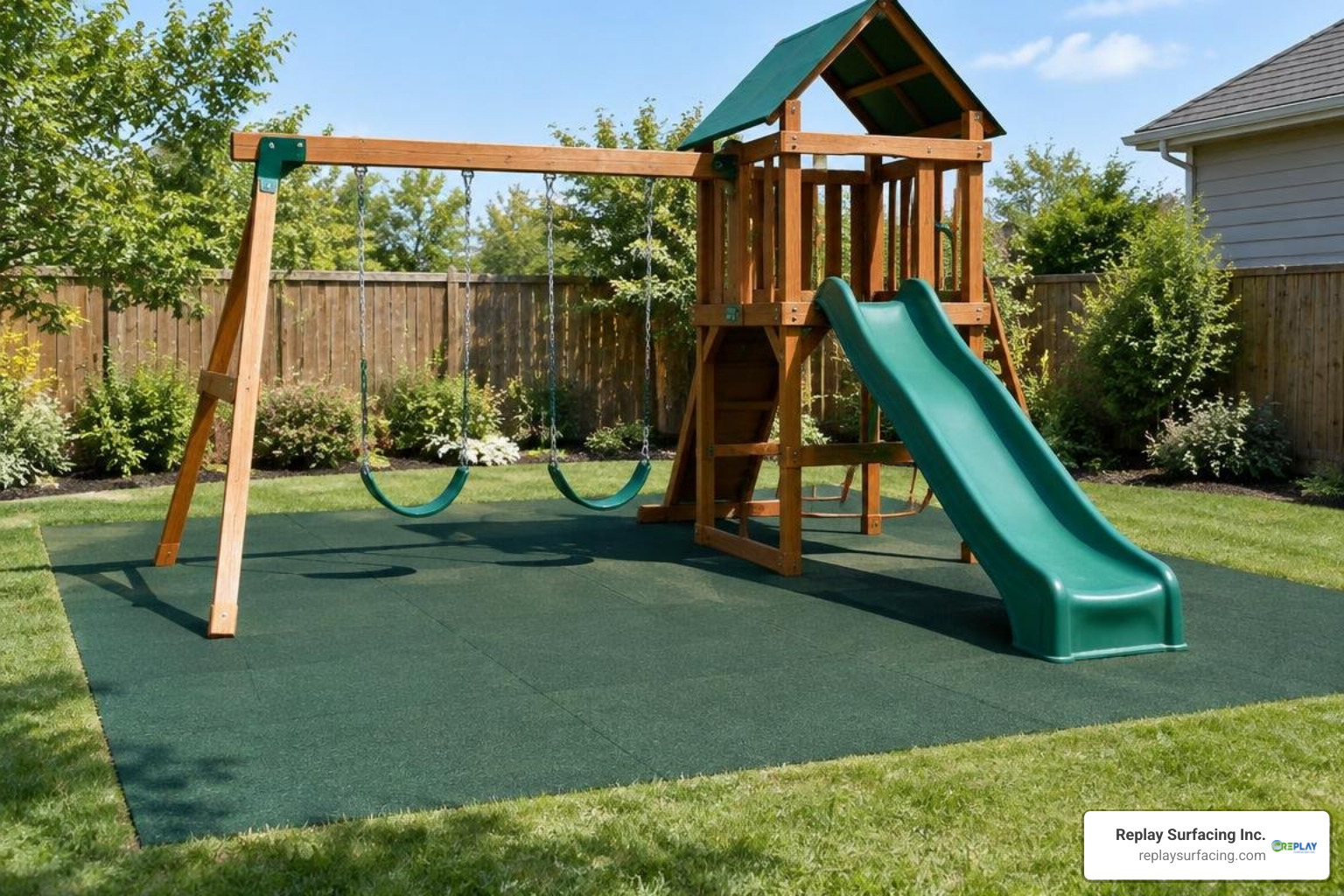
One major advantage of vulcanized rubber landing pads is their remarkable versatility across residential and recreational spaces. Beyond slide exits, these heavy-duty mats perform exceptionally well in other high-friction zones:
- Swing Set Bays: Prevent deep heel trenches and standing water under swings where kids constantly drag their feet to stop.
- Climbing Wall and Ladder Bases: Provide traction and impact protection where children dismount ropes, ladders, and climbing holds.
- Splash Pad & Pool Perimeters: Offer non-slip, watertight footing along walkways prone to standing water and wet feet.
- Garden and Utility Pathways: Shield heavy footpaths, patio transitions, and shed doorways from rutting and grass die-off.
Routine Care to Extend Playground Slide Mat Durability
Outdoor rubber requires almost no maintenance compared to wood mulch or loose gravel, but occasional basic care preserves its clean appearance and grip.
Periodically sweep away leaves, twigs, and loose dirt that settle on the textured top surface. If mud splatters across the mat after heavy storms, spray it down with a standard garden hose. For stubborn residue or tree sap, use warm water and mild household dish soap with a soft-bristle broom—avoid harsh petroleum-based chemical solvents that might degrade rubber over time.
Because our vulcanized mats feature superior freeze-thaw resilience, they can remain outdoors through snowy Connecticut and Indiana winters as well as blistering Tucson heat waves without cracking or peeling. Explore our overview on durable outdoor rubber matting maintenance for additional long-term care strategies.
Frequently Asked Questions About Slide Landing Mats
How do rubber mats prevent soil erosion and muddy puddles under slides?
When children land at the bottom of a slide, their feet apply heavy, repetitive downward and lateral force. This friction shears grass roots and compresses the subsoil, creating a sunken bowl that naturally collects rainwater. A heavy-duty rubber mat acts as an impact shield: it disperses landing energy evenly across its broad surface area, protects root structures, and prevents water from pooling in worn-out depressions.
Can slide landing pads be used under swings and other play equipment?
Yes. Heavy-duty rubber pads are ideal for any high-traffic play zone, including underneath swing bays, at the base of climbing ropes, around sandbox borders, and beneath monkey bars. Their weight keeps them anchored firmly in place, ensuring children enjoy slip-resistant footing and cushioned falls across all active equipment areas.
What is the ideal thickness and size for a residential slide landing zone?
For standard backyard residential playsets with slide deck heights between 4 and 6 feet, a mat measuring at least 31 in. x 35 in. with a thickness between 1 and 2 inches provides dependable fall protection and coverage. For faster commercial-style slides, steep chutes, or older children, upgrading to a 36 in. x 48 in. pad guarantees that forward landing trajectories remain fully cushioned.
Conclusion
Muddy slide exits, ruined pants, and unsightly yard trenches do not have to be an inevitable part of outdoor play. Installing a heavy-duty, eco-friendly rubber landing mat protects your children from hard falls while safeguarding your turf against erosion and standing puddles.
At Replay Surfacing Inc., we are committed to turning scrap tires into safe, ultra-durable, and sustainable play spaces across Charlotte, Raleigh, Sanford, Columbia, Tucson, Connecticut, Indiana, Nashville, Beaverton, and Lake Charles. Explore our full range of residential playground surfacing options today to build a cleaner, safer, and mud-free backyard play area.