
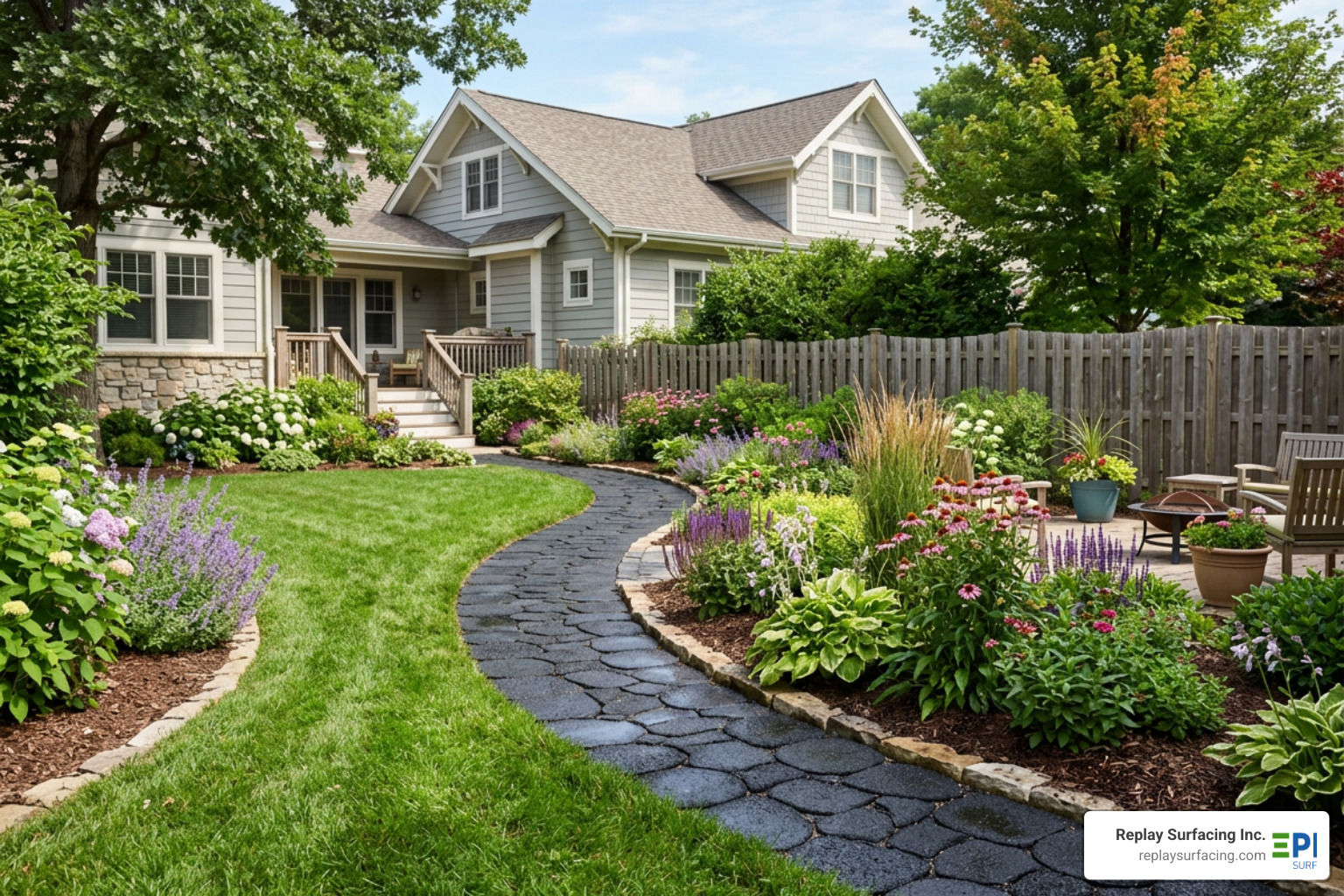
Rubber Stones in Denver: A Quick Guide to Types and Uses
Rubber stones are surfacing and landscaping products made from recycled rubber — most commonly from used tires — that serve as durable, eco-friendly alternatives to natural stone, concrete, and wood materials.
Here is a quick overview of the main types:
| Type | Common Use |
|---|---|
| Stepping stones and pavers | Garden paths, patios, driveways |
| Bonded rubber mulch | Playgrounds, trails, park surfaces |
| Poured-in-place (EPDM) | Splash pads, play areas, sport courts |
| Interlocking rubber tiles | Gyms, playgrounds, commercial floors |
| Rubber honing stones | Hockey skate blade maintenance |
| Rubbing/worry stones | Sensory therapy, anxiety relief, fidget tools |
Each type serves a very different purpose, so it helps to know which one fits your project before you buy.
Rubber stones are soft, flexible, and surprisingly tough. They absorb impact, resist freeze-thaw cycles, and handle heavy foot traffic without cracking. They also divert waste from landfills — just 25 square feet of installed rubber surfacing keeps 3 tires out of the landfill.
For facility managers and landscapers in Denver dealing with cracked concrete, unsafe playground surfaces, or high maintenance costs, rubber stones offer a practical, long-lasting fix.
This guide covers every major type, how they are made, how to install them, and what to look for when buying.
I’m Landon Olson, operator of Replay Surfacing Inc., and with a background in mechanical engineering and over a decade working across manufacturing and safety surfacing industries, I have spent years helping facilities find the right rubber stones solutions for their specific needs. Let’s break down everything you need to know.
Basic rubber stones vocab:
What Are Rubber Stones and How Are They Made?
To understand why rubber stones are taking over modern landscape architecture from Charlotte, NC to Tucson, AZ, we have to look at how they are manufactured.
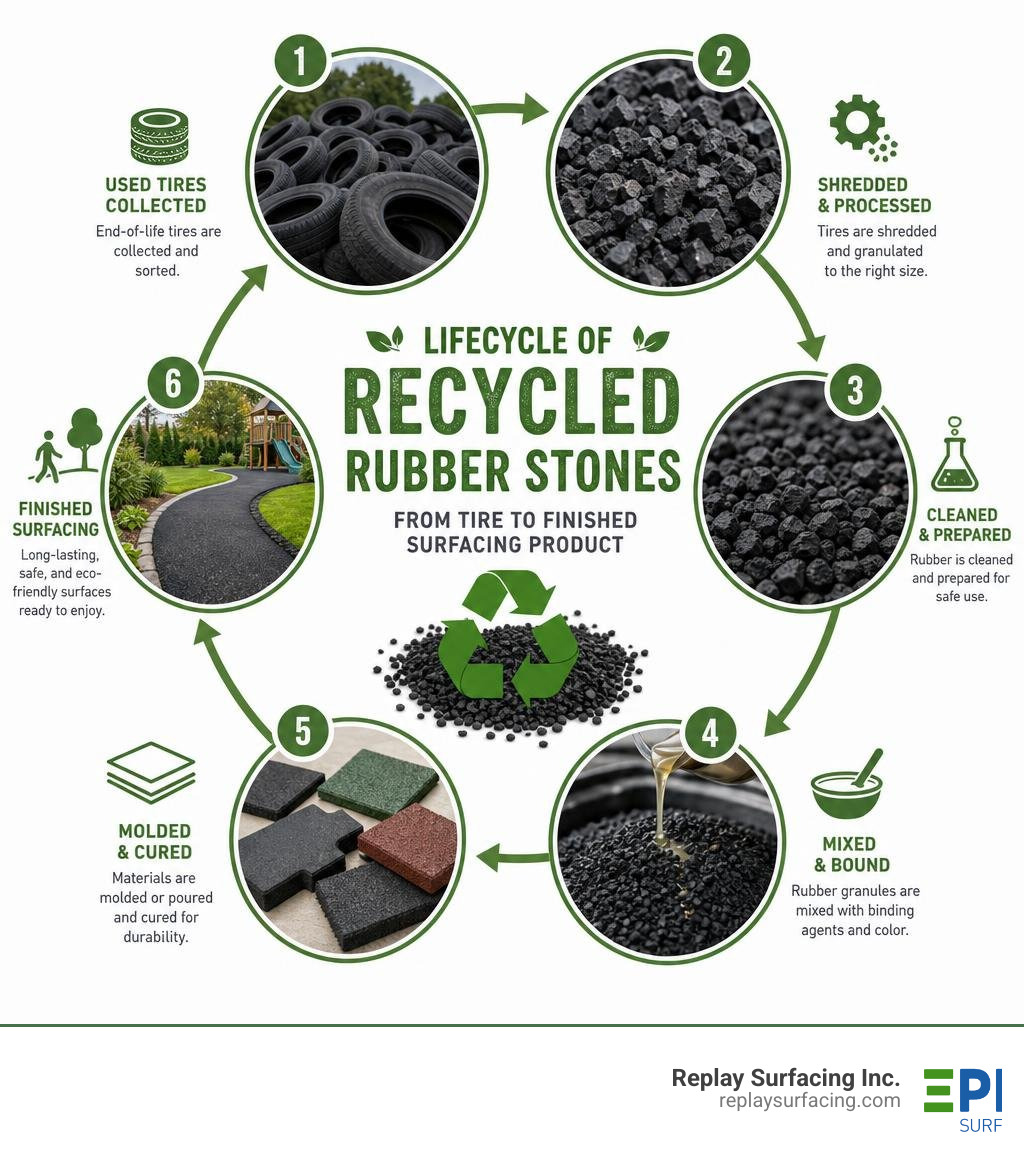
The production process centers on high-quality post-consumer waste. We source discarded commercial vehicle tires, stripping away the tread and processing the rubber into small chips or “tire buffings.” By utilizing only the outer buffing layer of commercial tires, manufacturers successfully prevent steel wire fragments from entering the raw rubber mixture. This ensures a clean, completely safe material.
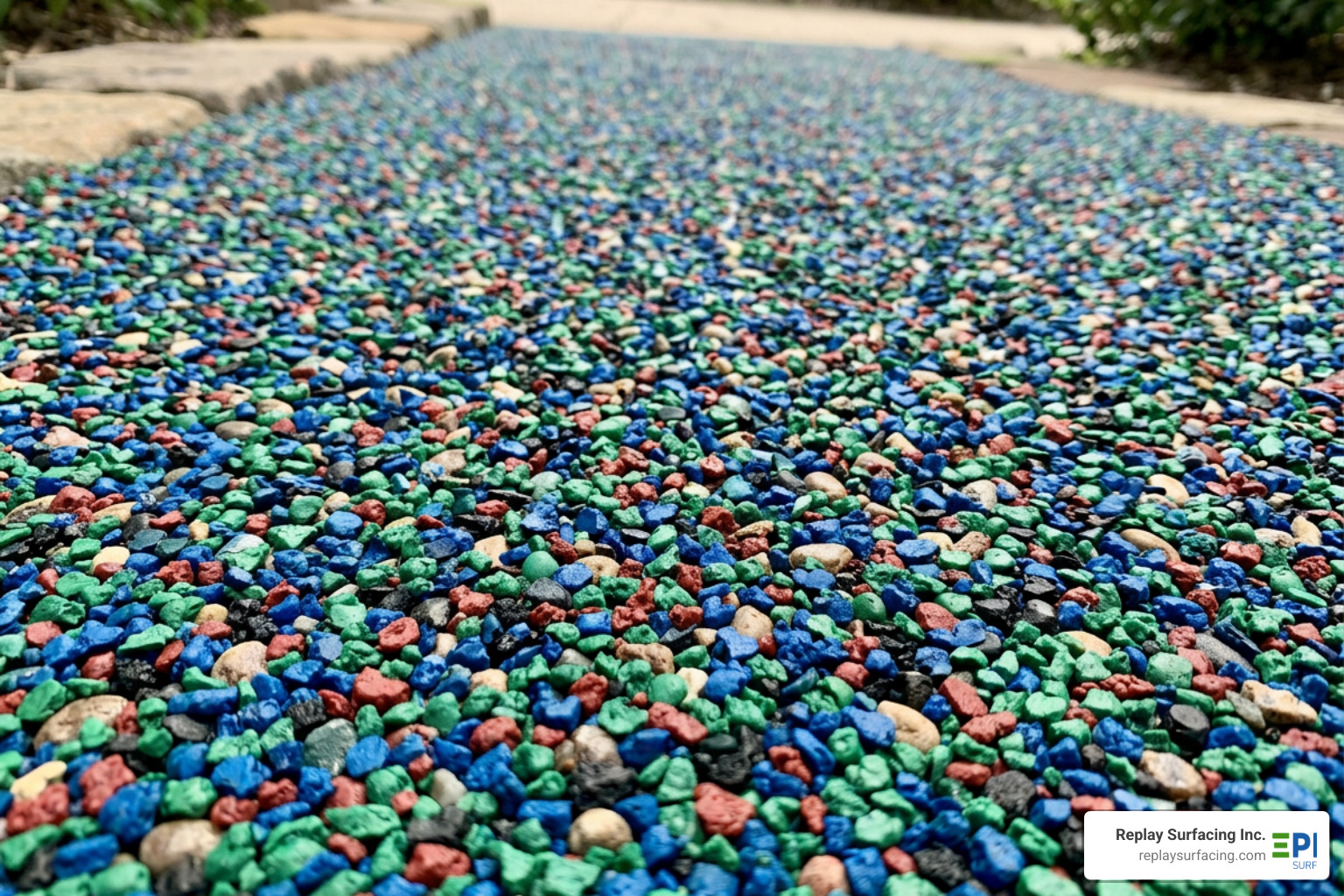
These clean rubber chips are then thoroughly mixed with a high-performance, weather-resistant polyurethane binding agent. Depending on the final application, we can introduce vibrant EPDM (Ethylene Propylene Diene Monomer) synthetic rubber granules to create beautiful custom color blends.
This recycling process offers incredible environmental benefits:
- Landfill Diversion: A typical single-car driveway resurfaced with rubber stone keeps 60 tires out of our landfills.
- Large-Scale Impact: A standard two-car driveway keeps 120 tires from reaching the landfill.
- LEED Certification: Because it is a post-consumer recycled product, utilizing rubber stone contributes directly to LEED (Leadership in Energy and Environmental Design) certification points for commercial building projects.
Exploring the Different Types of Rubber Stones
Not all rubber stones are created equal. Depending on whether you are designing a backyard walkway in Raleigh, NC or surfacing a public park playground in Sanford, NC, the right product type makes all the difference.
Garden Rubber Stepping Stones and Pavers
If you love the timeless look of natural flagstone but dread the heavy lifting, recycled rubber stepping stones and pavers are an ideal choice. These products are molded to mimic the irregular shapes, rich textures, and earthy tones of authentic slate or cracked logs.
They are lightweight and highly ergonomic, offering “just enough give to put a spring in your step.” Many residential pavers feature dual-sided or reversible designs (such as a classic slate texture on one side and a decorative pattern on the other), giving you maximum design flexibility.
To explore how these elements transform residential yards, check out our guides on Garden Rubber Stepping Stones and Why Your Garden Needs Flexible Rubber Stone Edging. For those sourcing materials locally, you can find high-quality design inspiration through regional suppliers like Stepping Stones in Indiana or Triangle Landscape Supplies | Mulch, Stone, Soil in Raleigh.
Bonded Rubber Mulch and Poured-in-Place Surfacing
For larger pathways, municipal trails, and playground areas, we look to seamless systems like bonded rubber mulch and poured-in-place EPDM surfacing.
- Bonded Rubber Mulch: This is a single-layer system consisting of shredded rubber buffings bound with a specialty polyurethane. It resembles natural wood mulch but will not decompose, blow away, or attract pests. It can be easily piled and sloped to match the natural contours of your terrain.
- Poured-in-Place EPDM: A premium two-layer system consisting of a thick, shock-absorbing base attenuation layer topped with a durable, customizable 1/2-inch EPDM wear cap. This system is highly popular for vibrant, multi-colored playground designs.
- Interlocking Rubber Tiles: These heavy-duty tiles are designed for quick installation. High-quality tiles are IPEMA certified for critical fall heights of 4, 6, 8, and 10 feet, making them exceptionally safe for playgrounds.
To see why facility managers are choosing these seamless pathways over concrete, read Why Bonded Rubber Stone is the Future of Walkways.
Specialty Rubber Surfacing for Sport Courts and Splash Pads
In wet play areas and high-impact sports environments, safety is the number-one priority. Non-abrasive, slip-resistant splash pad surfaces and shock-absorbing sport court overlays protect athletes and children from painful fall injuries.
These specialty surfaces utilize UV-resistant EPDM coatings to prevent fading under intense sun exposure in hot climates like Tucson, AZ or Columbia, SC. For local bulk sourcing and landscape prep, regional hubs such as Landscape Supplies Near Me 804# Columbia, SC can provide the necessary sub-base aggregates.
Key Benefits of Rubber Stones vs. Traditional Materials
When comparing rubber stones to traditional concrete, asphalt, or natural stone, the physical advantages of rubber become clear:
| Feature | Rubber Stone | Concrete | Natural Stone |
|---|---|---|---|
| Flexibility | High (bends with sub-base movement) | None (cracks under stress) | None (shifts or breaks) |
| Slip Resistance | Excellent (wet or dry) | Poor when wet or icy | Moderate to poor |
| Freeze-Thaw Durability | Immune to cracking | Highly susceptible | Prone to splitting |
| Installation Weight | Lightweight & easy | Extremely heavy | Extremely heavy |
| Eco-Friendliness | Made from recycled tires | High carbon footprint | High quarrying impact |
Because rubber is inherently flexible, it can be applied directly over cracked, pitted, or shifting concrete and asphalt substrates without cracking. In cold climates like Connecticut or Indiana, where severe freeze-thaw cycles destroy rigid concrete driveways, rubber stone expands and contracts naturally, remaining completely intact year after year.
To dive deeper into these performance comparisons, check out Why a Rubber Stone Driveway Beats Traditional Asphalt and our comprehensive Rubber Stone Pool Deck Guide.
Installation and Maintenance of Rubber Surfacing
Achieving a flawless, long-lasting rubber stone surface requires proper preparation and simple, routine maintenance.
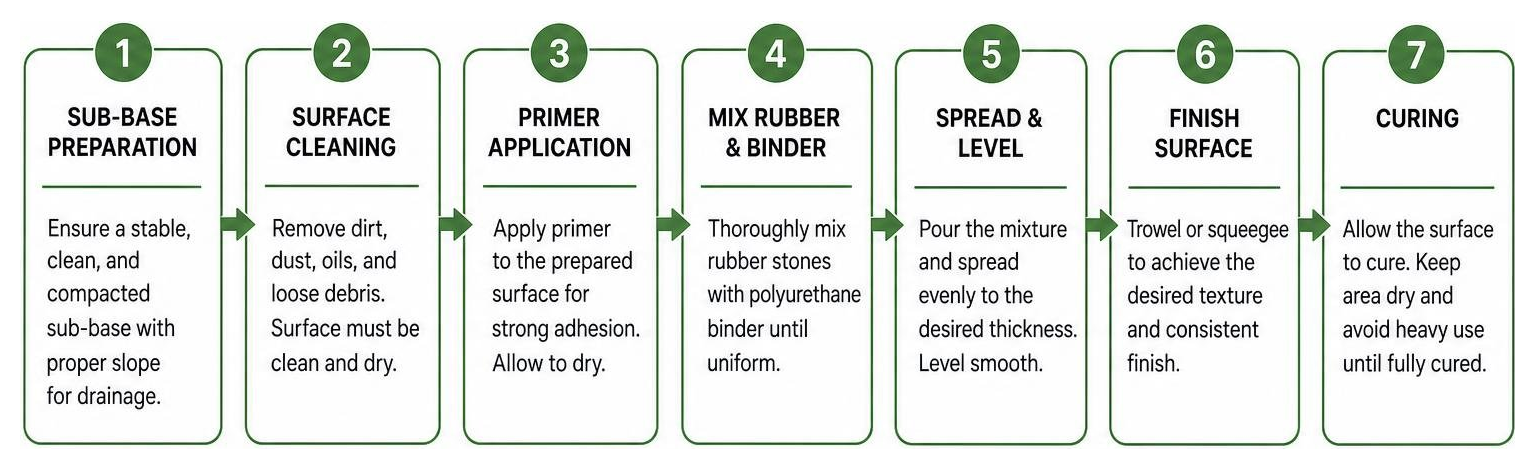
Step 1: Sub-Base Preparation
Rubber stone can be applied over concrete, asphalt, wood decks, or compacted stone. If you are preparing a compacted stone base for a poured-in-place system, we highly recommend using a compacted 3/4-inch crusher run stone with fines. Ensure the sub-base has a minimum of a 1% slope to facilitate proper water drainage.
Step 2: Atmospheric Conditions
For the polyurethane binder to cure correctly, the outdoor temperature must be above 40°F (and rising) for at least 24 hours during and after the installation.
Step 3: Mixing and Troweling
The rubber chips are thoroughly mixed with the polyurethane binder and hand-troweled over the prepared sub-base to create a seamless, uniform surface.
Step 4: Simple Maintenance
Keep your surface looking brand new by blowing off leaves and dirt with a standard leaf blower, or giving it a gentle pressure wash seasonally. To maintain the surface’s strength and shine, we recommend applying a polyurethane top coat re-roll every 3 to 5 years.
Frequently Asked Questions About Rubber Stones
Are rubber stones safe for playgrounds and high-traffic areas?
Yes! High-quality rubber surfacing is engineered to meet and exceed the rigorous shock-absorbing standards set by ASTM F-1292-96 and ASTM F-1951-99 for impact attenuation and wheelchair accessibility. This makes it one of the safest playground surfaces available, protecting children from critical fall heights.
Can rubber stones be installed over cracked concrete or sloped surfaces?
Absolutely. Because rubber stone is highly flexible, it easily covers cracked, pitted, or shaled concrete and asphalt. Its structural characteristics also allow for piling and sloping, making it perfect for sloped walkways, ramps, and stair landings.
Where can consumers purchase rubber stones and what should they look for?
When purchasing, always look for certified recycled content, built-in UV protection, and verified slip resistance. For professional installation and high-quality materials, it is best to work with certified local surfacing specialists.
What are the other specialty uses of “rubber stones” mentioned in the industry?
While we focus on large-scale safety and architectural surfacing at Replay Surfacing Inc., the term “rubber stone” also applies to unique niche items.
For example, in sports, hockey players use specialized rubber-bonded honing stones, such as the Howies Hockey Rubber Skate Stone | Jerry’s Hockey or the Howies Rubber Stone – Hockey Lion Inc., to remove nicks and burrs from high-tech carbon-coated skate blades without damaging the coating.
In sensory therapy, occupational therapists recommend smooth, pocket-sized Rubbing Stones – Kaiko Fidgets Australia Pty Ltd as silent grounding tools to manage anxiety.
Even in education and play, items like the 1 1/2″ Rubber Rock-Shaped Rubber Bouncy Balls – 12 Pc. | Oriental Trading are used in physics and geology classrooms to demonstrate unpredictable kinetic motion.
Additionally, in printmaking and art, specialty tools like the Stones Rubbing Crayon – Hard | Renaissance Graphic Arts, Inc. are used for precision transfer work.
Conclusion
Whether you are looking to upgrade a cracked residential driveway, build a safe backyard garden path, or design an inclusive, accessible public playground, rubber stones offer a beautiful, durable, and highly sustainable solution. By transforming millions of discarded tires into comfortable, high-performance surfaces, we can build safer communities while directly protecting our environment.
If you are ready to upgrade your facility or home with a custom rubber surfacing solution, we are here to help. Schedule a consultation with Replay Surfacing today to speak with our design experts and receive a free quote for your project!