

Outdoor Rubber Matting in North Carolina: A Safer, Longer-Lasting Exterior Surface
Outdoor rubber matting is a practical way to add traction, cushion impacts, protect underlying surfaces, and manage dirt or water in exposed areas. Choose a textured, UV-stable mat with drainage for wet walkways and entrances; use 3 mm to 6 mm rolls or tiles for typical foot traffic; and step up to thicker impact mats where equipment, play, or animal use creates heavier loads.
It works well for commercial entrances, patios, pool surrounds, ramps, playgrounds, sports spaces, and horse stalls across North Carolina and regional facilities. Quality rubber can remain effective through rain, sun, and changing temperatures, with some products designed for operating conditions from -20 C to +80 C. Many recycled-rubber options also give discarded tires a useful second life.
For an eco-conscious facility manager, the right matting reduces slip risks and maintenance without committing to frequent repairs. The key is matching the material, texture, thickness, and drainage pattern to the site rather than treating every outdoor area the same.
I am Landon Olson, a mechanical engineer and sustainability professional who has worked across manufacturing, safety surfacing, and recycled-rubber products. At Replay Surfacing Inc., I focus on turning scrap tires into durable outdoor rubber matting and other practical surfaces that support safer, lower-waste spaces.
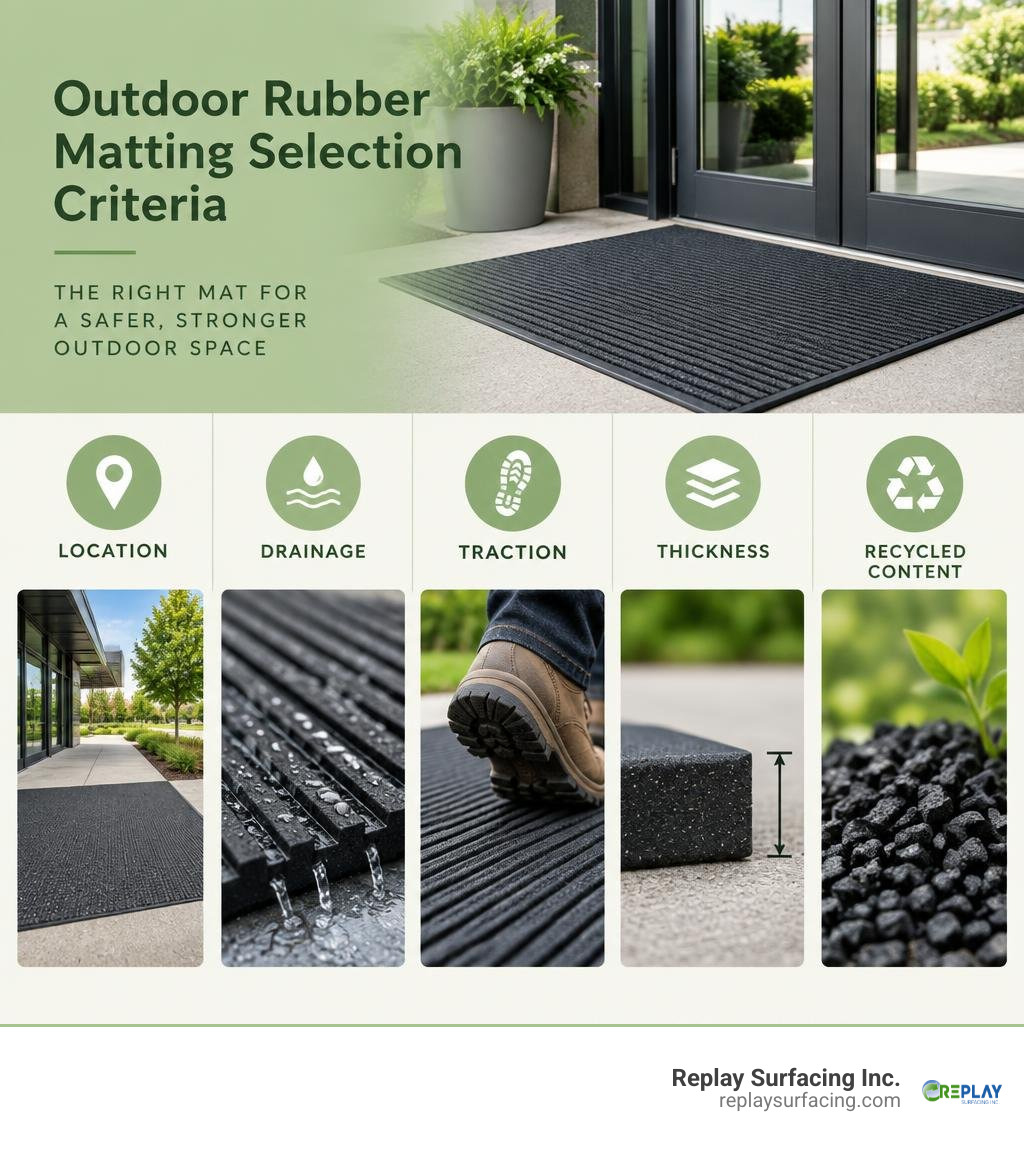
Core Benefits of Outdoor Rubber Matting
Outdoor surfaces take a beating. From scorching summer sun in Tucson, Arizona, to freezing winter slush across Connecticut and Indiana, exterior ground coverings face extreme environmental stressors. Standard concrete spalls, timber decking rots, and asphalt softens under relentless heat. High-grade rubber matting solves these issues by delivering comprehensive resilience across all four seasons.
A primary advantage is enhanced traction. High-traffic exterior walkways benefit immensely from textured surfaces, such as broad-ribbed outdoor rubber matting for anti-slip walkways, which consistently achieves impressive 4/5 slip-resistance and 4/5 wear-resistance ratings. By channeling water away from the contact plane, ribbed and textured profiles keep shoes and boots firmly planted even during torrential downpours in Lake Charles, Louisiana, or damp winter mornings in Beaverton, Oregon.
Thermal resilience is equally critical. Premium exterior mats operate seamlessly within an extreme range of -20°C to +80°C. They do not turn brittle during sub-zero cold snaps in Indiana, nor do they melt, warp, or crack under the direct desert sun of Tucson. Integrated UV stabilizers prevent premature fading and surface chalking, making these surfaces reliable for both covered and semi-exposed outdoor entrances.
Beyond grip and thermal stability, heavy-duty vulcanized and recycled tire rubber provides natural noise dampening and thermal insulation. Whether installed on an exposed steel ramp, a noisy commercial entranceway, or an outdoor fitness patio, tough outdoor rubber mats absorb vibrational energy and protect the underlying concrete or asphalt subfloors from cracking under repeated stress.
Types and Formats of Exterior Rubber Mats
Selecting the ideal surfacing format requires evaluating your space’s specific demands—whether you need quick-draining tiles for a wet deck or broad, continuous roll matting for an accessible ramp.
| Mat Type | Standard Thicknesses | Surface Profile | Best Applications | Primary Advantage |
|---|---|---|---|---|
| Entrance Scraper Mats | 5/8 in (16 mm) | Fingertip, Ribbed, Wiper | Building entries, doorways | Traps mud, snow, and moisture |
| Interlocking Tiles | 3/8 in to 1 in (9.5–25 mm) | Cobblestone, Smooth, Perforated | Patios, garden trails, play areas | Modular, DIY-friendly, self-draining |
| Rolled Rubber Runners | 3 mm to 6 mm (1/8–1/4 in) | Broad Rib, Fine Rib, Diamond | Commercial walkways, ramps | Seamless lengths, custom trimmed |
| Heavy Impact Stall Mats | 1/2 in to 3/4 in (12.7–19 mm) | Button top, Textured, Diamond | Stalls, wash bays, outdoor gyms | Absorbs extreme point loads |
Heavy-Duty Entrance and Scraper Mats
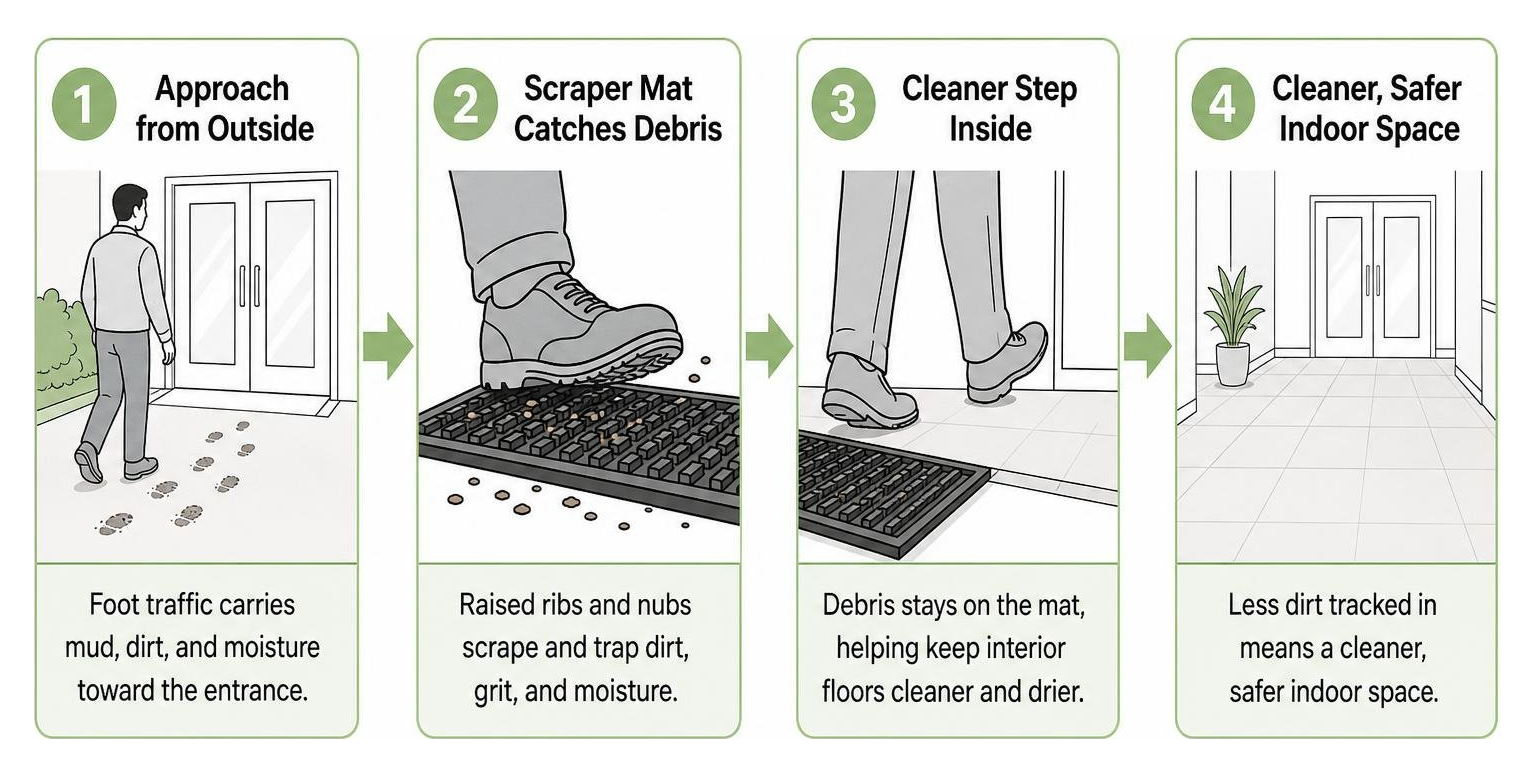
Exterior entryways serve as the first line of defense against outdoor grit, mud, and water. Commercial-grade outdoor rubber floor mats utilize flexible fingertip nubs or raised scraping ridges that dislodge dirt from footwear before it crosses the threshold.
In busy commercial corridors throughout Charlotte and Raleigh, North Carolina, installing heavy duty entrance mats protects delicate interior flooring while minimizing building maintenance costs. Bevelled safety borders ensure smooth transitions for wheelchairs, carts, and strollers, eliminating trip hazards along high-volume entry points.
Interlocking Tiles and Roll Formats for Outdoor Rubber Matting
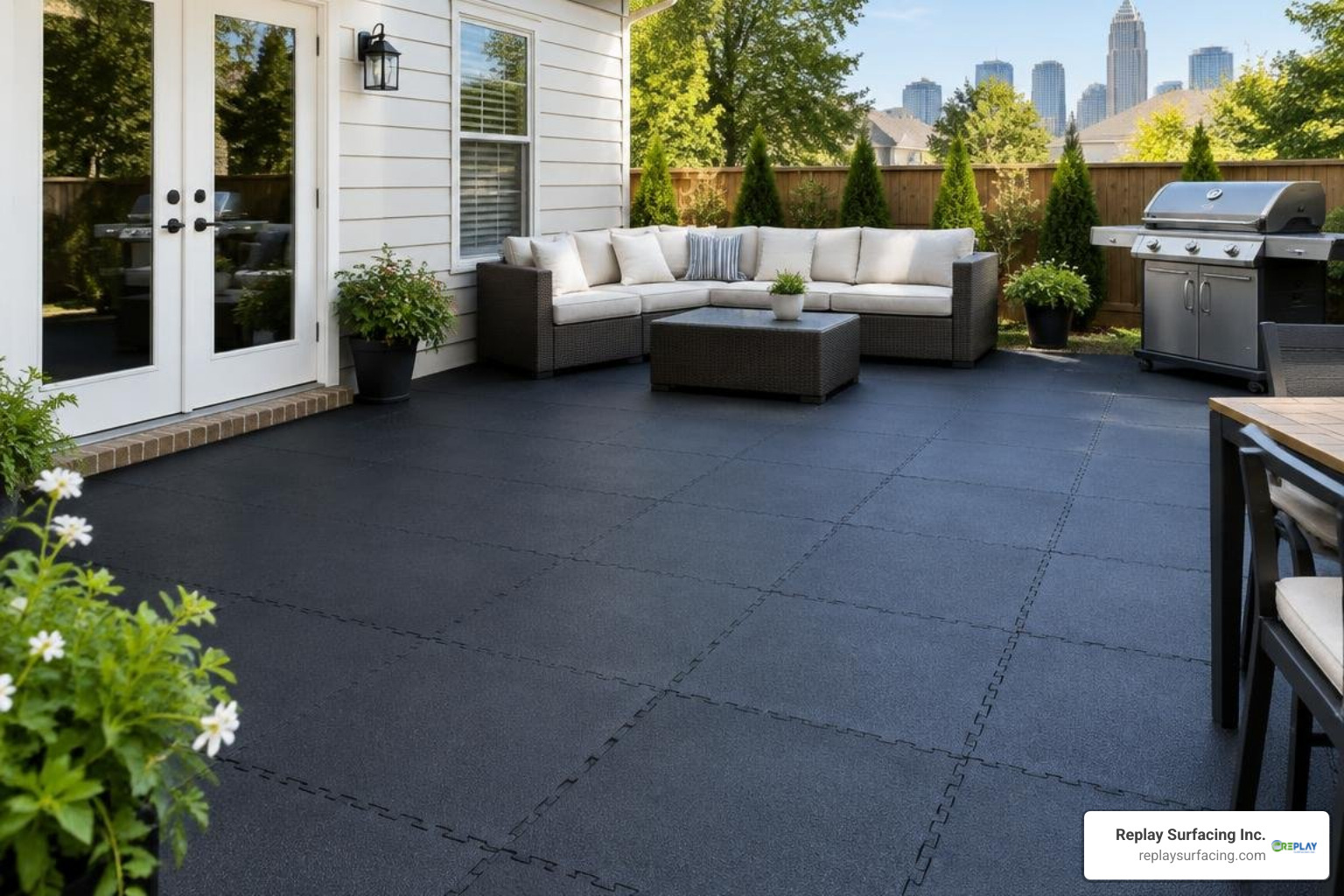
For larger exterior surface areas, modular systems offer practical scalability. Interlocking tiles let facility managers and homeowners configure tailored shapes across patios, deck surrounds, and garden paths. Utilizing interlocking rubber pathway tiles allows quick replacement of individual damaged sections without tearing up the entire layout.
Continuous rolled mats provide uniform, streamlined coverage across long corridors, wheelchair ramps, and loading docks. Sourced in widths between 90 cm and 120 cm and lengths up to 10 meters, rolls eliminate frequent seam interruptions. They can be loose-laid for temporary seasonal use or permanently adhered over concrete ramps to secure wet footpaths during damp seasons in Nashville, Tennessee, and Sanford, North Carolina.
Specialized Impact and Safety Mats
When fall protection or heavy equipment cushioning is required, standard thin mats are insufficient. Thicker vulcanized and recycled rubber systems absorb severe impacts and redistribute shock away from the base substrate.
- Play Areas: Shock-attenuating play yard rubber surfaces cushion slips, trips, and falls around backyard swing sets, municipal parks, and daycares.
- Equestrian and Agricultural: 3/4-inch heavy-duty stall mats provide thermal insulation from cold sub-bases and reduce joint strain on horses and livestock in rural Indiana and Columbia, South Carolina.
- Outdoor Athletics: Dedicated outdoor sports surfacing provides consistent ball bounce, joint-friendly traction, and all-weather durability for neighborhood basketball and multi-sport courts.
Key Applications Across Commercial and Residential Spaces
The high adaptability of rubber surfacing makes it a leading choice across commercial, residential, agricultural, and industrial sectors.
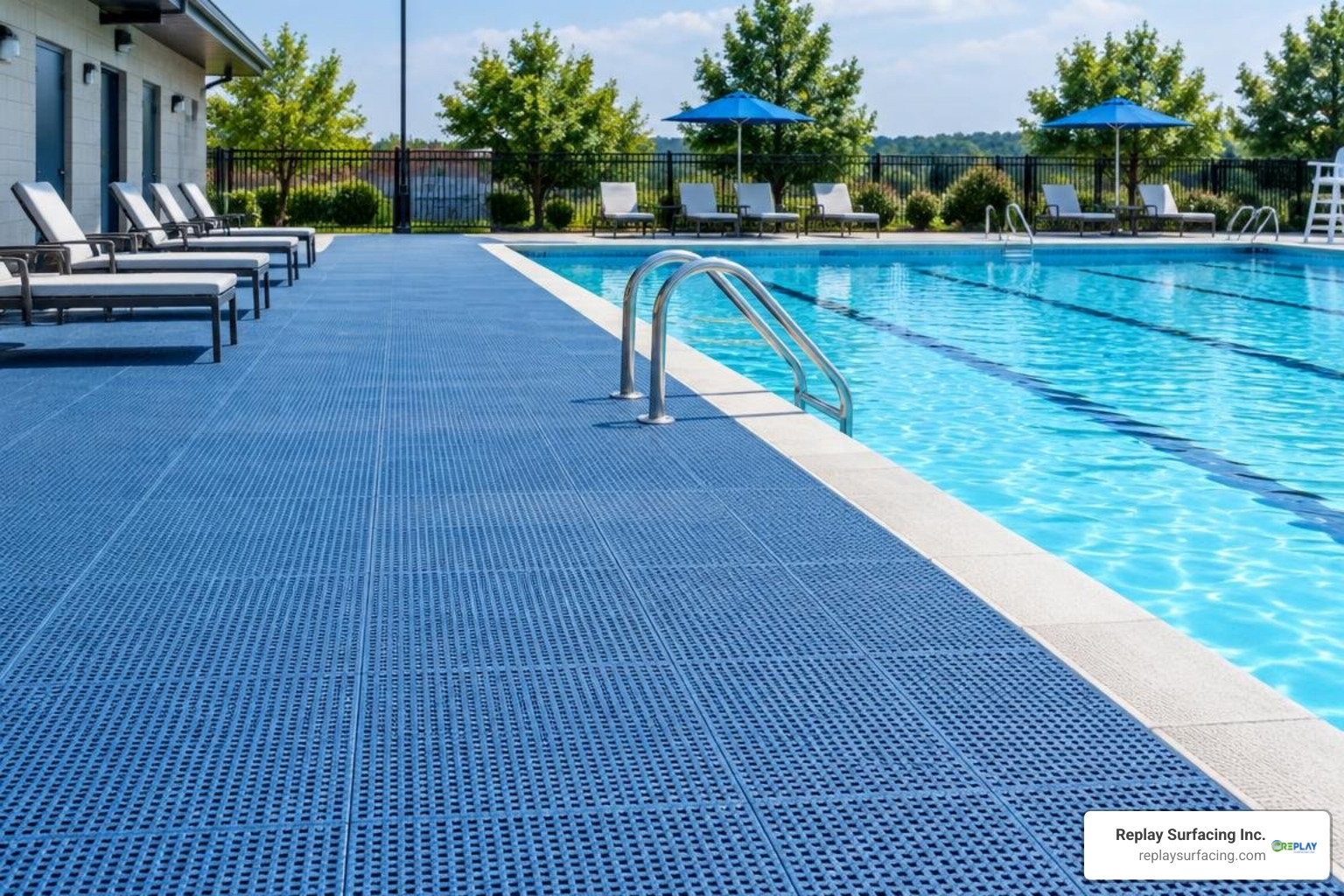
Around outdoor pools, splash pads, and lakeside docks, standing water creates immediate slip liabilities. Perforated rubber mats allow chlorinated or fresh water to drain freely through open cavities, maintaining a dry, textured contact surface for bare feet. In commercial facilities from Connecticut to Tucson, exploring durable outdoor rubber matting options ensures compliance with strict accessibility and safety standards while preventing poolside slips.
For landscaping and recreation, recycled rubber walkway systems provide flexible, permeable trails through parks, botanical gardens, and community centers. Unlike poured concrete, flexible rubber moves naturally with freeze-thaw soil cycles, avoiding frost heaves and root upheavals.
Enhancing Safety on High-Traffic Patios and Walkways
Backyard entertaining areas, hotel courtyards, and brewery patios handle continuous foot traffic, moving patio furniture, and spilled liquids. Facility owners effectively mitigate wear by protecting patio walkways using low-profile, weather-resistant rubber runners.
On inclined outdoor paths and garden trails, broad-ribbed rubber mats stabilize underlying soil, preventing rainwater run-off from eroding delicate mulch and gravel beds. They establish a dependable, accessible surface for guests with limited mobility or strollers traversing uneven terrain across outdoor hospitality spaces in Beaverton, Oregon, and Lake Charles, Louisiana.
Selecting Thickness and Size for Outdoor Rubber Matting
Selecting proper dimensions and thickness balances cost, weight, and operational performance:
- Light Foot Traffic (3 mm to 6 mm): Ideal for standard residential door thresholds, covered garden walkways, and workbench runners. A 6 mm mat is widely favored for higher-traffic commercial pathways.
- Medium Duty & Utility (3/8 Inch / ~9.5 mm): Suitable for home gyms, patio fitness zones, and dog daycares. 3/8-inch mats safely cushion dropped free weights up to 150 pounds without compromising the concrete below.
- Heavy Impact & Industrial (1/2 Inch to 3/4 Inch / ~12.7 mm to 19 mm): Designed for equestrian wash bays, cross-training facilities, weightlifting platforms, and heavy equipment staging. A 4×6-foot, 3/4-inch mat weighs approximately 90 to 100 pounds, ensuring it stays firmly in place without adhesives.
Purchasing from dependable collections like Replay Surfacing’s commercial and home rubber mats often provides 19% to 33% cost savings on rolled rubber sports flooring and multi-mat bundles.
Installation, Maintenance, and Sustainability
Installing exterior rubber mats is straightforward and requires minimal specialized tools. For most flat, solid substrates—such as broom-finished concrete, exterior decking, or packed crushed stone—mats can be loose-laid. Their substantial material density (averaging 3 kg/m² even for thin 3 mm roll stock) ensures they remain anchored under regular foot traffic.
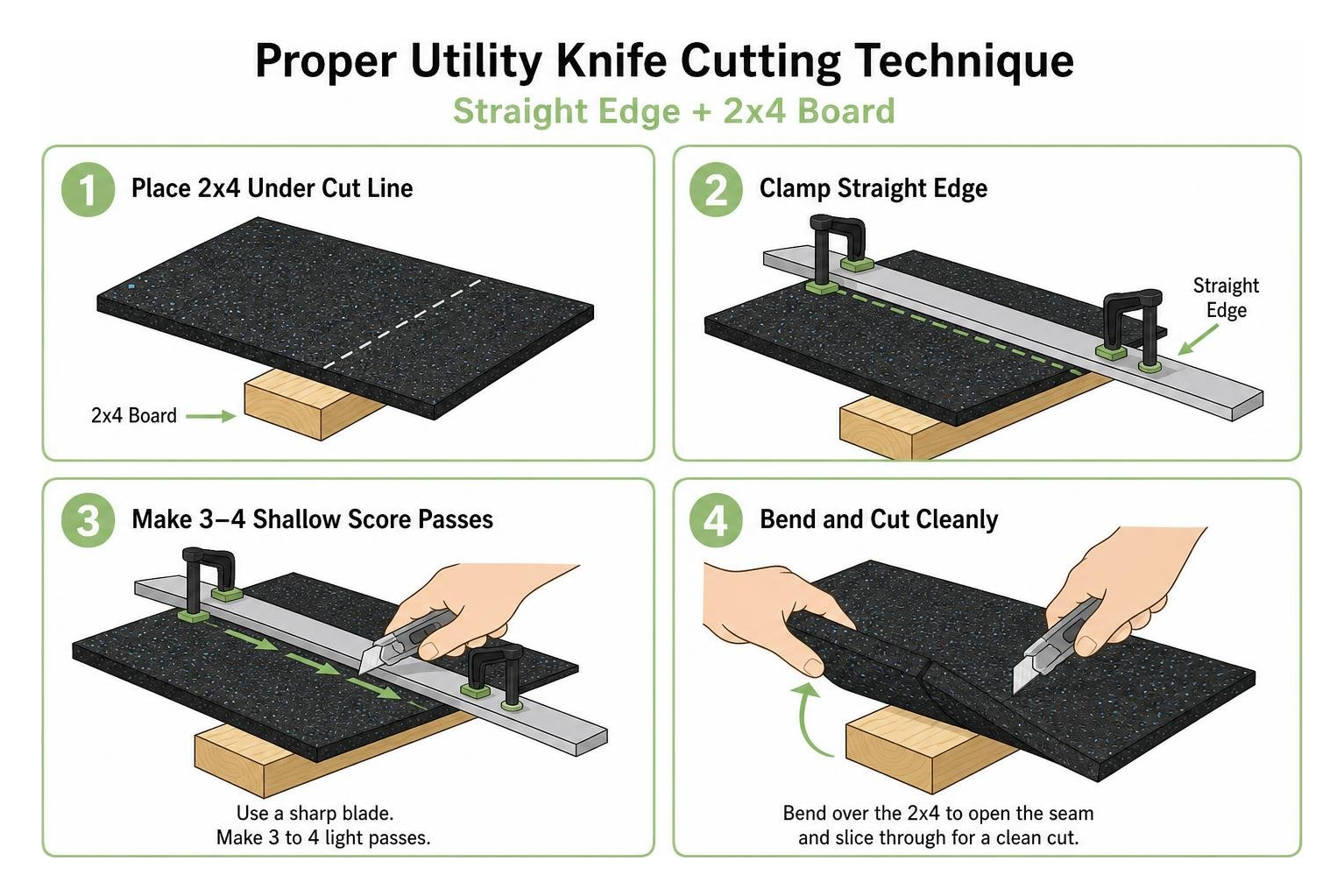
When custom shaping is necessary around patio posts, fence lines, or curved garden borders, cutting rubber requires a simple technique:
- Place a sacrificial 2×4 timber board directly beneath the planned cut line.
- Clamp a rigid metal straight edge along your cut marks.
- Use a heavy-duty utility knife with a fresh, sharp blade to make 3 to 4 shallow score passes rather than trying to force the blade through in one stroke.
- Bending the rubber slightly over the 2×4 opens the cut seam, allowing the knife to slice through cleanly without binding.
Routine maintenance is equally simple. Daily debris can be swept or blown off with a leaf blower. For deeper cleaning, scrub the surface using warm water and a neutral pH detergent, then rinse thoroughly with a garden hose. Avoid solvent-based petroleum cleaners or harsh bleach, as these degrade natural and synthetic elastomers over time.
New rubber products occasionally carry an initial vulcanization scent. To eliminate this odor quickly, clean both sides with mild soapy water and let the mats sun-cure outdoors in a well-ventilated space for several days before putting them into service.
Sustainability sits at the core of modern surfacing. Choosing eco-friendly outdoor rubber matting prevents whole scrap tires from crowding landfills or posing fire hazards. By mechanically shredding discarded tires into clean crumb rubber and vulcanizing it into long-lasting mats, we create durable, closed-loop surfacing solutions. Furthermore, mats manufactured from 100% rubber are fully recyclable at the end of their operational lifespan or can be repurposed by local animal shelters and rescue centers for comfortable pet bedding.
Frequently Asked Questions About Outdoor Rubber Mats
How do you properly cut outdoor rubber mats to fit custom spaces?
To cut heavy outdoor rubber cleanly without jagged edges, elevate the cut line by setting a 2×4 wooden stud underneath the mat. Secure a steel straight edge along your measurement line, lubricate your utility blade with a drop of soapy water, and execute several shallow scoring cuts. As you score, the mat will bend over the wood, opening the gap and allowing the blade to pass through smoothly with minimal effort.
Can outdoor rubber matting withstand extreme winter freezing and summer heat?
Yes. High-performance outdoor rubber mats feature an operational temperature threshold ranging from -20°C to +80°C (-4°F to +176°F). They are built to handle rapid temperature swings without warping, rotting, or snapping. Whether enduring freezing snow in Connecticut and Indiana or severe UV exposure in Tucson, Arizona, the elastomeric structure expands and contracts naturally without surface degradation.
Are outdoor rubber mats eco-friendly and recyclable?
Yes. Many outdoor rubber mats are manufactured using recycled passenger and commercial tires, transforming end-of-life waste into functional surfacing. Products made entirely of 100% vulcanized rubber can be re-ground at specialized industrial recycling facilities. Used mats in good structural condition can also be donated to equestrian facilities, dog kennels, or animal shelters for stall and floor padding.
Conclusion
Outdoor rubber matting delivers an exceptional balance of slip resistance, all-weather durability, subfloor protection, and low-maintenance convenience. Whether you are outfitting a busy commercial entrance in Charlotte, upgrading an outdoor fitness deck in Nashville, or creating a safe playground walkway in Columbia, rubber surfaces provide the dependable grip and shock absorption modern spaces require.
At Replay Surfacing Inc., we are committed to turning post-consumer tire rubber into high-performance, eco-friendly surfaces that stand up to the elements year after year. If you are ready to enhance exterior safety and eliminate slip hazards across your facility, explore versatile outdoor walkway mats to find the ideal layout, thickness, and texture for your upcoming project.