
Why Beaverton OR Playground Safety Surfacing Matters More Than You Think
Beaverton OR playground safety surfacing is one of the most important — and most overlooked — decisions a facility manager or school district can make.
Here’s a quick answer to what most people are looking for:
Best playground surfacing options for Beaverton, OR:
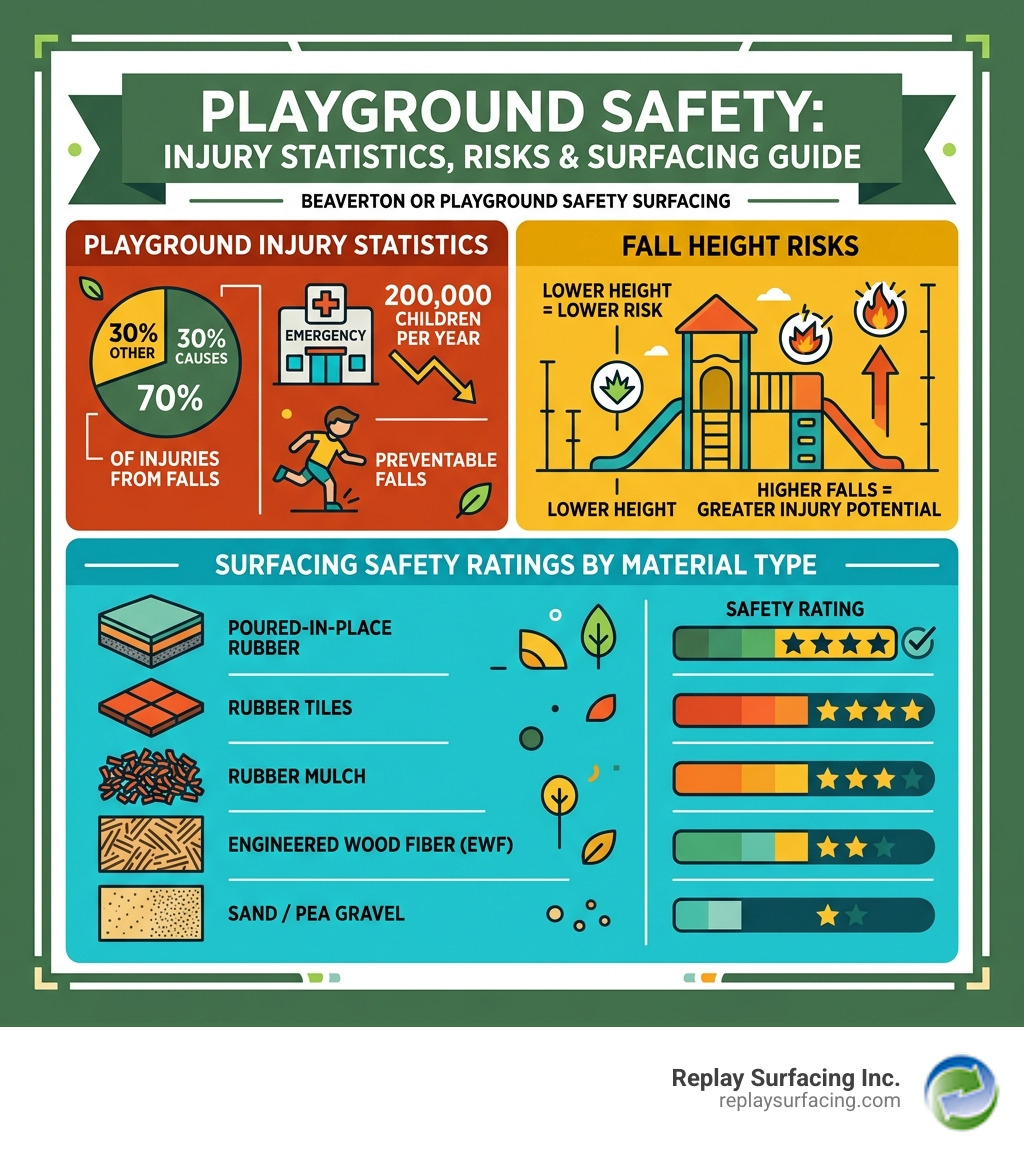
| Surfacing Type | Safety Rating | ADA Compliant | Maintenance | Best For |
|---|---|---|---|---|
| Poured-in-Place Rubber | Excellent | Yes | Low | Schools, parks, high-traffic areas |
| Rubber Tiles | Very Good | Yes | Low-Medium | Modular or phased installs |
| Rubber Mulch | Good | Yes | Medium | Budget-conscious projects |
| Engineered Wood Fiber (EWF) | Good | Conditional | High | Lower-use areas |
| Sand / Pea Gravel | Fair | No | High | Not recommended for Beaverton’s wet climate |
The stakes are real. According to the CDC, around 200,000 children visit the emergency room every year because of playground injuries. The CPSC reports that nearly 70% of those injuries come from falls — and most of those falls happen onto unsafe or poorly maintained surfaces.
Beaverton’s wet winters and mild summers add another layer of complexity. Surfaces that work fine in dry climates can become slippery, waterlogged, or moldy here. Choosing the wrong material isn’t just a maintenance headache — it’s a safety risk.
I’m Landon Olson, operator of Replay Surfacing and a mechanical engineer with an MBA, and I’ve spent my career turning recycled rubber into safer, more sustainable Beaverton OR playground safety surfacing solutions. In this guide, I’ll walk you through everything you need to make a confident, informed decision for your community.
The Critical Role of Beaverton OR Playground Safety Surfacing
When we talk about playground safety, we aren’t just talking about keeping knees from getting scraped. We are talking about preventing traumatic brain injuries and long-term physical trauma. In Beaverton, where our community pride shines through our parks and schools, the “foundation” of the playground is its most vital safety feature.
Understanding the Standards: ASTM F1292 and More
To ensure a surface is truly safe, we look at several technical benchmarks. The primary standard is ASTM F1292, which measures impact attenuation. This standard uses two main metrics:
- G-max: This measures the maximum acceleration (shock) experienced during an impact.
- Head Injury Criterion (HIC): This evaluates the likelihood of a head injury arising from a fall.
For a surface to be compliant, it must keep HIC scores below 1,000. However, at Replay Surfacing, we aim for much higher safety margins. For example, some advanced poured-in-place systems can achieve HIC scores near 400, which is significantly safer than the bare minimum. You can learn more about these requirements in our guide to Safety First: Understanding Playground Surface Impact Standards.
Beyond impact, we must consider Shock Absorbing Playground Surfaces that meet ADA compliance. This ensures that children using wheelchairs or mobility aids can navigate the surface easily without getting stuck in loose-fill materials like sand or deep wood chips.
Navigating Beaverton’s Rainy Climate with Proper Drainage
Beaverton is beautiful, but let’s be honest: it rains. A lot. From October through May, our playgrounds face a constant barrage of moisture. This makes permeability a top priority for Beaverton OR playground safety surfacing.
If a surface doesn’t drain well, you end up with standing water, which leads to:
- Slip hazards: Puddles on top of rubber or wood can become incredibly slick.
- Mold and Mildew: Organic materials like wood chips can rot or grow fungus in the damp shade.
- Freeze-Thaw Damage: Water trapped in the surface can freeze, expanding and cracking the material.
Local organizations like the Tualatin Hills Park & Recreation District (THPRD) prioritize high-drainage solutions to keep parks open year-round. A great example of this is the New Beaverton City Park play structure now open, which recently transitioned from bark chips to permanent safety flooring to ensure better durability and accessibility regardless of the weather.
Why Poured-in-Place is the Gold Standard for Beaverton OR Playground Safety Surfacing
If you visit a modern school or a high-traffic city park in Beaverton, you’ll likely see a seamless, colorful floor. This is Poured-in-Place (PIP) rubber. We consider this the “Gold Standard” for several reasons:
- Customization: Because it is mixed and poured on-site, we can create intricate designs, school logos, or “learning landscapes” with different colors.
- Safety: It offers the best impact protection for tall equipment.
- Accessibility: It is entirely seamless, meaning no trip hazards and 100% wheelchair accessibility.
- Durability: With a high-quality TPV or EPDM wear layer, it stands up to UV exposure and heavy foot traffic.
For a deeper dive into why this material is so popular, check out Poured-in-Place Rubber: The Ultimate Playground Safety Surface and our The Ultimate Guide to Professional Rubber Playground Installation.
Comparing Unitary vs. Loose-Fill Surfacing Options
When choosing Beaverton OR playground safety surfacing, you generally choose between two categories: Unitary (solid) and Loose-Fill (granular).
| Feature | Poured-in-Place (Unitary) | Rubber Tiles (Unitary) | Engineered Wood Fiber (Loose-Fill) |
|---|---|---|---|
| Initial Cost | High | Medium-High | Low |
| Maintenance | Very Low | Low | High (requires raking/topping off) |
| ADA Access | Excellent | Excellent | Conditional (if compacted) |
| Lifespan | 10-15+ Years | 10-12 Years | 3-5 Years (needs replacement) |
| Drainage | Excellent | Good | Moderate |
The Maintenance Trap
While Engineered Wood Fiber (EWF) has a lower upfront cost, it can be a “maintenance trap” in Beaverton. Research shows that loose-fill materials compress by about 25% over time. In our rainy climate, EWF can become displaced under swings and slide exits, creating “pitting.” If these pits aren’t refilled, the “critical fall height” protection disappears, making the playground unsafe.
Conversely, Playground Safe Mulch made of recycled rubber stays in place better than wood and doesn’t rot, though it still requires occasional raking. For those looking for the “set it and forget it” option, unitary surfaces are almost always the better long-term investment. See our Best Playground Flooring Ultimate Guide for a full breakdown.
Sustainable Benefits of Recycled Rubber in Beaverton OR Playground Safety Surfacing
At Replay Surfacing, we are passionate about the environment. Our products are born from the idea of transforming a waste product — old tires — into a community asset.
- Landfill Diversion: Every playground we install keeps hundreds (sometimes thousands) of tires out of Oregon landfills.
- Eco-Friendly Manufacturing: By using recycled materials, we reduce the need for “virgin” plastics and petroleum-based products.
- Durability: Recycled rubber is incredibly resilient. It doesn’t splinter like wood or attract pests.
We’ve seen successful implementations of these sustainable materials in projects like THPRD brings new play equipment, upgrades to McMillan Park | THPRD. By choosing recycled rubber, Beaverton schools and parks are making a choice that protects both children and the planet. This is a core part of Municipal City Park Rubber Surfacing strategies across the Pacific Northwest.
Installation and Maintenance for Long-Term Safety in Oregon
Proper installation is just as important as the material itself. You could buy the best rubber in the world, but if it’s poured over a poorly prepared base, it will fail.
The Installation Process
- Sub-base Prep: We typically use a compacted stone aggregate base. This ensures maximum drainage. In some cases, like the Beaver Acres Track project, asphalt or concrete might be used as a base for specific athletic applications.
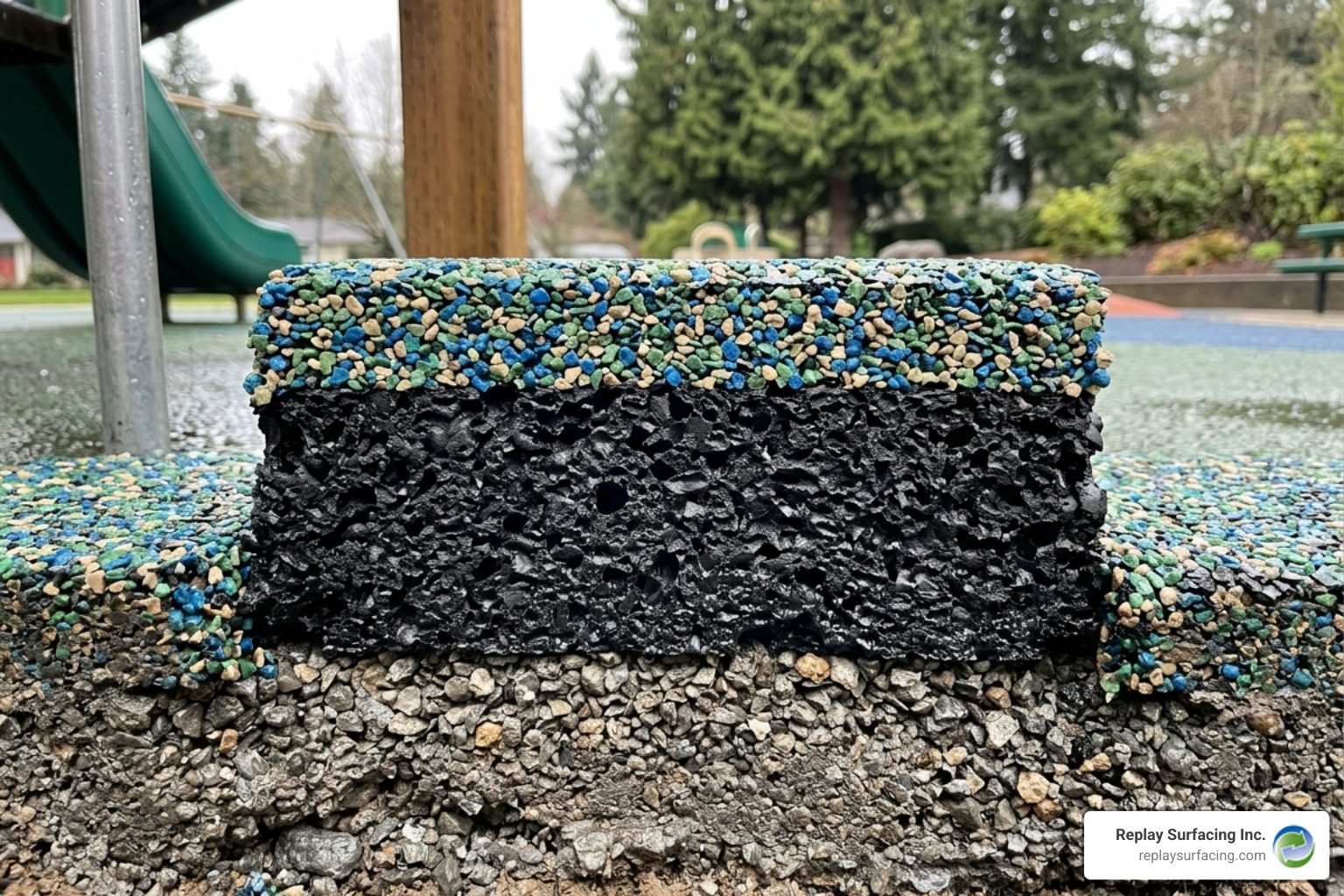
- The Cushion Layer: A thick layer of recycled tire buffings mixed with a polyurethane binder is laid down. The thickness depends on the “fall height” of your equipment (e.g., a 10-foot slide needs a thicker cushion than a 4-foot climber).
- The Wear Layer: A 1/2-inch top layer of EPDM or TPV granules provides the color and UV resistance.
Keeping it Safe
While rubber surfaces are low maintenance, they aren’t “no maintenance.” To ensure long-term safety, we recommend:
- Annual Inspections: Check for “wear patches” under high-use areas like swings.
- Cleaning: Use a leaf blower to remove debris and occasionally power wash with a mild detergent to keep colors vibrant.
- Professional Re-coating: Every few years, a “top coat” of binder can be applied to keep the surface flexible and prevent granulation.
Our team of Playground Safety Surfacing Installers specializes in these precision steps to ensure your warranty remains valid and your kids stay safe.
Frequently Asked Questions about Beaverton Playground Surfaces
How much does playground surfacing cost in Beaverton?
The cost of Beaverton OR playground safety surfacing varies widely based on the material and the site conditions.
- Loose-fill (Wood/Rubber Mulch): Generally $3–$8 per square foot installed.
- Unitary (PIP/Tiles): Generally $12–$20+ per square foot installed.
Factors that influence price include the required thickness (determined by fall height), the state of the existing site (does old dirt need to be hauled away?), and the complexity of the design. While the upfront cost of PIP is higher, the lack of annual “topping off” costs often makes it cheaper over a 10-year lifecycle. You can find more pricing details at Playground Surfacing.
Is rubber surfacing ADA compliant for local parks?
Yes! In fact, poured-in-place rubber and rubber tiles are among the best options for meeting ADA standards. Unlike sand or wood chips, which require significant force to push a wheelchair through, rubber surfaces provide a firm, stable, and slip-resistant path. This is essential for School Playground Surfacing where inclusivity is a legal and moral requirement.
How does the local weather affect surface lifespan?
Beaverton’s climate is actually quite kind to rubber compared to the extreme heat of Arizona or the deep freezes of the Midwest. However, the constant moisture means you must prioritize UV-stable binders and high-quality drainage. Without proper drainage, the sub-base can shift, leading to cracks in the rubber. We tailor our Daycare Childcare Playground Surfacing installs specifically for the Pacific Northwest to combat these issues.
Conclusion: Choosing the Best Surface for Your Community
Selecting the right Beaverton OR playground safety surfacing is a legacy decision. The surface you choose today will protect thousands of children over the next decade. At Replay Surfacing Inc., we pride ourselves on being more than just installers; we are partners in building safer, more sustainable communities.
Whether you are a parent pushing for a safer school yard, a city planner looking for durable park solutions, or a daycare owner needing an inclusive play area, we have the expertise to help. By recycling tires into high-performance safety surfaces, we ensure that the only thing “falling” on your playground is the rain — and even that will drain away safely.
For those looking to protect other areas of their facility, you can also find More info about rubber deck coating on our site. Let’s build something safe together.