
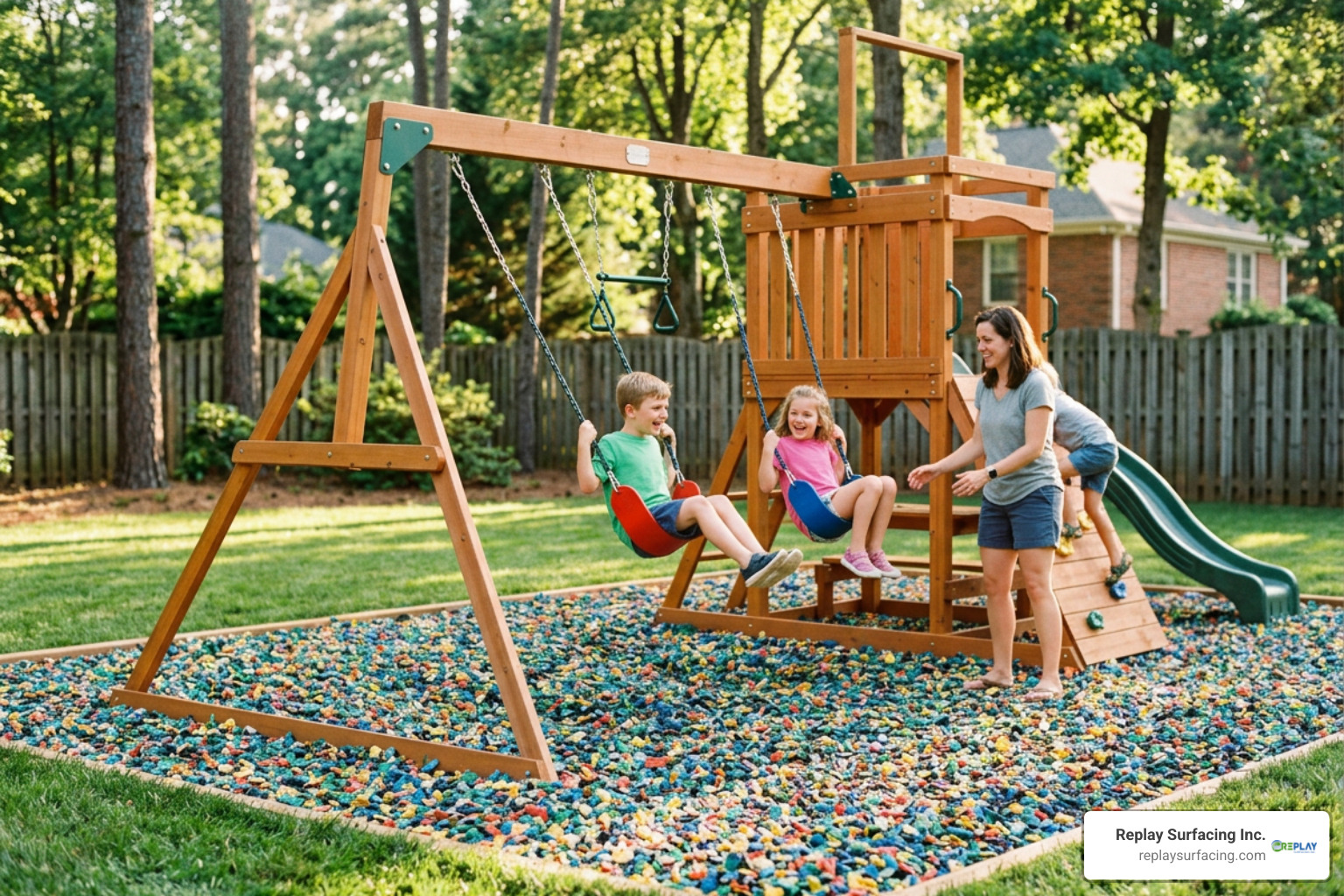
The Comprehensive Guide to Rubber Mulch Charlotte NC Playgrounds and Landscapes
Living in the Queen City brings a unique mix of outdoor beauty and regional climate hurdles. Between intense summer humidity, heavy thunderstorm downpours, and our notorious native soil, outdoor surfaces take a severe beating throughout the seasons. When evaluating materials for your outdoor spaces, recycled rubber mulch stands out as a high-performing choice specifically suited for recreational spaces, play structures, and high-traffic borders across residential and commercial properties.
Unlike conventional wood chips, which break down rapidly in the Piedmont heat and foster mold, recycled tire mulch a durable solution for modern landscaping remains intact season after season. It provides reliable weed suppression by blocking sunlight from reaching germinating seeds, while advanced UV-resistant coatings ensure the rich color won’t fade into a dull gray after a single summer. For property owners across Charlotte, Raleigh, and Sanford who want clean, durable play zones without annual top-offs, rubber mulch is engineered to endure.
Playground Safety Standards for Rubber Mulch Charlotte NC Projects
Safety is paramount whenever children take to swing sets, jungle gyms, and climbing towers. Standard landscape mulch, gravel, or wood chips do not offer the consistent impact attenuation required to cushion serious falls. Using certified playground safe mulch ensures the surface complies with rigorous criteria set by ASTM International, including ASTM F1292 for impact attenuation and ASTM F1951 for wheelchair accessibility.
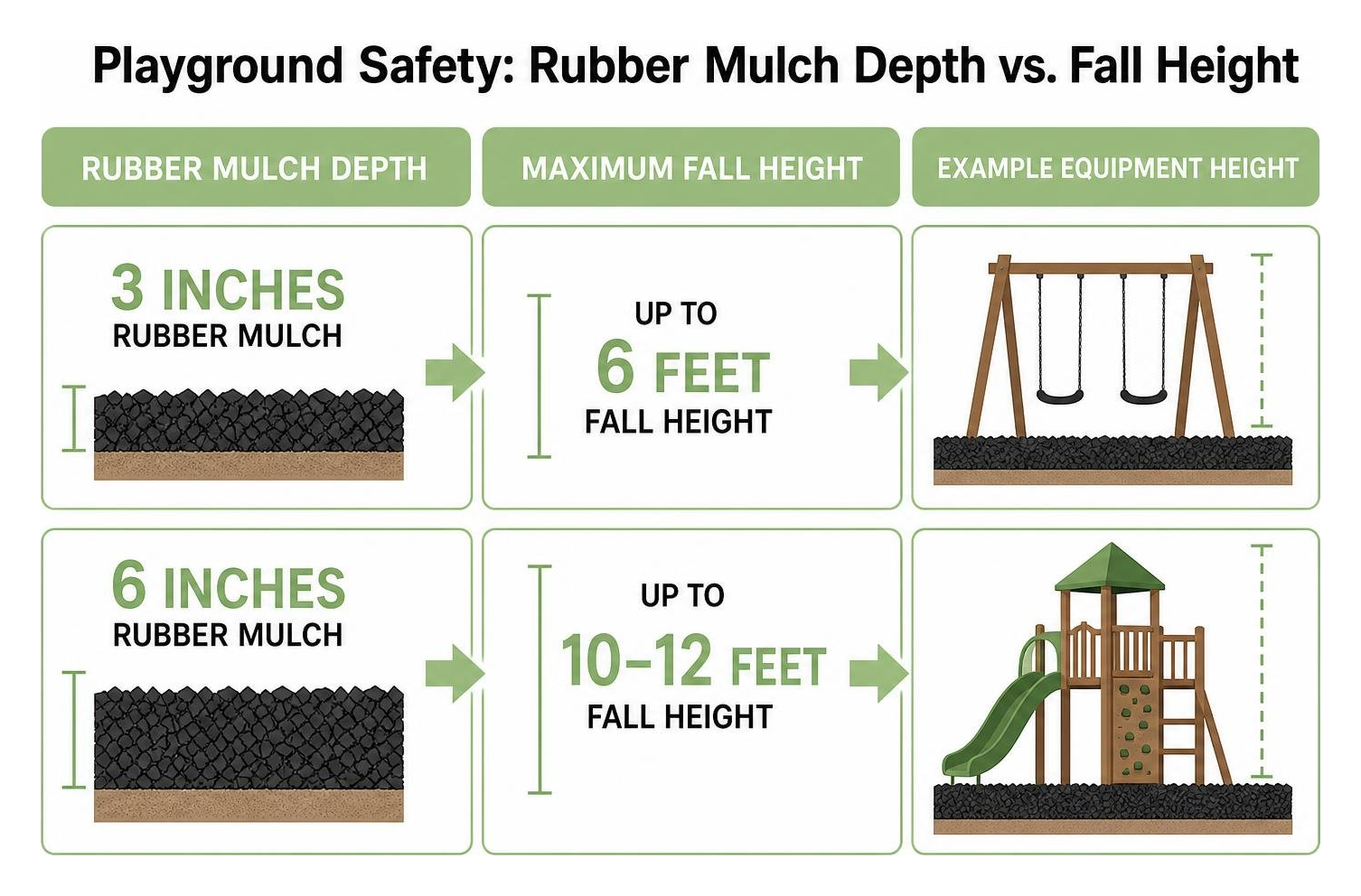
Proper installation depth is critical to guarantee safety ratings. As outlined in the definitive guide to rubber mulch depth playground requirements, loose-fill rubber surfacing provides unmatched shock absorption compared to rigid surfaces. A 3-inch layer of rubber mulch cushions falls from equipment up to 6 feet high, while a 6-inch layer can protect against falls from up to 10 to 12 feet. By investing in safe landings a guide to rubber mulch for swingsets and climbers, you ensure your backyard or community play zone offers true peace of mind all year round.
Gardens vs. Play Areas: Managing Charlotte Red Clay and Summer Heat
Piedmont red clay soil presents distinct landscaping challenges: it compacts easily, drains slowly when wet, and bakes rock-hard in direct sun. Understanding the differences between dedicated play zones and living plant beds helps you select the right ground cover for each area:
- Play Areas and Pathways: Rubber mulch excels here. It allows water to pass through freely without turning into sticky red mud, stays in place during torrential Carolina downpours, and creates a clean, cushioned ground cover that prevents erosion.
- Flower and Vegetable Beds: For living plants, traditional organic ground covers are generally preferred. High-quality non-toxic rubber mulch does not leach harmful chemicals, but it also does not break down to deposit organic matter into dense clay. Additionally, rubber chips absorb radiant solar heat during July and August, which can stress delicate root systems if installed directly against tender plant stems.
If you use rubber mulch in decorative borders adjacent to planting beds, leave a 2- to 3-inch buffer around plant bases or pair it with heat-tolerant native shrubs. For standard garden beds, sourcing traditional organic hardwood or triple-shredded bark mulch provides the natural breakdown that enriched topsoil requires.
Cost Analysis and Longevity: Rubber Mulch Investment and Durability
While rubber mulch carries a higher upfront cost than wood mulch, its long-term economic value is clear. Wood mulch rots, compacts, and washes away, requiring homeowners across Charlotte to purchase fresh material and pay for labor every spring. High-density rubber chips do not decay, blow away in summer gusts, or compress under normal foot traffic.
| Feature / Expense Factor | Traditional Wood Mulch (10-Year Cycle) | Premium Recycled Rubber Mulch (10-Year Cycle) |
|---|---|---|
| Initial Material Cost | Low ($35–$50 per yard) | Moderate to High ($85–$140 per yard) |
| Annual Replenishment | Mandatory (Top-off 1–2 inches every spring) | None required (occasional raking only) |
| 10-Year Total Investment | High (Initial cost + 9 years of re-mulching & labor) | Low (Single initial investment) |
| Decomposition & Rot | Decomposes within 12 months | Does not rot, mold, or break down |
| Pest & Termite Attraction | Can harbor termites, carpenter ants, and fungi | Inert material does not attract pests |
| Impact Attenuation | Degrades quickly as chips compact | Retains shock absorption for over a decade |
To explore detailed pricing breakdowns, check out our rubber mulch cost guide 2026 and review the cost of rubber mulch per yard to plan your project budget accurately.
Calculating Material: Cubic Yards, Tons, and Depth Requirements
Estimating your required volume prevents shortages during installation. Rubber mulch is typically measured and sold either by weight or volume.
- By Volume: One cubic yard equals 27 cubic feet. A single yard covers approximately 100 square feet at a depth of 3 inches (ideal for standard play equipment borders and walkways). If you need bulk sizing, calculating your space with rubber mulch by the yard ensures you order the exact amount.
- By Weight: Because rubber is denser than dried bark, one ton typically covers between 400 and 450 square feet at a 3-inch depth. You can calculate bulk weight options using our guide to rubber mulch per ton.
Always install a secure perimeter border—such as composite edging, timber curbs, or rubber borders—to contain the loose-fill material and preserve your specified depth over time.
Delivery, Sourcing, and Proper Installation Best Practices
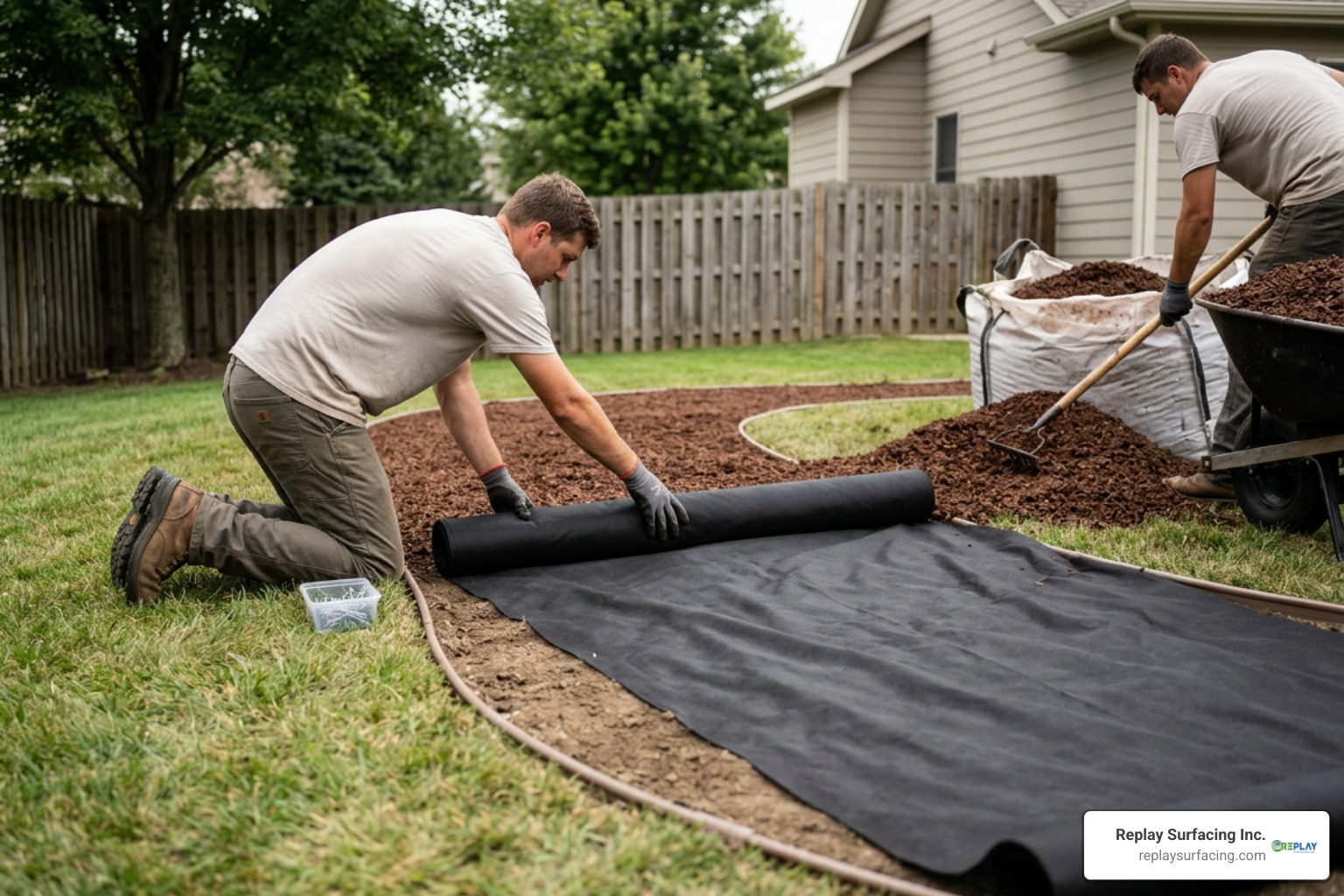
A flawless, durable surfacing project depends on site preparation. Following a structured installation sequence ensures your play yard stays clean, drains properly, and prevents weeds from penetrating the surface.
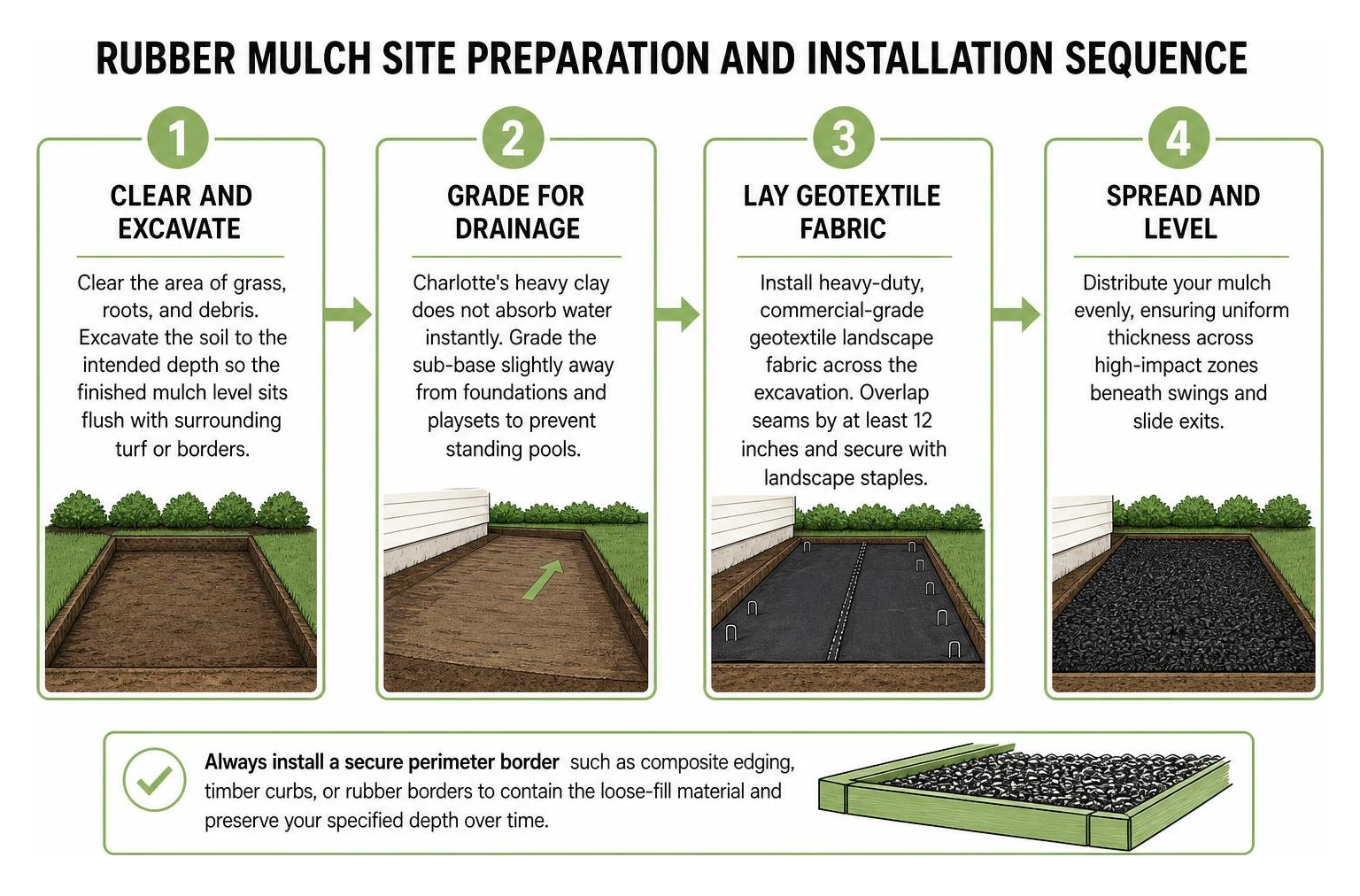
- Clear and Excavate: Clear the area of grass, roots, and debris. Excavate the soil to the intended depth so the finished mulch level sits flush with surrounding turf or landscape borders.
- Grade for Drainage: Charlotte’s heavy clay does not absorb water instantly. Grade the sub-base slightly away from foundations and playsets to prevent standing pools.
- Lay Geotextile Fabric: Install heavy-duty, commercial-grade geotextile landscape fabric across the excavation. Overlap seams by at least 12 inches and secure with landscape staples. This keeps the rubber separate from the clay subsoil while suppressing stubborn weeds.
- Spread and Level: Distribute your mulch evenly, ensuring uniform thickness across high-impact zones beneath swings and slide exits. Learn more step-by-step pointers in our guide on installing rubber mulch.
Buying and Installing Rubber Mulch Charlotte NC Homeowners Trust
Whether you are upgrading a backyard in Ballantyne, Myers Park, or Huntersville—or coordinating projects in nearby regional hubs like Columbia, SC or Raleigh, NC—logistics matter. Sourcing high-grade loose rubber mulch ensures you receive clean, wire-free material that is 99.9% steel-free and treated with durable colorants.
For residential play structures, selecting dedicated rubber mulch for playset configurations guarantees clean delivery in supersacks or bulk truckloads directly to your driveway, streamlining installation from start to finish.
Frequently Asked Questions About Charlotte Mulch Applications
Can rubber mulch overheat and damage plants during hot Charlotte summers?
Yes, rubber mulch can absorb and hold solar heat during sweltering Carolina heat waves. When placed directly against tender green foliage or delicate annual stems, the radiant heat can stress shallow root systems. However, high-quality material is not rubber mulch toxic to the surrounding environment. To safely incorporate rubber surfacing near greenery, maintain a 2- to 3-inch clearance around tree trunks and plant bases, or reserve rubber mulch specifically for play areas, borders, and utility pathways.
How does rubber mulch interact with native Piedmont red clay soil?
Charlotte’s red clay is prone to severe compaction and poor drainage. If wood mulch is placed directly on bare clay, it frequently forms a spongy, waterlogged mat that promotes mold. Using loose-fill playground surfacing over a professional geotextile barrier prevents the rubber from sinking into the clay, allows storm runoff to drain efficiently, and stops red clay mud from splashing onto playground equipment and footwear.
How long does rubber mulch last in North Carolina?
When properly installed, premium rubber mulch lasts 10 to 12 years or longer with minimal upkeep. Unlike wood mulch, which rots away under humid Southern conditions, rubber mulch resists decomposition, insect infestations, and fungal growth. Using rubber mulch for play areas that actually last eliminates annual replacement expenses, requiring only periodic raking to keep high-traffic zones smooth and level.
Conclusion
Upgrading your outdoor recreational areas with premium recycled rubber surfacing provides a resilient, low-maintenance foundation built for Carolina weather. At Replay Surfacing Inc., we divert discarded tires from regional landfills and transform them into durable, impact-absorbing surfacing for backyards, schools, and parks.
If you are ready to eliminate muddy play zones, reduce annual landscaping maintenance, and build a safer environment for your family, discover the benefits of our high-performance play yard rubber mulch today.