

Choose Residential Rubber Playground Tiles in Charlotte, NC for Safer Backyard Play
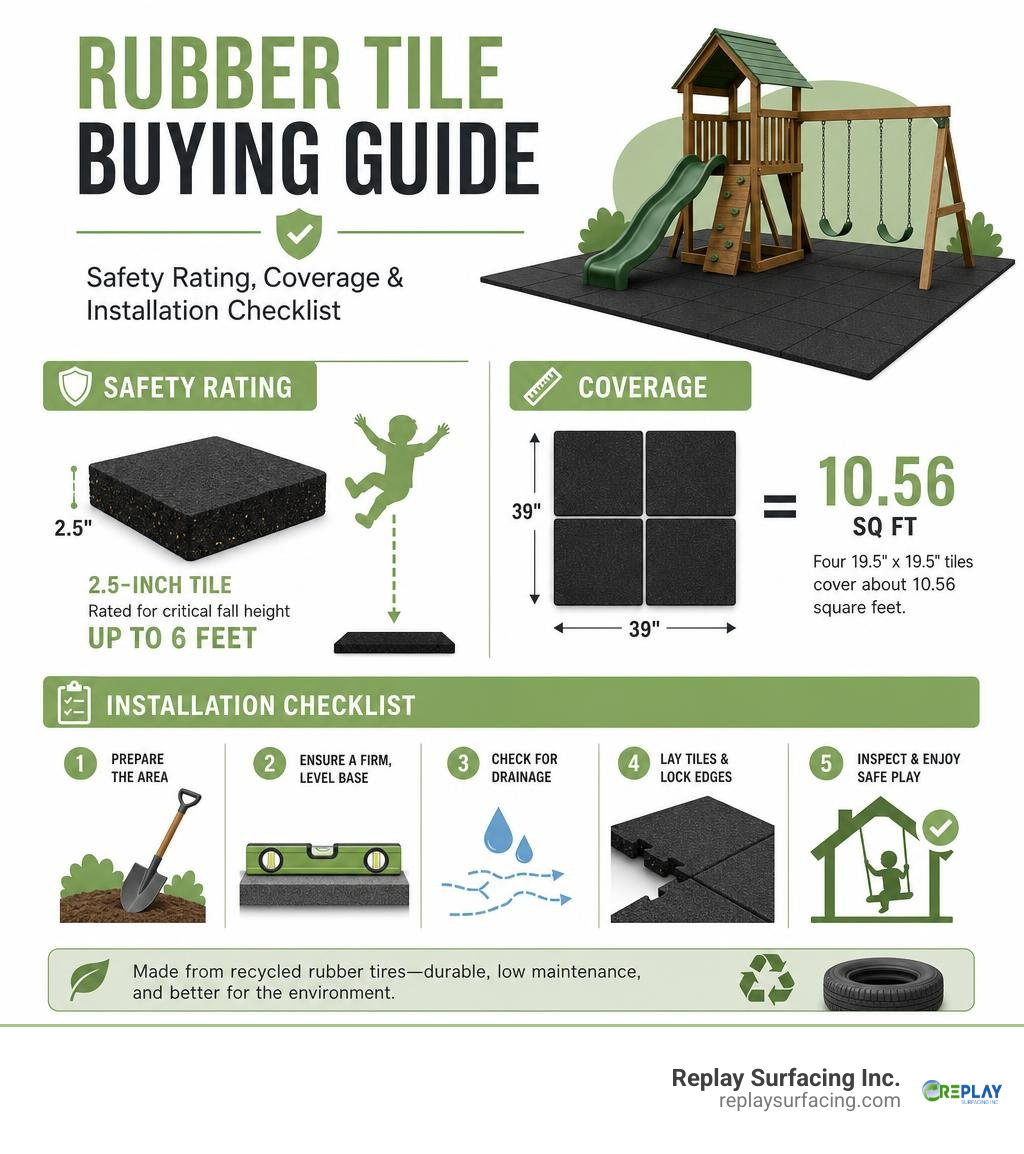
For a safer, lower-maintenance play zone, choose interlocking recycled-rubber tiles sized for your equipment’s fall zone and install them over a firm, level, well-drained base. A 2.5-inch tile can be rated for a critical fall height of up to 6 feet, making it a practical option beneath many residential swing sets and play structures across Charlotte, NC and surrounding areas.
These modular tiles create a soft, stable surface without the frequent raking and replenishing that loose-fill materials need. A four-tile pack with 19.5-inch by 19.5-inch tiles covers about 10.56 square feet, so measuring the full use zone before buying is essential. This roundup compares durable, recycled-rubber options for eco-conscious homeowners and facility managers who want dependable impact protection, simple upkeep, and flexible layouts.
I’m Landon Olson, a mechanical engineer and the operator of Replay Surfacing Inc., where we turn reclaimed tire rubber into useful safety surfacing products. My work in manufacturing, sustainability, and safety surfacing helps homeowners choose residential rubber playground tiles that balance fall protection, durability, and environmental goals.
Residential rubber playground tiles terms simplified:
- home rubber playground flooring
- residential rubber surfacing
- diy rubber playground surface residential
Key Benefits of Residential Rubber Playground Tiles
When planning a backyard play structure, safety and longevity are always top of mind. Backyard play areas face everything from scorching sun in Tucson, AZ to heavy seasonal rains in Beaverton, OR and humid summers across Lake Charles, Louisiana. Traditional wood mulch rots, scatters across the lawn, and hides sharp debris, while pea gravel presents choking hazards and easily gets kicked out of place.
Modular rubber safety surfacing solves these issues permanently. As we cover in The Complete Guide to Residential Rubber Surfacing, rubber safety tiles provide reliable shock absorption, weather resilience, and exceptional cleanliness year-round.
| Feature | Modular Rubber Safety Tiles | Poured-in-Place Rubber | Loose-Fill Wood Mulch / Gravel |
|---|---|---|---|
| DIY Installation | High (interlocking modular system) | Low (requires professional crews) | High (shoveling and spreading) |
| Fall Protection Longevity | Constant certified shock attenuation | Constant certified shock attenuation | Decreases as mulch displaces |
| Maintenance Needs | Low (occasional sweep or rinse) | Very Low (surface wash) | High (constant raking & top-offs) |
| Eco-Friendly Sourcing | High (reclaimed tire rubber) | High (recycled tire base) | Moderate (organic degradation) |
| Reconfigurability | Easy to move, expand, or repair | Permanent installation | Spreads messily into grass |
By transforming scrap tires into high-performance safety surfaces, we keep rubber waste out of local landfills across communities like Charlotte, NC, Raleigh, NC, and Sanford, NC, while giving parents complete peace of mind.
Critical Fall Height and 2.5-Inch Safety Rating
Critical Fall Height (CFH) is a safety measurement established through standard shock attenuation testing. It represents the maximum fall height from playground equipment at which a surfacing system will absorb impact energy well enough to minimize life-threatening head injuries.
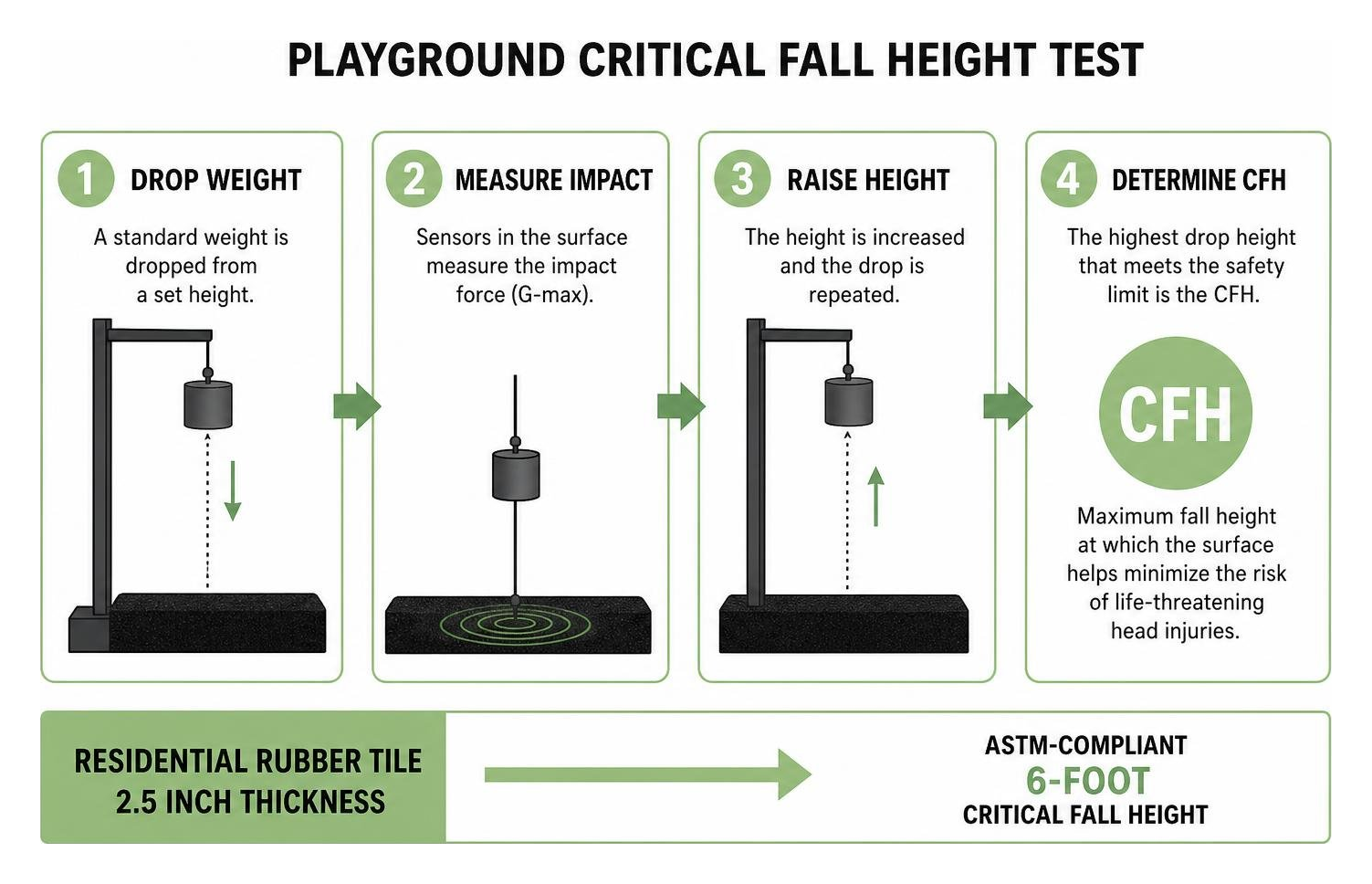
A tile thickness of 2.5 inches is the residential standard for heavy-duty play sets because it achieves an ASTM International-compliant 6-foot critical fall height rating. If your children love climbing the monkey bars or standing up on the swing platform, that 2.5-inch dense rubber core acts as a high-density deceleration cushion. For families interested in chemical safety and material purity, The Definitive Guide to Non-Toxic Playground Tiles highlights how high-grade reclaimed tire crumb bound with non-hazardous polyurethane creates an ultra-safe zone for growing adventurers.
Comparing Modular Tiles to Poured Rubber Surfaces
Both modular tiles and poured-in-place rubber systems offer superior fall safety, but they cater to different homeowner priorities:
- Modular Rubber Tiles: Ideal for DIY enthusiasts who want to install safety surfacing over a weekend. If a section gets stained or worn, you can swap out individual tiles without touching the rest of the layout.
- Poured-in-Place Rubber: Delivers a seamless, custom-shaped finish without any visible joints, often chosen for sprawling multi-level commercial playscapes or high-end residential patios.
For an in-depth breakdown of how these surfacing options perform in modern backyards from Connecticut to Indiana, read Playground Flooring for Your Backyard Oasis: A Comprehensive Guide.
Choosing and Sizing Your Playground Surfacing
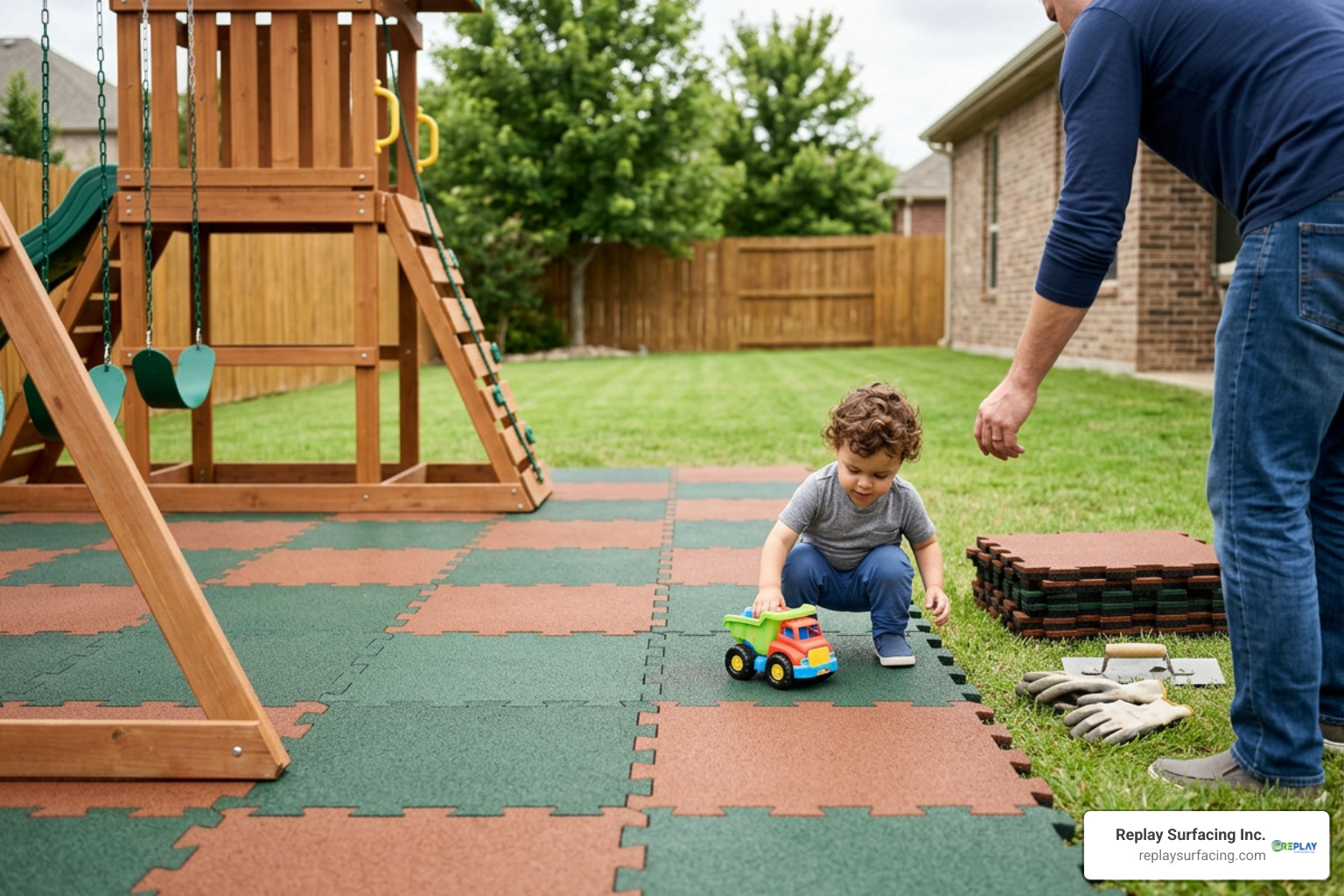
Before ordering materials for your home in Nashville, TN or Columbia, SC, you need to calculate the full use zone around your play set. The use zone should extend at least 6 feet in all directions from stationary equipment, and even further in front of and behind swing sets to ensure full fall protection.
If you are planning a multi-use outdoor living space, our guide on The Ultimate Guide to Rubber Yard Tiles for Patios and Playgrounds explains how to combine active fall zones with adjacent patio seating.
Sizing and Coverage of Residential Rubber Playground Tiles
Each standard modular playground tile measures 19.5 inches wide by 19.5 inches long by 2.5 inches thick.
- Single Tile Footprint: Approx. 2.64 sq. ft.
- Standard 4-Pack Bundle: Covers 10.56 square feet.
- Unit Weight: Each tile weighs around 18 to 22 pounds, giving the assembled layout substantial ballast so it stays firmly anchored under active foot traffic without shifting.
When ordering, calculate your total square footage and add a 5% to 10% overage buffer to accommodate border trimming and custom cuts. Exploring Interlocking Outdoor Playground Tiles will help you determine the exact tile configurations and border ramps needed for your target square footage.
Base Surface Compatibility: Grass, Dirt, and Concrete
Rubber tiles can be installed over multiple base types, provided the ground is properly prepared:
- Concrete Pads or Asphalt: The most stable substrate. Tiles lay flat, drain efficiently through bottom-molded channels, and resist shifting over time.
- Compacted Crushed Stone / Aggregate: The preferred sub-base for backyard earth installations. A 3-to-4-inch layer of compacted aggregate (such as crushed limestone or decomposed granite) creates a level, free-draining foundation.
- Direct Dirt or Turf: Not recommended without site prep. Laying heavy tiles directly over soft soil or living grass leads to uneven settling, trapped moisture, and weed growth. Always remove topsoil, lay a commercial geotextile weed barrier, and compact a gravel base before placing tiles.
Check out our Playsafe Interlocking Tiles Ultimate Guide for complete base preparation guidelines across varied soil profiles.
DIY Installation and Upkeep
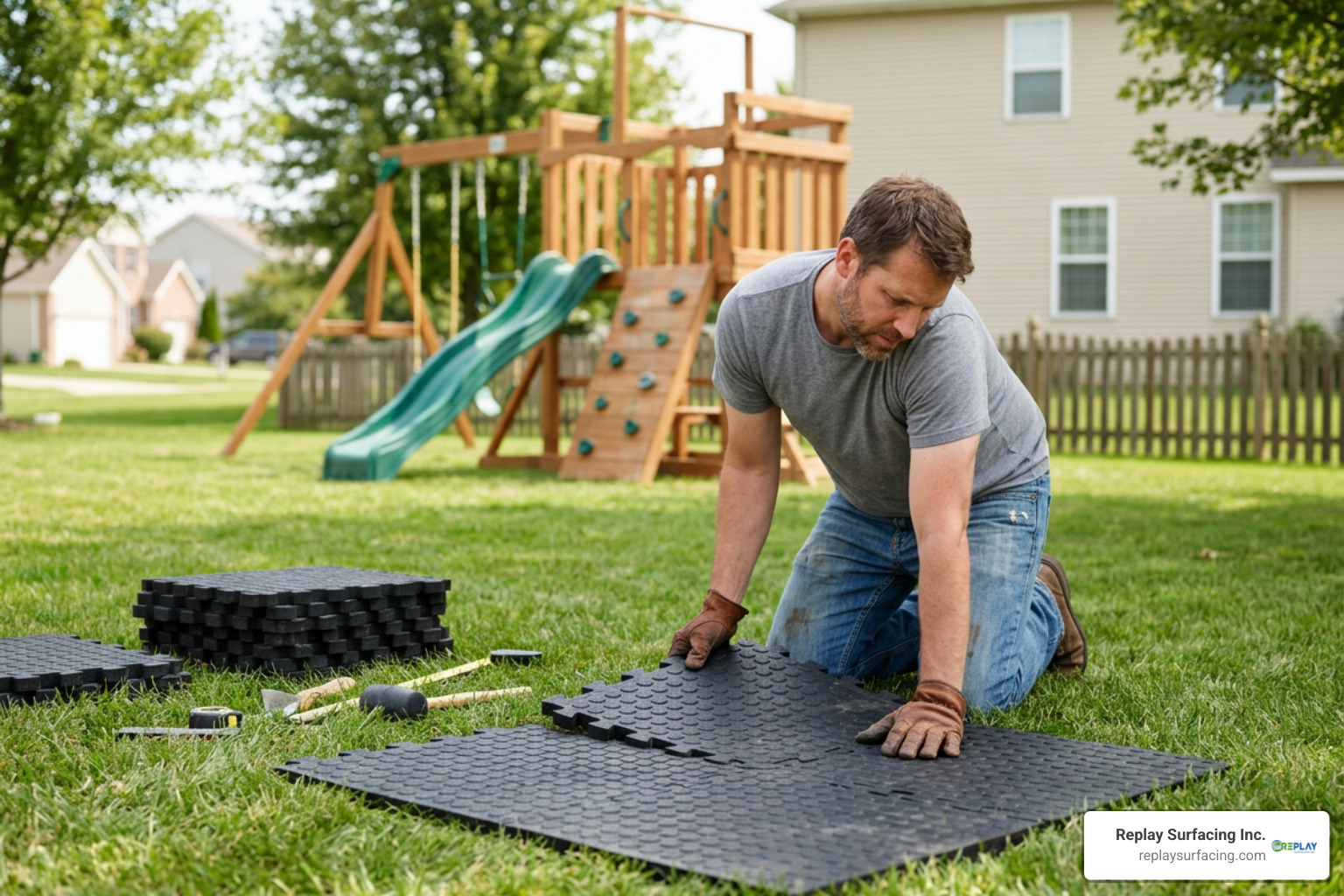
Installing interlocking safety tiles is a straightforward project that two people can complete over a weekend with standard home tools.
Step-by-Step Interlocking Modular Assembly
Follow these steps for a tight, resilient play surface:
- Prep the Foundation: Level your base and ensure a slight 1% slope away from home foundations for drainage.
- Lay Geotextile Fabric: If working on aggregate, roll out heavy-duty landscape fabric to stop weed intrusion.
- Start from the Corner: Place your first tile against a square boundary or snap chalk lines down the center of the play area.
- Insert Alignment Dowels: Connect tiles using heavy-duty interlocking pins or puzzle-style tabs, tapping seams snug with a rubber mallet.
- Stagger Joints: Lay tiles in a staggered, running-bond brick pattern to maximize structural integrity and prevent seam separation.
- Trim Edges: Cut perimeter tiles using a utility knife lubricated with soapy water and a straight edge.
- Attach Beveled Ramps: Install ADA-compliant reducer ramps along the outer edge to prevent tripping hazards.
For step-by-step visuals and detailed tool lists, follow our guide on Installing Playground Tiles.
How to Clean and Maintain Residential Rubber Playground Tiles
Maintenance is refreshingly simple compared to raking wood chips:
- Routine Clearing: Use a standard leaf blower or soft-bristle broom to clear leaves, pine needles, and twigs.
- Surface Washing: Hose down the tiles periodically with clean water. For sticky juice spills or mud, scrub with mild household dish soap and a deck brush, then rinse clean.
- Pressure Washing: You can use a low-pressure washer (under 1,500 PSI) held at least 12 inches away to deep-clean high-traffic zones without gouging the rubber binder.
- Drainage Inspection: Ensure perimeter borders remain free of silt so water drains freely through the sub-surface channels during heavy downpours.
Frequently Asked Questions About Playground Safety Tiles
What critical fall height does a 2.5-inch tile support?
A 2.5-inch thick recycled rubber tile is engineered to meet a 6-foot critical fall height safety standard. This provides sufficient shock absorption to significantly reduce the risk of critical impact trauma from standard residential backyard playsets, swings, and climbing frames.
Can you install modular rubber tiles over existing dirt or grass?
You should never place rubber safety tiles directly on unprepared topsoil or existing grass. The organic matter beneath will decompose, causing the tiles to shift, sink, and separate. For a lasting installation, excavate 3 to 4 inches of sod, lay down a weed barrier membrane, and compact a layer of crushed stone aggregate base before installing your tiles.
How many square feet does a 4-pack of modular tiles cover?
A standard 4-pack of 19.5-inch by 19.5-inch modular safety tiles covers 10.56 square feet. To calculate your total need, divide your total fall zone square footage by 10.56 and round up to account for edge cuts.
Conclusion
Upgrading your backyard play area with resilient rubber safety surfacing creates a safe, clean, and durable environment where kids can explore with confidence. By keeping scrap tires out of landfills and turning them into durable surfacing products, we deliver long-lasting protection that stands up to every season.
Whether you are building a new swing set area in Charlotte, NC, Raleigh, NC, Sanford, NC, Tucson, AZ, Columbia, SC, Nashville, TN, Beaverton, OR, Lake Charles, Louisiana, or across Connecticut and Indiana, we are here to support your project. Ready to transform your outdoor space? Explore our complete line of residential rubber surfacing solutions today and build an outdoor oasis built to protect every adventure.