
Why Rubber Mulch for Play Areas in North Carolina Is Worth Knowing About
Rubber mulch for play areas in North Carolina is one of the most effective safety surfacing options available today — and if you’re responsible for a playground, it deserves a close look.
Quick Answer: What Is Rubber Mulch for Play Areas in North Carolina?
| Feature | Details |
|---|---|
| What it is | Shredded recycled rubber used as loose-fill playground surfacing |
| Primary benefit | Absorbs impact from falls, reducing serious injuries |
| Lifespan | 10–20 years without decomposing |
| Safety standard | Meets ASTM F1292 for fall height protection |
| Depth needed | 6 inches for up to 12 feet of fall protection |
| Eco benefit | Each ton recycles approximately 134 tires |
| Best for | Schools, parks, daycares, home backyards |
Every year, over 200,000 children in the U.S. are treated in emergency rooms for playground-related injuries. The surface under the equipment matters enormously. The right loose-fill material can mean the difference between a scraped knee and a serious head injury.
That’s exactly why facility managers, school administrators, and parents are increasingly turning to rubber mulch. It’s durable, low-maintenance, and built specifically to cushion falls — unlike grass, sand, or basic wood chips that compact, wash away, or break down over time.
But rubber mulch isn’t a one-size-fits-all decision. There are real tradeoffs to understand: cost, installation depth, color options, safety certifications, and legitimate health questions that deserve honest answers.
This guide covers all of it — simply and clearly.
I’m Landon Olson, operator of Replay Surfacing Inc., where I’ve spent my career converting scrap tires into high-quality rubber surfacing products, including rubber mulch for play areas in North Carolina used in schools, parks, and residential settings across North America. My background in mechanical engineering and sustainable manufacturing means I approach this topic from both a safety and a systems perspective — so you get practical guidance you can actually use.
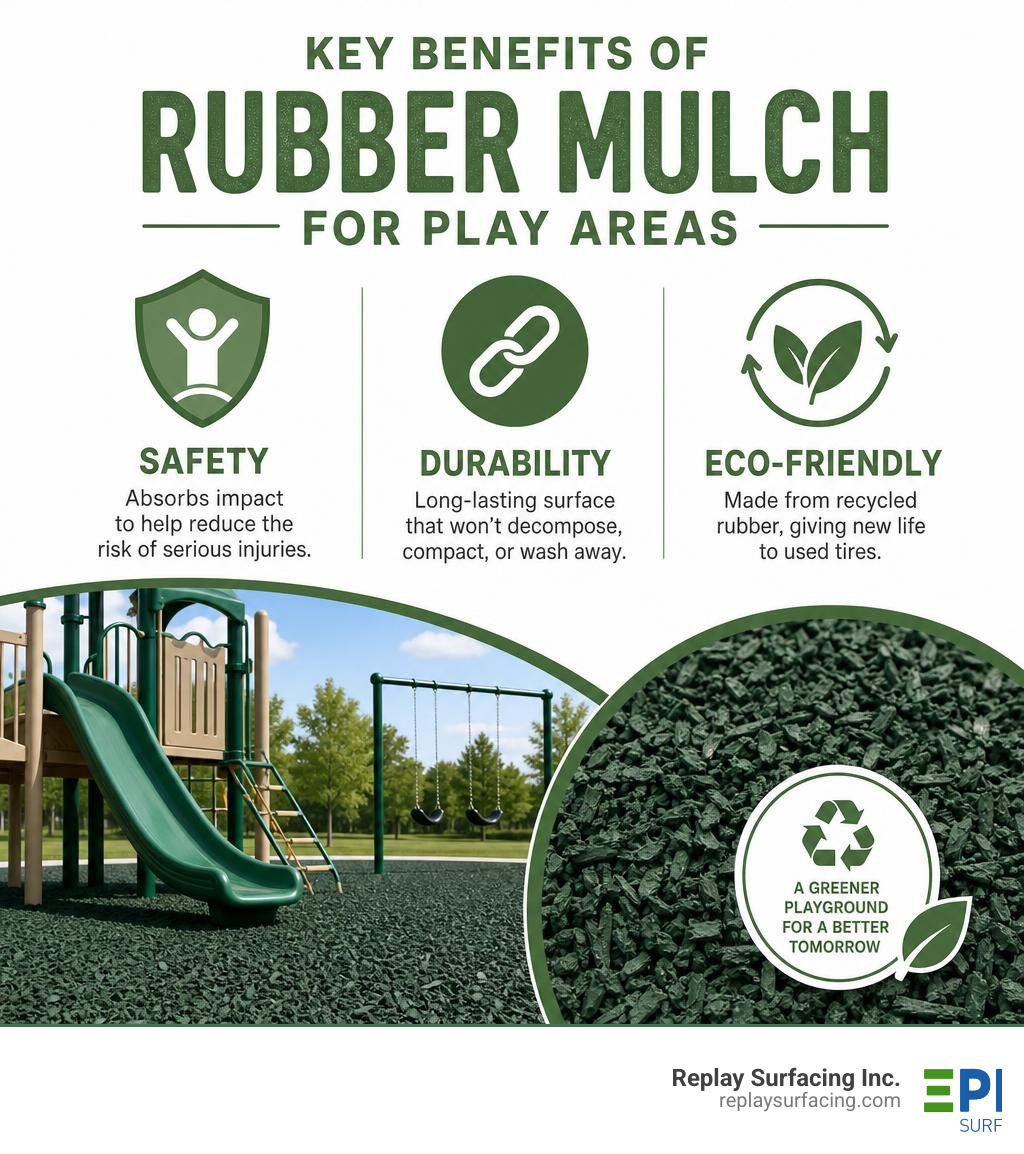
Rubber mulch for play area terms to know:
What is Rubber Mulch and How is it Manufactured?
At Replay Surfacing, we believe in transparency. To understand why rubber mulch performs so exceptionally well in a rubber mulch for play area in North Carolina setup, it helps to know how it is made.
Most playground rubber mulch is manufactured using 100% recycled passenger car and commercial truck tires. Rather than letting these tires sit in landfills where they pose fire hazards and collect rainwater for pests, we process them into a highly durable, shock-absorbing ground cover. You can read more about this environmental journey in our guide to Rubber Mulch Made from Recycled Tires.
The manufacturing process involves several critical steps:
- Shredding: Tires are mechanical crushed and shredded into small nuggets, typically ranging from 3/8″ to 3/4″ in size. This specific mixture of granules and chunks prevents compaction.
- Steel Extraction: Tires contain steel belts for structural integrity. Through a series of powerful industrial magnets, the steel is meticulously extracted. High-quality playground mulch is guaranteed to be 99.9% steel-free to ensure children’s safety.
- Coloring: The raw black rubber is washed and coated with specialized, non-toxic polymer-based pigments. These colors are baked and fused directly onto the rubber, ensuring they do not bleed onto children’s clothing or hands.
Some premium products are made from “tire buffings”—the clean, wire-free outer tread layer of large commercial vehicle tires. This raw material source naturally minimizes steel content from the very beginning. Whether you are using it for municipal parks or looking to Transform Your Garden with the Best Rubber Mulch for Landscaping, selecting a high-quality product is key. If you’re wondering how to identify premium materials, check out our Best Recycled Rubber Playground Mulch Guide and our detailed overview of Recycled Tire Mulch: A Durable Solution for Modern Landscaping.
Benefits of Choosing a Rubber Mulch for Play Area
Why make the switch to rubber? When designing a Play Yard Rubber Mulch project, the physical properties of rubber offer distinct advantages over traditional organic materials:
- Unrivaled Shock Absorption: Rubber is inherently elastic. It deflects and absorbs the energy of an impact, which is why it is the premier choice for a Rubber Mulch for Playset installation.
- Extreme Durability: Unlike wood mulch, rubber does not rot, decay, or decompose. It remains fully functional for 10 to 20 years.
- Pest and Weed Resistance: Termites, carpenter ants, and rodents have zero interest in nesting or feeding on rubber. Furthermore, because rubber does not retain organic nutrients, weed seeds find it incredibly difficult to germinate.
- Weather-Friendly Performance: Rubber does not absorb water, meaning it won’t float away during heavy downpours or freeze solid during harsh winters in places like Connecticut or Indiana. It drains rapidly, letting kids get back to playing almost immediately after a storm.
Comparing Wood Chips vs. Rubber Mulch for Play Area Surfacing
Many school districts and homeowners initially lean toward wood chips or engineered wood fiber (EWF) because of the lower upfront cost. However, when we look at the lifecycle cost and safety performance, the math quickly shifts in favor of rubber.
| Feature | Wood Chips / EWF | Rubber Mulch |
|---|---|---|
| Lifespan | 1–3 years (requires annual top-offs) | 10–20 years (virtually zero decomposition) |
| Compaction | High (packs down and loses shock absorption) | Extremely low (retains loose-fill elasticity) |
| Moisture Retention | High (can lead to mold, mildew, and freezing) | Zero (drains instantly, never freezes) |
| Pest Attraction | Attracts termites, bugs, and rodents | Repels pests completely |
| Splinter Hazard | High risk for hands and feet | Zero risk |
| Typical Depth Required | 9 to 12 inches | 6 inches |
While local suppliers of playground wood chips provide excellent organic options for specific regional landscape needs, EWF requires constant raking to prevent compaction and must be replenished annually as it rots into the soil. Rubber mulch is five times heavier than wood, meaning it won’t blow away in high winds or wash away during heavy rains.
Aesthetic Options and Color Customization
Gone are the days when rubber mulch only came in basic tire-black. Today, you can design a playground that is as visually stimulating as it is safe.
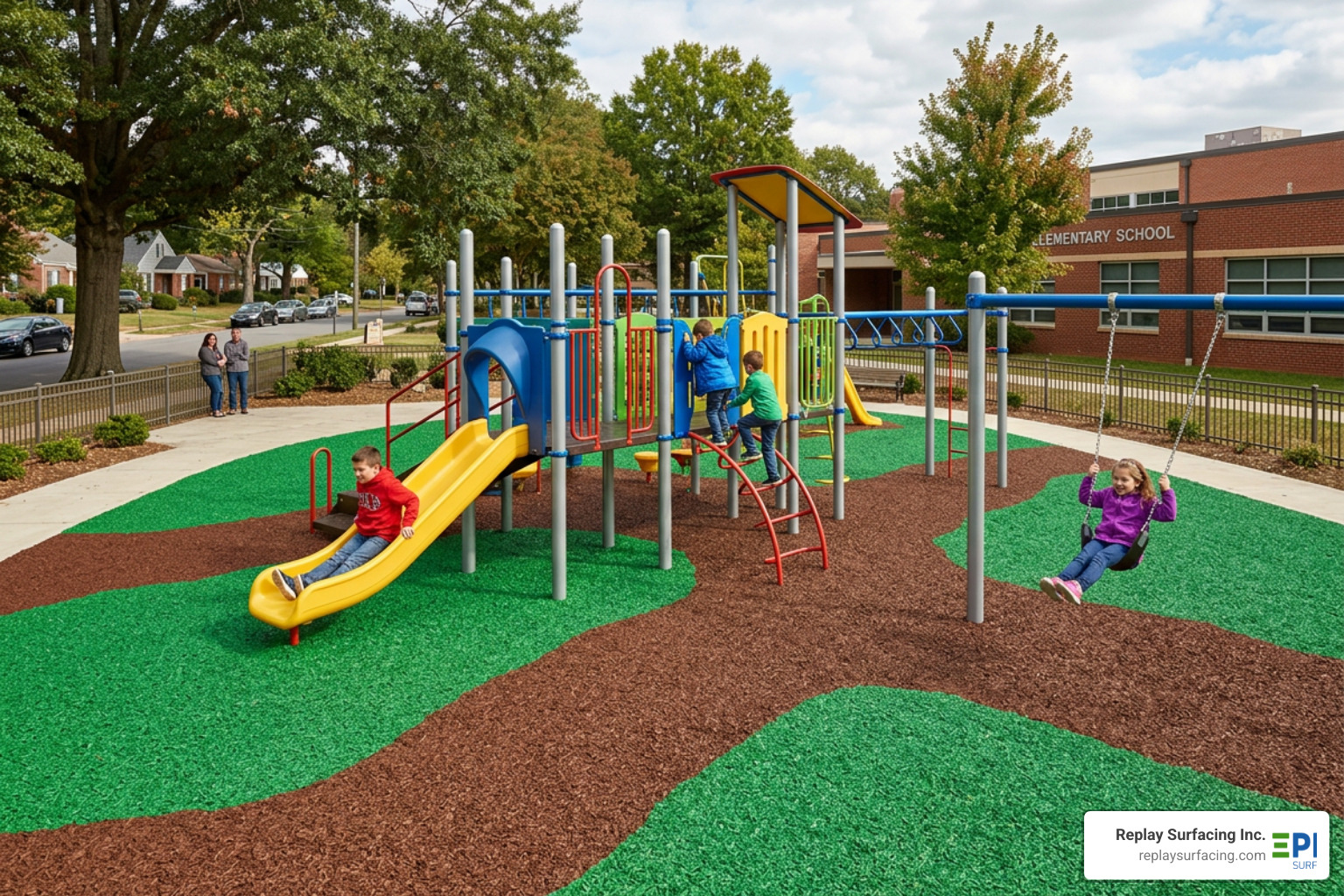
Modern manufacturing allows for beautiful, fade-resistant color choices that come with a 12-year color-retention warranty. Popular colors include:
- Natural Earth Tones: Rich browns and deep blacks that mimic organic mulch. Products like North Carolina Black Landscape Rubber Mulch and North Carolina Brown Landscape Rubber Mulch blend seamlessly into local Southern landscapes.
- Vibrant Playful Colors: Forest greens, ocean blues, and brick reds. For example, Connecticut Playground Green Rubber Mulch and Indiana Playground Black Rubber Mulch are widely used to match school team colors or community park themes.
If you are planning your playground’s design palette, take a look at The Ultimate Guide to Rubber Mulch Colors, Costs and Coverage and our dedicated Green Rubber Mulch Guide 2026.
Safety Standards, Health, and Environmental Considerations
When it comes to children, safety is always our first priority. Is rubber mulch actually safe, and what does the science say?
First, reputable rubber mulch meets rigorous safety certifications. It is tested to meet ASTM F1292 (for impact attenuation) and ASTM F1951 (for ADA accessibility). When installed at the proper depth, loose-fill rubber mulch creates a surface that is easy for wheelchairs to navigate while remaining incredibly soft to land on.
Regarding health concerns, extensive studies by state and federal environmental agencies have evaluated crumb rubber. The consensus is that high-quality, non-toxic rubber mulch does not present a health hazard to children or pets. It is non-toxic, does not release harmful chemical vapors under normal outdoor conditions, and is free of lead and heavy metals.
To dive deeper into the research, we encourage you to read our detailed analysis: Is Rubber Mulch a Safe Surface for Your Child’s Playground?. We also address common questions in Rubber Mulch Toxic and showcase certified clean options in our guide to Non-Toxic Rubber Mulch.
From an environmental standpoint, using recycled rubber keeps millions of tires out of landfills and stockpiles. To learn more about how we balance safety and recycling integrity, check out Sustainable Playground Rubber Mulch and the Truth About Recycled Materials.
Fall Height Protection and ASTM F1292 Compliance
The primary job of a rubber mulch for play area in North Carolina surface is to cushion falls. In the playground safety industry, this is measured by “critical fall height”—the maximum height from which a child could fall onto the surface without suffering a life-threatening head injury.
- 3 Inches of Depth: Provides up to 6 feet of critical fall height protection.
- 6 Inches of Depth: Provides up to 12 to 17 feet of fall protection (depending on the specific product certification).
Compared to wood mulch, which requires up to 12 inches of material to achieve similar ratings (and quickly loses its effectiveness as it compacts), rubber mulch provides superior protection at half the thickness. For a complete breakdown of safety ratings and testing protocols, read our Playground Certified Rubber Mulch Complete Guide.
Installation, Depth Requirements, and Cost Analysis
Installing rubber mulch is a straightforward process, but doing it right ensures it lasts for decades.
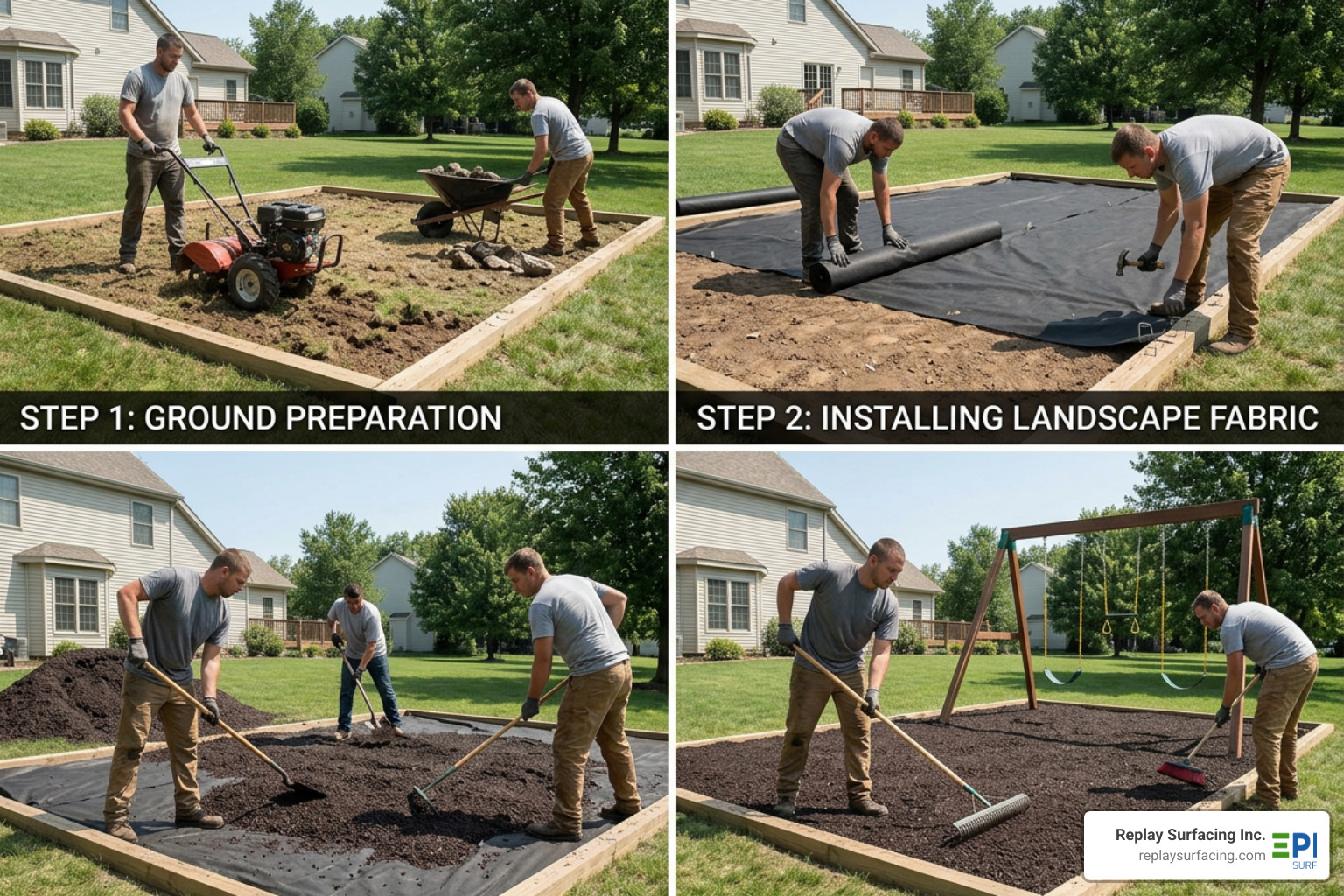
- Site Preparation: Clear the play area of all grass, weeds, rocks, and old wood mulch. Excavate the area to your desired depth (usually 3 to 6 inches, depending on the height of your play equipment).
- Lay a Weed Barrier: Always install a high-quality, commercial-grade geotextile landscape fabric. This prevents soil from mixing with your rubber mulch over time and stops weeds from pushing through.
- Install Borders: Use sturdy borders like rubber timbers or heavy-duty plastic edging to contain the loose-fill mulch.
- Spread and Level: Pour the rubber mulch and rake it evenly across the play area.
While the initial cost of rubber mulch is higher than wood chips, it is a much smarter long-term investment. Because you do not need to purchase replacement mulch every year, rubber mulch typically pays for itself within 3 to 4 years. For a comprehensive pricing analysis, check out our Rubber Mulch Cost Guide 2026, review the The Definitive Guide to Rubber Mulch Depth Playground Requirements, and browse the Best Rubber Mulch for Sale.
Calculating Coverage: How Much Rubber Mulch for Play Area Projects in North Carolina Do You Need?
To calculate how much rubber mulch you need, you will need to know your play area’s total square footage and your target depth.
- 1 Ton (2,000 lbs) of rubber mulch typically covers:
- Approximately 400 square feet at a 2-inch depth (ideal for landscaping).
- Approximately 150 square feet at a 6-inch depth (standard for commercial playgrounds).
To avoid math-induced headaches, we’ve put together several simple calculators and purchasing resources:
- Rubber Mulch Yard Guide 2025
- Rubber Mulch Yard Buying Guide
- Rubber Mulch by the Yard
- Rubber Mulch Per Ton
Professional Installation and Regional Services
While many homeowners opt for a DIY weekend installation, commercial properties, schools, and municipal parks usually require professional setup to ensure strict compliance with ADA and local safety codes.
Replay Surfacing Inc. proudly serves several key regions across the country, providing certified materials and professional installation services. We operate directly in:
- North Carolina: Charlotte, Raleigh, and Sanford. If you are in Lee County or nearby, you can learn about local projects through Sanford, North Carolina playground surfacing options.
- South Carolina: Columbia.
- Tennessee: Nashville.
- Arizona: Tucson.
- Louisiana: Lake Charles.
- Oregon: Beaverton.
- Northeast & Midwest: Connecticut and Indiana.
Our local teams understand regional climate challenges—from the intense desert heat of Tucson to the freezing winters of Connecticut—and can recommend the exact depth and drainage solutions required for your local soil conditions.
Frequently Asked Questions about Playground Surfacing
Is rubber mulch safe for children and pets?
Yes. Premium playground rubber mulch is non-toxic, 99.9% steel-free, and specifically engineered to be safe for kids and pets. It does not contain harmful chemical residues, does not cause splinters, and uses advanced polymer coatings so colors won’t rub off on skin or paws.
How long does rubber mulch last compared to wood mulch?
Rubber mulch lasts between 10 and 20 years. Unlike wood mulch, which decays, molds, and must be completely replaced or topped off every single year, rubber mulch retains its color, shape, and shock-absorbing properties decade after decade.
Does rubber mulch require a weed barrier during installation?
Yes, we highly recommend installing a commercial-grade weed barrier (geotextile fabric) beneath your rubber mulch. This fabric serves two purposes: it prevents weeds from taking root and keeps the clean rubber nuggets from sinking and mixing into the dirt below.
Conclusion
Investing in a high-quality rubber mulch for play areas in North Carolina is one of the smartest decisions you can make for safety, aesthetics, and long-term cost savings. By transforming recycled tires into highly durable, impact-absorbing surfacing, we create play spaces that protect our children and our environment.
Whether you are updating a backyard swing set in Beaverton, Oregon, or designing a massive public park in Charlotte, North Carolina, Replay Surfacing Inc. is here to help you every step of the way.
Ready to make your playground safer and completely maintenance-free? Visit our Play Yard Rubber Mulch Solution Page to request a custom quote or contact our regional specialists today!