Raleigh Residential Rubber Surfacing: Why Homeowners Are Switching
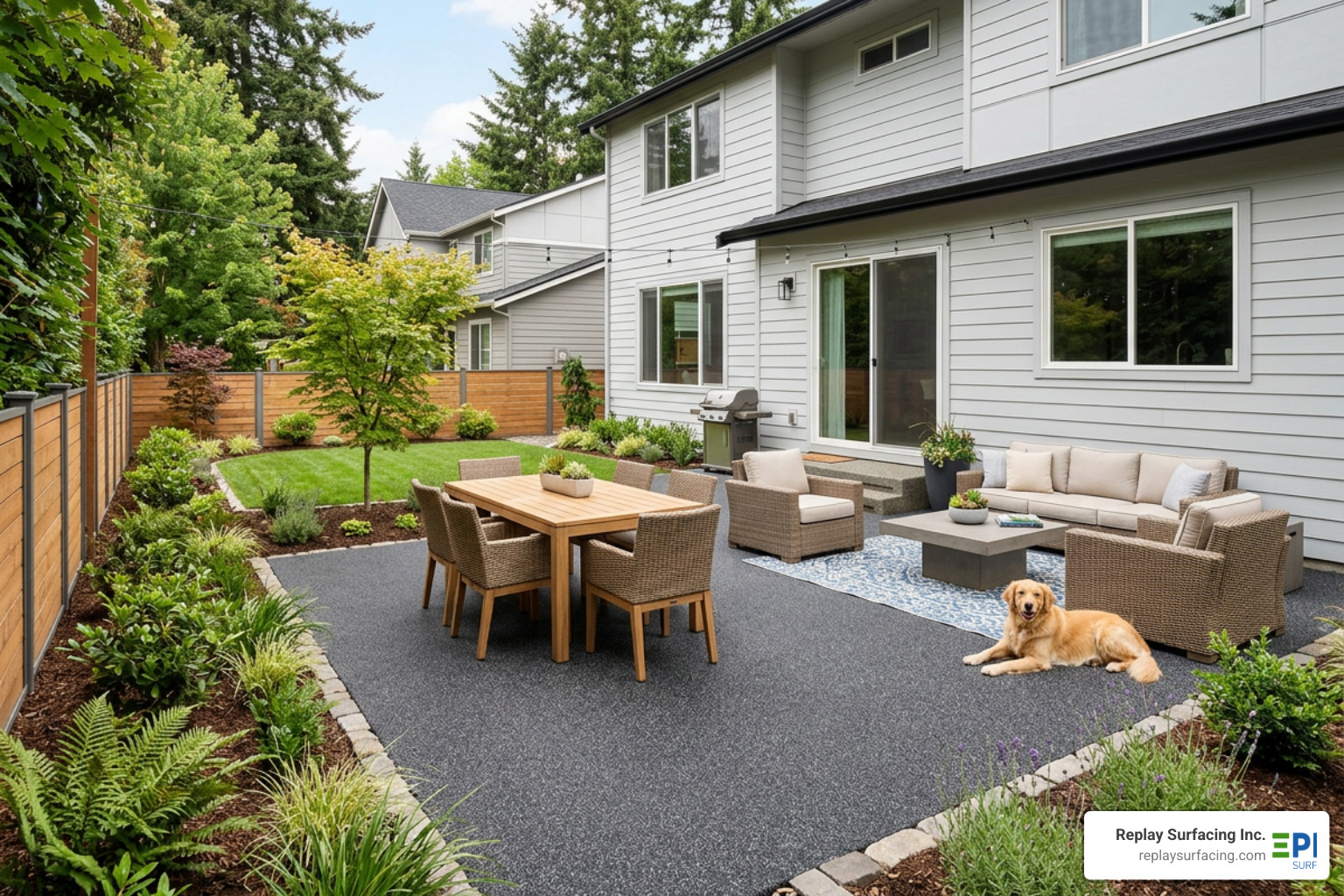
Raleigh residential rubber surfacing is a poured or tiled rubber material used to cover outdoor and indoor home surfaces — like pool decks, patios, driveways, and walkways — as a safer, more durable alternative to concrete, tile, or wood.
Here’s a quick summary of what you need to know:
| Question | Quick Answer |
|---|---|
| What is it? | Recycled rubber granules bonded with polyurethane resin, poured or laid over existing surfaces |
| Top benefits | Slip-resistant, shock-absorbing, crack-resistant, low maintenance |
| How long does it last? | 10–20+ years with proper care |
| Can it go over old concrete? | Yes — no demolition needed |
| Is it eco-friendly? | Yes — made from recycled tires diverted from landfills |
| Cost vs. concrete? | Competitive upfront, lower long-term maintenance costs |
Cracked concrete. Slippery tile after rain. Wood that warps and splinters. These are the everyday frustrations that send homeowners looking for something better.
Rubber surfacing solves all three. It’s soft underfoot, grips well when wet, and doesn’t crack under freeze-thaw cycles or bake in summer heat. It also installs directly over most existing surfaces — so there’s no costly tearout.
And it’s not just practical. Modern rubber surfacing comes in dozens of colors and custom blends, so your pool deck or patio can look exactly the way you want it.
I’m Landon Olson, operator of Replay Surfacing Inc., where I’ve built my career around turning recycled scrap tires into high-performance Raleigh residential rubber surfacing solutions — drawing on my mechanical engineering background and MBA to bring both technical precision and smart business thinking to every project. In the sections below, I’ll walk you through everything you need to know to make the right choice for your home.
Quick look at residential rubber surfacing:
- Raleigh rubber safety surfacing
- Tucson residential playground flooring
- home rubber playground flooring
What is Residential Rubber Surfacing?
At its core, residential rubber surfacing is a high-performance, flexible safety flooring system. It is created by combining rubber granules with a specialized polyurethane binder. When mixed and applied, these materials cure into a seamless, highly durable, and cushioned surface that can withstand heavy foot traffic, vehicles, and intense weather.
To understand how it works, it helps to look at the two primary types of rubber used:
- EPDM (Ethylene Propylene Diene Monomer) Granules: This is virgin rubber colored all the way through. Because the color isn’t just painted on the surface, EPDM granules resist fading, UV degradation, and wear over decades. It is the gold standard for top-coat design.
- SBR (Styrene-Butadiene Rubber): This is high-quality recycled rubber, typically sourced from diverted passenger tires. It is highly elastic, incredibly tough, and serves as the perfect sustainable base layer to absorb impact.
To hold these granules together, we use a premium polyurethane resin binder. Depending on your design goals, this can be a standard aromatic binder (which may amber slightly over time under heavy UV exposure) or an aliphatic binder (a premium, completely clear, UV-stable agent that preserves bright colors indefinitely).
When these materials are mixed on-site and hand-troweled, we call it poured-in-place (PIP) rubber surfacing. This method allows us to create a completely custom, seamless finish that perfectly contours to any shape, step, or slope in your yard.
If you want to explore how this looks in real-world settings, check out some of our completed residential projects.
Comparing Surfacing Materials
To see how rubber holds up against traditional residential materials, let’s look at the numbers:
| Feature | Residential Rubber Surfacing | Traditional Concrete | Outdoor Tile | Pressure-Treated Wood |
|---|---|---|---|---|
| Slip Resistance | Excellent (Wet or Dry) | Poor when wet or sealed | Highly slippery when wet | Slippery when wet/moldy |
| Durability | 10–20+ Years (Flexible) | Cracks easily over time | Grout cracks, tiles chip | Warps, rots, and splinters |
| Underfoot Comfort | Soft and shock-absorbing | Hard, unforgiving | Hard, cold | Rigid, prone to splinters |
| Installation | Direct over existing surfaces | Requires full demolition | Requires flat, perfect base | Requires heavy framing |
| Maintenance | Power wash occasionally | Requires sealing/patching | Grout cleaning and repairs | Sanding, staining, sealing |
Poured-in-Place (PIP) vs. Rubber Tiles and Mulch
When exploring rubber options, you will likely come across three main formats: poured-in-place (PIP), interlocking tiles, and loose-fill mulch.
- Poured-in-Place (PIP): This is a unitary, seamless surface. Because it is mixed and troweled on-site, it has no seams, gaps, or loose pieces. This makes it highly accessible, exceptionally beautiful, and impossible to trip over.
- Interlocking Rubber Tiles: While tiles are popular for quick DIY indoor gym setups, they present challenges outdoors. Over time, outdoor tiles can warp, curl at the edges, or shift due to temperature changes, creating dangerous tripping hazards.
- Loose-Fill Rubber Mulch: Often used in garden beds or playground pits, loose rubber mulch is highly shock-absorbent. However, it requires constant raking, can be kicked out of bounds by kids or pets, and doesn’t provide a stable surface for patio furniture or wheelchairs.
For most homeowners looking to elevate their backyards, patios, and pool decks, the seamless nature of PIP is the clear winner. It’s why so many families are upgrading their yards—discover why local parents are swapping grass for rubber surfacing to create safer, cleaner play spaces.
Key Benefits of Residential Rubber Surfacing
Choosing residential rubber surfacing isn’t just about choosing a cool aesthetic; it’s about investing in safety, longevity, and comfort.
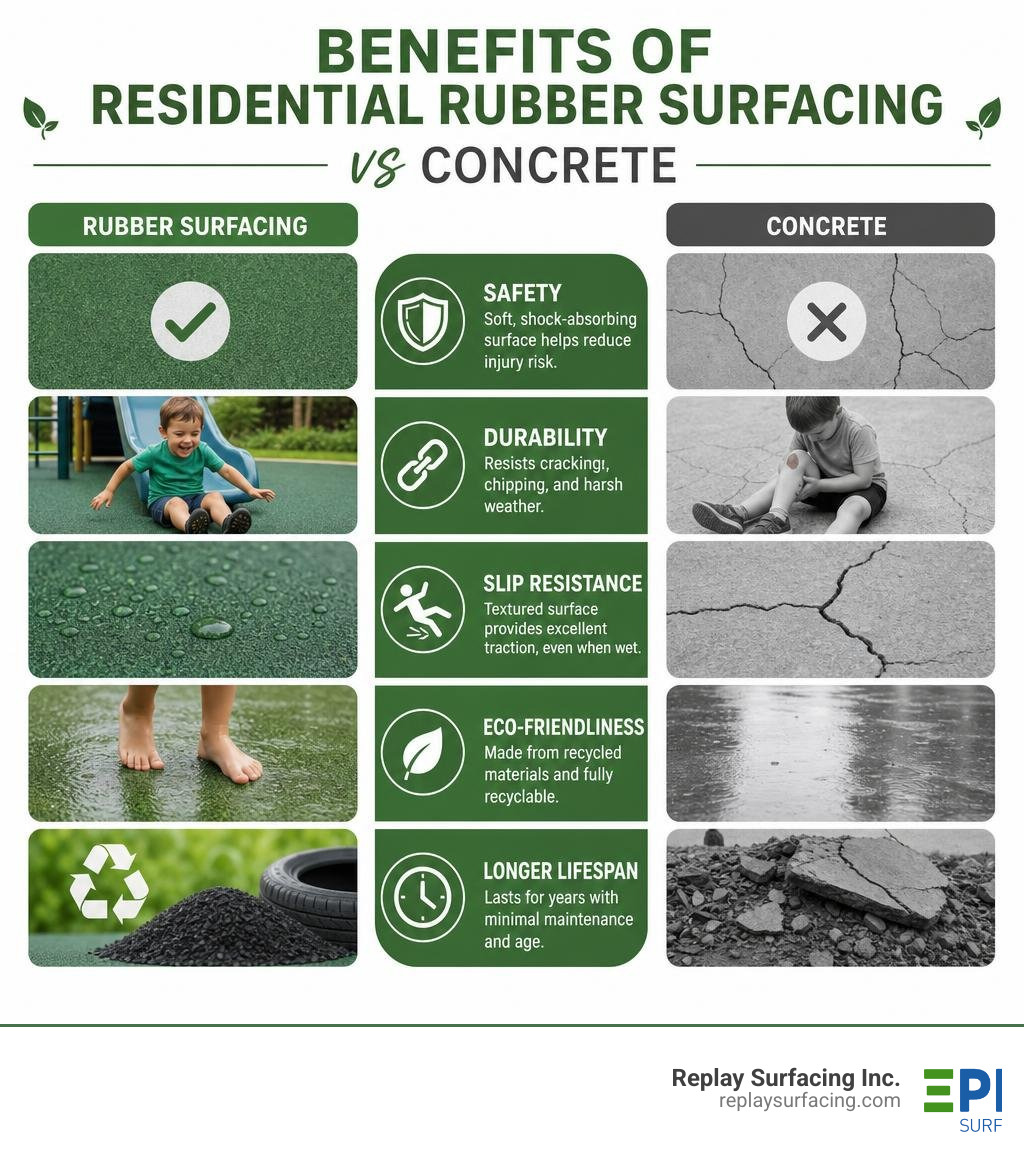
- Unmatched Slip Resistance: Rubber has a natural high-friction surface. Even when fully saturated with water from a rainstorm or a heavy splash from the pool, it provides incredible traction.
- Exceptional Impact Absorption: Whether it’s a toddler learning to walk or a grandparent enjoying the patio, rubber cushions falls. It acts like a giant shock absorber for your joints.
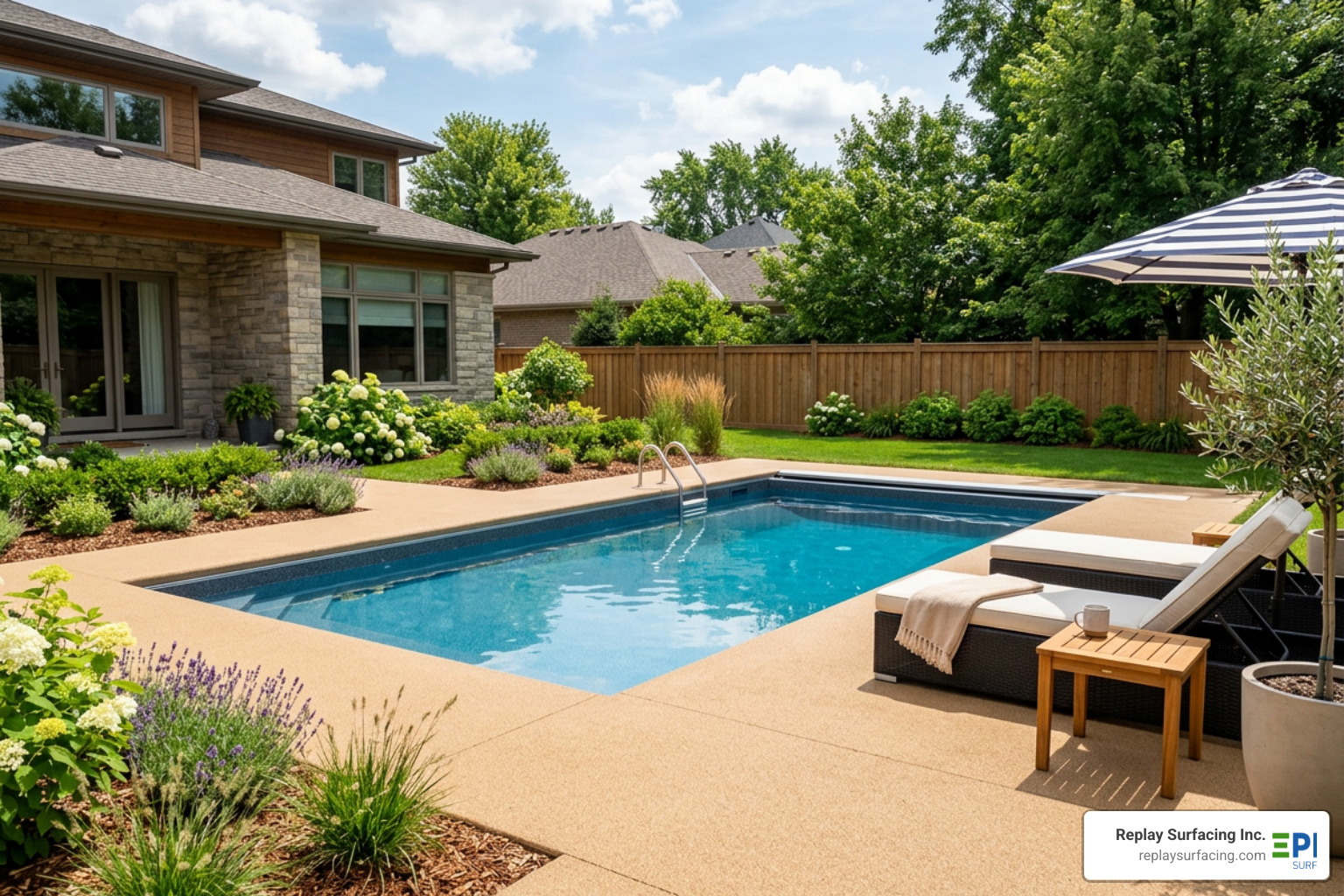
- Thermal Comfort: Have you ever sprinted across a blazing hot concrete pool deck in July? Rubber surfacing stays significantly cooler under direct sunlight than concrete, brick, or stone, making it comfortable for bare feet and paws.
- UV Stability and Longevity: Formulated with advanced UV stabilizers, our premium rubber surfaces resist cracking, fading, and peeling, even under intense sun exposure.
To learn more about how this material transforms backyards into safe havens, read our guide on durable backyard rubber flooring that kids and parents love.
Safety and Slip Resistance for Families
For families with young children or aging relatives, safety is non-negotiable. Traditional hard surfaces like concrete or tile offer zero forgiveness during a fall. Poured rubber safety surfacing, however, can be installed at varying thicknesses to meet specific fall-height safety ratings. This means if a child slips off a play structure or trips while running near the pool, the impact is cushioned, dramatically reducing the risk of serious injury.
If you are located in North Carolina, we highly recommend looking into our specialized Raleigh playground surfacing options to see how we tailor these safety features to local residential play spaces.
Weather Resilience in Diverse Climates
One of the greatest engineering feats of poured rubber is its elastic memory. Traditional paving materials are rigid. When water gets into micro-cracks in concrete or asphalt and freezes, it expands, causing the surface to crack, heave, and crumble.
Rubber is completely porous and flexible. It allows water to drain through easily, preventing standing water and ice sheets from forming on top. During extreme freeze-thaw cycles—common in places like Connecticut and Indiana—the rubber simply flexes and returns to its original shape without cracking.
Conversely, in hot, high-UV environments like Tucson, Arizona, rubber’s heat-resistant properties keep your outdoor living spaces usable even during triple-digit summer days.
Popular Home Applications for Rubber Surfacing
Where can you use rubber surfacing? The short answer is: almost anywhere you want a safe, beautiful, low-maintenance floor.
- Pool Decks: Eliminate slippery puddles and scorching hot surfaces.
- Patios and Porches: Transform old, cracked concrete patios into elegant, comfortable outdoor dining rooms.
- Driveways: Give your home instant curb appeal with a durable, oil-resistant, crack-free driveway that can support the weight of multiple vehicles.
- Walkways and Steps: Create beautiful, slip-resistant pathways that safely guide guests through your garden.
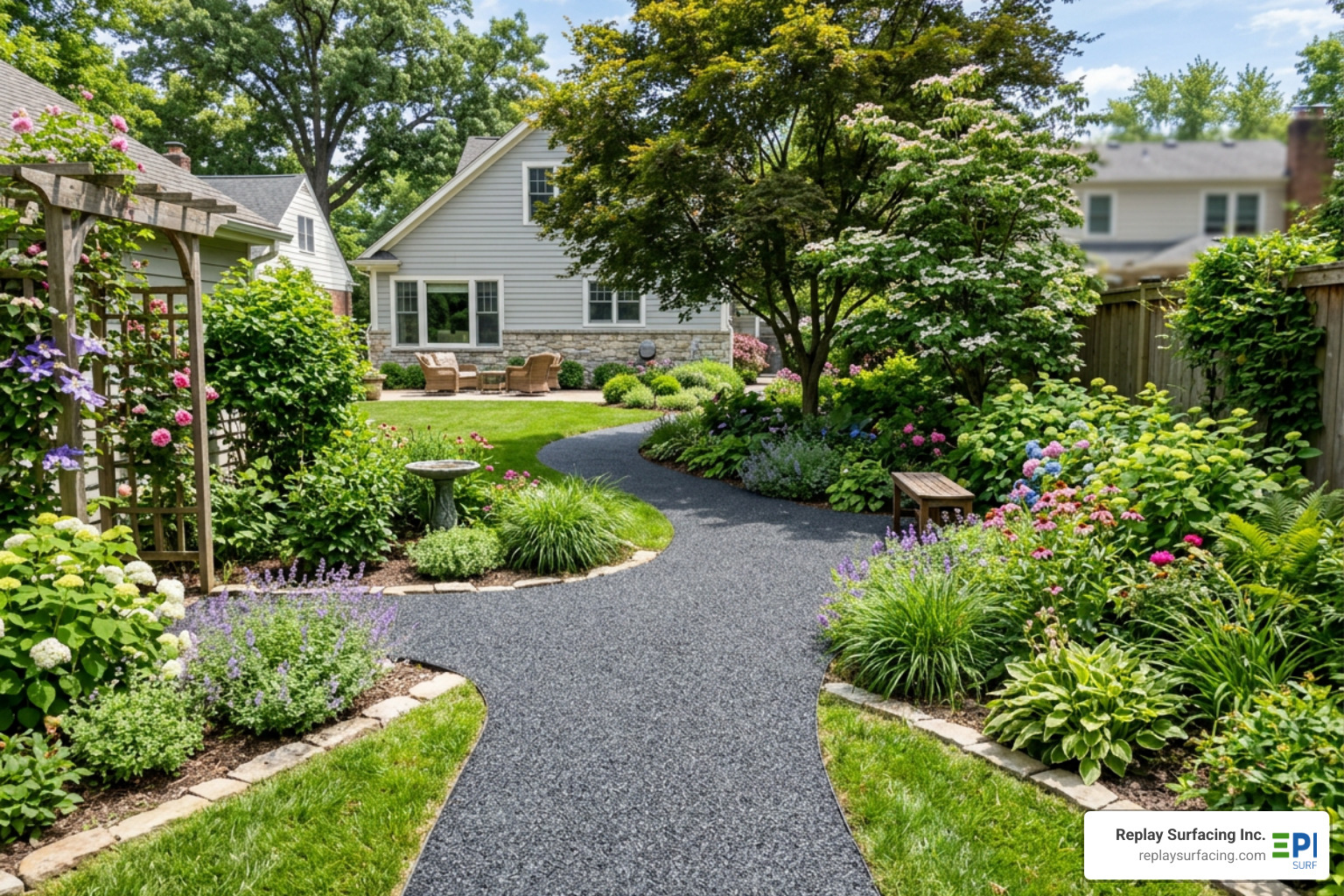
Ready to upgrade your outdoor spaces? Read more about why a poured rubber residential installation is the upgrade your yard deserves.
Designing Your Custom Residential Rubber Surfacing
Gone are the days when rubber only came in basic industrial black. Today, we offer an extensive palette of vibrant colors, from earthy terra-cottas and warm sand tones to cool slate grays and deep blues.
Because we mix the granules on-site, we can create custom color blends (marbled or textured effects) that perfectly match your home’s siding, stone accents, or landscaping. We can also hand-trowel custom geometric patterns, borders, or even custom logos and family crests directly into your surface.
Playgrounds and Backyard Play Areas
If you are building a backyard oasis for your kids, safety is your top priority. Traditional grass quickly turns to mud and wears down to hard-packed dirt under swings and slides. Wood mulch splinters, attracts pests, and gets scattered across your lawn.
Poured rubber provides a clean, dry, and highly cushioned surface that keeps kids safe and mud-free year-round.
- Find the perfect fit for your home with our safe and sound backyard play area flooring options for every budget.
- Plan your entire project with our playground flooring for your backyard oasis: a comprehensive guide.
Installation and Maintenance of Rubber Surfacing
How does the magic happen? The installation of poured-in-place rubber surfacing is a precise craft that requires experienced hands.
- Surface Preparation: We thoroughly clean the existing subfloor (concrete, asphalt, wood, or compacted stone), removing dirt, grease, and loose debris.
- Priming: We apply a specialized polyurethane priming mixture to the subfloor. This ensures an unbreakable chemical bond between the base and the new rubber layer.
- Mixing: We combine the EPDM or SBR rubber granules with our high-grade polyurethane binder in a specialized mixer to ensure every granule is perfectly coated.
- Troweling: Our professional installers pour the wet mixture onto the surface and hand-trowel it to a uniform thickness (typically 3/8 inch to 1/2 inch for patios and driveways, and thicker for playground safety areas).
- Curing: The surface is left to cure. Within 24 to 48 hours (depending on local humidity and temperature), it is fully cured and ready for foot traffic.
Learn more about the technical details of crafting a durable recycled rubber outdoor walkway.
Installing Over Existing Concrete, Asphalt, or Wood
One of the biggest financial benefits of residential rubber surfacing is that it is an overlay system. If you have a patio or driveway with ugly surface cracks, shifted pavers, or stained concrete, you don’t need to pay thousands of dollars to jackhammer, haul away, and repave it.
As long as the underlying subfloor is structurally stable (meaning it isn’t actively sinking or sliding down a hill), we can bridge those cracks and imperfections. The rubber overlay bonds directly to the old surface, masking all blemishes under a gorgeous, seamless blanket of rubber.
If you are looking to revitalize your home in Tennessee, discover our premier residential rubber flooring in Nashville to see how we handle local concrete overlays.
Long-Term Maintenance and Care
Maintaining your rubber surface is incredibly easy. Unlike wood, it never needs sanding, staining, or sealing. Unlike concrete, it never needs crack repairs.
- Regular Cleaning: A simple sweep or rinse with a garden hose is usually all it takes to remove leaves and dirt. For a deeper clean, you can use a light power washer (keeping the nozzle at a safe distance) and a mild dish soap.
- Stain Resistance: The non-porous nature of EPDM granules means they resist staining from spilled drinks, pool chemicals, and even automotive fluids in your garage.
- Periodic Re-Rolling: To keep your surface looking brand-new and maintain its structural integrity over a 20-year lifespan, we recommend having us “re-roll” the surface with a fresh coat of polyurethane resin binder every 5 to 7 years. This is a quick, inexpensive maintenance step that rejuvenates the surface’s strength and shine.
Whether you are dealing with the humid summers of Charlotte, NC or the coastal dampness of Columbia, SC, these simple steps will keep your investment looking pristine.
Cost and Environmental Impact of Rubber Surfacing
At Replay Surfacing Inc., our core mission is sustainability. Every square foot of rubber surfacing we install helps divert scrap passenger tires from landfills, where they would otherwise pose severe fire and environmental hazards.
Our surfaces are made of 92% recycled SBR rubber bonded with 8% polyurethane resin, making them an incredibly eco-friendly choice for modern landscaping. By choosing rubber, you are actively reducing waste and supporting a circular economy.
- Elevate your garden beds sustainably: Transform your garden with the best rubber mulch for landscaping.
- Get smart about your purchasing options with our rubber mulch yard buying guide.
Cost of Residential Rubber Surfacing vs. Traditional Materials
When comparing costs, it is important to look at the big picture.
- Initial Investment: Poured-in-place rubber surfacing generally costs more upfront than basic poured concrete or cheap wood mulch. However, it is highly competitive with mid-to-high-end paving options like decorative stamped concrete, interlocking stone pavers, and composite decking.
- Demolition Cost Avoidance: Because rubber can be poured directly over your existing cracked concrete or worn deck, you save thousands of dollars on demolition, disposal fees, and heavy equipment rental.
- Long-Term Savings: Traditional decks require annual staining. Concrete requires regular sealing and eventual replacement when it cracks. Rubber surfacing requires virtually zero maintenance costs outside of occasional cleaning and a periodic resin re-roll, saving you thousands of dollars over its 20+ year lifespan.
Frequently Asked Questions about Residential Rubber Surfacing
Can rubber surfacing be installed over cracked concrete?
Yes, absolutely! Poured-in-place rubber is highly flexible, allowing it to bridge minor cracks and surface imperfections in concrete, asphalt, or wood without telegraphing those cracks to the surface. However, the subfloor must be structurally sound; if the concrete is actively crumbling or shifting dramatically due to severe erosion underneath, those base issues must be repaired before installation.
Is rubber surfacing safe for pets and children?
Yes. Our rubber surfacing products are made from non-toxic, lead-free, and highly stable materials. The slip-resistant texture provides excellent traction for paws and little feet, preventing slips near wet pool decks. It is also anti-microbial and anti-fungal, ensuring a hygienic play environment.
How long does residential rubber surfacing last?
With basic care and regular cleaning, a professionally installed poured-in-place rubber surface will easily last 10 to 15 years. By performing a simple resin “re-roll” every 5 to 7 years to replenish the binder, you can easily extend the lifespan of your surface to 20 years or more.
Conclusion
Your home’s outdoor spaces should be a source of joy, relaxation, and beauty—not a source of endless maintenance and safety worries. Residential rubber surfacing offers the ultimate combination of modern style, family-friendly safety, and rugged durability.
At Replay Surfacing Inc., we are proud to transform environmental waste into beautiful, sustainable, and long-lasting residential masterpieces. Whether you are looking to secure a slippery pool deck in Tucson, Arizona, upgrade a playground in Raleigh, North Carolina, or revitalize a patio in Charlotte, NC, our local teams are ready to bring your vision to life.
Ready to take the next step? Upgrade your home with Replay Surfacing today and get a free, custom consultation for your space!