
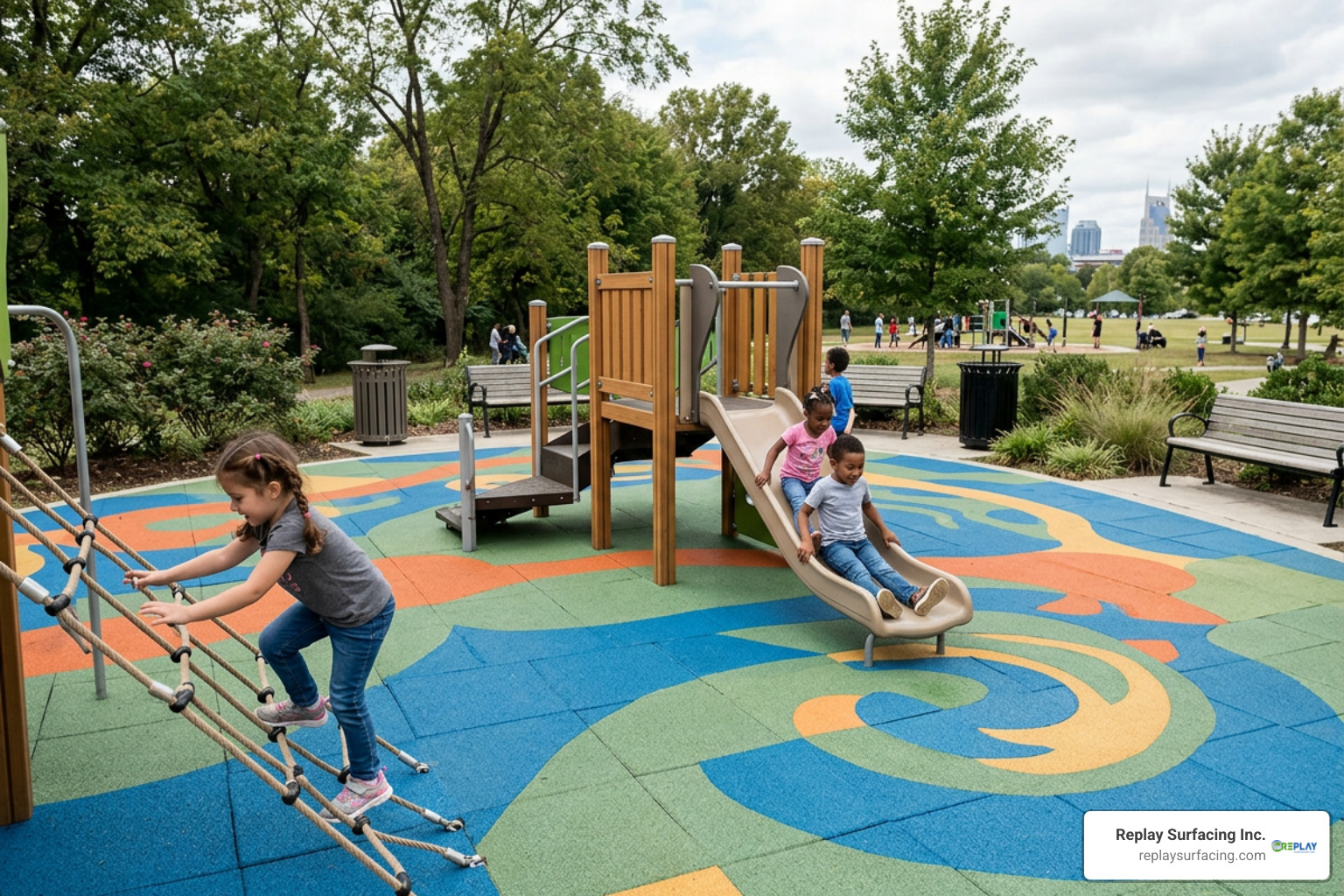
Why Nashville Playgrounds Deserve a Greener Surface
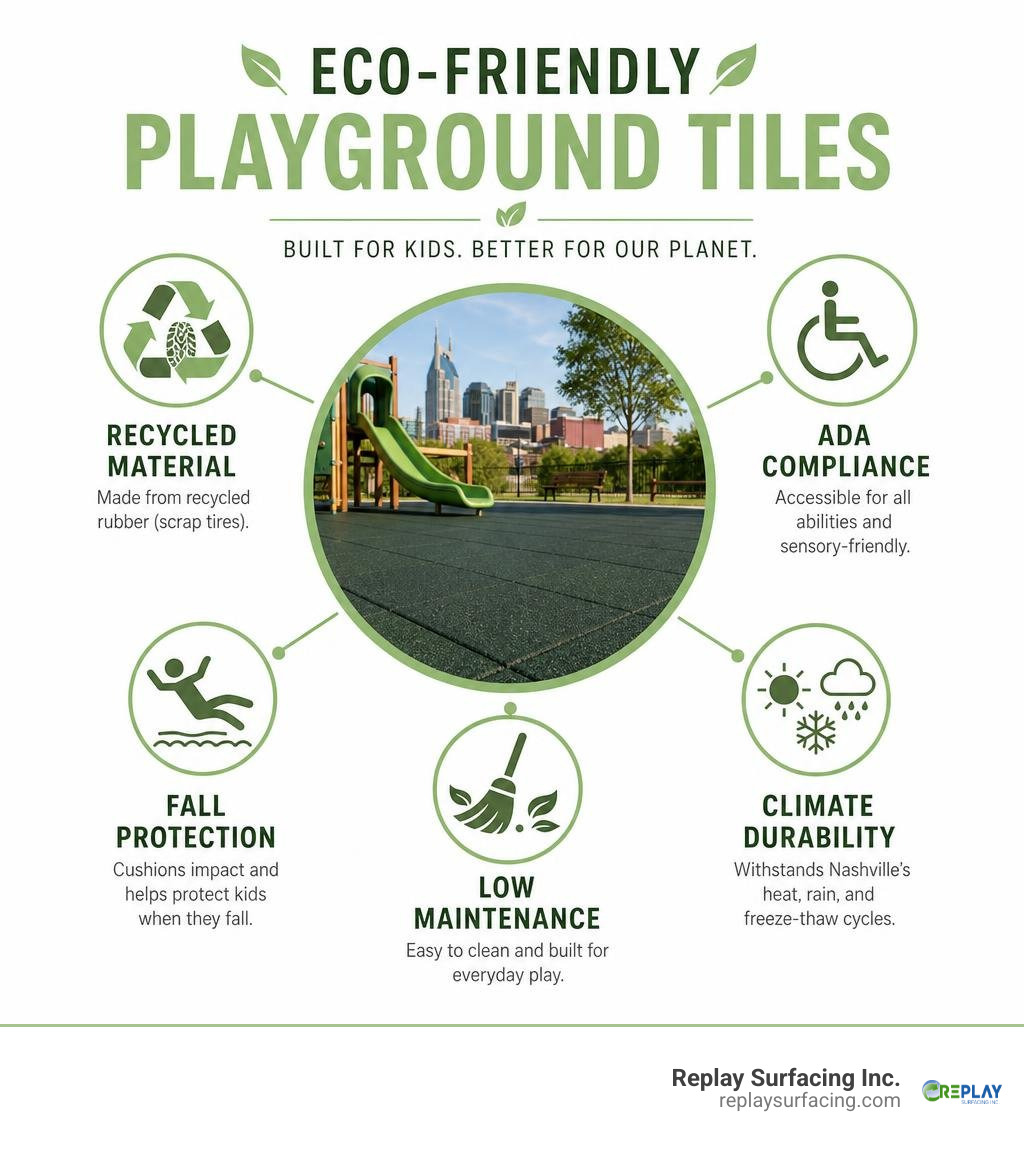
Nashville eco-friendly playground tiles are recycled rubber surfacing products made from scrap tires, designed to provide safe, durable, and sustainable play surfaces for parks, schools, and recreational facilities in Middle Tennessee.
Quick answer — what to know about eco-friendly playground tiles in Nashville:
| Feature | What It Means for You |
|---|---|
| Material | Made from recycled rubber (reclaimed scrap tires) |
| Safety | Cushions falls, meets ASTM impact attenuation standards |
| Durability | Withstands Nashville’s hot summers and cold winters |
| Accessibility | ADA-compliant; supports wheelchair access and sensory play |
| Eco Impact | Diverts millions of pounds of rubber from landfills |
| Maintenance | Low upkeep compared to wood mulch or loose fill |
Nashville’s playground scene is growing fast. Parks like Fannie Mae Dees Park, Rachel’s Garden, and Warner Park Nature Play are already drawing families across Middle Tennessee with inclusive designs, soft surfaces, and creative play features. But many of these spaces still rely on traditional surfacing materials that wear down quickly, require constant upkeep, and leave a larger environmental footprint.
There’s a better option — one that’s safer for kids, kinder to the planet, and built to last through Tennessee’s heat, rain, and freeze-thaw cycles.
I’m Landon Olson, operator of Replay Surfacing and a mechanical engineer with an MBA and years of experience in sustainable manufacturing — I’ve spent my career turning scrap tire waste into high-performance Nashville eco-friendly playground tiles that meet real safety and environmental standards. In the sections below, I’ll walk you through everything you need to know to make the right surfacing decision for your playground or facility.
Nashville eco-friendly playground tiles word roundup:
- non-toxic playground tiles
- sustainable playground surfaces Beaverton
- non-toxic playground surfacing Connecticut
Why Nashville Eco-Friendly Playground Tiles Are the Best Choice for Music City Parks
Middle Tennessee is famous for its vibrant culture, musical heritage, and rapidly expanding urban green spaces. As Nashville continues its dynamic growth into 2026, Metro Parks and community planners are placing a stronger emphasis on eco-friendly, resilient infrastructure. When evaluating safety surfaces for public parks, community centers, or schools, Nashville eco-friendly playground tiles stand out as the top choice for modern urban design.

Middle Tennessee experiences significant seasonal shifts—humid, sun-drenching summers that spike ambient temperatures and winter freezes accompanied by rain, frost, and occasional snow. Traditional surfacing materials struggle under these conditions:
- Wood mulch and chips rot, splinter, mold, and wash away during heavy Nashville downpours, requiring constant, costly topping off every season.
- Sand and pea gravel compact easily, losing shock-absorbing qualities while hiding hazardous debris like sharp stones, metal, or trash.
- Poured-in-place rubber, while smooth, can be prone to cracking over time when ground shifts occur unless installed on perfectly stabilized bases, and seamless repairs can prove challenging.
Interlocking recycled rubber playground tiles directly solve these issues. Engineered specifically to withstand severe climatic stress, these engineered tiles absorb shock efficiently, remain stable under heavy foot traffic, and allow stormwater to drain through self-draining channels without dislodging the surface. For a comprehensive look at shock absorption performance, review our detailed Eco Safety Rubber Playground Surfacing Guide.
By repurposing scrap tires into protective play mats, we turn an environmental liability—discarded tires piling up in landfills or breeding mosquitoes—into custom, resilient safety systems across Music City.
Comparing Traditional Surfaces to Nashville Eco-Friendly Playground Tiles
To understand the practical and financial advantages of installing sustainable tiles in public and private spaces, let’s examine how traditional playground surfaces compare across critical operational metrics:
| Surface Type | Initial Investment | Annual Maintenance | Expected Lifespan | Impact Absorption (ASTM F1292) | ADA Accessibility | Climate Performance in Middle TN |
|---|---|---|---|---|---|---|
| Recycled Rubber Tiles | Moderate to High | Very Low | 15–20+ Years | Consistent & Customizable | Superior (Seamless Wheelchair Access) | Excellent (UV Resistant, Freeze-Thaw Durable) |
| Wood Mulch / Wood Chips | Low | High (Annual Refills) | 1–2 Years | Inconsistent (Compacts over time) | Poor (High Rolling Resistance) | Fair (Rots, Washes Away, Holds Moisture) |
| Engineered Wood Fiber (EWF) | Moderate | Moderate to High | 2–4 Years | Degrades when wet | Conditional (Requires constant leveling) | Fair (Muddy when wet, wind scatter) |
| Pour-in-Place Rubber (PIP) | High | Moderate | 8–12 Years | High initially | Excellent | Good (Requires specialized seam repair) |
| Pea Gravel / Sand | Low | Moderate | Ongoing Loss | Poor (Displaces easily) | Non-Compliant | Poor (Tracks into indoor facilities, freezes) |
As shown in the comparison, Nashville eco-friendly playground tiles present the ideal balance of longevity, minimal lifecycle expense, and absolute safety consistency. While loose-fill materials seem cheaper upfront, their ongoing labor, replacement costs, and potential liability issues make them considerably more expensive over a 10-year span. Learn more in The Definitive Guide to Non-Toxic Playground Tiles.
Sourcing Recycled Materials and Manufacturing Standards
At Replay Surfacing, sustainability is built directly into our manufacturing pipeline. Discarded tires pose a severe environmental threat when improperly stockpiled, catching fire easily or harboring stagnant water. We transform these heavy-duty rubber compounds into refined, high-density raw materials tailored for dynamic impact protection.
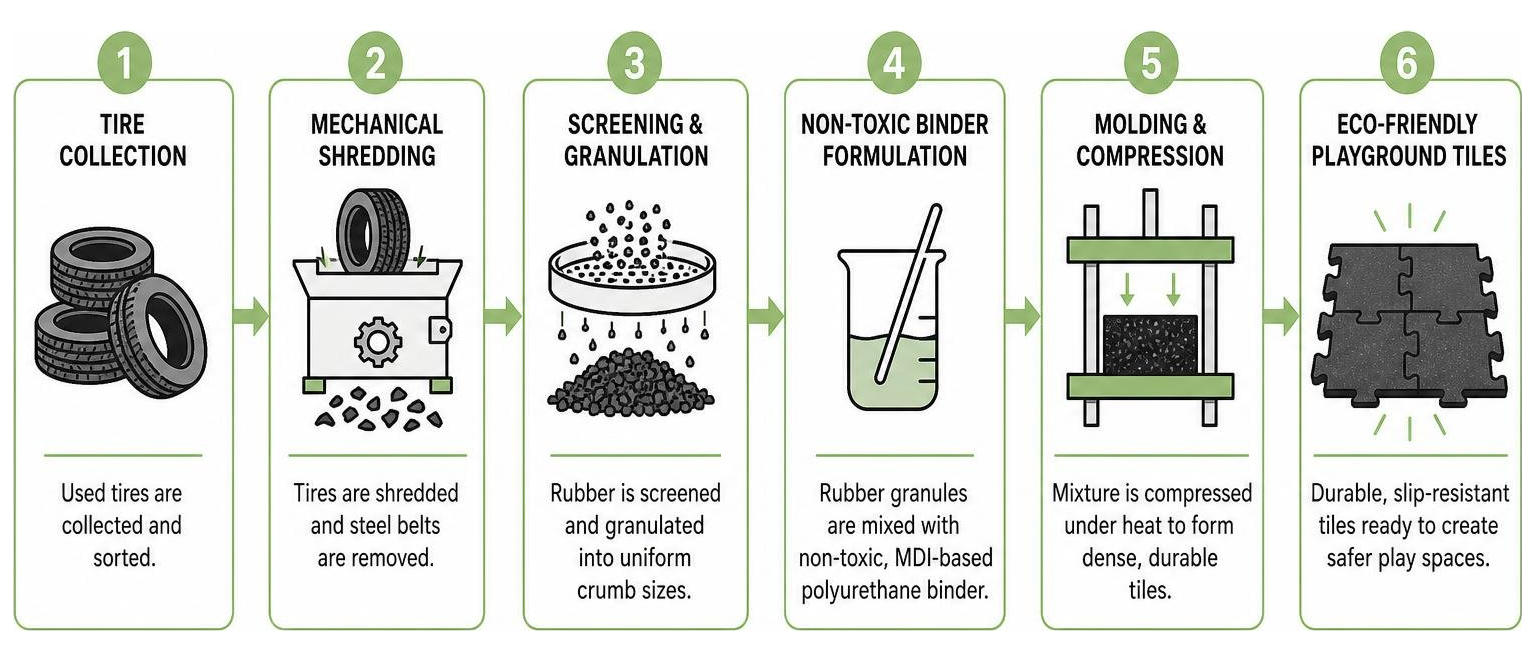
Our precision manufacturing process follows strict environmental and physical safety controls:
- Tire Collection & Mechanical Shredding: Reclaimed passenger and commercial tires undergo mechanical processing, removing 100% of internal steel belting and fiber reinforcement.
- Screening & Granulation: Clean rubber is granulated into uniform crumb particles, sorted strictly by size and mass density.
- Non-Toxic Binder Formulation: We bond the rubber granules using premium, non-toxic, MDI-based polyurethane binders free from harmful VOCs, heavy metals, formaldehyde, and phthalates.
- High-Pressure Mold Compression: Under high heat and uniform hydraulic compression, the rubber mixture forms dense, interlocking tiles engineered to precise critical fall height thresholds (ranging from 4-foot to 10-foot protection ratings).
- Quality Control Testing: Every batch is tested under ASTM F1292 guidelines for impact attenuation and ASTM F1951 for wheelchair accessibility standards.
Because our products are crafted without hazardous additives, children can safely touch, crawl, and play on our surfaces. For deeper insights into raw material choices, read our guide on Recycled Rubber Playground Flooring and explore Sustainable Playground Rubber Mulch and the Truth About Recycled Materials.
Top Nashville Parks Benefiting from Eco-Friendly Playground Surfacing
Nashville boasts some of the most dynamic, cherished public play parks in Tennessee. However, maintaining high-traffic public destinations requires surfacing solutions that match the intensity of thousands of visiting children every month.

Fannie Mae Dees Park (“Dragon Park”)
Located near Vanderbilt University, Fannie Mae Dees Park is world-famous for its iconic, winding mosaic dragon sculpture. Children climb, run, and explore around intricate brick and concrete artistic elements.
Integrating Nashville eco-friendly playground tiles around high-impact zones—such as the landing pads of slides, under swing sets, and near its famous UFO-like spinning merry-go-round—provides essential fall protection while keeping the park clean, accessible, and aesthetically vibrant without blowing loose mulch over the artistic mosaic stonework.
South Inglewood Park
Serving East Nashville families, South Inglewood Park features sports fields, community center programming, and active play equipment. Upgrading its high-traffic play zones with sustainable rubber tiles guarantees that kids playing after summer thunderstorms aren’t returning home covered in mud or wood dust.
Upgrading Local Parks with Nashville Eco-Friendly Playground Tiles
Inclusive playgrounds across the greater Nashville metro area demonstrate how safety surfacing unlocks play opportunities for children of all physical and cognitive abilities.
- Rachel’s Garden at Peay Park (Goodlettsville): Designed specifically as an inclusive haven, Rachel’s Garden features mini cabins, splash pad areas, and specialized sensory equipment. For children in mobility devices, navigating loose wood chips is nearly impossible. Installing precision-interlocking rubber tiles ensures a firm, level route between sensory play stations, water play areas, and shaded seating.
- Miles Together Playground (Brentwood): Built to ensure no child is left on the sidelines, Miles Together Playground features inclusive swings, sensory mazes, and fast-spinning seating. Smooth, impact-absorbing rubber tiles eliminate trip hazards, cushion accidental tumbles from high-speed spinners, and allow parents or grandparents pushing strollers or wheelchairs to navigate the entire park seamlessly.
For more details on how these installations operate in regional networks, see our resources on Recycled Rubber Playground Flooring and examine how communities build Eco-Friendly Playgrounds in Beaverton.
Harmonizing Natural Play with Eco-Tiles at Warner Park Nature Play
Not every playground revolves around bright plastic structures and steel swings. Parks like Warner Park Nature Play emphasize unstructured organic play—inviting kids to dig in dirt, stomping through shallow creeks looking for crawdads, building stick forts, and climbing logs.
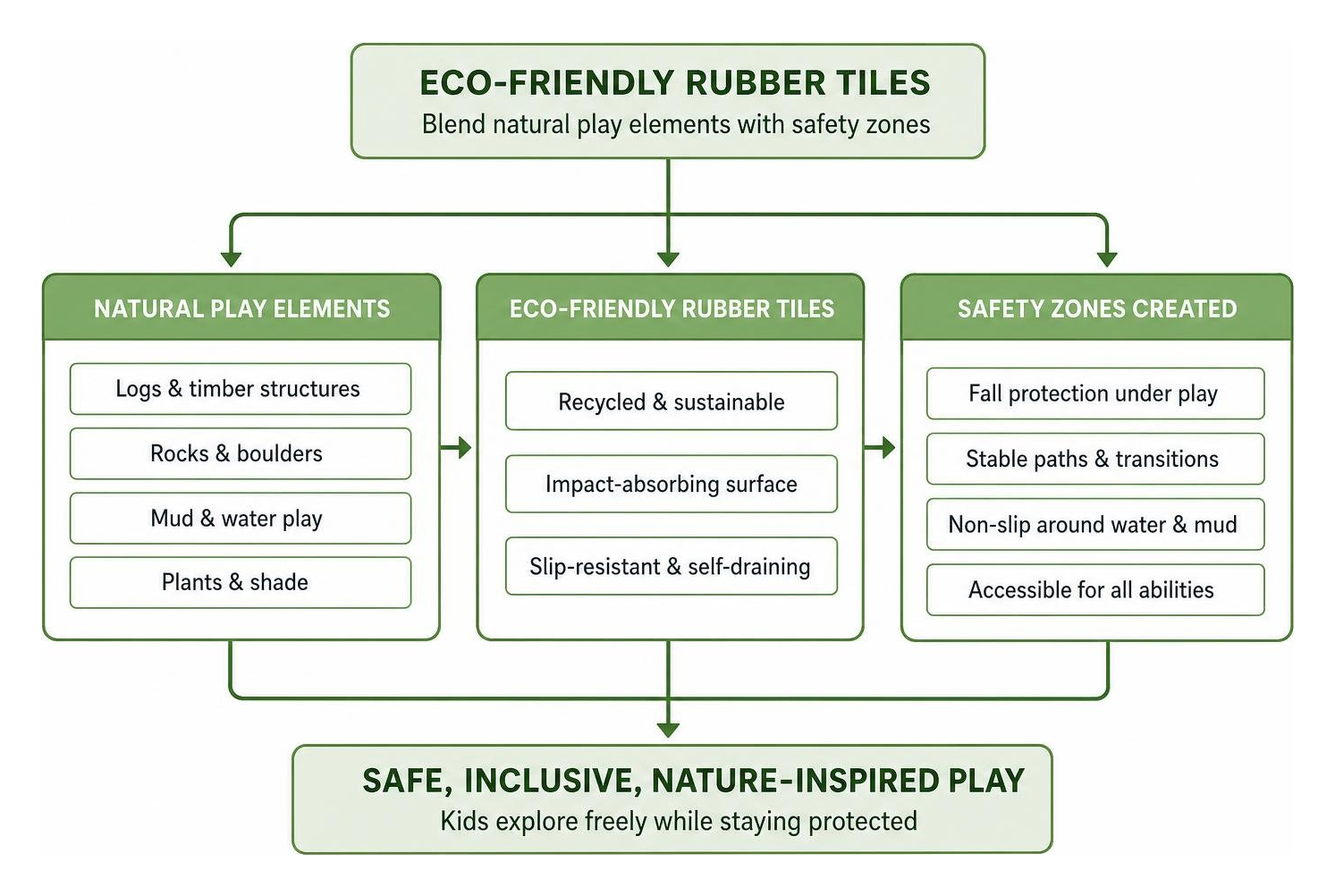
How can Nashville eco-friendly playground tiles support natural play environments without ruining their rustic charm?
- Targeted Transition Zones: Placing earth-toned rubber tiles at transition borders between timber play structures, mud zones, and clean pathways prevents erosion and keeps entryways safe and slip-resistant.
- Under-Structure Protection: Elevated log bridges, boulder climbs, and natural timber towers still require certified fall attenuation under municipal safety regulations. Earth-toned (forest green, slate gray, terracotta) tiles deliver required shock safety while blending seamlessly into woodsy surroundings.
- Protection Around Water & Mud: Near creek-crossing paths or water pumps, self-draining rubber tiles create a non-slip foothold that allows mud and water to wash away easily without creating standing puddles or treacherous slip hazards.
Families seeking fun indoor entertainment alternatives during extreme weather days also visit regional indoor play facilities, where engineered safety surfaces ensure maximum thrill with complete impact security.
Enhancing Accessibility and Local Regulations in Middle Tennessee
When public departments (like Metro Parks Nashville) or private schools evaluate surfacing options, compliance with federal, state, and local standards is non-negotiable.
Key regulatory considerations for Middle Tennessee playground projects include:
- ADA Standard for Accessible Design (ASTM F1951): Safety surfaces must allow wheelchairs, walkers, and strollers to move freely across the surface without sinking or meeting excessive rolling resistance. Rubber tiles pass this standard with flying colors, unlike wood chips which require frequent raking and compact unevenly.
- Standard Specification for Impact Attenuation (ASTM F1292): Surfacing must be rated to protect children falling from the specific equipment height (Critical Fall Height rating). Our tiles are tested and certified to absorb severe impacts from designated deck heights, significantly reducing the risk of traumatic head injuries or bone fractures.
- Metro Nashville Parks & Recreation Safety Standards: Local city planners prioritize durable materials that reduce ongoing municipal labor demands while maintaining public safety year-round.
Explore our full breakdown of safety compliance and materials at Non-Toxic Playground Tiles and check out our general project guidelines at Playground Surfacing.
Backyard Applications Across the Nashville Area
It’s not just municipal parks that benefit from high-performance rubber surfacing. Homeowners across Middle Tennessee—from East Nashville and Green Hills to Franklin, Murfreesboro, and Hendersonville—are upgrading private backyard play spaces with eco-friendly rubber safety products.
Why are Middle Tennessee homeowners choosing rubber tile systems over lawn grass or bulk wood chips?
- Eliminates Lawn Destruction: High-traffic swing zones and slide bottoms quickly wear grass down to bare mud. Rubber tiles create a permanent, clean, attractive landing zone.
- Pet & Child Friendly: Non-toxic rubber tiles don’t harbor insects, fleas, or ticks, nor do they leach toxic chemicals into nearby backyard garden beds.
- Low Maintenance for Busy Parents: Forget spending weekends raking stray wood chips out of the lawn or mowing around awkward play fort posts. A quick spray with a garden hose or leaf blower keeps the surface looking brand new.
- Customizable Footprints: Interlocking modular tiles can be expanded, reconfigured, or moved easily if you upgrade your backyard play set down the road.
If you’re evaluating options for a home residential installation, read our dedicated guide on Why Soft Rubber Playground Mulch is a Solid Investment for Nashville Backyards to explore all residential safety surface solutions.
Frequently Asked Questions About Playground Tiles in Nashville
How do rubber tiles handle Nashville’s summer heat and winter freezes?
Nashville summers regularly reach temperatures well above 90°F with intense UV exposure, while winters bring freezing rain and ice. Our high-density recycled rubber tiles are formulated with UV-stabilized pigments and climate-resilient binders that prevent fading, cracking, or crumbling.
Additionally, rubber maintains natural thermal flexibility—unlike concrete or asphalt, it won’t crack during freeze-thaw expansion cycles. Drainage channels molded into the underside of each tile allow rainwater to flow freely beneath the surface, preventing ice sheets from forming on top during winter freezes.
Are sustainable playground tiles fully ADA-compliant for inclusive play?
Yes, absolutely. Our interlocking eco-friendly playground tiles exceed ASTM F1951 standards for playground accessibility under the Americans with Disabilities Act (ADA).
Unlike wood mulch, engineered wood fiber, or rubber nuggets—which displace under wheel pressure and create deep ruts—rubber tiles create a firm, level, continuous surface. Children and parents using wheelchairs, crutches, or strollers can navigate every corner of the playground effortlessly without getting stuck.
How do rubber playground tiles compare in upfront cost versus long-term maintenance?
While traditional loose-fill wood mulch has a lower initial purchase price, it requires significant ongoing expenditure: annual replenishment, frequent labor to rake materials back into place, continuous weeding, and pest control.
Rubber tiles represent a higher initial investment upfront, but their maintenance costs are practically zero over a 15-to-20-year lifespan. When calculated over a 10-year period, rubber tiles are significantly more cost-effective than wood chips or gravel, making them a much smarter financial decision for municipal budgets, schools, and homeowners alike.
Conclusion
Creating safe, fun, and accessible play spaces for Music City children doesn’t mean compromising our commitment to the environment. Nashville eco-friendly playground tiles turn landfill-bound tire waste into high-performance safety surfaces that protect kids from falls, support complete inclusion for children with special needs, and withstand Middle Tennessee’s unpredictable weather for decades.
Whether you are managing a major municipal park renovation with Metro Nashville, upgrading a church or school playground in Goodlettsville, or installing a safe family play area in your backyard, Replay Surfacing Inc. is ready to help you build a cleaner, safer, greener surface.
We proudly serve regional communities across Nashville TN, Charlotte NC, Columbia SC, Raleigh NC, Sanford NC, Tucson AZ, Connecticut, Indiana, Beaverton OR, and Lake Charles Louisiana.
Ready to transform your Nashville play area with sustainable, high-impact rubber tiles?
Contact our expert team today to explore surface customization options, request physical material samples, or receive a free project estimate! Visit our main resource portal at Playground Surfacing to get started.