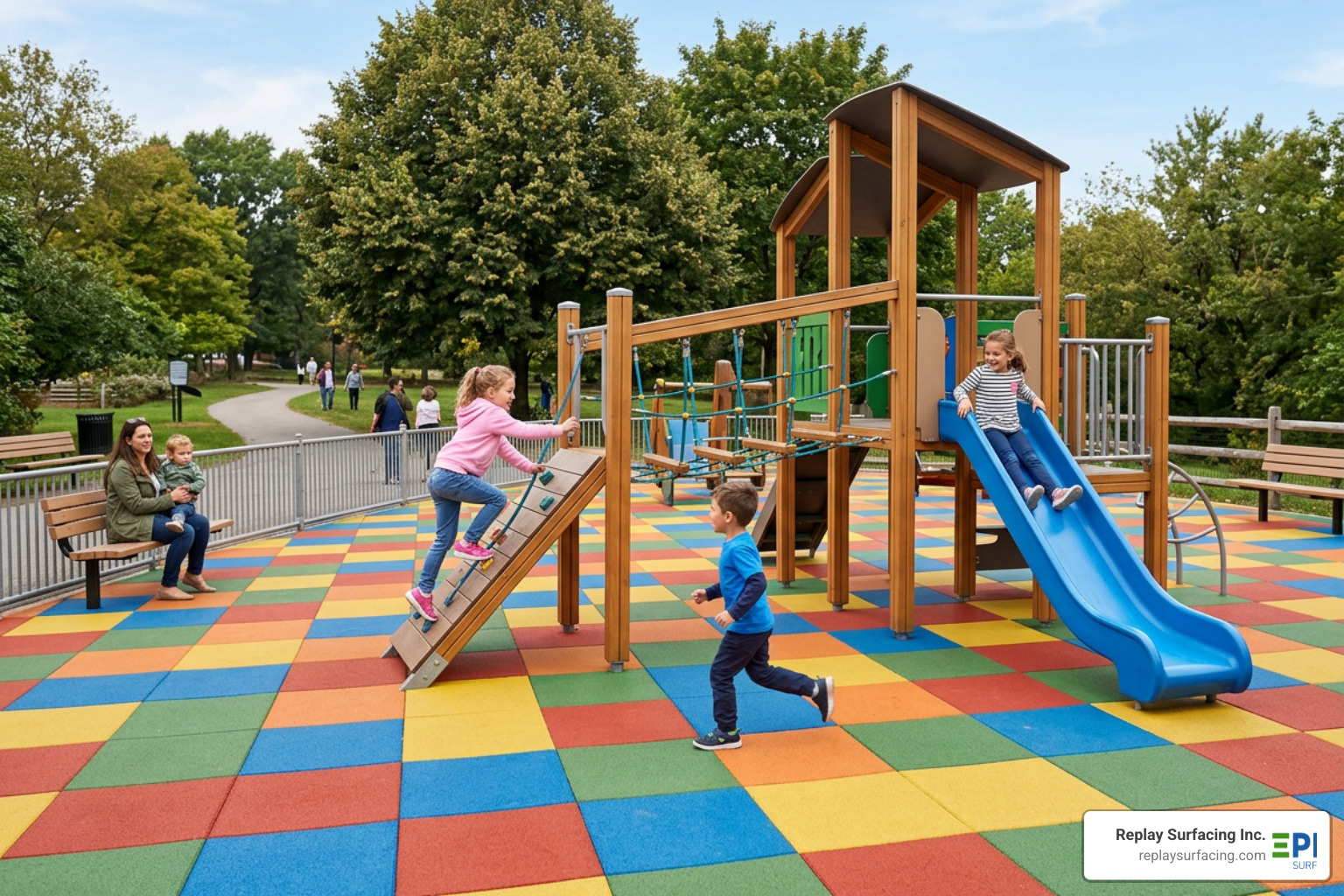
Why Non-Toxic Playground Tiles Matter for Safe, Healthy Play
Non-toxic playground tiles are rubber or foam surfacing panels free of harmful chemicals like lead, heavy metals, and BPA — designed to cushion falls and protect children from injury without exposing them to dangerous substances.
Quick answers:
- What are they? Interlocking rubber tiles made without toxic chemicals, heavy metals, or recycled tire contaminants
- Who needs them? Schools, parks, daycares, and residential play areas — especially in high-regulation states like California, Texas, and Florida
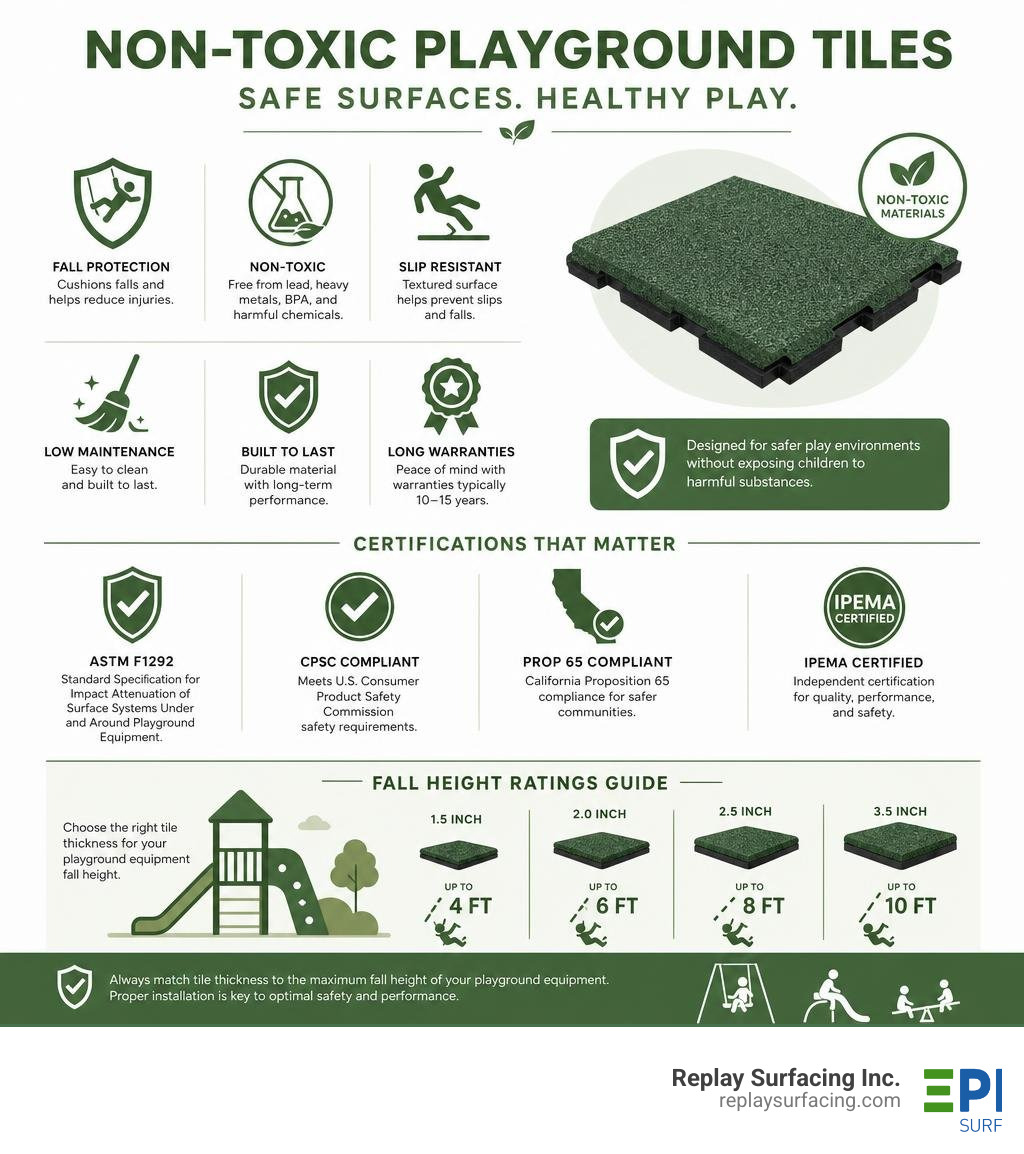
- Key certifications to look for: ASTM F1292, CPSC compliance, California Proposition 65 compliance, IPEMA certification
- Typical thickness: 1.5 in. to 3.5 in., depending on fall height requirements (up to 10 ft.)
- Top benefits: Fall protection, slip resistance, low maintenance, no toxic off-gassing, long warranties (10–15 years)
Every year in the United States, over 200,000 playground injuries are reported. Many of those injuries happen on surfaces that were never designed with both safety and health in mind. Traditional loose-fill materials — wood chips, gravel, and especially recycled tire mulch — can harbor pests, mold, and harmful chemical residues. Parents, school administrators, and facility managers across California, Texas, Florida, the Mid-Atlantic, and the Northeast are increasingly asking a smarter question: Is the surface under my playground equipment actually safe?
That question is exactly what this guide answers.
I’m Landon Olson, operator of Replay Surfacing and a mechanical engineer with an MBA, and I’ve spent my career turning scrap rubber into certified, non-toxic playground tiles and surfacing solutions that meet the highest safety standards. In the sections ahead, I’ll walk you through everything you need to know — from certifications and materials to installation, maintenance, and cost.
Quick non-toxic playground tiles definitions:
Understanding the Safety of Non-Toxic Playground Tiles
When we talk about safety on the playground, we aren’t just talking about broken bones and scraped knees. True safety means ensuring that the ground our children crawl, slide, and fall on is free from invisible hazards.
The chemical composition of playground surfacing is a major concern for modern parents and school boards. Traditional recycled rubber products can sometimes contain traces of heavy metals (like lead, mercury, and arsenic), volatile organic compounds (VOCs), and phthalates.
True non-toxic playground tiles are manufactured using premium, commercial-grade materials where raw components are thoroughly cleaned and impurities are filtered out. This ensures they are entirely lead-free, BPA-free, and contain no toxic chemicals or harmful plasticizers.
In highly regulated areas—such as our service locations in Connecticut, Indiana, Oregon (including Beaverton), and across our southern hubs in Charlotte and Raleigh, NC, Columbia, SC, Nashville, TN, Lake Charles, LA, and Tucson, AZ—surfacing must meet strict environmental and health standards. For example, our premium tiles comply fully with California Proposition 65, meaning they do not require warnings for containing chemicals known to cause cancer or reproductive harm. They are also fully compliant with the Consumer Product Safety Commission (CPSC) guidelines.
By selecting Non-Toxic Playground Tiles, you are choosing a surface that is as chemically safe as it is physically protective.
Verifying Certifications for Non-Toxic Playground Tiles
How can a buyer verify that a manufacturer’s safety claims are legitimate? You should always ask for independent, third-party testing documentation. In June 2026, the gold standards for playground safety remain highly rigorous:
- ASTM F1292 / ASTM F1292-17A: This is the standard specification for impact attenuation of surfacing materials within the use zone of playground equipment. It measures the critical fall height of the tiles to ensure they cushion impacts effectively.
- IPEMA Certification: The International Play Equipment Manufacturers Association provides third-party certification to validate that surfacing meets ASTM standards.
- CPSC Compliance: Meets the safety parameters outlined in the CPSC’s Public Playground Safety Handbook.
- EN 1177: The European standard for impact-attenuating playground surfacing, which is widely respected globally for its strict testing protocols.
When planning a project—whether for a municipal park in Raleigh, NC, a school district in Indiana, or a backyard in Tucson, AZ—always demand certified test results. High-quality tiles like the Safe-Play Rubber Playground Tiles | Play Area Fall Protection are fully tested to meet these exact standards, giving you complete peace of mind. Investing in certified Playground Safety Surfacing ensures your facility remains fully compliant with both local and national safety codes.
Why Non-Toxic Tiles Outperform Traditional Loose-Fill Materials
Traditional loose-fill materials like wood chips, engineered wood fiber (EWF), and gravel have been playground staples for decades. However, they come with significant hidden costs and safety hazards.
First, loose-fill materials are notorious for displacing. When children run, jump, and play, they kick the mulch away from high-use areas like the bottoms of slides and under swings. This leaves those critical impact zones with virtually zero fall protection. Furthermore, loose-fill materials easily hide sharp objects like broken glass, animal waste, and rusty nails. They also attract insects, harbor mold, and require constant raking and top-offs to maintain safety compliance.
In contrast, interlocking non-toxic tiles offer a stable, uniform surface that never displaces, stays sanitary, and provides consistent impact absorption year after year.
| Feature | Non-Toxic Playground Tiles | Wood Chips / Loose-Fill |
|---|---|---|
| Fall Protection Consistency | Excellent (fixed in place) | Poor (easily displaced) |
| Chemical Safety | Lead-free, BPA-free | May contain chemical treatments |
| Maintenance Required | Very low (sweeping/occasional washing) | High (constant raking, annual top-offs) |
| Pest & Mold Resistance | High | Low (harbors insects and fungi) |
| Accessibility (ADA) | Fully wheelchair accessible | Poor (difficult for wheels) |
| Long-Term Cost | Highly predictable, low maintenance | High recurring material and labor costs |
While loose-fill might seem cheaper upfront, the ongoing labor and replacement costs quickly make it the more expensive option. Over time, choosing a solid, non-toxic tile system is much more cost-effective.
Why Choose Non-Toxic Playground Tiles Over Recycled Tire Mulch
While Playground Rubber Mulch | Non Toxic Rainbow Mulch offers an excellent, tire-free loose-fill alternative, standard recycled tire mulch carries several health and aesthetic drawbacks.
Recycled tire mulch is made from old, discarded vehicle tires. These tires contain carbon black, heavy metals, and petroleum residues. When children play on recycled tire mulch, they often end up covered in a dirty black residue that stains clothes and skin. Even worse, in hot summer climates—such as Tucson, AZ, or Lake Charles, LA—recycled tire mulch can off-gas a strong, unpleasant oily odor.
By choosing high-quality, tire-free Rubber Mulch Toxic alternatives or premium virgin rubber tiles, you completely eliminate these issues:
- Zero Black Residue: No carbon black means children stay clean during playtime.
- No Off-Gassing: Even under the intense Arizona sun, our premium tiles do not release harsh chemical odors.
- No Hidden Contaminants: Because they do not come from old tires, there is no risk of steel wire fragments or road contaminants hiding in the play area.
Performance, Fall Protection, and Weather Durability
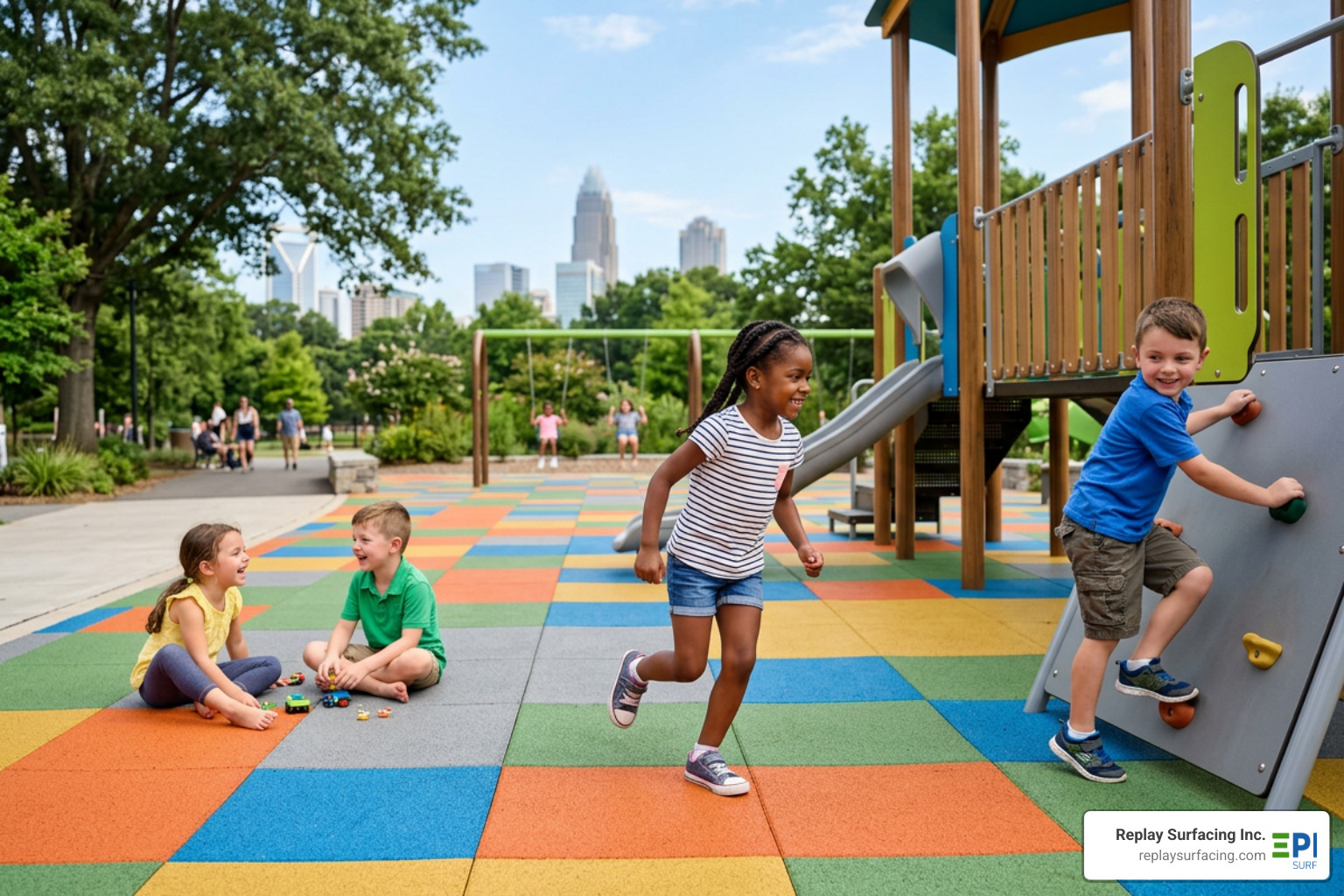
A playground surface must be tough enough to withstand mother nature while remaining soft enough to protect a falling child. Non-toxic playground tiles excel in both categories.
- Fall Protection: The thickness of the tile directly correlates with its critical fall height rating. For example, a 2.5-inch thick tile is typically certified to protect against falls from up to 6 feet, while a 3.5-inch tile can protect up to 8 feet.
- Slip Resistance: Rubber naturally becomes more slip-resistant when wet. This is a crucial safety benefit for wet climates like Lake Charles, LA, or during humid summers in Columbia, SC.
- UV Resistance: High-quality tiles feature UV-stabilized EPDM or premium color pigments that resist fading and cracking under direct sunlight, ensuring longevity in sunny regions like Tucson, AZ.
- Freeze-Thaw Durability: In cold-weather regions like Connecticut and Indiana, standard surfaces can crack and shift. Premium rubber tiles are highly flexible, allowing them to expand and contract without losing structural integrity.
- Water Permeability: Designed with built-in drainage channels on the underside, these tiles allow rainwater to drain through the seams and flow away, preventing puddles and allowing kids to get back to playing quickly after a rainstorm.
Our certified Playground Safety Surfacing is engineered to deliver reliable, year-round performance regardless of your local climate.
Thickness and Customization Options
Every playground is unique, and our non-toxic tiles offer the flexibility to match your specific aesthetic and safety requirements.
Thickness options generally range from 1 inch (for low fall heights or ground-level play) up to 4.25 inches (certified for critical fall heights up to 10 feet). This allows you to tailor the protection to the height of your slides, climbing walls, and swing sets.
We also offer a wide array of vibrant colors and patterns. You can choose solid earth tones to blend with nature in Beaverton, OR, or select bright, custom-designed patterns to create educational or interactive spaces for schools in Charlotte, NC. Additionally, we provide ADA-compliant ramp edges and corners to ensure the playground remains accessible to children of all abilities. Learn more about your options in The Ultimate Guide to Custom Safety Surfacing.
Installation and Maintenance Guidelines
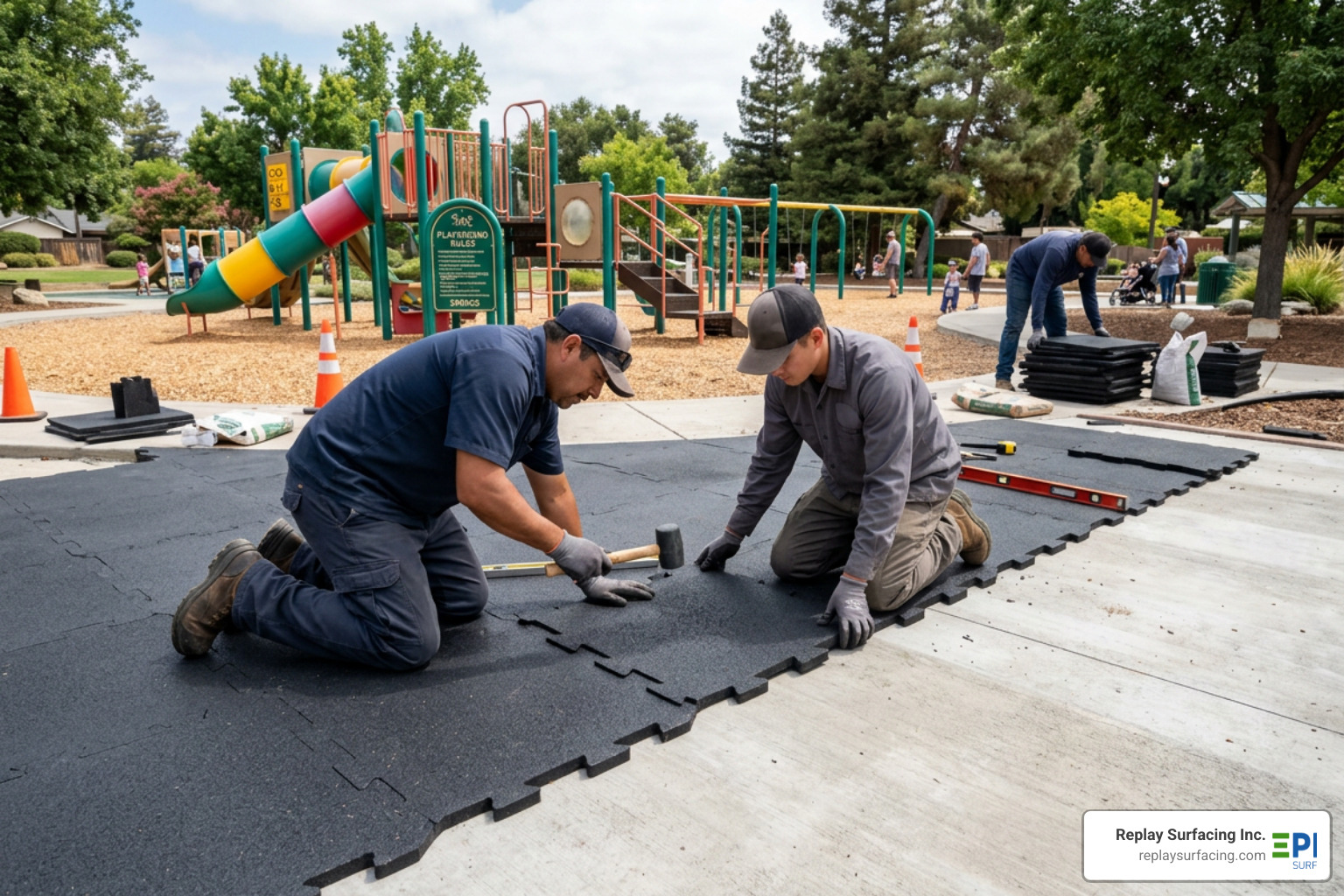
Proper installation is key to ensuring the longevity and safety of your playground tiles. While some residential buyers choose a DIY approach, commercial projects in schools, parks, and daycares typically require professional installation to maintain warranty coverage.
Sub-Base Preparation
The tiles must be laid on a flat, stable, and well-draining surface.
- Concrete or Asphalt: This is the ideal sub-base. It provides a perfectly flat surface and allows for easy adhesive application.
- Compacted Gravel/Crushed Stone: For outdoor installations where concrete isn’t preferred, a compacted aggregate base works beautifully.
- Soil or Grass: Installing directly over grass is not recommended without proper preparation. You must excavate the sod, level the soil, install a weed barrier fabric, and lay a compacted gravel base first.
Interlocking Systems
Most modern tiles utilize advanced interlocking systems, such as QuadBlock connectors or heavy-duty plastic dowels. These systems lock the tiles together securely along their entire perimeter, preventing the edges from curling or shifting over time. For high-traffic areas, applying a polyurethane adhesive to the sub-base ensures the tiles stay permanently anchored.
For the best results, we recommend hiring certified Playground Safety Surfacing Installers to handle the site prep and layout.
Cleaning and Long-Term Wear
One of the greatest benefits of choosing non-toxic playground tiles is how easy they are to maintain. Unlike wood chips, which require constant raking and annual replenishment, tiles require very little effort to keep clean:
- Routine Cleaning: Regularly sweep or use a leaf blower to remove leaves, twigs, and dirt.
- Washing: For spills, mud, or sticky spots, simply hose down the tiles. You can use a mild detergent (like Dawn dish soap) mixed with warm water and a soft scrub brush for stubborn stains. Avoid solvent or petroleum-based cleaners (like Pine-Sol or WD-40), as these will degrade the rubber.
- Disinfection: For indoor play areas or daycares, a diluted bleach-and-water solution can be used to sanitize the surface without damaging the tiles.
- Mold and Mildew Resistance: Because the rubber is non-porous and free-draining, it naturally resists mold and mildew growth—even in humid climates like Nashville, TN, or Columbia, SC.
With minimal maintenance, high-quality tiles will easily last 10 to 15 years. For a deeper dive into maintenance practices, read our Interlocking Playground Mats Ultimate Guide.
Frequently Asked Questions about Non-Toxic Playground Tiles
Choosing the right playground surface is a major decision. Here are answers to some of the most common questions we receive from school boards, park directors, and parents. Feel free to browse our dedicated section on Rubber Playground Mats for additional details.
Are non-toxic playground tiles safe for pets and plants?
Yes! Because our premium tiles are made from clean, non-toxic materials, they are completely safe for pets, plants, and local wildlife. They do not leach harmful chemicals into the surrounding soil, making them an excellent eco-friendly choice for backyard play areas, dog runs, and community gardens alike. They also emit zero harsh chemical odors, ensuring a pleasant environment for everyone.
Can these tiles be used for both indoor and outdoor play areas?
Absolutely. Non-toxic playground tiles are incredibly versatile. Indoors, they provide excellent sound insulation, shock absorption, and a comfortable surface for sensory rooms, daycare classrooms, and indoor play centers. Outdoors, their UV resistance, water permeability, and weather durability allow them to withstand the elements from the cold winters of Connecticut to the hot summers of Tucson, AZ. Discover more about indoor and outdoor versatility in our guide to Recycled Rubber Playground Flooring.
What is the typical cost and warranty for high-quality tiles?
High-quality, non-toxic playground tiles generally cost between $6 to $12 per square foot, depending on the thickness, color customization, and locking mechanism. While this is a higher upfront cost than wood mulch, the lack of annual maintenance and replacement costs means the tiles pay for themselves within 3 to 5 years.
Furthermore, our premium tiles come backed by a robust 10-year to 15-year limited warranty against manufacturing defects. For a complete breakdown of pricing, check out our Playground Rubber Flooring Price Complete Guide.
Conclusion
Creating a safe, joyful space for children to play shouldn’t require compromising on health or environmental values. By choosing non-toxic playground tiles, you are investing in a durable, high-performance, and chemically safe surface that protects children from both physical injuries and toxic chemical exposure.
At Replay Surfacing Inc., we are proud to help communities across Charlotte, NC, Columbia, SC, Raleigh, NC, Sanford, NC, Tucson, AZ, Connecticut, Indiana, Nashville, TN, Beaverton, OR, and Lake Charles, LA build safer, greener play spaces. Our sustainable manufacturing practices transform environmental challenges into beautiful, customized, and long-lasting safety surfaces.
If you are ready to design the perfect, non-toxic surface for your school, park, or backyard, explore our Eco Safety Rubber Playground Surfacing Guide or visit our main Playground Surfacing Page to request a custom quote today!