
When a Fall Happens, Beaverton Ground Padding Is the Last Line of Defense
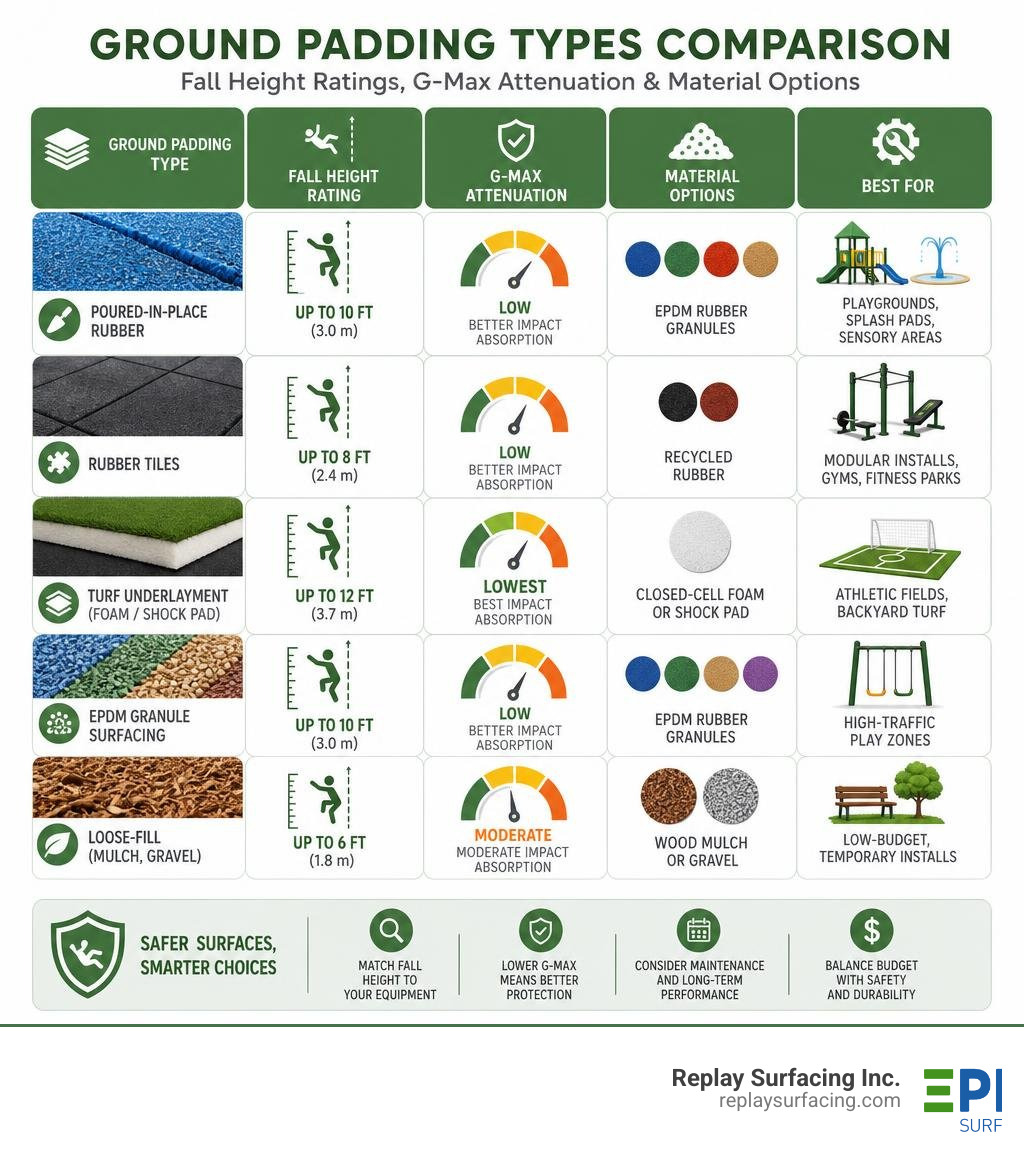
Beaverton ground padding is any material installed beneath or around play and athletic equipment to absorb impact and reduce injury risk. If you need a quick answer on which type is right for your project, here’s a snapshot:
| Ground Padding Type | Best For | Key Benefit |
|---|---|---|
| Poured-in-place rubber | Playgrounds, splash pads, sensory areas | Seamless, ADA-compliant, customizable |
| Rubber tiles | Modular installs, gyms, fitness parks | Easy replacement, multiple thicknesses |
| Turf underlayment (foam/shock pad) | Athletic fields, backyard turf | Reduces infill, improves G-Max rating |
| EPDM granule surfacing | High-traffic play zones | Durable color, weather-resistant |
| Loose-fill (mulch, gravel) | Low-budget, temporary installs | Low upfront cost, high maintenance |
Falls happen — on playgrounds, sports fields, and fitness areas alike. The surface underneath determines whether that fall is a close call or a serious injury. Choosing the wrong material means displacement, degradation, and eventually, exposed hard ground. Choosing the right one means years of reliable protection with minimal upkeep.
I’m Landon Olson, operator of Replay Surfacing Inc., and my background in mechanical engineering combined with hands-on experience across safety surfacing projects has given me a deep understanding of what makes ground padding in Beaverton perform when it matters most. Let’s walk through the best options available today so you can make a confident, informed choice.
Similar topics to ground padding:
- custom playground surface tiles
- playground surface maintenance Beaverton
- sustainable playground surfaces Beaverton
Choosing the Right Ground Padding for Outdoor and Athletic Use
When designing outdoor recreation zones or athletic facilities, safety is not just a nice-to-have feature—it is a core engineering requirement. Standard concrete, packed dirt, or poorly maintained turf can turn a simple trip into a major liability. That is why selecting the appropriate ground padding in Beaverton is essential for any sports field or play area.
For athletic turf installations, a high-quality shock-absorbing turf underlayment is critical. Working out or playing sports on unyielding subfloors can cause extreme stress on athletes’ joints. By adding a dedicated foam or rubber pad under the artificial turf, we can dramatically reduce joint fatigue and lower the risk of impact injuries. These underlayments act as a cushion, keeping the surface resilient and responsive even under heavy, continuous use.
If you are planning an outdoor project, you must also consider the specific safety needs of the environment. For example, when looking at Shock Absorbing Playground Surfaces, the padding must be engineered to handle falls from varying heights.
In major municipal hubs like Indianapolis, Indiana, local parks and schools are moving away from hard, unforgiving surfaces in favor of advanced cushioning systems. Whether you are installing custom safety surfacing for a school playground, a public park, or a residential backyard play area in the Indianapolis metro area, finding a system that withstands local weather while absorbing impact is key. This ensures beautiful, slip-resistant, and cushioned environments for children.
Types of Ground Padding for Sports and Playgrounds
Not all safety surfaces are created equal. Depending on your budget, safety requirements, and expected foot traffic, you will want to consider a few primary types of ground padding:
- EPDM Rubber Surfacing: Ethylene Propylene Diene Monomer (EPDM) rubber granules are mixed with a specialized polyurethane binder to create a highly durable, colorful, and weather-resistant top layer. It resists UV degradation and remains flexible through freezing winters and scorching summers.
- Turf Underlayment (Shock Pads): These are lightweight, high-density foam or frothed urethane pads installed directly beneath artificial grass. They provide consistent shock absorption across the entire field, reduce the amount of loose infill required, and are highly favored for putting greens and multi-sport fields. Products like the GST Putting Green Underlayment Pad 1/4 in. x 5 ft. x 200 ft. Roll are excellent examples of specialized underlayments designed to keep sports surfaces perfectly level and safe.
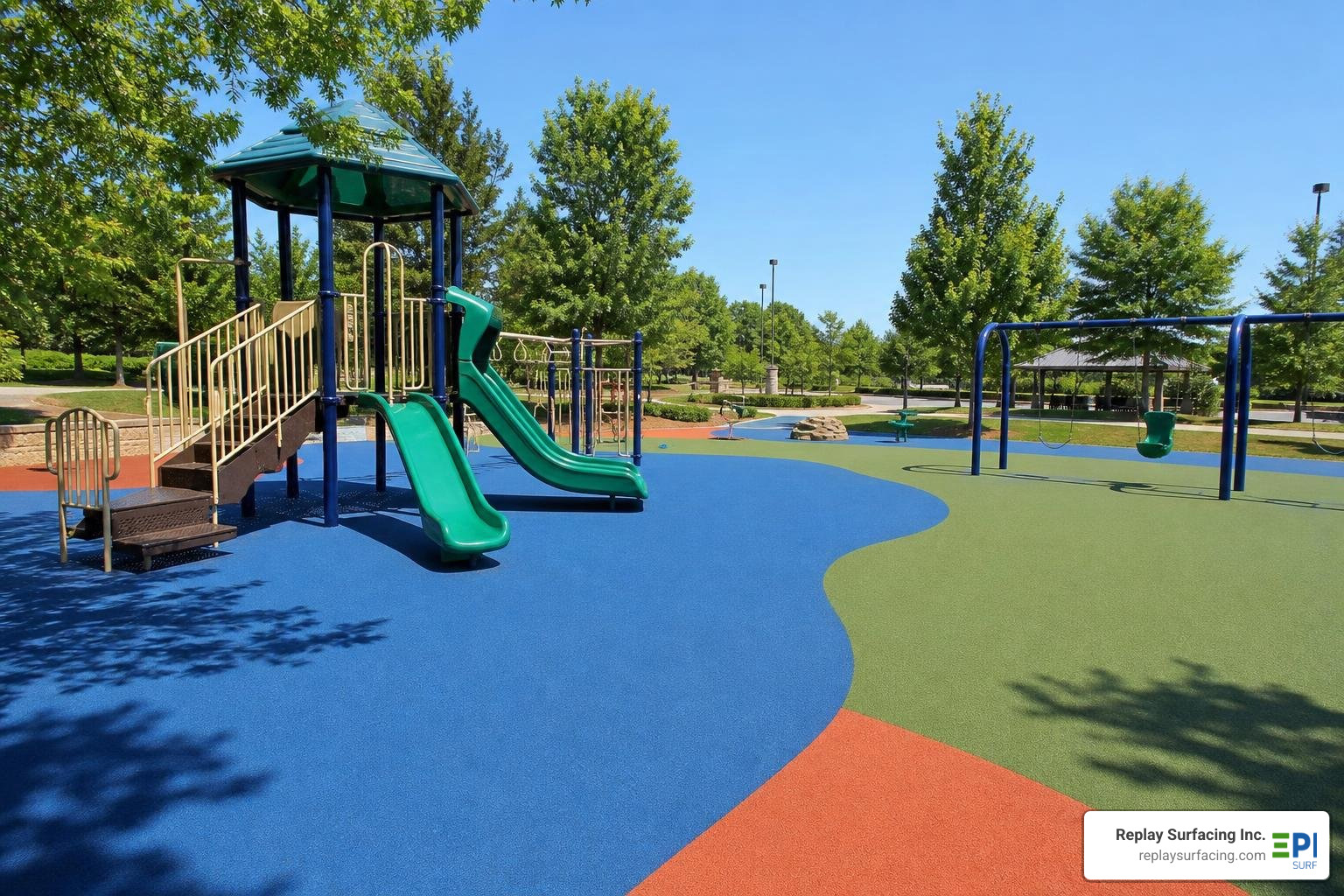
- Poured-in-Place (PIP) Rubber: This is the gold standard for modern playground safety. It consists of a dual-layer system: a thick base layer of shock-absorbing shredded rubber (often recycled SBR) and a vibrant wear layer of EPDM granules. PIP rubber creates a seamless, unitary surface that is fully ADA-compliant and highly accessible.
If you are looking for the absolute best in long-term protection, we highly recommend exploring Poured in Place Rubber: The Ultimate Playground Safety Surface.
For communities in Nashville, Tennessee, durable safety surfacing solutions must be tailored to handle both heavy recreational traffic and the humid southern climate. When upgrading community parks, school play zones, or athletic facilities in Nashville, selecting a seamless rubber surface ensures that the ground remains intact and safe year-round. While some property owners initially consult local residential flooring specialists like Your Flooring Source in Nashville, TN | Myers Flooring of Nashville for indoor solutions, they quickly realize that specialized, heavy-duty outdoor rubber systems are required to handle the rigorous demands of public play spaces.
Key Factors in Selecting Protective Ground Padding
To choose the perfect padding for your project, keep these critical evaluation criteria in mind:
- Durability and Weather Resistance: Outdoor padding must endure rain, snow, and intense UV exposure without crumbling, cracking, or losing its elasticity.
- Critical Fall Height: This is the maximum height from which a child or athlete could fall onto the surface without sustaining a life-threatening head injury. The thickness of your rubber or foam pad must directly correlate to the height of the play equipment.
- Impact Standards and Compliance: Every public playground surface must meet strict safety guidelines. To understand the testing and science behind these requirements, read our guide on Safety First: Understanding Playground Surface Impact Standards.
- G-Max Testing: G-Max measures the shock-attenuation performance of sports fields and play surfaces. A lower G-Max rating means the surface absorbs more of the impact energy, protecting the athlete’s body.
- ASTM F1292 Compliance: This is the benchmark standard for playground surfacing. Always ensure your provider offers certified materials that meet or exceed these specifications.
By selecting the correct thickness and material composition, you guarantee maximum impact protection for everyone who steps, runs, or falls onto your surface.
Comparing Rubber Safety Surfacing and Traditional Ground Cover Options
For decades, loose-fill materials like wood mulch, pea gravel, and shredded bark were the go-to choices for playgrounds and fitness areas. They were cheap to buy upfront and relatively easy to throw down. However, as safety standards have evolved, the hidden costs and safety hazards of these traditional materials have become impossible to ignore.
Modern rubber safety surfacing offers superior weather resistance and slip resistance, making it a far more reliable option. Unlike wood mulch, which decays, harbors mold, freezes solid in the winter, and easily washes away during heavy rainstorms, high-quality rubber remains stable and protective in all climates. For an in-depth breakdown of these benefits, refer to our Soft Fall Rubber Flooring Complete Guide.
In Raleigh, North Carolina, park managers and school administrators are actively transitioning from high-maintenance natural ground covers to durable rubber safety surfacing. Raleigh’s beautiful public parks deserve surfaces that stay clean, dry, and safe without constant replenishment. While native plants are excellent for local landscaping—as discussed in community forums regarding What native ground cover exists in Raleigh area that spreads quickly … —they are not designed to cushion a fall from a ten-foot swing set. For play zones, replacing organic ground cover with engineered rubber padding is the smartest way to protect children while reducing long-term maintenance budgets.
Similarly, our friends in South Carolina often deal with the challenges of managing outdoor spaces, where choosing the right materials makes all the difference. While conservation groups advocate for native vegetation over invasive species—such as the resources provided by the Invasive Ground Covers And Native Alternatives | South Carolina … —the play zones themselves require a unitary, non-organic safety barrier to keep weeds out and safety ratings high.
Why Rubber Ground Padding Outperforms Loose-Fill Materials
Loose-fill materials suffer from a fatal flaw: displacement. Every time a child runs, jumps, or slides, they push the mulch or gravel out of the way. This creates deep pits under high-use areas like swings and slide exits—the exact spots where falls are most likely to occur!
Poured-in-place rubber and interlocking rubber tiles solve this problem completely. Because they are unitary, they stay exactly where they are installed, ensuring consistent protection across every square inch of the play area.
| Surfacing Property | Replay Poured-in-Place Rubber | Replay Rubber Safety Tiles | Traditional Wood Mulch |
|---|---|---|---|
| Displacement Risk | Zero (Seamless & bonded) | Zero (Interlocking/pinned) | Extremely High (Requires daily raking) |
| Fall Height Protection | Up to 10+ feet (Customizable thickness) | Up to 10 feet (Varying tile thicknesses) | Variable (Decreases as material degrades/shifts) |
| ADA Accessibility | Outstanding (Wheelchair & stroller friendly) | Excellent (Firm, flat surface) | Poor (Difficult for assistive devices to navigate) |
| Maintenance Needs | Low (Occasional wash & roll coat) | Low (Easy individual tile replacement) | High (Annual top-offs, weeding, raking) |
| Lifespan | 10 to 20+ Years | 10 to 15+ Years | 1 to 2 Years (Decomposes rapidly) |
| Hidden Hazards | None (Smooth and solid) | None | High (Can hide glass, animal waste, sharp sticks) |
Best Use Cases for Specialized Rubber Surfacing
Our custom rubber ground padding is engineered to excel in a wide variety of settings:
- Playgrounds: Provides unmatched impact absorption under tall play structures, ensuring children can play hard without the risk of severe injury.
- Backyard Play Areas: Gives parents peace of mind by replacing muddy grass or messy wood chips with a clean, soft, and attractive rubber safety pad.
- Outdoor Fitness Parks: Absorbs the impact of high-intensity training, protects joints, and provides a slip-resistant surface for bodyweight exercises.
- Splash Pads: Our porous rubber systems allow water to drain instantly, preventing puddles while providing a soft, non-slip surface for wet feet.
- Sensory Play Areas: By using different colors, textures, and custom shapes, we can create engaging, tactile landscapes that stimulate children’s minds while keeping them physically safe.
Best of all, our unitary rubber systems are fully ADA-compliant. Unlike wood mulch or gravel, which trap wheelchair wheels and make navigation nearly impossible, our smooth rubber surfaces allow children and parents of all abilities to play together without barriers.
Heavy-Duty and Industrial Ground Protection Solutions
While playgrounds and sports fields are our primary focus, the need for high-performance ground padding extends far into heavy-duty commercial and industrial environments. High-traffic zones, construction areas, and industrial facilities require robust surfaces that can withstand extreme weight, heavy machinery, and constant friction.
For temporary worksites, construction crews often use heavy-duty ground protection mats to protect sensitive turf from being torn up by trucks and heavy equipment. Similarly, in industrial settings, specialized containment pads—such as a Ground Pad for Spill Containment Berms | ENPAC —are deployed to prevent punctures in environmental containment systems on rough, rocky terrain.
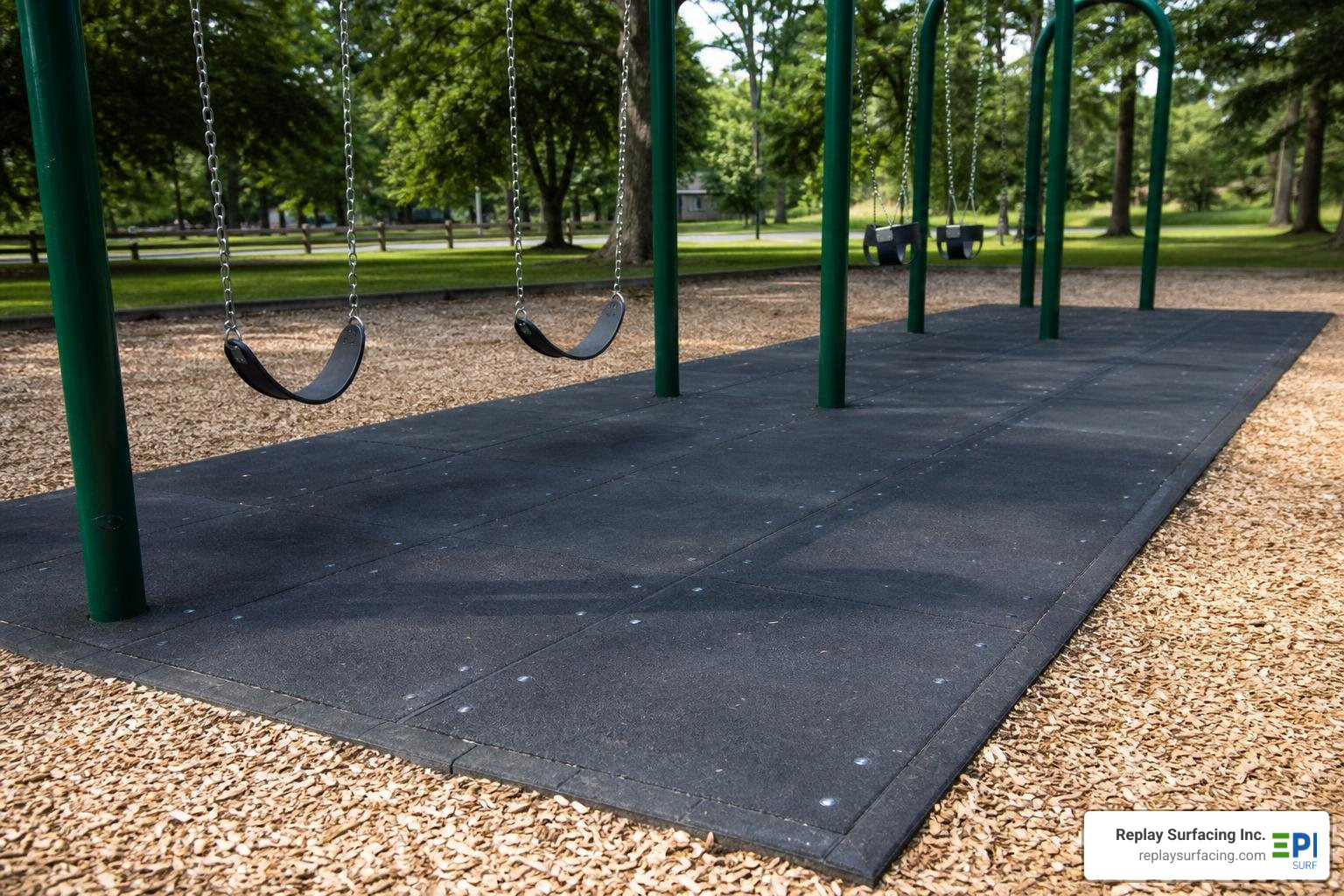
In school districts and municipal parks, we install heavy-duty rubber wear pads under swings and slides to combat localized erosion. For a complete look at how these heavy-duty pads fit into a comprehensive safety plan, check out our Ground Padding Playgrounds Complete Guide.
In Sanford, North Carolina, schools and recreational facilities rely on these heavy-duty safety surfaces to keep their high-impact areas safe and mud-free. Sanford’s active community demands playgrounds that can handle hundreds of kids a day without wearing down. When local facility managers search for the best flooring options—frequently reviewing local commercial directories like THE BEST 10 FLOORING NEAR SANFORD, NC 27330 – Yelp —they turn to Replay Surfacing for specialized, high-impact rubber solutions that standard commercial flooring companies simply cannot provide.
Even up in New England, where winters are harsh and unpredictable, our clients in Connecticut use these robust rubber systems to withstand heavy snowplows and freezing salt water. Local conservation districts, such as those organizing the GROUND COVERS – Connecticut’s Conservation Districts, recognize the environmental benefits of using stable, non-toxic, recycled rubber products that prevent soil erosion without leaching harmful chemicals into the local watershed.
Wall and Field Padding for Athletic Facilities
Safety in sports is not limited to what is underfoot. In high-speed athletic zones, vertical surfaces pose just as much of a threat to players as the ground itself. Gymnasiums, baseball fields, and indoor sports complexes require high-quality wall and field padding to protect athletes from colliding with concrete walls, metal fences, or wooden barriers.
According to industry standards, padding should be installed on every rigid surface a player could realistically make contact with. This includes outfield walls, backstops, dugout railings, and gym walls.
For outdoor sports fields, using durable, weather-resistant padding ensures that the safety foam remains dry and functional, even after years of rain and sun exposure. Inside school gyms and community centers, professional wall, stage, and floor padding is essential for protecting basketball players driving hard to the hoop.
By combining vertical wall padding with our heavy-duty Soft Fall Rubber Mats, athletic facilities can establish a comprehensive safety envelope that meets all modern sports safety standards.
Frequently Asked Questions about Ground Padding
What is the difference between indoor foam tiles and outdoor rubber padding?
The primary differences lie in material composition, density, and weather resistance.
Indoor foam tiles (typically made of EVA foam) are lightweight, highly cushioned, and perfect for playrooms or home gyms. However, they lack the structural integrity to withstand outdoor elements. UV rays from the sun will quickly break down EVA foam, causing it to fade, warp, and crumble. Furthermore, foam tiles can absorb water, leading to mold and bacteria growth.
Outdoor rubber padding, on the other hand, is engineered with UV-stabilized polyurethane binders and dense recycled rubber. It is completely weather-resistant, porous (allowing water to drain through), and built to handle heavy foot traffic, lawnmowers, and extreme temperature swings. To learn more about how outdoor-rated surfaces are engineered for safety, read our guide on Outdoor Rubber Play Surfaces: A Soft Landing for Every Fall.
How does ground padding protect against impact injuries?
Ground padding protects the human body through the physics of shock absorption and impact attenuation.
When a person falls, they carry kinetic energy. If they hit an unyielding surface like concrete or packed dirt, that energy is transferred instantly back into their bones and joints, causing severe fractures or head trauma.
High-quality rubber padding acts as a giant mechanical spring. It deforms upon impact, extending the amount of time it takes for the falling body to come to a complete stop. This dispersion of energy drastically lowers the G-max force experienced by the body. To dive deeper into the physics of how cushioned surfaces prevent injuries, check out The Science of Soft Landings and Impact Absorbing Mulch.
Can rubber ground padding be customized for specific designs and logos?
Yes, absolutely! One of the greatest advantages of poured-in-place EPDM rubber is its incredible design versatility. Because the rubber granules are mixed and hand-troweled on-site, we can create almost any design you can imagine.
We offer dozens of vibrant color options that can be blended to match school colors, corporate branding, or natural landscapes. We can seamlessly integrate custom graphics directly into the safety surface, including:
- School and team logos
- Hopscotch grids and four-square courts
- Themed play elements (like blue “water” channels, green “islands,” or colorful geometric shapes)
- Interactive learning designs (numbers, letters, and maps)
This seamless installation not only looks beautiful but also eliminates the tripping hazards associated with painted lines or modular mats.
Conclusion
When it comes to selecting the perfect ground padding, you do not have to compromise between safety, beauty, and environmental responsibility. At Replay Surfacing Inc., we are proud to lead the industry by recycling discarded tires into premium, high-performance rubber surfacing products. By transforming potential environmental hazards into sustainable, customizable, and durable safety surfaces, we help communities build cleaner, safer spaces for children and athletes alike.
Whether you are designing a vibrant new school playground, upgrading a public splash pad, or installing a high-performance sports court, we have the expertise and the eco-friendly solutions to bring your vision to life. Ready to take the first step toward a safer, more durable surface? Contact us today to explore our full range of certified Playground Surfacing options and secure a soft landing for your next project!