Why Raleigh Home Rubber Playground Flooring Belongs in Every Backyard
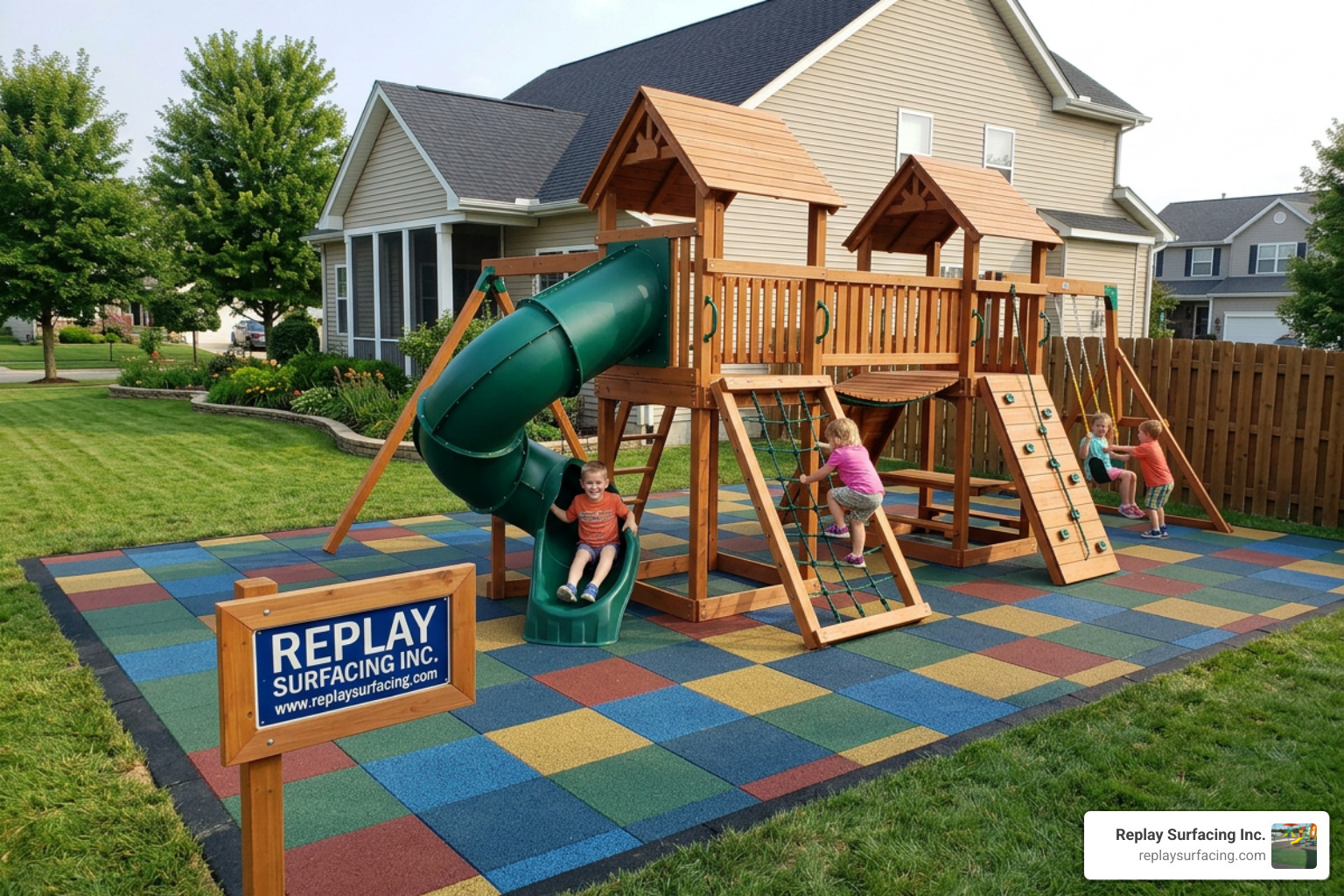
Raleigh home rubber playground flooring is one of the smartest upgrades you can make for a backyard play area. It protects kids from fall injuries, holds up in all weather, and needs almost no upkeep compared to wood mulch or grass.
Quick answer — here’s what you need to know:
| Question | Answer |
|---|---|
| What is it? | Interlocking or loose-fill rubber tiles made from recycled rubber, used under play equipment |
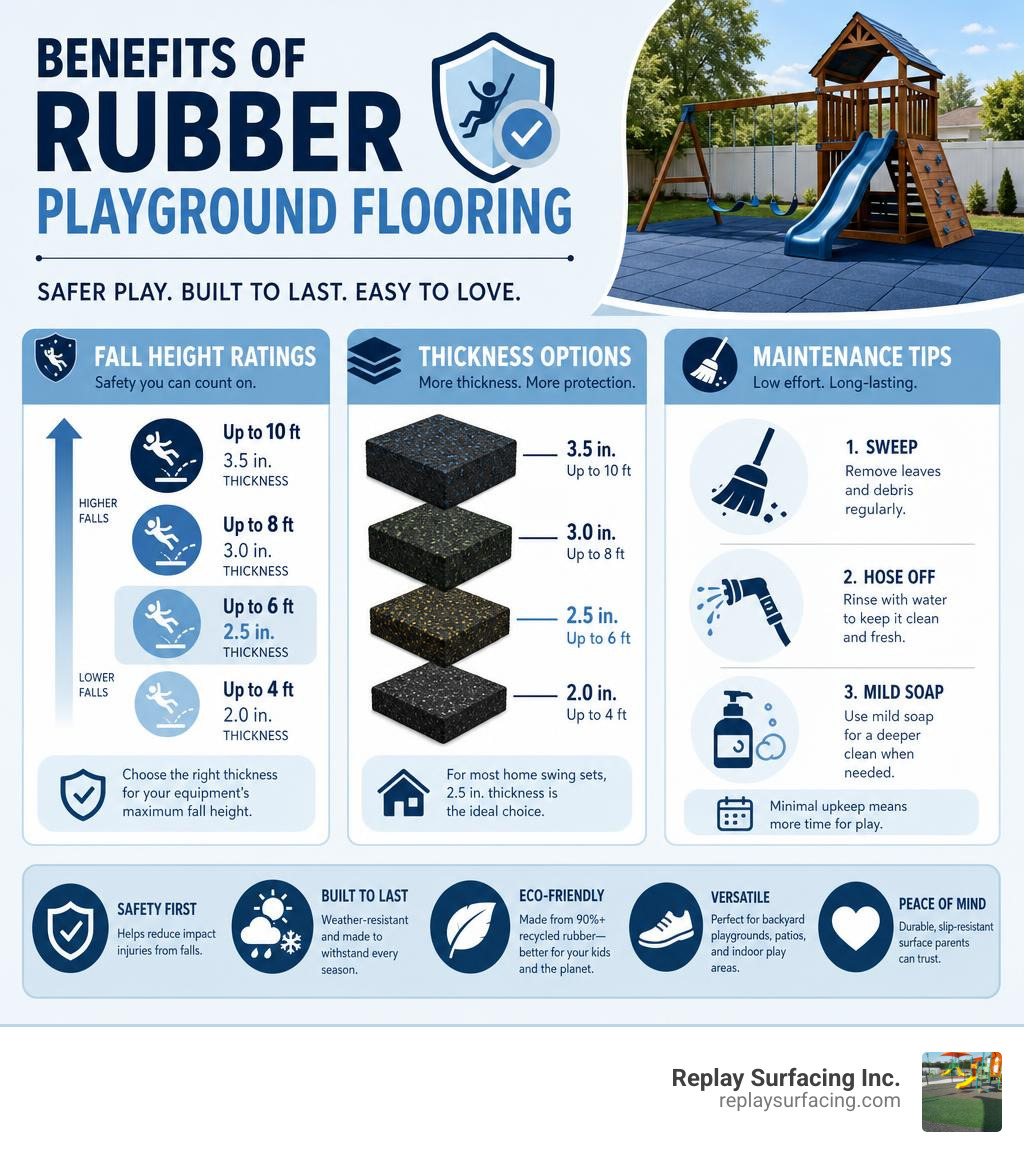
| Is it safe? | Yes — rated for fall heights of 4 ft up to 10 ft depending on thickness |
| Best thickness? | 2.5 in. for most home swing sets (covers up to 6 ft fall height) |
| Indoor and outdoor? | Yes — works in both settings |
| Maintenance? | Sweep, hose off, mild soap — no daily upkeep needed |
| Eco-friendly? | Yes — most tiles are made from 90%+ recycled rubber |
| Typical warranty? | 5 to 15 years depending on the product |
Choosing the right surface isn’t always obvious. There are several tile thicknesses, safety ratings, and installation methods to sort through — and the wrong choice can mean wasted money or, worse, a surface that doesn’t protect your kids the way you expect.
That’s what this guide is here for. We’ll walk you through the best options on the market so you can make a confident, informed decision.
I’m Landon Olson, operator of Replay Surfacing and a mechanical engineer with an MBA and years of hands-on experience in safety surfacing and sustainable rubber recycling. My work transforming scrap tires into high-quality Raleigh home rubber playground flooring gives me a practical, inside view of what actually works for families. Let’s dig in.
Home rubber playground flooring vocab to learn:
- Raleigh rubber safety surfacing
- Tucson residential playground flooring
- poured rubber residential installation
Why Raleigh Home Rubber Playground Flooring is the Ultimate Backyard Upgrade
As parents, we want our backyards to be zones of pure fun, creativity, and energy release. However, traditional play surfaces often turn into a headache. Between muddy patches, weeds, and scraped knees, keeping a play area clean and safe is a constant battle. That is where high-quality Raleigh home rubber playground flooring makes a world of difference.
Investing in modular rubber tiles or poured rubber surfaces transforms your play area into a resilient, high-performance space. Rubber is inherently elastic, meaning it naturally absorbs shock and cushions impacts. Unlike concrete, asphalt, or hard-packed dirt, rubber bends and flexes under pressure, providing a soft landing when kids inevitably tumble from the swings or slide.
Furthermore, rubber flooring is exceptionally weather-resistant. Whether you are dealing with the blistering summer heat of Tucson, Arizona, or the freezing, snowy winters of Connecticut, premium rubber flooring retains its flexibility and protective properties. It won’t freeze solid, crack, or rot. Because our surfaces are water-permeable, rain drains straight through, eliminating standing puddles and allowing your kids to get back to playing almost immediately after a heavy downpour.
By utilizing eco-friendly materials like recycled SBR (styrene-butadiene rubber) sourced from diverted vehicle tires, we help turn potential environmental waste into beautiful, customizable play areas. If you want to dive deeper into planning your backyard layout, check out our guide on Playground Flooring for Your Backyard Oasis A Comprehensive Guide.
Comparing Home Rubber Playground Flooring to Mulch, Grass, and Turf
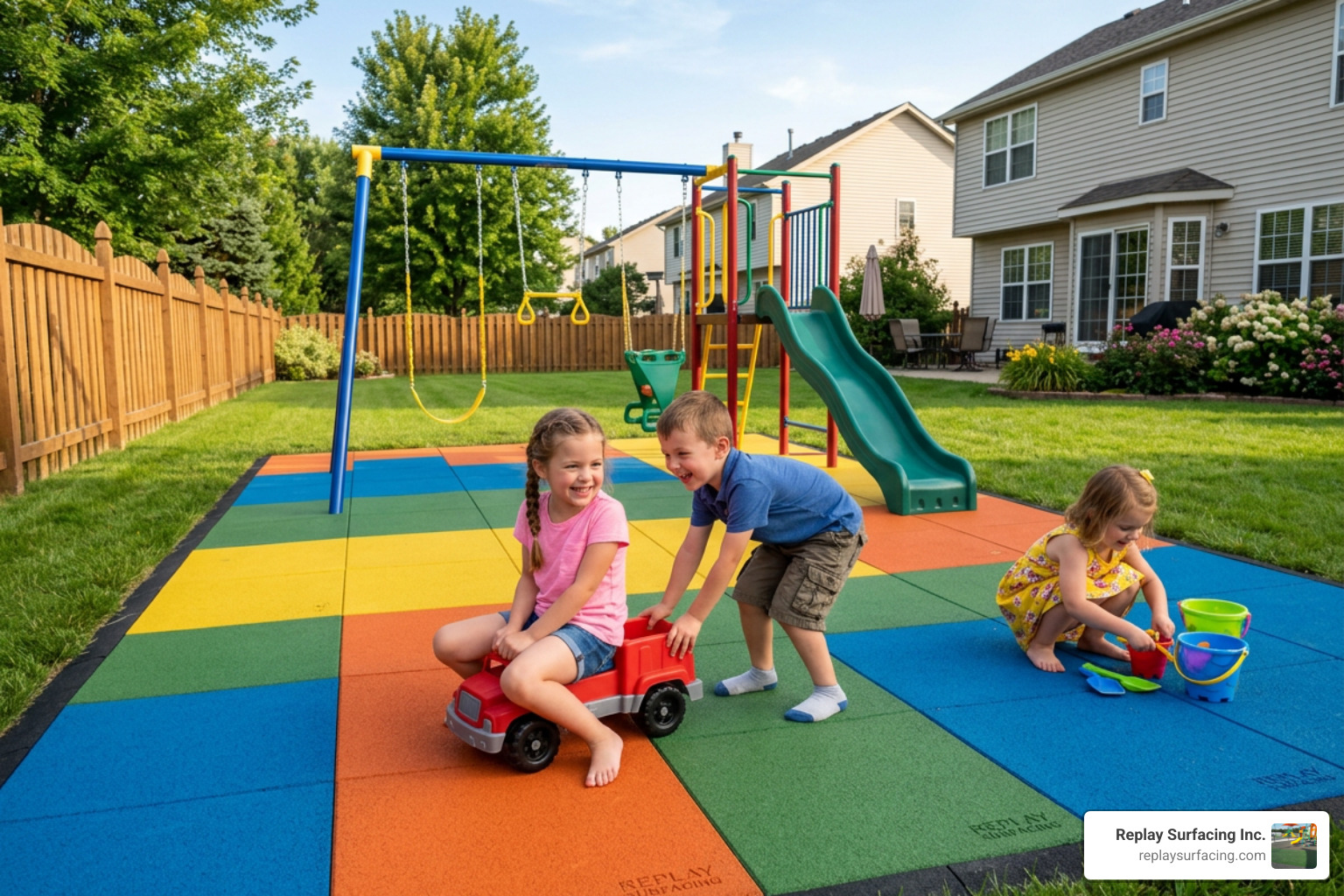
When designing a play space, homeowners typically weigh several surfacing options. Let’s look at how rubber tiles stack up against wood mulch, grass, and synthetic turf in real-world conditions.
- Wood Mulch: While initially cheap, wood mulch requires constant maintenance. It degrades, blows away in high winds, and must be raked back into place daily because kids kick it out from under swing sets. It also holds moisture, which can lead to mold and attract wood-boring insects like termites—a major concern for homes in humid areas like Charlotte or Sanford, North Carolina.
- Natural Grass: Grass looks beautiful at first, but it quickly wears down into hard-packed dirt under high-use areas. In wet climates like Lake Charles, Louisiana, or during rainy seasons in Nashville, Tennessee, these bare spots turn into slick, muddy bogs that kids track into the house.
- Synthetic Turf: Turf offers a clean look, but without a dedicated safety underlayment, it does not provide sufficient fall protection for taller play equipment. It can also get incredibly hot under direct sunlight.
To help you visualize the differences, here is a direct comparison:
| Feature | Rubber Playground Tiles | Wood Mulch / Wood Chips | Natural Grass | Synthetic Turf |
|---|---|---|---|---|
| Critical Fall Protection | Excellent (up to 10+ feet) | Good (only if maintained deep) | Poor (packs down quickly) | Moderate (requires foam pad) |
| Maintenance Required | Low (sweep/hose off) | High (regular raking & topping off) | High (mowing, watering, weeding) | Low to Medium (brushing) |
| Insect & Pest Resistance | High (does not attract pests) | Low (attracts bugs & rodents) | Low (harbors insects/fleas) | High |
| Lifespan | 10–15+ Years | 1–2 Years (needs replacement) | Continuous upkeep | 8–10 Years |
| Drainage | Excellent (water-permeable) | Moderate (can waterlog) | Poor (creates mud puddles) | Good (if base is prepared) |
Local climate considerations play a massive role in this choice. For instance, families searching for Raleigh, North Carolina playground surfacing need a surface that can handle both heavy summer downpours and humid conditions without rotting. Similarly, parents in the dry Southwest looking at Tucson, Arizona playground surfacing need UV-resistant materials that won’t degrade under intense desert sunlight. Rubber tiles solve both problems seamlessly.
Key Benefits of Raleigh Home Rubber Playground Flooring for Families
Beyond safety and durability, rubber playground flooring offers several lifestyle benefits that make daily life easier for parents:
- Allergen-Free and Non-Toxic: High-quality rubber tiles are manufactured without harmful chemicals or latex. They do not produce the dust, pollen, or mold spores commonly found in wood mulch or natural grass, making them a safe haven for kids with seasonal allergies.
- Clean Play, No Mess: Say goodbye to wood splinters in hands, dirt under fingernails, and mulch pieces scattered across your living room carpet. Rubber tiles keep the mess outside where it belongs.
- Insect and Pest Resistance: Because rubber is inorganic, it does not decompose. This means pests like termites, carpenter ants, spiders, and rodents have no interest in nesting in your play area.
- Long-Term Cost Savings: While the upfront cost of rubber tiles is higher than loose wood chips, you save hundreds of dollars every year by eliminating the need to buy, haul, and spread fresh mulch.
To learn more about the long-term benefits of rubber safety surfacing, explore our detailed breakdown of Rubber Playground Flooring.
Understanding Fall Heights and Safety Ratings
When it comes to playground safety, the most critical metric to understand is critical fall height. This is the maximum height from which a child could fall from play equipment onto the surface without sustaining a life-threatening head injury.
All reputable playground surfaces are tested under ASTM F1292, the standard specification for impact attenuation of surfacing materials within the use zone of playground equipment. This testing measures G-max (the maximum acceleration produced by an impact) and Head Injury Criterion (HIC) to ensure the surface absorbs enough energy to protect a child’s head during a fall. For additional public safety guidance, the U.S. Consumer Product Safety Commission provides a helpful Public Playground Safety Handbook that explains surfacing, use zones, and fall protection concepts.
Using a certified shock-absorbing surface is the single most effective way to prevent serious injuries. If you are designing a play space, you can read more about these protective standards in our guide to Playground Safety Surfacing.
Selecting the Right Tile Thickness for Your Play Equipment
To ensure your backyard play area is safe, you must match the thickness of your rubber tiles to the highest accessible platform or bar on your play equipment. Here is a quick guide to common safety ratings:
- 1-Inch Tiles: Typically provide fall height protection up to 4 feet. These are ideal for ground-level play areas, toddler zones, or patios.
- 2-Inch Tiles: Provide fall height protection up to 5 feet. This is a great mid-range option for low-profile climbing domes and small slide platforms.
- 2.5-Inch Tiles: Certified for fall heights between 4 to 6 feet. This is the “sweet spot” for most residential swing sets and playhouses.
- 2.75-Inch to 3-Inch Tiles: Provide robust protection up to 8 feet.
- 3.25-Inch to 4.25-Inch Tiles: Designed for heavy-duty play structures, protecting against falls from 8 to 10 feet.
Always measure your equipment from the highest point a child can stand on (such as the top of a slide or swing crossbar) to the ground before purchasing your tiles.
Safety Standards and Certifications to Look For
When shopping for Raleigh home rubber playground flooring, always verify that the products have independent safety certifications. Look for IPEMA (International Play Equipment Manufacturers Association) certification, which verifies compliance with ASTM standards.
If you are a homeowner in Connecticut, you should be aware of local safety guidelines to ensure your home play area aligns with regional safety expectations. Additionally, in states like Indiana, families often consult local safety surfacing guidelines to choose materials that meet strict local standards for impact attenuation.
Installation and Base Preparation for Backyard Play Areas
Proper base preparation is the secret to a long-lasting, flat, and safe rubber tile installation. If the base beneath your tiles is uneven or unstable, the tiles can shift, buckle, or create tripping hazards over time.
You can install rubber playground tiles over several different subfloors:
- Concrete or Asphalt: This is the ideal subsurface because it is perfectly flat, stable, and permanent. Tiles can be adhered directly to concrete using polyurethane adhesive.
- Compacted Crushed Stone: If installing over dirt, you must excavate the grass, lay down a geotextile weed barrier, and pack down a 3- to 4-inch base of crushed stone (such as aggregate or decomposed granite). This provides excellent drainage and a firm, level surface.
- Grass (with precautions): While some thick interlocking tiles can be laid over flat grass with a heavy-duty weed barrier underneath, we generally recommend a compacted stone base to prevent the ground from settling unevenly over time.
For a comprehensive look at how to prep your yard, check out our guide on DIY Playground Rubber Flooring.
Step-by-Step DIY Installation Guide
If you love a weekend project, installing interlocking rubber tiles is highly achievable. Here is how to do it:
- Measure and Order: Calculate your total square footage and add a 5% overage to account for custom cuts around posts and borders.
- Prepare the Base: Ensure your concrete is swept clean, or your compacted stone base is perfectly level.
- Lay the First Row: Start in a corner and work your way outward.
- Connect the Tiles: Most modular tiles use an interlocking dowel system or quad block connectors. Insert the connector pins into the pre-drilled holes on the side of the tile, then slide the adjacent tile into place.
- Stagger the Joints: Lay your tiles in a brick-like pattern (staggering the joints). This distributes weight evenly and prevents the seams from separating.
- Cut Edges to Fit: Use a sharp utility knife, a large bread knife, or a jigsaw to trim tiles around swing set posts or borders. Dipping the blade in soapy water makes cutting through thick rubber much easier!
- Secure the Perimeter: Use ramped edge reducers on the outer borders to prevent tripping and provide wheelchair accessibility.
For more pro-tips on interlocking systems, check out our Interlocking Playground Mats Ultimate Guide.
Professional Installation Services Across Key Regions
While DIY is a fantastic option for small to medium yards, larger play areas or complex layouts with poured-in-place rubber might require a professional touch.
If you are looking for professional installation services, Replay Surfacing has a wide network of local experts ready to help. For instance, homeowners in Columbia, South Carolina can access premium residential services directly through our team. If you are located in Tennessee, we provide regional installation expertise for Nashville, Tennessee playground surfacing. Our team operates across all major hubs—including Charlotte, Sanford, Beaverton, and Lake Charles—to ensure your backyard safety project is executed flawlessly.
Maintenance and Longevity of Rubber Play Surfaces
One of the greatest joys of Raleigh home rubber playground flooring is how little maintenance it requires. Unlike wood mulch, which needs to be raked weekly and topped off annually, rubber tiles are practically “set it and forget it.”
To keep your tiles looking vibrant and performing safely for years, follow these simple maintenance tips:
- Weekly: Sweep or use a leaf blower to remove leaves, twigs, and loose dirt.
- Monthly: Check the interlocking joints or quad blocks to ensure all connections remain tight and flush.
- Quarterly: Hose down the tiles to wash away fine dust. For stubborn dirt, scrub with a soft-bristle brush using a mild detergent (like Dawn or Tide) diluted in water, then rinse thoroughly.
- Avoid Solvent Cleaners: Never use solvent- or oil-based cleaners like Pinesol, Lysol, Murphy’s Oil Soap, WD-40, or paint thinners. These chemicals will break down the polyurethane binders in the rubber, causing the surface to degrade.
With proper care, premium rubber tiles will easily last 10 to 15 years, backed by industry-standard warranties that protect your investment.
Frequently Asked Questions about Backyard Play Flooring
Can rubber playground tiles be used both indoors and outdoors?
Yes! Rubber playground tiles are incredibly versatile. Because they are non-toxic and odor-free, they are perfect for indoor playrooms, basement gyms, and sensory spaces. Outdoors, their UV-resistant and water-permeable design allows them to withstand extreme temperatures, snow, and heavy rain without losing their protective qualities.
Are rubber playground tiles safe and non-toxic for children?
Absolutely. High-quality rubber tiles are manufactured using recycled SBR tire rubber and bound with non-toxic, lead-free polyurethane. They are completely safe for children and pets, free of latex, and do not leach harmful chemicals into your backyard soil.
How do you clean and maintain rubber playground tiles?
Maintenance is incredibly simple. For regular cleaning, just sweep away loose debris and hose the surface down with water. For a deeper clean, damp mop or scrub the tiles with a mild household detergent and water. Avoid any petroleum- or solvent-based cleaning products, as they can damage the rubber.
Conclusion
Creating a safe, beautiful, and low-maintenance backyard play space is one of the best investments you can make for your family. By upgrading to Raleigh home rubber playground flooring, you protect your children from fall injuries while reclaiming your weekends from endless weeding and mulching.
At Replay Surfacing Inc., we are proud to transform environmental hazards—like discarded tires—into beautiful, customizable, and incredibly durable safety surfaces for families across Charlotte, Columbia, Raleigh, Tucson, Nashville, and beyond. Ready to build your backyard oasis? Explore our premium residential surfacing solutions today!