
Your Backyard Deserves Better Than Concrete and Mulch
Poured rubber residential installation is one of the smartest upgrades a homeowner can make in 2026 — whether you’re creating a safe backyard play zone, a slip-resistant pool deck, or a low-maintenance patio surface.
Here’s a quick look at what you need to know:
| What You Want to Know | The Short Answer |
|---|---|
| What is it? | A two-layer rubber surface: recycled SBR base + colored EPDM top coat |
| Where can it go? | Backyard play areas, pool decks, patios, stairs, driveways |
| How much does it cost? | Roughly $10–$15 per sq ft installed professionally |
| Is it safe for kids? | Yes — meets ASTM fall height safety standards |
| How long does it last? | 12–15 years with basic maintenance |
| Can I customize it? | Yes — nearly unlimited color and pattern options |
| Do I need a pro? | For best results and safety compliance, yes |
Traditional surfaces like concrete, mulch, and loose gravel come with real trade-offs — burning feet in summer, displaced material, hidden hazards, and frequent replacement costs. Poured rubber solves all of that with a seamless, durable finish that actually looks great and holds up to heavy use.
It’s not just a safety product. It’s a long-term investment in your outdoor space.
I’m Landon Olson, operator of Replay Surfacing Inc., where I’ve combined my mechanical engineering background and years of hands-on experience in the safety surfacing industry to help homeowners get poured rubber residential installation right the first time. In the sections below, I’ll walk you through everything — from materials and costs to site prep and professional installation.
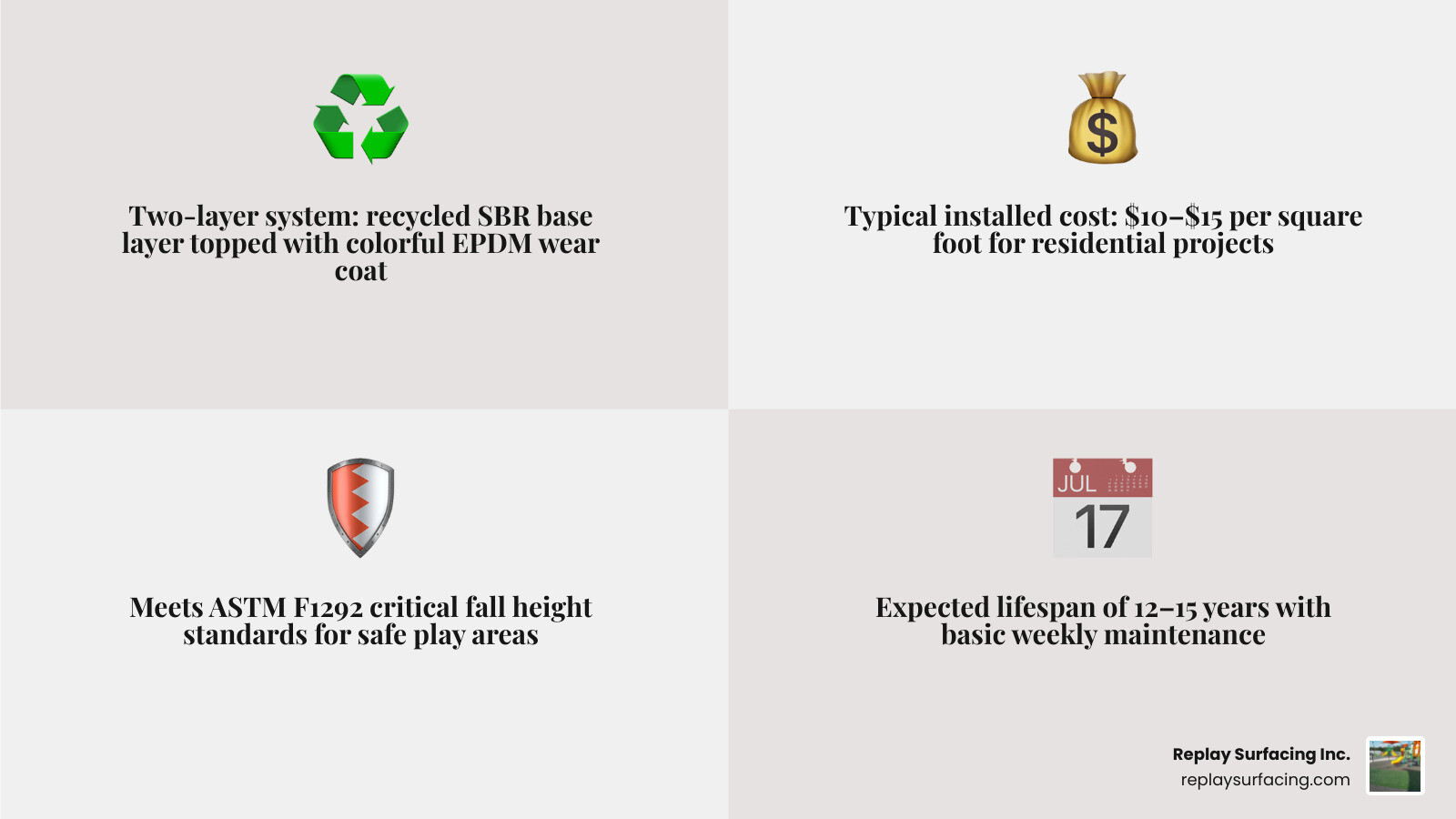
Quick poured rubber residential installation terms:
Understanding Poured-in-Place Rubber for Your Home
When we talk about Poured in Place Rubber Surfacing, we are describing a high-performance flooring system mixed and applied right on your property. Unlike rubber mats or tiles that have seams and can peel at the edges, a poured surface is completely seamless. It contours to the unique shapes of your backyard, whether you have a curved garden path in Charlotte or a custom-shaped pool in Tucson.
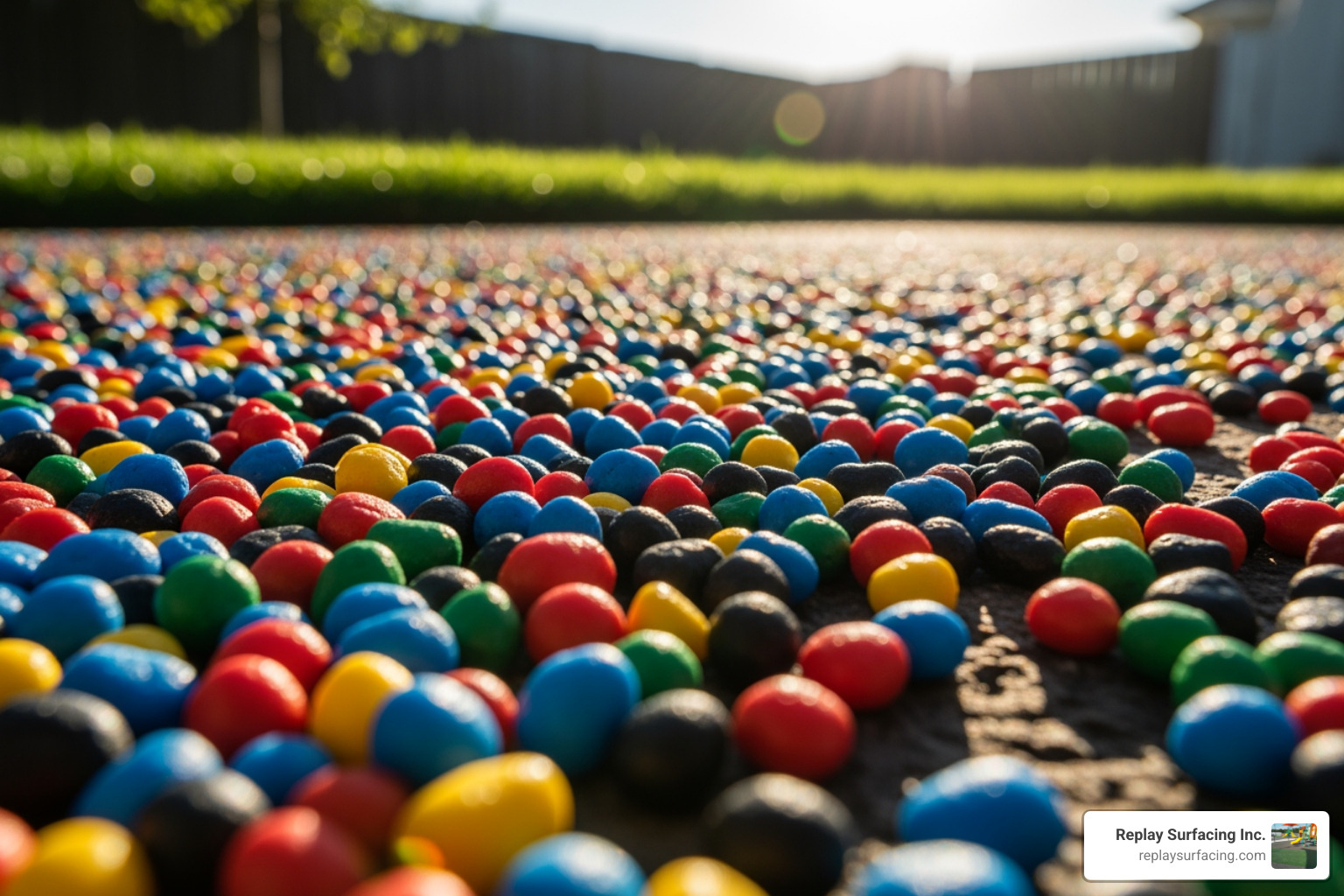
The system is built on two distinct layers. The first is the SBR (Styrene-Butadiene Rubber) base layer. This is the “cushion” of the system, made from recycled tires that have been processed into clean rubber buffings. This layer provides the impact attenuation—the “bounce” that protects your kids when they jump off the swing set.
On top of that, we install the EPDM (Ethylene Propylene Diene Monomer) wear layer. These are virgin rubber granules that provide the vibrant color and UV resistance needed to survive the intense Carolina sun or the dry heat of Arizona. Because we mix these on-site, we can create custom designs that match your home’s aesthetic perfectly. For many Residential projects, this means a surface that is as beautiful as it is functional.
Components of a High-Quality Surface
The “glue” that holds your poured rubber residential installation together is a polyurethane binder. This is where many DIY projects go wrong, but where we excel. There are two main types of binders:
- Aromatic Binder: This is the standard, cost-effective option. It is strong and flexible but has a slight amber tint. Over time, UV exposure can cause it to “amber” or darken slightly, which is why it’s best used with earth tones or darker color mixes.
- Aliphatic Binder: This is the premium choice. It is crystal clear and chemically stable against UV rays. If you’re choosing a light gray, sky blue, or white surface for a pool deck in Nashville, we always recommend aliphatic binder to ensure the colors stay true for years.
As noted in the Poured In Place Rubber – Trassig resources, the quality of these binders and the ratio at which they are mixed with the rubber granules determines the tensile strength and longevity of your floor. We use specific formulas tailored to the local climate—higher humidity in Lake Charles or Raleigh requires a different approach than the arid air of Tucson.
The Benefits of Poured Rubber Residential Installation
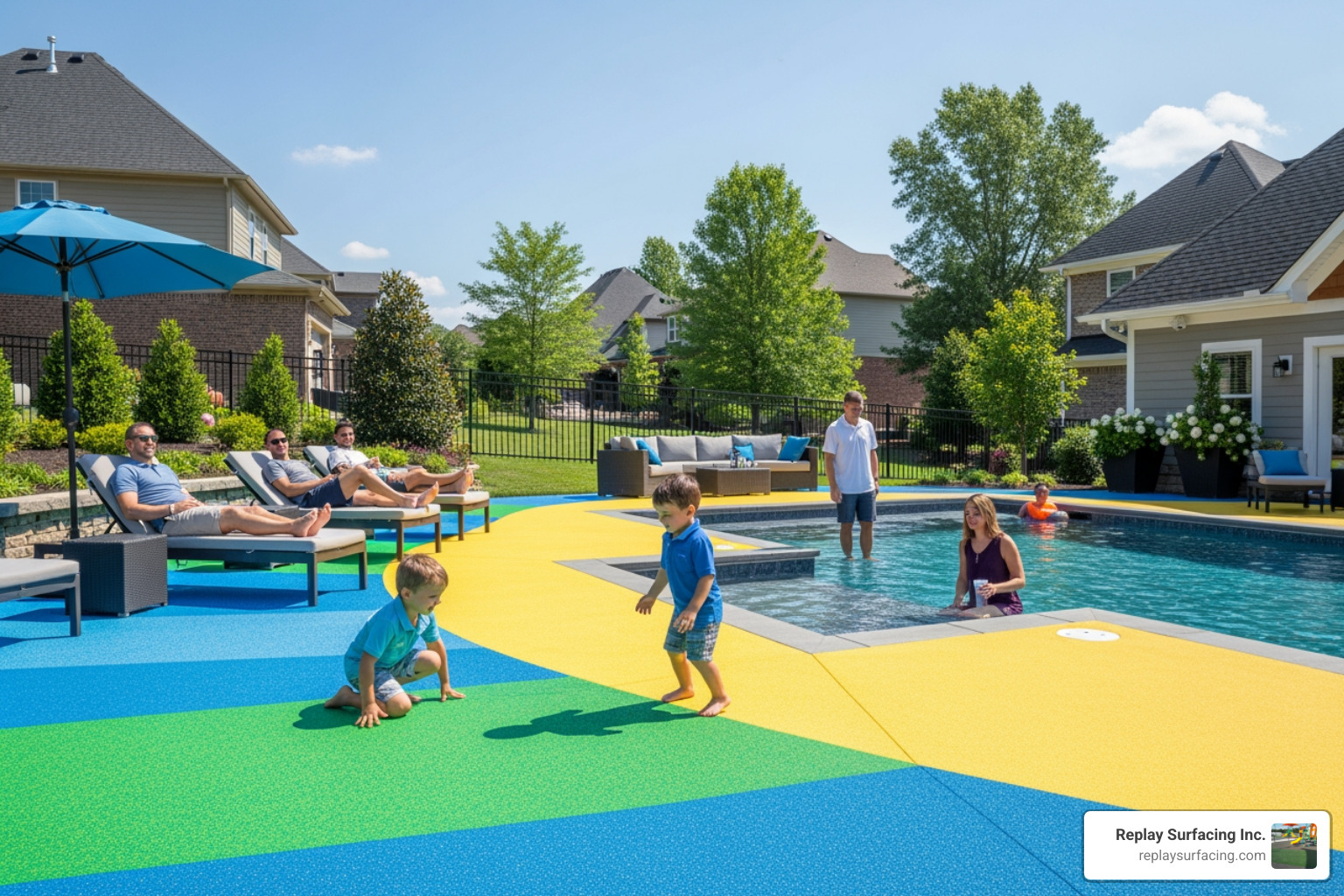
Why are so many homeowners in Indiana and South Carolina switching to rubber? It comes down to comfort and safety. If you’ve ever walked barefoot on a concrete pool deck in Columbia during July, you know it can reach temperatures upwards of 120°F. Rubber has a much higher specific heat capacity than concrete, meaning it stays significantly cooler underfoot, providing thermal comfort for your family and pets.
Furthermore, Poured in Place Rubber the Ultimate Playground Safety Surface is a game-changer for accessibility. Because it is a solid, level surface, it is fully ADA-compliant. Wheelchairs, walkers, and strollers glide over it with ease, making your backyard inclusive for everyone.
Safety Standards for Poured Rubber Residential Installation
Safety isn’t just a buzzword; it’s a set of measurable standards. Our installations are designed to meet or exceed ASTM F1292, which governs impact absorption. This is measured by “Critical Fall Height”—the maximum height a child can fall from and still be protected against serious head injury.
Whether you are in Raleigh or Sanford, we ensure that the thickness of your SBR base layer is calibrated to the height of your play equipment. For example, a 6-foot tall slide requires a thicker base than a simple patio area. By following Rubber Flooring Installation Guide protocols and seeking IPEMA certification for our materials, we provide a safety net that loose-fill mulch or dirt simply cannot match.
Customizing Your Poured Rubber Residential Installation
One of the most exciting parts of our Residential Projects is the design phase. You aren’t limited to one or two colors. We can perform color blending to create “marbled” looks that hide dirt and debris effectively.
- 50/50 Mixes: A popular choice in Charlotte is a 50% color / 50% black SBR mix. This gives you a speckled look that is very cost-effective while still providing a pop of color.
- Custom Logos: Want your favorite team’s logo or a whimsical “ocean” theme with blue waves for your splash pad? We can hand-trowel those designs directly into the wear layer.
- Texture: The seamless nature of the pour allows us to wrap rubber around stairs, curbs, and even vertical surfaces, creating a cohesive look for your entire backyard.
Professional Installation and Site Preparation
A successful poured rubber residential installation starts long before the rubber hits the ground. Proper site preparation is the difference between a surface that lasts 15 years and one that fails in two. We begin by ensuring the sub-base is stable. While we can install over existing concrete or asphalt, many backyard projects require a “crushed stone” base. This involves excavating the area and compacting 4-6 inches of aggregate to create a solid, draining foundation.
We also pay close attention to the “pitch.” A 1% slope is necessary to ensure water drains off the surface rather than pooling in the middle. If we are installing over concrete, we perform moisture testing to ensure the binder will adhere correctly. As we explain in our guide on How to Install Your Own Poured in Place Rubber Surface, even small amounts of trapped moisture can cause the rubber to “bubble” or delaminate.
Cost Factors for Homeowners
We believe in transparency when it comes to pricing. While Projects Residential vary, the average cost for a professional installation typically ranges from $10 to $15 per square foot.
| Surface Type | Initial Cost (per sq ft) | Maintenance Level | Lifespan |
|---|---|---|---|
| Poured Rubber | $10 – $15 | Very Low | 12–15 Years |
| Synthetic Turf | $8 – $12 | Medium | 8–10 Years |
| Wood Mulch | $3 – $5 | High (Annual Refill) | 1–2 Years |
| Rubber Tiles | $7 – $10 | Medium (Seam issues) | 5–8 Years |
According to our Rubber Surfacing Cost Ultimate Guide, several factors can shift these numbers. Choosing 100% color EPDM instead of a black mix can increase the price, as color granules cost roughly four times more than black SBR. Additionally, the thickness required for fall safety will impact the volume of material used. For a deeper dive into the math, check out our article on Understanding Rubber Playground Surfacing Costs.
Maintenance and Long-Term Care
One of the biggest selling points of a poured rubber residential installation is how little work it requires. Unlike mulch, which needs to be raked and topped off every year, or grass that requires mowing and watering, rubber is mostly “set it and forget it.”
For routine care, a weekly sweep or a quick pass with a leaf blower to remove leaves and twigs is usually enough. Twice a year, a gentle power wash (staying under 2000 PSI) will keep the colors looking vibrant.
If you are a fan of DIY Pour in Place Rubber Surfacing, you might consider a “rebinding” coat every 2 to 3 years. This is essentially a fresh layer of polyurethane binder rolled over the top with a paint roller. It keeps the rubber granules locked in place and protects against UV degradation. If a small area gets damaged—say, from a heavy piece of equipment being dragged—we offer patch repair kits that allow you to fix the spot seamlessly. For more tips, our The Ultimate DIY Guide to Rubber Playground Flooring is an excellent resource.
Frequently Asked Questions about Residential Rubber
Can poured rubber be installed over existing grass?
The short answer is no. Grass and dirt are unstable; they shift with moisture and can lead to cracking in the rubber. A proper poured rubber residential installation requires a compacted stone base, concrete, or asphalt. We always excavate the sod and replace it with a geotextile membrane and crushed stone to prevent weed growth and ensure a flat, stable surface.
How does the surface handle extreme weather?
Poured rubber is incredibly resilient. In Tucson, its UV-stable components prevent it from cracking under the desert sun. In Indiana or Connecticut, its permeable design allows water to drain through, which prevents the “freeze-thaw” cycle that often destroys concrete. Because the material is flexible, it can expand and contract with temperature changes without developing the spider-web cracks common in rigid surfaces.
Is the material safe for pets and children?
Absolutely. The rubber we use is non-toxic and hypoallergenic. Because it drains quickly and doesn’t retain moisture like wood mulch, it doesn’t promote the growth of mold, mildew, or bacteria. It’s a clean, safe environment for kids to crawl on and for pets to run on without the risk of splinters or hidden “surprises” buried in loose fill.
Conclusion
At Replay Surfacing Inc., we are proud to help homeowners across Charlotte, Raleigh, Tucson, and beyond transform their yards into sustainable, beautiful spaces. By recycling tires and turning them into high-quality surfacing, we aren’t just improving your home; we’re keeping waste out of landfills.
Whether you’re looking for a safer place for your children to play or a sophisticated, slip-resistant deck for entertaining, we have the expertise to make it happen. Ready to see what’s possible? Start your residential project today and give your backyard the upgrade it truly deserves.