
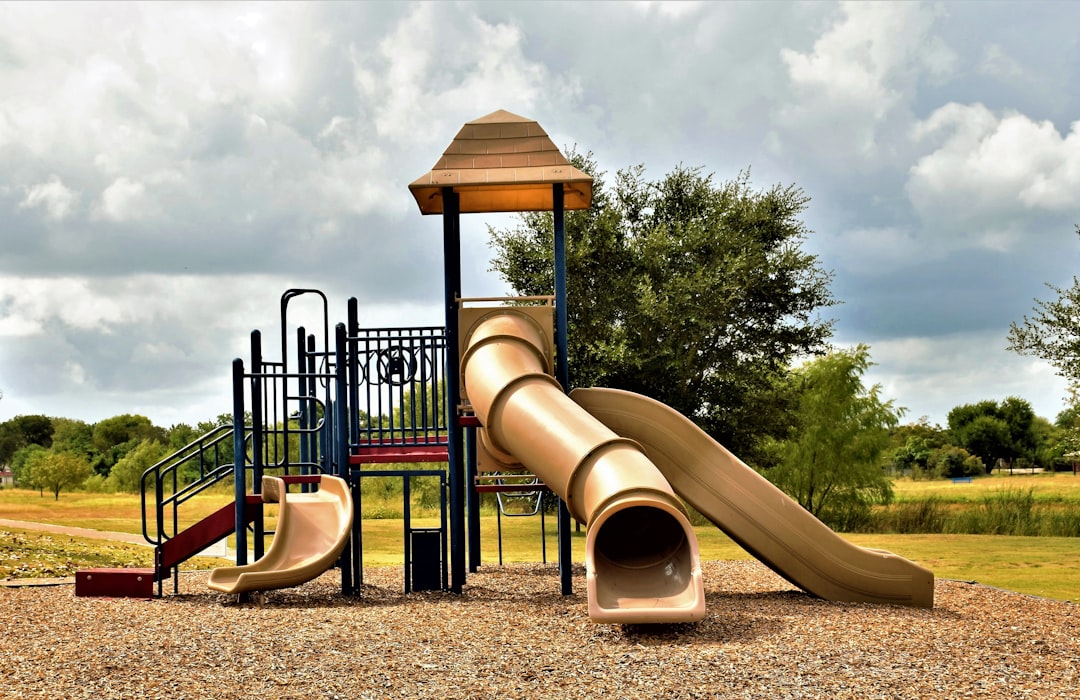
Why Mulch in Playgrounds in Charlotte Is One of the Most Important Safety Decisions You’ll Make
Mulch in playgrounds Charlotte is the loose-fill material spread under and around play equipment to cushion falls and reduce the risk of serious injury. Choosing the right type matters more than most people realize.
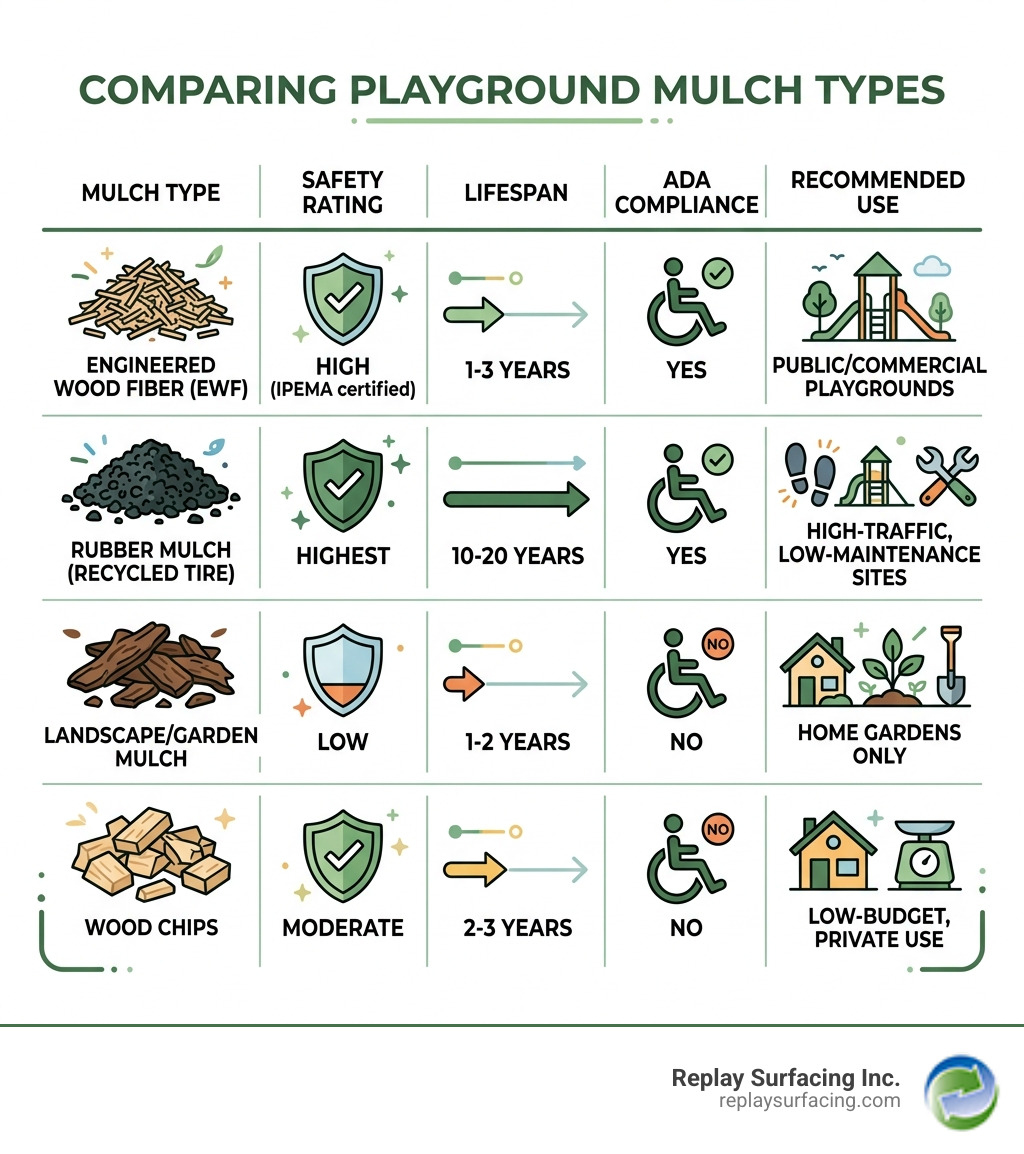
Here is a quick comparison of the most common options:
| Mulch Type | Safety Rating | Lifespan | ADA Compliant | Best For |
|---|---|---|---|---|
| Engineered Wood Fiber (EWF) | High (if IPEMA certified) | 1-3 years | Yes | Public/commercial playgrounds |
| Rubber Mulch (recycled tire) | Highest | 10-20 years | Yes | High-traffic, low-maintenance sites |
| Landscape/Garden Mulch | Low | 1-2 years | No | Home gardens only |
| Wood Chips | Moderate | 2-3 years | No | Low-budget, private use |
Falls are the leading cause of playground injuries. The surface underneath a child when they fall is the single biggest factor in whether that fall causes serious harm. Not all mulch is created equal — and using the wrong type in a public or commercial setting can put children at risk and leave facility managers out of compliance with federal safety standards.
The good news? Once you understand what separates a safe playground surface from an unsafe one, the decision becomes a lot clearer.
I’m Landon Olson, operator of Replay Surfacing and a mechanical engineer with an MBA, and I’ve spent years working at the intersection of sustainability and safety surfacing — including the specific challenges around mulch in playgrounds Charlotte. In the sections below, I’ll walk you through everything you need to make a confident, compliant, and cost-effective choice.
Understanding the Different Types of Mulch in Playgrounds Charlotte
When we talk about mulch in playgrounds Charlotte, we aren’t just talking about the stuff you put around your rose bushes in Charlotte or Raleigh. In safety surfacing, “mulch” refers to a specific category of loose-fill materials designed to absorb the energy of a child’s fall.
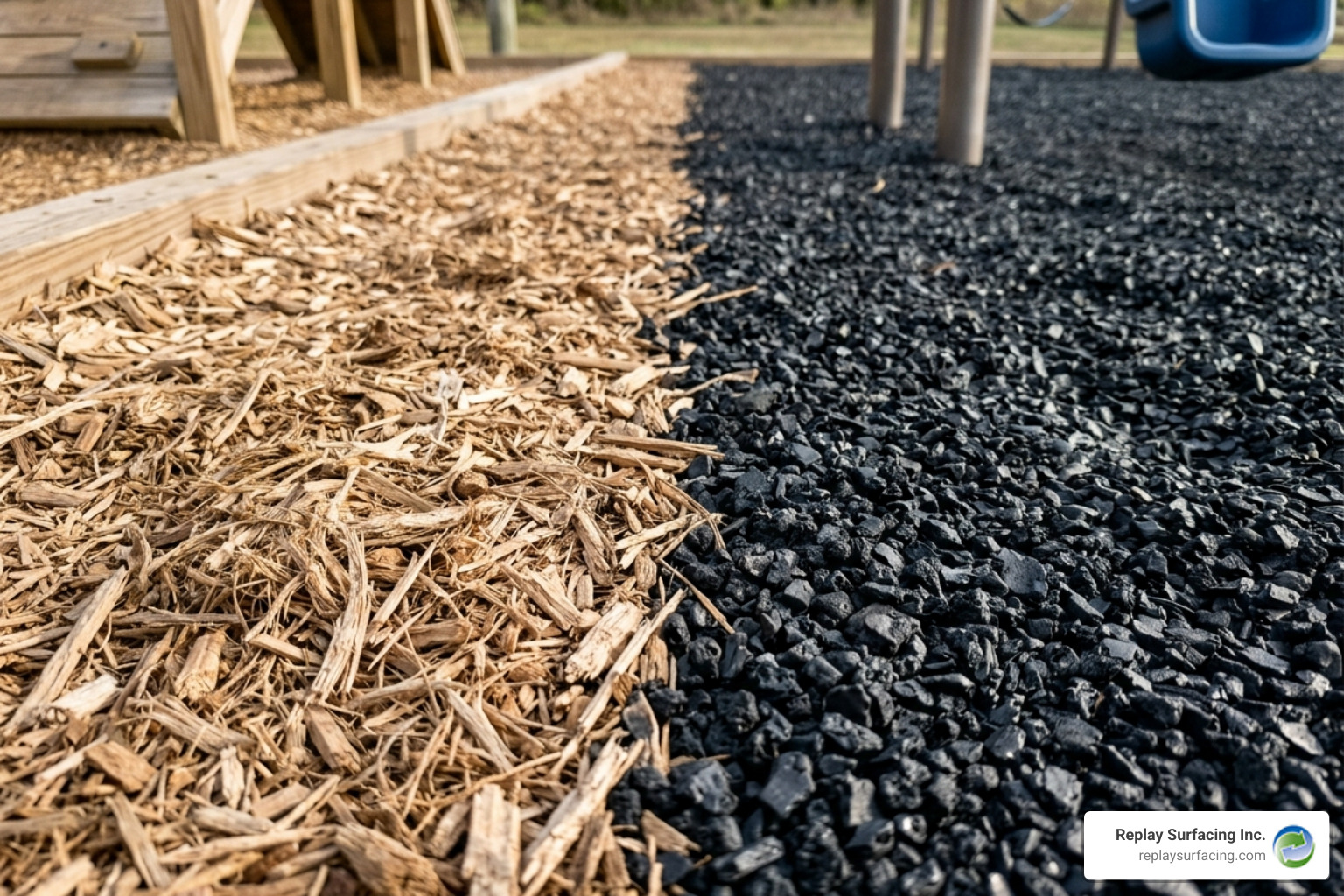
There are four main contenders you’ll see in the field: Engineered Wood Fiber (EWF), rubber mulch, regular wood chips, and landscape mulch. While they might look similar from a distance, their performance under pressure—literally—varies wildly. For a deeper dive into what makes a surface truly protective, check out our guide on Playground Safe Mulch.
The primary difference lies in certification. In places like Nashville, TN or Sanford, NC, a public park cannot simply use any wood product. It must meet rigorous impact attenuation standards. If you’ve ever wondered, Can I use regular mulch for a playground?, the short answer is: only if it’s a private backyard, and even then, it’s not the safest bet.
| Feature | Engineered Wood Fiber (EWF) | Rubber Mulch | Standard Wood Chips |
|---|---|---|---|
| Material | Shredded virgin wood | Recycled tire rubber | Shredded bark/limbs |
| Impact Absorption | Good (when maintained) | Excellent | Fair |
| Accessibility | Yes (if compacted) | Yes | No |
| Pest Resistance | Low | High | Low |
| Initial Cost | Low | Moderate to High | Very Low |
Certified Engineered Wood Fiber (EWF)
EWF is the most common organic option for mulch in playgrounds Charlotte. Unlike standard wood chips, EWF is made from shredded virgin wood (often from used pallets) and contains no twigs, bark, or leaves. This material is specifically processed to have a “knit-together” texture.
When installed correctly, the fibers interlock, creating a surface firm enough for wheelchair access while remaining soft enough to cushion falls. To ensure you are getting the real deal, look for Certified playground mulch options that carry IPEMA certification. This ensures the product has been third-party tested for impact attenuation and purity.
Why Landscape Mulch Fails Safety Tests
It’s tempting to head to a local garden center in Columbia, SC or Lake Charles, LA and buy bulk landscape mulch. However, regular mulch is a safety hazard in a play environment.
First, landscape mulch decomposes rapidly, turning into soil that provides zero impact protection. Second, it often contains large splinters, mold, and fungi that can be harmful to children. Most importantly, it lacks the consistent particle size required to prevent “bottoming out” during a fall. For more on why organic bark is a maintenance-heavy choice, see our Bark mulch playground surfacing complete guide.
Safety Standards and Critical Fall Height Requirements
Safety isn’t just a suggestion; it’s a series of measurable metrics defined by organizations like ASTM (American Society for Testing and Materials) and the CPSC (Consumer Product Safety Commission).
Two major standards govern mulch in playgrounds Charlotte:
- ASTM F1292: This measures impact attenuation—how well the surface cushions a head-first fall.
- ASTM F1951: This tests accessibility, ensuring a person in a wheelchair can navigate the surface.
Critical Fall Height and Depth Ratios
“Critical Fall Height” is the maximum height from which a life-threatening head injury is not expected to occur. The required depth of your mulch depends entirely on the height of your equipment.
According to CPSC recommendations:
- Equipment up to 4 feet: Requires 6 inches of compressed mulch.
- Equipment up to 7-8 feet: Requires 9 inches of compressed mulch.
- Equipment up to 10-12 feet: Requires 12 inches of wood mulch.
Notably, rubber mulch is much more efficient. Only 6 inches of rubber mulch provides sufficient protection for falls from 10 feet. Before you order, consult a Rubber mulch yard buying guide to ensure you’re calculating the correct volume for your specific equipment heights and fall zones (the 6-foot safety buffer around all structures).
ADA Compliance and Accessibility in Playground Mulch
In 2026, inclusivity is a non-negotiable part of playground design. To be ADA compliant, mulch in playgrounds Charlotte must meet ASTM F1951 standards.
While EWF can be compliant if it is regularly compacted and leveled, it often fails if maintenance slips. This is where rubber mulch shines. It provides a stable, firm surface that allows for easier mobility for wheelchairs and walkers. For a comprehensive look at how to achieve a fully accessible site, read our Playground certified rubber mulch complete guide.
Comparing Organic vs. Inorganic Playground Surfacing
Choosing between wood (organic) and rubber (inorganic) is usually a debate between initial cost and long-term value. At Replay Surfacing, we specialize in transforming recycled tires into high-performance safety surfaces that bridge this gap.
There are significant Recycled rubber mulch benefits to consider. Unlike wood, rubber does not rot, attract termites, or float away during a heavy South Carolina rainstorm. Furthermore, our Non-toxic rubber mulch is cleaned of steel fragments and treated with child-safe coatings, making it an environmentally responsible way to divert tires from landfills in places like Tucson, AZ or Beaverton, OR.
The Longevity of Rubber Mulch in Playgrounds
If you install EWF or wood chips, you’ll be topping it up every year and replacing it entirely every 3 years. Rubber mulch, however, boasts a 10-20 year lifespan. It resists the fading effects of the sun and doesn’t break down into dust.
From tires to tots: everything you need to know involves understanding that while the upfront cost is higher, the “cost per year of play” is significantly lower with rubber. It stays vibrant and protective long after wood mulch has turned to compost.
Maintenance and Replacement Cycles
All mulch in playgrounds Charlotte requires some level of upkeep. Loose-fill materials are prone to “displacement”—the fancy term for when kids kick the mulch out from under the swings or slides.
- Wood Mulch: Requires weekly raking, monthly depth checks, and annual “top-offs” to maintain safety depths.
- Rubber Mulch: Requires occasional raking and debris removal. Because it doesn’t decompose, you won’t need to add new material nearly as often.
Properly Installing rubber mulch with a weed barrier and sturdy borders can further reduce maintenance. For a full breakdown of upkeep tasks, see our article on the Advantages of playground rubber mulch safety maintenance and durability.
Installation and Maintenance Best Practices
A safe playground starts with a solid foundation. You can’t just dump mulch in playgrounds Charlotte on top of grass and call it a day.
- Site Preparation: Clear the area of all debris, rocks, and grass. Excavate to the required depth so the finished mulch surface is level with the surrounding ground.
- Drainage: Especially in rainy climates like Connecticut or Indiana, standing water is the enemy of safety. Install a proper drainage system and a layer of geotextile fabric to prevent the mulch from mixing with the soil.
- Border Containment: Use heavy-duty timbers or rubber borders to keep the mulch where it belongs. This prevents trip hazards and keeps your investment from washing away.
For technical specifications on particle size and installation, our Recycled rubber chips complete guide is an excellent resource.
Regional Considerations for Local Service Areas
Geography plays a huge role in mulch performance. In the desert heat of Tucson, AZ, organic mulch can become brittle and dusty, whereas rubber mulch maintains its elasticity. In the humid environments of Charlotte, NC or Nashville, TN, wood mulch is highly susceptible to mold and fungi growth.
Local building codes may also vary. Always check with your local municipality to ensure your chosen material meets regional timber sourcing or recycling mandates. Our Best recycled rubber playground mulch guide offers insights tailored to these diverse climates.
Routine Safety Inspections
We recommend a “Safety First” inspection schedule for all mulch in playgrounds Charlotte:
- Daily: Check for foreign objects (glass, trash) and animal waste.
- Weekly: Rake high-traffic areas (under swings and slide exits) to restore required depths.
- Monthly: Use a depth probe to ensure the mulch hasn’t compacted below the critical safety level.
Using kick-out mats in high-impact areas can drastically reduce the amount of raking required. Learn more about managing these zones in our guide to Loose fill playground surfacing maintenance.
Frequently Asked Questions about Playground Mulch
How deep should mulch be for a 10-foot fall height?
For wood-based mulch in playgrounds Charlotte, you need at least 12 inches of compressed material. For rubber mulch, 6 inches is typically sufficient to meet safety standards for a 10-foot fall. Always verify with your specific product’s test results.
Does playground mulch attract pests or insects?
Standard wood mulch and chips can attract termites, ants, and spiders as they decompose. Recycled rubber mulch is inorganic and does not provide a food source or attractive nesting ground for insects, making it a “cleaner” option for schools and daycares.
Is rubber mulch safe for the environment and children?
Yes. Modern rubber mulch is processed to remove 99.9% of steel fragments. It is non-toxic and does not leach harmful chemicals into the soil. By using recycled tire products, you are helping to reduce the millions of tires that end up in landfills each year in areas like Sanford, NC and Columbia, SC.
Conclusion
At Replay Surfacing Inc., we believe that every child deserves a safe place to play. Choosing the right mulch in playgrounds Charlotte is a commitment to that safety. Whether you opt for the natural look of Engineered Wood Fiber or the unmatched durability of our recycled rubber solutions, the key is to prioritize certified, tested materials.
By transforming environmental hazards into sustainable construction solutions, we provide playgrounds in Charlotte, Raleigh, Tucson, and beyond with surfaces that are as kind to the planet as they are to a child’s knees.
Ready to upgrade your play area with a surface that lasts? Contact our playground surfacing specialists today for a custom quote and expert guidance on your next project. We’re here to help you build a safer, more sustainable future, one playground at a time.