
Understanding Sports Court Rubber Flooring: Types and Performance
When we talk about sports court rubber flooring, we aren’t just talking about a single product. It is a category of high-performance surfaces engineered to solve the problems that traditional concrete or asphalt create. Unlike a hard concrete slab, rubber is “resilient,” meaning it gives slightly under pressure and then returns to its original shape. This characteristic is what provides that crucial “bounce” and joint protection athletes rave about.
At Replay Surfacing, we specialize in transforming recycled tires into these high-performance materials. By using vulcanized rubber and recycled crumb rubber, we create surfaces that offer exceptional vertical deflection (the amount the floor compresses) and energy restitution (the energy the floor “gives back” to the athlete).
There are three primary formats you’ll encounter:
- Rubber Rolls: These are popular for indoor gymnasiums and multi-purpose rooms. Often available in 6-foot widths, these rolls provide a seamless look. Some advanced versions, like woodgrain rubber, even mimic the look of traditional hardwood while providing 7mm of cushioned support.
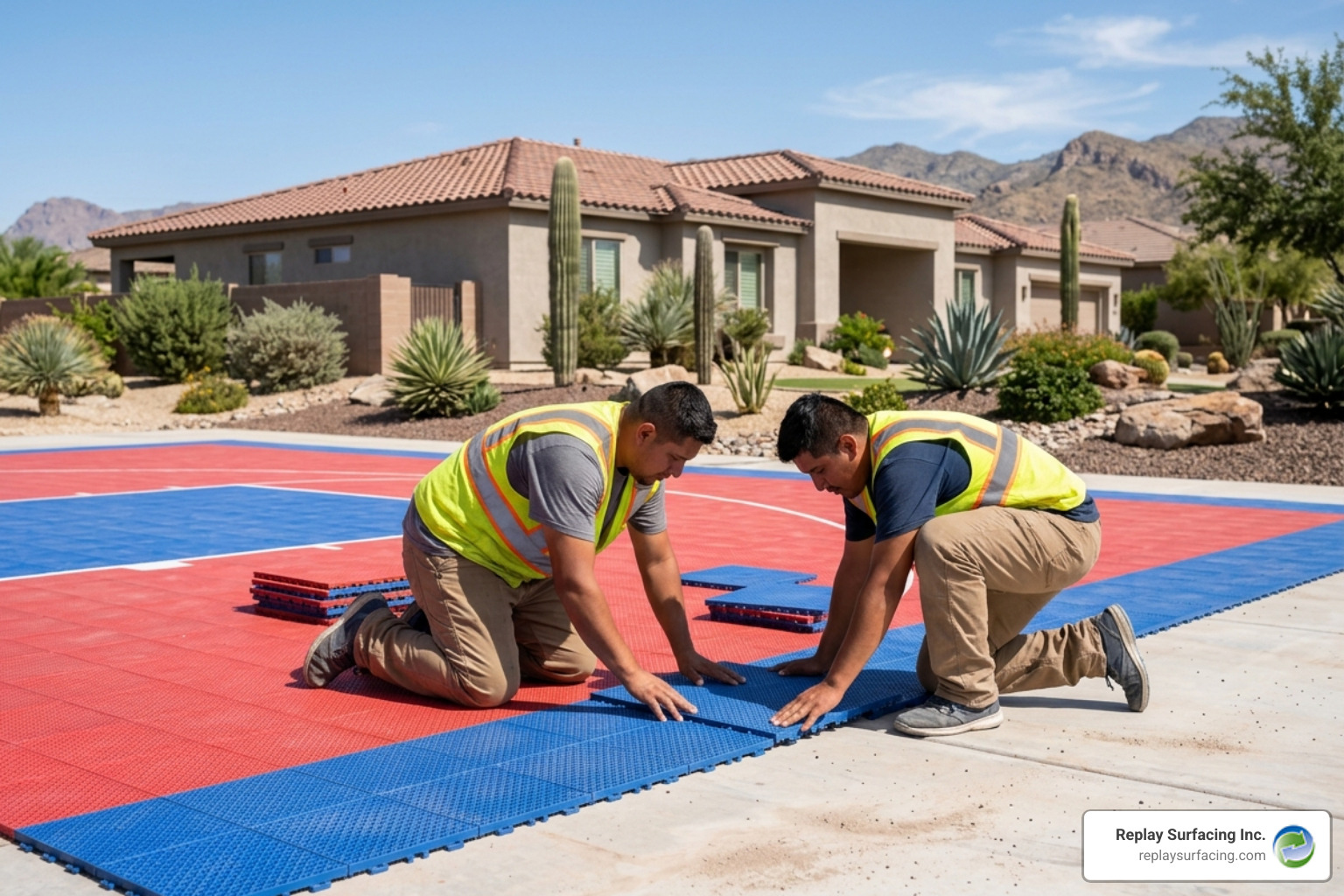
- Interlocking Tiles: These are the “DIY dream.” These tiles snap together like puzzle pieces. They are incredibly versatile and can be installed over existing concrete or asphalt.
- Poured-in-Place (Wet Pour): This is a premium, seamless surface where rubber granules are mixed with a binder and “troweled” onto the court. This allows for the most customization and is a favorite for professional-grade sports surfaces.
Indoor vs. Outdoor Sports Court Rubber Flooring
One of the most common questions we get from clients in places like Columbia, SC, or Lake Charles, Louisiana, is whether the same rubber can be used inside and out. The answer depends on how the material handles water and sun.
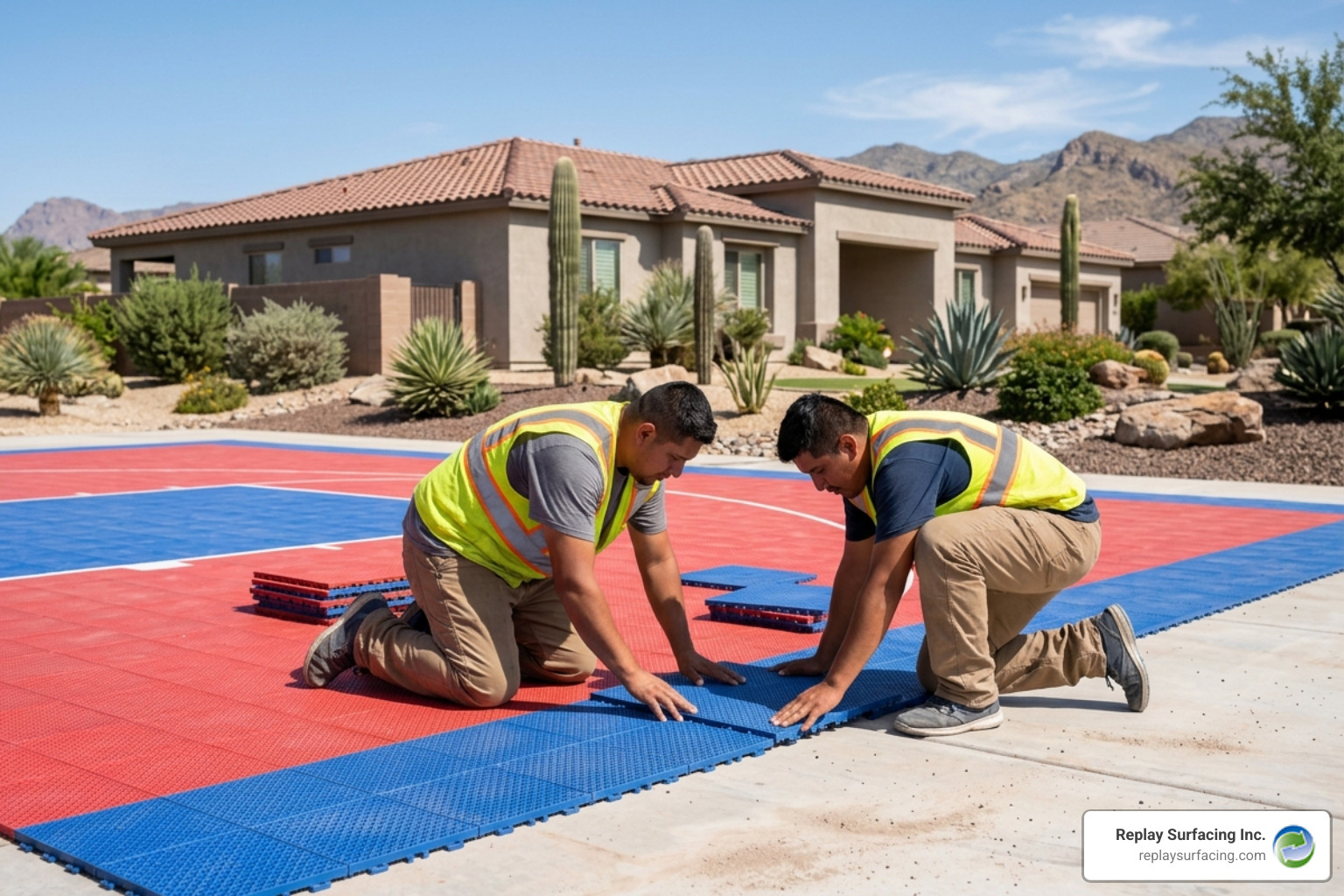
For outdoor athletic flooring, weatherproofing is the name of the game. Outdoor rubber surfaces must be UV-resistant to prevent the vibrant colors from fading under the Arizona or South Carolina sun. Furthermore, drainage is critical. Many outdoor systems utilize perforated tiles or porous “wet pour” designs. These allow rainwater to flow straight through the surface to the subfloor and away from the court, preventing puddles and keeping the court slip-resistant even after a downpour. You can learn more about these specialized systems on our page regarding outdoor athletic flooring.
Indoor flooring, conversely, often focuses on density and ease of cleaning. Since you don’t have to worry about rain, these surfaces are usually solid (non-porous), making them easier to sanitize with a simple mop and mild soap.
Customizing Your Sports Court Rubber Flooring
Gone are the days when a sports court had to be “industrial gray.” Because we work with recycled rubber and EPDM (ethylene propylene diene monomer) granules, the color palette is virtually limitless.
We can customize your court with:
- Permanent Game Lines: Whether it’s a three-point line for basketball or the “kitchen” for pickleball, we can paint or “pour” these lines directly into the surface.
- Custom Logos: Want your school mascot in the center of the court in Raleigh? We can do that.
- Color Blends: We offer dozens of standard colors and can create custom blends to match your team’s branding.
For those looking for a truly high-end finish, a wet pour installation allows for seamless transitions between colors and integrated graphics that won’t peel or wear off over time. For more inspiration, check out our guide on sports court surfacing.
Key Benefits of Rubber Surfacing for Sports Courts
Why choose rubber over the alternatives? It really comes down to how the body feels after two hours of play.
1. Superior Joint Protection Concrete is a “zero-give” surface. Every time an athlete jumps and lands, that shock travels straight up through their ankles, knees, and lower back. Sports court rubber flooring acts as a giant shock absorber. By reducing the impact force, it helps prevent chronic injuries and allows athletes to play longer with less fatigue.
2. Traction and Slip Resistance Rubber has a high natural coefficient of friction. Even when slightly damp, it provides excellent grip for fast cuts and sudden stops. This makes it significantly safer than vinyl or painted concrete, which can become “skating rinks” with just a little bit of moisture or sweat.
3. Noise Reduction If you’ve ever been in a gymnasium with five basketballs bouncing at once, you know how loud it can be. Rubber surfaces naturally dampen sound, making them ideal for multi-use facilities in residential areas or schools.
4. Sustainability and LEED Credits At Replay Surfacing, we take pride in the fact that our products give a second life to scrap tires. Using these materials can contribute to LEED (Leadership in Energy and Environmental Design) credits for commercial building projects. It’s a win for the athlete and a win for the environment. Discover more about why this is the gold standard on our page for rubber surfacing for sports courts.

Best Sports for Rubber Court Surfaces
While we often think of rubber for weight rooms, modern engineering has made it a premier choice for almost any ball sport.
- Basketball: This is the big one. With ball rebound rates often exceeding 98%, players get the “true” bounce of a hardwood floor with the safety of a resilient surface. We have extensive resources on basketball court rubber flooring for those looking to build a hoop-haven.
- Pickleball and Tennis: These sports require consistent ball bounce and high traction for lateral movement. Rubber surfaces provide a slightly slower, more controlled game pace that many recreational players prefer.
- Badminton: The quick footwork in badminton requires a surface that won’t cause “turf toe” or slips. A rubber mat for badminton court use is an excellent portable or permanent solution.
- Multi-Sport Versatility: In many of our service areas like Sanford, NC, or Beaverton, OR, space is at a premium. A single rubber court can be lined for basketball, volleyball, and futsal, serving as a true “Swiss Army Knife” for the community.
Whether you are looking for an outdoor rubber flooring for basketball court setup or an indoor volleyball hub, rubber is the most adaptable material on the market.
Installation and Maintenance for Long-Term Durability
One of the best things about sports court rubber flooring is that it doesn’t require a PhD to maintain, but it does require a professional touch to install correctly.
Subfloor Preparation
The secret to a great court isn’t just the rubber; it’s what’s underneath. For the best ball rebound, we recommend installing over a clean, level concrete or asphalt base. If the subfloor is cracked or uneven, those imperfections will eventually show through the rubber. Our team at Replay Surfacing ensures the base is prepped, cleaned of debris, and leveled before a single tile or drop of adhesive is laid.
Professional Installation
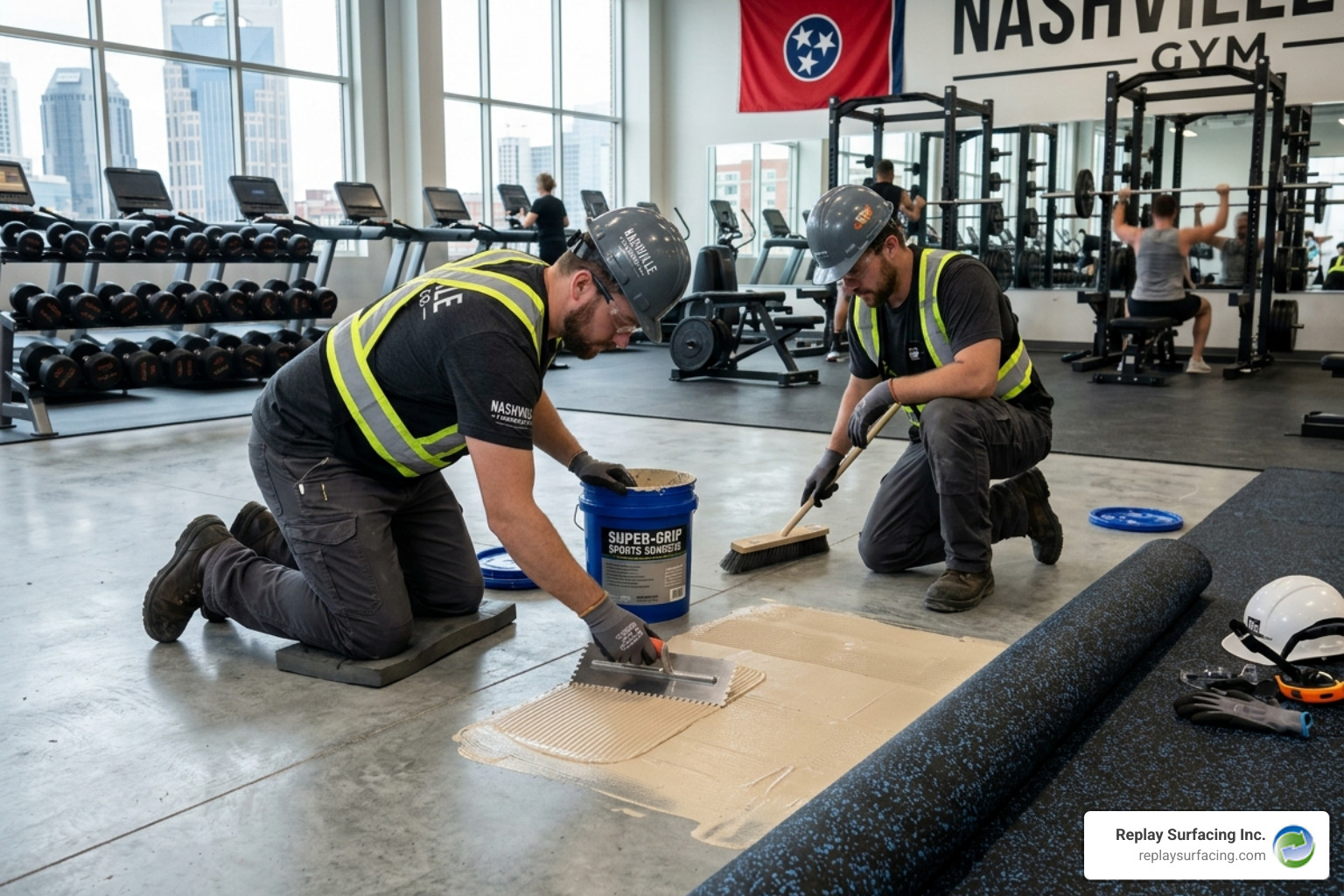
While some modular tiles are DIY-friendly, professional installation is recommended for rolls and mandatory for poured-in-place surfaces. We use industrial-grade adhesives or specialized tape to ensure the flooring stays put, even under the most intense “beating.” As a dedicated sports court flooring company, we handle everything from the initial site assessment to the final line painting.
Simple Maintenance
To keep your court looking new, follow these simple steps:
- Sweep Regularly: Remove dirt and grit that can act like sandpaper on the surface.
- Power Wash (Outdoor): A light power wash once or twice a year will keep the pores of the rubber clear for drainage.
- Deep Clean (Indoor): Use a walk-behind scrubber or a mop with a neutral pH cleaner. Avoid petroleum-based cleaners, as they can degrade the rubber over time. For more specific tips, visit our replay court gym flooring page.
Frequently Asked Questions about Sports Court Rubber Flooring
How long does rubber sports flooring last?
With proper care, a high-quality rubber court will easily last 10 to 15 years, and often much longer. The lifespan depends heavily on the thickness of the material and the volume of traffic. Because rubber is “color-through” (the color goes all the way through the material, not just a top layer), it won’t show wear patterns as quickly as painted surfaces.
How does rubber flooring enhance athlete safety and performance?
The primary safety benefit is impact attenuation. When an athlete falls, the rubber compresses to absorb the energy of the impact, significantly reducing the risk of broken bones or concussions. Performance-wise, the consistent traction allows for faster, more confident movements, while the energy return reduces muscle fatigue during long games. You can read more about these safety metrics at rubber surfacing for sports courts.
Can I install rubber court flooring over grass or dirt?
We strongly advise against it. Grass and dirt are unstable; they shift with moisture and temperature. Without a solid subfloor like concrete, asphalt, or a specialized gravel paver system, the rubber flooring will buckle, shift, and lose its ball-rebound properties. For a court that “takes a beating,” a solid foundation is non-negotiable.
Conclusion
At Replay Surfacing Inc., we believe that every athlete—from the kid shooting hoops in a Tucson driveway to the pro training in a Nashville facility—deserves a surface that supports their goals and protects their body. By recycling tires into premium sports court rubber flooring, we’re not just building courts; we’re building a more sustainable future for the communities we serve.
Whether you are in Raleigh, Charlotte, Connecticut, Indiana, or any of our other service locations, our team is ready to help you design a court that is as durable as it is beautiful.
- View our Projects/Sport Surfaces
- Explore our Portfolio Categories/Sport Surfaces
- Contact us for sports court surfacing
Ready to give your athletes a surface that can truly take a beating? Let’s get to work.