Why Playground Turf Tiles Are the Smart Choice for Safe, Low-Maintenance Play Spaces
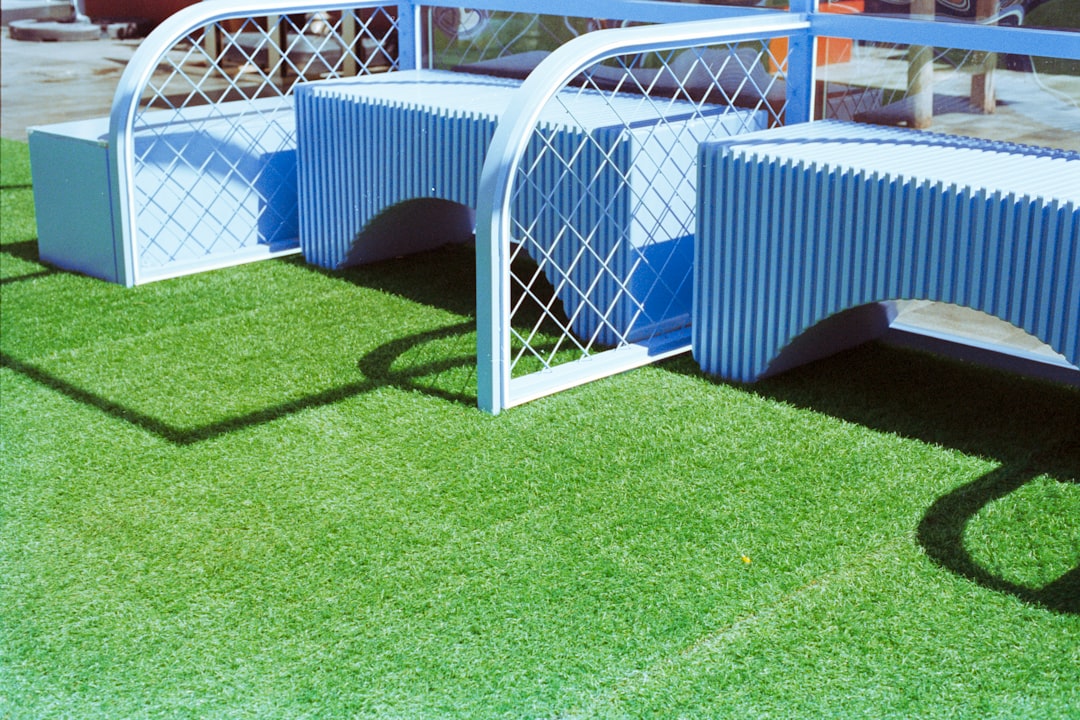
Playground turf tiles are interlocking modular panels with a synthetic grass surface on top and a cushioned base layer underneath — designed to create a safe, natural-looking play surface that installs quickly and requires minimal upkeep.
Here’s a quick snapshot of what you need to know:
| Feature | Details |
|---|---|
| What they are | Modular tiles with synthetic turf surface + foam or rubber base |
| Fall height protection | Up to 12 feet, depending on tile thickness and padding |
| Key safety standard | ASTM F1292; IPEMA certification available |
| Best for | Playgrounds, schools, daycares, backyards |
| Install method | Interlocking DIY or professional installation over hard or compacted base |
| Maintenance | Low — occasional brushing, rinsing, infill top-up |
| ADA compliant | Yes, firm surface supports wheelchair accessibility |
Choosing the right playground surface is harder than it looks. Parents and facility managers want something safe, something that holds up through rain and heavy use, and something that doesn’t demand constant repairs. Traditional grass gets muddy and uneven. Rubber mulch displaces and needs raking. Poured-in-place rubber is durable but costly and difficult to repair.
Playground turf tiles sit in a practical middle ground — they look great, protect against falls, drain well, and can be installed without heavy equipment or professional crews in many cases.
One customer who made the switch put it simply: “The kids love to play on this surface. We’re glad that we went this route instead of rubber tiles.”
I’m Landon Olson, operator of Replay Surfacing Inc., and I’ve spent years working at the intersection of engineering, sustainability, and safety surfacing — including hands-on experience specifying and installing playground turf tiles for schools, parks, and recreational facilities across North America. In this guide, I’ll walk you through everything you need to make a confident, informed decision.
Playground turf tiles basics:
What are Playground Turf Tiles?
At Replay Surfacing Inc., we often describe playground turf tiles as the “Lego blocks” of the surfacing world. They are modular units, typically 24″ x 24″ or 1m x 1m, that combine the aesthetic beauty of a manicured lawn with the industrial-strength impact absorption required for modern safety standards.
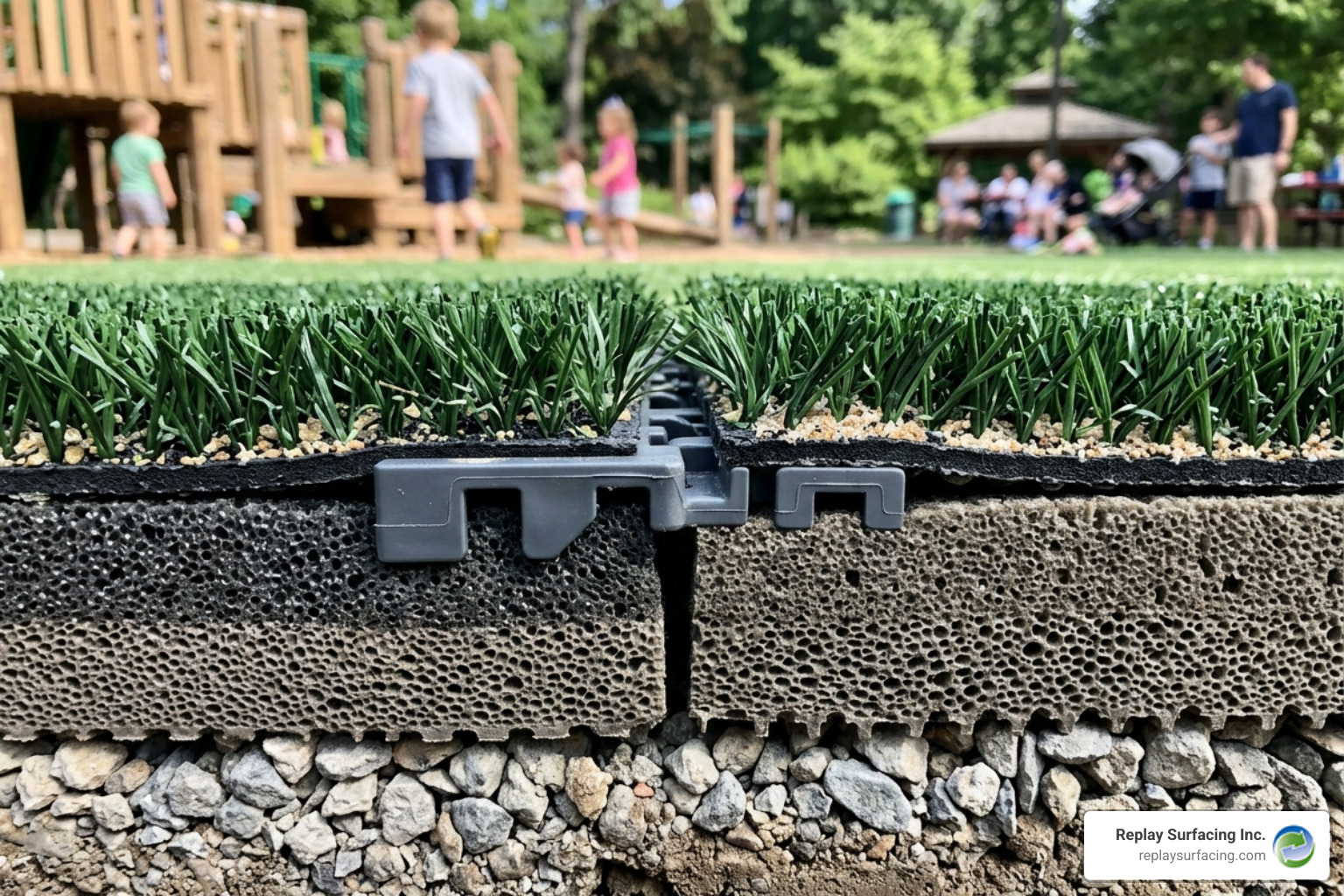
Unlike traditional sod, these tiles consist of a high-density synthetic grass top layer bonded to a specialized base. This base is often made from high-quality EVA foam or recycled rubber stanchions that allow for water drainage and shock absorption. For those looking for a quick transformation in places like Charlotte, NC or Tucson, AZ, EZ-Install Artificial Turf Tiles represent a way to create a seamless safety floor in minutes.
These systems are particularly popular for Interlocking Outdoor Playground Tiles because they offer a portable, modular solution. If a single tile is damaged by a stray lawnmower or a localized spill, you don’t have to replace the whole playground—you simply swap out the affected tile.
Understanding Playground Turf Tiles vs. Synthetic Rolls
When planning a project in Nashville, TN, or Raleigh, NC, you’ll likely choose between turf rolls and turf tiles.
Synthetic Turf Rolls (like Playground Turf Flooring | Play Time Turf | GrassTex) are typically 15 feet wide. They provide a beautiful, seamless look but require professional installation, heavy equipment to move the rolls, and complex seaming techniques like S-cuts to hide the joins.
Playground turf tiles, on the other hand, are the ultimate DIY-friendly option. They are easy to transport in a standard truck and can be carried through narrow gates or onto rooftops in urban areas like Charlotte. While rolls are great for massive open fields, tiles excel in smaller or irregularly shaped play areas where maneuverability is key.
Material Composition and Durability
The “grass” on these tiles isn’t just for show. High-quality playground turf tiles use polyethylene yarn polymers, which are soft to the touch but incredibly resilient. Many of our systems feature a “thatch” layer—a curly tan or green fiber at the base of the blades—that provides a plush body and reduces the need for heavy infill.
In sunny climates like Tucson, AZ, UV stability is non-negotiable. These tiles are engineered to withstand a “daily sun wave” of 100+ degrees without melting or significant fading. Furthermore, many systems incorporate antimicrobial technology and “ChargeGuard” anti-static properties, ensuring that kids don’t get a “zap” every time they touch a metal slide.
Safety Standards and Fall Height Protection
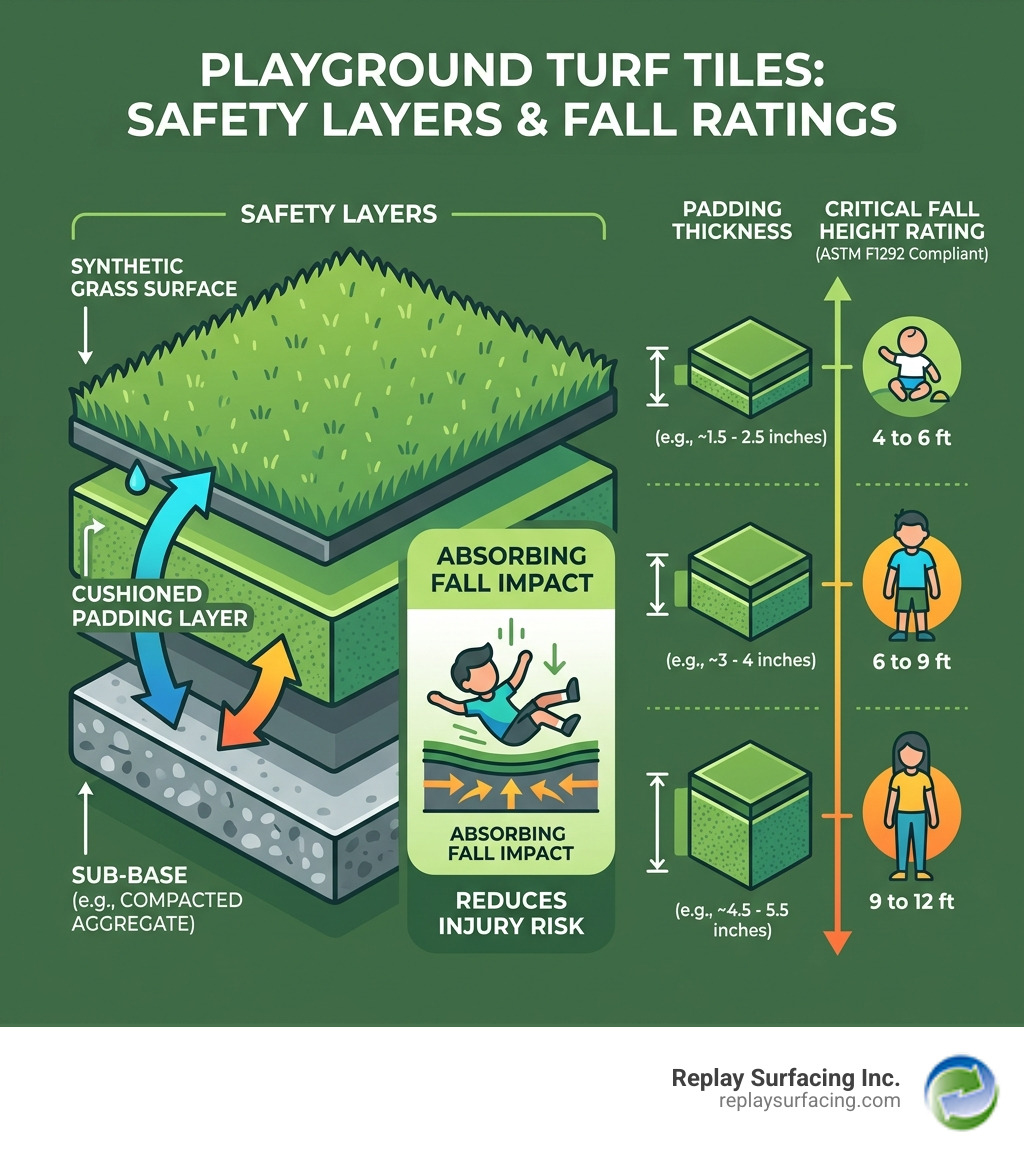
Safety is the heartbeat of what we do at Replay Surfacing Inc. Whether we are working on a school in Columbia, SC, or a daycare in Sanford, NC, we strictly adhere to ASTM F1292 standards. This is the industry benchmark for “Critical Fall Height”—the maximum height from which a child can fall onto the surface without sustaining a life-threatening head injury.
Playground Surfacing must be more than just “soft.” It needs to be scientifically rated. Playground turf tiles achieve this by utilizing shock-absorbing underlayments, such as PolyGreen foam pads, which provide consistent HIC (Head Injury Criterion) ratings across the entire play area.
Fall Height Ratings for Playground Turf Tiles
Not all tiles are created equal. The thickness of the tile and its accompanying pad determines its safety rating:
- 1-inch to 2-inch systems: Typically rated for 4-foot falls, ideal for residential play sets.
- 2.75-inch systems: Often provide up to 8-foot fall height protection.
- Premium systems: Using a combination of a 1.25-inch turf top and a 2.25-inch foam base, these can meet ASTM requirements for 8 to 12-foot fall heights.
In locations like Sanford, NC, where large commercial play structures are common, we often recommend thicker padding to ensure 12-foot fall height certification. For more on how this compares to other materials, check out our guide on Loose Fill Playground Surfacing.
ADA Compliance and Inclusive Play
In April 2026, the standard for a “great” playground is inclusivity. Playground turf tiles are a premier choice for ADA-compliant spaces in Connecticut and Indiana. Unlike wood chips or sand—which are nearly impossible for wheelchairs to navigate—turf tiles provide a firm, stable surface.
Because the tiles interlock securely, they create a “monolithic” surface that doesn’t develop ruts or “potholes.” This ensures that children of all abilities can move freely from the swing set to the slide without barriers. For a deeper dive into accessibility, see our Interlocking Playground Mats Ultimate Guide.
Comparing Playground Turf Tiles to Other Surfacing
How do playground turf tiles stack up against the competition in Nashville or Tucson? Let’s look at the numbers.
| Surfacing Type | Aesthetics | Maintenance | Initial Cost | Lifespan |
|---|---|---|---|---|
| Turf Tiles | Natural Look | Low | Medium-High | 10-15 Years |
| Rubber Mulch | Rugged | Medium (Raking) | Low-Medium | 10+ Years |
| Poured-in-Place | Custom Patterns | Low-Medium | High | 8-12 Years |
| Natural Grass | Natural | High (Mowing) | Low | Varies |
While Best Playground Ground Cover is a subjective title, turf tiles win on the “no-mess” factor. They don’t track into the house like mulch, and they don’t hide “surprises” from local pets as easily as sand or wood fiber.
Pros and Cons of Turf vs. Rubber Tiles
We are often asked: “Should I get turf or rubber tiles?” In Charlotte, NC, the answer usually depends on your aesthetic preference and heat tolerance.
Pros of Turf Tiles:
- Natural Look: It stays green year-round without water.
- Cooling Tech: Modern turf can feature “Cool Reflect” technology, keeping it up to 20 degrees cooler than standard synthetic surfaces.
- Comfort: It is generally softer for sitting and lounging than rubber.
Pros of Rubber Cal Eco Safety Interlocking Playground Tiles:
- Extreme Durability: Can handle higher-impact “traffic zones” slightly better.
- Color Variety: Available in vibrant reds, blues, and grays.
- Drainage: Often feature “stanchions” (legs) on the bottom for rapid water flow.
Installation and Maintenance of Playground Turf Tiles
One of the biggest draws for our customers in Raleigh, NC, and Columbia, SC, is the ease of Installing Playground Tiles.
Base Preparation is Everything: You cannot simply throw turf tiles over existing grass. You must remove the sod, lay down a weed barrier, and create a 3-4 inch base of compacted crushed stone or “decomposed granite.” This ensures the surface stays flat and drains properly. If you are installing indoors or on a rooftop, a concrete or asphalt subfloor works perfectly.
Maintaining Your Playground Turf Tiles for Longevity
Maintenance is where playground turf tiles truly shine. You don’t need a lawnmower; you need a leaf blower.
- Weekly: Use a blower to remove leaves, twigs, and debris.
- Monthly: Rinse high-traffic areas with a garden hose to remove dust.
- Seasonally: Use a stiff-bristled (non-metal) broom to “brush” the fibers against the grain. This keeps the blades standing upright and prevents matting.
- As Needed: For spills, mild soap and water usually do the trick.
For more detailed tips, refer to The Ultimate DIY Guide to Rubber Playground Flooring.
Frequently Asked Questions
Can playground turf tiles be used under swings and slides?
Absolutely! In fact, we recommend it. These are high-impact areas where natural grass usually dies and turns into a mud pit. For extra protection in Sanford, NC, we suggest adding “wear mats” on top of the turf in the heavy-use zones directly under swings to extend the life of the turf fibers.
How do turf tiles perform in wet conditions and drainage?
They are designed to be porous. Most tiles feature a perforated backing or a “stanchion” base that allows water to flow through the tile and into the compacted stone base below. This means the playground is ready for use shortly after a rainstorm—no more waiting days for the mud to dry!
Are these tiles suitable for indoor sports and play areas?
Yes, they are excellent for indoor gyms, “football-themed” basements, and daycare centers in locations like Beaverton, OR or Lake Charles, LA. For indoor use, you can often skip the heavy stone base and install them directly over concrete using double-sided tape or a light adhesive.
Conclusion
At Replay Surfacing Inc., we believe that every child deserves a safe place to play, and every facility manager deserves a surface that doesn’t cause a headache. By recycling tires into high-quality rubber components and combining them with advanced synthetic turf technology, we offer a sustainable, durable solution that protects both children and the environment.
Whether you are in Charlotte, Raleigh, Tucson, or Nashville, playground turf tiles offer a customizable, ADA-compliant, and high-performance alternative to traditional surfacing. From the initial design to the final “click” of the interlocking tiles, we are here to help you transform your space.
Ready to upgrade your play area? Contact us today for a Fast Quote for Playground Surfacing and let’s build something great together.