
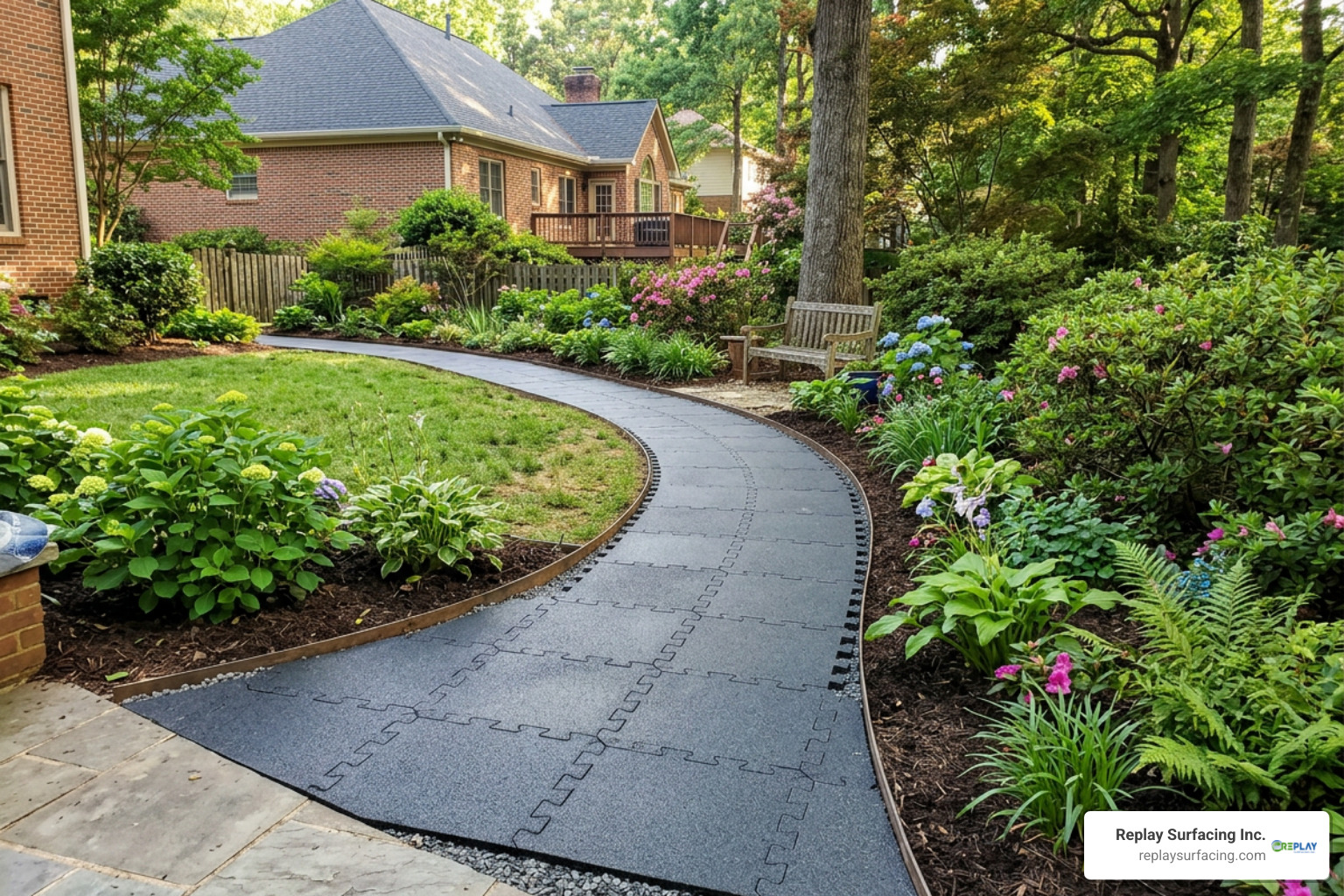
Rubber Yard Tiles in Raleigh, NC: Main Types and Applications
When selecting rubber yard tiles, choosing the right style depends heavily on where you intend to install them and how much traffic the area receives. Whether you are surfacing a home playground in Nashville, TN, or transforming a damp pool surround in Lake Charles, LA, understanding your options makes all the difference.
Interlocking, Paver-Style, and Decorative Rubber Tiles
Outdoor rubber tiles generally fall into three main structural types:
- Interlocking Tiles: These tiles use built-in puzzle-style tabs or internal pin connection systems. Interlocking tiles lock firmly together, making them an excellent candidate for DIY projects over concrete or crushed stone. Many are manufactured using recycled SBR (styrene-butadiene rubber) derived from diverted scrap tires.
- Paver-Style Rubber Tiles: Designed to mimic traditional brick or cobble pavers, these provide the classic aesthetic of stone with the forgiving cushion of rubber. Dual-sided paver tiles feature dual-textured surfaces, allowing home contractors in Connecticut or Indiana to choose between brick or cobble patterns.
- Decorative Garden Stepping Tiles: Crafted for low-impact footpaths, decorative tiles are often made from 100% PVC-free vulcanized rubber (frequently incorporating up to 50% recycled content). Molded into aesthetic shapes like sunflowers or textured flagstones, they add visual appeal to garden walkways while offering shoe-scraping utility.
Choosing Rubber Yard Tiles for Playgrounds and Patios
Every yard zone serves a unique function, which means tile selection should align with safety and structural demands:
- Patios and Decks: For residential patios or rooftop balconies in places like Charlotte, NC, high-density rubber pavers provide a comfortable, sound-dampening surface under patio furniture.
- Playgrounds and Play Yards: Shock absorption is paramount. Playground areas require thicker, safety-rated tiles designed to absorb impacts from falls.
- Walkways and Garden Paths: Flexible products such as Outdoor Interlocking Rubber Pathway Materials 24 x 24 Inches provide non-slip footings through muddy garden patches and high-traffic yard corridors.
- Heavy-Duty and Livestock Zones: High-load areas require specialized density. Heavy-duty paddock options rely on high-density formulations (typically 92% recycled SBR rubber bonded with 8% polyurethane) to withstand thousands of pounds of pressure without tearing or permanently compressing.
Key Benefits and Performance of Rubber Yard Tiles
Fall Protection, Safety Ratings, and Thickness Requirements
Safety is the single biggest reason families choose rubber yard tiles over concrete or wood. Outdoor rubber tiles range from 1/4-inch decorative mats up to 5 inches thick for heavy commercial applications.
For play equipment, tile thickness directly correlates with critical fall height protection tested under ASTM impact standards. If your play structure features a 6-foot slide deck, your surface must be rated to absorb a fall from that exact height.
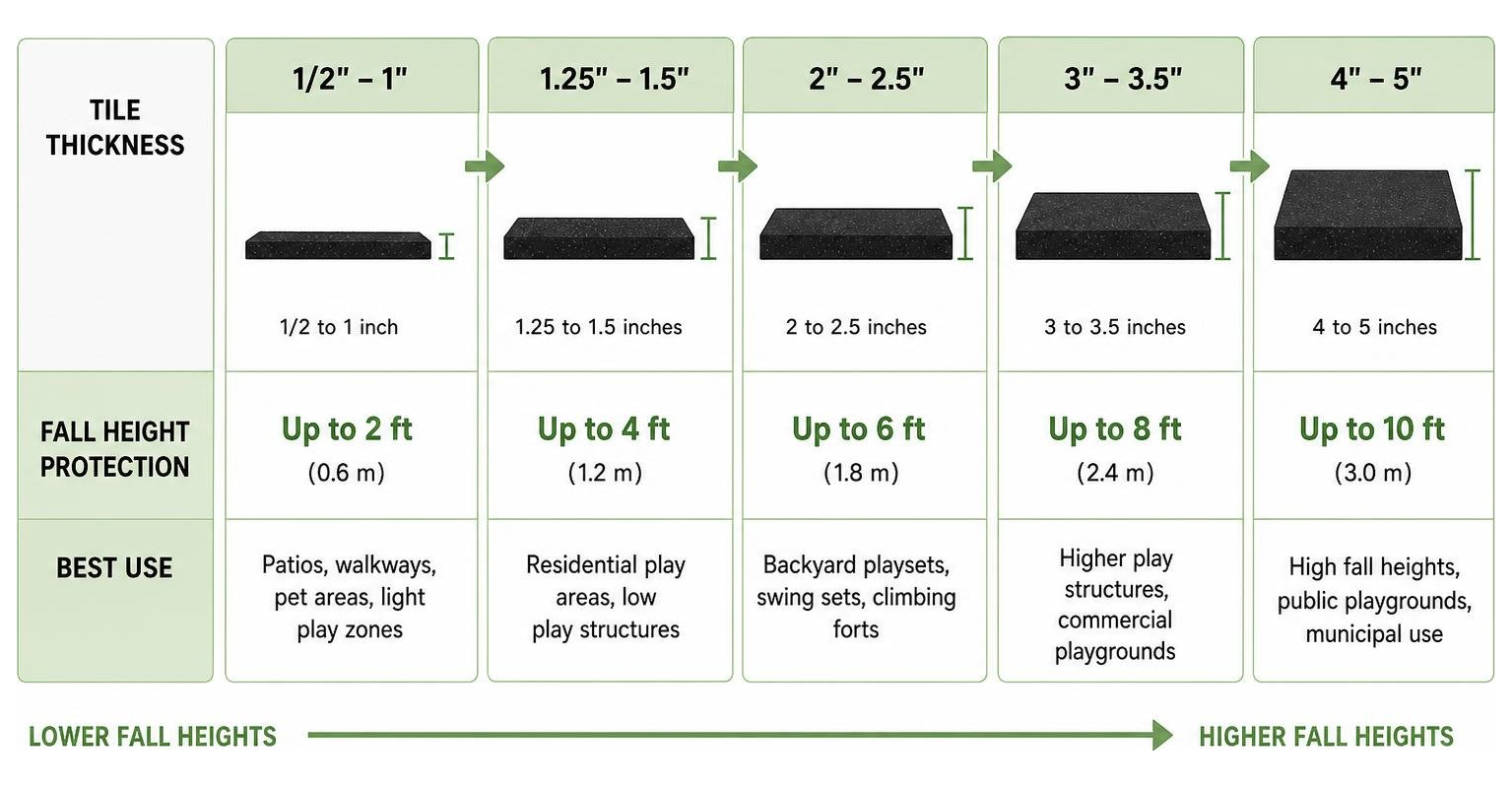
- 1/2-inch to 1-inch thickness: Best for general patio comfort, residential walkways, and pet areas.
- 2-inch to 2.5-inch thickness: Recommended standard for backyard swing sets and climbing forts with critical fall height requirements up to 6 feet.
- 3-inch to 5-inch thickness: Required for high fall heights in public or municipal playgrounds.
To explore specialized options for play equipment, review our guide on Top Rated Backyard Playground Flooring Options You Can Buy Today, check our Interlocking Playground Mats Ultimate Guide, or browse our selection of Playground Mats Ready for Outdoor Fun.
All-Weather Durability, UV Protection, and Drainage Systems
Outdoor rubber tiles are designed to withstand extreme climate swings—from humid summers in Columbia, SC, to freezing winter freeze-thaw cycles in Connecticut. High-quality SBR and TPV rubber tiles resist thermal cracking because the material remains elastomeric across broad temperature ranges.
Proper drainage is essential for all-weather longevity. Premium tiles feature studded bottom profiles and under-tile drainage channels. These channels elevate the tile slightly, allowing rainwater to flow beneath the surface rather than pooling on top. This prevents standing water, repels mold growth, and provides superior slip resistance (often achieving high PTV slip resistance ratings both wet and dry).
For custom outdoor landscaping, check out our Recycled Rubber Garden Tiles to ensure proper drainage and stability.
How to Install Rubber Yard Tiles on Any Subsurface

Preparing Subbases: Dirt, Grass, Concrete, and Wood
The performance of your rubber surface depends directly on subbase preparation:
- Concrete and Wood Decks: Ensure the subfloor is structurally sound. Patch major concrete cracks with hydraulic cement and sweep away debris. Rubber tiles easily conform to slight surface imperfections, but large divots should be filled first.
- Grass and Dirt Yards: Installing directly over soft dirt or turf leads to uneven settling over time. Dig out 2 to 4 inches of topsoil, tamp down the earth, and lay a permeable landscape fabric barrier to block weed growth while permitting drainage. For high-grade stability on raw dirt, install a GeoGrid or plastic sub-base paving grid prior to tile layment.
Learn more about managing natural yards in our Rubber Mats Play Yards Ultimate Guide.
Step-by-Step Guide to Installing Rubber Yard Tiles
Installing rubber yard tiles is a straightforward DIY project when following this basic workflow:
- Heavy-duty utility knife or reciprocating saw
- Straight edge and chalk line
- Rubber mallet
- Interlocking pins or polyurethane adhesive (if gluing down)
- Tape measure
- Acclimate the Materials: Lay tiles flat near the installation zone for 24 hours to acclimate to local outdoor ambient temperatures.
- Establish the Boundary: Start in a corner or center point, using chalk line references to maintain a true 90-degree grid.
- Connect the Tiles: Fasten interlocking tabs or insert plastic interlocking connection pins into pre-drilled side holes using a rubber mallet.
- Trim Borders: Cut edge tiles to fit perimeter walls using a sharp utility knife lubricated with soapy water for smooth cuts.
- Allow Expansion Gaps: Leave a 1/4-inch expansion perimeter near rigid structures to accommodate hot summer expansion in sun-drenched regions like Tucson, AZ.
- Attach Beveled Edges: Install beveled rubber transition ramps on open borders to eliminate tripping hazards and ensure wheel accessibility.
Comparative Cost, Performance, and Maintenance Analysis
Rubber Tiles vs. Concrete, Wood, and Plastic Alternatives
When evaluating yard upgrades, consider upfront material pricing alongside long-term maintenance costs. Rubber yard tiles typically cost between $4.07 and $16.15 per square foot depending on thickness and fall-height ratings.
| Surface Type | Avg. Cost / Sq Ft | Shock Absorption | Maintenance Level | Slip Resistance | Lifespan |
|---|---|---|---|---|---|
| Rubber Yard Tiles | $4.07 – $16.15 | Exceptional | Minimal (Hose off) | Excellent (Wet/Dry) | 15–20+ Years |
| Poured Concrete | $6.00 – $12.00 | None (Hard) | Moderate (Sealing) | Poor when wet | 20+ Years |
| Wood Decking | $15.00 – $35.00 | Low | High (Stain/Seal) | Moderate to Slippery | 10–15 Years |
| Rigid Plastic Tiles | $3.50 – $9.00 | Low to Moderate | Low (Sweep/Hose) | Moderate | 8–12 Years |
Long-Term Cleaning, Maintenance, and Upkeep
Rubber yard tiles require minimal upkeep. Routine care keeps them looking vibrant year after year:
- Regular Debris Removal: Use a standard leaf blower or soft-bristle outdoor broom to clear leaves, twigs, and dirt.
- Washing: Hose down tiles periodically with clear water. For stubborn mud, wash with a bucket of warm water and a mild, non-abrasive detergent.
- Spot Cleaning: Avoid harsh petroleum-based solvent cleaners, which can degrade recycled SBR rubber compounds over time.
For more insights on maintaining child-friendly rubber surfaces, read about Durable Backyard Rubber Flooring That Kids and Parents Love.
Frequently Asked Questions About Yard Surfacing
Can rubber tiles be installed directly over uneven dirt or lawns?
While tiles can flex to conform to minor ground contour variations, laying them directly onto unprepared lawns leads to shifting, uneven gaps, and weed growth between seams over time. For best results, clear vegetation, level the soil, lay geotextile landscape fabric, and add a thin, compacted layer of crushed stone aggregate or sub-base grid prior to installing tiles.
What thickness of rubber tile is recommended for backyard play sets?
For standard residential play structures, swing sets, and lower monkey bars (up to 6-foot fall heights), a 2.5-inch thick rubber tile featuring tested fall-height attenuation is the industry standard. Always match the tile’s fall protection rating to the highest accessible platform on your play set.
How do rubber tiles hold up in freezing winter climates?
Exceptionally well! Unlike concrete, which cracks when water enters micro-fractures and freezes, rubber tiles retain elastomeric flexibility. Ice can be gently cleared with a plastic snow shovel, and ice-melt chemicals designed for rubber or concrete won’t break down high-grade SBR or polyurethane binders.
Conclusion
Upgrading your yard with rubber yard tiles transforms underutilized spaces into safe, low-maintenance living areas. By giving discarded scrap tires a durable second life, you get a weather-resistant patio, walkway, or playground surface built to last.
Whether you’re planning a playground installation in Beaverton, OR, or a residential patio refresh in Sanford, NC, our team brings specialized engineering and recycling expertise to every project.
Ready to transform your outdoor living space with sustainable rubber solutions? Explore our Outdoor Rubber Flooring Solutions or contact our expert team today to get started!