

What Is Recycled Tire Mulch — and Is It Right for Your Project?
Recycled tire mulch is shredded rubber made from end-of-life scrap tires, processed into small pieces and used as a ground cover for playgrounds, landscaping, and sports surfaces.
Here’s a quick snapshot to help you decide if it’s what you need:
| Feature | Recycled Tire Mulch |
|---|---|
| Lifespan | 10–20 years (vs. 1–3 years for wood mulch) |
| Best uses | Playgrounds, flower beds, walking paths, sports fields |
| Fall protection | Up to 16 feet with a 6-inch depth |
| Maintenance | Low — occasional raking, no replacement needed |
| Colors available | Black, brown, red, blue, green, and more |
| Key concern | Heat retention and chemical leaching in some conditions |
| Environmental upside | Diverts tires from landfills (290 million discarded in the U.S. annually) |
The U.S. discards around 290 million scrap tires every year. Recycled tire mulch turns that waste problem into a durable, low-maintenance surfacing solution — one that lasts far longer than traditional wood mulch and never needs routine replenishment.
It’s not a perfect product. There are real tradeoffs to understand — from surface heat on hot days to questions about chemical exposure. This guide covers all of it honestly, so you can make a confident purchasing decision.
I’m Landon Olson, operator of Replay Surfacing and a mechanical engineer with an MBA, and I’ve spent my career recycling millions of pounds of scrap tires into high-quality surfacing products — including recycled tire mulch for playgrounds, sports areas, and commercial landscaping. Let’s dig into everything you need to know to choose the right product for your project.
Understanding Recycled Tire Mulch: Production and Composition
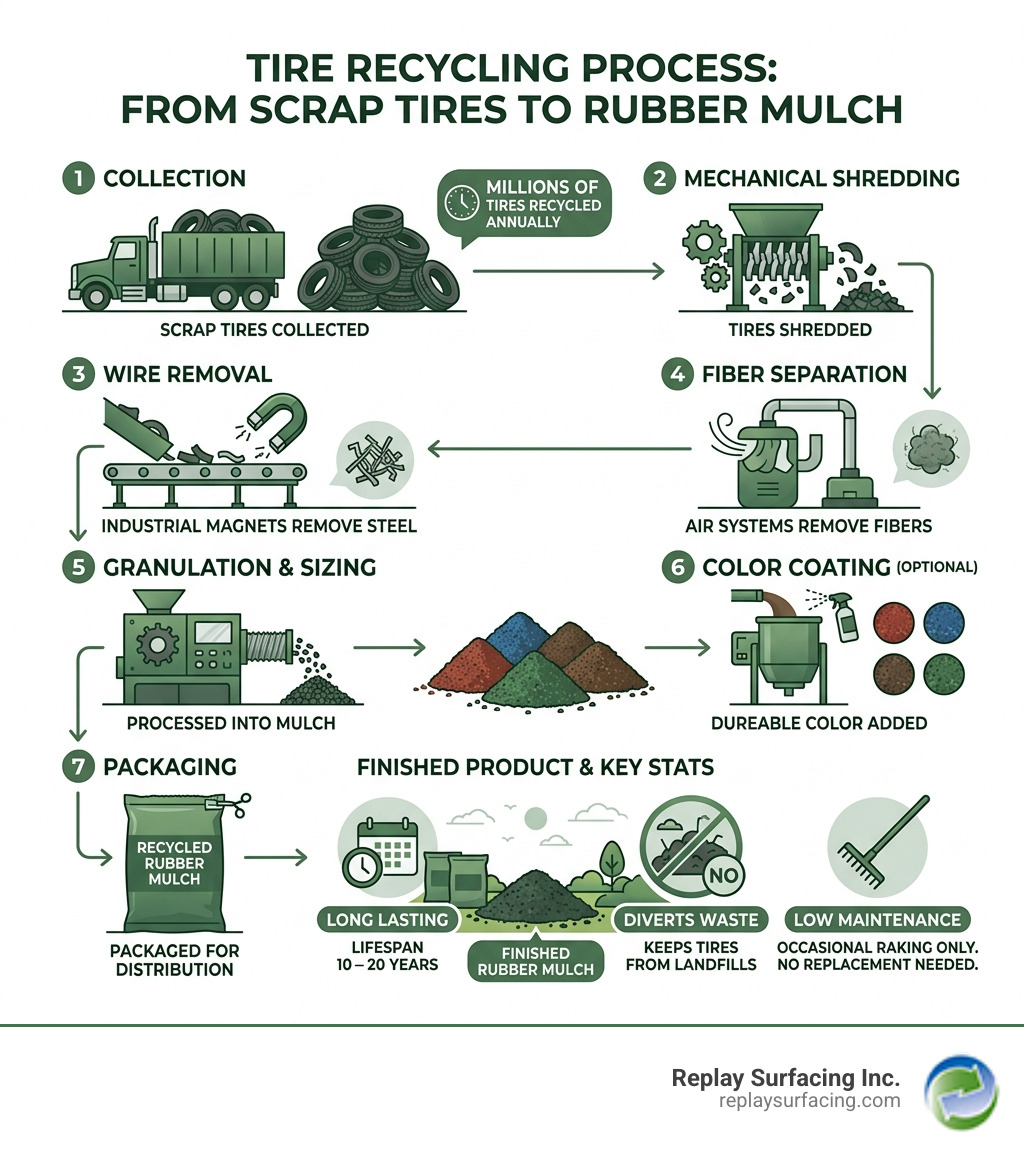
To understand why recycled tire mulch is such a powerhouse in the landscaping world, you first have to look at where it comes from. Most of the rubber mulch we use in places like Charlotte, NC or Indianapolis, IN starts its life on the road. Specifically, it is derived from shredded and processed end-of-life tires.
The production process is quite rigorous. At facilities like the Liberty Tire facility in Sanford, tires undergo a multi-stage mechanical shredding process. One of the most critical steps is the removal of steel belts. Tires are reinforced with wire, so manufacturers use powerful industrial magnets to ensure the finished product is 99.9% wire-free. This creates what we call “clean” rubber, often referred to as SBR (Styrene-Butadiene Rubber).
There are two primary types of rubber mulch:
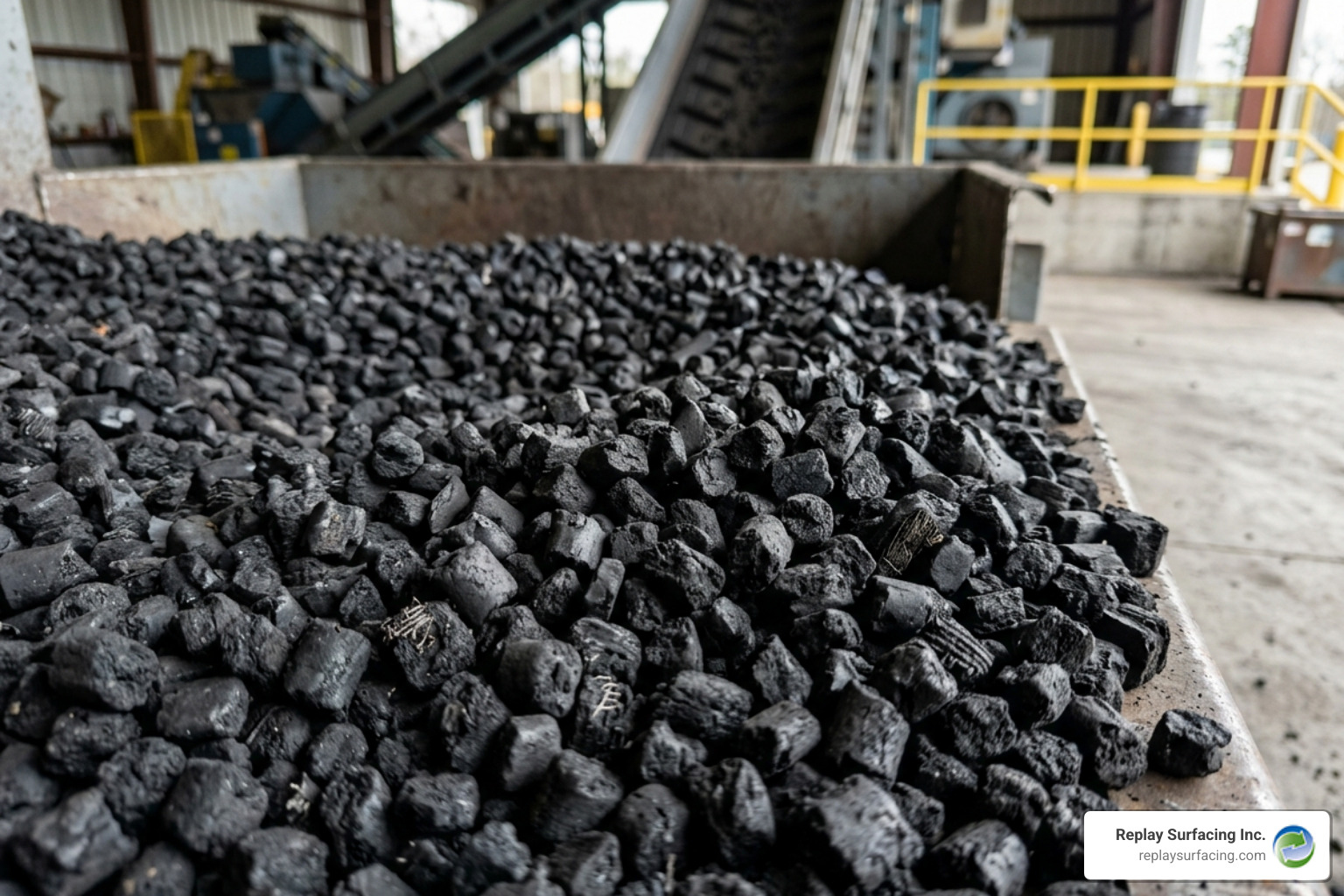
- Buffings: These are long, thin slivers of rubber typically taken from the tread of large commercial truck tires during the retreading process. Because they come from the outer layer, they are naturally free of steel and fabric.
- Nuggets: These are chunkier pieces, often sized between 10mm and 32mm. They provide a more traditional “mulch” look and are excellent for high-impact areas.
For a deeper dive into the technical side of these materials, you can check out our Recycled Rubber Chips Complete Guide or read about the transition From Tires To Tots.
Key Benefits: Why Choose Rubber Over Wood?
If you’ve ever spent a Saturday afternoon in Columbia, SC or Raleigh, NC hauling heavy bags of wood mulch only to watch it fade and rot by next spring, you know the struggle. This is where recycled tire mulch truly shines.
Longevity and Cost-Effectiveness
While wood mulch decomposes and needs to be topped off every year, rubber mulch lasts between 10 to 20 years. It doesn’t rot, compress, or blow away in the wind. While the upfront cost is higher—with bulk prices for items like North Carolina Black Landscape Rubber Mulch ranging from $483 to $739 for large quantities—you save thousands over a decade by eliminating the annual “mulch ritual.”
Superior Safety for Playgrounds
For parents and school administrators, safety is the number one priority. A 6-inch layer of rubber mulch can cushion falls from heights of up to 16 feet. This offers the highest impact-absorbing ratings among loose-fill surfacing options, far surpassing engineered wood fiber or gravel. For more on why this is the Best Rubber Mulch For Playground use, consider its ability to stay springy even after years of play.
Pest and Weed Resistance
Unlike organic mulch, rubber does not provide a food source for termites or carpenter ants. It also serves as a superior weed barrier. Because it doesn’t absorb water, moisture passes right through to the soil below, keeping your plants hydrated while the surface stays dry and unattractive to fungi.
| Comparison | Wood Mulch | Recycled Tire Mulch |
|---|---|---|
| Replacement Frequency | Every 1-2 years | Every 10-20 years |
| Attracts Termites? | Yes | No |
| Fall Safety Rating | Moderate | Excellent |
| Initial Cost | Low (~$1.50/cu ft) | High (~$7.00/cu ft) |
| Maintenance | High (replenishing) | Low (raking) |
For more details on these perks, see our guide on the Advantages Of Playground Rubber Mulch.
The Environmental Impact of Recycled Tire Mulch
Is it truly “green”? The answer is a bit of a “yes, and…”
On the “yes” side, using recycled tire mulch is a massive win for landfill diversion. With 290 million tires discarded annually, turning them into mulch prevents them from becoming breeding grounds for mosquitoes or fuel for dangerous tire fires. It’s a classic example of a circular economy.
However, there are valid environmental concerns regarding toxicity. Rubber tires contain zinc (up to 2% by mass), which can leach into the soil over time. While this isn’t usually an issue for decorative landscape beds, it can be toxic to certain plants and aquatic life if used near sensitive waterways.
We always recommend using a Non Toxic Rubber Mulch and following our Green Rubber Mulch Guide 2026 to ensure you’re placing it in areas where it provides the most benefit with the least ecological risk.
Safety Standards and Federal Research Findings
Understandably, many people ask: “Is it safe for my kids to play on?” This has been the subject of extensive federal research.
The EPA, CDC, and CPSC have conducted multi-agency studies (the Federal Research Action Plan or FRAP) to characterize the chemicals in tire crumb. Their findings generally show that while chemicals like VOCs (Volatile Organic Compounds) and metals are present, the “bioaccessibility” is very low—usually less than 3%. This means that even if a child touches the mulch, very little of the chemical content is actually absorbed by the body.
One real-world safety consideration is temperature. In sunny climates like Tucson, AZ, rubber mulch can get hot—reaching temperatures up to 172°F. It is important to provide shade over play areas or choose lighter colors to mitigate this. For a full breakdown of the science, read our article: Is Rubber Mulch A Safe Surface For Your Childs Playground.
Installation and Maintenance Guide
Installing recycled tire mulch isn’t difficult, but doing it right ensures it stays put for 20 years.
- Clear the Area: Remove all existing grass, weeds, and old wood mulch.
- Prepare the Base: Ensure the ground is level and has good drainage. In regions like Nashville, TN or Connecticut where heavy rains occur, proper grading is key.
- Install a Weed Barrier: Use a high-quality landscape fabric. This prevents the rubber from sinking into the soil and keeps weeds from poking through.
- Spread the Mulch: Use a rake to level the material. For landscaping, 2 inches is usually enough. For playgrounds, you’ll need significantly more.
Maintenance is a breeze. You don’t need to replace it; you just need to occasionally rake it to keep the depth even, especially in high-traffic zones like under swings. For more specific regional tips, check out our Indiana Black Landscape Rubber Mulch guide.
Calculating Your Recycled Tire Mulch Needs
Nothing is worse than being ten bags short in the middle of a project. To calculate your needs, you need your square footage and your desired depth.
- Landscaping: 2 inches is standard.
- Residential Playgrounds: 3 to 4 inches is recommended.
- Commercial Playgrounds: 6 inches is often required to meet safety codes.
A 2,000 lb “Super Sack” (about 95 cubic feet) will cover:
- 570 sq. ft. at 2-inch depth
- 380 sq. ft. at 3-inch depth
- 285 sq. ft. at 4-inch depth
For more help with the math, visit our Rubber Mulch By The Yard page or check the Cost Of Rubber Mulch Per Yard to budget effectively.
Choosing the Right Recycled Tire Mulch for Your Project
The “best” mulch depends on your aesthetic and your budget.
- Color: Most rubber mulch is coated in UV-resistant paint. Popular colors include Espresso Brown, Black, and Redwood. These colors are often warranted for 10-12 years against fading.
- Type: Nuggets (like the Premium Nugget Rubber Mulch Pallet) are great for a clean, uniform look. Shredded styles look more like natural bark.
- Quantity: If you’re doing a small flower bed in Beaverton, OR, bagged mulch from a local garden center is fine. For larger projects, buying Rubber Mulch Per Ton is significantly more economical.
Frequently Asked Questions
Does recycled tire mulch attract pests or termites?
No. Unlike wood mulch, rubber provides no nutritional value to insects. It is one of the best ways to keep termites away from your home’s foundation.
Is rubber mulch safe for pets and garden plants?
Generally, yes. It is safe for pets to walk on. However, because it doesn’t decompose, it adds no nutrients to the soil. If you’re using it in a garden, you’ll need to supplement your plants with fertilizer.
How do I clean and maintain rubber mulch surfaces?
A leaf blower on a low setting is perfect for removing debris like leaves or twigs. For deeper cleaning, you can simply hose it down. It drains quickly and won’t get muddy.
Conclusion
At Replay Surfacing, we believe in the power of recycling to solve modern problems. By choosing recycled tire mulch, you aren’t just getting a durable, beautiful, and safe surface for your home or business—you’re helping us transform environmental hazards into sustainable solutions.
Whether you are looking for Play Yard Rubber Mulch in Charlotte, NC or need a bulk shipment in Tucson, AZ, we are here to help you every step of the way. From playgrounds to pet areas, rubber mulch is the “set it and forget it” solution that keeps your property looking great for decades.
Ready to start your project? Explore our Play Yard Rubber Mulch solutions today and see the difference that high-quality recycled rubber can make.