
Why Connecticut Splash Pads Need the Right Rubber Surface
Rubber surfacing for splash pads Connecticut is one of the most important safety investments a facility manager can make for any public water play area. Whether you’re overseeing a municipal park in Hartford, a shoreline resort near the Connecticut coast, or a school recreation center in Stamford, the surface underfoot matters — a lot.
Here’s a quick summary of what you need to know:
| Question | Quick Answer |
|---|---|
| What is it? | A poured or bonded rubber layer installed over splash pad surfaces for safety and durability |
| Why does it matter? | Falls cause over 70% of playground injuries — the right surface dramatically reduces that risk |
| Best material types | Poured-in-place rubber, Splash Tread, bonded rubber, rubber tiles |
| Key standards to meet | ASTM F1292, ADA compliance, slip resistance, CPSC guidelines |
| Lifespan | 12–15 years with proper maintenance |
| Connecticut-specific benefit | Handles freeze-thaw cycles, heavy rain, humidity, and UV exposure |
More than 200,000 children under 14 are treated in emergency rooms every year for playground-related injuries. Many of those injuries are directly linked to hard, unforgiving surfaces. In a splash pad environment — where water creates constant slip hazards — the stakes are even higher.
Traditional concrete or asphalt simply can’t keep up. They crack under Connecticut’s harsh winters, become dangerously slippery when wet, and offer zero impact absorption if a child falls.
Rubber surfacing solves all of that. It’s non-slip, impact-absorbing, chlorine-resistant, and built to handle the climate swings Connecticut throws at it year after year.
I’m Landon Olson, a mechanical engineer and operator of Replay Surfacing Inc., where I’ve spent my career turning recycled rubber into high-performance surfacing solutions — including rubber surfacing for splash pads Connecticut communities rely on for safe, sustainable aquatic play. In this guide, I’ll walk you through everything you need to know to make the right choice for your facility.
The Importance of Rubber Surfacing for Splash Pads Connecticut
When we talk about aquatic play in the Constitution State, we aren’t just talking about fun and games; we are talking about a serious commitment to public safety. In April 2026, the standards for Splash Pads have never been higher. For any facility in Connecticut, from the urban centers of New Haven to the quiet parks of Litchfield County, rubber surfacing isn’t a luxury—it’s an essential component of the infrastructure.
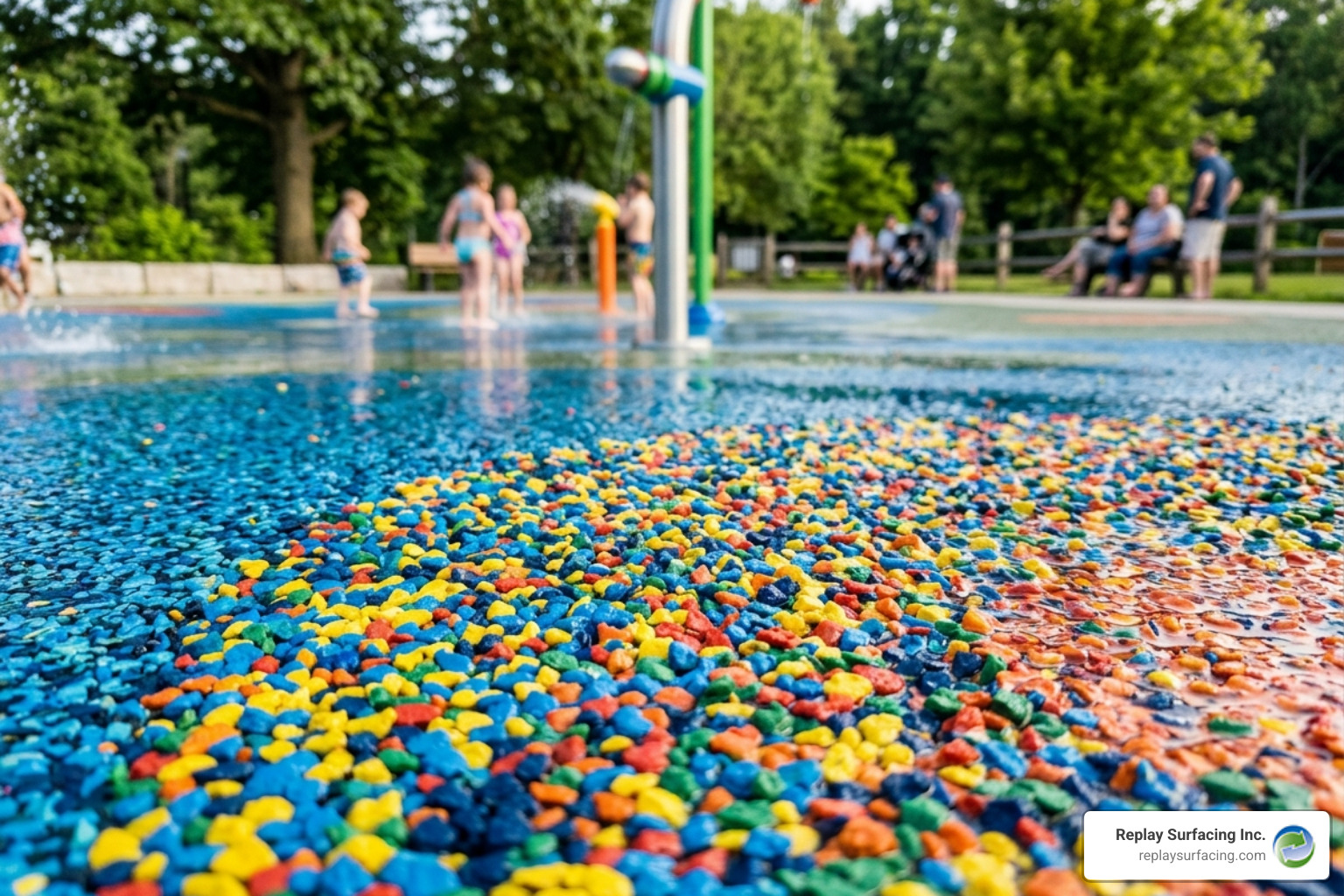
The primary reason for this is the inherent danger of wet surfaces. Concrete becomes a skating rink the moment a water jet turns on. Rubber surfacing provides a high-traction, slip-resistant texture that remains stable even under several inches of moving water. This texture is vital for preventing the “slip and trip” accidents that account for a massive portion of recreation-related liability claims.
Safety Standards and Fall Protection
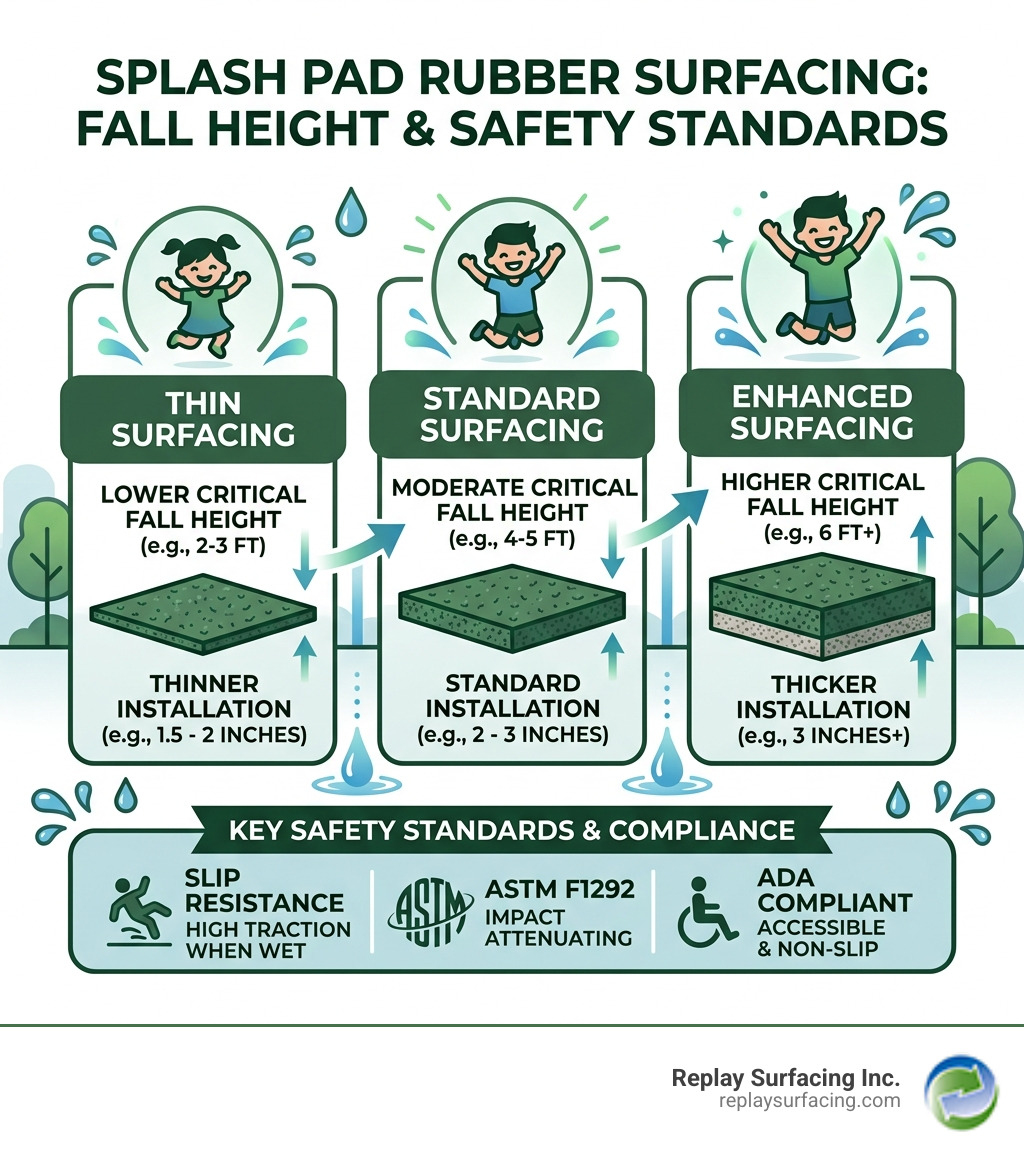
Safety isn’t just a feeling; it’s a measurable metric. According to the Consumer Product Safety Commission (CPSC), falls account for over 70% of all playground-related injuries. When a child falls on a splash pad, the surface must be able to absorb that impact. This is where the ASTM F1292 standard comes into play.
This standard measures “impact attenuation,” or how well a surface cushions a fall. Our rubber systems are tested to protect children from falls of 6 to 12 feet, significantly reducing the risk of life-threatening head injuries. By utilizing a Poured in Place Rubber system, we can customize the thickness of the cushion layer to meet the specific “critical fall height” of your splash pad equipment. This scientific approach to safety is what separates a professional installation from a DIY patch job.
Accessibility and Inclusive Play
In Connecticut, we believe every child deserves the right to play. This means adhering strictly to ADA (Americans with Disabilities Act) compliance. Traditional loose-fill surfaces like wood mulch or sand are impossible for wheelchairs to navigate and are generally unsuitable for water environments anyway.
A unitary rubber surface provides a firm, stable, and slip-resistant path that allows children of all abilities to interact with water features. Whether it’s a park in Arizona or a community center in Hartford, providing a seamless surface ensures that no child is left on the sidelines. Universal design isn’t just about following the law; it’s about building a community where play is truly inclusive.
Resilient Solutions for the Connecticut Climate
Connecticut presents a unique challenge for outdoor surfacing. We deal with humid, blistering summers and bone-chilling winters where the ground heaves with freeze-thaw cycles. If you’ve ever seen a concrete sidewalk in New Britain after a long winter, you know exactly what I mean—cracks, pits, and uneven slabs everywhere.
Our rubber surfacing for splash pads Connecticut is engineered to be flexible. Unlike rigid concrete, rubber expands and contracts with the temperature. It is also highly UV stable, meaning the vibrant blues and greens of your splash pad won’t fade into a dull grey after one summer of exposure to the sun. Furthermore, our materials are specifically formulated for chlorine resistance, ensuring that the chemicals used to keep the water clean don’t break down the structural integrity of the floor.
| Feature | Rubber Surfacing | Traditional Concrete |
|---|---|---|
| Slip Resistance | High (Wet or Dry) | Low (Dangerous when wet) |
| Impact Absorption | Excellent (ASTM F1292) | None |
| Climate Flexibility | High (Resists cracking) | Low (Prone to cracking) |
| Maintenance | Low (Easy to clean) | Medium (Requires sealing/patching) |
| Customization | Limitless colors/designs | Limited to stains/stamps |
We serve various regions, and whether we are working on surfacing in Charlotte or a project in downtown Stamford, we apply the same high-standard UV-resistant binders to ensure longevity.
Customizing Rubber Surfacing for Splash Pads Connecticut
One of the most exciting parts of our work is the ability to turn a flat surface into a work of art. We use high-quality EPDM (Ethylene Propylene Diene Monomer) granules and TPV layers to create intricate designs. Want a giant sea turtle in the middle of your splash pad? We can do that. Looking to incorporate your town’s logo or a map of the Connecticut River? No problem.
A great real-world example is the work done at Waterbury Fulton Park. By using modern poured-in-place rubber, installers were able to revitalize a historic site while maintaining the aesthetic integrity of the area. You can see similar creative applications in our Splash Pad Portfolio, where we showcase how color and design can transform a simple water area into a landmark destination.
Handling Humidity and Heavy Rain
Connecticut is no stranger to heavy downpours. A poorly designed splash pad will result in standing water, which becomes a breeding ground for bacteria and algae. Our aquatic surfacing is designed with advanced drainage in mind. Some systems are non-porous to keep water on the surface and directed toward drains, while others allow for rapid filtration.
Importantly, our materials have anti-microbial properties. In the humid summers of the Connecticut shoreline, this prevents the growth of fungus and slime that can make surfaces slick and unsanitary. Additionally, rubber is much better at heat dissipation than asphalt. Even on a 90-degree day in Nashville or Hartford, the surface remains comfortable for bare feet.
Installation Requirements and Maintenance for Longevity
Getting a rubber surface to last 12 to 15 years requires more than just pouring rubber on the ground. It starts with the sub-base. In Connecticut, we typically install over concrete, asphalt, or a highly compacted stone base. The preparation must be perfect to ensure proper water runoff and to prevent the rubber from delaminating over time.
The installation process involves mixing the rubber granules with a specialized polyurethane binder on-site and troweling it by hand to a seamless finish. This eliminates tripping hazards and ensures a uniform thickness that meets safety standards. You can view some of our completed splash pad projects to see the level of detail required for a professional finish.
Sustainability and Eco-Friendly Materials
At Replay Surfacing, we are proud to be part of the circular economy. Every year, about 290 million scrap tires are generated in the U.S. Instead of letting these environmental hazards sit in landfills, we recycle them into durable surfacing.
By choosing rubber surfacing for splash pads Connecticut, you are directly contributing to waste diversion. Our products often contain over 60% post-consumer recycled content, which can help your project earn LEED credits. Whether we are working in Oregon or right here in Connecticut, our mission remains the same: transforming waste into a safe place for children to play.
Professional Sub-Base Preparation
You can’t build a great house on a shaky foundation, and you can’t install a great splash pad on a poor sub-base. Whether we are working with Indiana playground surfacing standards or local Connecticut codes, the sub-base must be stable.
We can install over:
- Concrete: The gold standard for splash pads; must be cured and free of sealers.
- Asphalt: A durable option, though it requires specific primers.
- Stone Base: Must be crushed, leveled, and mechanically compacted.
Proper preparation ensures that the surface doesn’t sink or “bubble,” which is critical for maintaining the 12-15 year lifespan we expect from our high-traffic installations.
Frequently Asked Questions about Rubber Surfacing for Splash Pads Connecticut
How much does splash pad surfacing cost in Connecticut?
Pricing for rubber surfacing for splash pads Connecticut depends on several factors. On average, you can expect to pay for the material, the specialized binders, and the expert labor required for a hand-troweled finish.
Factors that influence the final quote include:
- Thickness: Areas with higher play equipment require a thicker cushion layer.
- Color Choice: Standard colors are more affordable, while custom blends or vibrant EPDM colors can increase the price.
- Site Prep: If we need to remove old concrete or perform extensive excavation, the cost will rise.
- Geography: Labor rates in areas like Stamford or Greenwich may differ slightly from more rural parts of the state.
For a ballpark estimate, many municipal projects in Sanford, North Carolina and Connecticut find that while the initial investment is higher than wood mulch, the long-term savings on maintenance and replacement make rubber the most cost-effective choice over a 10-year period.
Which Connecticut cities benefit most from rubber surfacing?
While we serve the entire state, certain areas have a higher demand for advanced aquatic surfacing. Coastal cities like Bridgeport and Stamford often deal with salt air and high humidity, making the anti-microbial and corrosion-resistant properties of rubber essential.
Urban centers like Hartford and New Haven, which see heavy foot traffic in their public parks, benefit from the sheer durability of poured-in-place systems. These surfaces can withstand thousands of tiny feet running over them all summer long without wearing down or becoming displaced like loose-fill materials.
What maintenance is required for aquatic rubber surfaces?
One of the best “selling points” of a rubber surface is that it is low maintenance, but “low” doesn’t mean “none.” To ensure your surface reaches that 15-year milestone, we recommend:
- Regular Cleaning: Use a leaf blower to remove debris and a hose to wash away dirt.
- Power Washing: A low-pressure power wash with a mild detergent can remove stubborn algae or chlorine deposits.
- Inspections: Check for any signs of wear or “granuling” (where small pieces start to come loose).
- UV Re-coating: Every few years, applying a fresh top coat of binder can rejuvenate the surface and protect it from UV brittleness.
You can find more detailed maintenance tips for splash pads on our dedicated service page.
Conclusion
Creating a safe, vibrant, and sustainable play area is a legacy that lasts for generations. At Replay Surfacing Inc., we are dedicated to helping Connecticut communities achieve this goal through high-quality rubber surfacing for splash pads Connecticut. From the initial design phase to the final trowel stroke, we bring engineering precision and a passion for recycling to every project.
Our surfaces don’t just meet safety standards—they exceed them. We provide a path for inclusive play, a resilient barrier against the New England weather, and a second life for millions of recycled tires. Whether you are in Hartford, Stamford, or anywhere in between, we are ready to help you build a better splash pad.
Ready to start your project? We offer free consultations and quotes to help you navigate the process. Get more info about our rubber pool deck and splash pad services and let’s make your community’s next summer the safest one yet!