
Rubber Mulch Landscaping in Charlotte, NC
What Is Rubber Mulch and How Is It Manufactured?
When you consider that Americans generate roughly 290 million scrap tires annually according to the Environmental Protection Agency (EPA), the need for smart recycling solutions becomes clear. Rather than letting discarded tires pile up in landfills or create environmental hazards, our manufacturing process transforms them into durable, attractive ground cover.
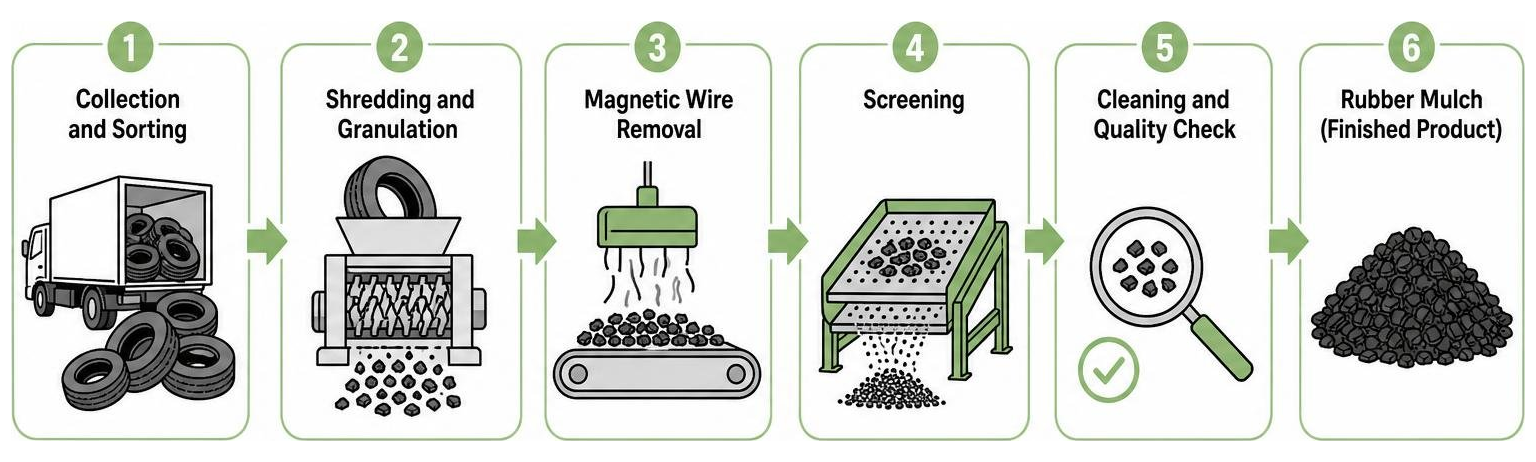
The manufacturing process for rubber mulch landscaping in Charlotte, NC involves several technical steps to ensure safety and quality:
- Collection and Sorting: Scrap tires are collected through local recycling initiatives across our service hubs—from Charlotte and Raleigh, NC, to Tucson, AZ, and Nashville, TN.
- Shredding and Granulation: Industrial machinery breaks down the intact tires into smaller chunks or loose chips.
- Magnetic Wire Removal: Heavy-duty, high-power magnetic equipment sweeps through the rubber stream multiple times to extract internal steel belts and metal wires.
- Washing and Screening: The rubber is thoroughly cleaned to remove dirt, road debris, and residual dust.
- Color Coating: Non-toxic, non-bleeding color sealants are applied to transform dull gray rubber into vibrant shade options like redwood brown, deep black, forest green, and dark blue.
By diverting waste from municipal dumps, choosing recycled tire mulch a durable solution for modern landscaping turns a potential environmental problem into a practical outdoor solution. When manufactured properly, high-grade rubber mulch made from recycled tires provides homeowners and commercial site managers with a clean, wire-free surfacing option that handles years of foot traffic.
Key Advantages of Rubber Mulch Landscaping
The standout appeal of rubber mulch landscaping is its extraordinary longevity. While traditional pine straw or shredded hardwood rots away within 12 to 18 months, rubber mulch regularly lasts between 10 to 20 years without decomposing.
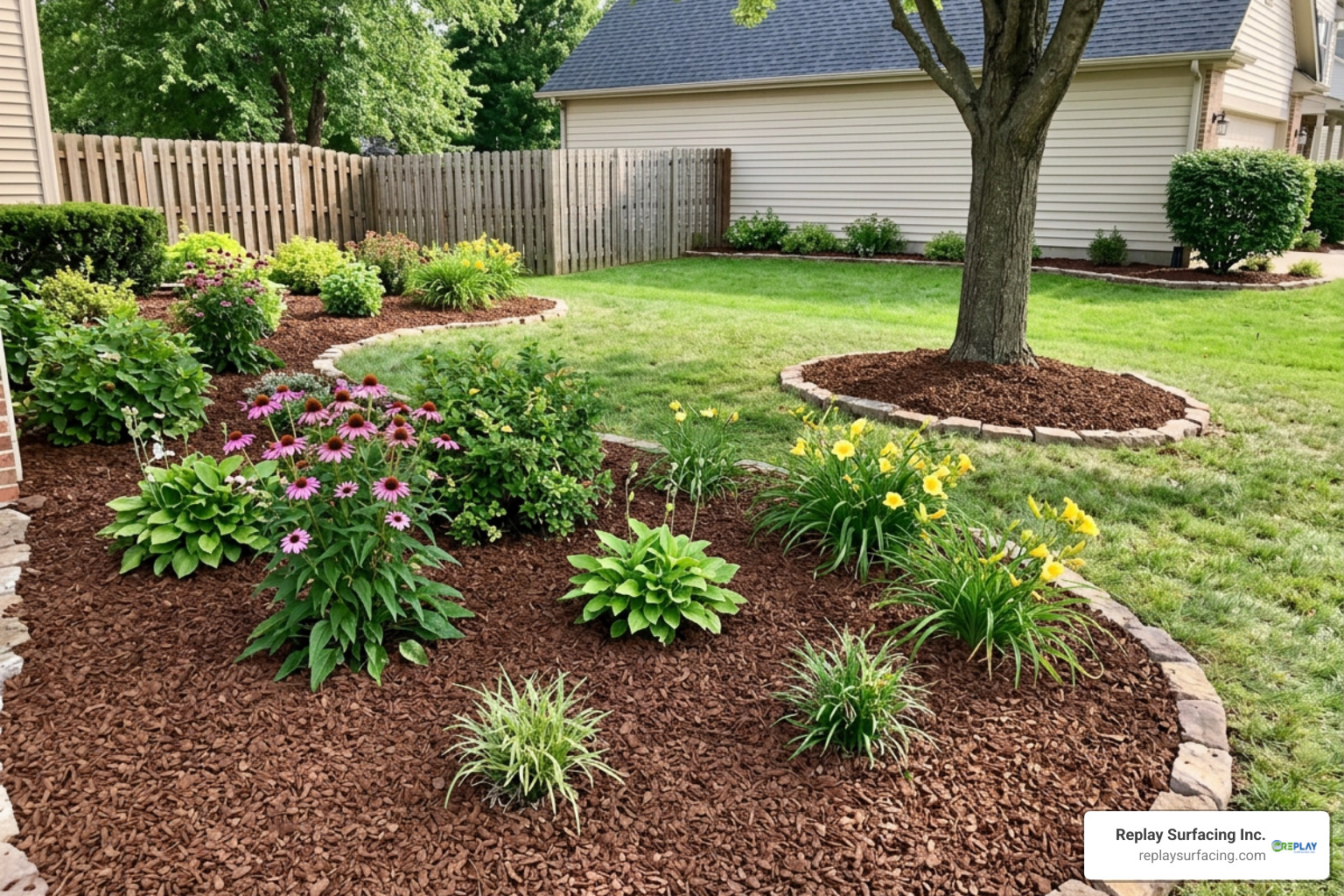
Here are the primary advantages driving homeowners from Beaverton, OR, to Lake Charles, LA, to make the switch:
- Exceptional Longevity: Because rubber does not rot, absorb water, or decay, a single installation lasts decades.
- 12-Year Color Guarantees: Premium landscape rubber mulch includes specialized UV-resistant coatings. Many high-end brands guarantee up to 12 years of color retention before noticeable fading occurs.
- Low Maintenance Requirements: You no longer need to spend every spring hauling heavy bags of bark to top off your flower beds.
- Erosion Control & Water Conservation: Rubber mulch allows rainwater and liquid fertilizers to pass straight down into the subsoil without absorbing the water itself. This keeps soil hydrated underneath while preventing surface washing during heavy downpours.
If you are looking to transform your garden with the best rubber mulch for landscaping, eliminating annual re-mulching offers both financial savings and hours of physical labor saved every season.
Weed Suppression, Pest Resistance, and Wind Performance in Rubber Mulch Landscaping
Maintaining landscape beds usually means battling persistent weeds and unwanted bugs. Rubber mulch changes that dynamic significantly.
- Superior Weed Suppression: Loose rubber chips do not provide organic nutrients for windblown weed seeds to germinate. When paired with a heavy-duty geotextile weed fabric, rubber mulch forms a thick barrier that blocks sunlight and stops weed root development.
- Pest and Insect Deterrence: Wood mulch acts as an open invitation to wood-boring insects, including subterranean termites, carpenter ants, and roaches. Rubber contains zero organic matter for insects to feed on or nest in, making it an effective deterrent around house foundations in places like Sanford, NC, or Columbia, SC.
- Wind and Storm Resistance: Light wood chips frequently blow away in strong winds or wash out into driveways during severe thunderstorms. Rubber mulch is denser and heavier than dry wood flakes, holding its ground on sloped beds and exposed yard borders.
For high-traffic walkways and high-wind outdoor zones, installing a permanent mulch recycled rubber outdoor pathway for gardens or utilizing rubber as walkway mulch creates an attractive surface that stays exactly where you put it.
Applications and Versatility for Rubber Mulch Landscaping
Rubber mulch adapts easily to a wide variety of outdoor designs across diverse climates—from humid southern yards in Indiana to arid desert yards in Tucson:
- Residential Flower Beds and Borders: Surrounding ornamental shrubs, hardy perennials, and decorative evergreens with rich black or brown rubber chips highlights your curb appeal without attracting bugs to your foundation.
- Garden Paths and Walkways: Provides a soft, cushioned walking surface that cushions impact and eliminates muddy boots.
- Sloped Areas and Terraces: Helps stabilize exposed slopes where traditional bark mulch constantly slides downhill.
- Backyard Play Zones: Creates an impact-absorbing drop zone beneath swing sets, climbing structures, and play houses.
- Tree Rings: Encircles established shade and ornamental trees, blocking turf encroachment while protecting trunks from lawnmower damage.

Whether you consult our rubber mulch yard guide 2026 or explore our recycled rubber chips complete guide, matching the right aggregate size to your project ensures optimal performance.
Safety, Chemical Content, and Flammability Considerations
While the physical benefits of rubber mulch are clear, property owners should also consider safety factors like chemical stability and flammability.
Heavy Metals and Zinc Leaching
Scrap tires contain trace compounds, including heavy metals like zinc, used in vulcanization. Research demonstrates that unsealed rubber particles exposed to continuous acid rain can leach small amounts of zinc into underlying soil. While zinc is a necessary micronutrient for plants, high concentrations can cause toxicity in sensitive species like acid-loving blueberries or azaleas. Buying high-quality, coated rubber mulch minimizes direct leaching into local soil ecosystems.
Chemical Toxicity Concerns
Concerns around synthetic rubber often cite volatile organic compounds (VOCs) and polycyclic aromatic hydrocarbons (PAHs). For example, coach Amy Griffin raised national public health inquiries when she compiled a list of 38 soccer players (34 goalkeepers) diagnosed with cancer after years of playing on synthetic turf with crumb rubber infill. However, landscape-grade rubber mulch uses larger rubber aggregates treated with protective polyurethane color coatings, drastically reducing air dust and direct particle inhalation compared to microscopic turf crumbs. For comprehensive background, review the official EPA research on tire recycling and environmental safety.
Flammability
A landscape combustibility study from the University of Nevada Cooperative Extension revealed that shredded rubber produced the highest fire spread rate, flame height, and heat output among eight common mulch materials tested. Unlike wet wood that smolders, dry tire rubber burns hot once ignited. Because of this, rubber mulch should not be placed directly against wood siding, grill stations, or fire pits.
Property owners looking for peace of mind often choose verified non-toxic rubber mulch options, while carefully weighing potential risks detailed in our analysis of whether rubber mulch toxic concerns apply to their specific landscape layouts.
Evaluating Safety Around Children, Pets, and Edible Gardens
When deciding where to install rubber mulch around your property, target areas where its strengths shine while avoiding sensitive plant environments:
- Play Areas and Shock Absorption: Rubber mulch is arguably the best loose-fill impact material available for shock absorption. A standard 4-to-6-inch layer offers fall protection against head injuries from height thresholds up to 10–12 feet.
- Pets: High-grade rubber mulch does not bleed color onto dog paws or fur. However, curious dogs that tend to chew non-food items should be supervised to prevent accidental swallowing.
- Edible Gardens and Vegetable Beds: We advise keeping rubber mulch out of edible crop beds and vegetable gardens. Deep vegetable roots can absorb leached zinc or petroleum compounds over time. Stick to organic compost or untreated wood chips around tomatoes, lettuce, and fruit bushes, and keep rubber mulch in flower beds, paths, and play areas.
For families setting up play spaces in Connecticut or Tennessee, our beginners guide to safe rubber mulch for play areas and detailed review on is rubber mulch a safe surface for your childs playground provide deeper installation recommendations.
Comparing Rubber Mulch to Organic Wood Mulches
Choosing between traditional wood mulch and rubber mulch comes down to evaluating upfront costs against long-term maintenance and durability.
| Feature | Recycled Rubber Mulch | Shredded Wood / Bark Mulch |
|---|---|---|
| Average Lifespan | 10 to 20 Years | 1 to 2 Years |
| Color Retention | 10–12 Years (Guaranteed) | 3 to 6 Months |
| Annual Top-Off Needed? | No | Yes (Every Spring) |
| Insect Attractant? | No (Termite Resistant) | Yes (Attracts Bugs & Fungi) |
| Soil Nutrient Value | None | Adds Organic Matter as it Decomposes |
| Wind & Rain Displacement | Heavy (Stays in place) | Light (Washes/Blows away) |
| Flammability Risk | High heat burn rate | Lower burn intensity |
| Initial Purchase Cost | Higher ($$$) | Lower ($) |
| Long-Term ROI (10 Years) | Exceptional (Zero replacement cost) | Low (Cumulative repurchasing) |
While wood mulch enriches soil as it breaks down, its rapid decomposition requires yearly replacement. Over a 10-year period, buying, hauling, and spreading wood mulch repeatedly ends up costing significantly more than a single installation of rubber mulch. Explore our rubber mulch cost guide 2026 and the ultimate guide to rubber mulch colors costs and coverage for local pricing figures.
Purchasing Options, Coverage, and Cost Breakdown
When purchasing rubber mulch, material is usually sold in bagged quantities, pallet loads, cubic yards, or bulk tons.
- Bagged Options: Typically sized around 0.8 cubic feet per bag. Great for small garden touch-ups, tree rings, or walkways.
- Cubic Yard Bulk Orders: One cubic yard covers roughly 100 square feet at a 3-inch depth. Ideal for large residential landscapes in Raleigh or Charlotte.
- Bulk Tons: Preferred for large commercial spaces or school play environments across Indiana and Connecticut.
To accurately budget your installation, refer to our detailed breakdown on the cost of rubber mulch per yard, check current bulk rates for rubber mulch per ton, and browse the best rubber mulch for sale to find the best materials for your site.
Frequently Asked Questions About Rubber Mulch
How long does rubber mulch color last before fading?
Most premium manufacturers treat rubber mulch with non-toxic, UV-resistant coatings that hold their rich shade for up to 12 years. Unlike wood mulch that bleaches gray within a single season, rubber mulch keeps its vibrant finish year after year with minimal maintenance.
Does rubber mulch attract insects or wood-boring pests?
No. Rubber mulch is entirely inorganic, offering zero food value or nesting habitat for termites, carpenter ants, roaches, or beetles. Using it around home foundations helps create a protective, pest-resistant buffer zone.
Does rubber mulch leach harmful chemicals into local soil?
Coated, high-grade landscape rubber mulch releases minimal chemical runoff into surrounding soil. However, because trace amounts of zinc can leach over extended periods, rubber mulch should not be used in edible vegetable gardens or directly around acid-sensitive fruit plants.
Conclusion

Rubber mulch landscaping offers a highly durable, low-maintenance ground cover that solves common outdoor challenges. By taking scrap tires out of landfills and turning them into long-lasting landscape surfaces, homeowners and property managers across Charlotte, Raleigh, Columbia, Tucson, Nashville, and beyond can enjoy vibrant garden beds, weed-free pathways, and cushioned play spaces for up to 20 years.
At Replay Surfacing, we specialize in converting recycled rubber into dependable, sustainable outdoor surfaces built for high performance. Whether you are tired of spending every spring spreading heavy wood mulch or want a reliable safety cushion under your family’s playset, rubber mulch provides a practical, long-term solution.
Ready to transform your property? Explore the complete rubber mulch yard buying guide to find the right coverage, colors, and application tips for your upcoming project!