
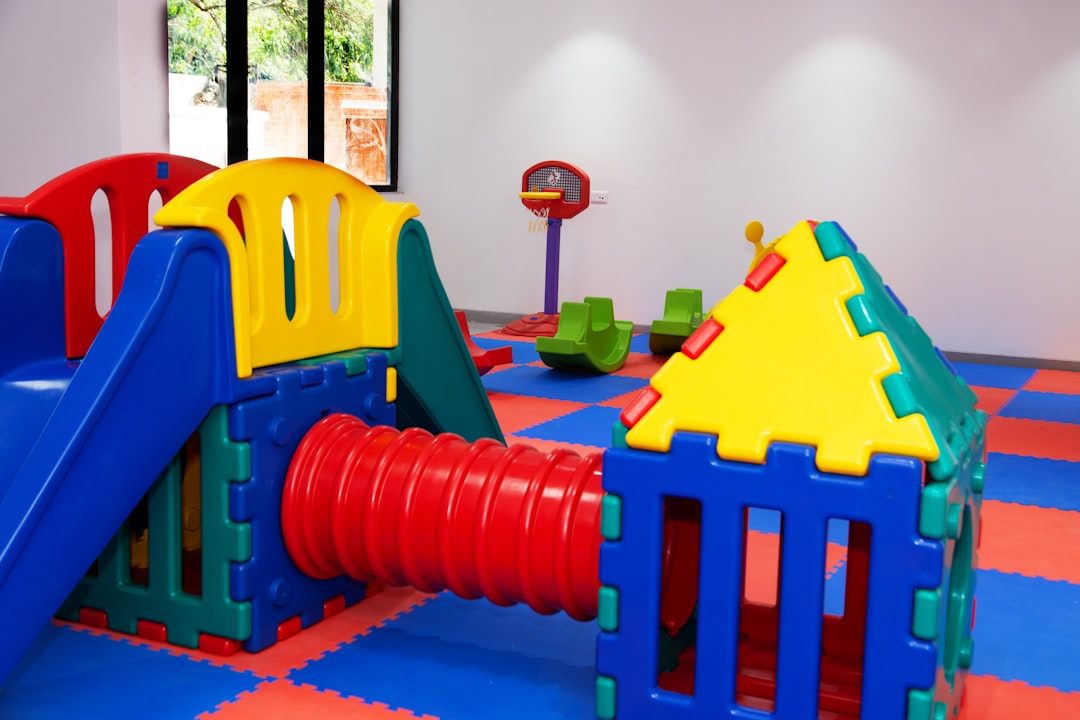
Indoor Playground Foam Tiles in Charlotte, NC: Safe, Active Play Solutions
Indoor playground foam tiles are interlocking, cushioned floor panels designed to protect children from impact injuries during active play. For families and businesses in Charlotte, NC, and surrounding areas, creating a secure environment is a top priority. Here’s a quick overview of what you need to know:
| Feature | Detail |
|---|---|
| Primary material | Closed-cell EVA foam |
| Common thicknesses | 5/8 inch, 3/4 inch, 1-1/2 inch |
| Fall height protection | Up to 4 feet (EVA foam tiles) |
| Best for | Toddler areas, ground-level equipment, home playrooms, daycares |
| Installation | DIY interlocking, no adhesive required |
| Safety standard to look for | ASTM F1292 or ASTM F3351 |
Every year, falls are one of the leading causes of injury on playgrounds. The right flooring underneath a child can be the difference between a scare and a serious injury. For indoor spaces — from basement playrooms to daycare centers — foam tiles offer an accessible, affordable first line of defense.
But not all foam tiles are the same. Thickness, material quality, fall height ratings, and intended use all play a role in which tile is right for your space.
I’m Landon Olson, operator of Replay Surfacing and a mechanical engineer with an MBA, and I’ve spent my career developing safe, sustainable surfacing solutions — including indoor playground foam tiles — for facilities that need to balance safety, durability, and environmental responsibility. In the sections below, I’ll walk you through everything you need to choose, install, and maintain the right foam tile surface for your playground.
Indoor playground foam tiles terms to learn:
What Are Indoor Playground Foam Tiles?
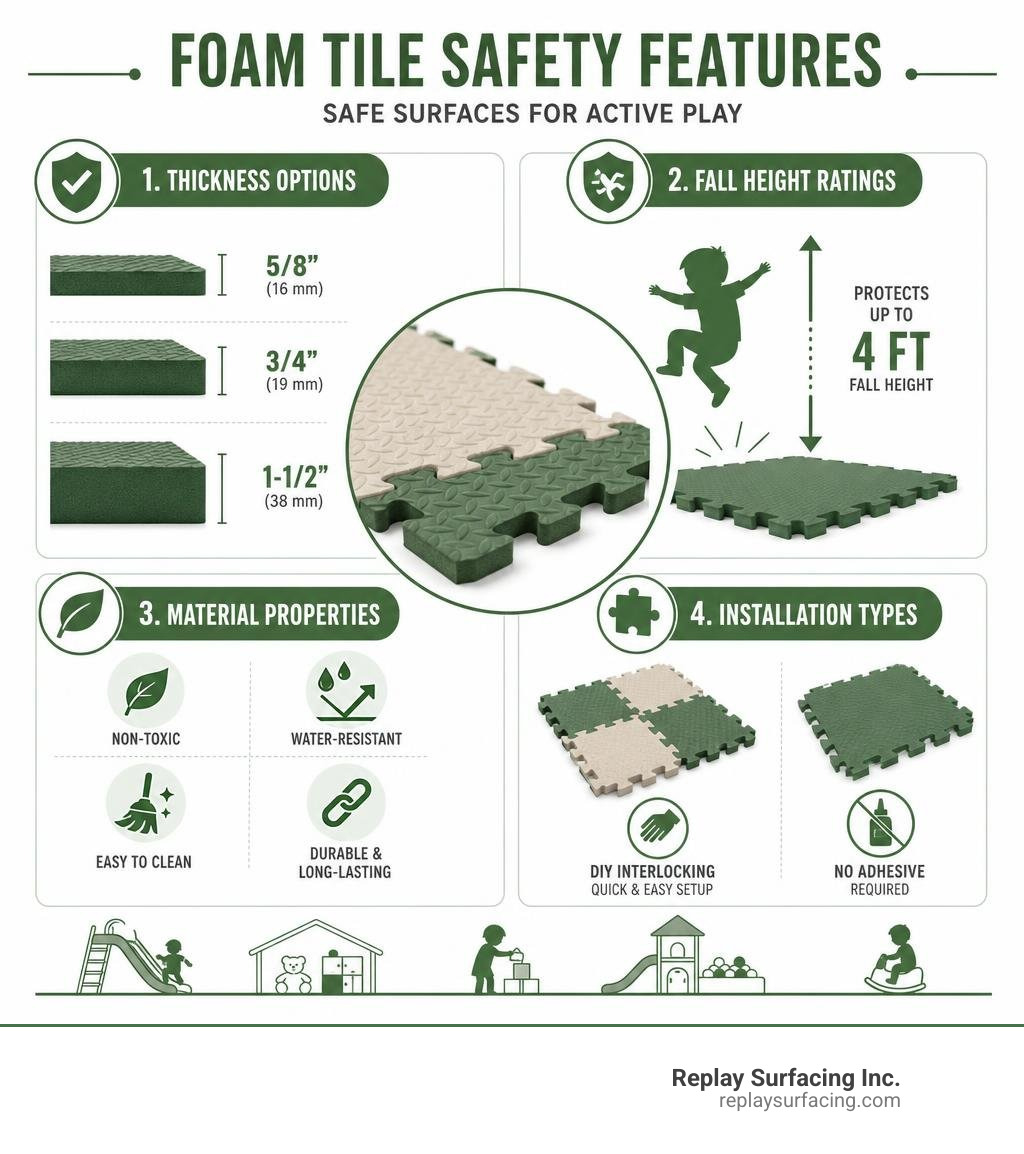
Indoor playground foam tiles are modular, interlocking tiles manufactured from Ethylene-Vinyl Acetate (EVA) foam. Unlike open-cell foam (which acts like a sponge, absorbing water, sweat, and bacteria), EVA foam features a closed-cell structure. This engineering characteristic ensures that the tiles remain completely waterproof, odor-resistant, and incredibly easy to sanitize.
For parents and facility managers from Charlotte, NC to Tucson, AZ, the primary concern is always health and safety. High-quality EVA foam tiles are manufactured as non-toxic playground tiles, meaning they are 100% lead-free, latex-free, and allergen-free. They do not emit harmful volatile organic compounds (VOCs) or chemical off-gassing, making them perfectly safe for infants crawling on the floor or toddlers building block towers.
Because they are lightweight, soft to the touch, and naturally insulating, these tiles transform hard concrete basements or cold commercial floors into inviting, comfortable play zones.
Types of Indoor Playground Foam Tiles
When designing an indoor play space, you will encounter several distinct styles of foam tiles, each tailored to specific aesthetic and functional needs:
- Flat Mats and Folding Mats: Often used for temporary setups or gymnastics areas where quick storage is necessary.
- Reversible Puzzle Tiles: These double-sided tiles feature different colors on each side (such as blue on one side and red on the other). They allow you to easily refresh the look of your playroom simply by flipping them over, offering excellent modular flexibility.
- Premium Soft Foam Tiles: Available in solid, vibrant colors, these are the standard for daycares and home playrooms, providing a plush, reliable surface that balances budget and comfort.
- Wood Grain and Patterned Tiles: For modern homes in Raleigh, NC or Beaverton, OR, where bright primary colors might clash with home decor, wood grain foam tiles offer a sophisticated hardwood aesthetic without sacrificing the soft, impact-absorbing benefits of foam.
- Multi-Color Play Packs: Pre-packaged sets are ideal for defining small, colorful play boundaries in daycares or preschools.
To understand how these different options fit into your overall safety plan, check out our playsafe interlocking tiles ultimate guide.
Key Benefits of Foam Tiles in Play Areas
Why do play centers in Nashville, TN and home basements in Connecticut rely so heavily on foam flooring? The benefits go far beyond basic cushioning:
- Excellent Shock Absorption: The microscopic air pockets within the closed-cell EVA foam act as tiny springs, absorbing the energy of trips, slips, and tumbles.
- Thermal Insulation: Concrete subfloors in places like Indiana can get incredibly cold during the winter. Foam tiles provide an thermal barrier, keeping little feet warm and comfortable year-round.
- Acoustic Noise Reduction: Anyone who has managed a room full of energetic children knows how loud it can get. Foam tiles dampen sound, absorbing the echoes of running feet and falling toys.
- Waterproof and Spill-Resistant: Spilled juice, milk, or paint won’t seep into the tile. Spills sit on the surface, allowing you to wipe them up instantly before mold or mildew can form.

Whether you are setting up a small home play zone or a large commercial recreation space, our professional installation teams across our local service areas can help you design a layout that maximizes safety and style.
Safety Standards, Thickness, and Fall Height Ratings
When it comes to playground safety, we don’t guess—we measure. The gold standard for playground surfacing safety is the ASTM F1292 standard, which measures shock-attenuation performance. Specifically, it looks at the Head Injury Criterion (HIC) to determine the “critical fall height” of a surface. The critical fall height is the maximum height from which a child could fall onto the surface without sustaining a life-threatening head injury.
While outdoor spaces often require thick rubber to handle tall slides, indoor areas using indoor playground foam tiles must still align with these safety standards if climbing equipment is present. Local building codes and daycare licensing standards in states like North Carolina, South Carolina, and Oregon frequently mandate certified fall-safe flooring. For a deeper dive into these specifications, consult our playsafe interlocking tiles ultimate guide.
Choosing the Right Thickness for Indoor Playground Foam Tiles
The level of protection you need directly dictates the thickness of the tile you should purchase:
- 3/8 Inch (9mm) to 1/2 Inch (12mm) Thickness: Best for general floor play, yoga, T-ball practice, or underfoot comfort. These thinner tiles offer minimal fall protection and are not rated for climbing equipment.
- 5/8 Inch (13mm) to 3/4 Inch (19mm) Thickness: A step up in durability and comfort. These options are perfect for toddler zones, low-to-the-ground activity tables, and home playrooms.
- 1-1/2 Inch (38mm) Thickness: This is the professional standard for commercial play spaces. High-density tiles of this thickness are independently tested to provide a 4-foot critical fall height rating. This makes them the ideal choice for play areas with low-level climbing structures, indoor slides, and active sensory zones.
To ensure your layout meets all local and national safety guidelines, read our interlocking playground mats ultimate guide
Comparing Foam to Rubber Play Flooring
While EVA foam is a fantastic, cost-effective option for many indoor applications, it is important to understand how it compares to heavy-duty rubber tiles. At Replay Surfacing, we specialize in recycling tires into durable rubber surfacing, giving us a unique perspective on when to use each material.
| Feature | EVA Foam Tiles | Recycled Rubber Tiles |
|---|---|---|
| Primary Use | Toddler areas, home playrooms, light commercial | High-impact commercial play, heavy climbing structures |
| Fall Height Ratings | Up to 4 feet (at 1-1/2″ thickness) | Up to 10+ feet (at 4.25″ thickness) |
| Durability | Moderate (can be punctured by pet nails or heavy furniture) | Extremely high (virtually indestructible) |
| Water Resistance | 100% Waterproof (closed-cell) | Highly water-resistant (often porous or pore-sealed) |
| Installation | DIY interlocking, lightweight | Interlocking pins or glue-down, heavy tiles |
| Cost | Budget-friendly ($1.80 – $3.80 / sq. ft.) | Premium investment ($10.00 – $15.00+ / sq. ft.) |
Foam is soft, warm, and highly economical, making it perfect for spaces where kids spend time sitting or crawling on the floor. However, if your play area in Columbia, SC or Lake Charles, LA features climbing equipment taller than four feet, or experiences massive foot traffic from older kids wearing shoes, upgrading to rubber tiles is highly recommended. Learn more about making this choice in our interlocking playground mats ultimate guide.
Commercial vs. Home Playgrounds
The choice of flooring also depends heavily on the setting:
- Home Playgrounds & Basements: For residential basements in Connecticut or playrooms in Sanford, NC, foam tiles are almost always the winner. They are budget-friendly, easy to install yourself, and soft enough for cozy family playtime.
- Commercial Playgrounds & Daycares: Daycare facilities in busy areas like Charlotte, NC or Nashville, TN require materials that can withstand constant, heavy foot traffic. While foam tiles are excellent for designated infant and toddler rooms, open play areas with heavy play structures are better suited for rubber flooring.
To explore rubber options for high-traffic public spaces, check out our rubber mats play yards ultimate guide.
Installation and Maintenance of Foam Play Flooring
One of the greatest selling points of indoor playground foam tiles is how incredibly easy they are to install. You do not need professional installers, expensive adhesives, or specialized tools to achieve a beautiful, functional layout.
Step-by-Step DIY Installation:
- Prepare the Subfloor: Sweep and mop the subfloor to remove all dirt, dust, and debris. Ensure the floor is completely dry.
- Plan Your Layout: Start in one corner of the room. Lay your first tile with the corner edge pieces attached.
- Interlock the Tiles: Work your way outward along the walls, locking the puzzle-style teeth together.
- Leave an Expansion Gap: Foam naturally expands and contracts with changes in temperature and humidity (especially noticeable in humid climates like Lake Charles, LA or dry climates like Tucson, AZ). Leave a gap around the perimeter of the room equal to the thickness of your tiles.
- Cut to Fit: Use a sharp utility knife and a straight edge to easily trim tiles to fit flush against walls or around support pillars.
If you are dealing with a large-scale commercial space or simply want a flawless, guaranteed finish, our regional teams are available to provide professional installation services across our local service areas.
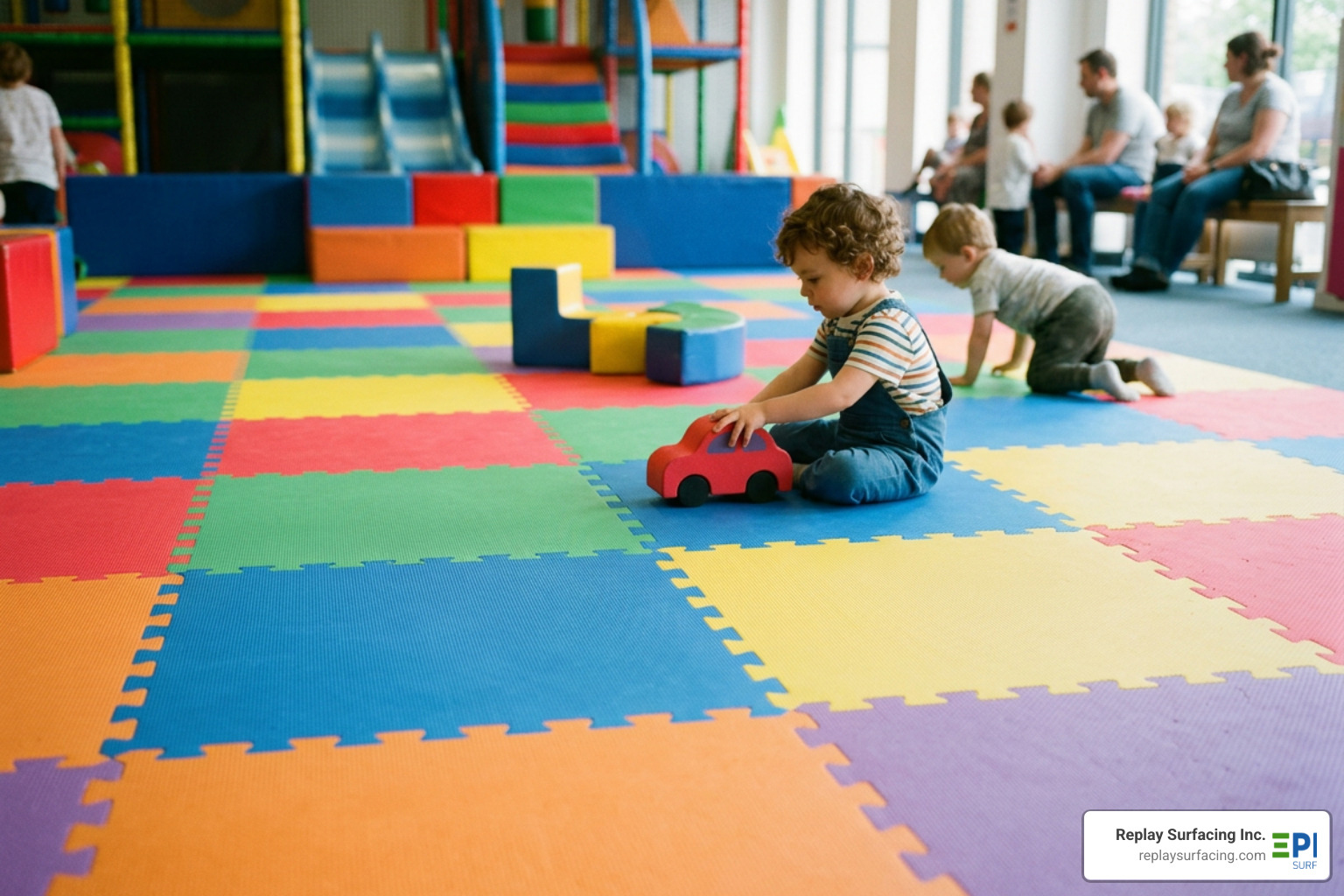
Cleaning and Disinfecting Protocols
Maintaining a hygienic environment is critical for children’s health. Because high-quality EVA foam is non-porous, it naturally resists mold, mildew, and liquid penetration.
- Daily Maintenance: Sweep or vacuum (without the beater bar brush active) to remove loose dirt, crumbs, and dust.
- Routine Cleaning: Wipe the tiles down using a damp microfiber cloth or mop with warm water and a mild dish soap. Avoid harsh chemical solvents or bleach, which can degrade the foam over time.
- Disinfecting: For daycares or during flu season, you can safely sanitize the tiles using standard household disinfecting wipes (like Clorox or Lysol wipes) or a heavily diluted, kid-safe sanitizing spray. Allow the tiles to air dry completely before letting children back onto the play surface.
Frequently Asked Questions about Indoor Play Flooring
Are indoor playground foam tiles safe for toddlers?
Yes! High-quality EVA foam tiles are completely safe for toddlers and infants. When purchasing, ensure the tiles are certified non-toxic, latex-free, lead-free, and formamide-free. This guarantees a safe environment for children who are crawling, rolling, and learning to walk. For more details, see our guide on non-toxic playground tiles.
Can you install foam tiles over carpet?
Yes, but with a caveat. Foam tiles perform exceptionally well over tight, low-pile commercial carpets. However, if you place them over thick, plush residential carpeting, the tiles may shift or separate at the interlocking joints when walked on. To prevent this, you can apply double-sided carpet tape around the perimeter of the foam layout to hold the tiles securely in place.
How long do foam playground tiles last?
In a residential setting, high-quality foam tiles can easily last 5 to 10 years with proper care. In high-traffic commercial environments, they may require replacement every 2 to 5 years. To maximize their lifespan, avoid walking on them with high heels, keep sharp pet nails trimmed, and place protective furniture sliders under any heavy play equipment to prevent permanent indentations.
Conclusion
Creating a safe, fun, and comfortable environment for children doesn’t have to be a stressful engineering puzzle. Indoor playground foam tiles offer the perfect balance of impact protection, thermal comfort, noise reduction, and colorful design.
At Replay Surfacing Inc., we are committed to providing top-tier, sustainable surfacing solutions. From our recycled rubber playground tiles to premium foam play surfaces, we serve local communities across our regional locations—including Charlotte, NC, Columbia, SC, Raleigh, NC, Sanford, NC, Tucson, AZ, Connecticut, Indiana, Nashville, TN, Beaverton, OR, and Lake Charles, LA.
Ready to transform your indoor play area into a certified safe zone? Learn more about our playground surfacing solutions or contact our team today to get started on your custom layout!