
Playground Surfacing in Charlotte: The Foundation of Fun and Safety
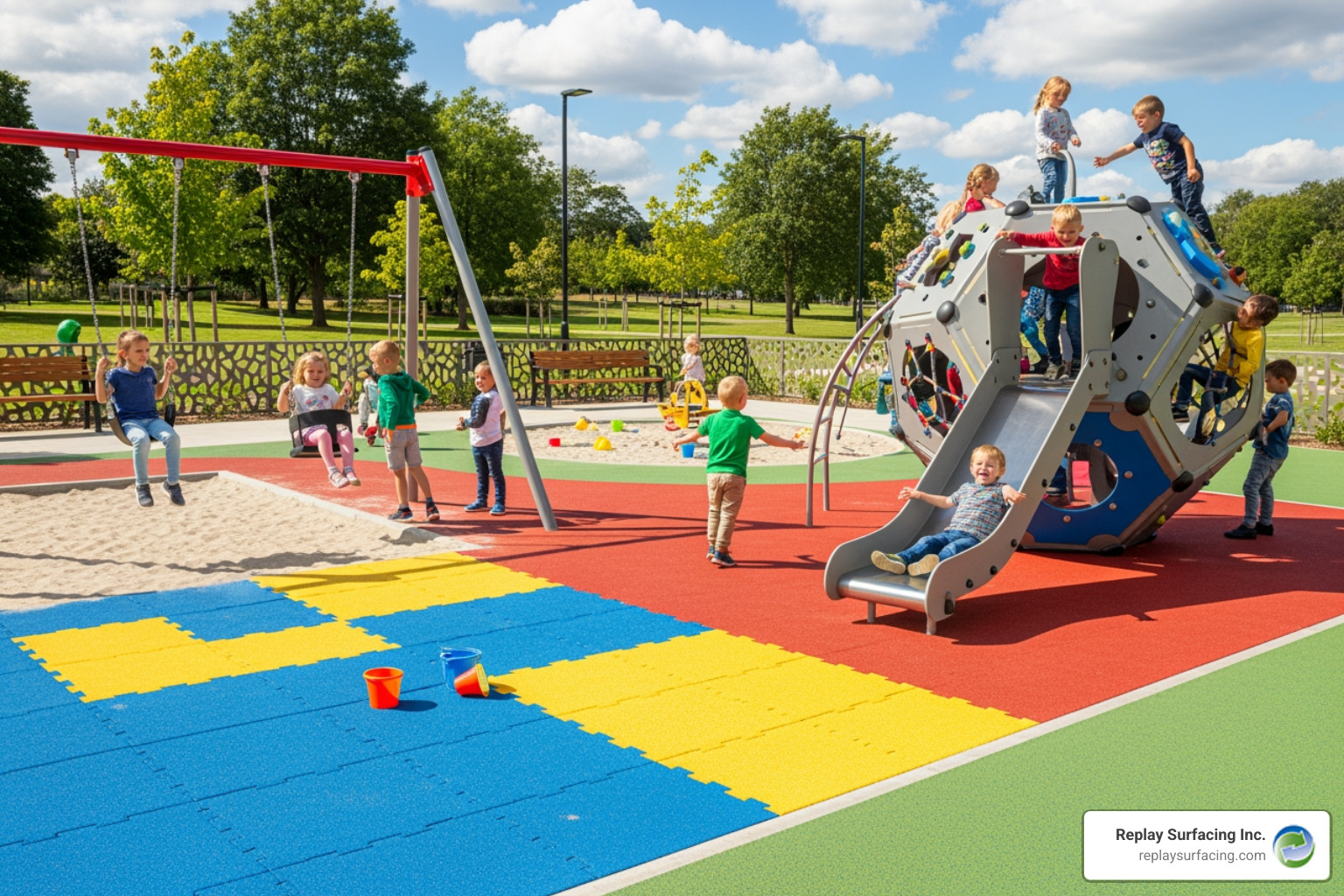
Playground surfacing in Charlotte is designed to protect children from falls while providing a durable, accessible surface. The main types include:
- Rubber Tiles/Mats: Interlocking, DIY-friendly, and easy to replace.
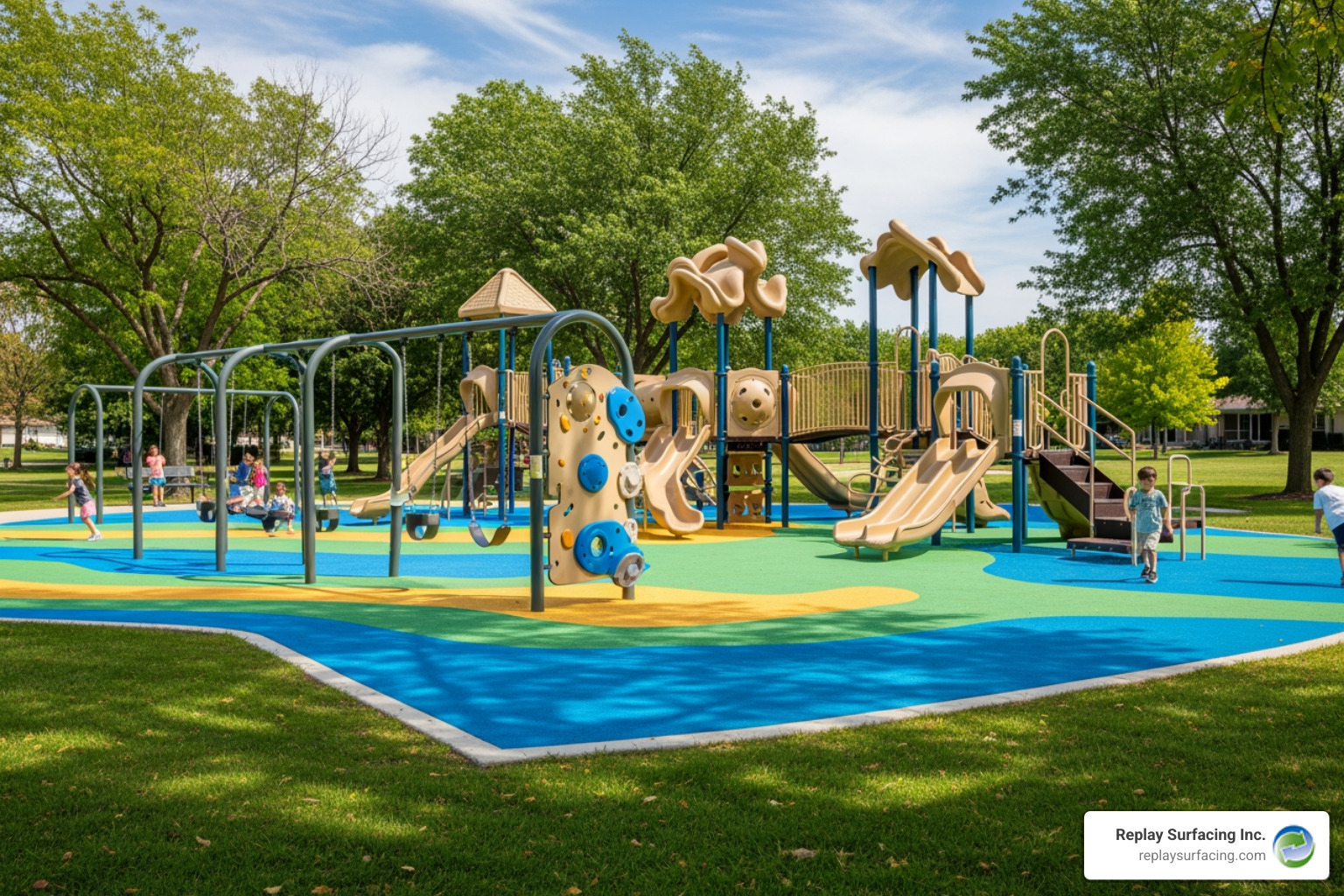
- Poured-in-Place Rubber: Seamless, highly customizable, and excellent for ADA accessibility.
- Rubber Mulch: A loose-fill option from recycled tires with superior fall protection and drainage.
Choosing the right surface that meets ASTM standards is crucial. The Consumer Product Safety Commission reports over 200,000 playground injuries annually, many from falls on hard surfaces. Proper soft matting reduces impact forces and prevents serious head injuries, giving kids the confidence to play freely.
Beyond safety, modern surfacing addresses accessibility, durability, and sustainability. Unitary surfaces like poured rubber and tiles meet ADA standards (ASTM F1951), allowing wheelchair access. Unlike wood chips, rubber-based surfaces last 10-15 years with minimal upkeep, resisting weather from the sun in Tucson to the rain in Beaverton. These recycled products also divert tires from landfills, often qualifying for LEED credits and grants.
I’m Landon Olson. At Replay Surfacing, we engineer sustainable solutions from scrap tires, creating safe, durable playground surfacing. We help facility managers in Charlotte, Raleigh, and across North America build play spaces that protect children and the environment.
Reducing Risks with Superior Shock Absorption
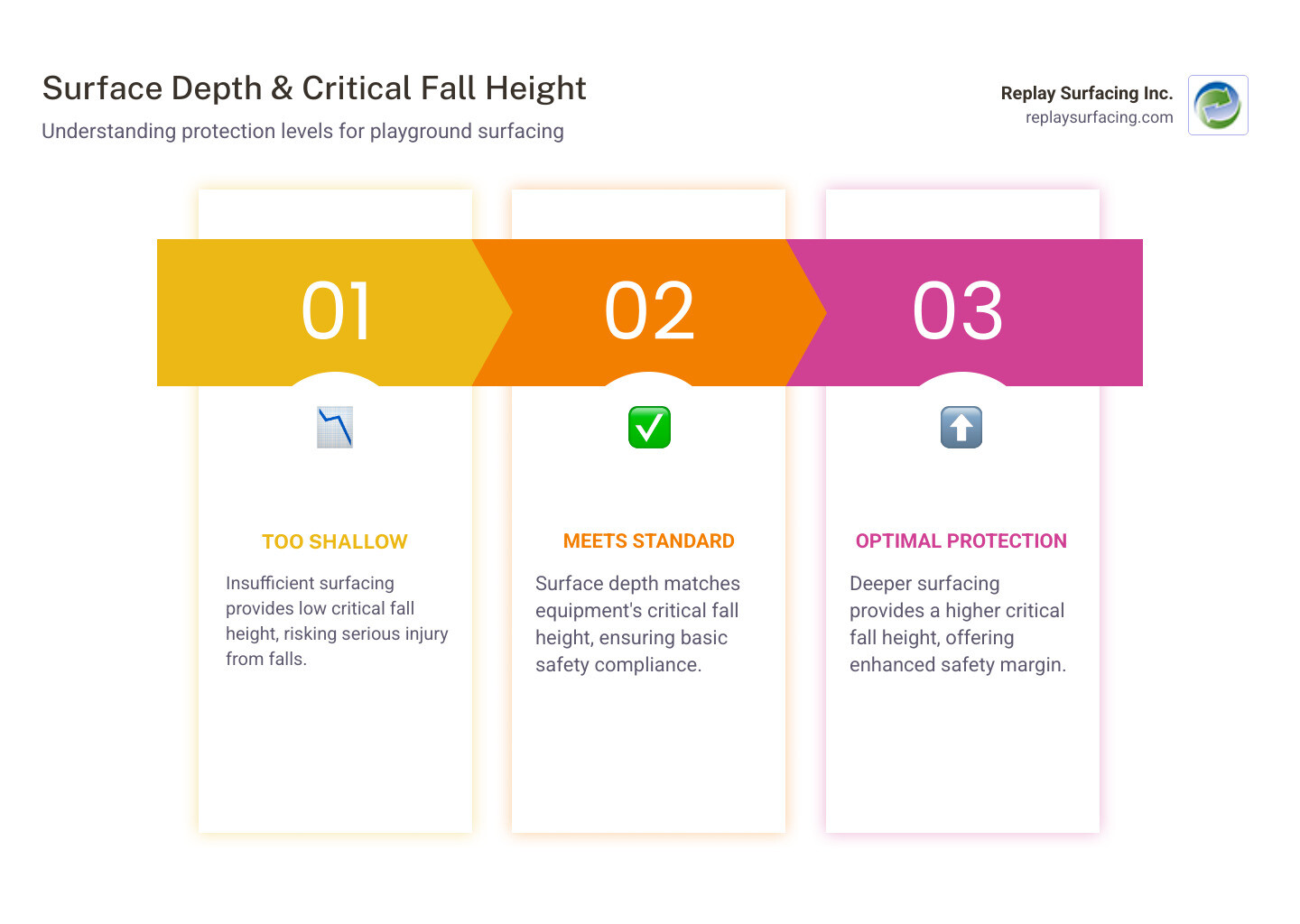
The main goal of playground surfacing is minimizing fall injuries through superior shock absorption, or fall attenuation. This is measured by Head Injury Criterion (HIC) and GMAX ratings under the ASTM F1292 standard, which evaluates a surface’s ability to cushion impact.
A lower HIC score means less risk of severe head injury. Our PolyFoam safety pads, for example, are tested to meet these standards, ensuring they absorb and disperse the energy from a fall. This reliable protection gives parents and caregivers peace of mind. Whether installing poured-in-place rubber or rubber mulch, our priority is to meet or exceed these critical safety standards, as every inch of protection matters. Learn more about our Shock Absorbing Playground Surfaces.
Ensuring Play for All: Accessibility and ADA Compliance
A great playground is accessible to every child. Traditional surfaces like sand or wood chips create barriers for wheelchairs and mobility devices. We champion unitary surfaces like poured-in-place rubber and rubber tiles that provide a smooth, continuous path for easy navigation.
These surfaces meet the ASTM F1951 standard for accessibility, ensuring a firm, stable, and slip-resistant ground crucial for inclusive play. Our poured-in-place rubber is designed to be fully ADA-compliant, making it a great choice for projects in Columbia, SC, or Nashville, TN. Even our rubber mulch is engineered to meet ADA guidelines, making it easy to traverse. By choosing inclusive options, we build communities where everyone can play. This commitment extends to creating accessible routes for all, as seen in our Recycled Rubber Walkways.
Exploring Your Options: Types of Playground Surfacing in Charlotte
When it comes to selecting the perfect playground surfacing in Charlotte, you have three excellent options, each with distinct advantages. At Replay Surfacing, we specialize in changing recycled tires into high-performance surfaces that protect children while helping the planet.
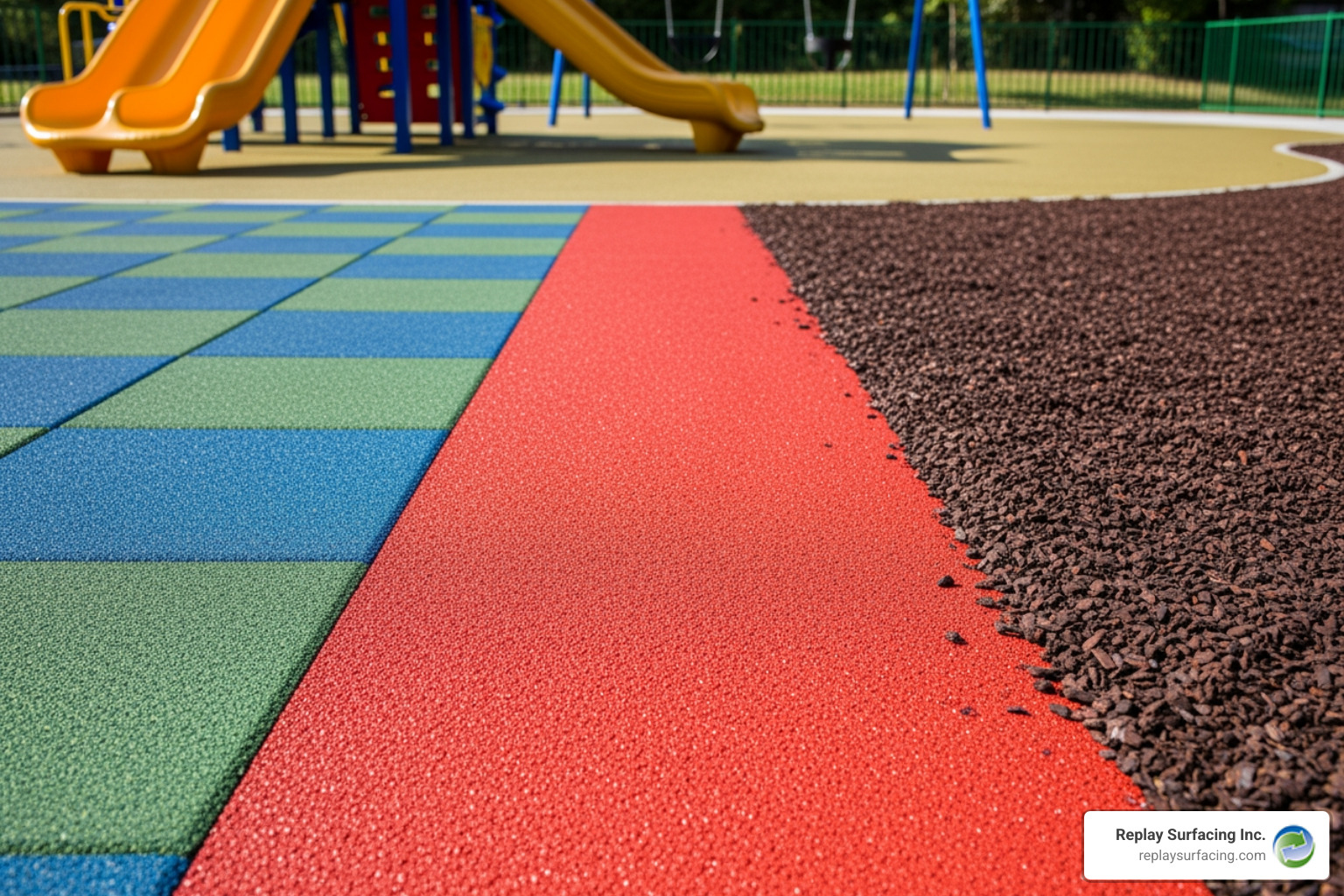
The right choice depends on your specific situation, including your budget, design goals, and maintenance capacity. Each type of rubber surfacing brings something special to the table.
Here’s a quick comparison to help you understand your options:
| Feature | Rubber Tiles/Mats | Poured-in-Place Rubber | Rubber Mulch |
|---|---|---|---|
| Safety (Fall Height) | Varies by thickness (e.g., 1″ for 4′ fall, 5″ for 10′ fall) | Customizable to meet specific fall height requirements (12-15+ ft) | Excellent (6 ft at 3″ depth, 17 ft at 6″ depth) |
| Durability | High, sections can be replaced | Very High (12-15 years lifespan) | Very High (12-year fade warranty, doesn’t decompose) |
| Maintenance | Low, easy to clean, replace individual tiles | Very Low, virtually seamless and maintenance-free | Very Low, deters weeds/pests, no topping off needed |
| Accessibility (ADA) | Good (interlocking tiles can be firm) | Excellent (seamless, ASTM F1951 compliant) | Good (ADA-compliant, easy to traverse) |
| Customization | Good (color, pattern options) | Excellent (limitless colors, shapes, logos, 3D designs) | Good (various colors) |
Rubber Tiles and Mats: The Versatile Building Blocks
Rubber tiles and mats are the modular building blocks of playground surfacing. These interlocking tiles create a uniform, protective surface. Their key advantage is flexibility; if a tile is damaged, you can simply replace that single section. The uniform thickness ensures predictable safety performance, with different thicknesses protecting against various fall heights (e.g., 1-inch for a 4-foot fall, 5-inch for a 10-foot fall).
For facilities in Sanford and Charlotte, rubber tiles are a practical DIY installation option that helps reduce labor costs. The interlocking design is straightforward, requiring only a level surface. They also come in many colors, allowing for creative designs like checkerboard patterns or borders. Made from recycled rubber, they are an environmentally responsible choice. Learn more in our Interlocking Playground Mats Ultimate Guide and explore our Play Safe Rubber Safety Tiles.
Poured-in-Place (PIP) Rubber: The Seamless, Creative Solution
Poured-in-place (PIP) rubber is a smooth, seamless surface mixed and applied on-site, offering maximum design flexibility. Its continuous, gap-free nature makes it the gold standard for accessibility and ideal for high-traffic areas. It meets ASTM F1951 standards, ensuring full ADA compliance so every child can steer the play space with confidence.
The creative possibilities are limitless. With 24 standard colors, we can incorporate custom logos, school mascots, and interactive games directly into the surface. This is achieved with a two-layer system: a shock-absorbing base mat of recycled rubber and a colorful EPDM rubber wear course on top. This combination provides precise fall height protection and a durable surface that can last 12-15 years.
PIP rubber is cost-effective for projects over 1,000 square feet, and clients find that it often qualifies for LEED credits and state grants. Dive deeper with our guide to Poured in Place Rubber: The Ultimate Playground Safety Surface and explore our EPDM Rubber Playground options.
Rubber Mulch: The Durable Loose-Fill Alternative
For a superior loose-fill option, rubber mulch is a game-changer. Made from 100% recycled tires, it offers exceptional fall protection and solves the common problems of wood mulch. A 3-inch depth provides 6 feet of fall protection, while a 6-inch depth protects against falls up to 17 feet. Its shock absorption remains consistent over time, unlike wood mulch which compacts.
Rubber mulch is five times heavier than wood mulch, so it stays in place and doesn’t require constant topping off. It doesn’t rot or decompose, and it deters pests like termites. This means fewer maintenance headaches and a cleaner play environment. Our rubber mulch includes a 12-year fade warranty and has excellent drainage, so kids can get back to playing quickly after rain.
It’s also non-toxic, IPEMA and ASTM certified, and meets ADA compliance standards for accessibility. For play areas in Connecticut and community parks in Indiana, rubber mulch offers an outstanding mix of safety, durability, and low maintenance. Learn more in our guide to Playground Rubber Mulch and find the Advantages of Playground Rubber Mulch: Safety, Maintenance, and Durability.
Making the Right Choice: Key Factors for Your Charlotte Playground Project
Selecting the perfect playground surfacing for your Charlotte project involves balancing safety, accessibility, and longevity. Whether your project is in sunny Tucson, AZ, or rainy Beaverton, OR, understanding key factors will lead to the smartest choice for your community.
When we consult with clients in Charlotte, NC, or Lake Charles, LA, we walk through several considerations. These include budgeting, long-term value, climate, the installation process, the maintenance schedule, and sustainability. Exploring each factor ensures you can move forward with confidence.
Understanding Costs and Long-Term Value
When evaluating playground surfacing, consider the total cost of ownership, not just the initial price. A cheaper surface may cost more over time in repairs and maintenance. Rubber playground mats, for example, offer excellent durability for their price.
Poured-in-place rubber has a higher initial investment but can last 12-15 years with minimal care, making it cost-effective for projects over 1,000 square feet. Similarly, rubber mulch has a 12-year fade warranty and requires little upkeep, saving you money on topping off or replacing material. When we work with facilities in Sanford, NC, or Lake Charles, LA, we emphasize long-term value. Spending more upfront can save a fortune over the years. For a detailed budget breakdown, see our guide on Rubber Softfall Cost.
Installation and Maintenance Needs for soft matting for playgrounds
The installation and maintenance of your playground surfacing are key to its longevity. While interlocking rubber tiles can be a DIY project for certain installations in Indiana and Connecticut, poured-in-place rubber requires skilled contractors to ensure safety and durability.
Proper site preparation is essential for any surface. This involves a stable sub-base (crushed stone and geotextile fabric) for drainage and weed prevention. Our PolyFoam safety pad can replace some of the stone, speeding up installation and improving drainage. This means playgrounds in rainy areas like Beaverton, OR, are ready for play just 15-20 minutes after a storm. Learn more about setup in our Installing Rubber Mulch guide.
Maintenance varies by surface. Rubber mulch is low-maintenance; it doesn’t rot, deters pests, and stays in place. Unitary surfaces like tiles and poured rubber only need routine cleaning and inspections. With proper care, these surfaces can last 12-15 years in climates ranging from sunny Tucson, AZ, to rainy Nashville, TN. For DIY enthusiasts, our DIY Playground Rubber Flooring guide offers helpful tips.
Durability, Sustainability, and Safety Standards
Three factors are paramount for playground surfacing: durability, sustainability, and safety.
Durability: Rubber surfacing excels here. Poured-in-place rubber and tiles can last 10-15 years, withstanding heavy traffic and weather. Rubber mulch includes a 12-year fade warranty. This longevity offers better value for communities in Columbia, SC, or Lake Charles, LA.
Sustainability: At Replay Surfacing, we transform discarded tires into functional playground surfaces. Our rubber mulch and PolyFoam safety pad are prime examples of this eco-friendly process. Using recycled content often qualifies projects in places like Charlotte, NC, for LEED credits and grants. Explore our Sustainable Construction Materials.
Safety Standards: We never compromise on safety. Our surfaces are tested to meet or exceed ASTM F1292 (shock absorption) and ASTM F1951 (accessibility) standards. They are non-toxic, free of heavy metals, and IPEMA certified, ensuring they comply with the CPSC Public Playground Safety Handbook. For added assurance, we offer Non-Toxic Playground Tiles.
Frequently Asked Questions about Playground Surfacing in Charlotte
When it comes to playground surfacing in Charlotte, we understand you want clear answers. Whether you’re planning a project right here in Charlotte, NC, or elsewhere, these are the most common questions we hear from clients.
How thick does playground surfacing need to be?
The required thickness is determined by the critical fall height of your playground equipment, following ASTM and CPSC guidelines. Taller equipment requires a thicker, more cushioned surface.
Material capabilities vary. For example, rubber mulch at a 3-inch depth provides 6 feet of fall protection, while a 6-inch depth protects against falls from 17 feet. Rubber tiles also come in various thicknesses; a 1-inch tile may handle a 4-foot fall, while a 5-inch tile can protect against 10-foot falls. With poured-in-place rubber, we customize the thickness to your exact equipment specifications.
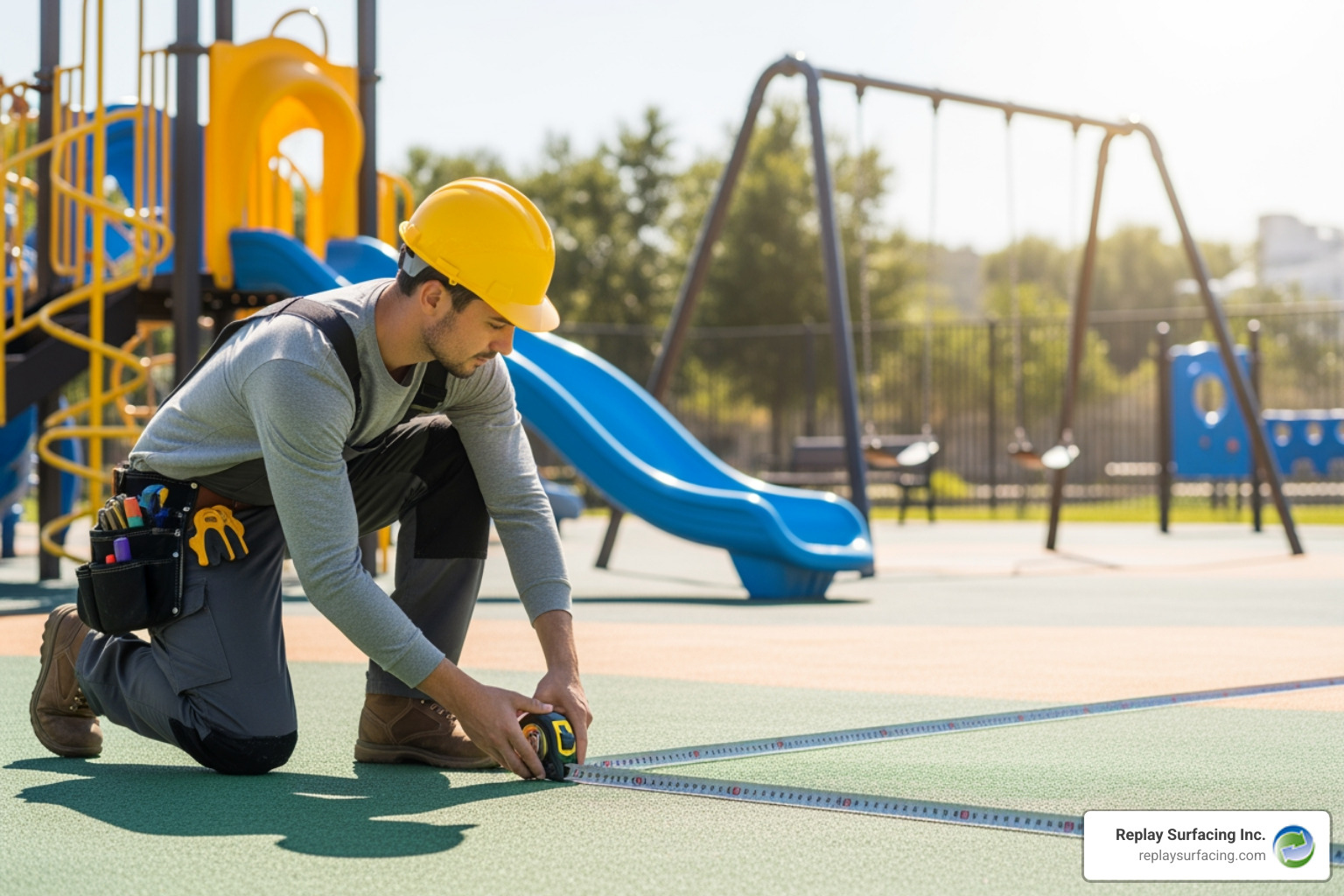
When we visit your site in Columbia, SC, or Beaverton, OR, we measure your equipment to engineer the precise thickness needed for your playground, ensuring optimal safety.
Can rubber matting be installed over grass or dirt?
Yes, but proper site preparation is crucial for longevity. Installing directly over grass or dirt can lead to uneven surfaces, poor drainage, and weeds. We recommend preparing a sub-base of compacted crushed stone and geotextile fabric. This creates a stable, level foundation that drains efficiently and prevents weed growth.
Our PolyFoam safety pads are an excellent alternative to crushed stone, offering superior drainage and shock absorption. This allows playgrounds in Connecticut or Indiana to be ready for play just 15-20 minutes after rain. Proper preparation eliminates mud and keeps the surface clean and safe. Learn more in our guide on Installing Rubber Mulch.
Is recycled rubber matting safe for children?
Absolutely. The safety of children is our top priority. All our playground surfacing made from recycled tires undergoes extensive purification and testing. Our products are IPEMA certified, meaning a third party has verified they meet strict safety and quality standards. We also comply with ASTM testing for heavy metals and other contaminants.
Our materials are non-toxic, and our PolyFoam safety pads are lead-free, heavy metal-free, and anti-microbial. These verifiable certifications provide peace of mind for parents and administrators in Raleigh, NC, or Nashville, TN. By choosing recycled rubber, you are also making an environmentally conscious decision, turning landfill waste into a safe community asset. For more details on safety, read our article: Is Rubber Mulch a Safe Surface for Your Child’s Playground?.
Conclusion: Building a Safer, Greener Play Space in Charlotte
Choosing the right playground surfacing in Charlotte is about creating a safe, inclusive, and sustainable space for children to play. It’s an investment in your community’s well-being and our planet’s health.
This guide has shown how modern surfacing protects children through superior shock absorption, promotes inclusivity with accessible surfaces, and offers long-term value with durable, low-maintenance materials. Whether you choose the flexibility of rubber tiles, the creativity of poured-in-place rubber, or the reliable protection of rubber mulch, you are making a smart choice.
At Replay Surfacing, sustainability is at our core. We transform scrap tires into safe, colorful play spaces that last for decades, turning an environmental problem into a community solution. It’s a win for safety, accessibility, and the planet.
Every project is unique, from a park in Charlotte to a school in Denver or a daycare in Raleigh. Our team understands these different needs and will help you steer your budget, climate, and maintenance requirements. We provide expert guidance to help you select the perfect surface for your community.
Building a safer, greener play space starts with a single decision. We’re ready to help you make it.
Contact us for your next playground project and let’s create a play area that brings joy and peace of mind to your community for years to come.
Have Questions About Rubber Surfacing?
Whether you’re exploring options or planning a project, Replay Surfacing Inc. is here to help. Contact us today for expert guidance and a free estimate.