

Understanding Rubber Stone Edging and Its Benefits
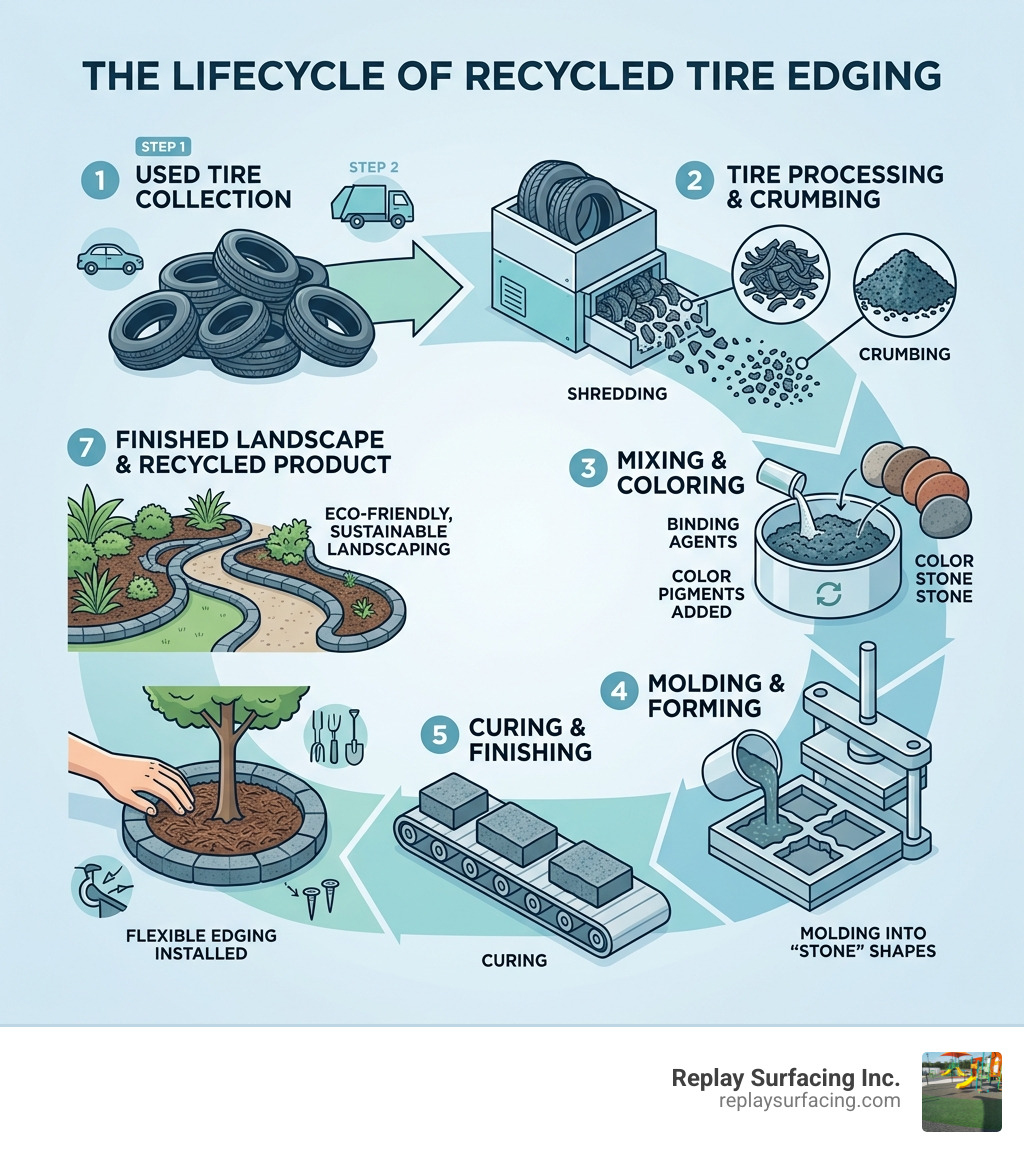
At Replay Surfacing, we believe in the power of transformation. By taking scrap tires—which would otherwise sit in landfills for centuries—and turning them into high-performance rubber stone edging, we provide homeowners in cities like Charlotte, NC, and Tucson, AZ, with a product that is as tough as it is beautiful.
The primary benefit of choosing recycled rubber is its incredible resilience. Unlike natural stone, which can shift or crack during the freeze-thaw cycles common in places like Connecticut or Indiana, rubber remains flexible. It expands and contracts with the temperature without losing its structural integrity. This is particularly important for our clients in the Midwest and Northeast, where ground movement is a constant threat to traditional masonry. Furthermore, because it is made from 98% recycled tires, every linear foot of edging you install helps divert waste from the environment. In fact, a typical flower bed installation can recycle over 10 tires!
For our clients in Columbia, SC, the aesthetic appeal is just as important as the durability. This material offers a masonry-like texture that complements various architectural styles, from Southern traditional to desert modern. To learn more about how this material is changing the landscape, check out Why Bonded Rubber Stone Is The Future Of Walkways.
Top Features and Specifications of Rubber Stone Edging
When you are browsing for the best rubber stone edging, you’ll notice that quality matters. Most high-end products, similar to those found at Rubber Edging – The Home Depot, are engineered with UV inhibitors and antioxidants. This is crucial for our customers in sunny climates like Tucson or Lake Charles, Louisiana, as it prevents the rich brown or slate colors from fading under intense sunlight. Without these stabilizers, inferior products can become chalky and brittle within just a few seasons.
Most popular models feature a “Roman Stone” or “Cobblestone” texture. These designs are molded to look like hand-carved masonry, providing an upscale finish to your garden beds. Additionally, these products typically come with a 5-year limited warranty, highlighting a lifespan that far exceeds flimsy plastic alternatives.
Key Specifications of Rubber Stone Edging
Understanding the physical dimensions helps you plan your project accurately. Whether you are in Raleigh, NC, or Beaverton, OR, most standard sections follow these specifications:
- Length: Standard 4-foot (48-inch) sections.
- Height: Typically 3.25 to 4.5 inches, providing a substantial profile.
- Weight: Approximately 10 lbs per 4-foot section, making it heavy enough to stay put but light enough for a single person to handle.
- Installation Hardware: Usually includes 4 heavy-duty nylon spikes per unit.
| Feature | Rubber Stone Edging | Plastic Edging | Concrete Edging |
|---|---|---|---|
| Durability | High (won’t crack) | Low (warps/brittle) | Medium (can crack) |
| Flexibility | Excellent (curves) | Poor (kinks) | None (rigid) |
| Installation | Easy DIY | Easy DIY | Professional/Heavy |
| Eco-Friendly | Yes (Recycled) | No (Virgin Plastic) | Low |
| Maintenance | Minimal | High (Replacement) | Low |
Step-by-Step Installation: How to Lay Rubber Stone Edging
One of the reasons we love rubber stone edging at Replay Surfacing is that it doesn’t require a construction crew to install. Whether you’re working on a backyard in Sanford, NC, or a community park in Nashville, TN, you can achieve professional results in a single afternoon.

1. Preparation
Clear the area of large rocks, weeds, and debris. While many products are marketed as “no-dig,” we recommend a very shallow trench (about 1-2 inches deep) to help the edging sit flush with your lawn. This prevents grass from creeping under the border and makes mowing much easier. In areas with heavy clay soil, like parts of North Carolina, ensuring a level base is key to a professional finish.
2. Layout
Lay your sections end-to-end along the border. Because rubber is flexible, you can easily trace the contours of your flower beds. For a more permanent bond, some styles allow you to use a small amount of exterior-grade adhesive at the joints. This is a great tip for high-traffic areas where the edging might be bumped frequently.
3. Securing the Border
Using a rubber mallet, drive the included nylon spikes through the pre-drilled holes in the edging. These spikes should penetrate at least 6 inches into the ground. If you are working in the hard-packed soil of Tucson, AZ, you may want to dampen the ground slightly before driving the spikes.
4. Backfilling
Once secured, push your mulch, soil, or Resin Bound Rubber Crumb against the inside of the edging. This provides extra stability and creates that clean, finished look. Firmly tamping down the backfill ensures the edging stays upright and resists shifting over time.
Design Versatility: Creating Curves and Flexible Borders
Traditional stone blocks are great for straight lines, but they struggle with the organic shapes of modern landscaping. Rubber stone edging shines when it comes to versatility. It can achieve a radius as tight as 18 inches without kinking or breaking.
This makes it the perfect choice for:
- Tree Rings: Easily encircle mature trees in your yard to protect them from mower damage. This is a popular application in the wooded suburbs of Raleigh and Charlotte.
- Winding Paths: Create beautiful, flowing walkways that lead through your garden.
- Playground Perimeters: As we discuss in The Best Rubber Playground Border Edging For Your Park, rubber borders are the safest and most flexible way to contain loose-fill surfacing.
Whether you are designing a sleek modern landscape in Charlotte or a lush garden in Indiana, the ability to bend your border to your will is a game-changer.
Maintenance Tips for Rubber Stone Edging
While this material is nearly maintenance-free, a little care goes a long way. For our clients in humid areas like Lake Charles or Columbia, SC, you may occasionally see a bit of dirt or pollen buildup.
- Annual Cleaning: A simple spray from a garden hose is usually enough. For stubborn dirt, use a soft-bristle brush and mild soap.
- Weed Prevention: Check the spikes annually to ensure they haven’t “heaved” due to extreme temperature changes. Tap them back down if necessary.
- Mower Safety: One of the best features is that you can strim or mow right up to the edge. While a trimmer might cause minor cosmetic scuffs, it won’t shatter the rubber like it would plastic. For more on maintaining rubberized surfaces, see our guide on Rubber Surfacing & Flooring in Columbia, SC.
Comparing Rubber Stone Edging to Traditional Materials
When you look at the long-term costs, rubber stone edging is an investment that pays for itself. Natural stone is beautiful but incredibly heavy and expensive to ship and install. Wood rot is a constant battle in the South, particularly in humid regions like Lake Charles or Columbia, and plastic often needs replacing every two to three years as it becomes brittle.
Rubber is rot-proof, moisture-resistant, and impact-absorbing. If a heavy lawnmower accidentally bumps into a rubber border in your Nashville yard, the edging simply absorbs the impact. If that same mower hits a ceramic or concrete border, you’re looking at a shattered mess. This durability makes it a favorite for property managers in Beaverton and Sanford who want to reduce long-term maintenance expenses.
For those looking for a completely seamless look, you might also consider Resin Bound Rubber Mulch, which offers similar eco-friendly benefits with a different aesthetic texture.
Frequently Asked Questions about Rubber Stone Edging
How long does rubber stone edging last?
In most residential settings—from the heat of Arizona to the winters of Connecticut—you can expect your edging to last 5 to 10 years, and often much longer. Its resistance to rot and UV damage is what gives it such an edge over other materials. Unlike wood, it won’t attract termites or succumb to fungal decay, which is a major benefit in the humid climates of the South.
Is rubber stone edging safe for pets and children?
Absolutely. The rubber used is non-toxic and doesn’t have the sharp edges often found with metal or broken stone. This is why we use similar materials for our playground projects across our service locations, including Nashville and Beaverton. It provides a soft, forgiving edge that reduces the risk of scrapes or cuts during outdoor play.
Can I use rubber stone edging for driveways?
While it is perfect for garden beds and pathways, we don’t recommend using standard garden edging as a structural border for heavy vehicle traffic. However, for a decorative border along a driveway where cars won’t be driving directly over it, it works beautifully. It can help define the transition between a gravel drive and a lawn in rural Indiana or Connecticut, providing a clean line that stays put.
Conclusion
At Replay Surfacing Inc., we are proud to serve communities from Charlotte, NC, to Tucson, AZ, by providing sustainable construction solutions that don’t sacrifice style. Rubber stone edging is the perfect example of our mission: taking an environmental hazard like old tires and turning them into a durable, customizable, and beautiful addition to your home. By choosing recycled products, you are supporting a circular economy that benefits your local environment in places like Raleigh, Sanford, and Lake Charles.
Whether you are looking to define a flower bed in Raleigh or create a safe playground border in Nashville, this flexible material offers the longevity and ease of use that traditional stone simply can’t match.
Ready to transform your outdoor space? More info about Denver rubber surfacing services can help you get started on your next project, or contact us at one of our many locations to see how we can help you build a more sustainable landscape today.