
Plan a Safer Connecticut Rubber Mulch Install
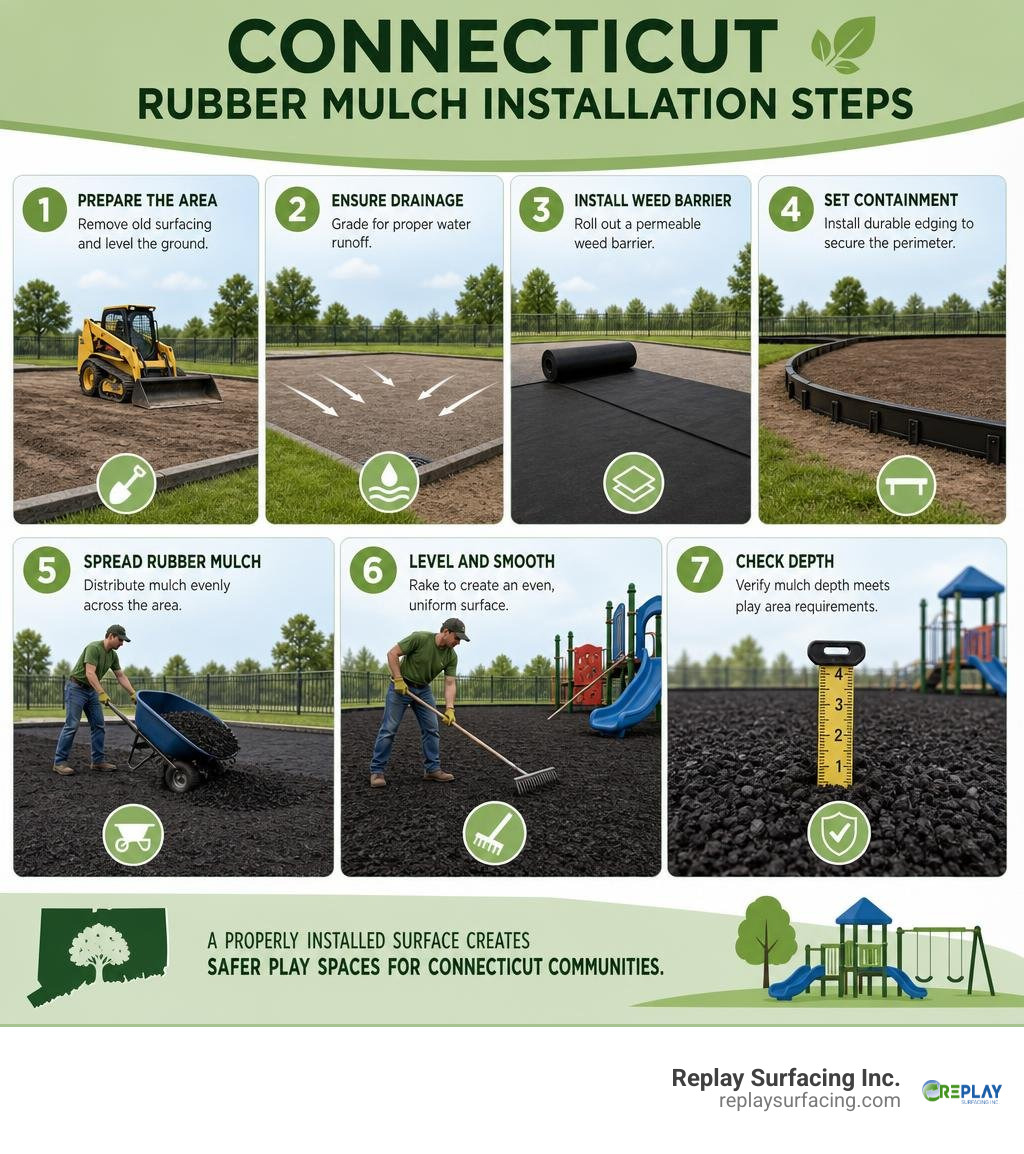
A successful Connecticut rubber mulch install starts with a level, well-drained play area, secure borders, and enough certified rubber mulch to match the equipment’s critical fall height. For Waterbury playgrounds, the basic process is to remove unsuitable soil or old surfacing, correct grading and drainage, install a permeable weed barrier if needed, set containment edging, spread mulch evenly, and verify depth throughout the safety zone.
Rubber mulch is a practical option for Connecticut’s wet springs, freeze-thaw cycles, and active community play areas. Unlike wood mulch, it does not rot, attract insects, or turn into mud as it breaks down. But performance depends on correct site preparation, drainage, and ongoing depth checks. Playground projects should also be designed around applicable ASTM impact-attenuation testing and CPSC public playground guidance, rather than choosing a depth by guesswork.
I am Landon Olson, operator of Replay Surfacing Inc. With a mechanical engineering background and experience in recycled-rubber manufacturing and safety surfacing, I help clients make informed decisions about a durable, sustainable Connecticut rubber mulch install. This guide walks through the site work, material planning, safety considerations, and maintenance details that help a Waterbury-area playground stay dependable over time.
Connecticut rubber mulch install word roundup:
Benefits of Rubber Mulch for Connecticut Playgrounds
Safety stands as the paramount priority for any recreational space, whether building a municipal playscape in Waterbury, Connecticut or updating an elementary school yard in Charlotte, NC. Traditional wood chips and pea gravel shift rapidly, leaving hard soil exposed beneath high-traffic swing sets and slide exits. Rubber mulch offers superior shock absorption, dramatically reducing the risk of severe head injuries and fractures from accidental falls.
When you choose a high-grade playground certified rubber mulch, you invest in materials tested to meet rigorous ASTM F1292 standards for impact attenuation and ASTM F1951 requirements for accessibility under the Americans with Disabilities Act (ADA). Unlike standard organic options, rubber mulch stays springy and cushions impact throughout all seasons.
We also prioritize environmental wellness and health. Using clean, non toxic rubber mulch guarantees that children, pets, and local wildlife remain safe from hazardous chemical leaching or sharp steel wire contaminants. If your community focuses on sustainable initiatives, discovering how to choose sustainable and safe rubber playground surfacing in CT helps your organization balance environmental stewardship with high-performance impact protection.
Connecticut Climate Durability and Longevity
New England weather presents extreme conditions for outdoor surfacing. From harsh sub-zero winters to hot, humid summers, outdoor materials face constant wear. Organic wood mulch decomposes quickly under these swings, requiring annual top-offs, turning into splintered mush, and losing its impact-absorbing qualities within months.
By transforming discarded vehicle tires into premium recycled rubber mulch, we convert potential environmental waste into an exceptionally resilient surfacing product. Rubber does not absorb water, meaning it resists the destructive freeze-thaw cycles that break down concrete, wood, and lower-grade ground covers in Connecticut. It won’t rot, compress into hardpan, cultivate mold, or harbor fungus, ensuring that municipal play spaces across Connecticut, Indiana, and Beaverton, OR maintain consistent cushioning year after year.
Drainage and Pest Prevention in New England
Spring rains and winter snowmelt can quickly turn an ordinary playground into an unusable mud pit. Because rubber is non-porous, water flows directly through the loose-fill chips into the aggregate base or subsoil drainage system below. Play areas dry out rapidly after torrential storms, allowing children back onto the equipment without tracking muddy residue indoors.
Furthermore, organic wood mulches naturally attract termites, carpenter ants, ticks, and burrowing pests looking for food and nesting grounds. Rubber offers zero nutritional value to insects or rodents. Pairing heavy-duty recycled rubber chips with a quality geotextile underlayment creates a reliable weed barrier, preventing unwanted vegetation from taking root and minimizing groundskeeping labor.
Step-by-Step Connecticut Rubber Mulch Install Guide
Executing a playground surface build correctly demands precision, proper depth calculations, and careful attention to sub-base preparation. Whether overseeing a project in Tucson, AZ or managing an installation in Waterbury, following proven industry steps for installing rubber mulch ensures compliance with strict safety codes and long-term surface stability.
Preparing the Site for a Connecticut Rubber Mulch Install
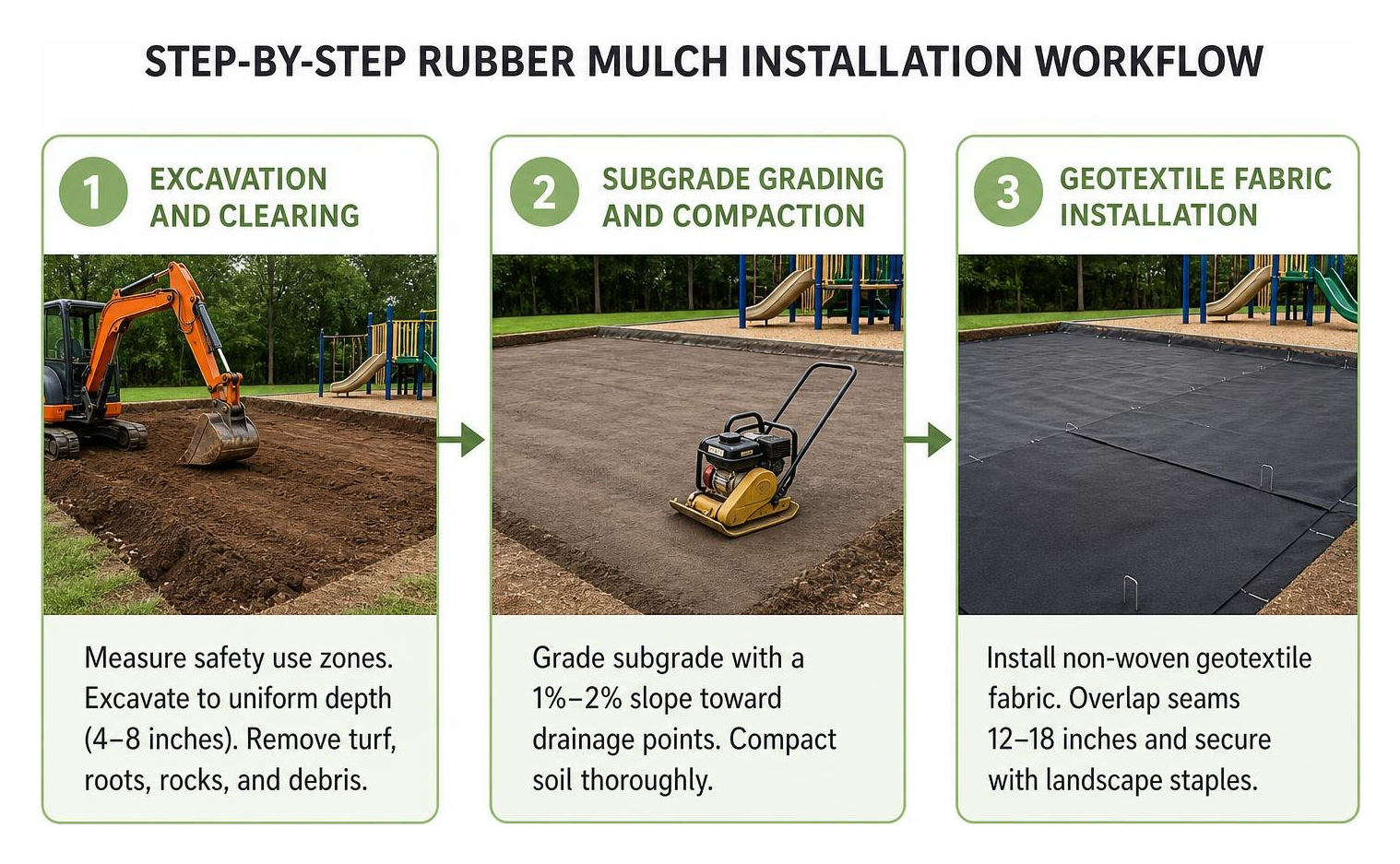
- Excavation and Clearing: Measure the equipment safety use zones (typically extending a minimum of 6 feet in all directions from stationary equipment and further for swings and slides). Excavate the area to a uniform depth—usually between 4 to 8 inches depending on critical fall height requirements. Remove all turf, roots, large rocks, and organic debris.
- Subgrade Grading and Compaction: Establish a gentle 1% to 2% slope across the subgrade directed toward appropriate drainage collection points. Compact the native soil thoroughly with a mechanical plate compactor to prevent future settling or uneven depressions.
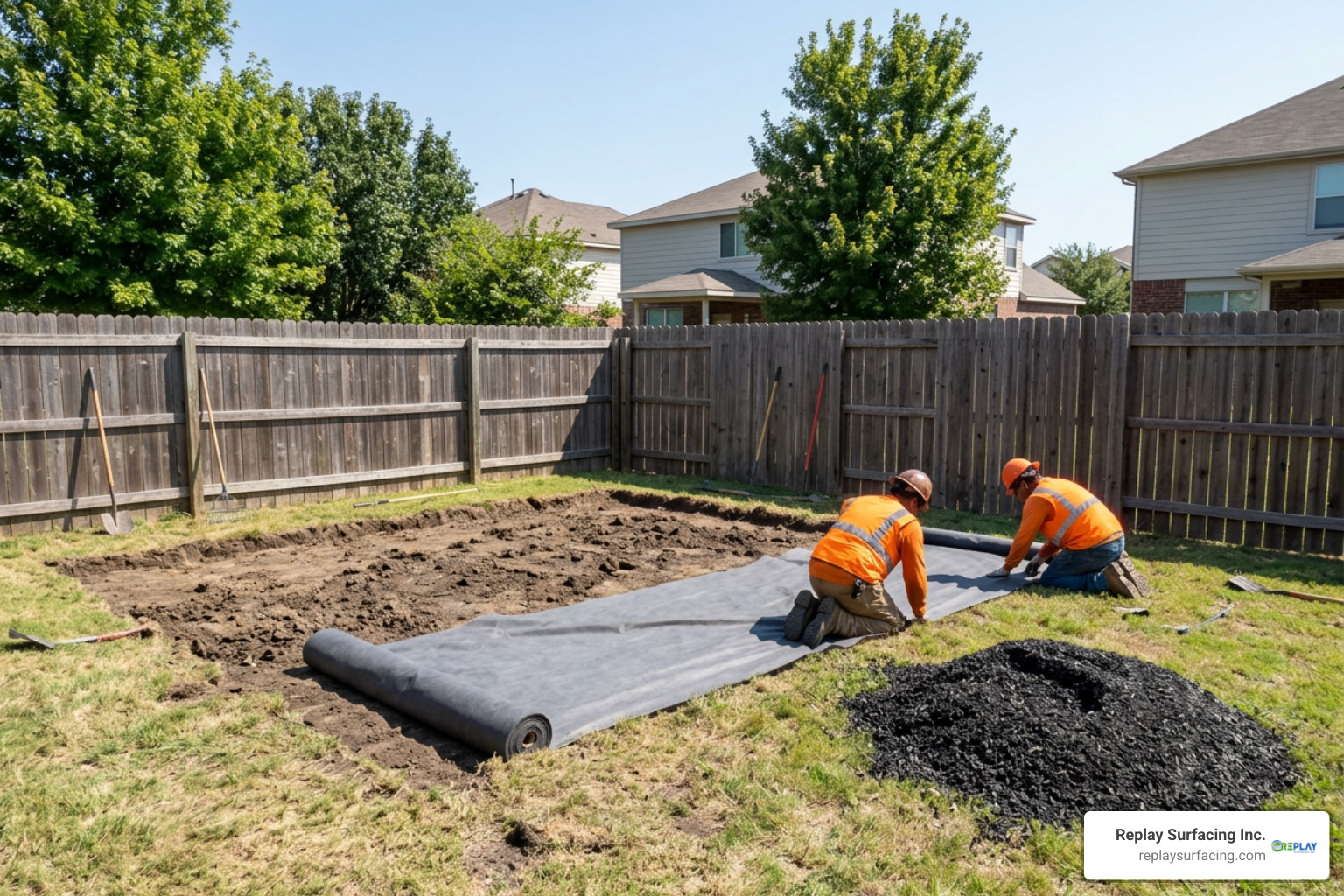
- Geotextile Fabric Installation: Roll out heavy-duty, commercial-grade, non-woven geotextile landscape fabric across the entire excavated basin. Overlap all seams by at least 12 to 18 inches and pin the fabric securely using heavy landscape staples. This permeable barrier prevents weed growth, deters burrowing animals, and stops the rubber mulch from mixing into the underlying soil while allowing rainwater to drain freely.
Mulch Placement and Depth Requirements
- Installing Secure Containment Edging: Anchor heavy-duty timber, composite, or poured concrete borders around the entire perimeter of the play area. Edging must stand at least 2 to 3 inches taller than the final mulch depth to retain loose-fill particles during vigorous play.
- Calculating Material Volumes: Accurately determine the required material by measuring the square footage and multiplying by target depth. Sourcing certified rubber mulch by the yard ensures you receive the exact bulk volume needed without unexpected shortfalls.
- Spreading and Leveling: Deposit the rubber mulch systematically across the geotextile fabric. Spread the material evenly using hand rakes or lightweight mechanical spreaders, taking care not to puncture the base fabric.
- Depth Verification: Take physical measurements across multiple points within the play area, paying special attention to high-impact landing zones beneath swings and slide exits to confirm depth complies with the equipment’s certified fall height rating.
Professional vs. DIY Connecticut Rubber Mulch Install Considerations
While a small residential play set in Columbia, SC or Lake Charles, Louisiana might be handled by ambitious homeowners over a weekend, commercial and municipal builds require specialized equipment and expert oversight.
- Equipment and Labor: Excavating dozens of cubic yards of rocky New England soil requires skid steers, mini-excavators, and dump trailers. Professional crews handle heavy excavation, grading, and material distribution in a fraction of the time.
- Safety Compliance: Certified installers understand local municipal regulations, ADA accessibility pathways, and ASTM impact attenuation standards. Minor calculation errors in fall heights can lead to failed safety inspections and liability exposure for schools or park districts.
- Long-Term Performance: Professional grading prevents standing water pools that undermine retaining borders. Many commercial surfacing projects choose to upgrade to seamless systems; reviewing a bonded rubber mulch price guide can help determine whether loose-fill or bound safety systems better match your facility’s long-term budget.
Cost Analysis and Longevity in Connecticut’s Climate
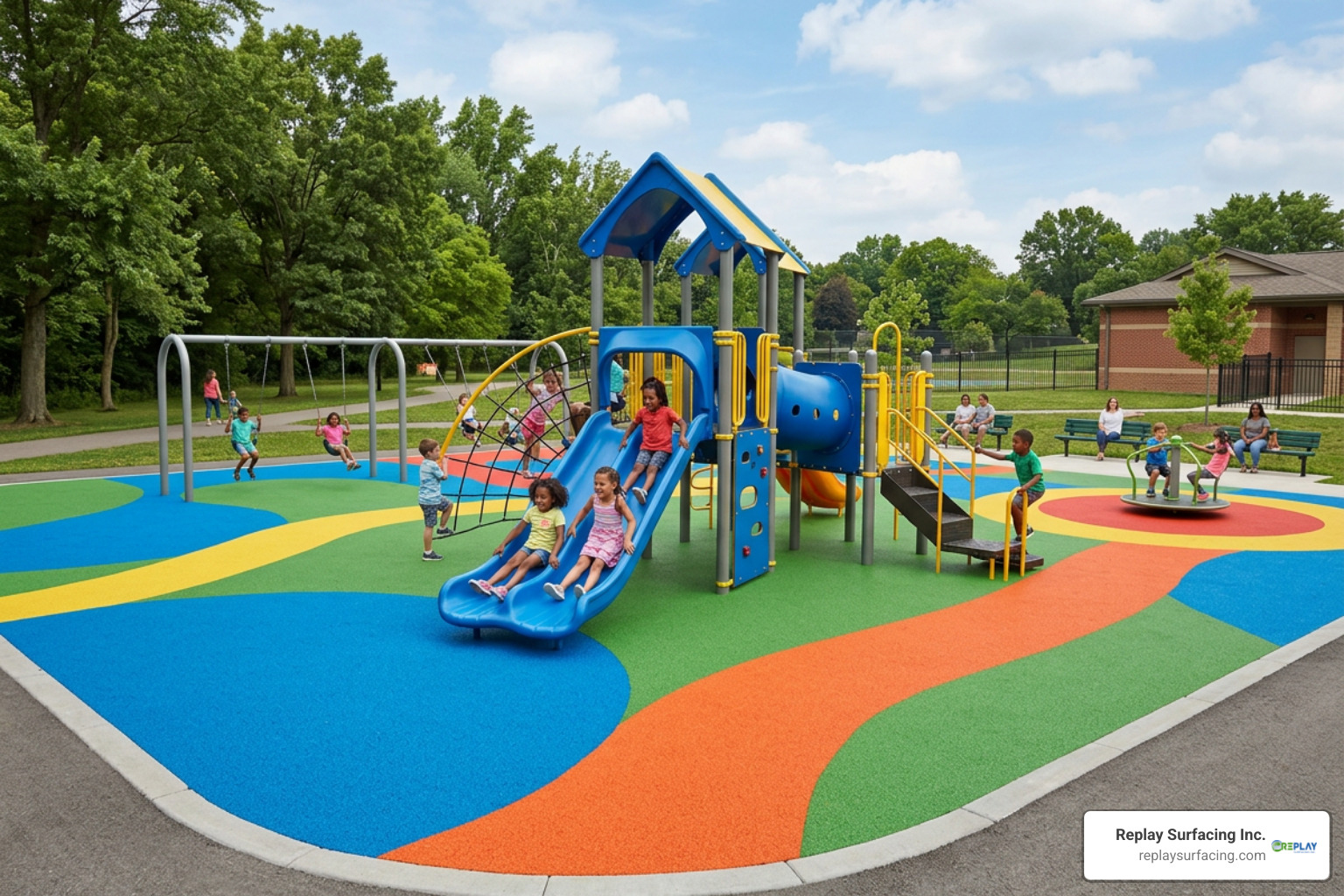
When evaluating playground safety surfaces, upfront material costs only reveal part of the financial picture. While organic engineered wood fiber (EWF) carries a lower initial purchase price, its recurring maintenance, settling, and annual replenishment costs quickly accumulate over time.
Consulting a comprehensive rubber mulch cost guide 2026 highlights the dramatic return on investment rubber surfacing delivers. In Connecticut’s demanding climate, rubber mulch lasts 10 to 15 years or longer with minimal loss of volume. Exploring the ultimate guide to rubber mulch colors costs and coverage allows project planners to match vibrant aesthetic choices to their exact budget parameters.
| Cost Factor | Engineered Wood Fiber (EWF) | Recycled Rubber Mulch |
|---|---|---|
| Initial Material & Install Cost | Moderate ($) | Higher ($$$) |
| Annual Top-Off Requirements | Requires 2-3 inches added yearly | Minimal (occasional raking/spot top-off every 3-5 years) |
| Expected Lifespan | 2 to 4 years before severe rot | 10 to 15+ years |
| Freeze-Thaw Resistance | Poor (compacts, freezes solid, rots) | Excellent (retains cushioning, drains moisture) |
| Pest & Weed Resistance | Low (decomposes into fertile soil) | High (inert synthetic material suppresses weeds) |
| 10-Year Cumulative Cost | High (frequent labor, material replacement) | Low (stable upfront investment, minimal maintenance) |
Selecting a Reliable Connecticut Surfacing Contractor
Selecting the right partner for your installation ensures safety and protects your capital investment. When vetting surfacing professionals in Connecticut or our service hubs in Raleigh, NC, Sanford, NC, and Nashville, TN, confirm the following credentials:
- Local Climate Experience: Contractors must understand how local soil compositions, frost lines, and drainage patterns affect sub-base longevity.
- Industry Certifications: Look for installers certified in playground safety standards (such as NRPA/CPSI credentials) who source IPEMA-certified materials.
- Comprehensive Insurance and Warranties: Verify that your contractor carries active general liability and worker’s compensation insurance, along with clear warranty protections on both labor and material fading or degradation.
Frequently Asked Questions About Playground Surfacing in CT
How much rubber mulch is needed for safe fall protection in Connecticut?
The required depth depends directly on the critical fall height of your highest playground component, as outlined by ASTM F1292 and CPSC guidelines. A compacted depth of 6 inches of playground-certified rubber mulch generally protects children from falls up to 10–12 feet. For lower residential equipment (under 5 feet), a 3- to 4-inch depth may suffice. Always check manufacturer specifications and add 1 to 2 inches beyond minimum requirements to account for natural displacement during play.
How does rubber mulch handle Connecticut winter snow and ice?
Rubber mulch performs exceptionally well during cold New England winters. Because the rubber material does not absorb water, it will not freeze into a rock-solid, dangerous mass like wet sand or soaked wood mulch. Snow naturally filters through the loose particles, melting quickly and draining away into the base system below. The surface maintains impact absorption even in sub-freezing temperatures.
What maintenance is required after installation?
Maintenance for rubber mulch is straightforward and cost-effective. Routinely rake high-traffic displacement areas—such as directly beneath swings, tire bouncers, and slide exits—back to uniform depth. Inspect the perimeter borders periodically to confirm containment integrity, and remove fallen tree leaves, twigs, or loose debris using a standard leaf blower on a low throttle setting.
Conclusion
Upgrading a play area in Waterbury, Connecticut with durable, eco-friendly surfacing provides children with a safe environment to explore and play. By transforming discarded scrap tires into long-lasting safety products, we eliminate environmental hazards while delivering surfaces that withstand tough New England weather.
Whether you are designing a new community park, upgrading a school playscape, or installing a residential backyard play area, our team at Replay Surfacing provides high-quality play yard rubber mulch engineered for safety, aesthetics, and lasting resilience. Contact us today to plan your playground project and build a safer play space for your community.