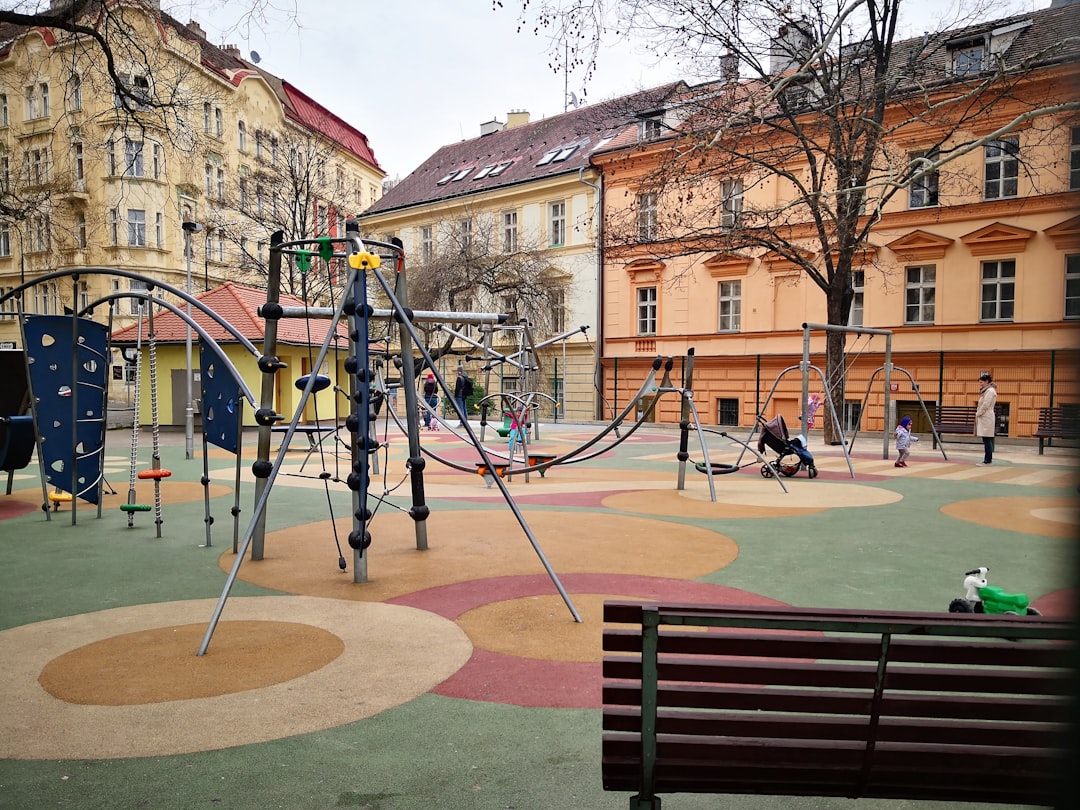
Playground Safety Mats Charlotte NC: Why Safety Matters More Than You Think
Playground safety mats Charlotte NC are specialized cushioned surfaces installed beneath playground equipment to absorb impact from falls and prevent serious injuries. Here’s what you need to know:
Quick Overview:
- Purpose: Reduce fall impact and meet ASTM safety standards
- Best placement: Under swings, slides, and high-traffic zones
- Key benefit: Protect children from 70% of playground injuries caused by falls
- Materials: Recycled rubber, polyethylene foam, or PVC
- Standards: Must meet ASTM F1292 fall height requirements
Falls from playground equipment account for 70 percent of all playground injuries. The difference between a minor bump and a serious injury often comes down to one thing: the surface beneath the equipment.
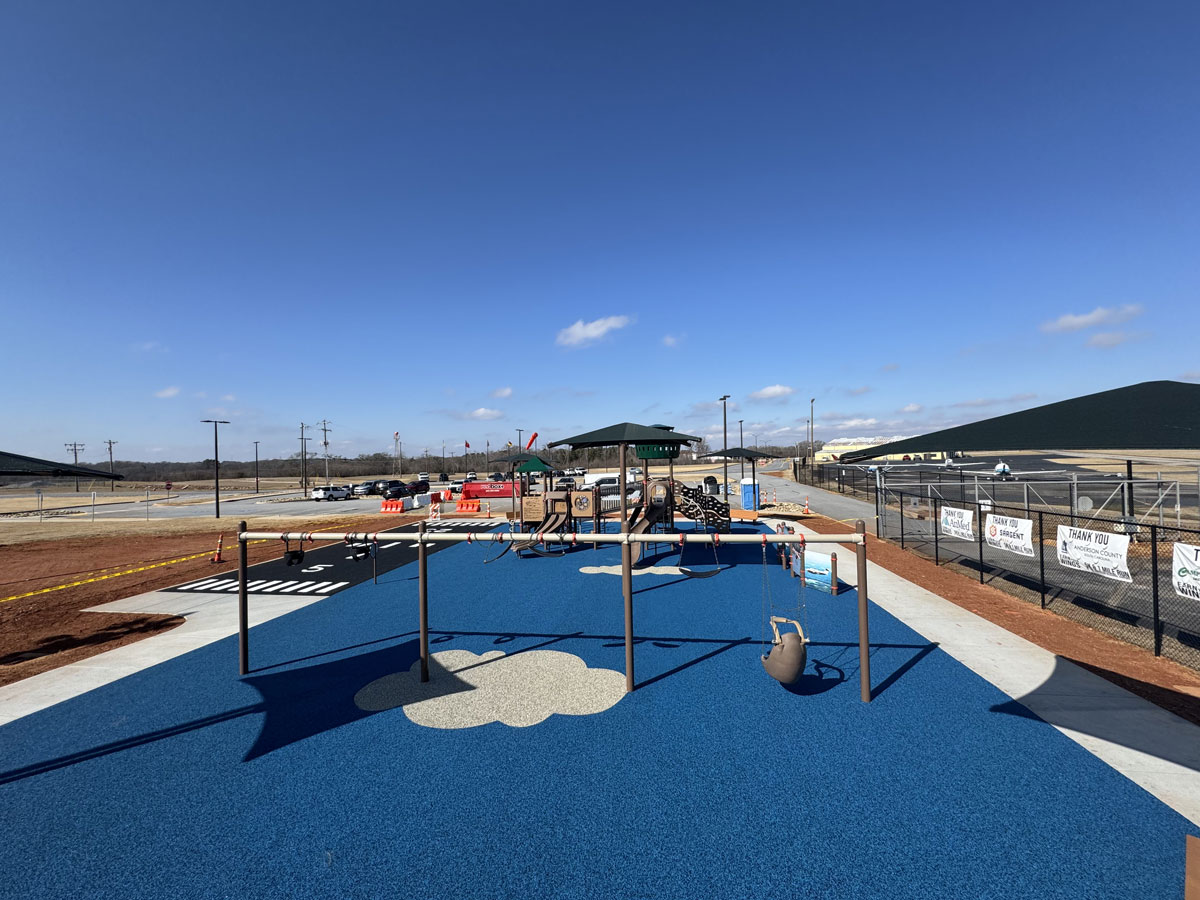
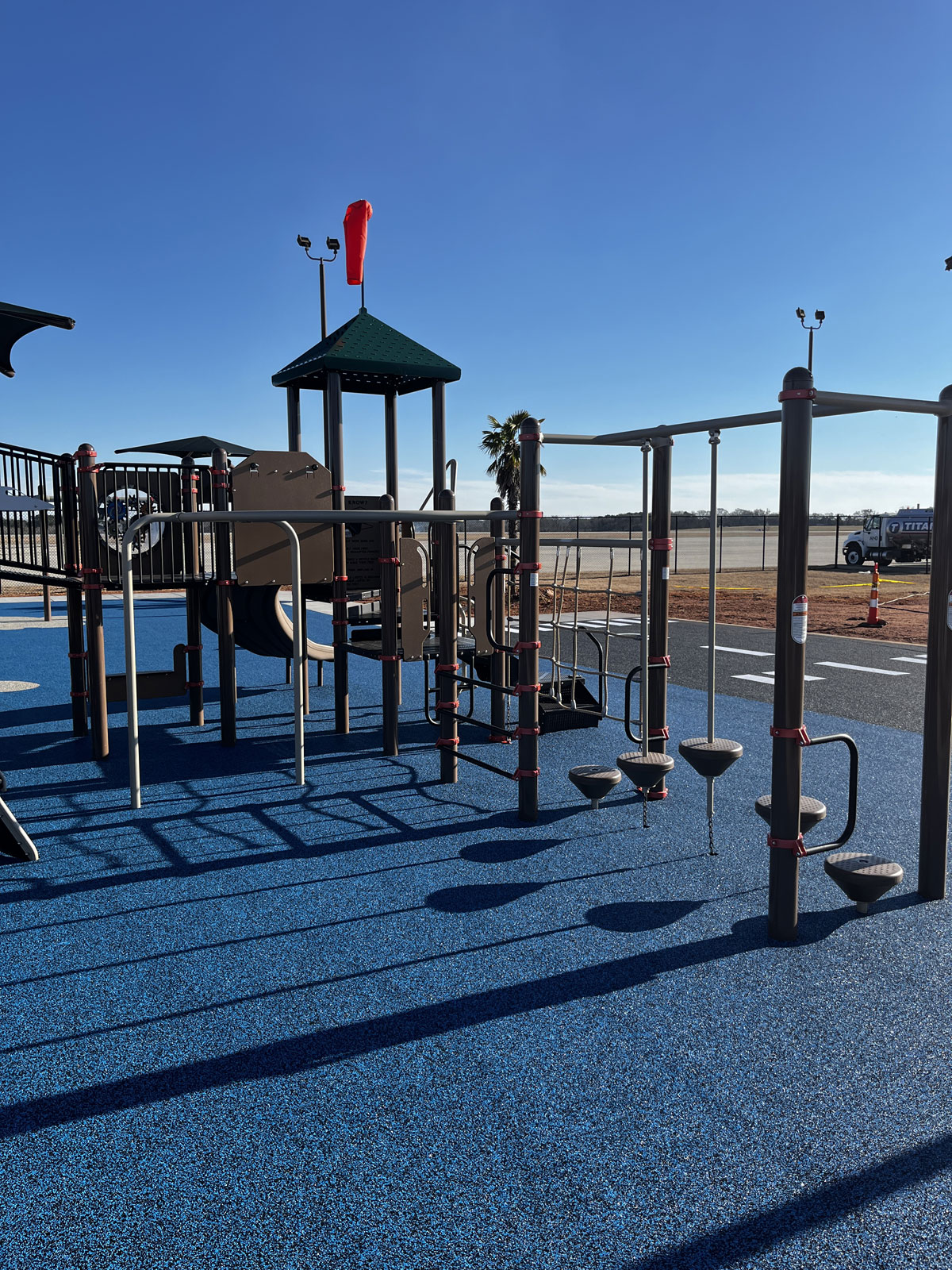
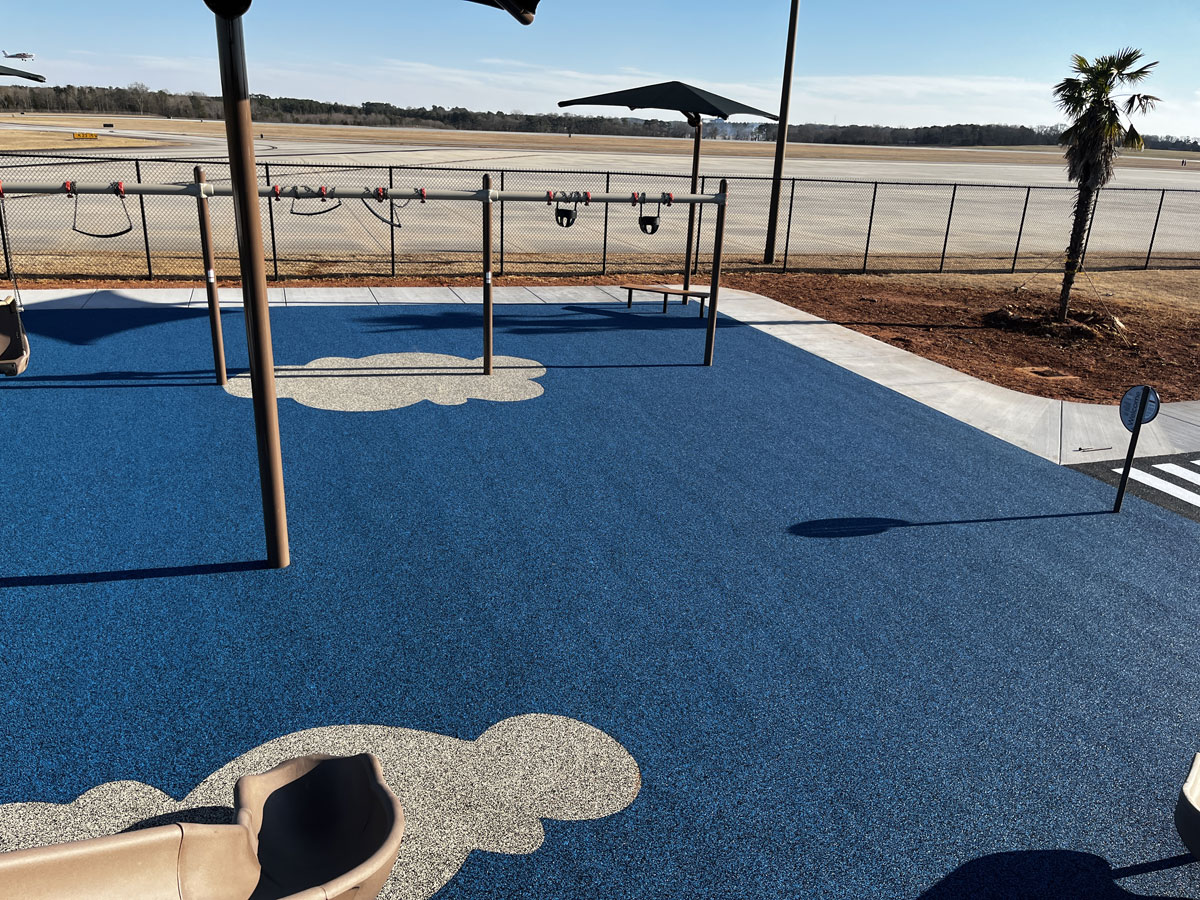
Playground safety mats provide critical fall protection in areas where children play most. They cushion impacts, prevent surface displacement, and create stable, accessible pathways that meet ADA requirements. Whether you’re managing a school playground in Charlotte, a community park in Raleigh, a recreation facility in Columbia, or a sports area in Tucson, the right safety surfacing protects children while reducing your long-term maintenance costs.
The challenge? Not all mats perform equally. Thickness, material composition, installation method, and climate conditions all affect how well these surfaces protect children over time.
I’m Landon Olson, and at Replay Surfacing, we’ve recycled millions of pounds of scrap tires into high-quality playground safety mats that serve communities across the Southeast and Southwest. My background in mechanical engineering and sustainability has taught me that effective playground safety mats combine rigorous safety standards with environmental responsibility.
Playground safety mats glossary:
Understanding the Role of Playground Safety Mats
When we talk about playground safety mats, we aren’t just talking about a piece of rubber on the ground. We’re talking about a sophisticated engineering solution designed to save lives—or at least prevent a lot of emergency room visits. In high-traffic zones across our service areas, from the humid parks of Lake Charles, Louisiana, to the sun-drenched play areas of Tucson, Arizona, these mats act as the last line of defense.
The primary role of these mats is impact absorption. When a child falls, the kinetic energy needs to go somewhere. Without a safety mat, that energy is absorbed by the child’s body. With a high-quality mat, the material compresses, dispersing the energy and significantly lowering the risk of fractures or head injuries. This is why choosing the right recycled-rubber-mats-playgrounds-guide is one of the most important decisions a facility manager can make.
In places like Charlotte, NC, where community parks are busy year-round, the Playground Safety Surface Resource in Charlotte NC emphasizes that consistent safety is only possible when the surface remains intact. Mats prevent the “pitting” or “kick-out” effect common under swings, ensuring that the safety depth required by law is always present.
Materials Used in Playground Safety Mats
Not all mats are created equal. At Replay Surfacing, our specialty is turning environmental hazards—specifically discarded tires—into durable safety products. However, the industry uses a few different materials:
- Recycled Tire Rubber: This is the gold standard for durability and eco-friendliness. By vulcanizing or bonding recycled rubber granules, we create a dense, weather-resistant mat that can withstand the heavy foot traffic of a Nashville schoolyard or a Raleigh park.
- Polyethylene Foam: Products like PolyFoam safety pads use closed-cell polyethylene. These are often used as underlays for turf. They offer incredible drainage—draining over 36 gallons per square foot vertically—making them ideal for the rainy seasons in Connecticut or Beaverton, OR.
- PVC: Some specialized mats use recycled PVC. These are often designed with holes to allow grass to grow through, providing a “natural” look while maintaining a safety fall height of up to 12 feet.
When selecting materials, we always recommend non-toxic-playground-tiles to ensure that children aren’t just safe from falls, but also safe from harmful chemicals or heavy metals.
Choosing the Right Playground Safety Mats for Your Equipment
The “one-size-fits-all” approach doesn’t work in playground safety. Different equipment creates different fall risks and wear patterns.
- Swing Mats: These are typically heavy-duty (some weigh up to 121 lbs!) to prevent them from shifting. They are placed directly under the swing seat’s resting position to catch the “scuffing” feet of children.
- Slide Mats: Positioned at the exit of a slide, these mats provide a cushioned landing for kids coming down at high speeds. They help prevent the “thud” at the bottom that can jar a child’s spine or ankles.
- Wear Mats: These are versatile protectors used under spinners or at the entrance of play structures. Using soft-fall-rubber-mats in these zones ensures that your primary surfacing (like poured-in-place rubber) doesn’t wear through to the concrete or dirt below.

Why Safety Mats are Essential for High-Traffic Zones
If you’ve ever watched a group of kids at a park in Sanford, NC, or Columbia, SC, you know they aren’t exactly gentle on the equipment. High-traffic zones—those areas under swings, at the base of slides, and around merry-go-rounds—experience thousands of footfalls a week.
Without playground safety mats, the safety surfacing in these areas quickly displaces. If you’re using loose-fill materials, the kids’ feet act like shovels, digging holes until the “critical fall height” protection is gone. This is where the statistic that 70% of injuries come from falls becomes scary. If the surfacing is kicked out, a fall from a 6-foot slide is essentially a fall onto hard-packed earth.
In our work with Nashville, Tennessee Playground Surfacing, we’ve seen how mats act as “placeholders” for safety. They ensure that even if the surrounding mulch moves, the most dangerous landing zones remain protected.
Meeting ASTM and ADA Standards
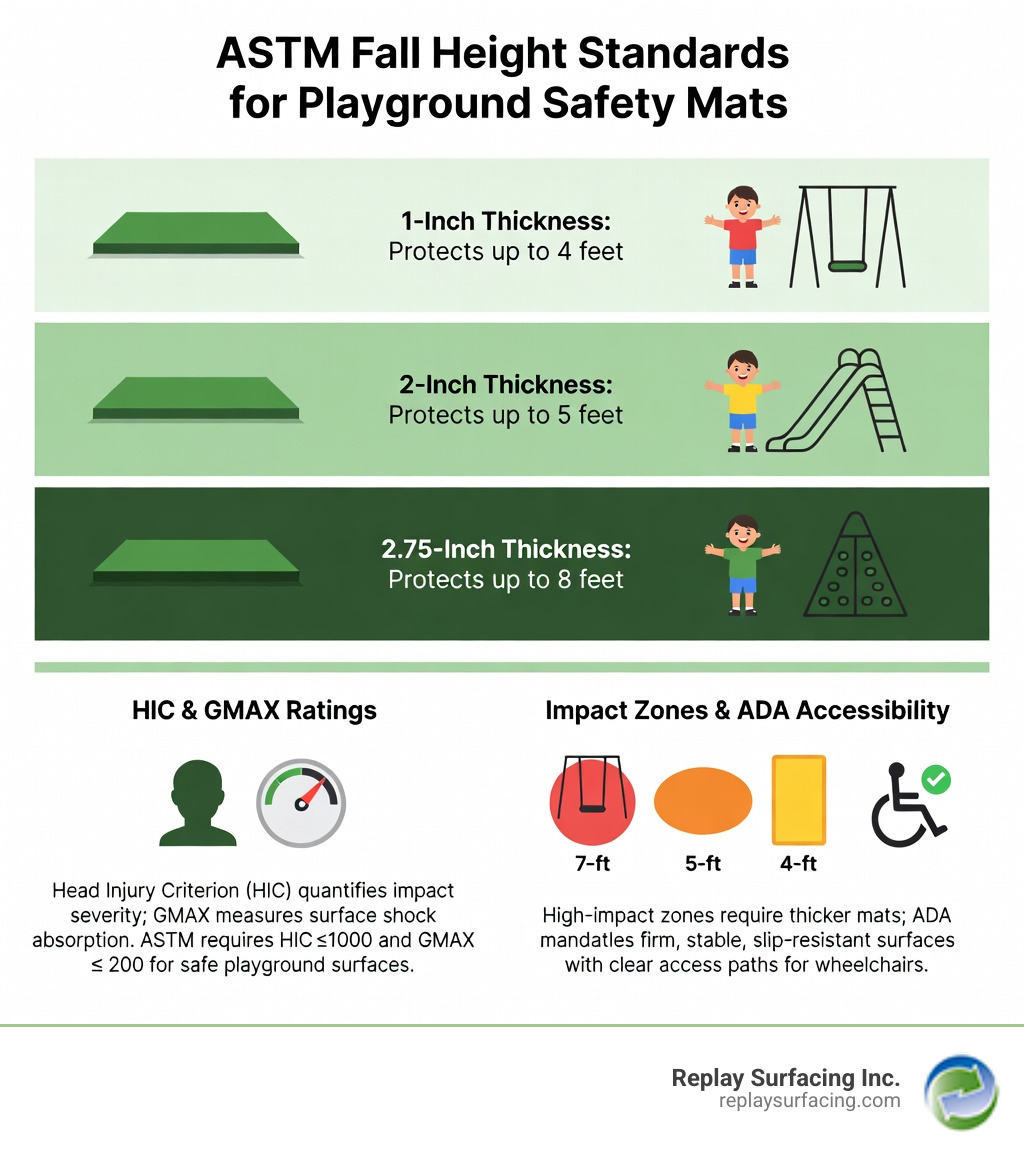
Safety isn’t just a suggestion; it’s a regulated standard. To be legally compliant in the US, playground surfaces must meet ASTM F1292 standards. This involves two key metrics:
- GMAX: Measures the maximum acceleration (shock) of an impact.
- HIC (Head Injury Criterion): Measures the likelihood of a head injury arising from an impact.
Our interlocking-playground-mats-ultimate-guide explains how different thicknesses correspond to these ratings. For example, a 2-inch mat might provide a 5-foot fall rating, while a 2.75-inch mat can protect up to 8 feet. In our service areas like Tucson, where the sun can bake surfaces, we ensure our mats maintain these ratings even in extreme heat.
Reducing Maintenance and Enhancing Accessibility
One of the biggest headaches for park managers in places like Beaverton or Sanford is maintenance. Constantly raking mulch back under swings is a never-ending chore. Playground safety mats virtually eliminate this need in the most problematic areas.
Furthermore, these mats are essential for ADA (Americans with Disabilities Act) compliance. A wheelchair cannot easily steer through deep wood chips or loose rubber. By installing outdoor-walkway-mats and firm safety mats, you create a “unitary” surface that allows children of all abilities to access the equipment. It transforms an inaccessible playground into a universally accessible play area, often in just one day of installation.
Comparing Types and Materials
Choosing between a tile, a wear mat, or a foam pad can feel like picking a favorite child—they all have their strengths! To help you decide, we’ve broken down the most common options we install across our locations in Indiana, Connecticut, and the Carolinas.
| Mat Type | Primary Use | Key Benefit | Lifespan |
|---|---|---|---|
| Wear Mats | Under swings/slides | Prevents surface displacement | 5-10 Years |
| Interlocking Tiles | Full surface coverage | DIY friendly, easy to replace | 8-12 Years |
| PolyFoam Pads | Under turf/mulch | Superior drainage & HIC ratings | 10-15 Years |
| Safety Deck II | Grass playgrounds | Allows grass growth through mat | 7-10 Years |
When looking at rubber-mulch-mats, the goal is usually to provide a stable “island” of safety within a “sea” of loose-fill material.
Advantages of Recycled Rubber
At Replay Surfacing, we are big believers in the power of the tire. Recycled rubber is naturally suited for the outdoors. It is:
- Weather Resistant: It doesn’t rot in the humidity of Lake Charles or freeze-crack in the winters of Connecticut.
- UV Stable: High-quality mats are treated to resist the fading and “crumbling” that can happen in the intense Tucson sun.
- Eco-Friendly: Every mat we produce keeps tires out of landfills.
Our recycled-rubber-mats-playgrounds-guide highlights that these mats aren’t just safe for kids; they’re better for the planet.
Common Drawbacks to Consider
We believe in being honest with our customers. While playground safety mats are incredible, they aren’t magic.
- Warping: In areas with extreme temperature swings (like Nashville or Raleigh), cheaper tiles can expand and contract, leading to “curled” edges. This creates a tripping hazard.
- Cleaning: Gaps between tiles can collect sand, dirt, and the occasional lost LEGO piece. Periodic vacuuming or power washing is required.
- Heat: Like any dark surface, black rubber mats can get hot in direct sunlight. In our hotter service areas, we often recommend lighter-colored EPDM toppers or shaded installations.
If you are considering used-playground-tiles, be very careful. Rubber degrades over time, and a used tile may no longer meet the ASTM fall height requirements it had when it was new.
Installation and Maintenance for Longevity
You could buy the most expensive mat in the world, but if you toss it onto uneven dirt, it won’t do its job. Proper installation is the difference between a 10-year surface and a 2-year “maintenance nightmare.”
Subsurface preparation is the most critical step. The ground needs to be leveled and compacted. In many of our installations—from Charlotte to Tucson—we use a gravel base or a concrete pad to ensure the mats stay flat. When installing-playground-tiles, we also pay close attention to the “beveled edges.” These sloped edges ensure that there is a smooth transition from the ground to the mat, preventing kids from tripping as they run toward the swings.
Proper Placement and Security
Where you put the mat matters as much as how you install it.
- Swing Bays: Mats should be centered under the swing. We recommend using heavyweight mats (like our 121 lb swing mats) or securing them with security spikes to prevent them from migrating.
- Slide Exits: The mat should extend at least 4 to 6 feet from the end of the slide to account for the momentum of the child.
- Spinners: Circular wear mats are best here to provide 360-degree protection.
Using a playset-rubber-mat in a residential backyard follows the same rules: level ground, secure edges, and enough “splash zone” to catch a flying toddler.
Long-Term Care in Local Climates
Maintenance requirements vary by where you are.
- In Raleigh and Columbia: High humidity can lead to moss or algae growth in shaded areas. A simple solution of water and mild soap usually does the trick.
- In Tucson: The focus is on debris removal. Sand and grit can act like sandpaper on the rubber, wearing it down prematurely. Regular sweeping is key.
- In Connecticut and Indiana: Snow removal should be done with plastic shovels, never metal ones, which can gouge the rubber.
Periodic inspections should check for any “gapping” between tiles or any signs of the rubber becoming brittle. If a mat is damaged, it’s much cheaper to replace one tile than an entire poured surface!
Frequently Asked Questions
How much do playground safety mats cost?
Pricing for playground safety mats depends on three main factors: thickness (fall height), material, and size.
- Standard wear mats for swings can range from $100 to $250 depending on weight and thickness.
- Interlocking tiles usually cost between $8 and $16 per square foot.
- Large spinner mats can cost $500 to $1,000+ because of their specialized shape and size.
When looking for playground-mats-for-sale, always factor in the shipping cost—rubber is heavy!
Can these mats be used for residential backyards?
Absolutely! In fact, we recommend it. Most backyard “swingset-in-a-box” kits are installed over grass, which quickly turns into hard-packed dirt. A few well-placed mats can turn a dangerous backyard into a safe zone. Our rubber-mats-play-yards-ultimate-guide provides great tips for DIY parents looking to level up their backyard safety.
How do mats compare to other unitary rubber surfaces?
Unitary surfaces like Poured-in-Place (PIP) rubber offer a seamless, beautiful look, but they are expensive and require professional installation. Playground safety mats offer a middle ground—they provide the same “unitary” (solid) feel and ADA accessibility but at a lower price point and with easier repair options. If a section of PIP is damaged, you often have to patch it (which looks like a band-aid). If a mat is damaged, you just swap it out. You can enhance-safety-with-rubber-playground-mats by using them as “wear layers” on top of other surfaces to extend the life of your entire playground.
Conclusion
At Replay Surfacing, we believe that every child deserves a safe place to play, whether they are in a neighborhood park in Nashville or a backyard in Beaverton. By choosing high-quality playground safety mats, you aren’t just buying a product; you’re investing in peace of mind.
Our mission to recycle tires into sustainable construction materials means that your playground isn’t just protecting children—it’s also protecting the environment. From meeting strict ASTM standards to ensuring ADA accessibility, the right mats make all the difference.
Ready to secure your “Safe Zone”? Whether you need a single slide mat or a full interlocking tile system, we’re here to help. More info about playground services is just a click away. Let’s build something safe, sustainable, and fun together!