
When Your Playground Floor Is Worn Out, Resurfacing Is the Smart Fix
A playground rubber resurfacing service is one of the most cost-effective ways to restore a safe, compliant play surface — without the expense of tearing everything out and starting over.
Here’s what you need to know at a glance:
| Question | Quick Answer |
|---|---|
| What is it? | Applying a fresh EPDM wear layer over an existing rubber base |
| When is it needed? | Cracks, fading, or surface wear — typically after 10–15 years |
| How much does it cost? | Significantly less than full replacement (up to 80% savings) |
| Is it safe? | Yes — resurfacing can restore or improve ASTM safety ratings |
| Is it eco-friendly? | Yes — uses recycled rubber and reduces landfill waste |
Playground surfaces take a beating. Years of heavy foot traffic, UV exposure, and seasonal freeze-thaw cycles slowly degrade even the best poured-in-place rubber floors. You start to see cracking, peeling, color fade, and worn-down areas — especially under swings and at slide exits. Left unaddressed, those issues become safety hazards.
The good news: in most cases, you don’t need a full replacement. A professional resurfacing job can bring your playground back to like-new condition — and back into compliance — at a fraction of the cost.
I’m Landon Olson, operator of Replay Surfacing Inc., and with a background in mechanical engineering and years of hands-on experience in the safety surfacing industry, I’ve helped facility managers across the country find smarter, more sustainable ways to maintain their playground rubber resurfacing service needs. Let’s walk through exactly what the process looks like, what it costs, and how to choose the right installer.
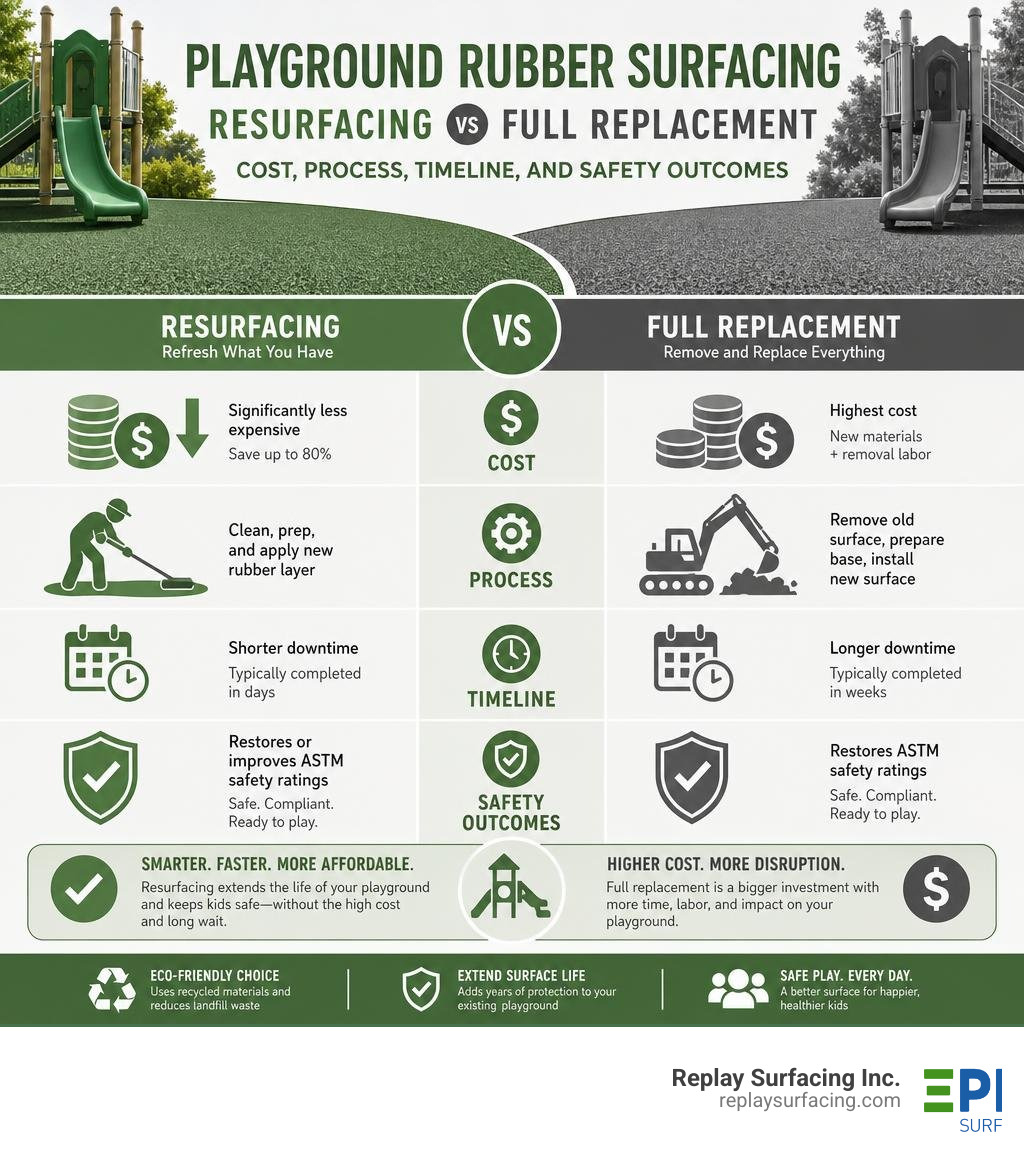
Terms related to playground rubber resurfacing service:
What is a Playground Rubber Resurfacing Service?
A playground rubber resurfacing service is a specialized maintenance and restoration process designed to renew the top layer of an existing poured-in-place rubber floor. Instead of excavating the entire system down to the sub-base, professionals repair and refresh the surface. This process restores the floor’s safety, flexibility, and vibrant aesthetics while saving time and money.
To understand how resurfacing works, it helps to understand how a standard Poured in Place Rubber Surfacing system is built. These floors consist of a two-layer system:
- The Cushion Layer (Base): This is the thick bottom layer, typically made of Styrene-Butadiene Rubber (SBR) shredded recycled tire rubber. It is engineered specifically for shock absorption, providing the critical fall protection that keeps kids safe when they take a tumble.
- The Wear Layer (Cap): This is the thin, durable top layer (usually about 1/2-inch thick) made of Ethylene Propylene Diene Monomer (EPDM) virgin rubber granules. This layer is pigmented throughout, UV-stabilized, and bound together with a high-strength polyurethane binder to withstand heavy foot traffic, weather, and sunlight.
Over time, UV rays degrade the polyurethane binder in the wear layer, causing the EPDM granules to break loose (a process known as “granule loss” or “fretting”). When a professional team resurfaces the playground, they clean the old floor, patch any deep structural damage, and apply a brand-new EPDM wear layer directly over the existing cushion layer.
Resurfacing vs. Full Replacement
Choosing between resurfacing and a full replacement comes down to assessing the structural integrity of your playground’s base.
If the underlying SBR cushion layer is still springy, intact, and securely bonded to the sub-base (concrete, asphalt, or compacted stone), a full replacement is unnecessary. Tearing out the entire system is a waste of both materials and budget. Instead, opting for a professional Rubber Surfacing for Playgrounds restoration preserves your existing sub-base and structural SBR cushion, applying a fresh top wear layer to make the system look and perform like new.
However, if the cushion layer has completely rotted, hardened, or separated from the ground beneath it, a full replacement may be required to guarantee safety. Our team can evaluate your surface to determine if it is a candidate for resurfacing.
When to Choose a Playground Rubber Resurfacing Service
How do you know when it is time to call in the professionals? While a high-quality poured-in-place rubber surface can last anywhere from 10 to 15 years with proper maintenance, local weather conditions play a major role in its lifespan:
- Tucson, Arizona: Intense, year-round UV exposure accelerates binder degradation, leading to premature color fading and dry-rot.
- Connecticut: Harsh winter freeze-thaw cycles can expand tiny cracks into major fissures if moisture gets trapped beneath the surface.
- Charlotte, Raleigh, and Sanford, North Carolina: High humidity and heavy seasonal rains can encourage weed growth along edges, which can slowly lift and separate the rubber layers.
- Lake Charles, Louisiana: Intense humidity and seasonal storms require resilient, highly permeable surfaces that drain water rapidly.
If you notice any of the following warning signs, it is time to schedule a professional assessment:
- Granule Shedding: You find loose colored rubber crumbs under swings, at slide exits, or on kids’ shoes.
- Visible Cracking or “Spidering”: Fine cracks are beginning to spread across high-traffic zones.
- Hardening: The surface feels stiff underfoot rather than springy, indicating the rubber is losing its shock-absorbing qualities.
- Localized Holes: High-impact areas under swings or slides have worn completely through to the black SBR base layer.
If you are managing facilities, keeping an eye on these signs is crucial. For a broader overview of material options, read our guide on Playground Surfacing.
The Benefits of Rubber Playground Resurfacing

Choosing to resurface your playground rather than replacing it outright offers substantial financial, environmental, and safety advantages.
Cost Savings and Environmental Advantages
The most immediate benefit of a playground rubber resurfacing service is the impact on your budget. By preserving the existing cushion layer, you eliminate the labor-intensive process of tearing out tons of rubber, hauling it away, and paying landfill disposal fees.
By choosing a professional restoration system, you can save up to 80% compared to the cost of a full replacement. This massive savings allows school districts, municipalities, and HOAs to stretch their maintenance budgets much further.
At Replay Surfacing Inc., our core mission is sustainability. We specialize in transforming environmental hazards into durable, beautiful play spaces by utilizing Recycled Rubber Playground Flooring. Millions of scrap tires end up in landfills every year. By choosing to resurface and extend the life of your existing rubber floor, you prevent waste from piling up in landfills. It is a highly responsible, green choice that lowers your facility’s carbon footprint.
Restoring Safety Ratings and Impact Attenuation
Beyond aesthetics and cost, playground maintenance is fundamentally about protecting children. Playground safety surfaces must comply with strict national standards, specifically ASTM F1292 (Standard Specification for Impact Attenuation of Surfacing Materials within the Use Zone of Playground Equipment).
This standard measures two critical values during a fall:
- G-max: The maximum acceleration (shock) experienced during an impact.
- Head Injury Criterion (HIC): A measure of the likelihood and severity of a head injury resulting from a fall.
Over a decade of use, rubber surfaces naturally compact, lose their elasticity, and harden. This significantly reduces their impact attenuation, raising G-max and HIC scores to dangerous levels.
A professional resurfacing service from an experienced Playground Safety Surfacing Company can restore these crucial safety ratings. By repairing damaged sections of the SBR cushion layer and applying a fresh, flexible EPDM wear layer, we bring the surface back into full compliance with critical fall height requirements, ensuring the playground remains a safe zone for children.
Step-by-Step Process of Professional Rubber Resurfacing
Resurfacing a poured-in-place rubber playground is a highly skilled craft. It requires specialized equipment, precise climate conditions (typically dry weather with temperatures consistently above 50°F), and experienced hands. For a deeper look at professional standards, refer to The Ultimate Guide to Professional Rubber Playground Installation.
Here is how our professional teams execute a seamless resurfacing project:
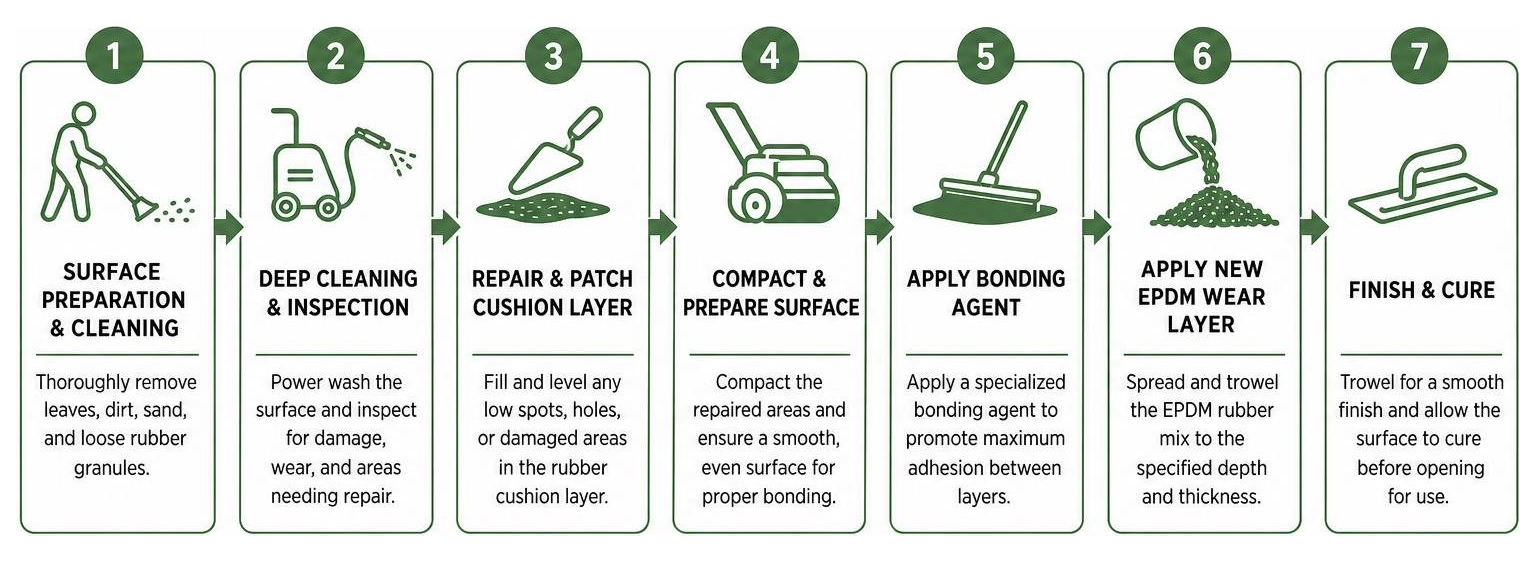
Step 1: Surface Preparation and Cleaning
A successful resurfacing job depends entirely on how well the new wear layer bonds to the old surface.
- Debris Removal: The team thoroughly sweeps and blows off the entire playground to remove leaves, dirt, sand, and loose rubber granules.
- Pressure Washing: We wash the surface using specialized, low-pressure equipment. High-pressure washing can damage older, fragile rubber, so we use gentle, professional cleaning techniques combined with child-safe, non-toxic detergents to lift deep-seated grime, mold, and oils.
- Edge Cutting: We cut clean, vertical joints along the playground’s borders, concrete footings, and equipment posts. This ensures the new rubber wear layer can be keyed in flush, preventing trip hazards and curling edges.
Step 2: Repairing the Base and Cushion Layer
Once the surface is clean and dry, we inspect the underlying SBR cushion layer.
- Patching Holes: Any areas where the top wear layer has worn completely through are primed with a polyurethane binder.
- SBR Leveling: We mix fresh SBR rubber crumbs with binder and trowel them into the holes, leveling the damaged areas flush with the surrounding cushion layer. This restores uniform shock absorption across the entire play area.
Step 3: Applying the New Wear Layer
With the repairs complete, we apply the brand-new, high-performance wear layer.
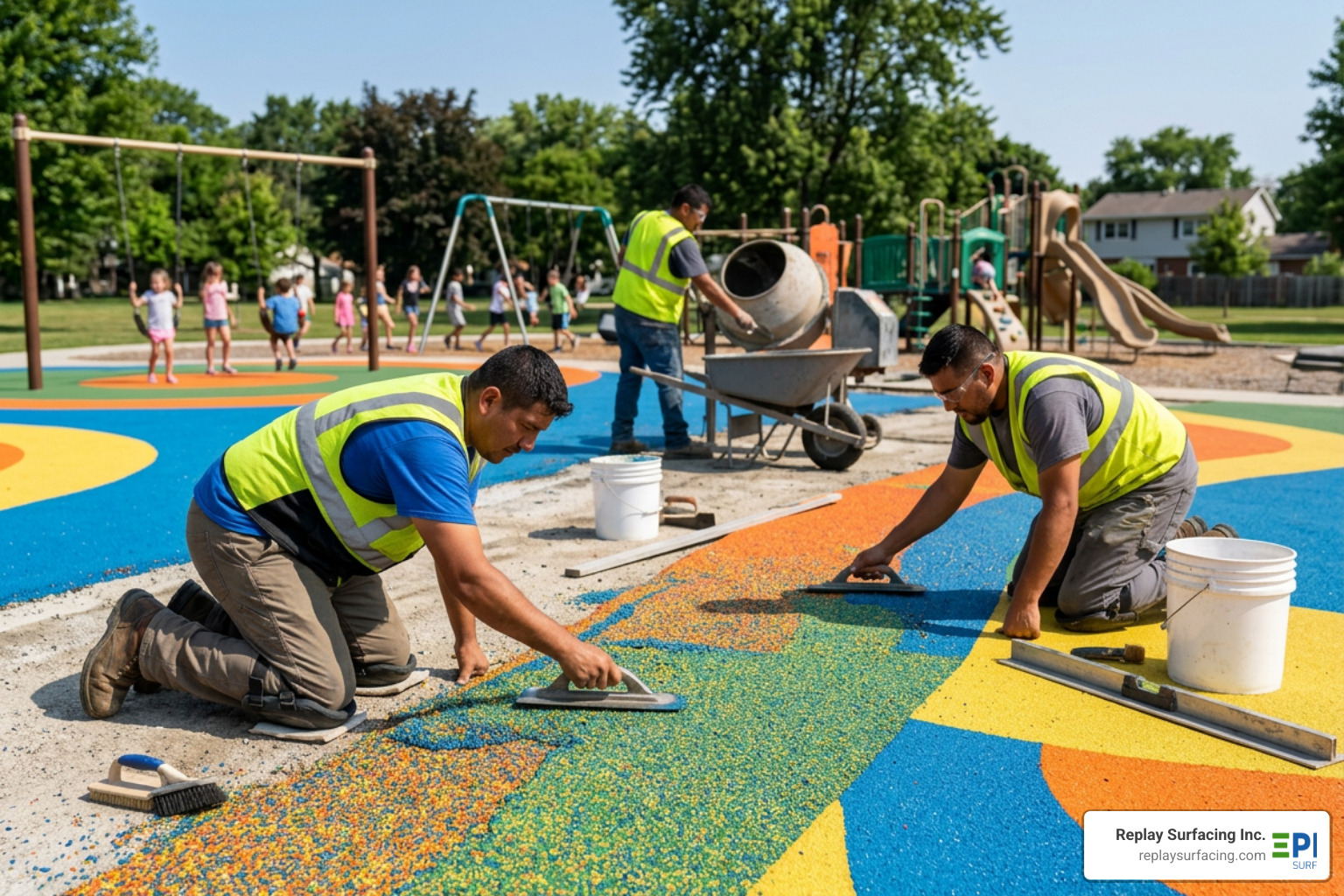
- Mixing: We combine premium, UV-stabilized EPDM virgin rubber granules with a top-grade polyurethane binder in a specialized mortar mixer.
- Troweling: Our certified installers hand-trowel the mixture over the prepared surface at a consistent thickness (typically 1/2 inch). This requires immense skill to ensure a perfectly smooth, seamless finish with no low spots where water could pool.
- Curing: The surface must cure undisturbed for 24 to 48 hours (depending on temperature and humidity) before it is ready to welcome children back for play.
Cost and Maintenance of Resurfaced Playground Floors
Understanding the financial investment and the long-term maintenance requirements of a resurfaced floor is key to maximizing your return on investment.
| Service Option | Average Cost Range | Expected Lifespan | Primary Benefit |
|---|---|---|---|
| Full PIP Replacement | $8 to $14+ per sq. ft. | 10–15 Years | Brand-new system from the sub-base up |
| Professional Resurfacing | $3 to $6 per sq. ft. | 10–15 Years | Saves up to 80% vs. full replacement |
| Wear Cap Resealing | $1.25 to $2 per sq. ft. | Extends life by 3–5 Years | Restores binder strength, stops granule loss |
Comparing Resurfacing Costs to New Installations
A brand-new poured-in-place rubber installation typically ranges from $8 to $14 per square foot, depending on the thickness required for critical fall heights and the complexity of the color design.
By contrast, a professional resurfacing service generally costs a fraction of that price because it utilizes the existing cushion layer. For a detailed breakdown of pricing structures, refer to our Playground Rubber Flooring Price Complete Guide.
Post-Resurfacing Maintenance Tips for Longevity
To ensure your newly resurfaced floor lasts another decade, regular upkeep is essential. Protect your investment by following these simple maintenance practices:
- Routine Sweeping: Use a leaf blower or a soft-bristle broom at least once a month to remove dirt, twigs, and abrasive sand that can wear down the EPDM granules.
- Low-Pressure Rinsing: Periodically rinse the surface with a standard garden hose. Avoid using high-pressure washers, which can tear the polyurethane bonds.
- Weed Control: Clear lawn weeds within 6 inches of the playground’s edge to prevent roots from creeping under the rubber and lifting the edges.
- Gentle Stain Removal: Scrub grease, food, or bird droppings gently using warm water and mild, child-safe dish soap. Avoid harsh chemical solvents.
- Annual Inspections: Schedule an annual professional inspection to identify high-traffic wear early, allowing for minor, low-cost patch repairs before they spread.
For a comprehensive look at long-term care and budgeting, read our guides on Understanding Rubber Playground Surfacing Costs.
Choosing the Right Playground Rubber Resurfacing Service Installer
Because rubber resurfacing requires precise chemical mixing and hand-troweling, choosing the right contractor is the single most important decision you will make for your project.
Safety Standards and Certifications (ASTM, IPEMA, ADA)
Any contractor you hire must be thoroughly versed in national safety and accessibility standards. Your resurfaced playground must meet:
- ASTM F1292: For impact attenuation and fall safety.
- IPEMA Certification: Independent verification that the surfacing materials comply with safety standards.
- ADA Compliance: The Americans with Disabilities Act requires playground surfaces to be firm, stable, and slip-resistant so that children and caregivers in wheelchairs can navigate the space easily. A seamless, professionally troweled rubber surface is naturally ADA-compliant.
When vetting installers, ask for documentation proving their materials are IPEMA certified and their installations meet ASTM standards.
Selecting a Qualified Contractor in Your Area
Look for an installer with a proven track record, extensive local experience, and specialized project management capabilities.
At Replay Surfacing Inc., we bring years of experience to every job, managing projects from start to finish with our in-house crews. We operate across a wide geographic service area, meaning we understand the unique climate challenges of your specific region:
- North Carolina: Serving Charlotte, Raleigh, and Sanford.
- South Carolina: Serving Columbia.
- Arizona: Serving Tucson.
- Connecticut
- Indiana
- Tennessee: Serving Nashville.
- Oregon: Serving Beaverton.
- Louisiana: Serving Lake Charles.
By working with certified Playground Safety Surfacing Installers, you ensure your playground is restored safely, on time, and in full compliance with all local and national standards.
Frequently Asked Questions about Playground Resurfacing
How long does a resurfaced rubber playground last?
With proper maintenance and professional installation, a resurfaced rubber wear layer can last an additional 10 to 15 years. To maximize this lifespan, we highly recommend budgeting for a professional roll-on polyurethane seal coat every 3 to 5 years to keep the binder strong and prevent granule loss.
Can you resurface over existing concrete or asphalt?
Yes! If you have an old concrete or asphalt recreational court, we can install a poured-in-place rubber safety surface directly over it. However, the existing concrete or asphalt base must be structurally sound, free of major shifting, and properly sloped to ensure adequate drainage.
Is the resurfacing material non-toxic and safe for children?
Absolutely. At Replay Surfacing Inc., safety is our top priority. All of our EPDM granules and polyurethane binders are completely non-toxic, latex-free, and lead-free. They do not release harmful chemicals or heavy metals, making them perfectly safe for children, pets, and the surrounding environment.
Conclusion
If your playground’s rubber floor is showing its age, don’t assume you have to pay for an expensive, disruptive full replacement. A professional playground rubber resurfacing service can restore your play area’s vibrant colors, smooth seamless texture, and critical safety ratings at a fraction of the cost.
At Replay Surfacing Inc., we are proud to help communities across Charlotte, Raleigh, Tucson, Nashville, and beyond turn worn-out play areas into safe, beautiful, and sustainable community spaces.
Ready to bring your playground back to life? Explore our past successful transformations at Projects – Playgrounds, or contact our team today at our rubber paving company page to request a free, professional site evaluation and custom quote. Let’s make your playground safe and fun for the next generation of play!