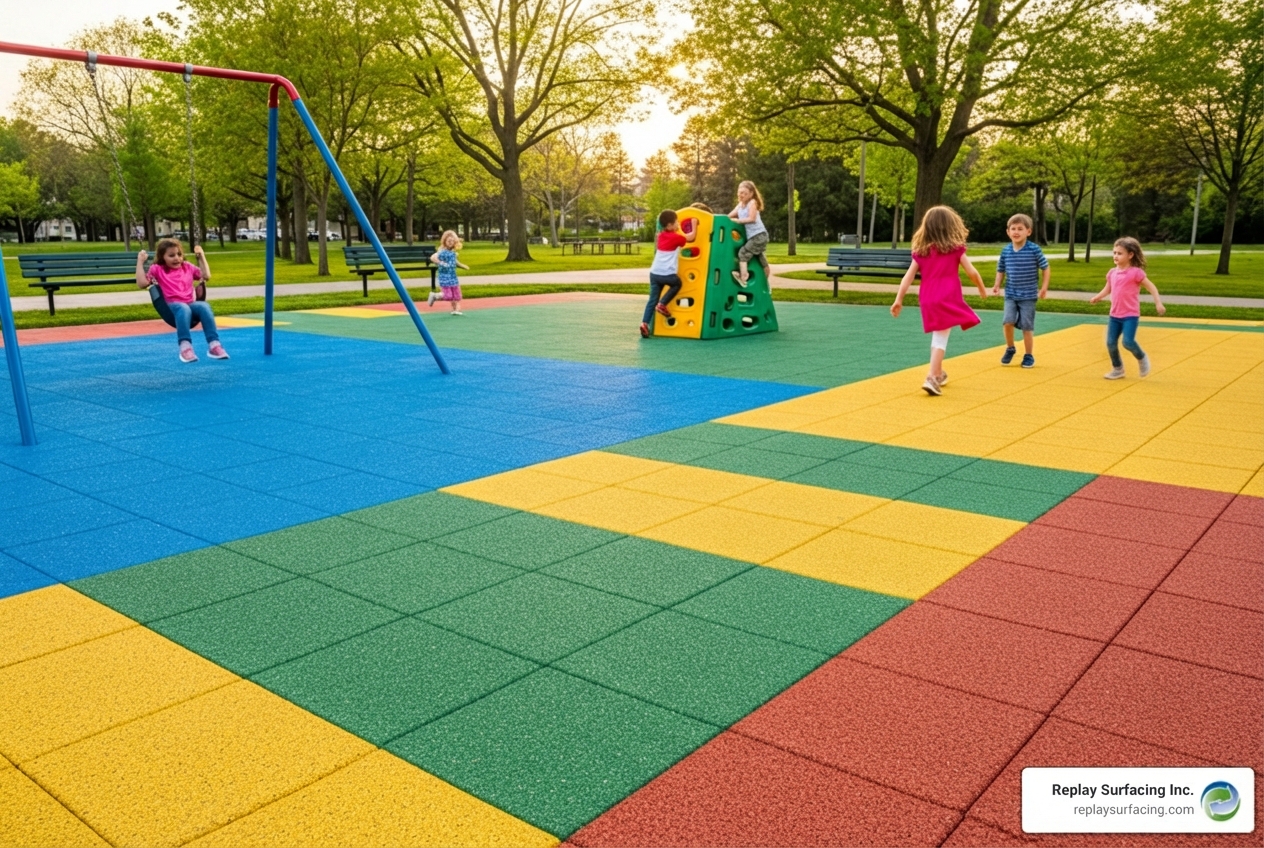
Why Understanding Outdoor Rubber Playground Mats Price Matters for Your Project
Outdoor rubber playground mats price varies significantly, but here’s a quick overview:
Quick Price Overview:
- Price per tile: $20 to $45 (for 2′ x 2′ tiles)
- Price per square foot: $5 to $18
- Thickness impact: 1″ tiles start around $26-$33, while 2.5″ tiles range from $39-$52
- Bulk discounts: Available for larger orders
- Installation: DIY-friendly interlocking tiles save on labor costs
Creating a safe playground is a top priority for any facility manager. Whether you’re planning a new park in Tucson, upgrading a school playground in Charlotte, or retrofitting a daycare in Columbia, the price of outdoor rubber playground mats is a key factor in your budget and timeline.
Rubber playground mats offer certified fall protection, but prices vary widely. A basic 1-inch tile might cost $26, while a premium 2.5-inch IPEMA-certified tile can be $52 or more. Understanding these price differences helps you balance safety, durability, and budget. The goal isn’t just the lowest price, but the best long-term value. A durable mat with a 15-year warranty is a smarter investment than a cheaper one needing frequent replacement. When you factor in installation, site prep, and shipping to locations like Raleigh or Nashville, the total investment becomes clearer.
This guide breaks down the outdoor rubber playground mats price landscape. You’ll learn how thickness, material, and other factors affect cost, helping you choose a surface that protects children and your budget.
I’m Landon Olson, and at Replay Surfacing, I help facility managers steer pricing to find sustainable surfacing solutions from recycled tires that meet safety standards and budget constraints. My engineering and sustainability background allows me to simplify these complex factors into practical advice.
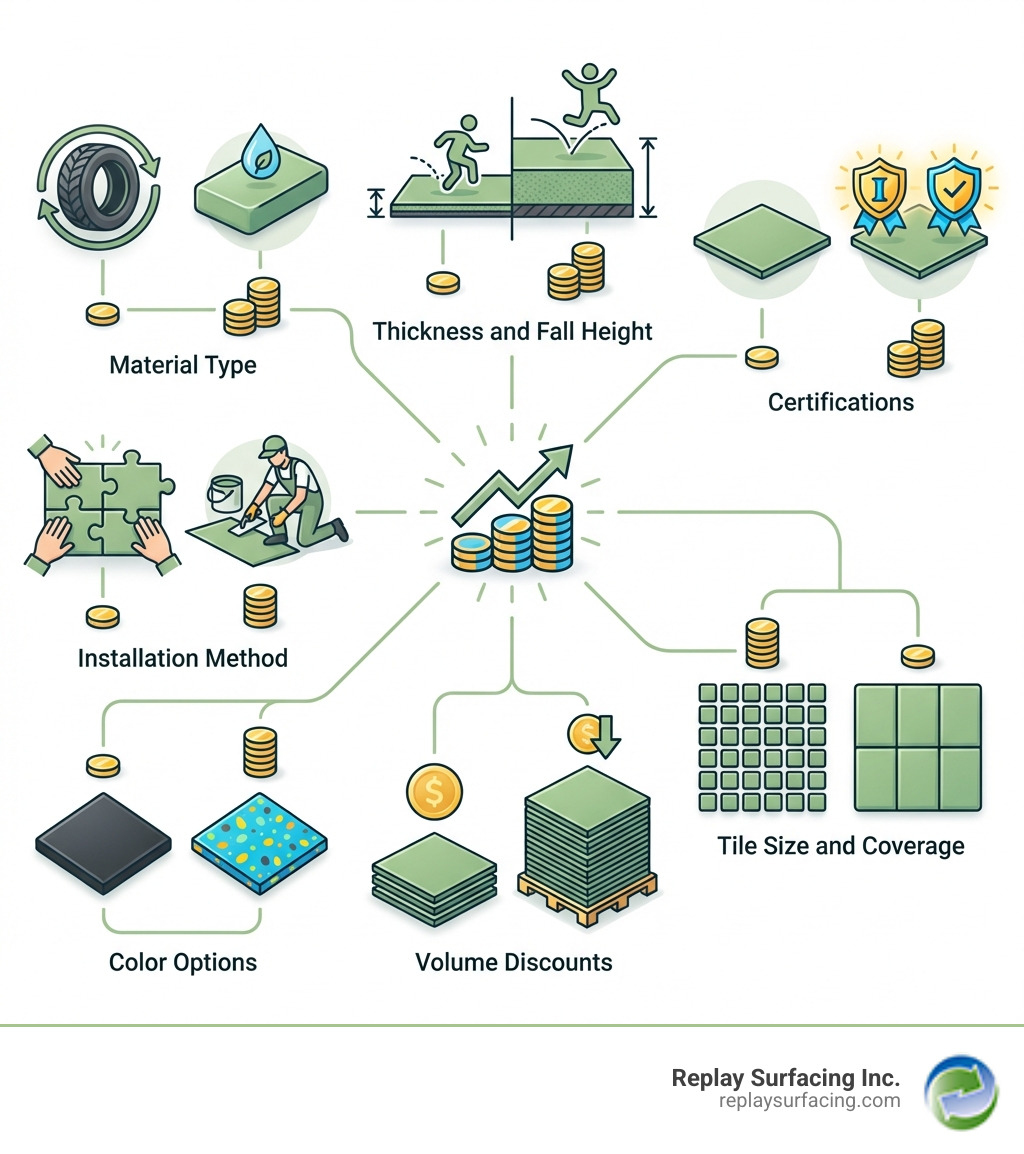
Basic outdoor rubber playground mats price terms:
Understanding the Average Outdoor Rubber Playground Mats Price
The outdoor rubber playground mats price is a spectrum, not a single number. Generally, you can expect to pay between $20 to $45 per tile. For standard 2′ x 2′ tiles, this translates to a cost of approximately $5 to $11.25 per square foot. Premium or specialized tiles can range up to $18 per square foot. For example, a 2.5-inch thick tile might cost between $39 and $46, while a 3-inch thick tile could be around $49. These variations depend on thickness, material, and order quantity.
For projects in our service areas like Charlotte, Raleigh, or Tucson, these averages are a good starting point. However, local market conditions can cause variations, so we always recommend a personalized quote. To learn more about enhancing safety, visit our guide on Enhance Safety With Rubber Playground Mats.
How Mat Thickness and Fall Height Rating Impact Cost
A primary driver of outdoor rubber playground mats price is thickness, which is directly tied to the Critical Fall Height (CFH) rating. Thicker mats absorb more impact, offering protection from greater heights. For instance, 2.5-inch tiles often meet CPSC guidelines for fall heights up to 6 feet, while 3-inch tiles are rated for up to 7 feet, complying with safety standards like ASTM F1292.
Naturally, there’s a direct correlation between thickness and price, as thicker mats require more material.
- 1-inch tiles: Can range from $26 to $32.
- 2.5-inch tiles: Typically cost between $39 and $46.
- 3-inch tiles: Can be priced around $49.
A playground with taller equipment will require thicker, more expensive mats—a necessary investment in safety. For deeper insights into impact absorption, explore our page on Shock Absorbing Playground Surfaces.
Comparing Prices: Different Types of Rubber Playground Surfacing
When considering outdoor rubber playground mats price, it’s helpful to compare the different forms of rubber surfacing available. Each type offers unique benefits in cost, installation, and maintenance.
| Surfacing Type | Price Range (per sq ft) | Installation | Maintenance |
|---|---|---|---|
| Interlocking Tiles | $5 – $18 | DIY-friendly, can be laid over various bases | Low, easy to replace individual damaged tiles |
| Solid Wear Mats | $10 – $15 | Easy, typically laid directly on surface | Very Low, designed for high-wear areas, minimal upkeep |
| Poured-in-Place | $8 – $25+ | Professional, specialized equipment required | Very Low, seamless, extremely durable, requires professional repair if damaged |
Interlocking Tiles: A popular choice for their versatility and DIY-friendly installation. They are ideal for projects in residential backyards in places like Sanford or for smaller community parks in Indiana.
Solid Wear Mats: These are heavy-duty mats placed in high-traffic areas like under swings or at slide exits. They absorb impact and prevent the displacement of loose-fill rubber mulch, extending the life of the overall surface.
Poured-in-Place (PIP) Rubber: This seamless surface is created on-site by mixing rubber granules with a binder. While the initial outdoor rubber playground mats price for PIP can be higher, it offers superior aesthetics and durability. We often recommend PIP for larger commercial playgrounds in areas like Charlotte or Beaverton. For more on this option, see Poured In Place Rubber The Ultimate Playground Safety Surface.
Key Factors That Influence the Price of Rubber Playground Mats
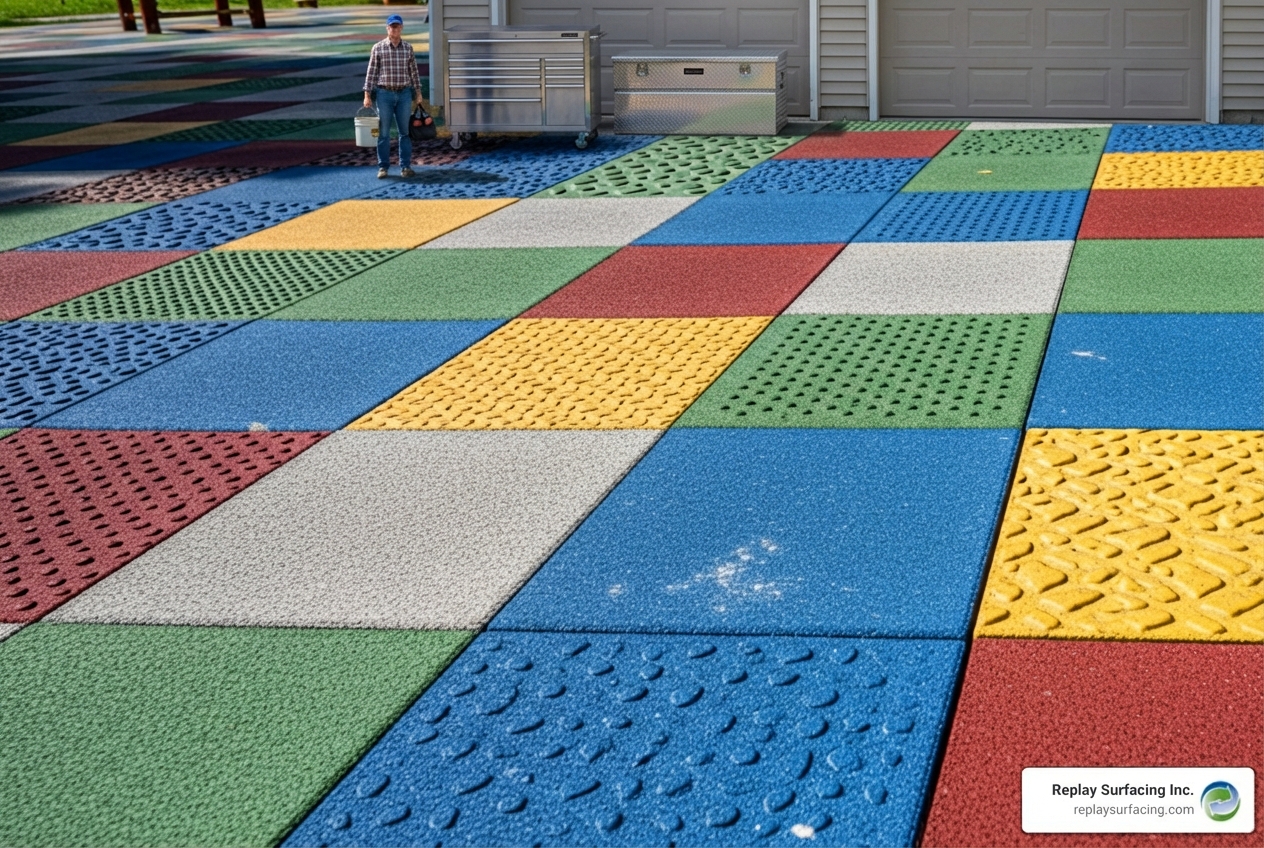
Beyond thickness, several other elements contribute to the overall outdoor rubber playground mats price. Understanding these factors helps you make informed decisions for projects in locations from Lake Charles, LA to Columbia, SC.
Material Composition: Recycled vs. Virgin Rubber
The material used is a primary price driver. At Replay Surfacing, we turn environmental hazards into sustainable surfaces by using recycled rubber.
- Recycled SBR Rubber: Most of our mats are made from recycled Styrene-Butadiene Rubber (SBR) from post-consumer tires. This is a cost-effective and eco-friendly option that offers excellent shock absorption and durability.
- EPDM Rubber Granules: For vibrant, long-lasting color, Ethylene Propylene Diene Monomer (EPDM) rubber granules are often used for top layers. EPDM is a virgin rubber with superior UV resistance, making it a premium choice for aesthetics, though it comes at a higher cost.
The long-term benefits of recycled rubber often outweigh the initial cost, offering better performance with less maintenance. For more about our sustainable options, visit Recycled Rubber Playground Flooring.
Size, Volume, and Customization Costs
The dimensions, quantity, and customization of your order all affect the outdoor rubber playground mats price.
- Standard Sizes & Bulk Discounts: Tiles typically come in 2′ x 2′ sizes. Purchasing in bulk for larger projects, like a city park in Raleigh or a school playground in Connecticut, can significantly reduce the per-unit cost, as volume discounts are often available for orders of 50 or more tiles.
- Custom Colors: While standard black is most cost-effective, custom colors and blends using EPDM granules are available and will increase the price.
- Shipping Charges: Freight for large orders to locations like Tucson, Nashville, or Beaverton is a notable part of the total cost. Always confirm shipping fees when budgeting for your project. For a comprehensive look at pricing, refer to our Rubber Playground Flooring Price Complete Guide.
The Role of Certifications and Warranty
Certifications verify that a product meets rigorous safety standards, influencing both the outdoor rubber playground mats price and its long-term value.
- IPEMA Certification: An IPEMA-certified product has been independently tested to meet safety standards like ASTM F1292 for impact absorption. This certification ensures the product has been stringently tested for critical fall height.
- CPSC Guidelines and ASTM Standards: Products that meet the CPSC guidelines for playground safety and comply with ASTM standards are designed for a high level of protection. Adherence to these standards may increase the initial price but is a critical investment in preventing injuries.
- Warranty Length: Warranties reflect a manufacturer’s confidence in their product. While they can vary, premium rubber playground tiles often come with a substantial 15-year warranty. A longer warranty protects your investment and offers greater long-term value.
These certifications and warranties are not formalities; they are assurances of safety and quality that justify the price by ensuring durability and protection.
Beyond the Sticker Price: Installation and Hidden Costs
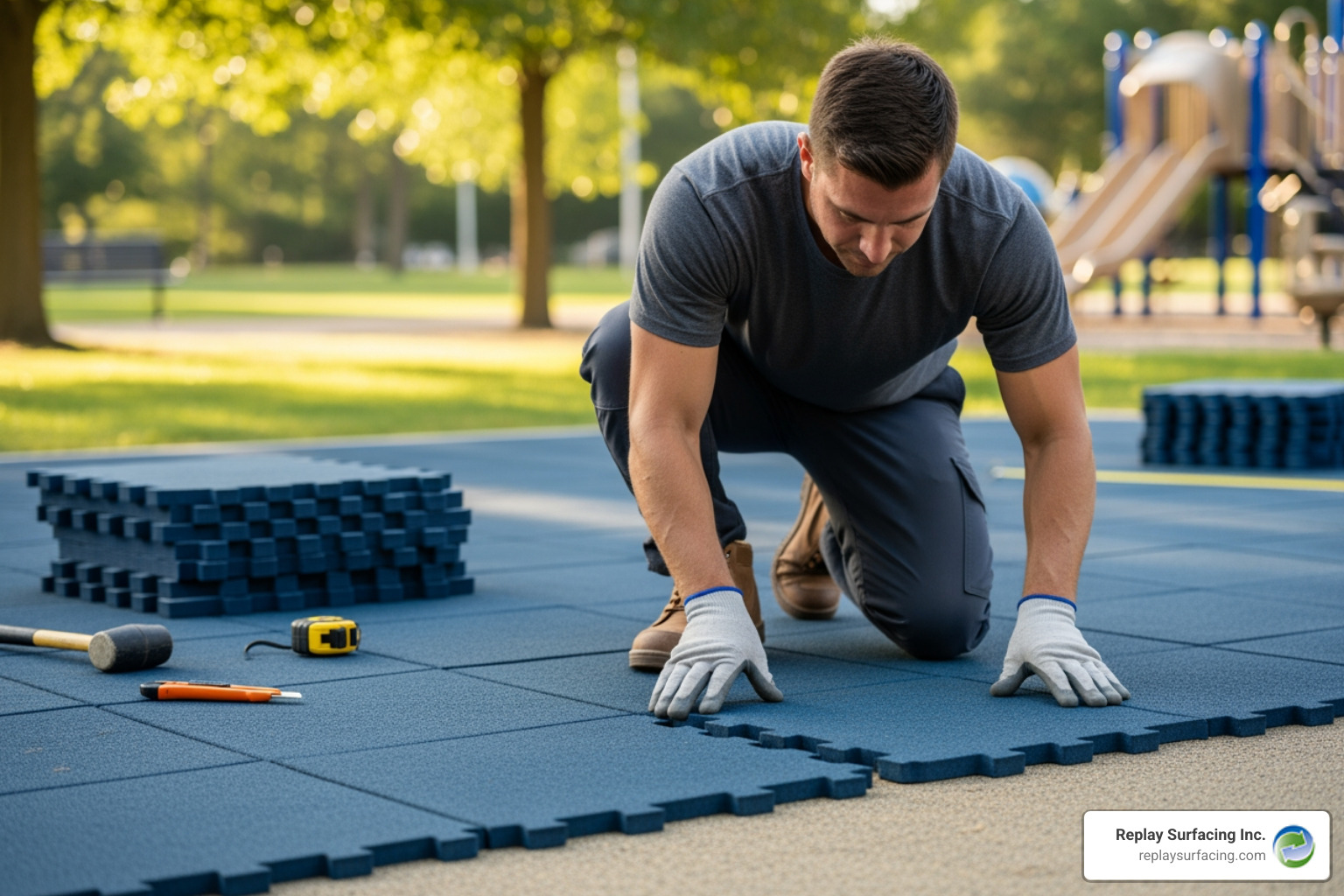
The initial outdoor rubber playground mats price is just one piece of the puzzle. To understand the total investment for your project in Charlotte or Tucson, you must also consider installation and other potential expenses.
Estimating the Cost of Installation
Installation costs vary based on the matting type and whether you choose a DIY or professional approach.
- DIY Installation: Interlocking rubber tiles are designed to be DIY-friendly. They connect easily over a prepared surface like compacted gravel, asphalt, or concrete. This can significantly reduce labor costs, making them a great choice for smaller community projects in places like Sanford, NC. For guidance, explore our DIY Playground Flooring page.
- Professional Installation: For larger projects or poured-in-place surfaces, professional installation is recommended to ensure safety standards are met. Labor costs can vary by region, so an installation in Charlotte may be priced differently than in a smaller town in Indiana.
- Site Preparation: Proper site preparation is crucial and includes ensuring the ground is flat, stable, and well-drained. This may involve excavation, grading, and adding a sub-base, all of which contribute to the total project cost.
Uncovering Other Associated Expenses
Several other expenses can impact the final outdoor rubber playground mats price.
- Adhesives and Connectors: Thicker tiles may require separate connectors, and adhesive will be an additional cost if you choose to glue tiles down for extra stability.
- Edging and ADA-Compliant Ramps: To ensure a finished look and accessibility, beveled edges and ADA-compliant ramps are often necessary. These prevent trip hazards and allow wheelchair access.
- Shipping and Handling: Shipping for heavy rubber mats can be substantial. Always confirm freight costs to your location, whether it’s in Beaverton, OR, or Lake Charles, LA.
- Long-Term Maintenance: Rubber mats are low-maintenance, requiring only occasional cleaning and inspection. Compared to traditional loose-fill options that require constant replenishment and upkeep, rubber mats offer significantly lower long-term costs, contributing to a lower total cost of ownership. For a deeper dive, read our guide on Understanding Rubber Playground Surfacing Costs.
Comparing the Value: Rubber Mats vs. Other Playground Surfaces Offered by Replay Surfacing Inc.
When evaluating the outdoor rubber playground mats price, it’s crucial to consider the long-term value. At Replay Surfacing, we offer a range of rubber-based solutions where the initial cost is balanced by superior safety, durability, and low maintenance, making them a smart long-term investment.
A Look at the Long-Term Outdoor Rubber Playground Mats Price
The true cost of playground surfacing is its lifecycle cost, which includes purchase, installation, maintenance, and replacement. While rubber mats may have a higher upfront cost than some traditional surfaces, they are more cost-effective over their lifespan.
- Durability and Weather Resistance: Our rubber mats are designed to withstand harsh conditions, from the intense sun in Tucson, AZ, to the cold winters in Connecticut. They resist UV degradation, don’t crack in freezing temperatures, and won’t absorb water, which prevents rot and erosion. This durability means fewer repairs and replacements.
- Low Maintenance Requirements: A key advantage of rubber mats is their minimal upkeep. Their substantial weight keeps them in place on windy days, they don’t attract pests, and they inhibit weed growth. This low maintenance reduces lifecycle costs for parks and schools in cities like Nashville, TN, or Lake Charles, LA. With warranties of up to 15 years, our mats are a protected, long-term investment. For a comprehensive comparison, see our Best Playground Flooring Ultimate Guide.
Cost and Maintenance of Alternative Rubber Surfaces
Besides mats, we offer other excellent rubber surfacing options with similar benefits.
- Rubber Mulch: This loose-fill option is made from 100% recycled rubber and offers superior fall protection. It is often a more affordable initial choice for large areas. Because it is heavy, it stays in place better than other loose-fill materials, doesn’t rot, and deters insects. It’s a great choice for a natural look with improved safety and reduced maintenance.
- Poured-in-Place (PIP) Rubber: PIP offers a seamless, highly customizable, and extremely durable surface. While its initial outdoor rubber playground mats price per square foot is at the higher end, its longevity and accessibility make it a premium choice for high-use playgrounds.
All our rubber surfacing solutions—mats, mulch, and PIP—provide consistent impact protection, resist weather, and significantly reduce ongoing maintenance compared to less durable alternatives. This commitment to sustainable, safe surfacing is at the core of what we do at Replay Surfacing. For more on rubber mulch, check out Advantages Of Playground Rubber Mulch Safety Maintenance And Durability.
Frequently Asked Questions about Playground Mat Costs
What is the most cost-effective rubber playground surfacing?
The most cost-effective rubber playground surfacing often depends on the specific project size and long-term goals. While rubber mulch can have a lower initial outdoor rubber playground mats price per square foot for large areas, recycled rubber tiles or poured-in-place rubber often provide the best long-term value due to their exceptional durability, minimal maintenance, and extended warranties. These benefits reduce replacement and upkeep costs over decades, making them a smart investment for projects in Charlotte, Tucson, and other Replay Surfacing Inc. service areas.
Can I install rubber playground mats myself to save money?
Yes, absolutely! Interlocking rubber tiles are specifically designed for DIY installation. Their modular nature allows them to be easily laid over a prepared, flat surface like compacted dirt, gravel, asphalt, or concrete. This significantly reduces labor costs, making them a popular choice for residential backyard playgrounds in Sanford or smaller community projects in Indiana. We provide guidance and support to help our clients successfully complete their DIY installations.
How much rubber surfacing do I need for my playground?
To determine the amount of rubber surfacing needed, you’ll need to calculate the total square footage of your play area. Crucially, you must also account for the required “use zone” around each piece of playground equipment, which is typically a minimum of 6 feet in all directions. This safety zone must also be covered with impact-attenuating surfacing. For taller equipment, the critical fall height will dictate the necessary thickness of the mats. To ensure accuracy and compliance with safety standards, we recommend consulting with a Replay Surfacing Inc. expert in your area. We can help you measure, plan, and select the right products for your specific needs in Raleigh, Columbia, or Beaverton.
Conclusion
Understanding the outdoor rubber playground mats price is about more than just the initial purchase; it’s about making a smart, long-term investment in safety, durability, and value. We’ve seen how factors like thickness, material composition (especially the use of recycled rubber), certifications, and volume discounts significantly influence the cost. Furthermore, considering installation methods, hidden expenses like connectors and edging, and the long-term maintenance savings paints a clearer picture of the total cost of ownership.
At Replay Surfacing, we are committed to changing environmental hazards into sustainable, customizable, and durable surfaces. Our recycled rubber solutions offer proven benefits, from superior fall protection and weather resistance to minimal maintenance, making them an ideal choice for playgrounds across our service areas. By choosing rubber mats, you’re not only providing a safe and engaging play environment but also making an environmentally responsible decision.
We believe that a truly valuable playground surface protects children, stands the test of time, and respects your budget. From the vibrant community parks in Charlotte to the schoolyards in Tucson and the residential play areas in Nashville, we are dedicated to helping you find the perfect surfacing solution.