
Why Choosing the Right Playground Rubber Floor in Charlotte Matters for Safety and Value
A playground rubber floor in Charlotte is one of the most important safety investments you can make for any play space — whether it’s a school, park, daycare, or community playground. According to the National Program for Playground Safety, nearly 70% of all playground injuries are related to falls to the surface. Picking the wrong surface can mean tripping hazards, costly repairs, or surfaces that simply don’t meet safety codes.
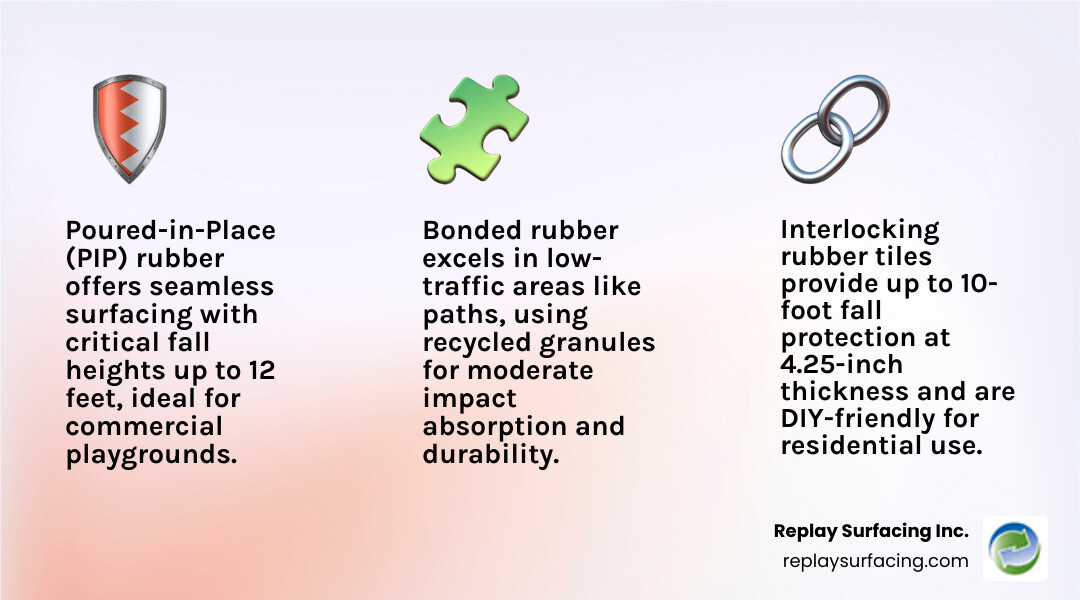
Here’s a quick comparison of the main types to match your search intent:
| Type | Best For | Fall Height | DIY-Friendly? |
|---|---|---|---|
| Poured-in-Place (PIP) | Commercial, custom designs | Up to 12’+ | No — professional install |
| Interlocking Rubber Tiles | Residential & commercial | Up to 10′ (4.25″ thick) | Yes |
| Bonded Rubber | Paths, tree wells, low-traffic zones | Moderate | Partial |
Each option has real trade-offs in cost, safety ratings, maintenance, and durability. The right choice depends on your specific site, budget, and how much foot traffic the area gets.
I’m Landon Olson, operator of Replay Surfacing and a mechanical engineer with an MBA, and I’ve spent years working directly with recycled rubber materials to develop playground rubber floor in Charlotte solutions that are safe, sustainable, and built to last. In this guide, I’ll walk you through everything you need to make a confident, informed decision.
Playground rubber floor in Charlotte vocab explained:
Comparing the Main Types of Playground Rubber Floor in Charlotte
When we talk about a playground rubber floor in Charlotte, we aren’t just talking about one product. There is a whole family of surfacing options, each with its own personality. Choosing between them is like choosing the right shoes: you wouldn’t wear high heels to a marathon, and you probably shouldn’t put thin residential tiles on a high-impact commercial playground in downtown Raleigh.
At Replay Surfacing, we specialize in turning recycled tires into high-performance surfaces. Whether you are looking for Poured In Place Rubber Surfacing or Interlocking Outdoor Playground Tiles, understanding the structural differences is the first step toward a safe play area.
Poured-in-Place (PIP) Surfacing
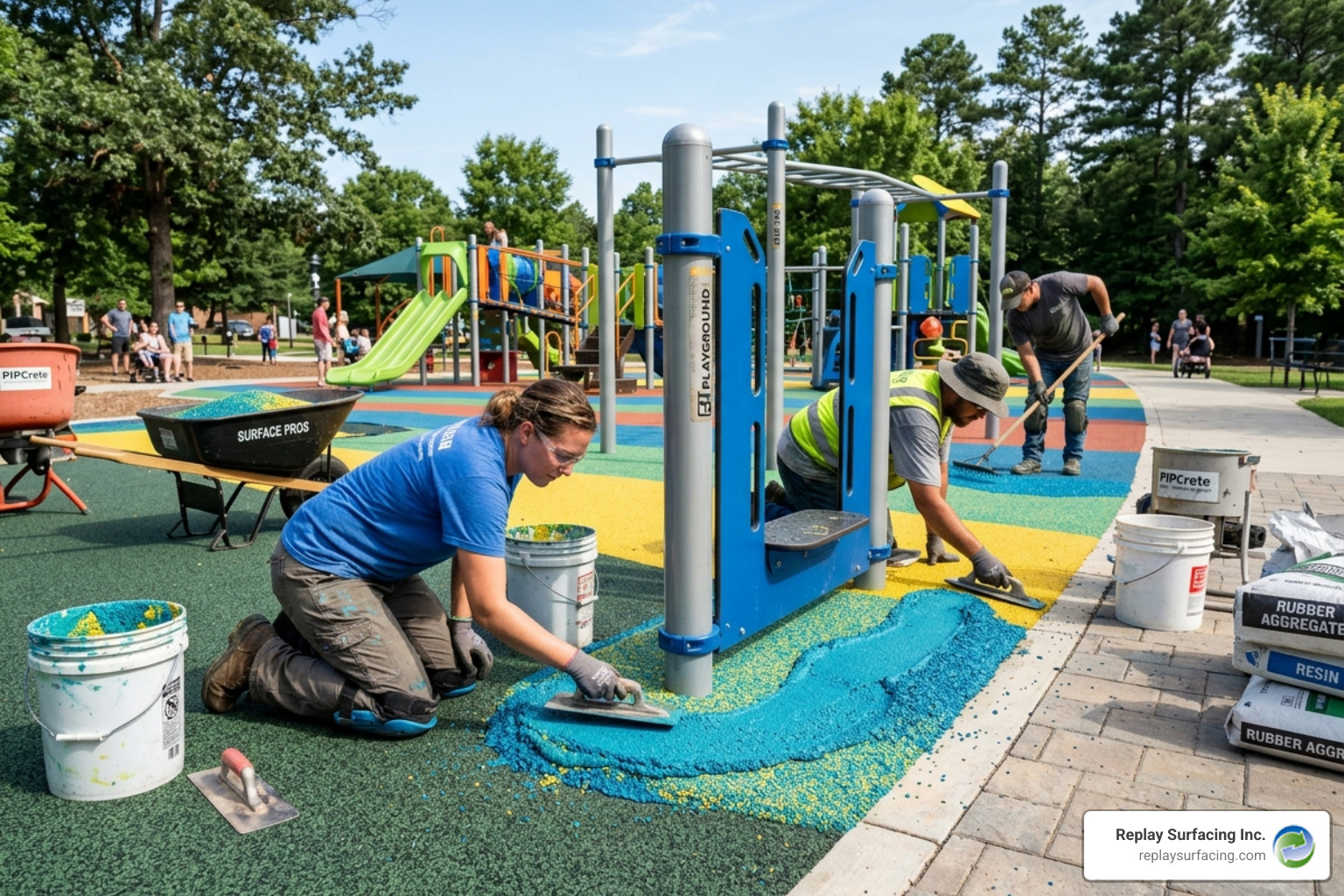
Poured-in-place rubber is often considered the “gold standard” for commercial playgrounds. It is a dual-layer system mixed and hand-troweled directly on-site. The base layer consists of SBR (Styrene-Butadiene Rubber) buffings, which provide the “cushion,” while the top layer is made of vibrant Epdm Rubber Playground granules held together by a high-quality polyurethane binder.
The result is a Wetpour Rubber Surfacing that is entirely seamless. This means no joints to trip over and total freedom for custom designs. Want a giant school logo or a colorful map of the United States in the middle of your Tucson park? PIP is how you get it done.
Interlocking Rubber Tiles
If PIP is the custom-tailored suit of flooring, Interlocking Outdoor Playground Tiles are the high-quality “off-the-rack” option. These 24×24 inch tiles are manufactured in a factory and shipped to your location in Connecticut or Indiana.
Modern tiles, like those discussed in our Plastsafe Interlocking Tiles Ultimate Guide, often feature sophisticated interlocking dowel systems. For example, Eco Safety Interlocking Playground Tiles provide about 2.77 square feet of coverage per tile. They are excellent for areas where you need a consistent thickness and a relatively simple installation process.
Bonded Rubber Surfacing
Bonded rubber is a middle-ground option. It uses larger pieces of recycled rubber bark or nuggets that are coated in binder and spread out to create a Rubber Resin Playground. It offers a more natural, “mulch-like” appearance but stays in place unlike loose-fill mulch. It is frequently used for walking paths, tree wells, and fitness trails where a rustic look is desired but accessibility is still a priority.
Safety Standards and Fall Height Ratings
Safety isn’t just a buzzword; it’s a set of rigorous engineering standards. In playground rubber floor in Charlotte design, we live by acronyms like ASTM, IPEMA, and ADA.
- ASTM F1292: This is the big one. It measures “impact attenuation,” or how well a surface cushions a child’s head during a fall. These standards are maintained by ASTM International to ensure safety across all play environments.
- IPEMA: This certification ensures that the product has been third-party tested to meet those ASTM standards.
- ADA Compliance: Every public playground must be accessible. Surfaces like PIP and tiles are inherently ADA-compliant because they are firm enough for wheelchairs but soft enough for safety.
For a deeper dive into these requirements, check out our Soft Fall Rubber Flooring Complete Guide and The Safe Zone Everything About Choosing The Right Playground Safety Mats.
Understanding Critical Fall Heights for a Playground Rubber Floor in Charlotte
The “Critical Fall Height” is the maximum height from which a child can fall onto a surface without sustaining a life-threatening head injury.
Thickness is the primary driver of safety here. For instance:
- A 2.5-inch thick tile might be certified for a 6-foot fall height.
- A 3.5-inch thick tile can often handle an 8-foot fall.
- For high-climbing equipment, 4.25-inch thick interlocking tiles can provide protection for fall heights up to 10 feet.
When we design a Ground Padding Playgrounds Complete Guide, we always match the rubber thickness to the highest point of the play equipment.
Accessibility and Inclusive Design
One of the greatest benefits of a unitary playground rubber floor in Charlotte is that it doesn’t move. Unlike wood mulch, which gets pushed aside and creates ruts, rubber surfaces remain flat. This is vital for Daycare Childcare Playground Surfacing and School Playground Surfacing in areas like Columbia, SC and Nashville, TN, where children with varying mobility needs play together. Meeting ASTM F1951 standards for wheelchair workability ensures that no child is left on the sidelines.
Installation and Maintenance: DIY vs. Professional
We often get asked: “Can I do this myself?” The answer depends on your patience and the type of surface you choose.
Is a Playground Rubber Floor in Charlotte DIY-Friendly?
Diy Playground Rubber Flooring is definitely possible with interlocking tiles. If you are a “weekend warrior” in Nashville or Beaverton, you can likely handle a tile installation. Most tiles use a dowel system or a simple adhesive application along the perimeter.
However, Installing Playground Tiles requires a perfectly level subfloor—usually concrete, asphalt, or a very well-compacted stone base. If the ground isn’t level, the tiles will eventually “lip” or “gap,” creating the very tripping hazards we want to avoid. For more tips, read our guide on how to Get Down And Diy Installing Your Playground Floor.
Poured-in-place rubber, on the other hand, is almost never a DIY project. It requires specialized equipment to mix the large quantities of rubber and binder, and the skill to hand-trowel it to a smooth, consistent depth before it cures. For this, you really need Playground Safety Surfacing Installers.
Long-Term Maintenance and Durability
A well-maintained playground rubber floor in Charlotte can last between 12 and 15 years. Maintenance is surprisingly simple:
- Tiles: Use a leaf blower or a garden hose to remove debris. Avoid harsh solvents that can break down the rubber.
- PIP: Periodic “top-coating” or “sealing” can help keep the EPDM granules from wearing away in high-traffic areas, like under swings or at the base of slides.
For areas that see hundreds of kids a day, we recommend Wear And Tear No More Choosing The Best Mats For High Traffic Playground Areas.
Pricing Factors and Long-Term Value
When budgeting for your playground rubber floor in Charlotte, don’t just look at the “sticker price.” You have to consider the total cost of ownership over 10 years.
- Material Quality: 100% color EPDM is more expensive than a 50/50 black and color mix. Using a 50/50 mix is a great way to save money while still getting a vibrant look.
- Thickness: Safety costs money. A surface rated for an 8-foot fall requires more material than one rated for a 4-foot fall.
- Installation: Tiles have a higher material cost but lower labor cost. PIP has a lower material cost for large areas but higher labor costs due to the skilled troweling required.
For a full breakdown, see our Playground Rubber Flooring Price Complete Guide and Understanding Rubber Playground Surfacing Costs. If you are working with a tight budget, our tips on Smart Spending Getting The Best Value On Outdoor Playground Mats can help you find the sweet spot between safety and savings.
Sustainable Surfacing in Your Community
At Replay Surfacing, we are proud to be part of the “circular economy.” Every playground rubber floor in Charlotte we install helps keep tires out of landfills. Recycled tires are shredded, cleaned, and processed into the buffings and granules that protect your children.
Using Recycled Tire Playground Flooring isn’t just good for the kids; it’s good for the planet. These products are often eligible for LEED credits, making them a favorite for eco-conscious projects in cities like Charlotte and Raleigh. You can learn more in our Eco Safety Rubber Playground Surfacing Guide.
Local Solutions for Your Community
We understand the specific needs of our local service areas. Whether it’s the intense heat of Tucson, Arizona, which requires UV-stable EPDM, or the damp climates of Connecticut and Beaverton, Oregon, where proper drainage is essential, we tailor our installations to the local environment. Our teams in Sanford, NC, and Columbia, SC, are experts at preparing sub-bases that handle local soil conditions to prevent shifting and cracking.
Comprehensive Safety Solutions Across Regions
From the Gulf Coast in Lake Charles, Louisiana, to the heart of Tennessee in Nashville, Replay Surfacing brings a consistent standard of excellence. We ensure that every project, whether it’s a small daycare in a suburban neighborhood or a massive municipal park, meets the highest national safety standards while providing a local touch.
Frequently Asked Questions about Playground Rubber Floors in Charlotte
How long does a rubber playground floor in Charlotte last?
With proper installation and minimal maintenance (like keeping it clear of debris and occasional sealing), a high-quality rubber floor can last 12 to 15 years. Many of our tiles even come with a 5-to-10-year warranty.
Can I install rubber playground tiles over grass or dirt?
It is not recommended. While some people try it for residential use, grass and dirt are unstable. Rain can cause the ground to shift or the tiles to buckle, creating trip hazards. It is always best to install over a compacted stone base, concrete, or asphalt.
Is bonded rubber surfacing a good choice for high-traffic areas?
Bonded rubber is beautiful and natural-looking, but it is generally less durable than PIP or tiles in extremely high-traffic areas like the “landing zone” of a slide. For those spots, we often recommend “wear mats” to provide extra protection.
Conclusion
Choosing the right playground rubber floor in Charlotte is about balancing safety, aesthetics, and budget. By opting for sustainable, recycled materials, you aren’t just protecting children from falls; you’re also making a responsible choice for the environment.
At Replay Surfacing Inc., we are committed to transforming environmental hazards into durable, customizable play surfaces across the country. From the initial design to the final trowel stroke, we ensure your playground is a “safe zone” for years to come.
Ready to start your project? Request a Quote for Professional Playground Surfacing today and let’s build something great together.