
Why the Right Backyard Play Area Flooring Can Make or Break Playtime Safety
Backyard play area flooring is one of the most important safety decisions you’ll make for your outdoor play space. The surface beneath a swing set or slide determines how well a child is protected if they fall — and the wrong choice can mean injuries, high maintenance costs, or a muddy mess after every rain.
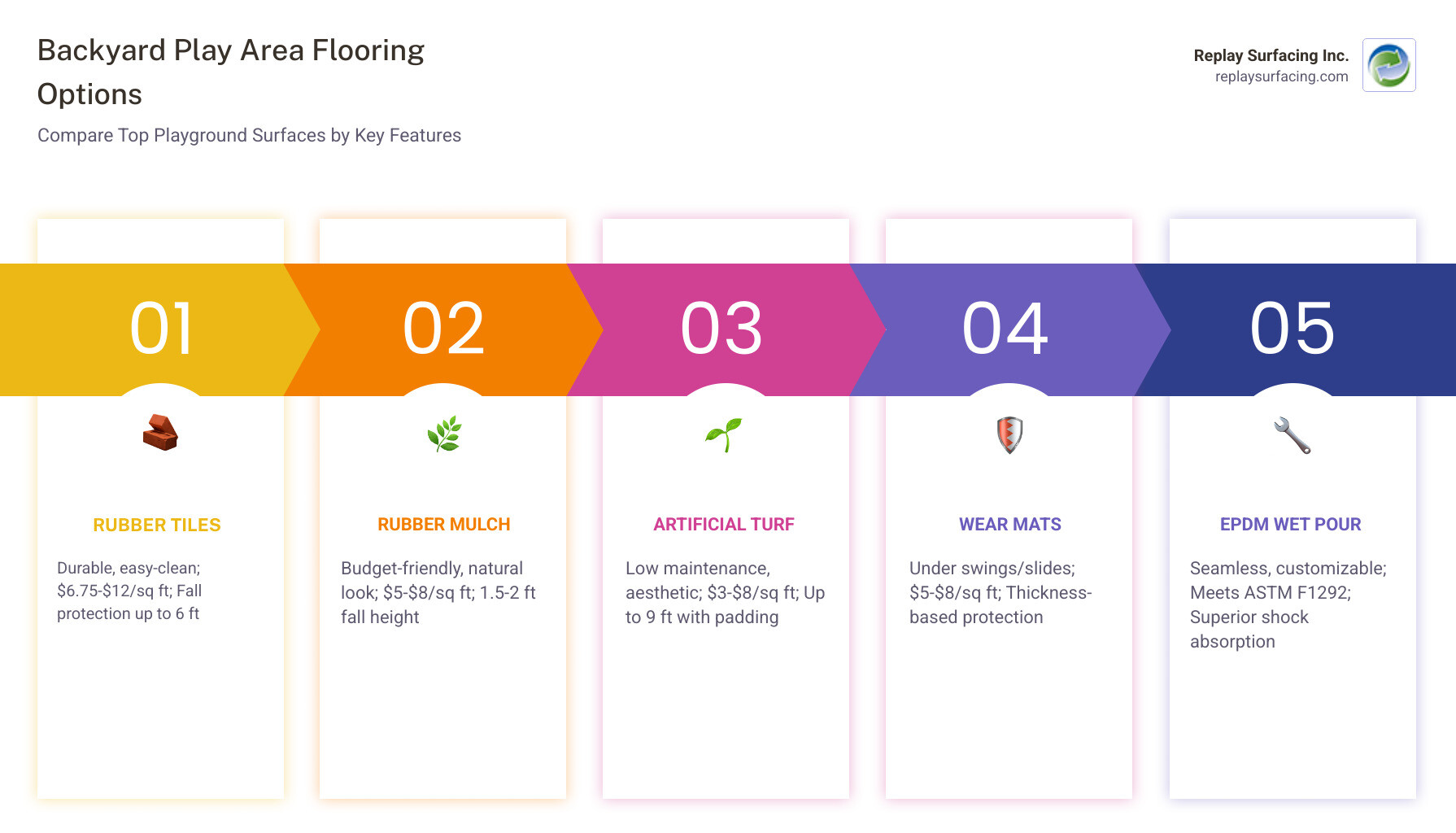
Here are the most common backyard playground flooring options at a glance:
| Flooring Type | Best For | Avg. Cost (per sq ft) | Fall Protection |
|---|---|---|---|
| Rubber Tiles | Durability, easy cleaning | $6.75 – $12+ | Up to 6 ft (residential) |
| Rubber Mulch | Budget-friendly, natural look | $5 – $8 | 1.5 – 2 ft (residential) |
| Artificial Turf | Low maintenance, aesthetics | $3 – $8 | Up to 9 ft (with foam pad) |
| Protective Wear Mats | Under swings/slides | $5 – $8 | Varies by thickness |
Each option has real trade-offs in cost, safety, and upkeep. The right pick depends on your equipment height, your budget, and how much maintenance you’re willing to do.
I’m Landon Olson, founder of Replay Surfacing Inc., where I’ve spent years engineering sustainable rubber surfacing solutions — including backyard play area flooring made from recycled tires — for playgrounds across North America. My background in mechanical engineering and sustainability means I look at these materials from both a safety and an environmental standpoint.
Key terms for backyard play area flooring:
Choosing the Right Backyard Play Area Flooring for Safety
When we think about a playground, we usually think about the height of the slide or the speed of the swings. But at Replay Surfacing, we think about the landing. Safety in your backyard isn’t just a “nice to have”—it’s a requirement. This is especially true in growing communities like Charlotte, North Carolina, where families are investing more in their outdoor living spaces.
The most critical concept in backyard play area flooring is the Critical Fall Height. This rating tells you exactly how much impact a surface can absorb. If your play set has a platform six feet off the ground, your flooring must be rated to protect a child falling from at least that height. For most residential playgrounds, a fall height rating of 1.5 to 2 feet is the baseline, but many families opt for commercial-grade protection (up to 6 feet or more) to ensure maximum peace of mind.
To navigate these standards, look for ASTM F1292 compliance. This is the “gold standard” for impact attenuation. It ensures that the material has been rigorously tested to reduce the risk of serious head injuries. Additionally, IPEMA certification provides third-party verification that the product meets these safety benchmarks. Whether you are setting up a small toddler zone in Sanford, NC, or a massive multi-level fort in Nashville, TN, checking these ratings is your first step.
We often tell our clients that shock attenuation is like an invisible insurance policy. You hope you never need it, but you’re relieved it’s there when a “superhero” jump goes slightly off-plan. For a deeper dive into these requirements, check out our Playground Surfaces Guide or learn more about professional Playground Surfacing in Charlotte, North Carolina to see how local standards are applied.
Top Types of Backyard Playground Surfaces
Deciding on the best backyard play area flooring usually comes down to three main contenders: rubber tiles, rubber mulch, and artificial turf. Each has its own personality, much like the kids who play on them!
- Rubber Playground Tiles: These are the “Cadillacs” of playground flooring. They offer a clean, modern look and are incredibly easy to maintain.
- Rubber Mulch: This is the budget-friendly favorite. It looks like wood chips but won’t give your kids splinters or attract pests.
- Artificial Turf: Perfect for the homeowner who wants their play area to blend seamlessly with a manicured lawn.
In places like Nashville, Tennessee, where the weather can swing from humid summers to chilly winters, choosing a material that handles temperature changes without cracking is vital. We’ve seen a huge rise in families choosing unitary surfaces (like tiles or turf) because they don’t get kicked around or “disappear” like loose-fill mulch often does.
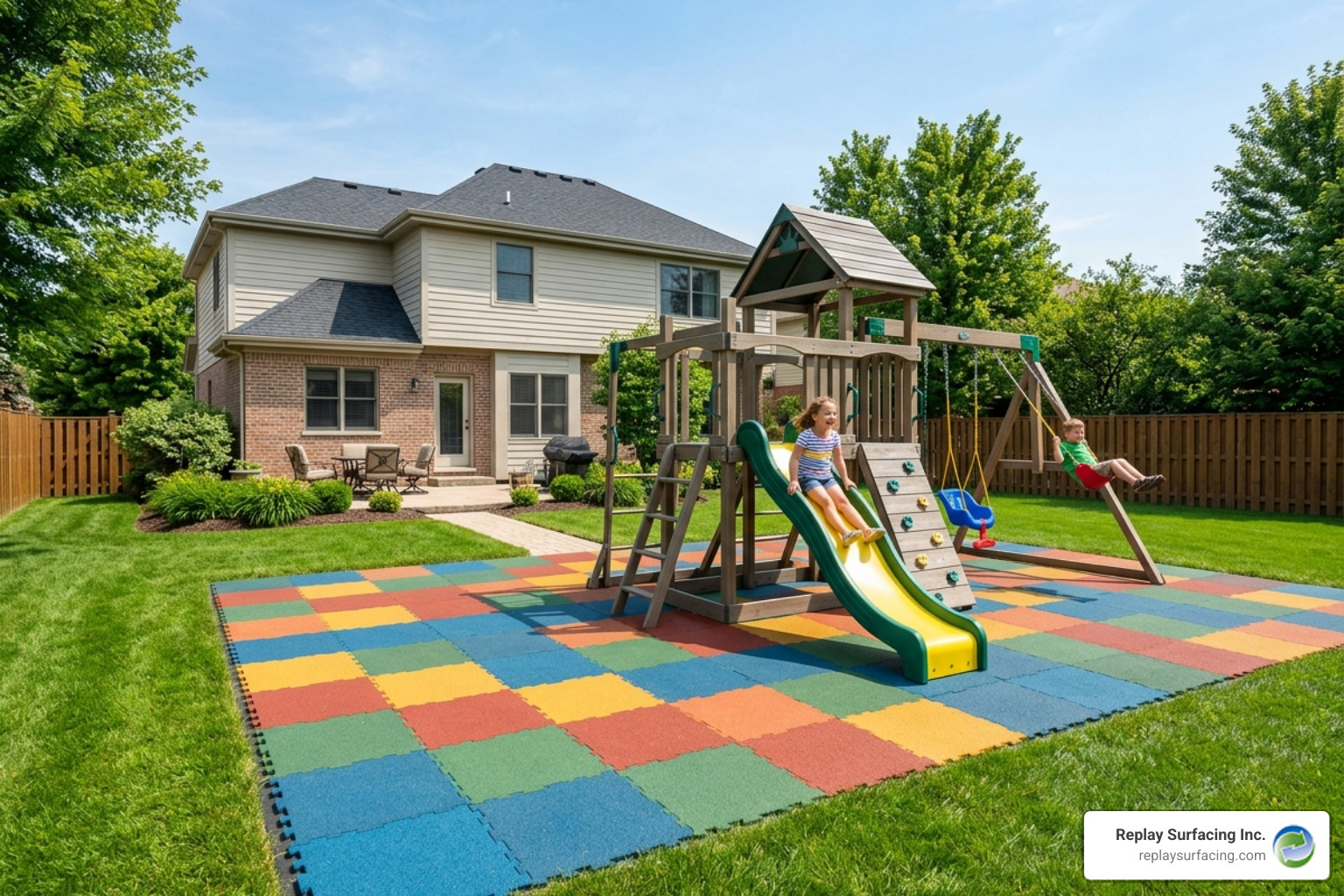
If you are looking for specific product recommendations, Rubber Flooring For Playgrounds offers a great starting point for comparing materials. For those in the Music City area, you can explore professional options for Playground Surfacing in Nashville, Tennessee to see what’s trending in your neighborhood.
Durable Rubber Tiles for Backyard Play Area Flooring
If you’re a fan of “set it and forget it,” rubber tiles are for you. Most tiles, like our popular Jamboree or SolidPlay lines, feature interlocking mechanisms or “QuadBlock” connectors. This makes them a favorite for DIY enthusiasts in Tucson, Arizona, where the sun is hot, and you want a project that can be finished in a single weekend.
One of the coolest features of these tiles is their porosity. They are designed to let water drain straight through. This means after a heavy rain in Lake Charles, Louisiana, or a summer storm in Connecticut, your play area is dry and ready for action much faster than a grass or dirt lot. Plus, they are slip-resistant even when wet, which is a major win for safety.
Because these are made from recycled tire material, they are also incredibly durable. They won’t rot, they don’t attract insects (no more giant backyard litter boxes!), and they stay cooler than asphalt or concrete. For more on the eco-friendly side of things, read about Recycled Rubber Playground Flooring. If you’re in the desert heat, check out Playground Surfacing in Tucson, Arizona for tips on heat-reflective color choices.
Low-Maintenance Artificial Turf and Rubber Mulch
For those who want a more “natural” look, artificial turf and rubber mulch are the way to go.
Artificial Turf has come a long way. Modern playground turf, like the Play Time Turf systems we often recommend, includes a “thatch” layer that makes it feel plush and reduces the need for heavy infill. The secret to turf safety, however, isn’t the grass itself—it’s what’s underneath. We use PolyGreen foam pads (like Play Pad 5 or 8) to provide the actual shock absorption. This combination can achieve fall height ratings of up to 9 feet!
Rubber Mulch is the economical champion. It provides a springy, cushioned feel that kids love. Unlike wood mulch, it doesn’t decompose, so you don’t have to replace it every year. It’s also surprisingly heavy, meaning it won’t blow away in a stiff Indiana wind.
Families in Indiana often prefer turf for its clean, “always-green” look. You can find more about Playground Turf in Indiana if you’re looking to upgrade your lawn. And if you’re worried about chemicals, rest easy—reputable rubber mulch is non-toxic and safe for little ones. Dive into the details here: Is Rubber Mulch A Safe Surface For Your Childs Playground.
DIY Installation and Maintenance Guide
Ready to get your hands dirty? Installing backyard play area flooring is a rewarding DIY project, but it does require some prep work. You can’t just throw tiles over a bumpy, weed-filled patch of dirt and expect them to stay level.
The Basic Steps for Tiles and Turf:
- Site Preparation: Clear the area of grass, large rocks, and debris.
- Sub-Base Compaction: For the best results, you want a flat, solid surface. This could be concrete, asphalt, or a 3-4 inch layer of compacted crushed stone. (Avoid pea gravel, as it shifts too much!)
- Containment Borders: Especially for rubber mulch, you’ll need a “box” or border to keep the material in place. 4×4 pressure-treated timbers work great for this.
- Landscape Fabric: Lay down a heavy-duty weed barrier to keep unwanted guests from poking through your beautiful new floor.
In Raleigh, North Carolina, where the soil can be heavy clay, proper drainage in your sub-base is key to preventing puddles. For a complete walkthrough, our Diy Playground Flooring guide covers everything from tool lists to finishing edges. You can also see local examples of Playground Surfacing in Raleigh, North Carolina for inspiration.
Maintaining Your Backyard Play Area Flooring
Maintenance is where the different types of backyard play area flooring really show their colors.
- Rubber Tiles: Use a leaf blower to remove leaves and pine needles. For spills or dirt, a simple garden hose and a mild soap (avoid petroleum-based cleaners!) will make them look brand new.
- Rubber Mulch: This requires a bit more “sweat equity.” You’ll need to rake it occasionally to keep the depth even, especially under high-traffic areas like the bottom of a slide.
- Artificial Turf: Give it a quick brush with a plastic rake every now and then to keep the blades standing upright.
In Columbia, South Carolina, where the pollen can be thick enough to see, a quick weekly hosing of your tiles or turf will keep the colors vibrant and the surface non-slip. Check out our tips on the Best Playground Ground Cover for more maintenance hacks, or see how professionals handle Playground Surfacing in Columbia, South Carolina.
Frequently Asked Questions about Playground Surfaces
What is a fall height rating for residential play areas?
In residential play, most standard swing sets have a fall height of about 1.5 to 2 feet. However, “standard” doesn’t always mean “safest.” If your kids are adventurous climbers, we recommend looking for flooring with at least a 4-foot fall rating. The goal of impact attenuation is to turn a dangerous fall into a “oops, I’m okay” moment. If you’re looking for extra protection under specific equipment, a Playset Rubber Mat can be a great localized solution.
Can I install backyard playground flooring over grass or dirt?
The short answer is: yes, but with a “but.” You can install rubber tiles or mulch over dirt, but you must ensure the ground is level and compacted. If you install over raw grass, the grass will eventually die and could cause uneven settling or drainage issues. We always recommend a weed barrier and, if possible, a compacted stone base. For more info on this, see our guide on Playground Ground Cover Rubber Mat installations.
How much does backyard playground flooring typically cost?
Budgeting for backyard play area flooring is all about balancing upfront costs with long-term value.
- Rubber Mulch: Usually the cheapest upfront ($5-$8 per sq ft).
- Artificial Turf: Mid-range ($3-$8 per sq ft), but remember to factor in the cost of the safety padding underneath.
- Rubber Tiles: Highest upfront cost ($6.75-$12+ per sq ft) but lowest long-term maintenance.
While the initial price tag of tiles might seem high, they can last 10-15 years without needing to be “topped off” like mulch. For a full breakdown, visit our Playground Surfacing cost page.
Conclusion
At Replay Surfacing Inc., we believe that every child deserves a safe place to play and every parent deserves peace of mind. By transforming recycled tires into high-quality backyard play area flooring, we’re not just protecting your kids—we’re also doing our part for the environment. Whether you are in the Pacific Northwest in Beaverton, OR, the sunny plains of Indiana, or the coastal regions of Connecticut, our mission remains the same: sustainable, customizable, and durable safety.
From the bouncy comfort of rubber mulch to the sleek, professional look of interlocking tiles, there is a solution for every backyard and every budget. Ready to start your transformation? Explore our playground surfacing projects and see how we’ve helped families across our service areas create their own outdoor oases.