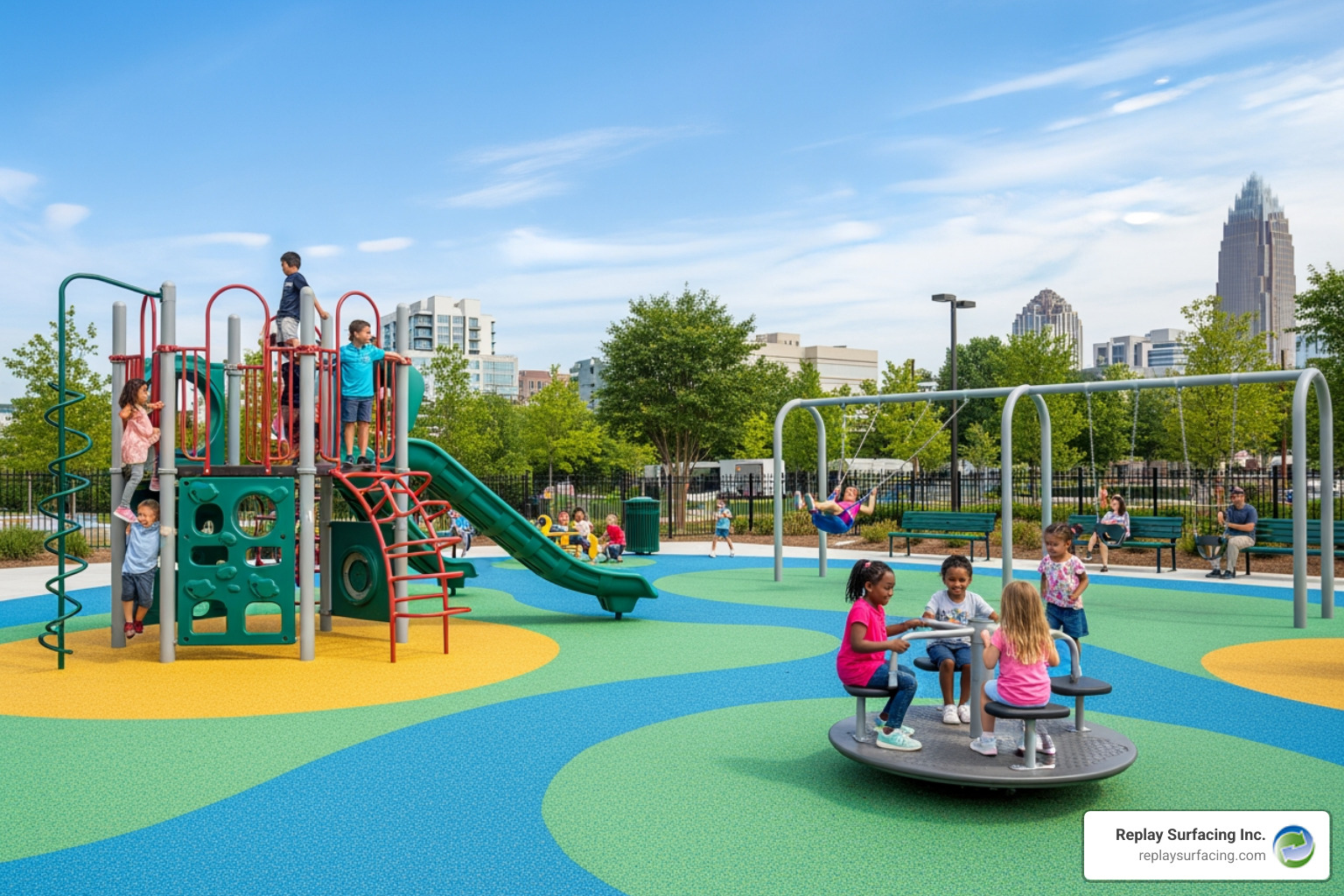
Rubber Play Bark in Charlotte, NC: What It Is and Why It’s a Smart Choice
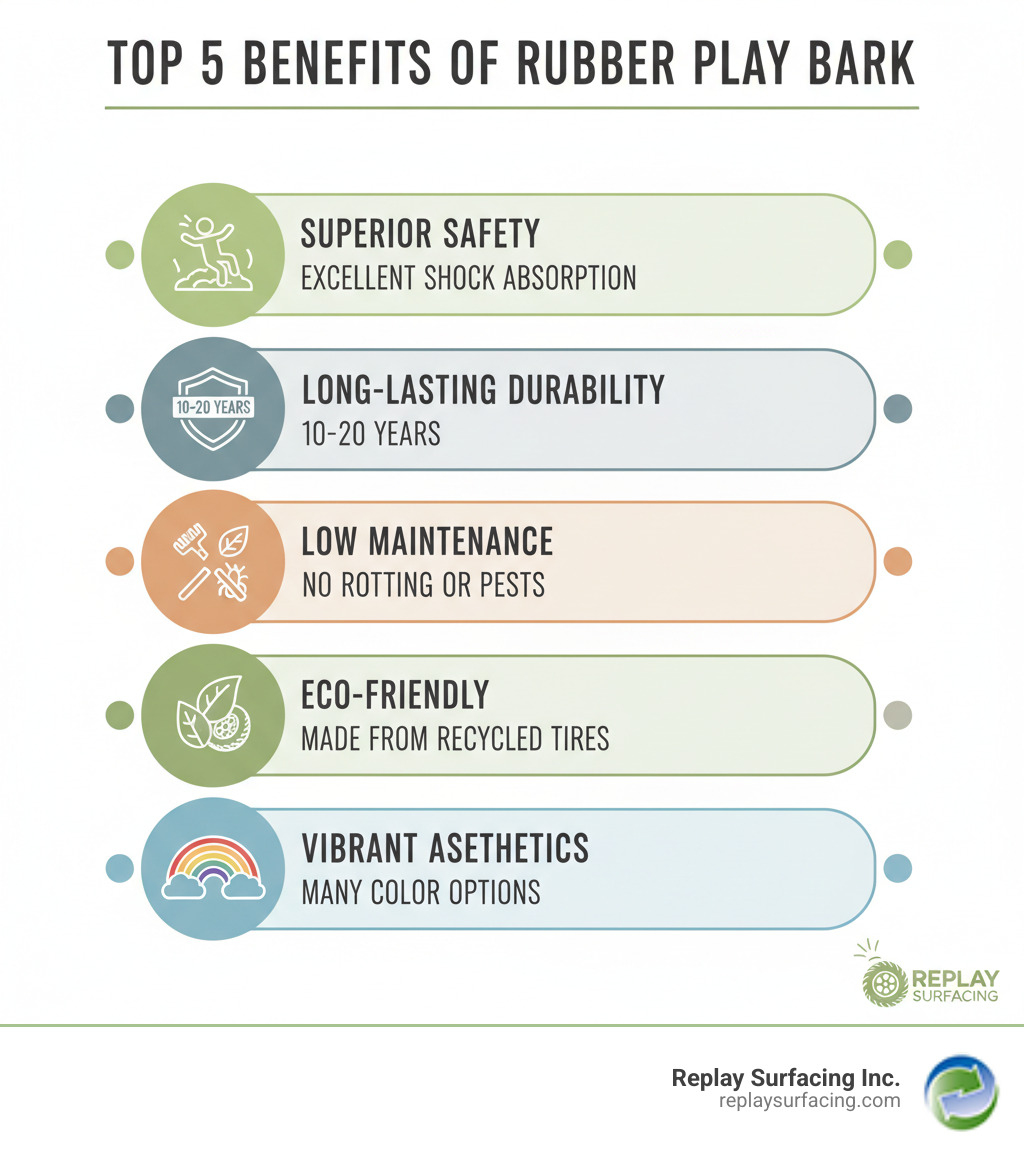
Searching for the best rubber play bark in Charlotte, NC, for your playground? Choosing the right surface is key for safety, fun, and long-term value. Here’s why rubber play bark is the superior choice:
- Superior Safety: Excellent shock absorption reduces injury risk from falls.
- Long-Lasting Durability: Lasts 10-20 years without breaking down.
- Low Maintenance: Resists rot, mold, and pests, requiring minimal upkeep.
- Eco-Friendly: Made from recycled tires, diverting waste from landfills.
- Vibrant Aesthetics: Available in many colors to brighten any play area.
I’m Landon Olson, operator of Replay Surfacing. With a background in mechanical engineering and an MBA, I’m dedicated to changing scrap tires into high-quality, innovative rubber surfacing solutions like rubber play bark. We apply engineering principles to offer the most advanced recycled rubber systems on the market.
At Replay Surfacing, we’re passionate about creating safe and sustainable playgrounds in communities from Charlotte, NC, to Tucson, AZ. Rubber play bark is an engineered material designed for superior protection and longevity, turning an environmental challenge into a valuable community resource.
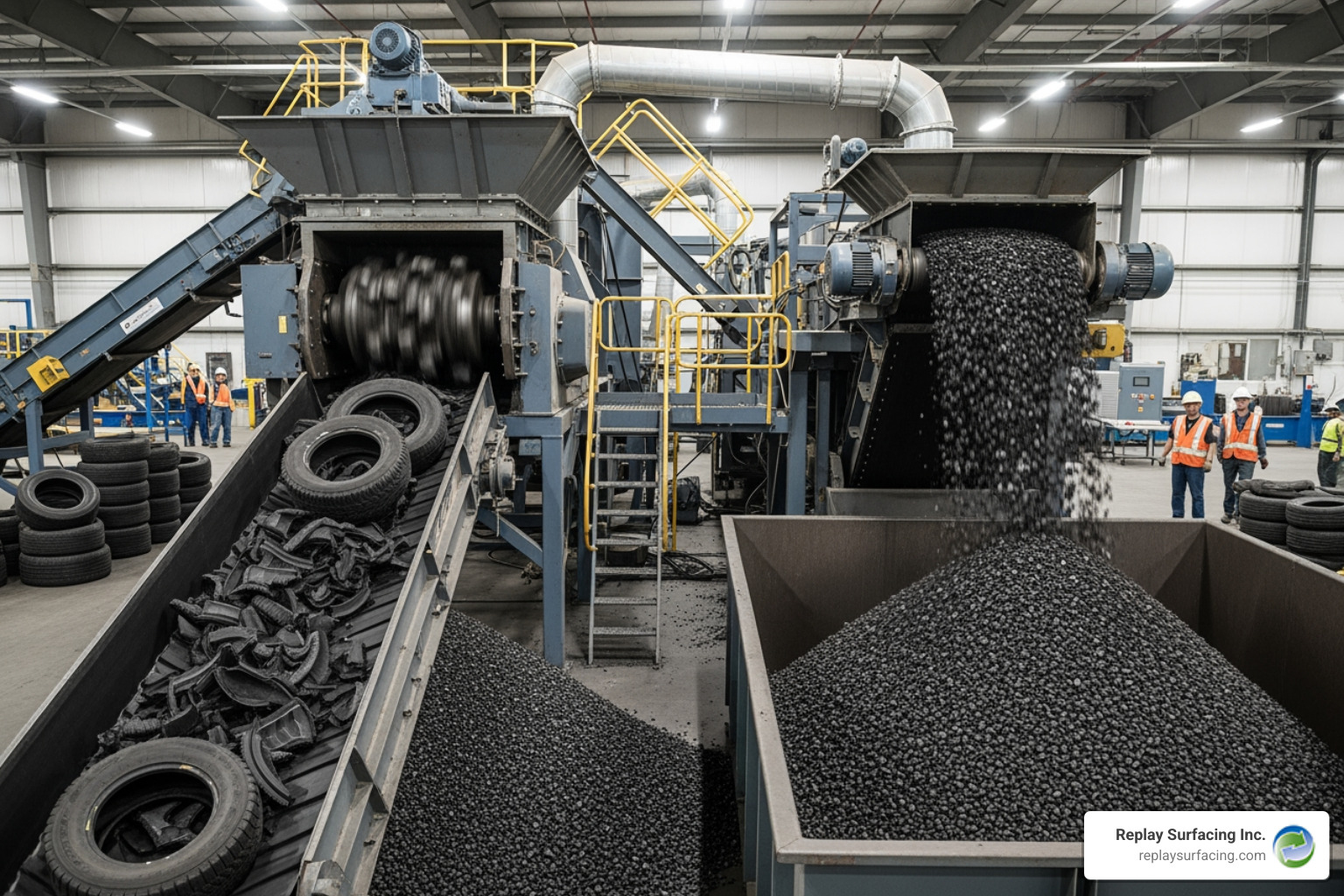
From Tires to Playgrounds: The Making of Rubber Bark
The journey of rubber play bark begins with old tires. At our recycling facilities, like the one in Sanford, NC, we shred tires and remove 99.9% of metal wires to ensure safety. The rubber granules are then coated with non-toxic, UV-resistant pigments in an exclusive encapsulation process. This gives the rubber play bark its vibrant, long-lasting color, making it a prime choice for playgrounds from Columbia, SC, to Lake Charles, LA. Learn more in our Rubber Mulch Made From Recycled Tires guide.
The Unbeatable Benefits of Rubber Surfacing
Choosing rubber play bark is a smart investment. It offers superior Shock Absorbing Playground Surfaces to reduce fall injuries, a 10-20 year lifespan, and minimal maintenance. Unlike organic materials, it doesn’t rot, attract pests, or compact over time. Its porous nature allows for quick drainage, meaning play areas in Beaverton, OR, or Nashville, TN, dry faster after rain. Furthermore, it can be installed to meet ADA accessibility requirements, ensuring inclusive play for all children. These benefits are detailed in our guide on the Advantages of Playground Rubber Mulch Safety Maintenance and Durability.
The Eco-Friendly Advantage
Our commitment to sustainability is core to our mission. Every bag of rubber play bark diverts tires from landfills, where they can take centuries to decompose. By recycling them, we support a circular economy and give these materials a new purpose. Choosing our Recycled Playground Surface for your project in Connecticut or Indiana is a tangible step toward a greener future.
Rubber Bark: How It Outperforms Traditional Playground Surfaces
While traditional options might seem cheaper upfront, rubber play bark offers unparalleled long-term value, safety, and sustainability. The table below compares it to other common loose-fill materials.
| Feature | Replay Surfacing’s Rubber Play Bark | Wood Chips / Engineered Wood Fiber (EWF) | Sand |
|---|---|---|---|
| Safety (Fall Protection) | Superior shock absorption; consistent cushioning; tested CFH | Good initially, but compacts and decomposes, reducing effectiveness | Can offer some cushioning, but easily displaced and compacts quickly |
| Upfront Cost | Generally higher than traditional loose-fill materials | Lower | Lowest |
| Long-Term Cost | Lower due to minimal replenishment and maintenance; 10-20 year lifespan | Higher due to annual replenishment, pest control, and breakdown | Higher due to frequent replenishment, cleaning, and displacement |
| Maintenance | Very low; occasional raking; no decomposition, mold, or pests | High; frequent raking, topping up, pest management, decomposes | High; frequent raking, topping up, sifting for debris, can harbor pests |
| Durability/Lifespan | Excellent; 10-20 years; retains properties | Poor; 1-3 years; breaks down, splinters | Moderate; easily displaced, contaminated |
| Accessibility (ADA) | Can meet ADA requirements, firm yet pliable surface | Difficult to steer for wheelchairs when loose or compacted | Extremely difficult for wheelchairs and other mobility devices |
This makes rubber play bark a wise investment for durable, accessible, and safe play spaces in Charlotte, NC, and across all our service areas.
Safety First: Understanding Certifications and Fall Heights for Rubber Play Bark
At Replay Surfacing, safety is our top priority. Understanding Critical Fall Height (CFH) and key certifications is vital when choosing rubber play bark for your play space. This ensures every child has the safest possible landing, whether in a park in Charlotte, NC, or a schoolyard in Vancouver.
Recommended Depths for Maximum Safety
Critical Fall Height (CFH) is the maximum height from which a person can fall onto a surface without sustaining a life-threatening head injury. This rating is determined by ASTM standards and is crucial for playground safety. The depth of your rubber play bark directly impacts its CFH—the deeper the material, the more cushion it provides.
- 50mm (2 inches): Protects from falls up to 1.93 meters (6 ft 4 in), ideal for smaller play structures.
- 100mm (4 inches): Handles falls from 2.00 meters (6 ft 7 in), a popular choice for standard playgrounds.
- 150mm (6 inches): Offers protection for falls over 3.00 meters (almost 10 ft), essential for taller equipment.
Always match the depth of your rubber play bark to the height of your play equipment. Our experts in Nashville, TN, or Beaverton, OR, can help you determine the perfect depth for your project. For more safety insights, consult the CPSC Public Playground Safety Handbook and our article: Is Rubber Mulch a Safe Surface for Your Child’s Playground.
Key Safety Standards to Look For
Proven safety is non-negotiable. Look for rubber play bark that meets these rigorous standards and certifications to ensure it has been thoroughly tested for performance and safety.
- ASTM F1292 (Impact Attenuation): This standard measures how well a surface absorbs shock and determines its Critical Fall Height. Meeting this standard ensures the material effectively cushions falls.
- ASTM F1951 (Wheelchair Accessibility): This standard ensures the surface is firm and stable enough for wheelchairs, making playgrounds in Calgary or Montreal accessible to children of all abilities.
- IPEMA Certified: The International Play Equipment Manufacturers Association (IPEMA) provides third-party certification that a product meets relevant ASTM standards, offering an extra layer of trust and peace of mind.
- Non-Toxic Materials: We ensure our rubber play bark is made from non-toxic materials and coated with safe, encapsulated pigments. Learn more in our guide on Non-Toxic Rubber Mulch.
Insisting on these certifications is a wise investment in the health and safety of every child who uses your playground.
A Rainbow of Options: Types, Forms, and Colors
One of the most exciting aspects of rubber play bark is the variety it offers. Every playground, from a community spot in Calgary to a park in Charlotte, NC, has a unique style. Replay Surfacing provides a range of types, forms, and colors to bring your vision to life.
Types of Rubber Play Bark: Loose-Fill vs. Bonded
Rubber play bark is available in two main types, each with distinct benefits:
- Loose-Fill Rubber Mulch: This popular option consists of individual rubber nuggets or shreds that provide fantastic impact absorption. It’s simple to install, easy to maintain with occasional raking, and is a budget-friendly choice. Explore our Loose Rubber Mulch for your project.
- Bonded Rubber Mulch: For a seamless, single-piece surface, bonded rubber is an excellent choice. Rubber granules are mixed with a binder to create a firm, springy surface that looks like natural bark. It’s incredibly durable, requires very little upkeep, and is ideal for high-traffic or accessible areas. Find the benefits of Resin Bound Rubber Mulch for playgrounds and Recycled Rubber Walkways.
We also offer Poured-in-Place (PIP) Rubber Surfacing, a premium seamless option created on-site that allows for intricate designs and is considered by many to be the ultimate playground safety surface.
Designing Your Play Space: A Spectrum of Colors
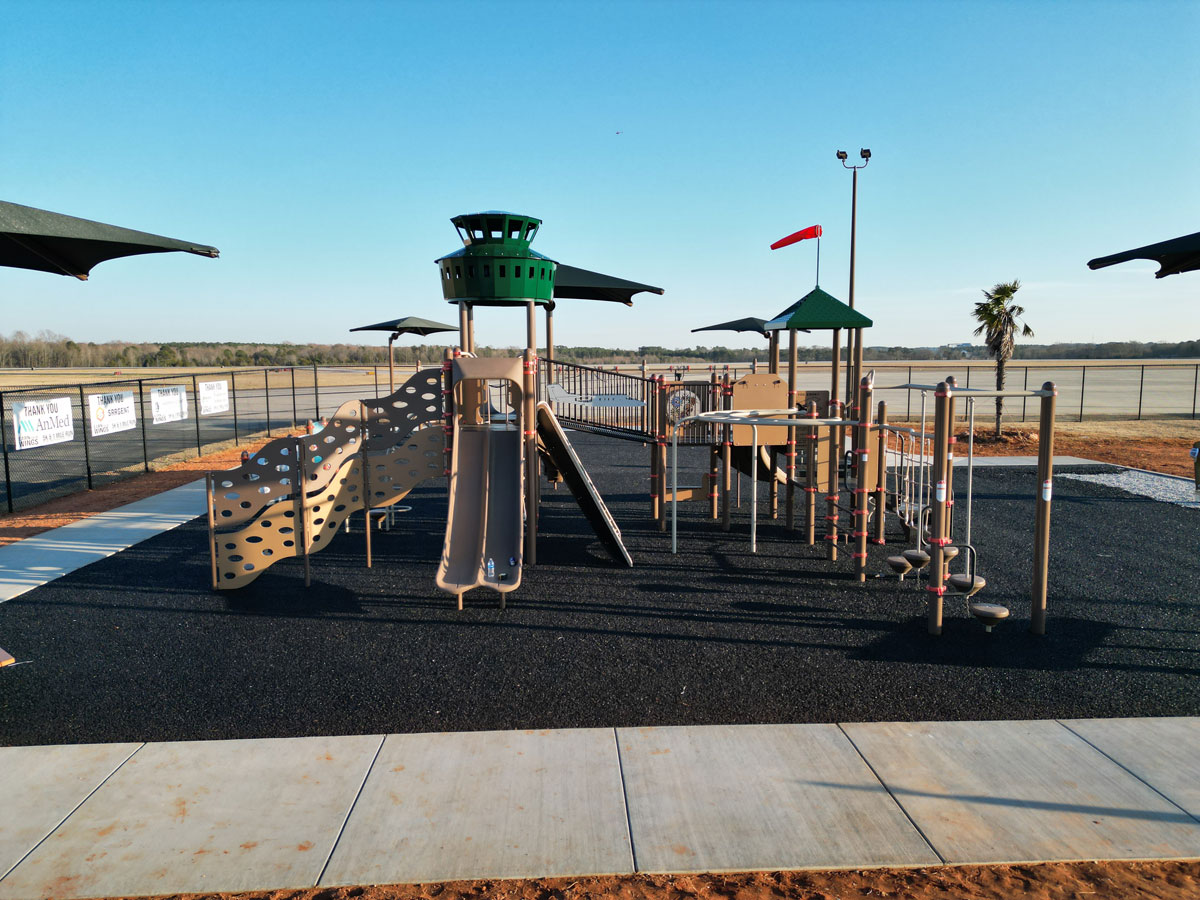
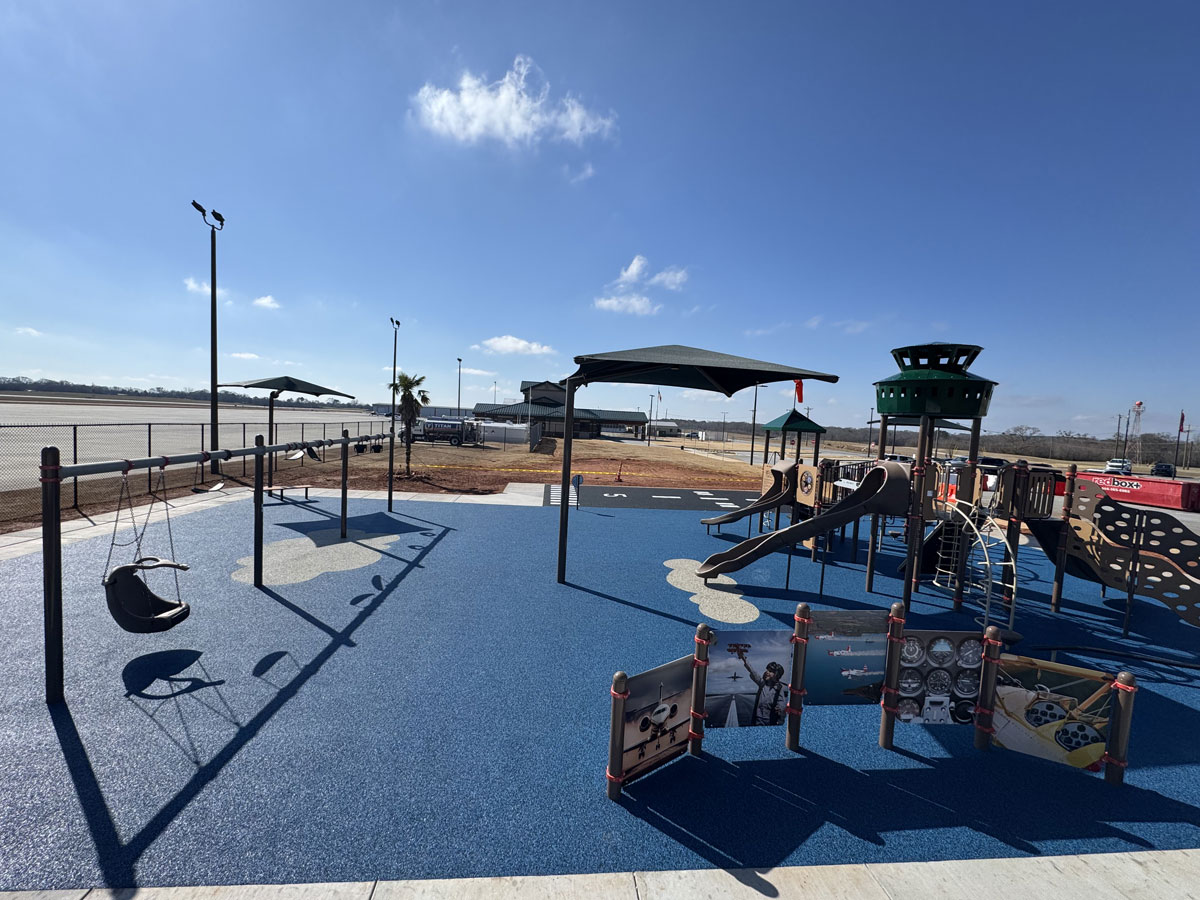
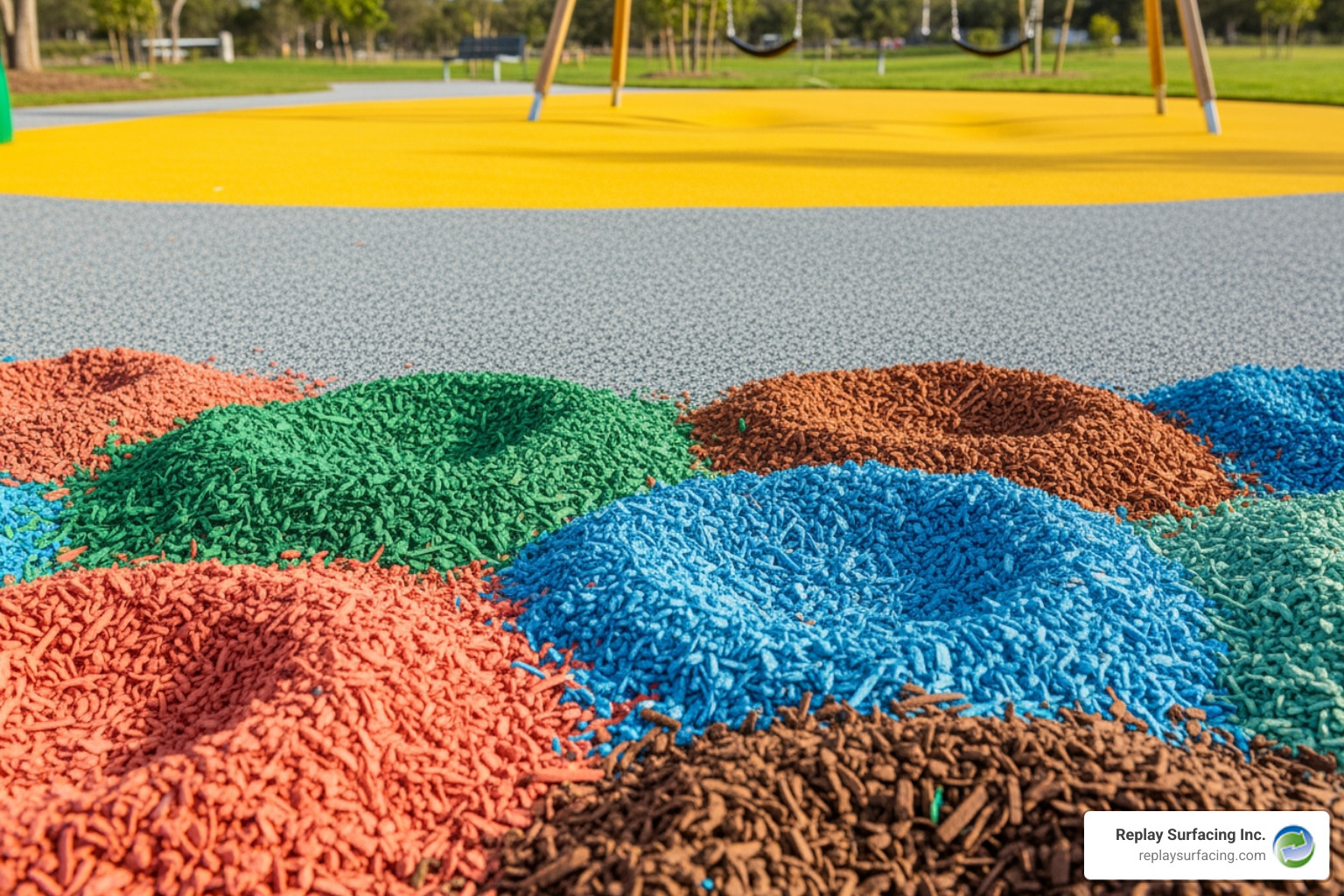
Safety can be colorful! Our rubber play bark comes in a wide range of hues to create imaginative and beautiful playgrounds. From earthy tones to bright, playful colors, the creative possibilities are endless.
Popular color options include:
- Black: A timeless and sleek choice.
- Woodland Brown: Mimics natural bark for an organic feel in parks in Raleigh, NC, or Beaverton, OR.
- Moss Green: A natural shade that blends with green spaces. Learn more in our Green Rubber Mulch Guide 2026.
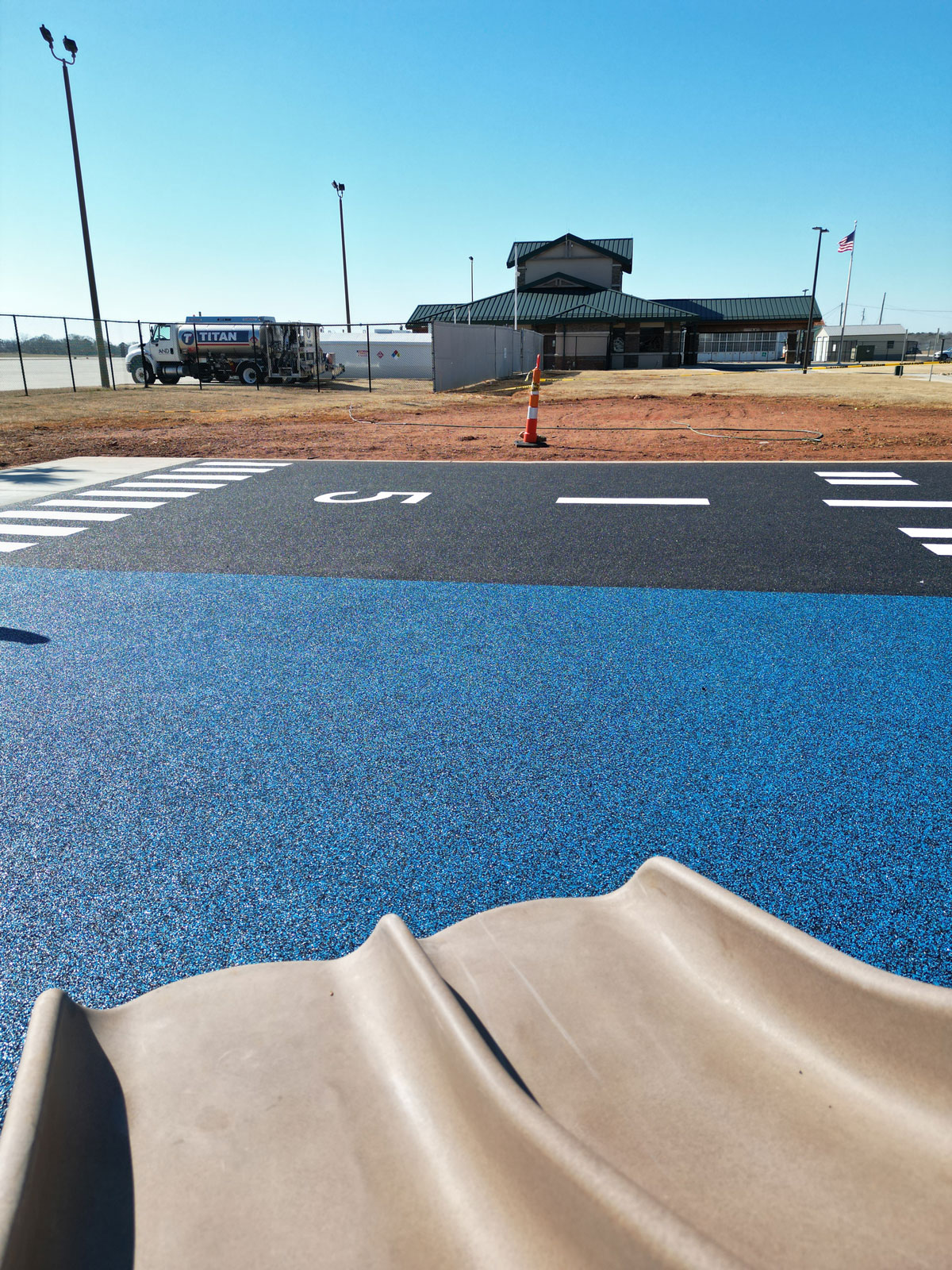
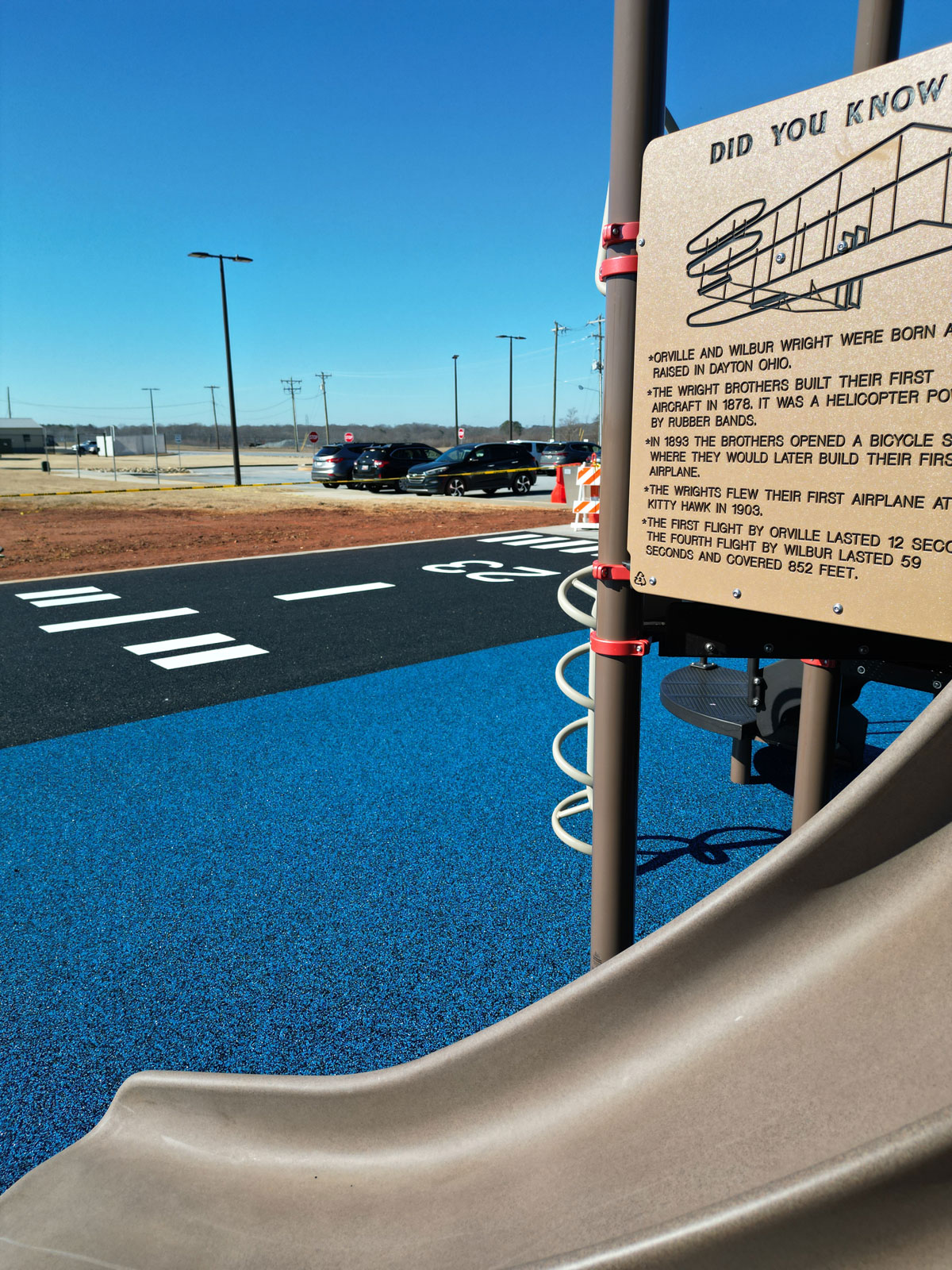
- Summer Blue: A cheerful color that adds a playful touch.
- Rustic Red: A warm, inviting color for energetic play zones.
- Slate Grey: A modern, neutral choice that lets equipment shine.
Custom color blends are also available, allowing you to create themed playgrounds in Tucson, AZ, or unique designs in Columbia, SC. This customization boosts aesthetic appeal and play value. Get inspired with our guide to Colored Rubber Surfaces for Playgrounds.
Your Guide to Installation, Maintenance, and Cost
To ensure your project is a success, it’s helpful to understand the installation, upkeep, and costs associated with rubber play bark. We’re here to guide you in setting up a safe playground in Charlotte, NC, Indiana, Beaverton, OR, or any of our service areas.
Getting Started: How to Install Rubber Play Bark
Installing loose-fill rubber play bark is a straightforward process suitable for DIYers and professionals in areas from Vancouver to Montreal. Here is a brief overview:
- Prepare the Site: Clear the area of rocks and debris. Ensure the ground is level and has proper drainage.
- Lay a Weed Barrier: Place a high-quality geotextile fabric to prevent weed growth and keep the rubber separate from the soil.
- Install Borders: Use wood, plastic, or concrete containment borders to keep the loose-fill mulch in place and at the correct depth.
- Calculate and Spread: Determine the required volume (length x width x depth) and spread the rubber play bark evenly with a rake.
For detailed instructions, see our guides on Installing Rubber Mulch and DIY Playground Flooring.
Long-Lasting Fun: Lifespan and Maintenance
One of the best features of rubber play bark is its longevity and low maintenance. It provides a safe, beautiful surface for 10 to 20 years without the need for annual replacement like organic mulches.
Maintenance is minimal. It does not decompose or attract mold and insects. Occasional raking to level the material in high-use areas and removing debris like leaves is all that’s typically required. Our rubber play bark is weather-resistant and dries quickly after rain, so playgrounds in Columbia, SC, or Calgary, AB, are ready for play sooner. This lack of annual replacement saves significantly on labor and material costs over time.
Budgeting for Safety: Understanding the Costs
While the initial cost of rubber play bark can be higher than traditional materials, its long-term value makes it a smart investment. The durability and 10-20 year lifespan eliminate the recurring annual costs of material and labor for replacement.
Over its life, the savings on maintenance, replacement, and pest control are substantial. This makes rubber play bark a highly cost-effective choice for playgrounds in Toronto, Vancouver, and all our service areas. The superior safety performance also provides invaluable peace of mind and can help reduce potential liability. For a deeper financial dive, review our guides on Understanding Rubber Playground Surfacing Costs and the Cost of Rubber Mulch Per Yard.
Frequently Asked Questions about Rubber Play Bark
When considering rubber play bark for a playground in Charlotte, NC, or Tucson, AZ, it’s natural to have questions. Here are clear, honest answers to the most common inquiries we receive.
Is rubber mulch toxic or safe for children?
Safety is our primary concern. Our rubber play bark is non-toxic and safe for children. It is made from recycled tires that undergo a rigorous cleaning process to remove contaminants. The rubber is then coated with non-toxic, UV-resistant pigments using an exclusive encapsulation process, which seals in the color and prevents leaching.
Many of our products are IPEMA certified and comply with ASTM standards for safety, including chemical composition. The rubber play bark we provide for playgrounds in Nashville, TN, and Beaverton, OR, meets or exceeds safety standards while being environmentally responsible. For more details, read our article on Non-Toxic Playground Tiles.
How much rubber mulch do I need for my playground?
Calculating the amount of rubber play bark you need is straightforward. First, measure the length and width of your play area to get the square footage. Then, decide on the required depth based on your equipment’s fall height (e.g., 6 inches or 0.5 feet for taller structures).
The formula is: (Length in feet x Width in feet) x Depth in feet = Cubic Feet. Divide the cubic feet by 27 to get the cubic yards needed.
Our team is happy to help with calculations for your project in Raleigh, NC, or Lake Charles, LA, to ensure you order the correct amount. For a detailed guide, see our Rubber Mulch Yard Buying Guide.
Does rubber mulch get hotter than wood mulch in the sun?
Like any dark surface, rubber play bark can absorb heat in direct sunlight, a valid concern in sunny areas like Tucson, AZ. However, several factors mitigate this:
- Color Choice: Lighter colors like Woodland Brown or Moss Green stay significantly cooler than black or dark red.
- Shade: Playgrounds under trees or shade structures will naturally remain cooler.
- Cooling Speed: Rubber cools down relatively quickly once out of direct sun and does not retain heat overnight like some materials.
By choosing lighter colors and incorporating shade, you can create a comfortable play environment with rubber play bark in any of our service areas, from Connecticut to Indiana.
Conclusion
It’s clear why rubber play bark is the superior choice for playground surfacing. It offers an unbeatable combination of superior safety, incredible durability (10-20 year lifespan), and eco-friendly design. Choosing rubber play bark is a smart, long-term investment in safe, happy, and healthy play.
At Replay Surfacing, we are proud to turn an environmental challenge into a valuable community asset. We don’t just sell rubber play bark; we help build a greener, safer future. Whether you’re planning a project in Toronto, Vancouver, Calgary, or Montreal, our expert team is ready to assist. For our clients in Charlotte, NC, Tucson, AZ, Nashville, TN, Beaverton, OR, and states like Connecticut and Indiana, Replay Surfacing is your trusted partner for supply and installation.
Ready to transform your play area into a haven of safe, sustainable, and colorful fun? We’re here to guide you.
Explore our playground surfacing solutions today and let Replay Surfacing help you create an environment where children can thrive.