
Durable Outdoor Rubber Matting in Charlotte, NC: Safer, Longer-Lasting Walkways
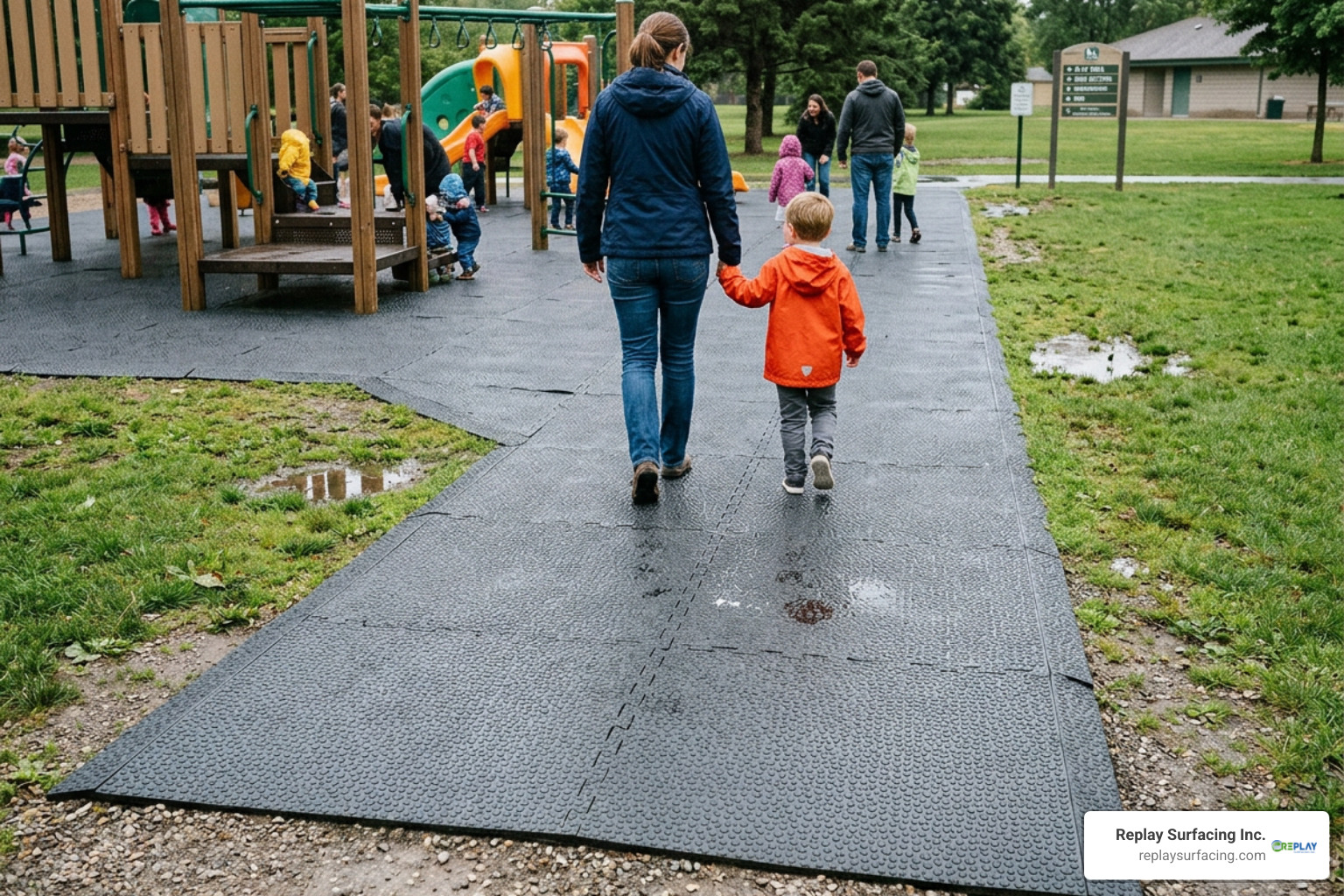
For high-traffic patios, entrances, playground paths, and sports-area walkways, choose durable outdoor rubber matting with a textured surface, reliable drainage, and enough thickness for the traffic and equipment it will handle. Rubber’s naturally high friction helps it stay in place, while weather-resistant material can reduce slipping, surface wear, mud tracking, and frequent repair needs.
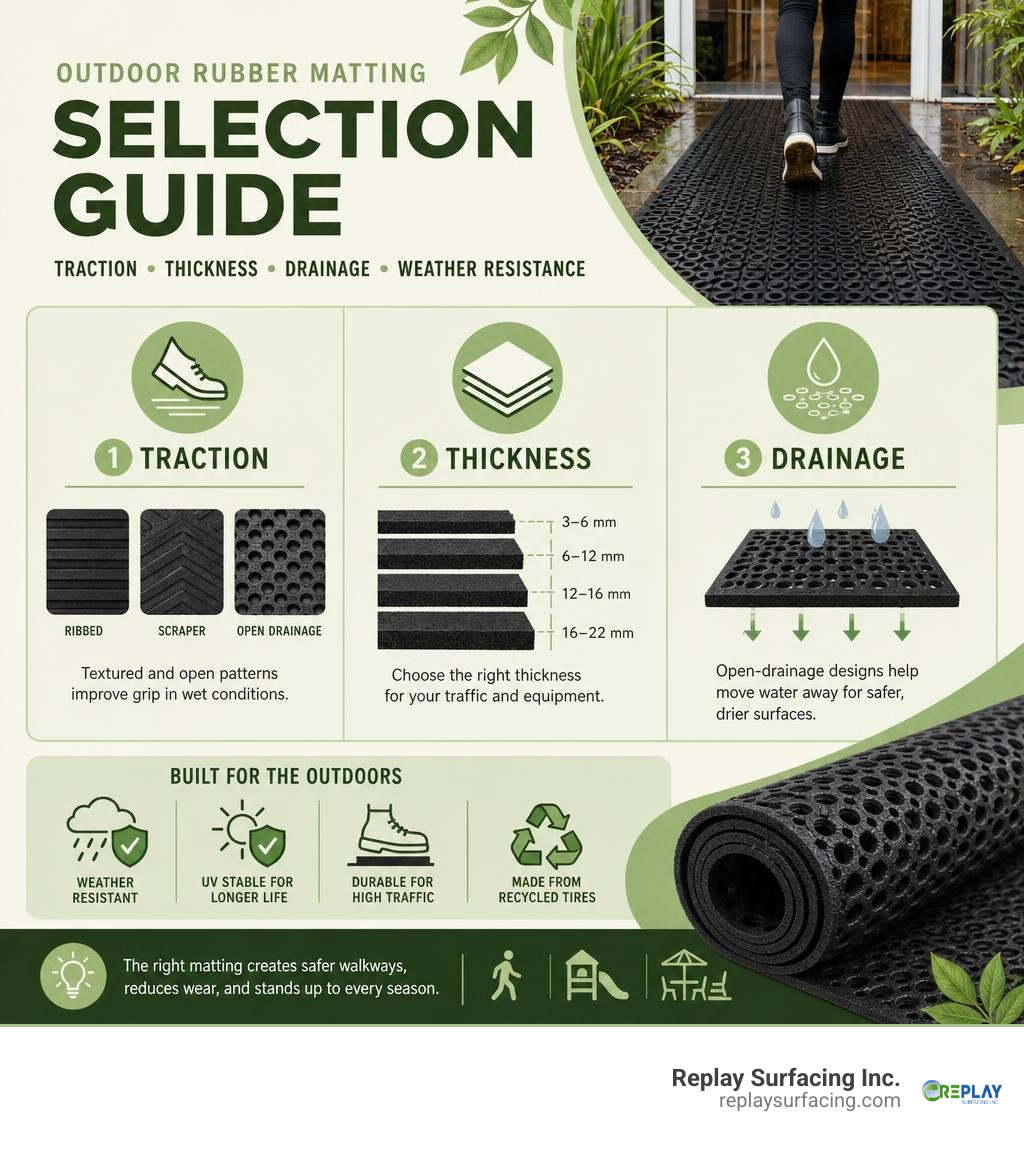
For local facilities and outdoor community spaces across Charlotte, NC, Raleigh, NC, and surrounding service areas, focus on three buying factors:
- Traction: Ribbed, scraper, or open-drainage patterns improve footing in wet areas.
- Thickness: Thin 3-6 mm runners suit lighter walkways, while heavy-duty mats up to 22 mm are better for demanding routes and equipment traffic.
- Fit and installation: Use cut-to-length rolls for long patios and paths, or interlocking mats for flexible coverage and easier replacement.
Recycled rubber matting can also turn scrap tires into a practical surface that supports safety and sustainability goals.
I’m Landon Olson, a mechanical engineer and the operator of Replay Surfacing Inc., where I help turn recycled tires into durable outdoor rubber matting and other safety-focused surfacing products. Below, we’ll compare the heavy-duty mat styles that best protect busy outdoor areas.
Key Benefits of Durable Outdoor Rubber Matting for High-Traffic Areas
High-traffic outdoor zones face continuous wear from heavy foot traffic, shifting weather, and tracked-in debris. Whether managing a lively restaurant terrace in Charlotte, NC, an active school courtyard in Raleigh, NC, or a busy patio in Tucson, AZ, traditional flooring surfaces like wood, concrete, or slick stone can wear down quickly or create hazardous slipping conditions. Heavy-duty rubber matting provides an immediate upgrade in surface durability, comfort, and pedestrian safety.
One of the standout advantages of rubber is its physical safety profile. Rubber naturally possesses a high friction co-efficient. This intrinsic grip helps hold mats firmly against subfloors while creating secure traction underfoot, virtually eliminating unwanted slips and falls even during heavy rain or morning dew. For facilities weighing long-term investments, evaluating the durability and cost of outdoor rubber flooring shows that high-grade rubber easily offsets maintenance expenses over time.
Beyond slip resistance, outdoor rubber mats provide exceptional all-weather resilience:
- Moisture and Microbe Resistance: Mold and mildew are not capable of growing on rubber, making it an ideal choice for humid climates like Lake Charles, Louisiana, or rainy seasons in Beaverton, OR.
- Thermal Insulation and Comfort: Unlike raw concrete or pavers, rubber offers thermal buffering underfoot during chilly mornings in Indiana or Connecticut while absorbing walking impact.
- Acoustic Dampening: Rubber dampens footfall noise in busy commercial zones, creating a quieter environment on walkways and deck areas.
- UV and Ozone Stability: Specially formulated rubber compounds resist solar degradation and cracking during the hot, dry summers of Tucson, AZ, and the humid summer sun in Columbia, SC, or Sanford, NC.
When you need walkways that endure constant punishment without warping, choosing heavy-duty outdoor rubber mats ensures your property remains safe, accessible, and clean all year long.
Types and Applications of Heavy-Duty Exterior Rubber Mats
Outdoor spaces have diverse demands. A residential deck requires comfortable, clean traction, while a commercial venue in Nashville, TN, might need continuous mud scraping and drainage. Selecting the right product profile ensures maximum service life and functionality.
| Mat Style | Slip Resistance Rating | Wear Resistance Rating | Ideal Thickness | Best Applications |
|---|---|---|---|---|
| Broad Ribbed Runners | 4 / 5 | 4 / 5 | 3 mm – 6 mm | Walkways, commercial aisles, patio access ramps |
| Corrugated Wide Rib | 4.5 / 5 | 4 / 5 | 3 mm (1/8″) | Industrial corridors, event staging, pet areas |
| Perforated Ring Drainage | 5 / 5 | 5 / 5 | 16 mm – 22 mm | Muddy entryways, pool surrounds, wash-down pads |
| Interlocking Solid Tiles | 4 / 5 | 4.5 / 5 | 10 mm – 20 mm | Modular patios, garden paths, fitness spaces |
Top Types of Durable Outdoor Rubber Matting for Residential and Commercial Patios
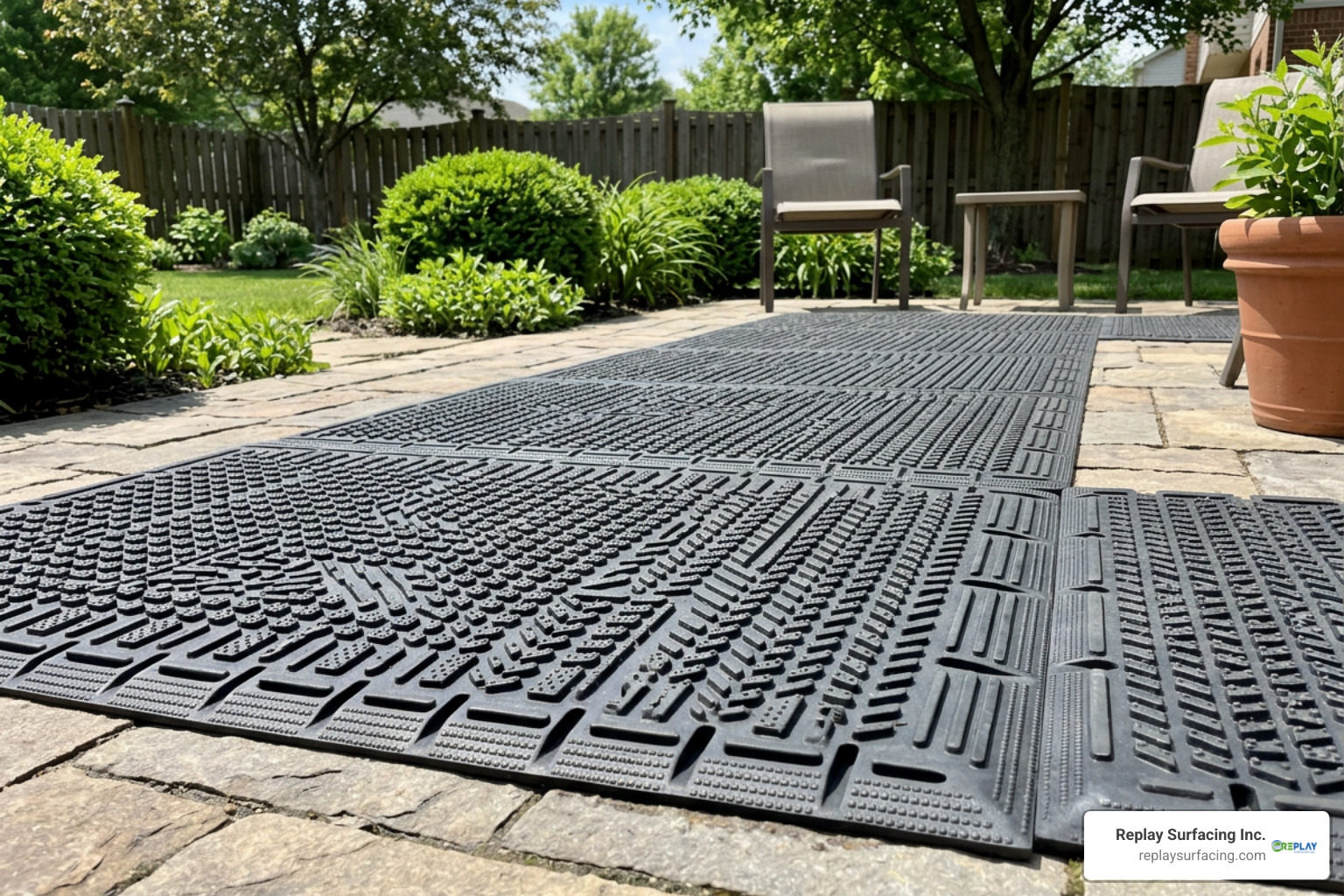
Textured runners—such as broad ribbed and corrugated wide rib mats—deliver an excellent balance of comfort and traction. Broad rib surfaces channel water away linearly, allowing shoes to maintain constant rubber contact. Similarly, heavy-duty corrugated runner options boast a tensile strength of 600 PSI and a compression rating of 36% at 50 PSI, providing robust stability under both foot traffic and rolling equipment.
For properties needing broader ground protection across landscaping or seating perimeters, installing continuous protective rubber ground cover prevents soil erosion while maintaining an attractive, clean walkway.
Heavy-Duty Walkway Mats and Drainage Solutions
For environments subjected to mud, slush, or continuous downpours, open-ring and perforated drainage mats are the top choice. These mats feature raised underside nubs and open drainage holes that let water, snow, and dirt drop straight through, preventing puddle accumulation on the walking surface.
High-load broad ribbed and perforated mats offer rugged scraping edges that strip dirt from work boots before it enters your facility. Integrating recycled rubber outdoor walkways creates a unified, safe transit zone from parking lots to main entry doors across all weather conditions.
How to Choose the Right Thickness, Size, and Material

Selecting rubber matting requires balancing expected traffic volume, subfloor conditions, and environmental exposure. Material metrics to evaluate include:
- Shore A Hardness: Most durable outdoor mats range between 55 and 65 Shore A, offering the ideal balance between foot cushioning and structural firmness.
- DIN Abrasion Loss: Look for ratings around 250 to 300 mm³ for high-wear areas, ensuring the rubber withstands years of heavy pedestrian grinding without wearing thin.
- Operating Temperature Range: Quality rubber handles swings from -20°C up to +80°C (-4°F to 176°F), easily withstanding freezing Midwestern winters in Indiana or blazing desert afternoons in Tucson, AZ.
For permanent exterior hardscaping, heavy interlocking rubber pavers deliver the appearance of traditional stone with the impact absorption and resilience of vulcanized rubber.
Selecting Dimensions and Thickness for Durable Outdoor Rubber Matting
Mat thickness directly correlates with load capacity and stability:
- Light to Moderate Foot Traffic (3 mm to 6 mm): Excellent for covered residential patios, light entryways, and ramps. These rolls weigh roughly 0.9 lbs per square foot (approx. 3 kg/m²), making them easy to cut and roll out.
- Heavy Commercial & Equipment Traffic (12 mm to 22 mm): Heavy-duty mats measuring 22 mm thick, often sized in convenient 100 cm x 150 cm formats or interlocking units, weigh up to 15.5 kg (34 lbs) each. Their sheer mass keeps them anchored during intense use.
For custom path layouts, interlocking rubber pathway tiles allow you to expand, reconfigure, or spot-replace individual sections without pulling up an entire installation.
Natural Rubber vs. Recycled SBR Tire Matting
Commercial matting is primarily manufactured from vulcanized natural rubber, virgin synthetic blends, or recycled Styrene-Butadiene Rubber (SBR) derived from scrap vehicle tires. At Replay Surfacing Inc., we focus heavily on recycled SBR. Scrap tires are engineered specifically to survive extreme abrasion, UV radiation, and severe mechanical loads on open roads.
When repurposed into outdoor mats, recycled tire rubber retains these extreme physical characteristics. Choosing recycled rubber diverts bulky waste from municipal landfills while delivering superior weatherproofing and gouge resistance at a practical cost.
Installation, Cleaning, and Maintenance for Weather Resilience
Proper installation and simple upkeep ensure your outdoor mats perform reliably for years. Depending on whether your application is temporary or permanent, you have several dependable installation methods:
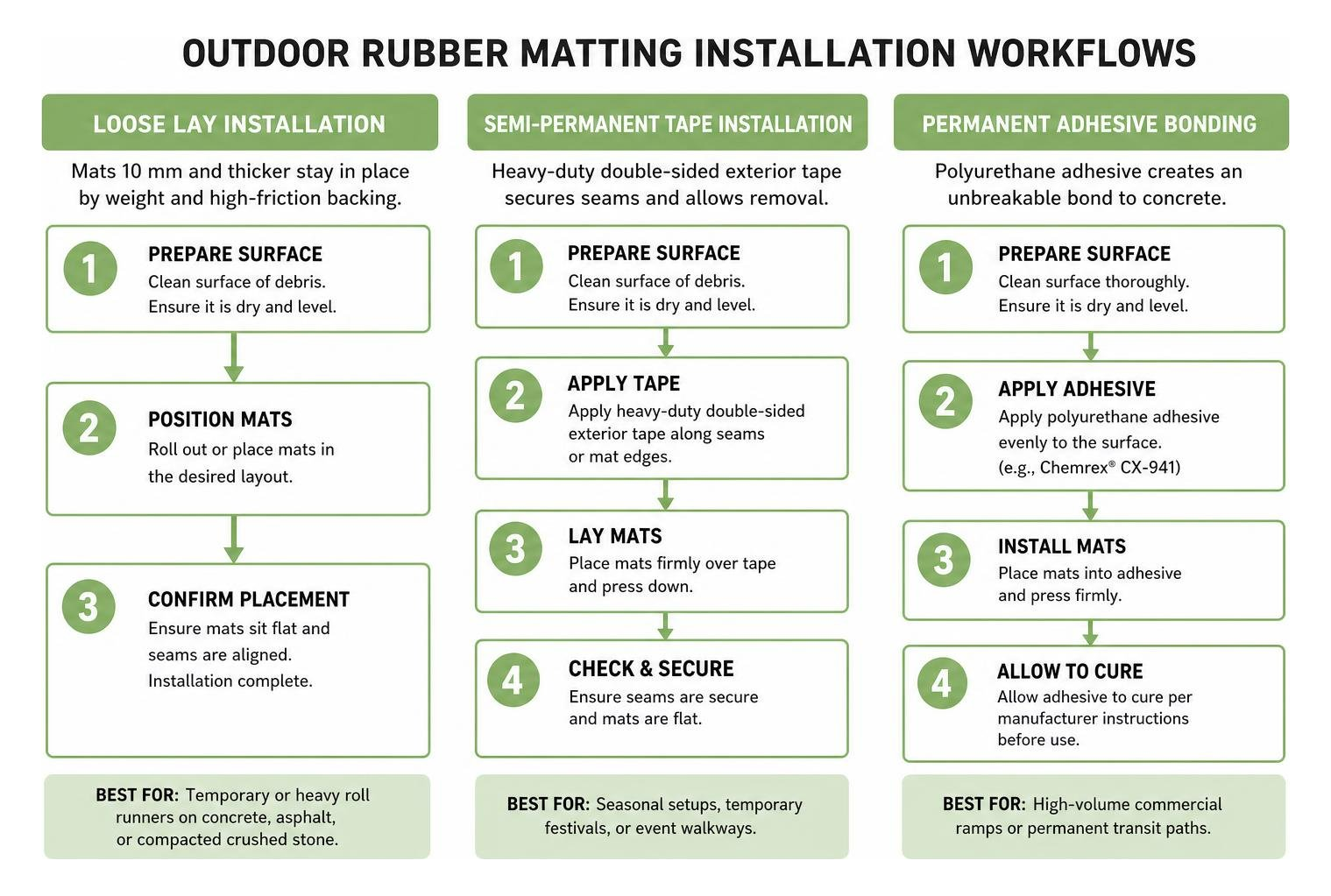
- Loose-Lay Installation: For mats 10 mm and thicker (or heavy roll runners), their weight and high-friction backing keep them firmly seated on concrete, asphalt, or compacted crushed stone without adhesives.
- Semi-Permanent (Double-Sided Exterior Tape): Ideal for seasonal setups, temporary festivals, or event walkways in locations like Nashville, TN, or Raleigh, NC. Heavy-duty tape secures seams while permitting easy removal later.
- Permanent Adhesive Bonding: For high-volume commercial ramps or permanent transit paths, exterior polyurethane adhesives create an unbreakable bond to clean, dry concrete surfaces.
Seasonal Maintenance Routine
Maintaining outdoor rubber is straightforward:
- Daily / Weekly Debris Clearing: Sweep or leaf-blow loose dirt, leaves, and grit from surface ribs and drainage openings.
- Periodic Washing: Rinse mats using a standard garden hose or a low-pressure power washer. For stubborn grime, scrub with warm water and a mild household detergent.
- Winter Care: Shovel snow with plastic-edged shovels to prevent gouging. Rubber naturally resists freezing, allowing ice to break free under normal foot pressure.
Our team provides local expertise and surfacing support across our service areas—including Charlotte, Sanford, and Raleigh, NC; Columbia, SC; Tucson, AZ; Nashville, TN; Beaverton, OR; Lake Charles, LA; as well as regional clients in Indiana and Connecticut.
Frequently Asked Questions About Outdoor Rubber Matting
What makes rubber matting resistant to extreme cold, rain, and snow?
Rubber retains its natural elasticity across broad temperature ranges (from -20°C to +80°C), meaning it will not become brittle, crack, or shatter in freezing winter conditions. In wet weather, surface ribs and open perforations channel water away, keeping walking points dry while rubber’s inherent friction prevents hydroplaning. Furthermore, because rubber is non-porous and mold-resistant, it does not rot or absorb standing water.
How do I install rubber mats temporarily versus permanently outdoors?
For temporary or seasonal use, heavy-duty mats can be loose-laid directly over stable ground or secured at the perimeters with heavy-duty double-sided exterior tape. Because dense rubber mats have significant self-weight and a high coefficient of friction, they naturally resist shifting. For permanent, high-traffic commercial installations, mats can be glued down to cured concrete or wood decks using an exterior-grade polyurethane adhesive.
Can rubber mats be customized to fit irregular walkways and patios?
Yes. Most rubber mats and roll runners can be trimmed to fit curves, posts, or awkward doorways using a heavy-duty utility knife and a straight edge. For larger or uniquely shaped patios, interlocking modular rubber tiles can be assembled in custom configurations and expanded or trimmed as needed to achieve a flush perimeter fit.
Conclusion
Upgrading your high-traffic walkways and outdoor entertaining zones with heavy-duty rubber matting provides long-lasting slip resistance, protects underlying decks and concrete, and creates a clean, comfortable transit path in every season. By transforming durable recycled tire rubber into high-performance surfacing, Replay Surfacing Inc. helps property owners and facility managers achieve superior safety and environmental sustainability.
Explore our full selection of outdoor walkway mats to find the ideal traction profile, thickness, and layout for your property today.