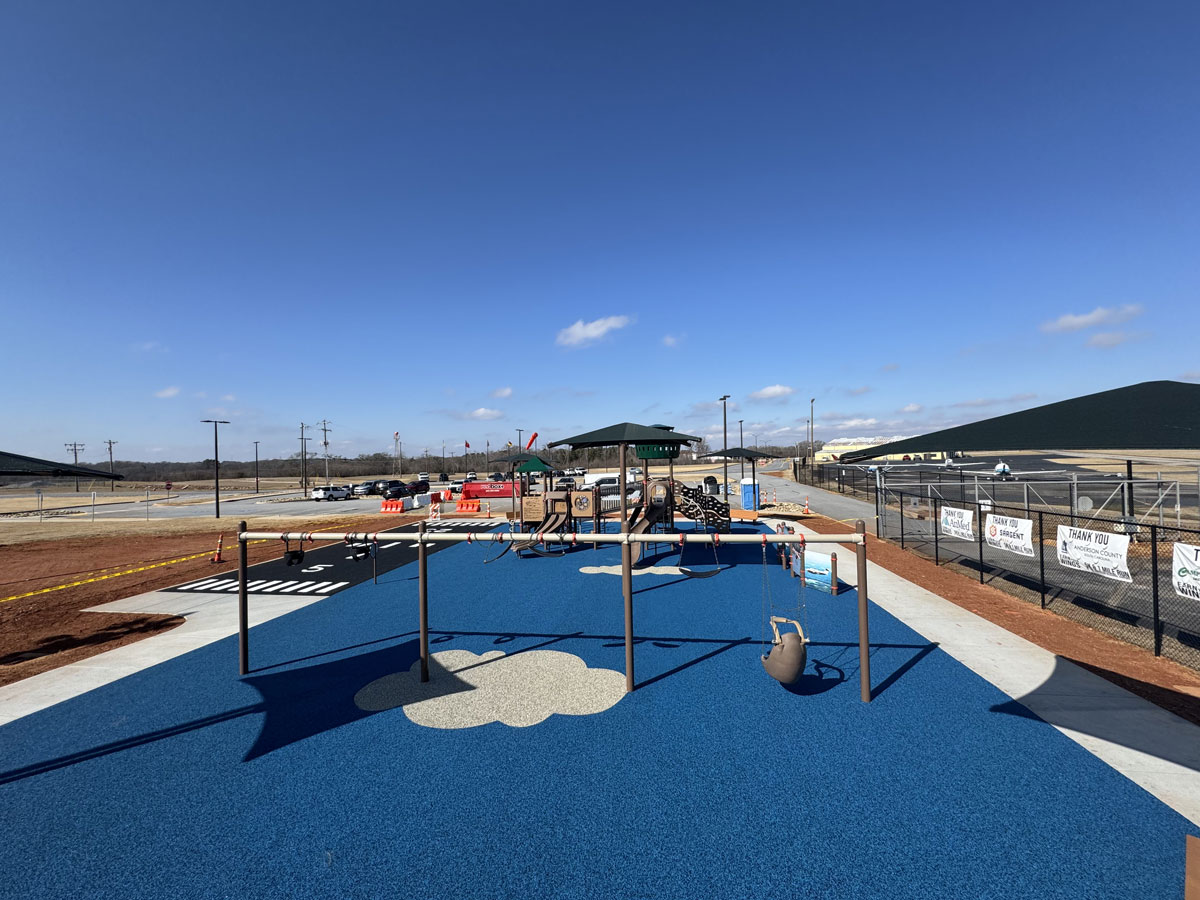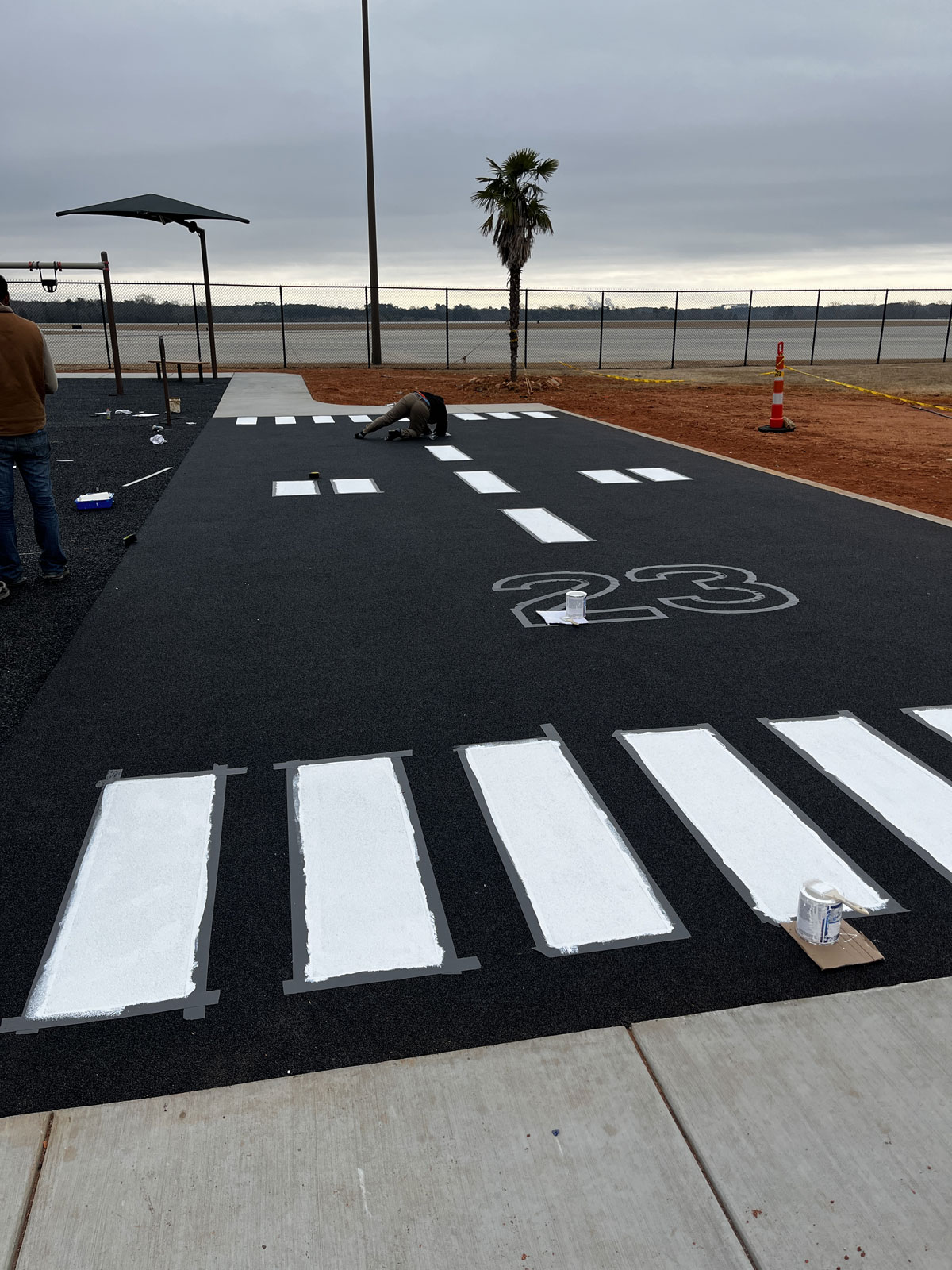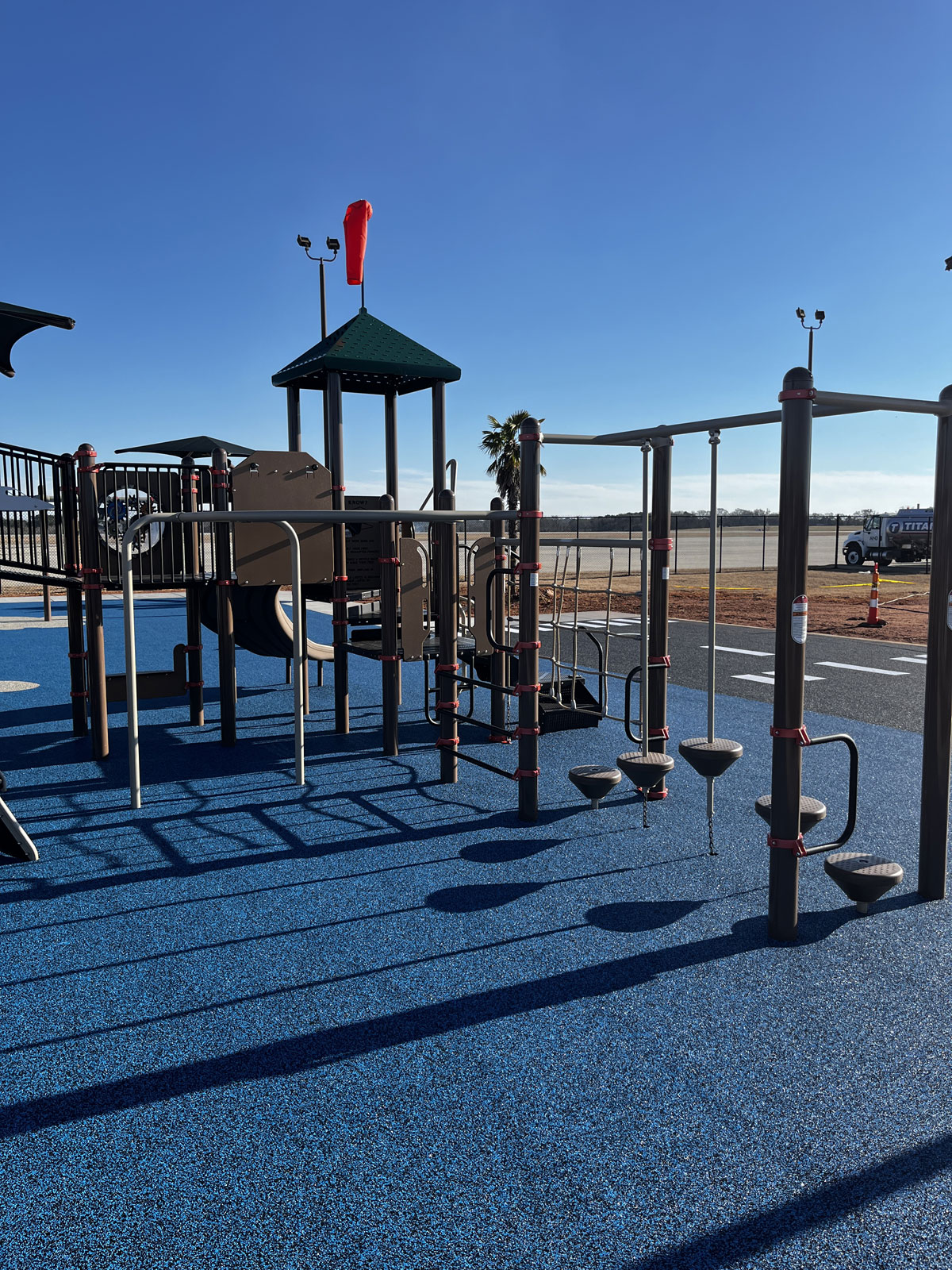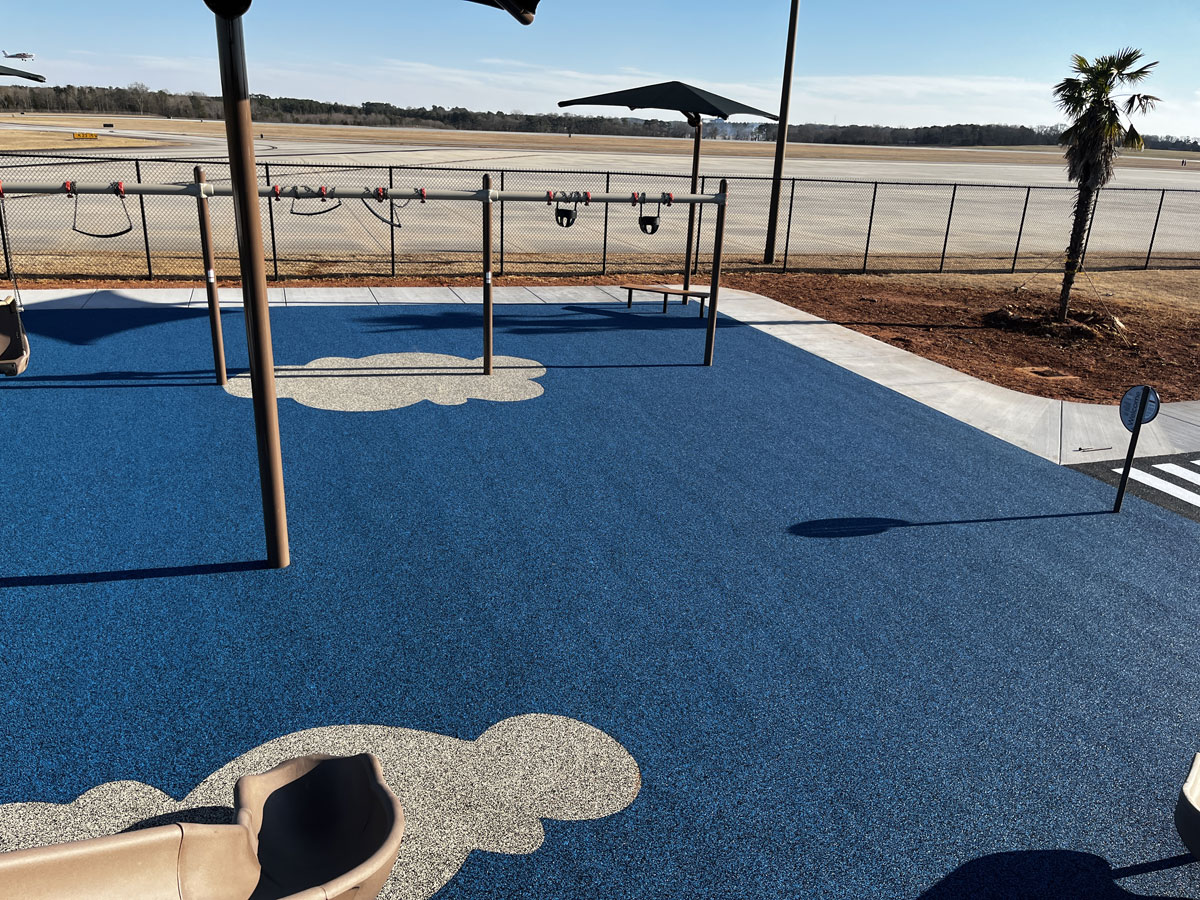
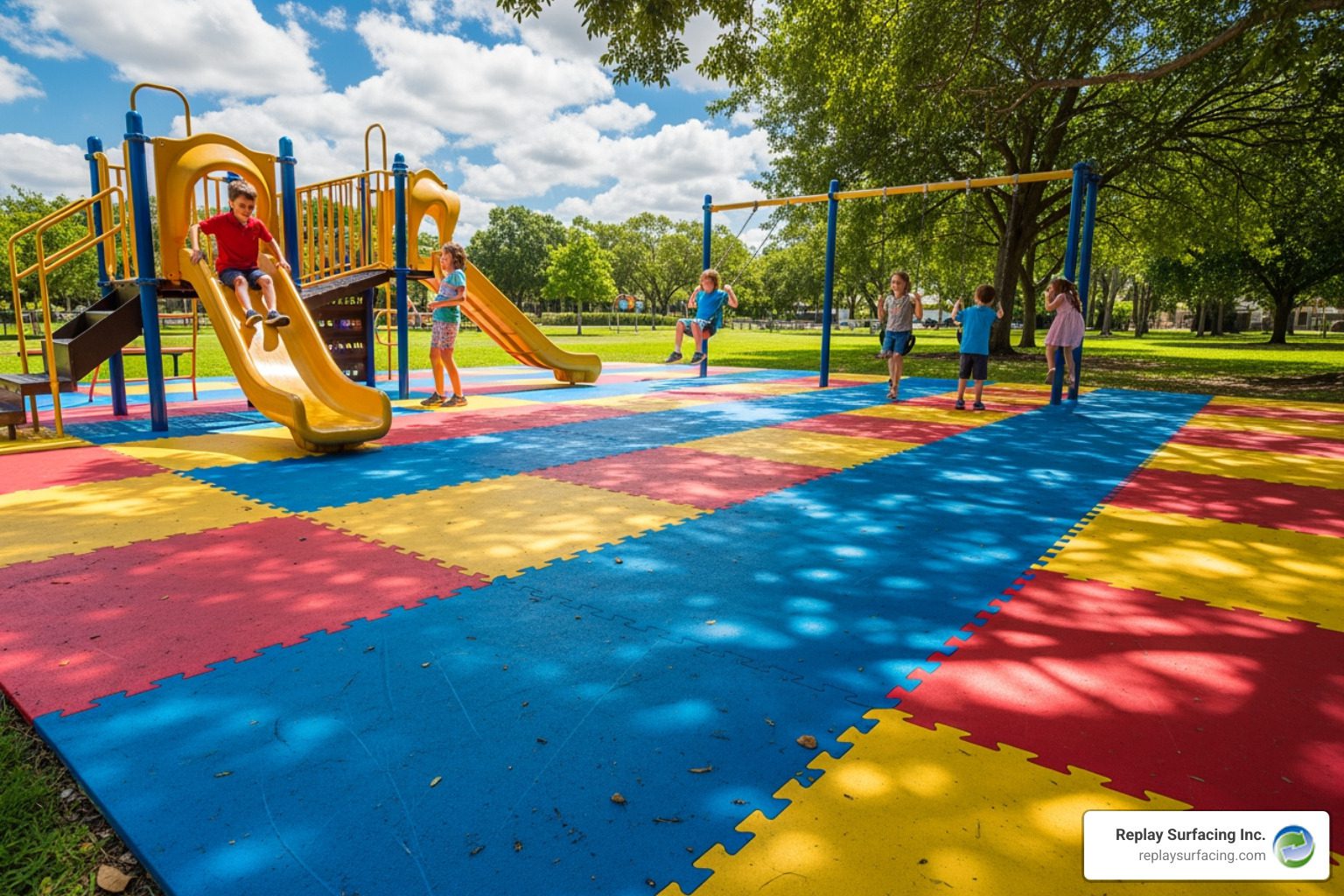
Playground Surfacing in Charlotte, NC: Why Safe Play Starts at the Ground
Playground surfacing in Charlotte, NC, provides essential safety solutions designed to cushion falls, prevent injuries, and create durable, low-maintenance play areas. Whether you’re upgrading a school playground, community park, or backyard play space in the Charlotte area, here’s what you need to know:
Top Playground Surfacing Options:
- Rubber Safety Mats – Heavy-duty mats (2’x4′ to 4’x6′) ideal for high-impact zones under swings and slides
- Interlocking Rubber Tiles – Modular 2’x2′ tiles offering 4-12 feet of fall protection depending on thickness
- Poured-in-Place Rubber – Seamless, customizable surfacing for comprehensive playground coverage
- PolyFoam Safety Pads – Drainage-focused underlayment that works beneath turf, mulch, or wood chips
Key Safety Features to Look For:
- Fall height ratings of 4-17 feet (depending on thickness and material)
- ASTM F1292 and CPSC compliance for certified impact attenuation
- Weather-resistant materials including UV-stabilized rubber and EPDM
- ADA-compliant surfaces for wheelchair accessibility
Every year, playground falls account for thousands of preventable injuries. The right surfacing makes all the difference. Traditional materials like wood mulch and gravel shift easily, creating bare spots and hazards. Modern playground surfacing in Charlotte solves this problem by staying in place, maintaining consistent fall protection, and requiring minimal upkeep.
These surfaces work especially well in high-traffic areas where loose-fill materials get kicked away—underneath swings, at the bottom of slides, and around climbing equipment. Made from recycled rubber, they’re built to last 20+ years while meeting strict safety standards.
I’m Landon Olson, and through my work with Replay Surfacing, I’ve helped transform millions of pounds of recycled tires into safe, sustainable playground surfaces for communities across Denver, Seattle, Phoenix, and beyond. Our experience installing playground surfacing in diverse climates—from the desert heat of Austin to the rain-heavy Pacific Northwest—has taught us what truly works for long-term playground safety.
If you want to understand how impact-attenuating surfaces reduce the risk of head injuries, the U.S. Consumer Product Safety Commission’s Public Playground Safety Handbook is an excellent external reference that aligns with the standards we follow in Replay Surfacing Inc. projects across Charlotte, Raleigh, Columbia, Beaverton, Tucson, and our other service areas.
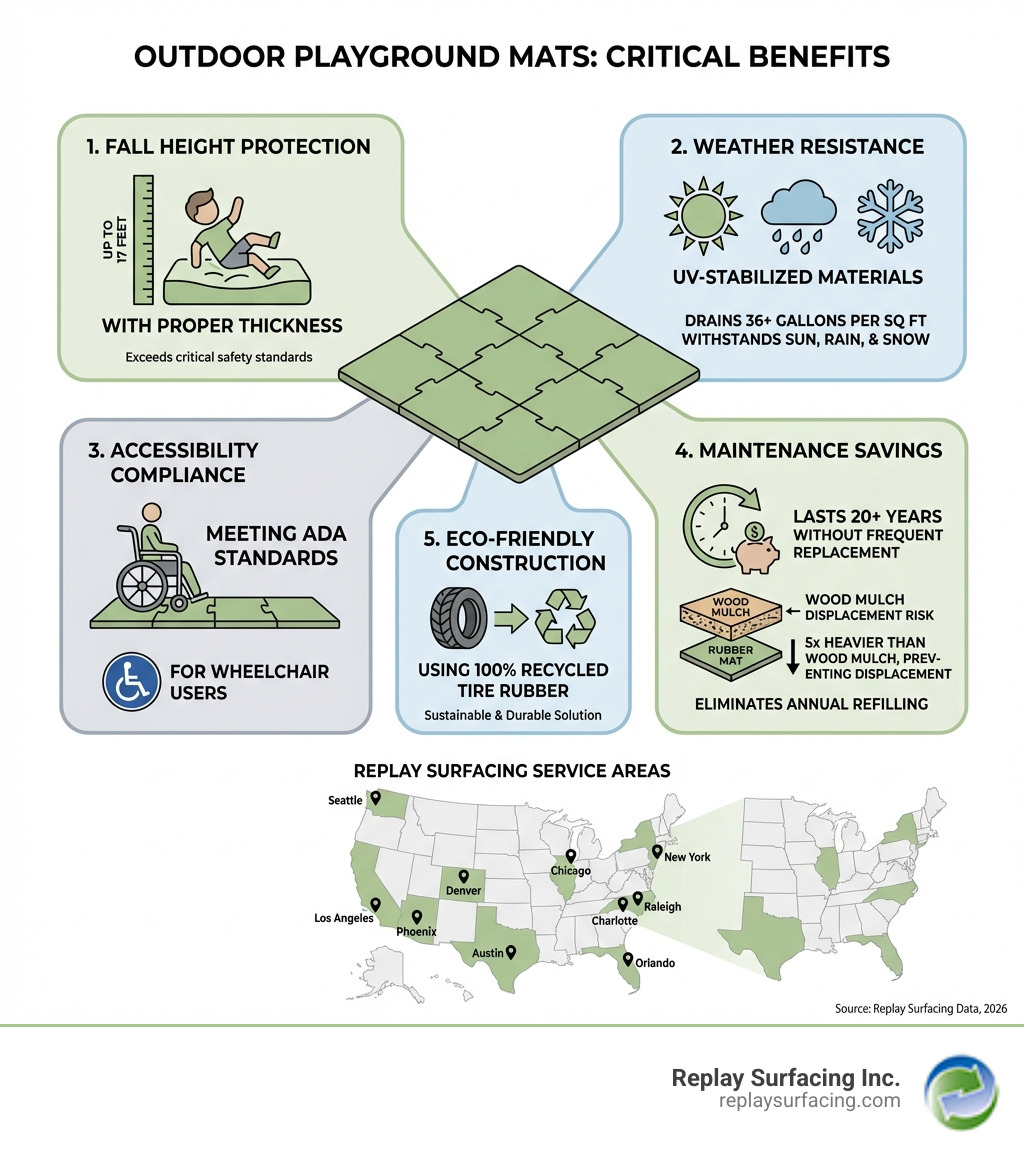
Playground surfacing in Charlotte vocab explained:
The Foundation of Safety: Why Playground Surfacing is Crucial
The most important thing to consider when selecting any outdoor playground flooring is safety. Historically, playgrounds often featured unforgiving surfaces like concrete or asphalt, which, as you can imagine, offered zero shock absorption and could lead to life-threatening injuries. Even grass or natural turf, while seemingly soft, offers only minimal shock absorption and degrades quickly with environmental conditions and recurring physical wear. This is where safe playground surfacing in Charlotte comes in, revolutionizing playground safety.
The primary safety benefit of using rubber playground surfacing is its superior shock absorption. These specialized materials are engineered to cushion falls, significantly reducing the risk of serious injuries. Unlike loose-fill materials like wood chips or pea gravel, which can shift and create inconsistent cushioning, unitary playground surfaces provide a uniform, reliable safety surface. Our goal at Replay Surfacing is to Enhance Safety With Rubber Playground Mats by creating impact-attenuating surfaces that protect children as they play.
A critical concept in playground safety is the “fall height rating.” This rating indicates the maximum height from which a child can fall onto the surface without sustaining a life-threatening injury. Our playground surfacing is designed and tested to meet stringent industry standards, including those set by the U.S. Consumer Product Safety Commission (CPSC) and ASTM International (e.g., ASTM F1292 for impact attenuation). We also ensure our products are IPEMA (International Play Equipment Manufacturers Association) certified, which provides an independent verification of product conformity to these safety standards. For instance, some of our rubber playground flooring tiles boast a 6-foot fall height rating, while other play tiles can protect from fall heights ranging from 4 to 12 feet, depending on their thickness.
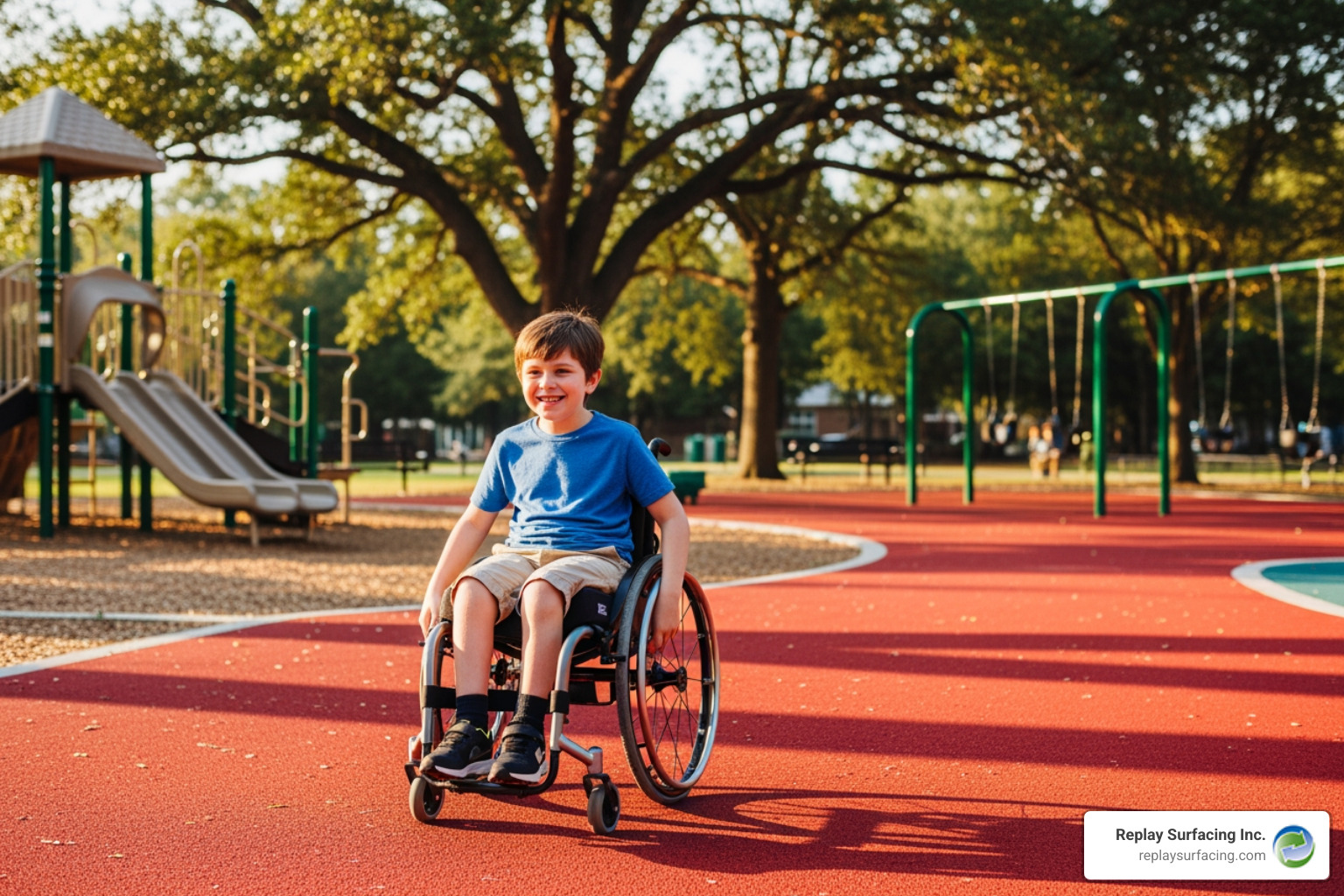
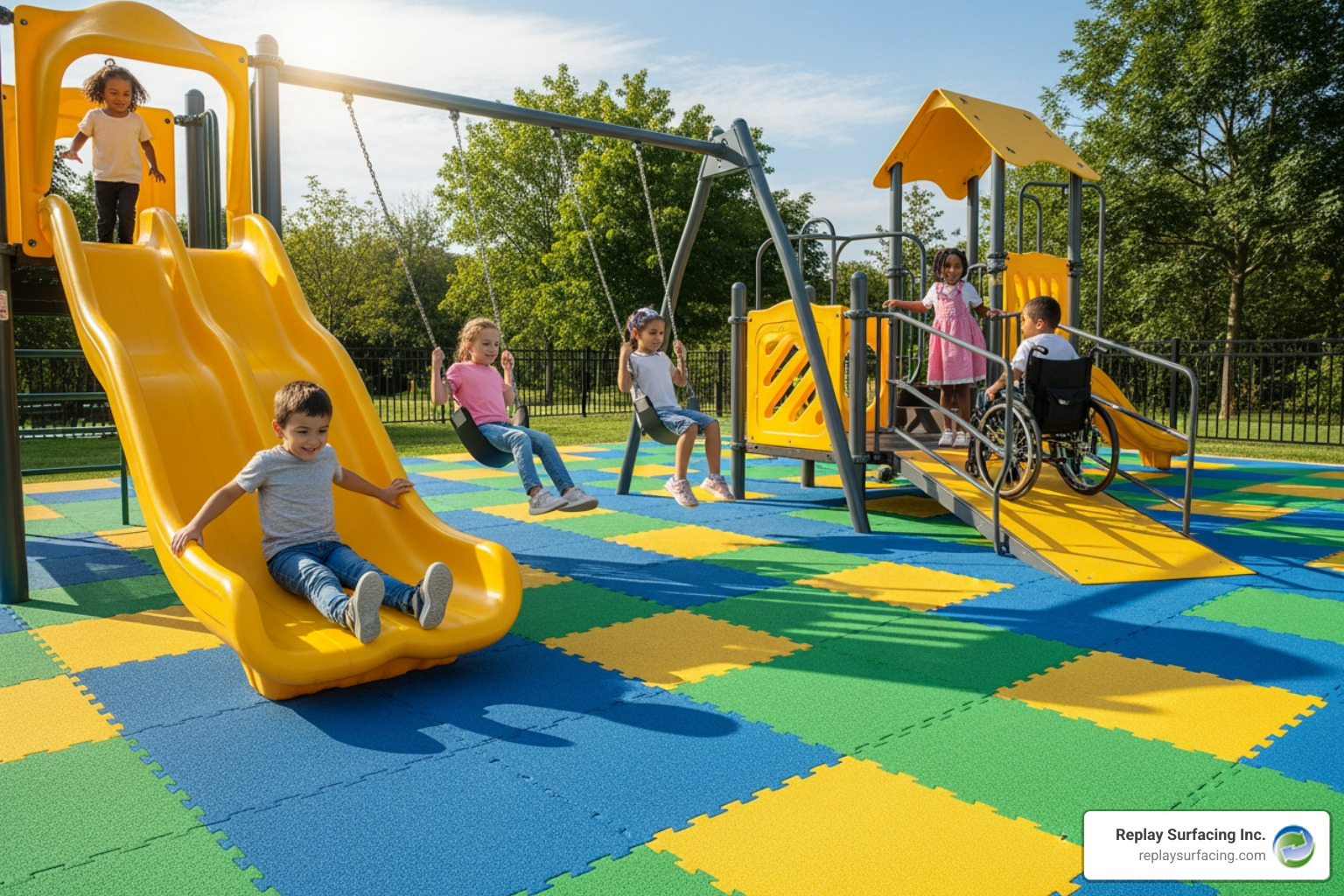
Beyond cushioning falls, we are deeply committed to making play accessible for all children, including those with disabilities. Our playground surfacing solutions contribute significantly to meeting ADA (Americans with Disabilities Act) compliance requirements. Many of our rubber playground tiles and rubber mulch options are designed to be smooth and firm enough for wheelchairs to roll across easily and safely. We offer ADA-compliant safety ramps that provide a gradual, beveled transition onto and off the tiled surfaces, ensuring that every child can enjoy the playground experience.
Key Considerations for Playground Surfacing in Charlotte
When selecting playground surfacing in Charlotte, one of the most crucial factors is material thickness, as it directly correlates with the critical fall height rating. The higher the play equipment, the thicker and more shock-absorbent your surfacing needs to be. For example, while a home playground might require a 1.5-foot fall height rating, commercial playgrounds, daycares, and schools in places like Charlotte, NC, or Tucson, AZ, typically need ratings of 4 or 6 feet, or even higher, depending on the equipment.
We carefully design our products to provide optimal cushioning properties. The density and thickness of our rubber tiles or foam pads are engineered to satisfy specific fall height requirements. For instance, our 2.5-inch thick rubber tiles meet CPSC guidelines for heights up to 6 feet, and when combined with a foam pad, some systems can offer up to 14 feet of vertical fall height protection. It’s vital to choose the right density and thickness to ensure that the materials can effectively absorb impact and protect against injuries. You can explore our range of Shock Absorbing Playground Surfaces to understand how we meet these rigorous safety standards. Our expertise ensures we meet safety standards across our service areas, from Charlotte to Tucson, providing top-tier solutions that endure.
Choosing the Right Playground Surfacing in Charlotte: Materials and Comparisons
When it comes to selecting the ideal playground surfacing for your Charlotte project, understanding the different materials and their properties is key. We offer a diverse range of solutions, each with unique advantages in terms of durability, weather resistance, and UV stability, essential for the varied climates across our service areas, from the humid summers of Lake Charles, Louisiana, to the sunny days in Phoenix, Arizona.
Our products are built to last. Rubber playground surfaces, for example, can endure for 20 years or more in most installations, maintaining their integrity and safety features for decades. This is a significant improvement over traditional loose-fill materials that require constant replenishment. Our rubber mulch, made from high-density recycled rubber, is engineered not to deteriorate or decompose, regardless of use or climate, and is warrantied against fading for up to 12 years. This remarkable durability means less maintenance and a longer lifespan for your playground surface.
Weather resistance is paramount for outdoor applications. Our playground surfacing is designed to withstand the elements. They are UV stable, meaning they resist degradation and fading from prolonged sun exposure—a crucial feature for playgrounds in sunny Tucson, AZ, or Nashville, TN. They also tolerate excessive wear and tear, and are resistant to extreme weather, from heavy rainfall in Charlotte, NC, to cold winters in Connecticut. Our rubber materials do not absorb water, preventing erosion during heavy rain and ensuring playgrounds can be back in use quickly, sometimes within 15-20 minutes after rainfall with proper drainage systems. For a comprehensive overview of our offerings, consult our Playground Surfaces Guide. We tailor material options for projects in diverse climates, like our work in Rubber Surfacing Phoenix and other Replay Surfacing locations.
Playground Mats vs. Tiles: Unitary Surface Solutions
When planning a playground, you’ll often hear about “unitary surfaces”—these are fixed, seamless, or interlocking surfaces that stay in place, unlike loose-fill options. Our playground surfacing solutions fall into this category, offering consistent safety and reduced maintenance. Let’s compare two popular unitary options: rubber mats and interlocking tiles.
| Feature | Rubber Mats (e.g., Swing/Slide Mats) | Interlocking Rubber Tiles (e.g., 2’x2′ tiles) |
|---|---|---|
| Safety | Excellent shock absorption for high-impact zones, consistent fall protection. | Consistent fall protection across the entire surface, adaptable to varying fall heights. |
| Durability | Very high, designed for specific heavy-wear areas, lasts 20+ years. | High, resilient, able to withstand heavy use and various weather conditions. |
| Maintenance | Low, easy to clean, prevents ruts in loose-fill. | Low, easy to clean, individual tiles can be replaced if damaged. |
| Accessibility | Generally good, but often used as an accent to a larger surface. | Excellent, ADA-compliant with smooth transitions and firm surface. |
| Cost | Moderate initial cost, high ROI due to reduced loose-fill maintenance. | Moderate to high initial cost, high ROI due to longevity and low upkeep. |
Our unitary surface solutions, like Poured In Place Rubber The Ultimate Playground Safety Surface, provide a seamless and aesthetically pleasing option. We offer all these options across our service areas, ensuring that whether your project is in Columbia, SC, or Indiana, you have access to the best and safest surfacing.
Common Materials for Playground Surfacing
The heart of our playground surfacing lies in the innovative materials we use, primarily recycled rubber. Our unique selling proposition at Replay Surfacing is changing environmental hazards—discarded tires—into sustainable, customizable, and durable surfaces. This commitment to recycling means our products are not only safe for children but also kind to the planet.
Our materials are primarily made from:
- Recycled Rubber (SBR): This is the most common material, derived from shredded tires. It forms the robust, shock-absorbing core of many of our mats and tiles. This material is what allows us to divert millions of pounds of waste from landfills, giving new life to old tires. Learn more in our Recycled Rubber Mats Playgrounds Guide.
- EPDM Rubber: Ethylene Propylene Diene Monomer (EPDM) granules are often used for the top layer of our poured-in-place systems and some tiles. EPDM offers superior UV stability and a vibrant range of colors, ensuring your playground remains bright and attractive for years.
- Polyethylene Foam: Our PolyFoam safety pads are made from 100% recycled polyethylene foam. These pads are ideal underlays for synthetic turf, rubber mulch, or wood chips, offering excellent drainage and shock absorption without containing rubber, lead, or other heavy metals.
We ensure all our materials are non-toxic, free of lead, heavy metals, and BPA. Our manufacturing process, which often uses American-sourced raw components, guarantees high quality and safety. We also offer a wide range of color options, from classic Black Playground Mats to vibrant reds and blues, and even a natural aesthetic with our Green Playground Mats Guide. This allows us to create playgrounds that are not only safe but also visually engaging and harmonious with their surroundings in communities like Nashville, TN, or Beaverton, OR.
Playground Surfacing Installation and Maintenance in Charlotte: A Practical Guide
Installing playground surfacing in Charlotte might seem daunting, but with the right approach and our expert guidance, it’s a straightforward process that leads to lasting safety and enjoyment. Many of our interlocking tile systems are designed for ease of installation, even for DIY projects.
One of the key benefits of our playground surfaces is their ability to protect underlying surfaces and prevent erosion. In high-traffic areas, loose-fill materials tend to get kicked out, creating hazardous ruts and exposing the hard ground beneath. Our heavy-duty mats, placed strategically, prevent this displacement, preserving the integrity of the entire play area. This means less refilling of mulch and a more consistent safety profile. For those who enjoy hands-on projects, our DIY Playground Flooring guide offers valuable insights.
Effective Installation Locations
Strategic placement of playground safety surfacing is crucial for maximizing safety and extending the life of your playground. We recommend focusing on areas that experience the most impact and wear:
- Under Swings: This is a classic spot where loose-fill materials are constantly kicked out. Heavy-duty rubber swing mats prevent ruts and maintain a consistent fall protection zone.
- Bottom of Slides: Children land here with momentum, making it a high-impact area prone to erosion. Slide mats create a safe, cushioned landing zone.
- Under Monkey Bars and Climbing Equipment: Any equipment from which children might fall from a height requires dedicated impact attenuation.
- High-Traffic Areas: Entry and exit points, or pathways within the playground, can also benefit from mats to prevent wear on turf or grass.
- Under Larger Equipment like Spinners: These areas see a lot of foot traffic and can quickly displace loose-fill.
By strategically installing our playground surfacing in these critical zones, we help create safe zones that protect children where they need it most. Our role as a Playground Safety Surfacing Company is to ensure that every playground, from a small backyard setup in Sanford, NC, to a large community park in Lake Charles, Louisiana, has the right protection. This also helps in protecting turf or grass in Replay Surfacing Inc. service areas by preventing localized wear.
Installation Best Practices for Playground Surfacing
Proper installation is key to ensuring the longevity and effectiveness of your playground safety surface. While our products are designed for durability, correct site preparation and installation techniques are essential.
- Site Preparation: Begin by ensuring the ground is flat, level, and free of any debris. For installations over grass or compacted dirt, we often recommend using a weed barrier to prevent growth underneath the mats.
- Leveling the Ground: A well-prepared sub-base, whether it’s concrete, asphalt, or a well-compacted granular surface, is crucial for stability and drainage. Our rubber playground tiles can be installed directly onto concrete without an underlayment.
- Using Interlocking Systems: Many of our rubber tiles feature an interlocking pin system (like our QuadBlock connectors) for easy alignment and a secure fit. This modular approach allows for simple installation and, if needed, easy removal and replacement of individual tiles. Our Interlocking Playground Mats Ultimate Guide provides detailed steps.
- Adhesives: For certain installations, especially over concrete, a polyurethane adhesive is recommended to glue the tiles down, creating a monolithic safety surface that is not bonded to the sub-base, allowing for movement with temperature changes.
- Beveled Edges and Transition Strips: To prevent tripping hazards and ensure accessibility, we use beveled safety ramps and transition strips. These provide a gradual slope onto and off the mats, especially important for ADA compliance.
- Ensuring Proper Drainage: Many of our mats and tiles are porous or designed with subsidiary structural tile legs that allow for unrestricted water drainage. This means water and snow can work their way through the seams or beneath the tiles, preventing pooling and allowing the surface to dry quickly. Our PolyFoam safety pads, for example, can drain over 36 gallons per square foot vertically.
Simple Maintenance for Longevity
One of the most appealing aspects of our playground surfacing is its low maintenance requirements, which translates into long-term savings and consistent safety. Unlike loose-fill materials that need regular raking, topping up, and sifting for debris, our unitary surfaces are remarkably easy to care for.
Routine cleaning typically involves sweeping away leaves and debris. For tougher dirt or spills, a simple rinse with water and a mild detergent will do the trick. Our rubber surfaces are non-porous, meaning they don’t absorb fluids, don’t promote bacteria, and are easy to disinfect. They also generate no dust, unlike wood mulch or sand, contributing to a cleaner play environment. Remember to avoid petroleum-based cleaners, as they can break down the rubber over time.
Our rubber mulch options are also incredibly low maintenance. They don’t rot, don’t attract termites or other pests, and, thanks to advanced Colorstay technology, are highly fade-resistant for up to 12 years. This means fewer worries about insects, weeds, or color degradation. Regular inspection for any damage is always a good practice, but with our durable materials, repairs are infrequent.
Ensuring long-term safety in busy parks in our service areas, from Charlotte to Tucson, is our priority. Our low-maintenance Playground Surfacing solutions mean that playground owners and operators can spend less time on upkeep and more time ensuring children are having safe, joyful experiences.
Playground Surfacing in Charlotte: Cost, Sustainability, and Long-Term Value
While the initial cost of professional playground surfacing might be higher than traditional loose-fill options, the return on investment (ROI) over its lifespan is significantly greater. Our rubber playground surfaces can last for 20 years or more in most installations, far outstripping the lifespan of wood chips or sand that require frequent replenishment and maintenance. This durability translates directly into reduced long-term costs, making them a smart investment for any play area in Charlotte.
At Replay Surfacing, sustainability is at the core of what we do. Our unique selling proposition is changing environmental hazards—millions of pounds of discarded tires—into safe, high-performance surfacing. This commitment means that when you choose our playground surfacing, you’re opting for an eco-friendly solution that diverts waste from landfills. Our products, such as the PolyFoam safety pad, are made from 100% recycled materials and are often 100% recyclable themselves. This not only benefits the environment but can also contribute to LEED (Leadership in Energy and Environmental Design) points for new construction projects. Explore our Recycled Tires Playgrounds Guide to learn more about our sustainable practices.
The value of our playground surfacing extends beyond just cost savings and environmental benefits. It’s about providing consistent, reliable safety for children, reducing liability for playground owners, and creating beautiful, durable play spaces that stand the test of time. For a range of options, check out our Playground Mats For Sale.
Frequently Asked Questions about Playground Surfacing in Charlotte
How thick should playground surfacing be?
The ideal thickness for playground surfacing directly depends on the fall height of your playground equipment. This is a crucial safety consideration. For most home playgrounds, a 1.5-foot fall height rating might suffice. However, for commercial playgrounds, daycares, or schools in our service areas like Charlotte, a 4-foot or 6-foot fall height rating is typically required, corresponding to thicker materials.
For example, our 2.5-inch thick rubber tiles meet the CPSC’s guidelines for equipment heights up to 6 feet. If your equipment has a higher potential fall height, you would need thicker surfacing or a system that incorporates an additional shock-absorbing underlayment, potentially achieving up to 14 feet of fall protection. The fall height rating is directly satisfied by the density and thickness of the flooring tiles or foam pads. Always check the manufacturer’s specifications and certified fall ratings for your specific equipment and chosen surface. Our Soft Fall Rubber Mats are designed with these critical ratings in mind.
Can you install playground surfacing directly on grass?
Yes, you can install playground surfacing directly on grass, but proper preparation is key to ensuring stability, drainage, and longevity. Simply laying surfacing materials on uneven grass can lead to shifting, water pooling, and an unstable play surface.
Here’s how we approach it:
- Leveling the Ground: The grass area needs to be as flat and level as possible. Any significant undulations should be addressed to prevent an uneven surface.
- Removing Debris: Clear the area of any rocks, roots, or other debris that could interfere with the surfacing or create an uneven base.
- Using a Weed Barrier: While our rubber surfaces can help suppress weeds, a weed barrier fabric laid underneath provides an extra layer of protection against grass or weeds growing through seams.
- Interlocking Tiles: Interlocking rubber tiles work particularly well for grass installations as their connection points help maintain stability.
- Ensuring Drainage: Most of our rubber mats and tiles are designed to allow water to drain through or around them. However, ensure the underlying soil also drains well to prevent water from accumulating beneath the surface.
By following these steps, you can create a safe and stable play area directly on grass. For more ideas on suitable ground covers, refer to our guide on the Best Playground Ground Cover.
Is rubber playground surfacing slippery when wet?
High-quality rubber playground surfacing is specifically designed with safety in mind, which includes excellent slip resistance, even when wet. Unlike concrete or asphalt, which can become extremely slick, our rubber surfaces are engineered to minimize slips and falls.
Here’s why our surfaces are safe when wet:
- High Coefficient of Friction: The rubber material itself has a naturally high coefficient of friction, providing good grip for shoes or bare feet.
- Porous and Textured Surfaces: Many of our surfaces feature textured top layers that improve traction. Additionally, our rubber tiles and wet pour surfaces are often porous, allowing water to drain through them quickly.
- Efficient Drainage: As we’ve mentioned, many of our systems, like the PolyFoam safety pad, boast impressive drainage capabilities, moving water away from the surface rapidly. This means playgrounds can be back in use within 15-20 minutes after rainfall.
Our surfaces are built to maintain their slip-resistant properties in various weather conditions, making them a much safer choice than traditional hard or loose-fill surfaces for playgrounds. For seamless, non-slip solutions, consider our Wetpour Soft Surfaces.
Conclusion
Choosing the right playground surfacing in Charlotte is one of the most impactful decisions you can make for any play area. We’ve seen how these innovative surfaces transform playgrounds, providing unparalleled safety, remarkable durability, and crucial accessibility for all children. From cushioning falls with certified fall height protection to withstanding harsh weather and requiring minimal maintenance, our recycled rubber solutions offer a smart, long-term investment.
At Replay Surfacing, we’re proud to turn environmental hazards into sustainable, safe, and vibrant play spaces across our service areas, whether it’s a residential backyard project in Rubber Surfacing Austin or a large commercial park in Rubber Surfacing Orlando or Charlotte. We believe every child deserves a safe place to play, learn, and grow.
Ready to create a safer, more engaging playground? Explore our range of sustainable and safe surfacing solutions and let us help you bring your vision to life. View our playground projects to see our commitment to quality and safety in action.