

Why Your Backyard Surface Matters More Than You Think
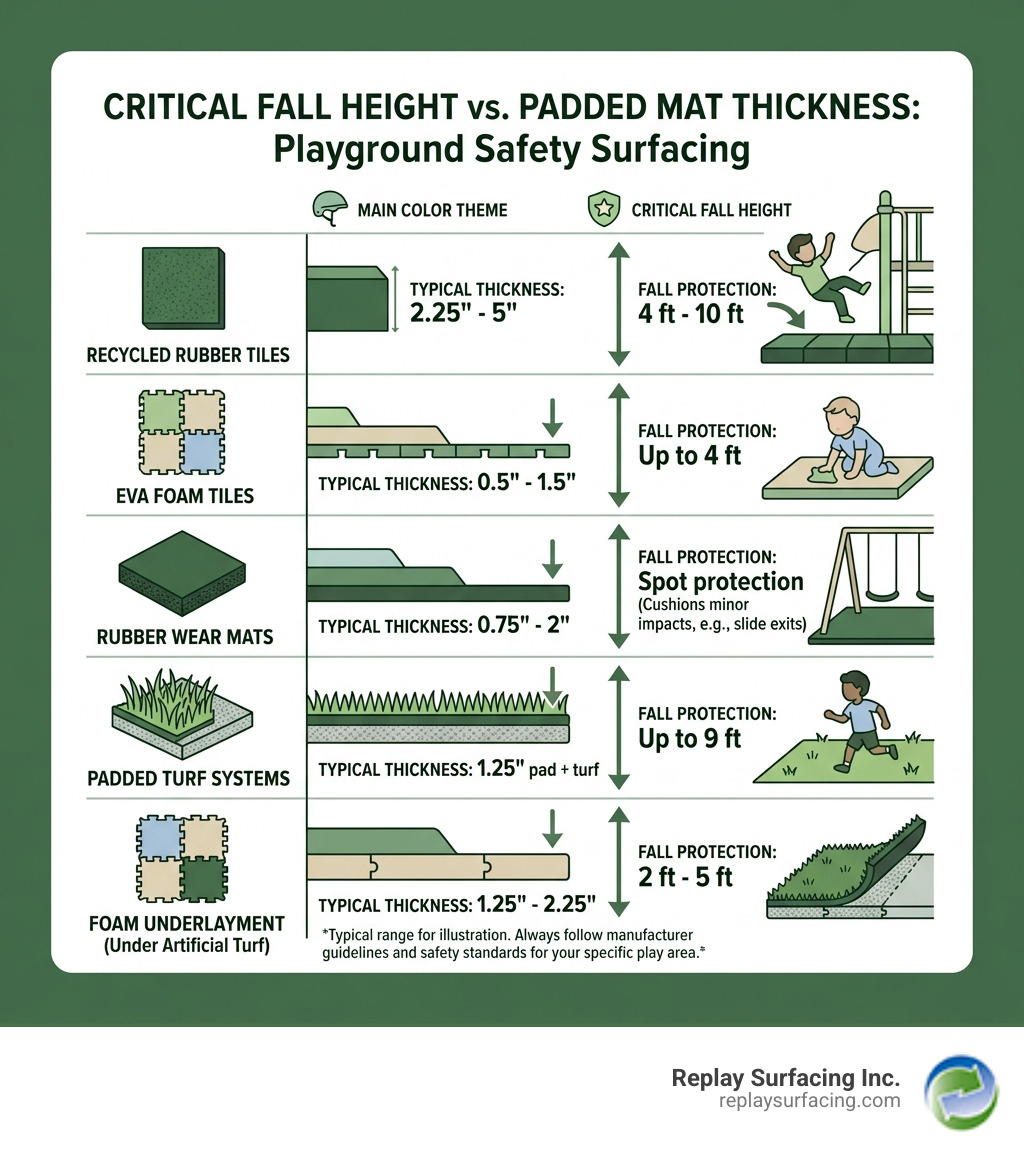
A padded playground mat is a safety surfacing layer placed under and around play equipment to cushion falls, reduce injuries, and create a safer play zone for kids of all ages. Here’s a quick overview of your main options:
| Surface Type | Best For | Typical Thickness | Fall Protection |
|---|---|---|---|
| Recycled rubber tiles | Outdoor playgrounds, high-traffic zones | 2.25″ – 5″ | 4 ft – 10 ft |
| EVA foam tiles | Indoor play areas, toddlers | 0.5″ – 1.5″ | Up to 4 ft |
| Rubber wear mats | Swing sets, slide exits | 0.75″ – 2″ | Spot protection |
| Padded turf systems | Backyards, schools, parks | 1.25″ pad + turf | Up to 9 ft |
| Foam underlayment | Under artificial turf | 1.25″ – 2.25″ | 2 ft – 5 ft |
Hard backyard surfaces — concrete, packed dirt, even grass — offer very little protection when a child falls. And falls will happen. The right padded surface doesn’t just soften the landing; it can mean the difference between a scraped knee and a serious head injury.
Whether you manage a school, a daycare, or your own backyard in Charlotte, Raleigh, Tucson, or anywhere in between, choosing the right surfacing is one of the most important safety decisions you’ll make for your space.
I’m Landon Olson, operator of Replay Surfacing Inc., where I’ve spent years engineering recycled rubber surfacing solutions — including the padded playground mat systems that protect kids across residential and commercial play areas. In the sections below, I’ll walk you through everything you need to pick, install, and maintain the right surface for your space.
The Science of the Padded Playground Mat: Materials and Safety Standards
When we talk about a padded playground mat, we aren’t just talking about a piece of carpet. There is significant engineering involved in ensuring these surfaces actually protect children. At Replay Surfacing, we specialize in recycling tires into high-performance rubber surfacing, but the market includes several materials, each with its own “science.”
Common Materials
- Recycled Rubber: This is the gold standard for outdoor durability. These mats are often made from 100% recycled vulcanized rubber or SBR (styrene-butadiene rubber) granules. They are incredibly dense, weather-resistant, and provide excellent shock absorption.
- EVA Foam: Common in indoor settings, Ethylene-vinyl acetate (EVA) is a closed-cell foam. It’s soft and colorful but can degrade under the harsh UV rays of the Arizona sun or the humidity of South Carolina if not specifically treated.
- Polyurethane-Bonded Foam: Often used as an underlayment for turf, these porous pads allow for drainage while providing a “hidden” layer of safety.
Safety Standards to Know
You shouldn’t just take a manufacturer’s word for it. Look for compliance with these standards:
- ASTM F1292: This is the big one. It measures “impact attenuation,” or how well a surface absorbs the energy of a fall to prevent head injuries.
- CPSIA Compliance: Ensures the mats are free from harmful lead or phthalates.
- Non-Toxic Certifications: Especially for our families in locations like Beaverton or Connecticut, where environmental health is a top priority, non-toxic playground tiles ensure that play stays safe from chemical exposure.
The scientific safety standards for playground surfaces are designed to ensure that a child falling from a specific height won’t suffer a life-threatening injury. By choosing a certified padded playground mat, you are investing in peace of mind.
Critical Fall Heights: How Thickness Saves Lives
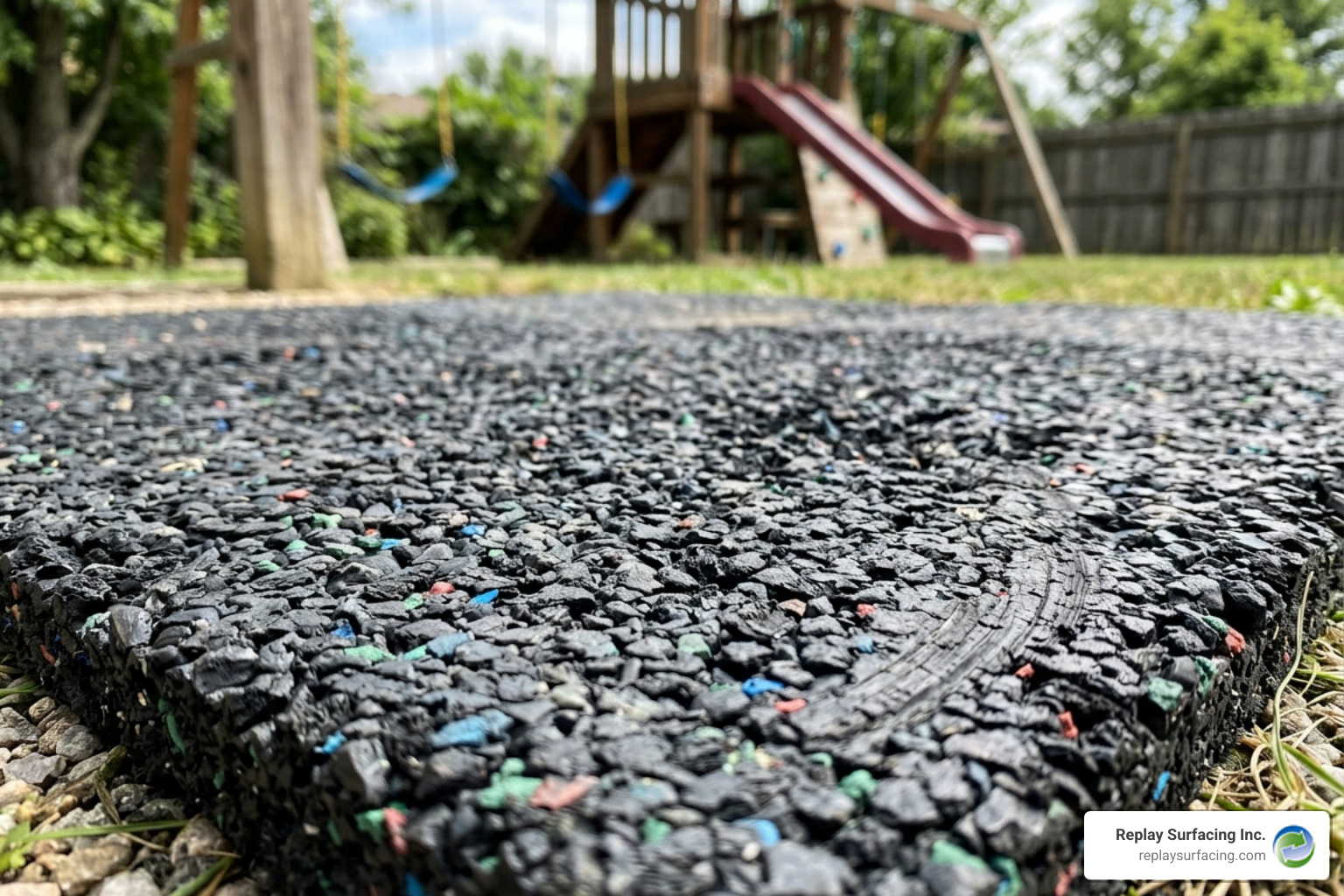
The most common question we get in cities like Raleigh and Nashville is: “How thick does the mat need to be?” The answer depends entirely on the height of your equipment. This is known as the Critical Fall Height (CFH).
If your play set has a platform 6 feet off the ground, your padded playground mat must be rated for at least a 6-foot fall.
| Mat Thickness | Certified Fall Height Protection |
|---|---|
| 0.75 – 1.0 inch | 1 – 2 feet (mostly for ground-level play) |
| 2.25 inches | 4 – 5 feet |
| 3.25 inches | 8 feet |
| 5.0 inches | 10 feet |
Using soft fall rubber mats that match your equipment’s height is the only way to effectively lower the Head Injury Criterion (HIC) during an accident.
Selecting a Padded Playground Mat for Toddlers
For the “littles” in nurseries or home playrooms, the focus is less on height and more on sensory support and hygiene. Infants and toddlers spend a lot of time on their hands and knees.
- Cushioning: Look for extra-thick padding (around 3.7 inches for indoor cushions) that supports tummy time and early crawling.
- Materials: Soft cotton covers with polyester fillings are popular for indoor use, as seen in various thick padded playmat specifications.
- Development: A soft surface encourages independent play, helping toddlers gain confidence in their balance without the fear of a hard “thud.”
Padded Playground Mat Requirements for Older Children
Older kids play harder. They jump off swings, fly down slides, and run at full tilt. For them, you need “wear mats” and high-impact zones.
- Slide Exits: The area at the bottom of a slide is a high-impact zone where loose-fill (like wood chips) often gets kicked away. A 2-inch thick rubber mat here prevents “ruts” and ensures there is always padding where the child lands.
- Swing Sets: We’ve all seen the deep holes under backyard swings. Placing a heavy-duty padded playground mat here maintains a level safety surface.
- Durability: In high-traffic areas like school playgrounds in Sanford or Columbia, commercial-grade recycled rubber is essential to withstand the constant friction of sneakers. Check out more info about playground wear mats to see how these targeted solutions work.
Versatile Configurations: Tiles, Rolls, and Foldable Options
Not every backyard is a perfect square, and not every parent wants a permanent construction project. Luckily, the modern padded playground mat comes in several “flavors.”
Interlocking Tiles
These are the DIY hero of the playground world.
- Ease of Install: Most tiles feature a “puzzle” or “brick” interlocking pattern. You don’t need glue or professional tools; you simply snap them together.
- Customization: If you have a weirdly shaped area in your Tucson backyard, you can trim rubber tiles with a simple utility knife to fit the space.
- Beveled Edges: Look for tiles with ramped or beveled edges. This prevents tripping at the edge of the play zone and makes the area ADA-accessible for strollers or wheelchairs.
- Resources: Learn more in our interlocking playground mats ultimate guide.
Padded Underpads for Turf
If you prefer the look of a lush green lawn, you can use a technical guide for playground underpads to install safety foam beneath artificial grass. This gives you the aesthetic of a park with the safety of a gym.
Portable Padded Playground Mat Solutions for Travel
For families on the go—perhaps visiting relatives in Indiana or camping in Connecticut—foldable mats are a lifesaver.
- Lightweight Foam: Usually made of XPE or EVA foam.
- Foldable Designs: These can be tucked into a trunk and unfolded at a park or a hotel to create an instant safe zone.
- Easy Storage: Perfect for small apartments or homes with limited playroom space.
Local Installation and Maintenance for Long-Lasting Play
Whether you are in the humid Southeast or the arid Southwest, the climate will affect your playground surfacing. At Replay Surfacing, we design our products to handle the specific challenges of our service areas.
Regional Considerations
- UV Resistance: In Tucson, AZ, the sun is brutal. Our mats are UV-treated to prevent cracking and fading.
- Drainage: In Lake Charles, Louisiana, or Columbia, SC, heavy rain is a factor. High-quality rubber mats are water-permeable, meaning the water flows through the mat into the ground, preventing puddles and mold.
- Base Preparation: For the best results, don’t just throw mats on the grass. We recommend a base of 3-4 inches of compacted crushed stone. This ensures a flat surface and superior drainage.
Cleaning Protocols
Maintaining your padded playground mat is surprisingly simple:
- Hose it Off: For most outdoor mats, a quick spray with a garden hose will remove dust, dirt, and spills.
- Sweep Regularly: Use a broom to clear away leaves or sticks that could become tripping hazards.
- Deep Clean: For non-porous indoor mats, a simple solution of mild soap and water (below 100°F) is all you need. Avoid harsh chemicals that can break down the rubber or foam.
For more regional tips, see our guide on finding the right outdoor mats for every space and our recycled rubber mat guides.
Cost Analysis and Value: Investing in Your Backyard Safety
Let’s talk numbers. While a padded playground mat is an upfront investment, it pays for itself in durability and safety.
- Initial Cost:
- EVA Foam: $3 – $5 per square foot. Great for short-term or indoor use.
- Recycled Rubber: $5 – $8 per square foot. The best value for long-term outdoor use.
- Padded Turf: $6 – $10 per square foot. The premium “natural look” option.
- Longevity: Our recycled rubber products often come with a 10-year warranty. Unlike wood mulch, which needs to be raked weekly and replaced annually, rubber mats are a “set it and forget it” solution.
- Maintenance Savings: Over five years, the cost of buying and hauling wood chips or sand usually exceeds the cost of a high-quality rubber mat system.
When looking for playground mats for sale, consider the “Total Cost of Ownership.” A cheaper foam mat might need replacing in two years, whereas a Replay Surfacing rubber tile will still be going strong when your kids are in middle school.
Frequently Asked Questions about Playground Safety
How do I clean my padded playground mats?
For outdoor rubber mats, simply sweep away debris and hose them down. For indoor foam mats, use a damp cloth with mild soap. Avoid using pressure washers on foam, as it can tear the material.
Can I install playground mats over grass or dirt?
You can, but we don’t usually recommend it for long-term use. Grass and dirt shift over time, which can cause the mats to become uneven. For the safest, flattest surface, a compacted stone or concrete base is best. If you must install over grass, ensure the area is level and use heavy-duty mats that won’t slide.
Are these mats safe for pets and the environment?
Yes! Our mats are made from recycled tires, which diverts waste from landfills. They are non-toxic, lead-free, and safe for the whole family, including four-legged friends. Because they are non-porous (or highly draining), they don’t trap pet odors or bacteria like carpet or wood chips do.
Conclusion
Creating a “padded paradise” in your backyard isn’t just about making things look pretty—it’s about creating a space where children can push their limits, build their motor skills, and have fun without the risk of serious injury.
At Replay Surfacing Inc., we are proud to serve communities from Charlotte to Beaverton, providing sustainable, durable, and customizable surfacing solutions. By recycling tires into high-quality padded playground mat systems, we aren’t just protecting your kids; we’re protecting the planet, too.
Ready to secure your play zone? Transform your backyard with professional residential surfacing and give your kids the safe landing they deserve.