
Why a Brown Rubber Paver in Charlotte, NC Might Be the Smartest Upgrade for Your Yard
A brown rubber paver in Charlotte, NC is a recycled rubber tile designed for outdoor surfaces like patios, pathways, and decks — and it’s quickly becoming a go-to choice for eco-conscious homeowners and facility managers alike. Here’s a quick snapshot of what you need to know:
| Feature | Detail |
|---|---|
| Material | 100% recycled rubber |
| Common size | 24 in. x 12 in. x 5/8 in. |
| Weight per paver | 6.5 lbs |
| Coverage (60-pack) | 120 sq. ft. |
| Installation | Tool-free, interlocking |
| Best use | Foot traffic areas (patios, paths, decks) |
| Weather performance | Freeze and crack-resistant |
| Maintenance | Rinse with water as needed |
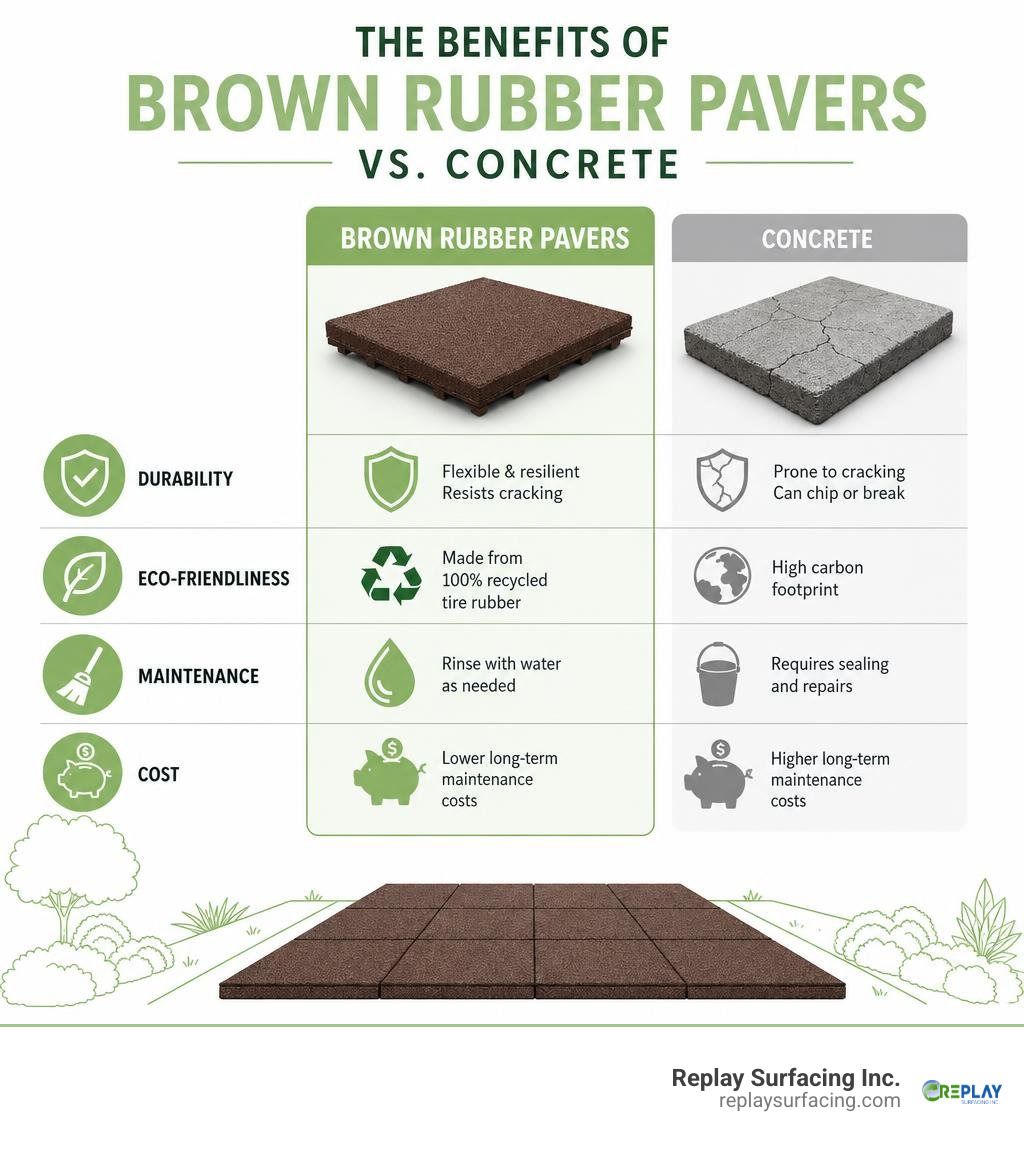
Choosing the right outdoor paver isn’t just about looks. It’s about finding something that lasts, stays safe underfoot in all weather, and doesn’t drain your maintenance budget year after year. Traditional concrete and stone options crack, shift, and fade — especially in climates with harsh freeze-thaw cycles. Rubber pavers solve many of those problems while also diverting waste tires from landfills.
That combination of durability, low maintenance, and sustainability is exactly why brown rubber pavers are trending in residential and commercial landscaping right now.
I’m Landon Olson, operator of Replay Surfacing, where I’ve spent my career recycling millions of pounds of scrap tires into high-performance surfaces — including brown rubber pavers for patios, walkways, and outdoor recreational spaces. My background in mechanical engineering and sustainable manufacturing gives me a practical lens for evaluating what actually works in the field, and I’ll walk you through everything you need to know to choose the right option for your yard.
What is a Brown Rubber Paver and Why is it Trending?
At Replay Surfacing, we have spent years perfecting the art of transforming environmental hazards into beautiful, sustainable construction materials. A brown rubber paver is a prime example of this innovation. Made from 100% recycled tire rubber, these pavers are designed to provide a durable, cushioned, and visually appealing alternative to traditional hardscaping.
The core of this trend lies in the raw material itself. Tires are manufactured to withstand extreme friction, heavy loads, and intense weather. When we recycle these tires into rubberised paving products, those same indestructible properties are transferred directly to your backyard patio or garden walkway.
In active residential hubs like Charlotte, NC, Raleigh, NC, and Nashville, TN, homeowners are increasingly looking for landscaping materials that offer high durability without the back-breaking maintenance. Traditional concrete and brick can chip, weed over, and settle unevenly. A dual-sided, interlocking brown rubber paver solves these issues. It offers built-in shock absorption, meaning it is comfortable to walk on, safer for children and pets who might trip, and highly forgiving on your joints.
Furthermore, the rich, earthy brown color of these pavers blends seamlessly with natural environments. Whether you are styling a cozy backyard in the rainy woods of Beaverton, OR, or creating a clean, modern patio space in the sun-drenched landscape of Tucson, AZ, the neutral brown tone mimics natural stone or classic clay brick. It provides a warm, inviting aesthetic that elevates any outdoor space while keeping millions of scrap tires out of our local landfills.
Key Benefits and Applications of Recycled Rubber Surfacing

When evaluating materials for your next landscaping project, it is essential to look at the long-term performance. Recycled rubber surfaces offer a unique set of benefits that traditional paving stones simply cannot match.
Unmatched Climate Durability and Slip Resistance
Whether you are dealing with the harsh, icy winters of Connecticut and Indiana, or the humid, rainy seasons of Sanford, NC and Lake Charles, LA, weather resistance is a top priority. Traditional concrete pavers absorb moisture. When that moisture freezes, it expands, causing the concrete to crack, crumble, and shift.
Because rubber is naturally flexible, a brown rubber paver easily accommodates these freeze-thaw cycles. The rubber expands and contracts with temperature shifts without losing its structural integrity. Furthermore, rubber is inherently slip-resistant. Even during heavy downpours in Columbia, SC or coastal Louisiana, these pavers provide excellent traction underfoot, making them a safe choice for pool surrounds, damp walkways, and open-air patios.
To better understand how these materials stack up, let us look at the pros and cons of different options:
| Feature | Brown Rubber Pavers | Traditional Concrete Pavers | Natural Stone Pavers |
|---|---|---|---|
| Material Composition | 100% Recycled Tire Rubber | Cement, Sand, and Gravel | Natural Quarried Stone |
| Flexibility & Crack Resistance | High (Will never crack or chip) | Low (Prone to cracking in freeze-thaw) | Low to Medium (Can crack or split) |
| Slip Resistance | Excellent (High traction even when wet) | Moderate (Can become slick when wet) | Variable (Smooth stones get very slippery) |
| Installation Effort | Very Easy (Interlocking, tool-free) | Labor-Intensive (Heavy lifting, mortar/sand) | High (Requires professional masonry) |
| Shock Absorption | Excellent (Soft, safe for kids/joints) | None (Hard, unforgiving surface) | None (Hard surface) |
| Eco-Friendliness | Outstanding (Diverts waste from landfills) | Low (High carbon footprint to manufacture) | Medium (Quarrying impacts the environment) |
| Long-Term Cost | Highly Cost-Effective (No repair costs) | Moderate (Requires sealing and repairs) | High (Expensive materials and installation) |
When you weigh the pros and cons and recycled rubber walkways, it becomes clear that rubber offers a level of longevity and safety that hard stone surfaces simply cannot deliver.
Versatile Applications for Every Yard
Where can you use these innovative pavers? The possibilities are virtually endless. They are perfect for creating recycled rubber walkways that wind through your garden, providing a clean path that keeps your shoes out of the mud.
We also highly recommend using them to explore porches walkways with replays rubber paving. If you have an old, weathered wooden deck or a cracked concrete porch in Raleigh or Nashville, you do not need to spend thousands of dollars tearing it out. You can simply lay these interlocking rubber pavers directly over the existing surface to instantly refresh the look and feel of your outdoor living area.
Styling Your Yard with a Brown Rubber Paver
One of the most exciting features of high-quality rubber pavers—such as the Vigoro 24 in. x 12 in. x 5/8 in. Brown Interlocking Dual-Sided Rubber Paver (60-Pack)—is their dual-sided design. This unique engineering gives homeowners incredible design flexibility.
One side of the paver features a classic, structured brick pattern, which is perfect for traditional, formal, or colonial-style homes. Flip the paver over, and you will find a natural, textured stone pattern that fits beautifully with rustic, modern, or organic landscapes.
Here are a few design tips to help you style your new patio walkway made from recycled rubber:
- Contrast with Greenery: The deep, warm brown of the pavers looks stunning when bordered by vibrant green turf, low-lying ferns, or ornamental grasses. In desert climates like Tucson, AZ, the brown tone provides a rich contrast to pale gravel, succulents, and cacti.
- Coordinate with Outdoor Furniture: Pair your brown pavers with dark wicker, teak, or modern black metal patio furniture. Add cream or beige outdoor cushions to create a high-end, resort-like feel right in your backyard.
- Define Your Spaces: Use the brick pattern for your main dining patio to create a clean, defined “room” effect, and transition to the stone pattern for the garden paths leading away from the patio. This subtle shift in texture adds depth and visual interest to your landscaping.
Installation and Maintenance Made Simple
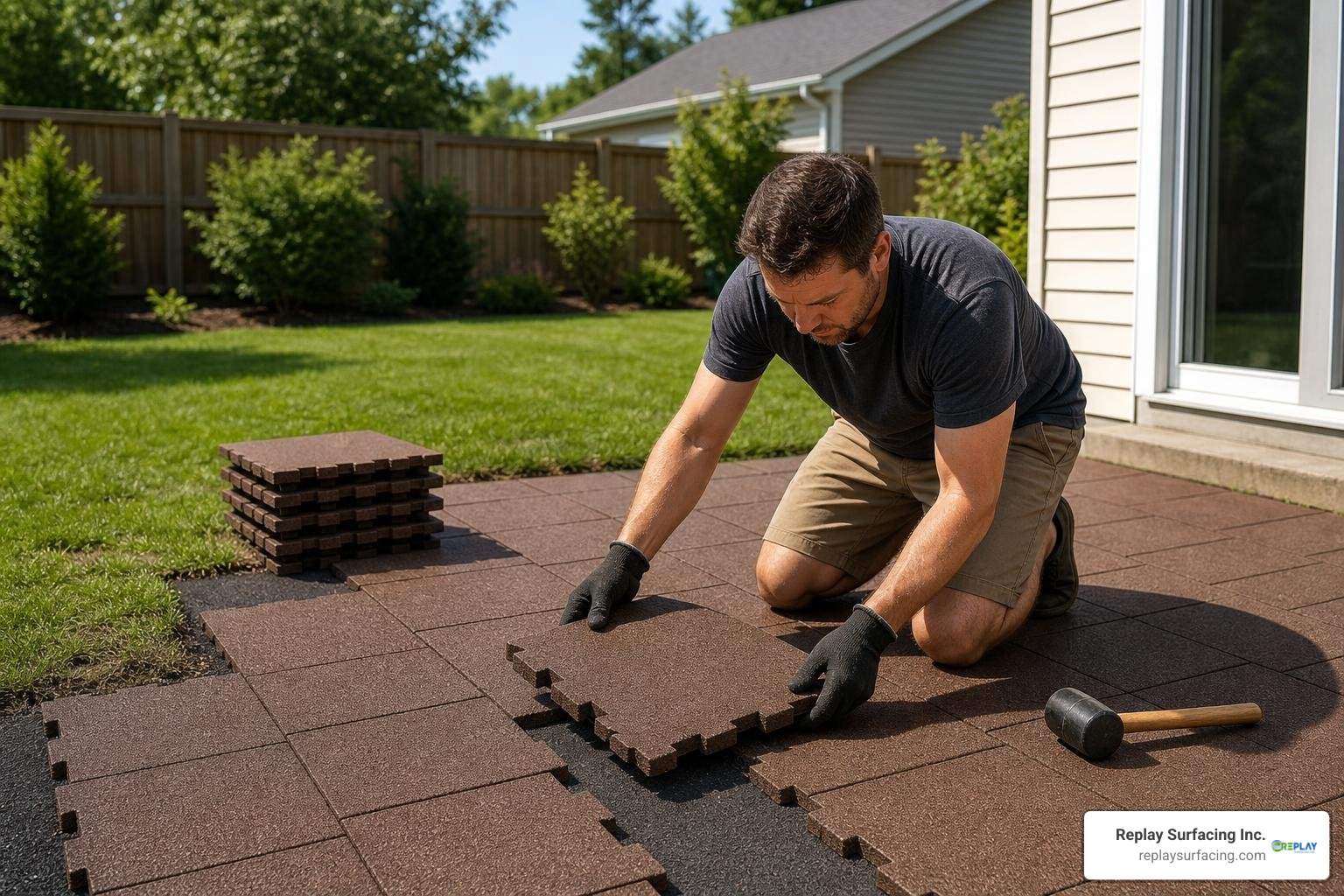
One of the biggest hurdles of any landscaping project is the installation. Hiring professional contractors can double or triple your budget, and traditional masonry work can turn your yard into a muddy, chaotic construction zone for weeks.
Fortunately, interlocking rubber pavers are designed with the DIY enthusiast in mind. Thanks to their lightweight, interlocking design, you can achieve a professional-grade finish without any specialized tools, heavy machinery, or adhesives.
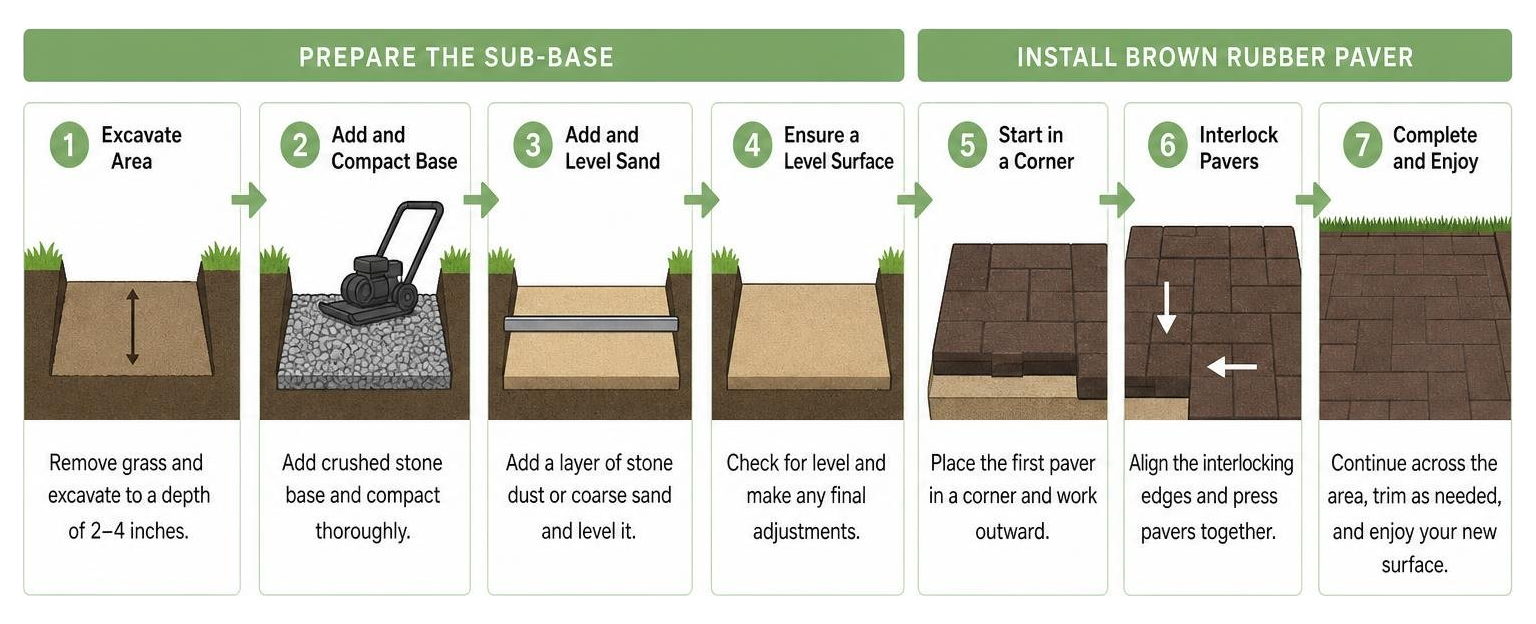
To make the process as straightforward as possible, here is a simple guide on how to install rubber pavers in your yard:
Once installed, these pavers require almost zero effort to keep them looking brand new. Unlike wood decks that require annual staining, or concrete that needs regular sealing to prevent moisture damage, rubber is incredibly low-maintenance.
- Routine Cleaning: Simply use a garden hose to rinse away dirt, pollen, or leaves.
- Deep Cleaning: For stubborn dirt or bird droppings, a mild dish soap mixed with water and a soft-bristle broom will do the trick. Avoid using harsh petroleum-based solvents, as these can degrade the rubber over time.
- Weed Control: Because the pavers interlock tightly, weed growth is heavily minimized compared to traditional stone pathways. If a rogue weed does pop up in a seam, it can easily be pulled by hand.
Preparing the Base for Your Brown Rubber Paver
While the interlocking assembly is incredibly easy, the secret to a long-lasting, perfectly flat rubber surface lies entirely in the preparation of your sub-base. Because rubber is flexible, it will contour to any bumps, dips, or rocks underneath it. If you lay your pavers on uneven ground, your final surface will be uneven too.
Depending on where you are installing, here is how you should prepare your base:
- Installing Over Hard Surfaces (Concrete, Wood Decks, Asphalt): This is the easiest installation. Simply sweep the existing surface clean of all debris, dirt, and rocks. If you are laying them over cracked rubber concrete or old wood, ensure there are no major structural voids. Once clean, you can lay the pavers directly on top.
- Installing Over Soil or Grass (Walkways and Patios):
- Excavate: Dig out the area to a depth of about 2 to 3 inches.
- Clear: Remove all grass, roots, and large rocks.
- Add Sub-Base: Add a 2-inch layer of crushed gravel or road base. This provides excellent drainage and a stable foundation.
- Add Sand: Add a 1/2-inch layer of leveling sand over the gravel.
- Compact: Use a hand tamper or plate compactor to pack the gravel and sand down until it is perfectly flat and firm.
Taking the time to build a proper, leveled base ensures that your pavers will stay flat, drain water efficiently, and remain beautiful for decades to come.
Frequently Asked Questions About Rubber Pavers
Can brown rubber pavers withstand extreme winter weather?
Yes, absolutely! Recycled rubber pavers are highly freeze-resistant and crack-resistant. In cold climates like Connecticut and Indiana, traditional concrete surfaces absorb water, freeze, and crack. Rubber pavers do not absorb water in the same way, and their natural elasticity allows them to expand and contract safely with shifting temperatures. They will easily withstand sub-zero winter freezes and scorching summer heatwaves without losing their shape or strength.
Are these pavers suitable for driveways or heavy vehicles?
No, these rubber pavers are designed for pedestrian foot traffic only. While they are incredibly durable and can support heavy patio furniture, grills, and active play, they are not engineered to handle the twisting, turning weight of cars, trucks, or heavy machinery. They are perfect for patios, garden paths, pool decks, and porches, but should not be used for driveways.
How much coverage does a standard 60-pack provide?
A standard 60-pack of 24 in. x 12 in. x 5/8 in. pavers provides exactly 120 square feet of coverage, with each individual paver covering 2 square feet. Each paver weighs approximately 6.5 lbs. This substantial weight is a major benefit: it is light enough for easy DIY installation, yet heavy enough to ensure the pavers stay firmly in place without sliding around once interlocked.
Conclusion: Elevate Your Yard with Sustainable Surfacing
Upgrading your outdoor living space does not have to mean choosing between style, durability, and environmental responsibility. By choosing a brown rubber paver, you get the best of all worlds: a gorgeous, dual-sided design that mimics natural stone or classic brick, unmatched slip and weather resistance, and a incredibly simple DIY installation process.
At Replay Surfacing Inc., we are proud to be a trusted rubber paving company helping homeowners across Charlotte, NC, Columbia, SC, Raleigh, NC, Sanford, NC, Tucson, AZ, Connecticut, Indiana, Nashville, TN, Beaverton, OR, and Lake Charles, LA build smarter, safer, and more sustainable yards. We believe that turning recycled materials into high-performance landscaping solutions is the way of the future, and we are here to help you bring that vision to your home.
Ready to transform your yard with a surface that lasts? Explore our premium selection of rubber pavers today, or discover why bonded rubber stone is the future of walkways to find the perfect sustainable solution for your next outdoor project!