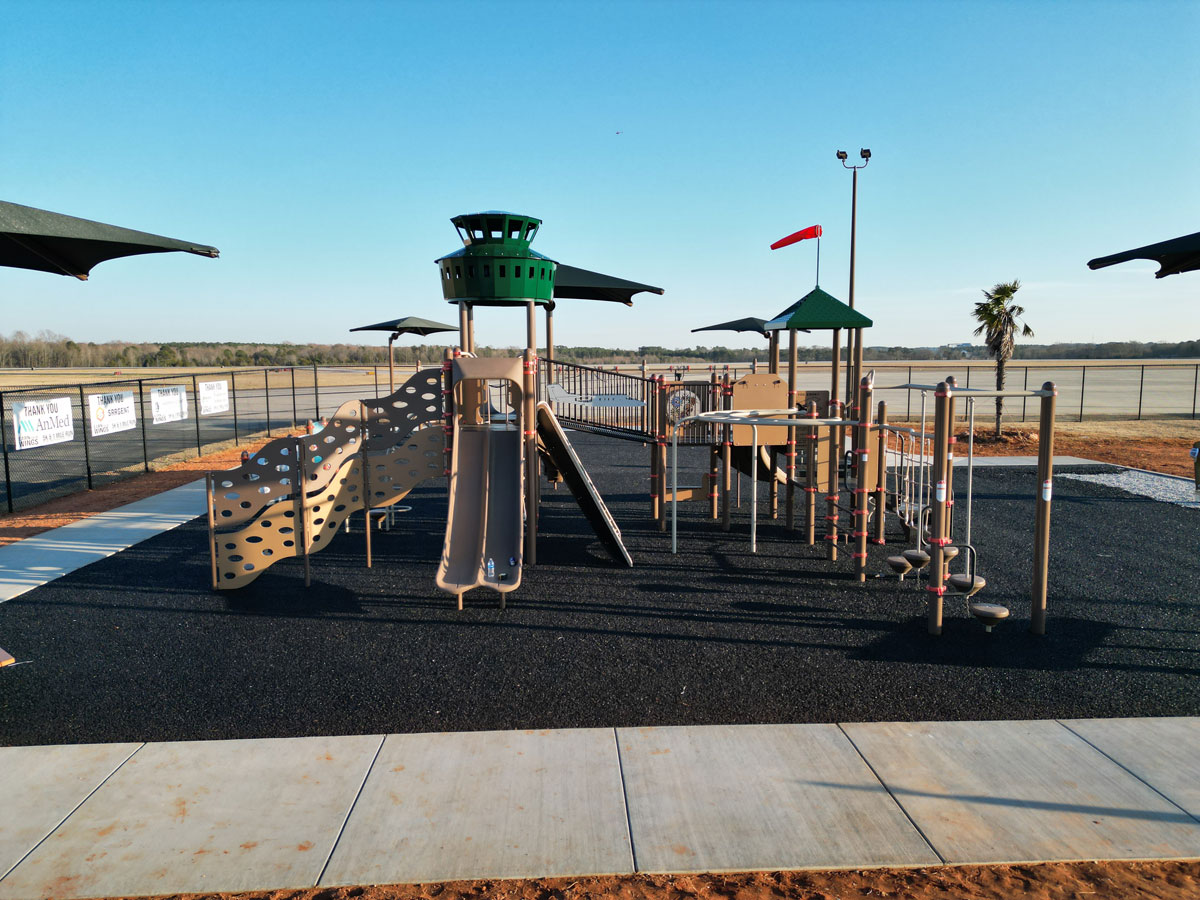
Introduction: Balancing Safety, Budget, and Durability
Affordable playground flooring in Charlotte doesn’t mean compromising on safety or quality. Here are the most cost-effective options:
Quick Answer: Most Affordable Playground Flooring Options in Charlotte
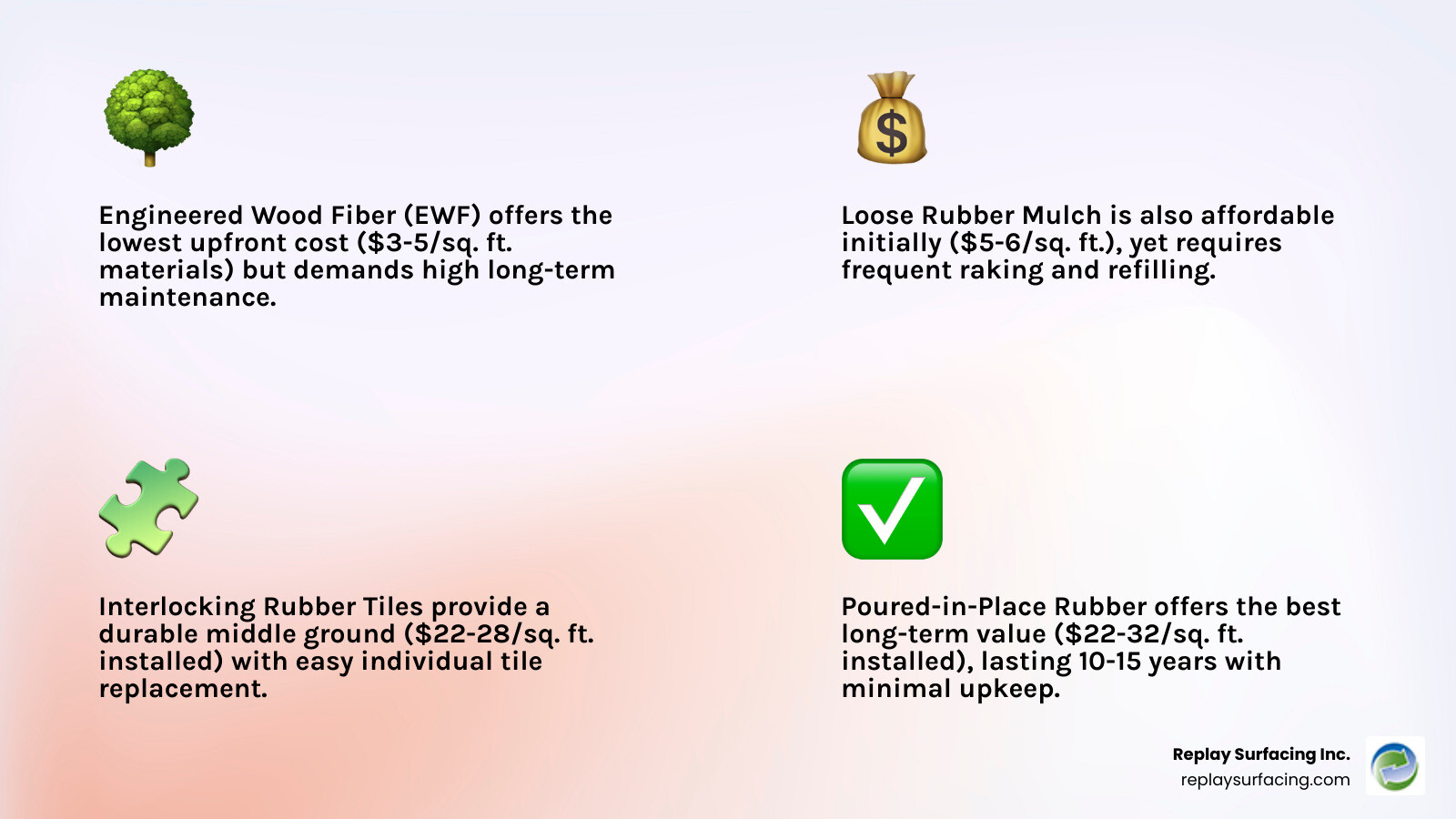
- Lowest Upfront Cost: Engineered Wood Fiber (EWF) at $3-5 per sq. ft. (materials only) or loose rubber mulch at $5-6 per sq. ft.
- Best Long-Term Value: Poured-in-place rubber at $22-32 per sq. ft. (installed) – lasts 10-15 years with minimal maintenance
- Middle Ground: Interlocking rubber tiles at $22-28 per sq. ft. (installed) – durable with easy individual tile replacement
Key Consideration: Loose-fill surfaces require frequent raking and refilling, potentially costing more over time than higher-priced unitary surfaces.
Every playground project in the Charlotte area faces the same challenge: how do you create a safe, compliant surface that protects children without breaking your budget? The answer isn’t always the cheapest option upfront. Sand and engineered wood fiber might seem affordable at first, but they require regular refills and routine maintenance that adds up quickly. Meanwhile, poured-in-place rubber costs more initially but can save thousands in upkeep over its 10-15 year lifespan.
Understanding the true cost of playground flooring means looking beyond the price tag. You need to consider safety standards like ASTM F1292 for impact attenuation, ongoing maintenance requirements, ADA compliance, and how long each material actually lasts. A surface that needs replacing every few years isn’t a bargain – it’s a recurring expense.
The good news? You have more options than ever, especially when it comes to recycled rubber solutions that combine affordability, durability, and sustainability. Whether you’re managing a school playground, a municipal park, or a daycare facility, there’s a cost-effective solution that meets your safety requirements without compromising quality.
I’m Landon Olson, and at Replay Surfacing, I’ve spent years changing recycled tires into durable playground surfaces, helping facilities across Charlotte, Raleigh, Tucson, and beyond find solutions for affordable playground flooring in Charlotte. My engineering background and hands-on experience in the sustainability sector have taught me that the smartest playground investment isn’t always the cheapest one – it’s the one that keeps children safe while delivering the lowest total cost of ownership.
Affordable playground flooring in Charlotte terms simplified:
Understanding Playground Surfacing Cost Factors
When we talk about affordable playground flooring in Charlotte, it’s crucial to understand that “affordable” isn’t just about the sticker price. Several factors influence the overall cost of a playground surface, from initial purchase and installation to long-term maintenance. Ignoring these can turn an initially cheap option into a budget black hole.
Here are the main cost factors we consider for projects in places like Charlotte, NC, or Tucson, AZ:
- Material Type: This is perhaps the most obvious factor. We distinguish between two main types: loose-fill surfaces and unitary surfaces. Loose-fill materials, like engineered wood fiber (EWF) or rubber mulch, generally have a lower upfront material cost. Unitary surfaces, such as poured-in-place (PIP) rubber, interlocking rubber tiles, or artificial turf, have a higher initial material and installation cost.
- Area Size: Simply put, the larger the playground area, the more material you’ll need, and often, the higher the labor costs for installation. A small backyard playset in Sanford, NC, will naturally cost less to surface than a sprawling community park in Raleigh, NC.
- Fall Height Requirements: This is a critical safety consideration that directly impacts cost. The height of your playground equipment dictates how much shock absorption your surface needs. Higher fall heights require thicker, more impact-attenuating material, which means more volume and thus higher costs. For instance, a slide with a 10-foot fall height will demand a much deeper and more expensive surface than a swing set with a 4-foot fall height. We always ensure our solutions meet the specific critical fall height requirements for your equipment.
- Installation Costs: Some materials are DIY-friendly, while others require professional installation. Loose-fill options can often be installed by a dedicated team or volunteers, reducing labor costs. Unitary surfaces, particularly poured-in-place rubber and artificial turf, demand specialized skills and equipment for proper installation, leading to higher labor expenses. However, this upfront investment often pays off in durability and longevity.
- Substrate Preparation: What’s underneath your new surface matters! A smooth, well-drained base (like compacted crushed stone or concrete) is ideal for most unitary surfaces. If your existing ground isn’t suitable, you might incur additional costs for excavation, grading, and installing a proper sub-base. This is a common consideration for older playgrounds in places like Columbia, SC.
- Long-term Maintenance: This is where the true definition of “affordable” comes into play. Loose-fill materials, while cheaper upfront, require constant maintenance—raking, topping off, and cleaning—which adds up over time. Unitary surfaces, though more expensive initially, boast significantly lower maintenance needs, translating into long-term savings.
- Regional Cost Variations: Material and labor costs can fluctuate based on your geographic location. Supply chain logistics, local labor rates, and even climate can affect the final price. We work diligently to provide competitive pricing for our clients across Connecticut, Indiana, Nashville, and all our service areas.
Comparing Loose-Fill vs. Unitary Surfaces for Affordability
When we help clients choose affordable playground flooring in Charlotte, we often start by explaining the fundamental difference between loose-fill and unitary surfaces. Each has its place, and understanding their characteristics is key to making an informed decision.
The Most Affordable Upfront: Loose-Fill Options
Loose-fill surfaces are made up of many small, individual pieces of material. They are generally the go-to choice if your primary concern is the lowest possible initial outlay. However, this affordability comes with a trade-off in ongoing maintenance.
- Engineered Wood Fiber (EWF): This is a popular and truly affordable option. EWF is essentially specially processed wood material that knits together to form a stable, yet cushioned, surface. It’s affordable, non-toxic, recyclable, and blends well with natural outdoor environments, making it a favorite for parks and schools in places like Beaverton, OR. We’ve seen EWF material costs range from $3-5 per square foot.
- Pros: Low initial cost, natural appearance, environmentally friendly (often recycled wood), good impact absorption when maintained correctly. It’s often easier for DIY installation for smaller residential projects.
- Cons: High maintenance requirements. EWF compacts over time, requiring regular raking and replenishment (topping off) to maintain critical fall height protection. It can also be displaced by active play or weather, leading to uneven surfaces. It’s not typically ADA compliant without additional measures.
- Safety Standards: EWF should meet ASTM F2075 for wood fiber specifications and must also comply with ASTM F1292 for impact attenuation to ensure it provides adequate fall protection.
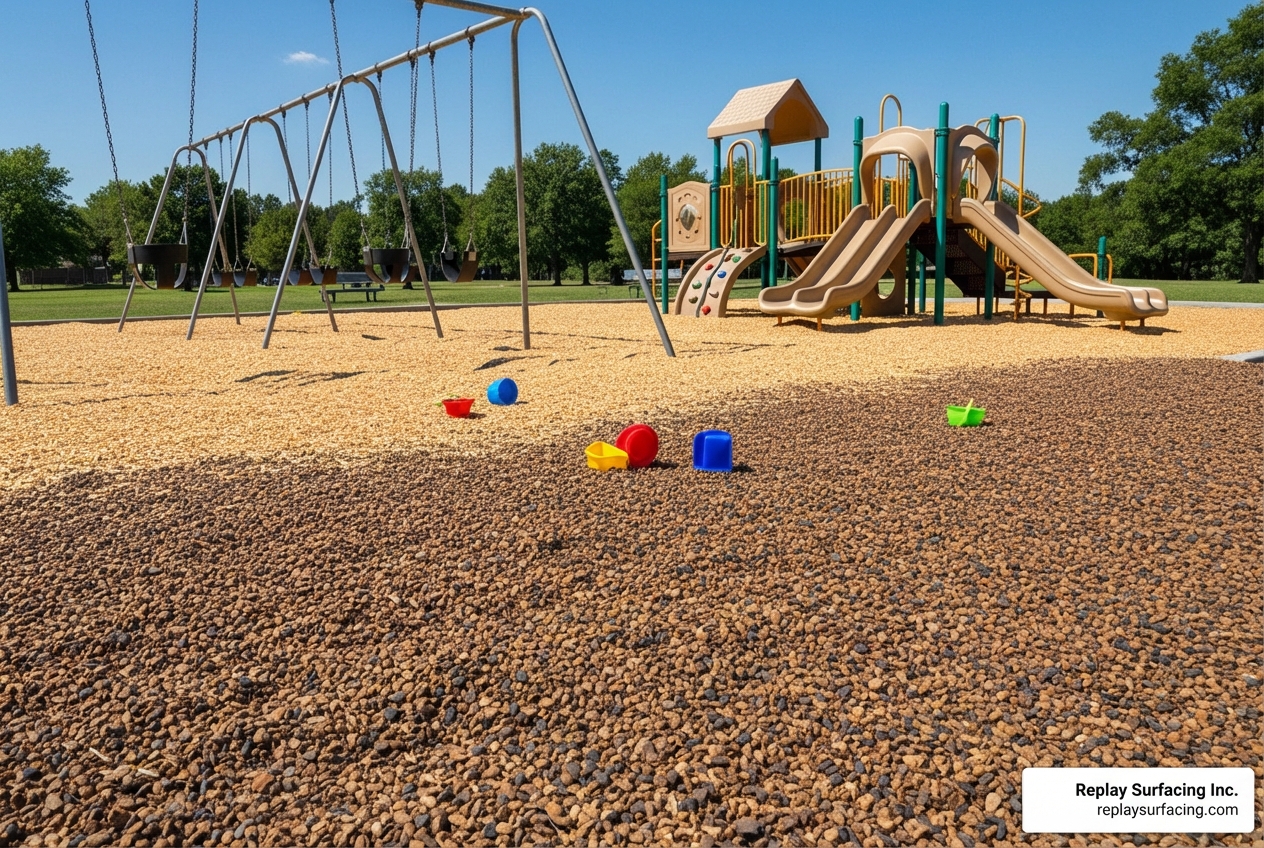
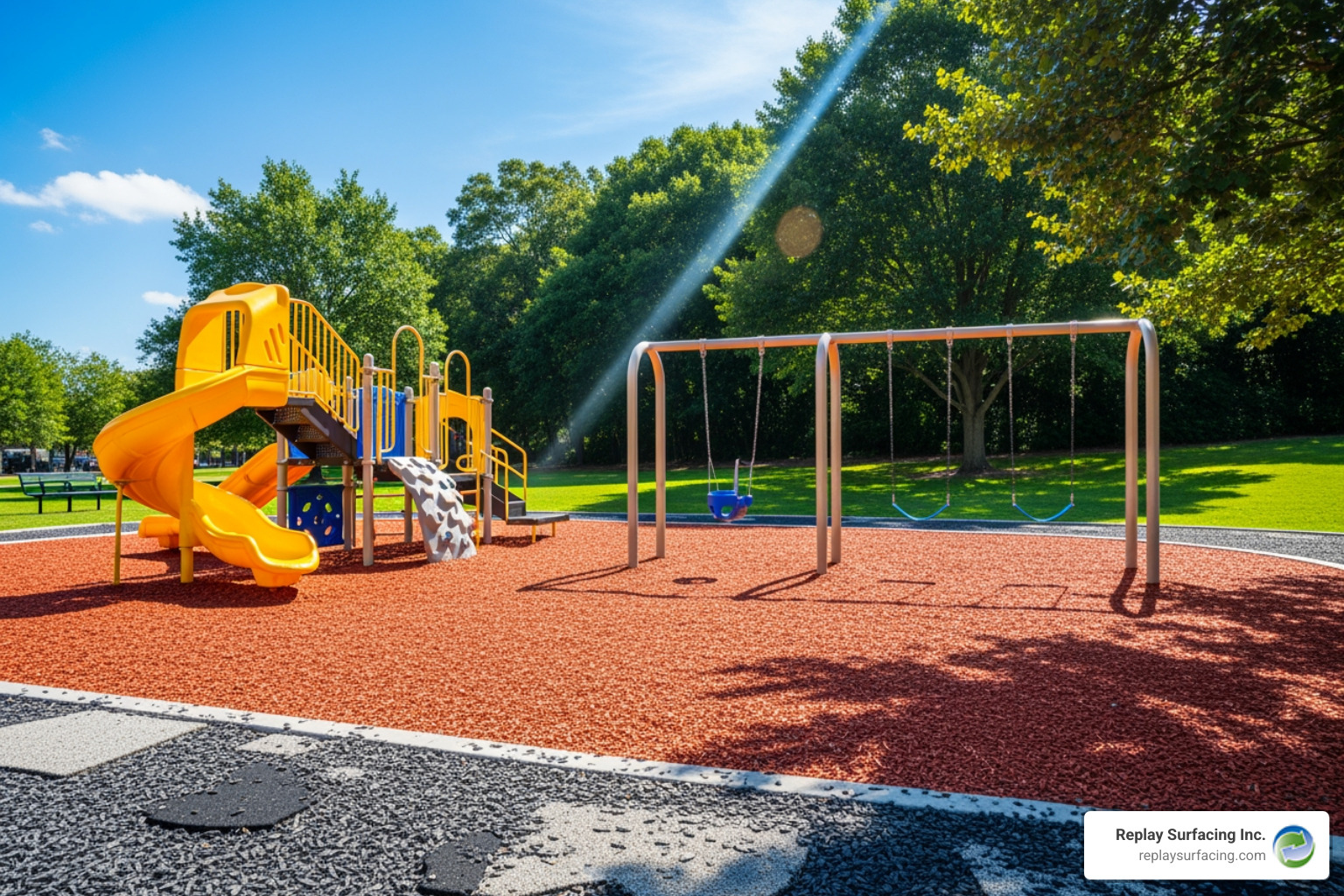
- Loose Rubber Mulch: Made from recycled tires, rubber mulch offers excellent shock absorption and a vibrant aesthetic. Material costs are typically around $5-6 per square foot.
- Pros: Excellent impact attenuation, available in various colors, often made from recycled materials (diverting waste from landfills), doesn’t decompose or attract insects like wood products. It’s a fantastic option for safety-conscious projects in places like Lake Charles, LA.
- Cons: Like EWF, it can be displaced, requiring frequent raking and refilling to maintain proper depth and consistency. Over time, this maintenance can make it less “affordable” than initially perceived. It can also get quite warm in direct sunlight, especially darker colors.
- Safety Standards: Loose rubber mulch must comply with ASTM F3012, which sets the standard for loose-fill rubber surfacing materials, and also ASTM F1292 for impact attenuation. We always recommend using certified rubber mulch to ensure safety.
- Learn more about this option: Loose Rubber Mulch.
The pros and cons here highlight the ongoing debate: is the lowest upfront cost truly the most affordable playground flooring in Charlotte in the long run? For many of our clients, the answer leans towards unitary solutions when considering total cost of ownership.
The Best Long-Term Value: Unitary Surfaces
Unitary surfaces provide a solid, continuous layer of protection. While their initial cost is higher, their durability, low maintenance, and superior safety features often make them the more economical choice over the lifespan of the playground.
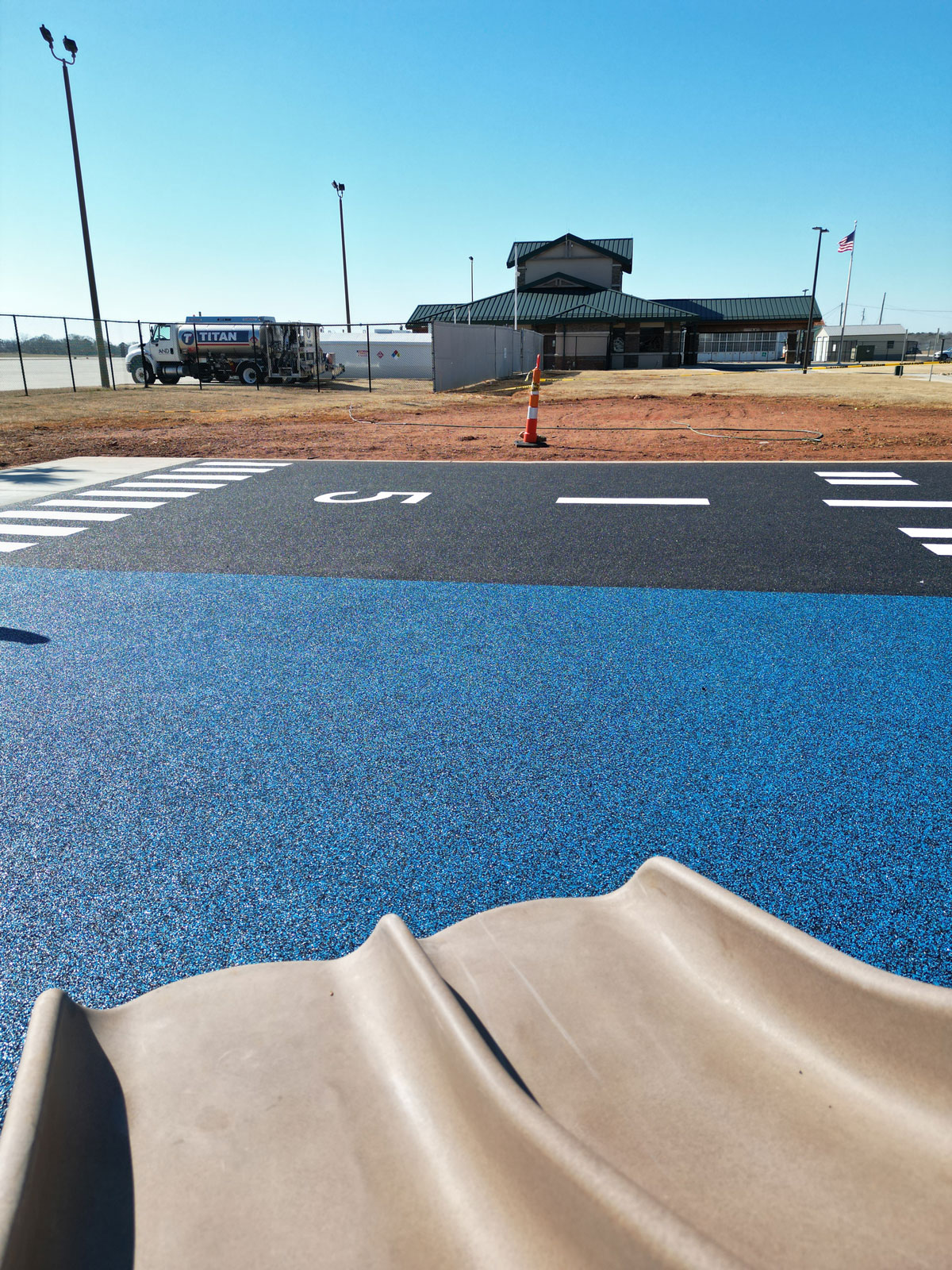
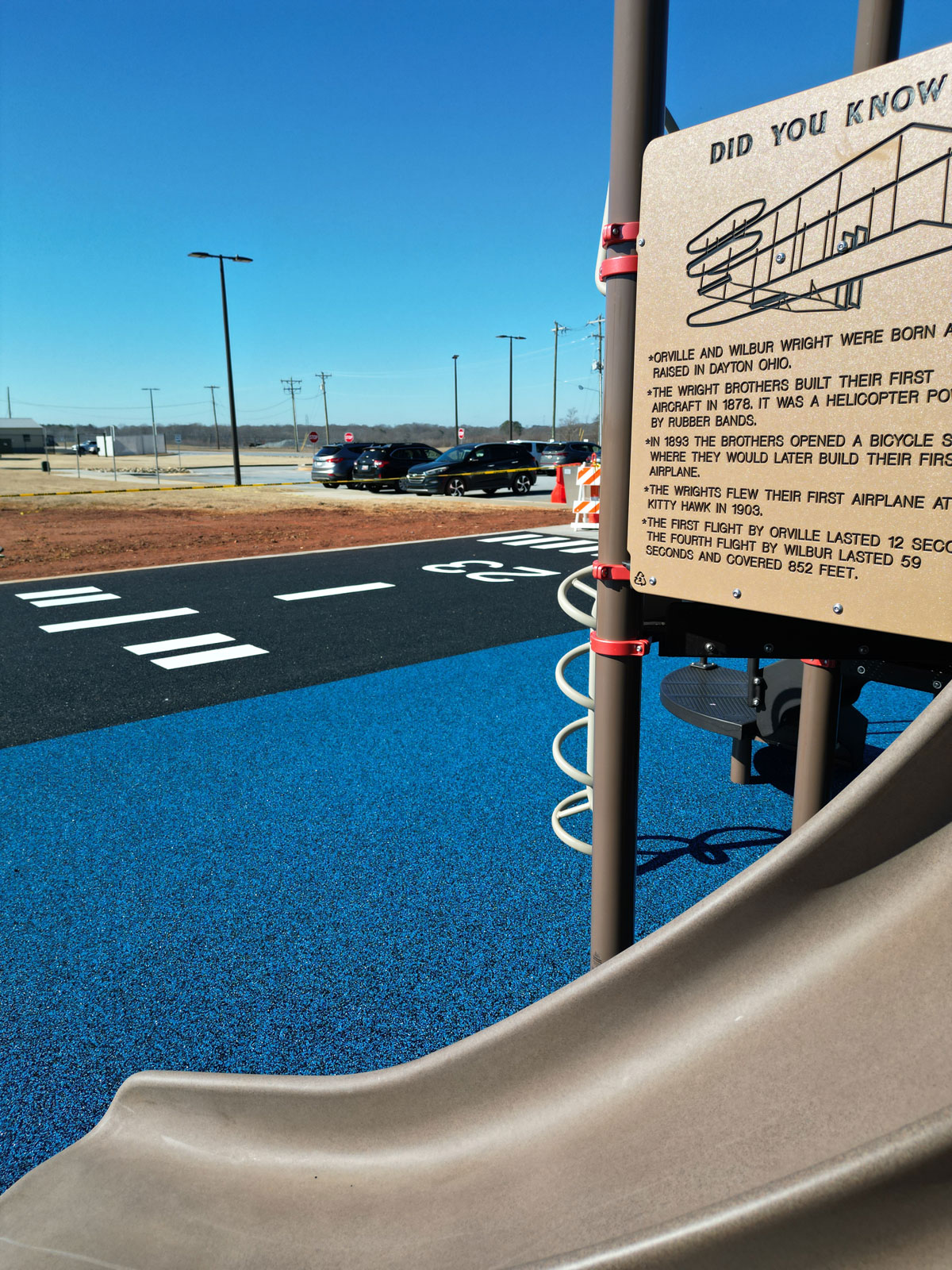
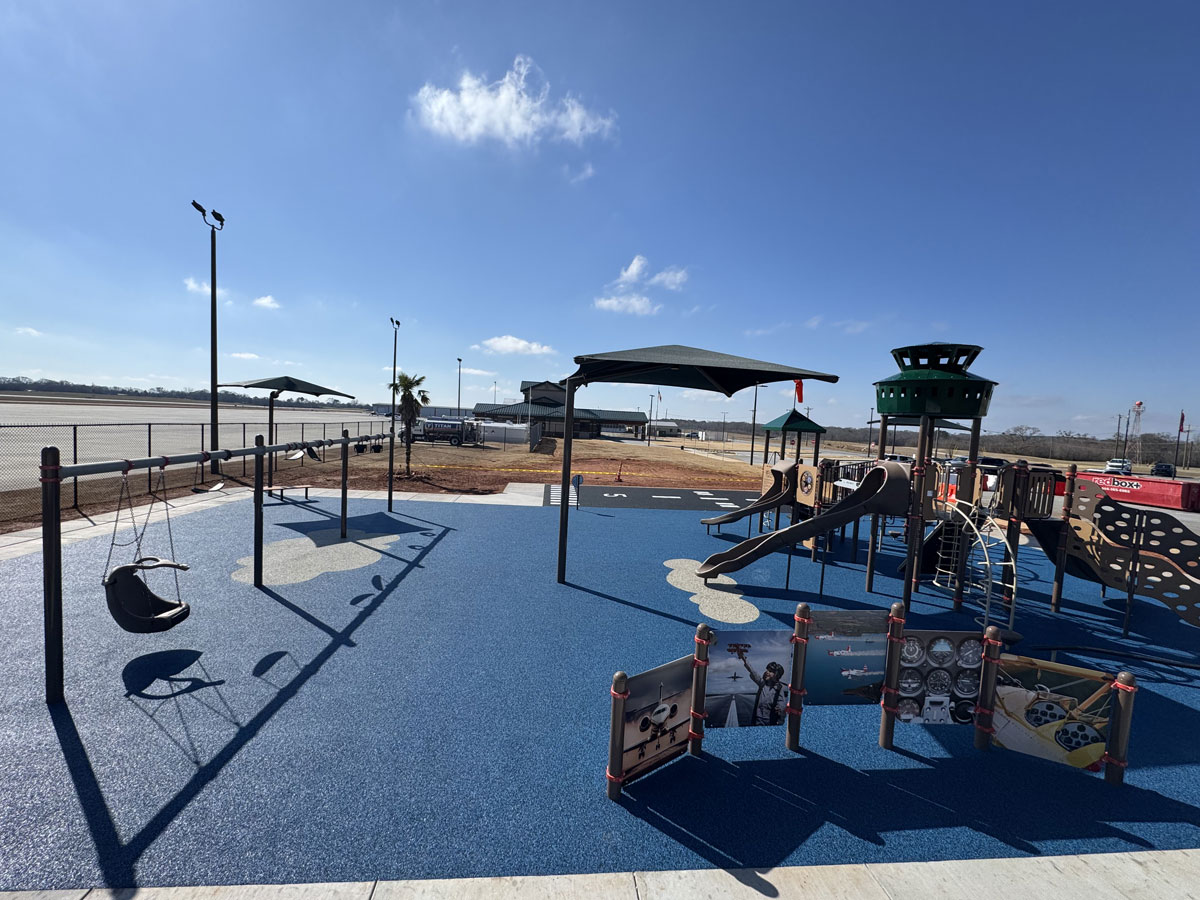
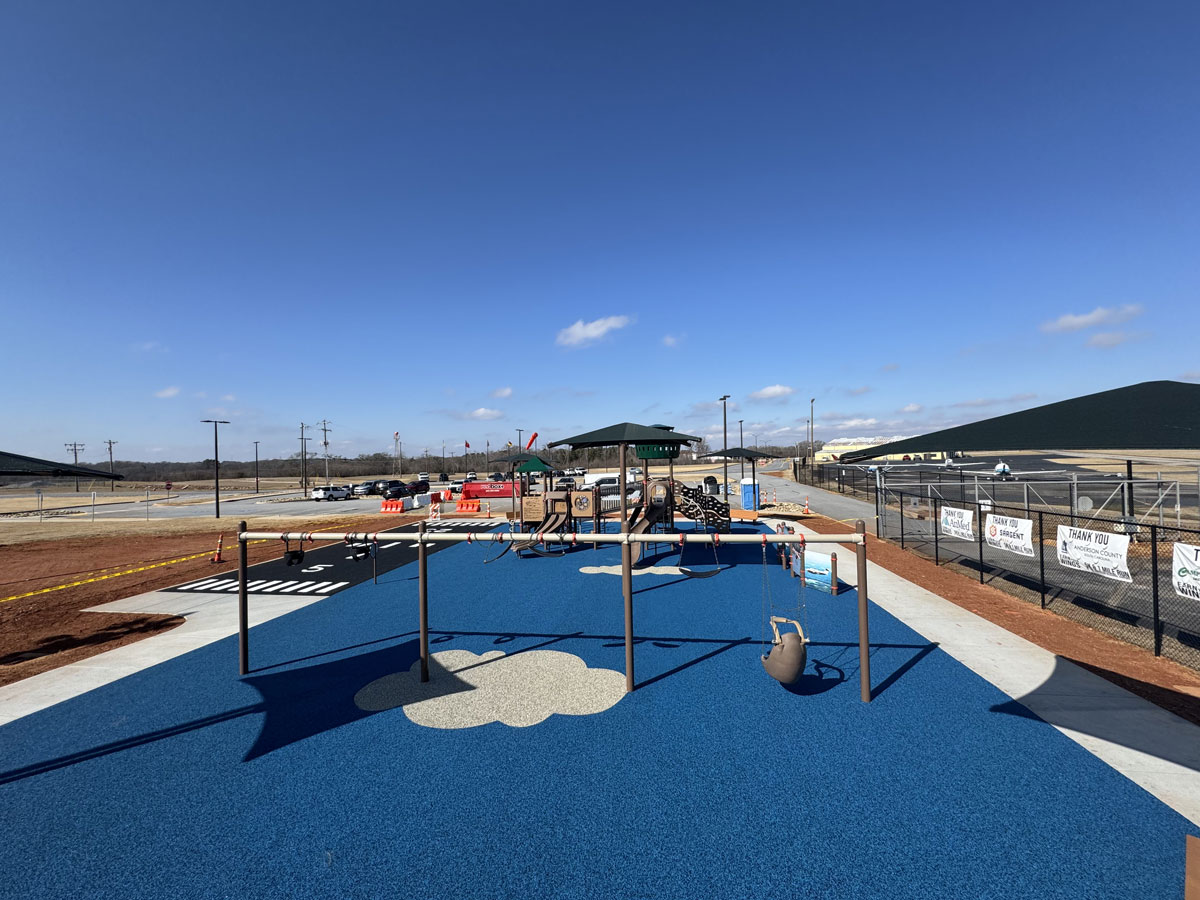
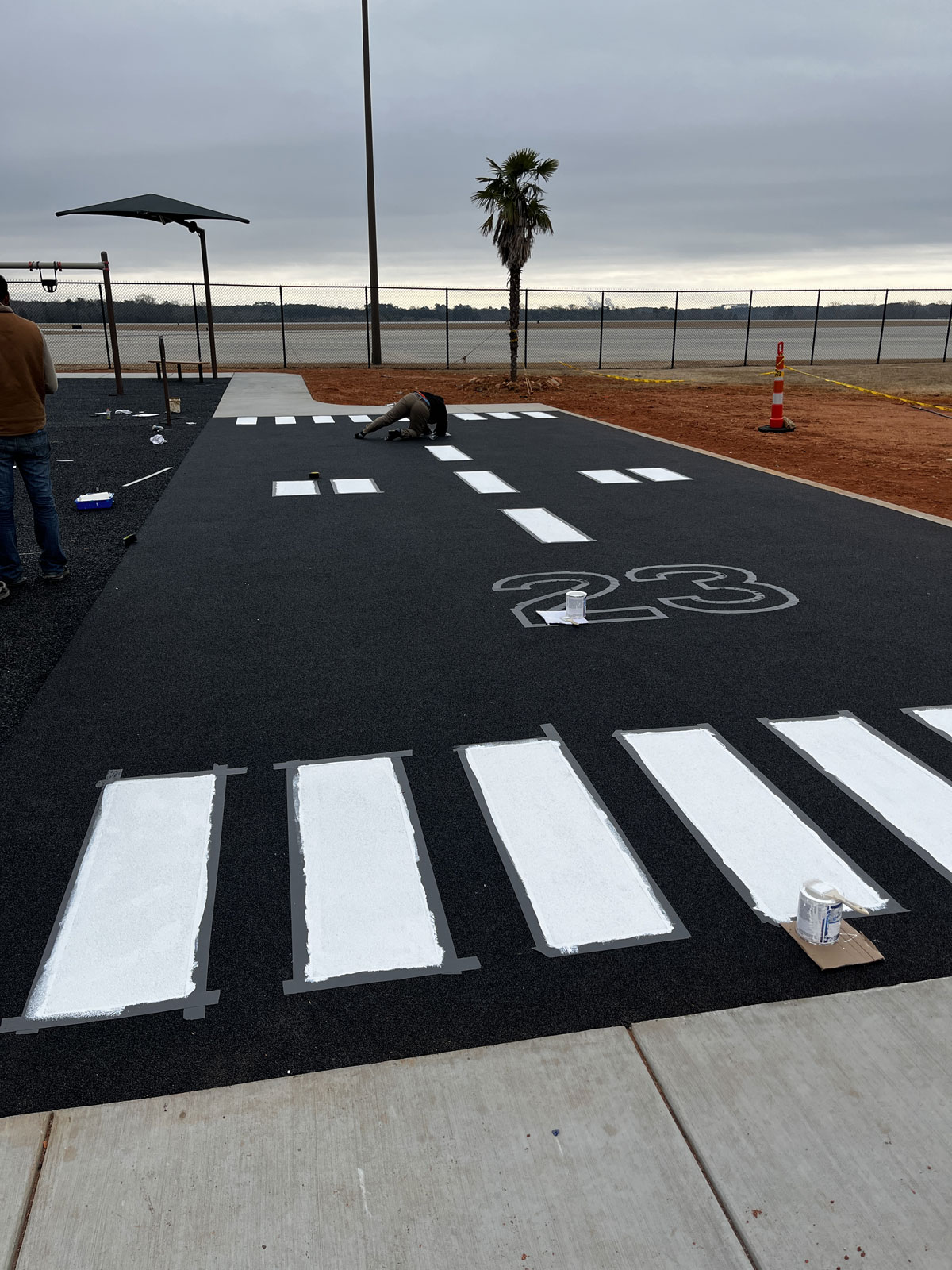
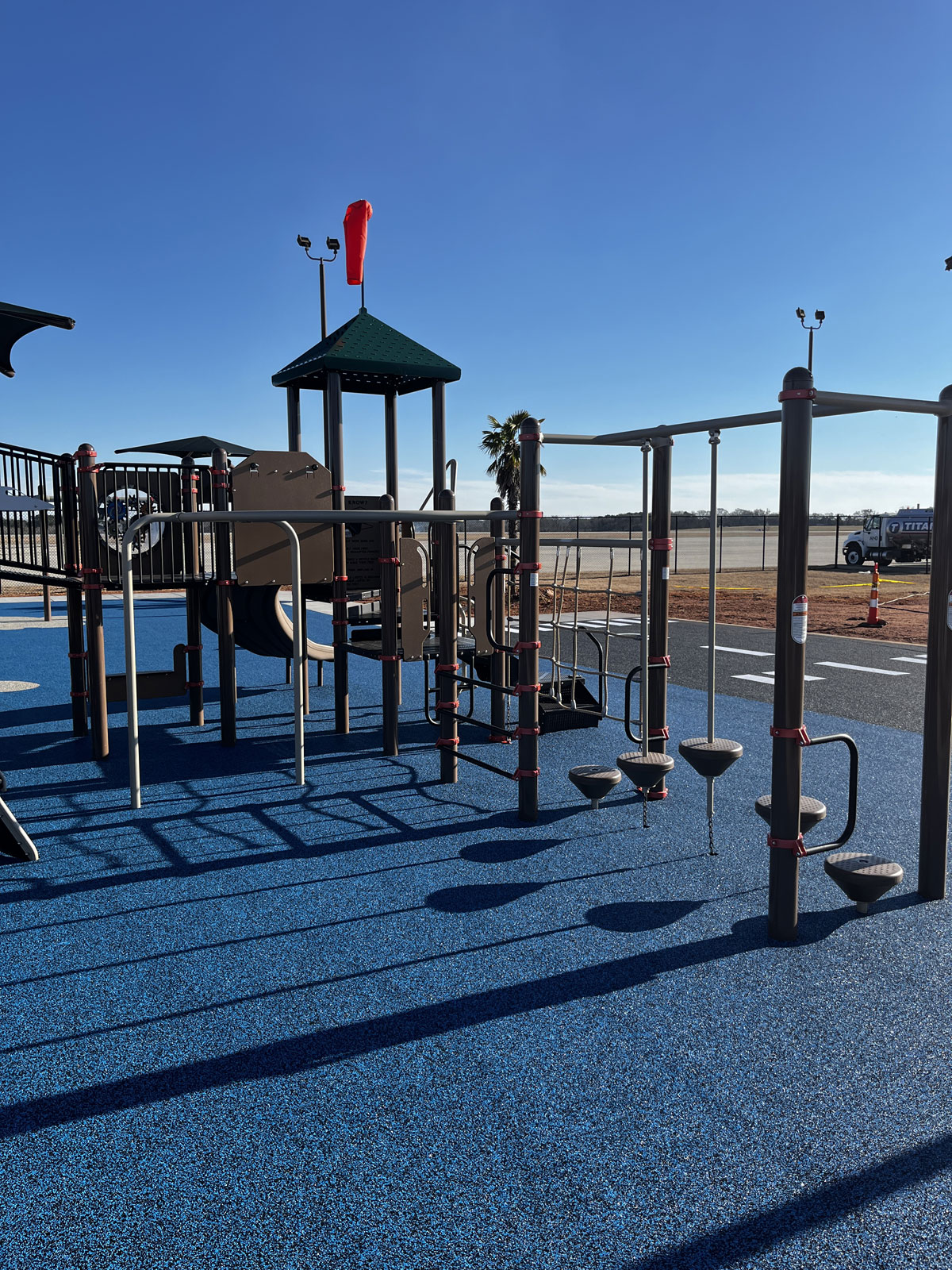
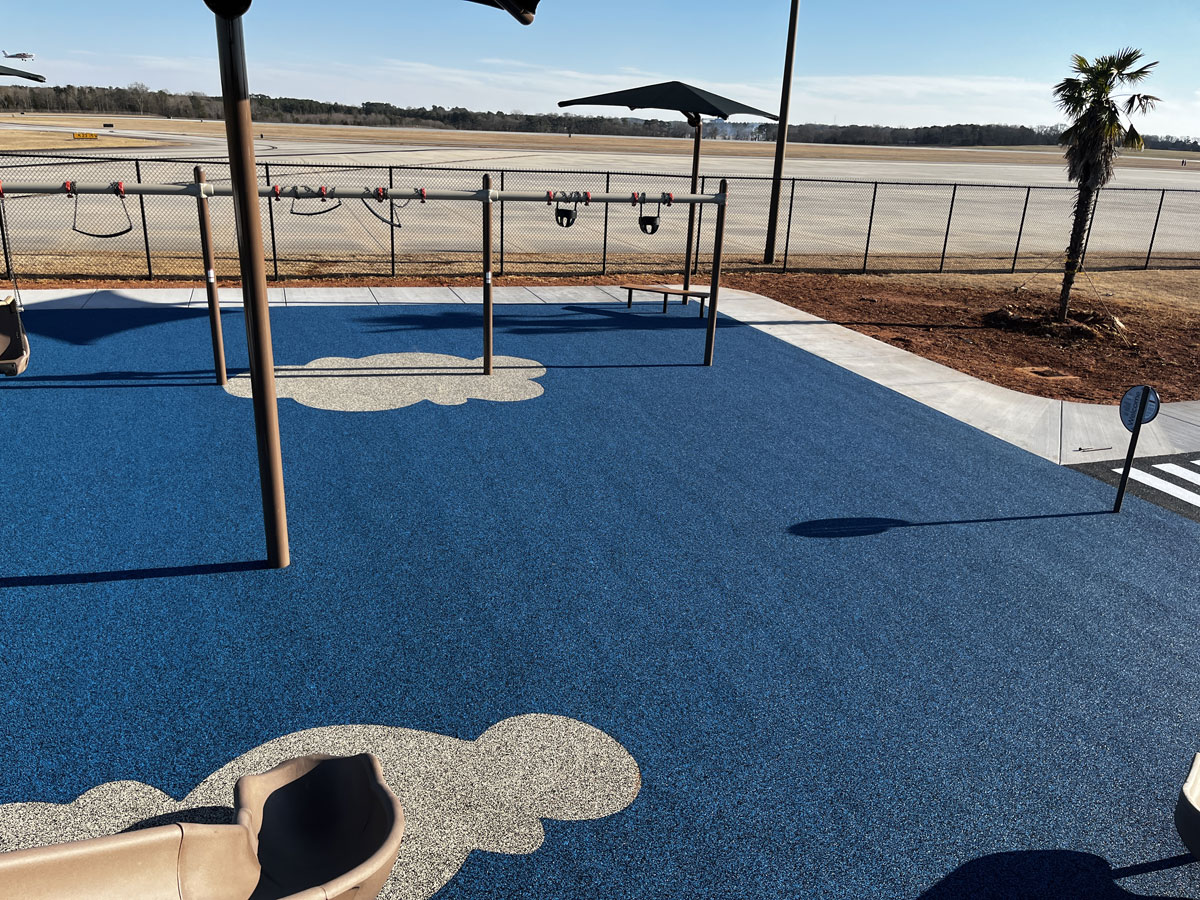
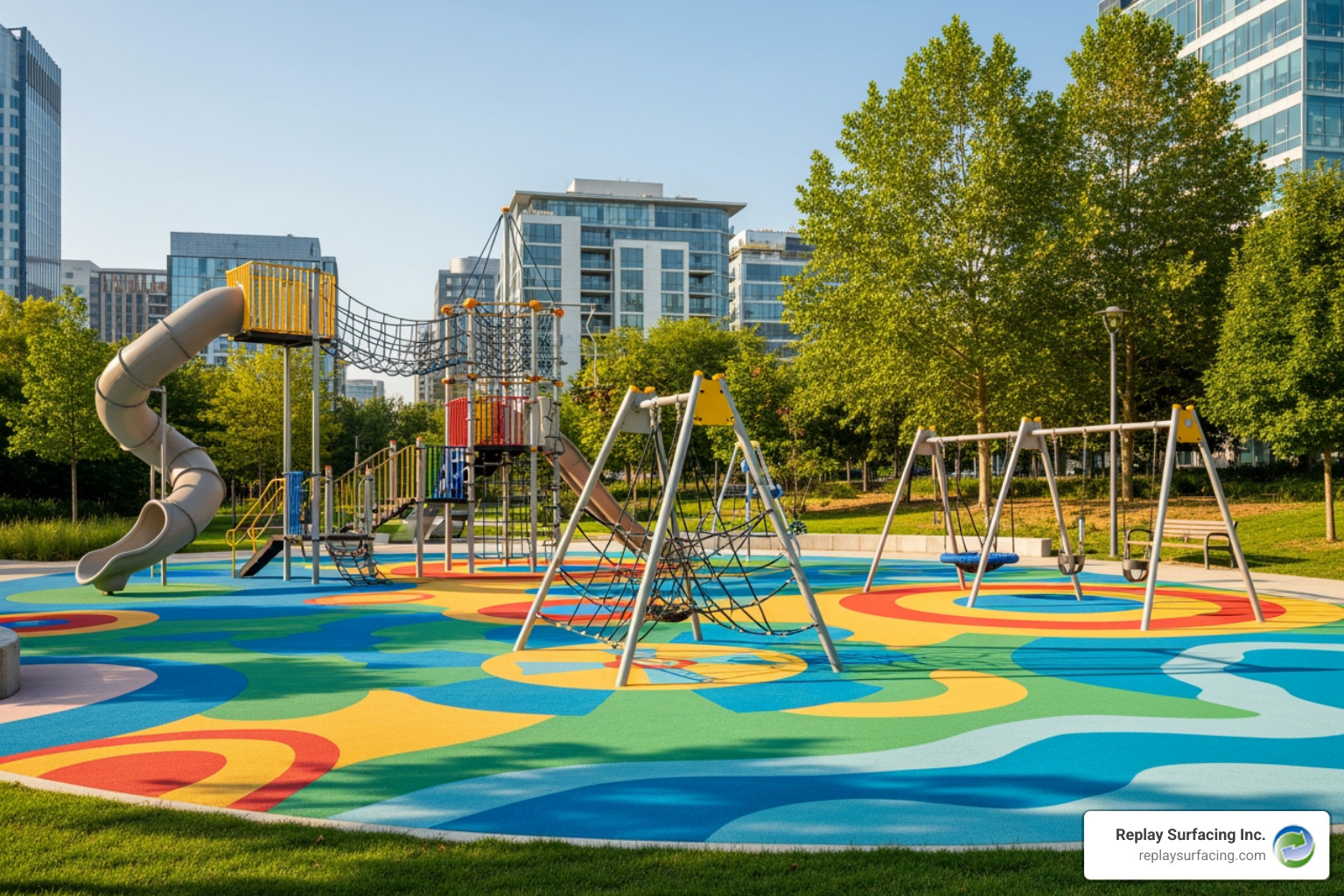
- Poured-in-Place (PIP) Rubber: This seamless surface is created by mixing rubber granules (often from recycled tires) with a binder on-site and pouring it directly onto a prepared sub-base. It’s highly customizable in terms of color and design, making it popular for vibrant play areas in urban settings like Nashville, TN. Expect installed costs to be in the range of $22-32 per square foot.
- Pros: Best durability (10-15 years lifespan with minimal maintenance), seamless finish (eliminates trip hazards), excellent impact absorption, fully ADA compliant, allows for creative designs and custom graphics. It’s a wise choice if you’re looking for long-term affordable playground flooring in Charlotte with minimal upkeep.
- Cons: High upfront cost, requires professional installation, and can be sensitive to weather conditions during installation.
- Safety Standards: PIP rubber surfaces must comply with ASTM F2479, which specifies standards for poured-in-place rubber surfaces, as well as ASTM F1292 for impact attenuation and ASTM F1951 for accessibility.
- Explore our options: Poured-in-Place Rubber.
- Interlocking Rubber Tiles: These pre-manufactured tiles, typically made from recycled rubber, interlock to form a cushioned surface. They offer a great balance of durability and ease of repair. Installed costs typically range from $22-28 per square foot.
- Pros: Durable, easy to clean, low maintenance, excellent impact absorption, individual damaged tiles can be replaced (a huge cost-saving benefit!), and generally ADA compliant. The interlocking system, like our QuadBlock connectors, makes installation quicker and easier than traditional glue-down systems, which is great for projects in Indiana.
- Cons: Higher upfront cost than loose-fill, visible seams (though modern tiles minimize this), and can sometimes shift if not properly installed on a stable base.
- Safety Standards: Interlocking rubber tiles must comply with ASTM F1951 for accessibility of surfaces and ASTM F1292 for impact attenuation. Our 2.5″ thick tiles, for example, meet CPSC guidelines for fall heights up to 6 feet and carry a 15-year warranty.
- Find more: Interlocking Rubber Tiles.
- Artificial Turf: While often associated with sports fields, specialized artificial turf designed for playgrounds can be a safe and aesthetically pleasing option. It typically requires a shock-absorbing underlayment to meet fall height requirements. Installed costs usually fall between $22-35 per square foot.
- Pros: Low maintenance, clean appearance, allergy-friendly, provides a smooth and accessible surface, and can be ADA compliant when installed properly with the right infill and padding. For clients in arid climates like Tucson, AZ, it offers a green look without the water demands.
- Cons: Higher upfront cost, requires professional installation, can get very hot in direct sunlight (especially without proper infill), and the quality varies significantly. It must be specifically designed and tested for playground use.
- Safety Standards: Artificial turf must meet ASTM F1951 for accessibility and ASTM F1292 for impact attenuation, often achieved through a specialized sub-base or padding.
A Closer Look at Your Options: Cost & Safety Breakdown
Choosing affordable playground flooring in Charlotte means digging deeper than just the initial price tag. We need to analyze the total cost of ownership and ensure the surface meets stringent safety standards.
Analyzing the True Cost of Playground Flooring in Charlotte
The difference between upfront cost and long-term value is critical. While some materials might seem cheap initially, their ongoing maintenance and shorter lifespan can make them significantly more expensive over time. This is what we call the Total Cost of Ownership (TCO). For example, while sand and EWF are indisputable winners in terms of installation cost only, they can become costlier in the long run due to regular refills and routine maintenance. Conversely, poured-in-place rubber, though not the cheapest upfront, offers years of minimal upkeep, making it a wise long-term investment.
Let’s break down the economics:
| Material | Upfront Cost (materials only) | Lifespan | Maintenance Cost (annual est.) | ADA Compliant? |
|---|---|---|---|---|
| Engineered Wood Fiber | $3-5/sq ft | 2-5 years | High (raking, topping off) | No (without add-ons) |
| Loose Rubber Mulch | $5-6/sq ft | 5-10 years | High (raking, topping off) | No (without add-ons) |
| Interlocking Rubber Tiles | $22-28/sq ft (installed) | 10-15 years | Low (cleaning, occasional tile replacement) | Yes |
| Poured-in-Place Rubber | $22-32/sq ft (installed) | 10-15 years | Very Low (cleaning) | Yes |
Note: These are estimated costs and lifespans. Actual figures can vary based on quality, installation, and local conditions.
As you can see, the initial savings on loose-fill materials can quickly erode when you factor in the labor and material costs for consistent maintenance and replenishment. For a community park in Connecticut or a school playground in Indiana, minimizing ongoing operational costs is often a top priority, making unitary surfaces a more attractive, truly affordable option for playground flooring in Charlotte in the long run.
For a deeper dive into these figures, check out our Understanding Rubber Playground Surfacing Costs guide.
Navigating Safety Standards for Your Playground
Safety is non-negotiable when it comes to playgrounds. Every material we recommend or install is chosen with the highest safety standards in mind.
- Critical Fall Height: This refers to the maximum height from which a child can fall onto a surface without sustaining a life-threatening head injury. All playground equipment has a specific fall height, and your chosen surfacing material must be thick enough to absorb the impact from that height. The required depth of surfacing is directly tied to this, which in turn affects material volume and cost. We ensure our products are tested for fall heights up to 12 feet.
- Impact Attenuation: This is the ability of a surface to reduce the force of an impact. The primary standard we adhere to is ASTM F1292 for impact attenuation. This standard assesses how well a surface absorbs shock, ensuring it provides adequate protection for children.
- ADA Compliance: The Americans with Disabilities Act (ADA) mandates that playgrounds be accessible to children of all abilities. This means surfaces must be firm, stable, and slip-resistant, allowing easy movement for wheelchairs and other mobility devices. Unitary surfaces like poured-in-place rubber, interlocking rubber tiles, and properly installed artificial turf are inherently ADA compliant. Loose-fill materials, however, often present accessibility challenges unless specific pathways or mats are integrated.
- Non-Compliant Surfaces to Avoid: We cannot stress this enough: certain common materials are simply not safe for playgrounds. We strongly advise against using dirt, grass, sand, or pea gravel as primary surfacing materials under equipment. While sand and pea gravel might offer some initial cushioning, they fail impact testing and can easily displace, leaving children vulnerable to serious injuries. Grass and dirt offer virtually no impact attenuation for falls from any significant height. For playgrounds in places like Raleigh, NC, where safety is paramount, these non-compliant options are a definite no-go.
Making the Smart Choice for Affordable Playground Flooring in Charlotte
Choosing the best affordable playground flooring in Charlotte for your project requires a thoughtful balance of several factors. At Replay Surfacing, we guide our clients through this decision-making process, ensuring they find a solution that fits their needs and budget.
Key Considerations for Your Project
When we’re helping a client, whether it’s a small daycare in Charlotte, NC, or a large public park in Nashville, TN, we always discuss these key points:
- Budget: This is often the first consideration. We help you understand the difference between upfront cost and total cost of ownership, allowing you to make a financially sound decision. Sometimes, spending a bit more initially saves a lot in the long run.
- Maintenance Capacity: Be honest about your ability to maintain the surface. Do you have staff dedicated to raking and replenishing loose-fill? Or would a low-maintenance unitary surface be more practical, freeing up resources for other tasks?
- Safety Needs: Prioritize critical fall height requirements for your specific playground equipment. The safety of the children is always our top concern.
- Accessibility: If ADA compliance is a requirement (which it often is for public and commercial playgrounds), unitary surfaces are generally the best choice.
- Aesthetics: How do you want your playground to look? EWF offers a natural look, while poured-in-place rubber and interlocking tiles provide vibrant colors and custom design opportunities. We’ve created stunning, custom-designed playgrounds in various colors across our service areas.
- Eco-Friendliness: Many clients are increasingly looking for sustainable options. Recycled rubber products offer a fantastic solution here.
- Learn more about our sustainable choices: Recycled Rubber Playground Flooring.
Why Recycled Rubber is a Top Choice for Affordable Playground Flooring in Charlotte
At Replay Surfacing, our passion lies in changing environmental hazards into safe, sustainable, and durable surfaces. This is why recycled rubber is at the heart of our solutions for affordable playground flooring in Charlotte.
- Durability: Rubber is incredibly resilient. Our rubber playground tiles come with a 15-year warranty, and poured-in-place rubber can last 10-15 years with minimal maintenance. This long lifespan means fewer replacements and lower long-term costs.
- Safety Performance: Recycled rubber offers superior impact attenuation, meeting and exceeding critical fall height requirements as per ASTM F1292. This means greater protection for children, with our surfaces tested for fall heights up to 12 feet.
- Sustainability: We take discarded tires, which would otherwise end up in landfills, and process them into high-quality rubber granules for our surfacing. This waste diversion is a cornerstone of our mission. Through this process, millions of tires are recycled annually, with all waste steel and textile separated for recycling as well.
- Tire Diversion: By choosing recycled rubber, you’re not just getting a great playground surface; you’re actively supporting local tire recycling programs and contributing to a healthier planet.
- Non-Toxic and Safe: We ensure that our products are made from thoroughly cleaned and filtered rubber, free from harmful impurities, toxic chemicals, heavy metals (like lead, mercury, and arsenic), and fillers like BPA. This commitment to non-toxic materials is paramount for children’s safety. Our US-manufactured tiles, using American-sourced components, exemplify this dedication.
- For more on our commitment to safe materials, see our Non-Toxic Playground Tiles and Best Recycled Rubber Playground Mulch Guide.
Choosing recycled rubber for your playground means investing in a solution that is safe for children, kind to the environment, and genuinely affordable over its lifetime.
Frequently Asked Questions about Playground Flooring Costs
We often get asked similar questions from clients across Tucson, AZ, to Columbia, SC. Here, we address some of the most common inquiries about affordable playground flooring in Charlotte.
What is the cheapest playground flooring upfront?
If we’re talking strictly about the initial material cost, Engineered Wood Fiber (EWF) is typically the cheapest, with materials costing around $3-5 per square foot. Other very low-cost upfront options include sand and pea gravel.
However, “cheapest upfront” rarely means “cheapest overall.” These materials come with significant drawbacks:
- High maintenance requirements: They need constant raking, leveling, and topping off to maintain adequate depth for fall protection.
- Long-term replenishment costs: Material is lost due to displacement, weather, and decomposition, requiring frequent re-orders and refills.
- Not ADA compliant: They don’t provide an accessible surface for children with mobility challenges.
So, while the initial price tag might be tempting, we encourage our clients to look beyond it to avoid unexpected costs down the line.
Is poured rubber flooring worth the cost?
In our expert opinion, absolutely! While poured-in-place (PIP) rubber has a higher initial investment (typically $22-32 per square foot installed), its long-term benefits make it an incredibly cost-effective solution for playground flooring in Charlotte.
Here’s why we believe it’s worth it:
- Low maintenance: Once installed, PIP rubber requires minimal upkeep—primarily just cleaning. You can forget about the costly upkeep and refills for years, unlike loose-fill options.
- Superior durability: With a lifespan of 10-15 years, it outlasts most other materials, reducing replacement frequency and associated costs.
- Long lifespan: This translates directly into lower total cost of ownership.
- ADA accessibility: Its seamless, unitary nature makes it fully compliant with ADA standards, ensuring inclusive play for all children.
- Safety: It offers excellent impact attenuation and a continuous surface that eliminates trip hazards.
For large-scale projects or public playgrounds in places like Raleigh, NC, or Charlotte, NC, the long-term savings in maintenance and the improved safety and accessibility often make poured rubber the smartest investment. Learn more about the economics: Rubber Surfacing Cost: Ultimate Guide.
How can I make my playground surface more affordable?
Making your playground surface more affordable involves smart planning and a long-term perspective. Here are our top tips:
- Consider Long-Term Value Over Initial Price: As we’ve discussed, prioritizing the total cost of ownership often leads to greater savings. A slightly higher upfront investment in a durable, low-maintenance unitary surface can save you significant money on labor, material replenishment, and repairs over a decade or more.
- Explore Phased Installation: For larger projects, consider installing the playground surfacing in phases. This allows you to spread the cost over multiple budget cycles, making a higher-quality surface more attainable.
- Choose the Right Material for Your Specific Needs: Don’t over-spec or under-spec. Match the material’s fall height rating to your equipment’s critical fall height. If you have low equipment, you might not need the thickest, most expensive surface.
- Accept DIY for Smaller Projects (with caution): For very small, residential backyard playgrounds, some interlocking rubber tiles can be a DIY-friendly option, saving on installation costs. However, always ensure you follow manufacturer guidelines and safety standards.
- Thinking about a DIY approach? Check out our DIY Playground Flooring guide.
- Leverage Recycled Materials: Opting for recycled rubber products is often a cost-effective choice that also aligns with environmental goals.
Conclusion: Investing in Safe and Sustainable Play
Choosing affordable playground flooring in Charlotte is about more than just finding the lowest price. It’s about making a smart investment that prioritizes children’s safety, minimizes long-term costs, and, ideally, contributes to a healthier planet. We’ve seen how upfront “bargains” can quickly become costly liabilities, while a higher initial investment in durable, low-maintenance options like poured-in-place rubber or interlocking rubber tiles offers true long-term affordability.
At Replay Surfacing, we’re dedicated to providing sustainable solutions by changing recycled tires into high-quality, non-toxic, and long-lasting playground surfaces. Our expertise, honed across projects in Charlotte, Raleigh, Tucson, and all our service areas, ensures that you receive a compliant, safe, and aesthetically pleasing surface that stands the test of time.
Don’t let budget constraints compromise safety or quality. Let us help you find the perfect balance for your playground project.
Explore our playground surfacing options today and find how we can help you build a safer, more sustainable play environment.