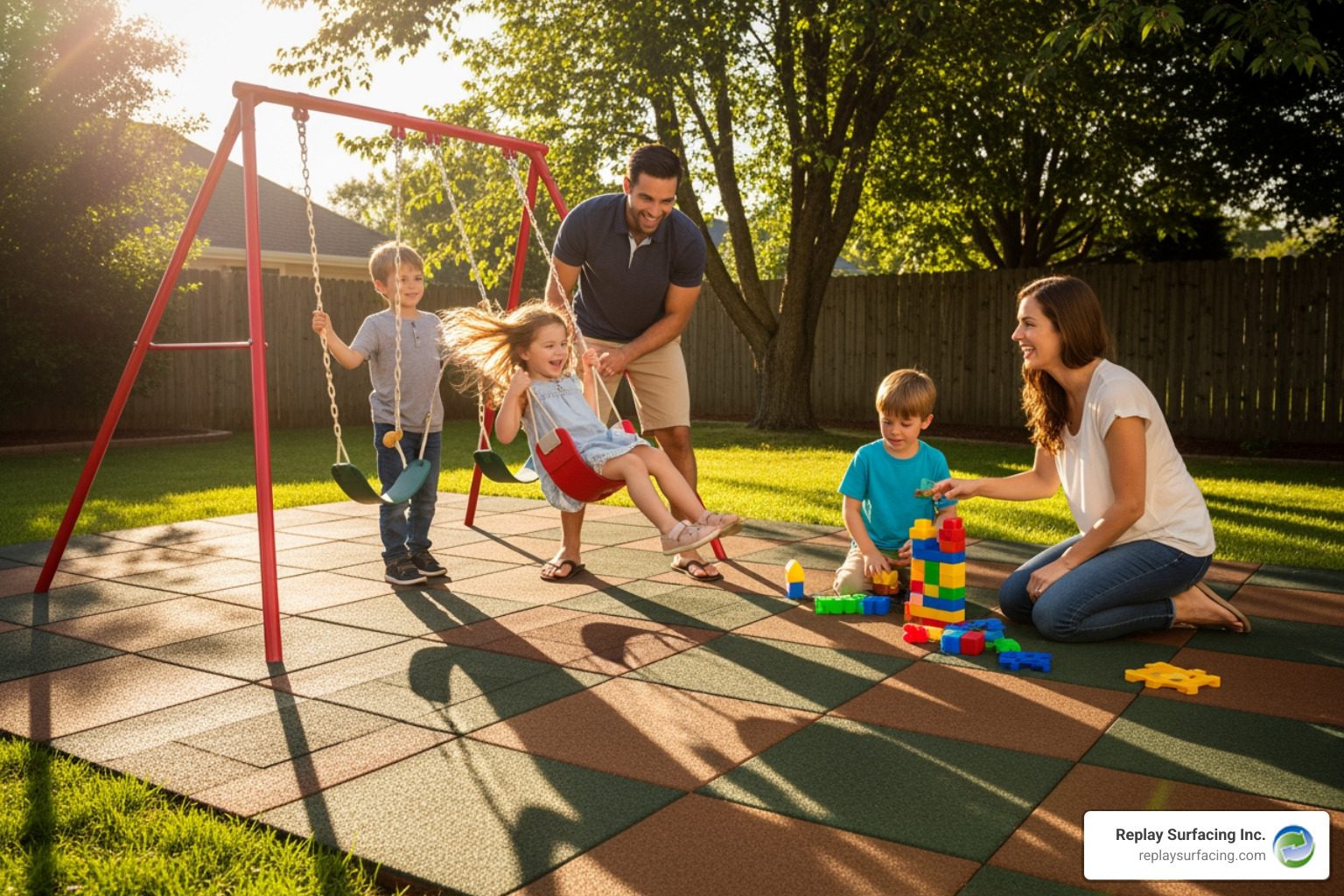
Playground Flooring in Charlotte NC: A DIY Guide to Safety and Savings
A DIY playground flooring project in Charlotte NC makes backyard play areas safer and more durable, saving you thousands over professional installation. Here’s how to start:
Quick DIY Playground Flooring Installation Overview:
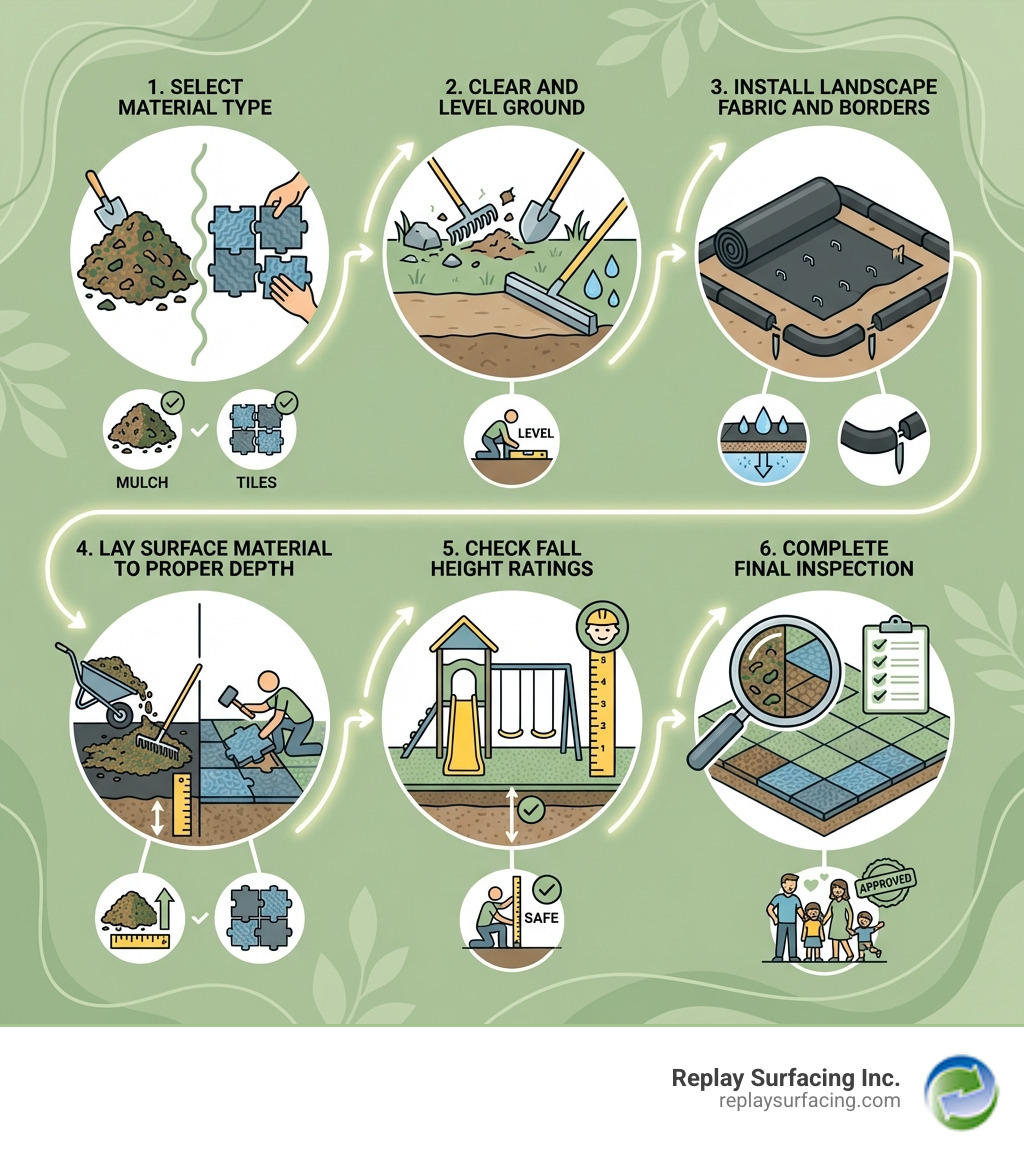
- Choose Your Material – Rubber mulch (loose-fill) or interlocking rubber tiles (unitary surface)
- Prepare the Ground – Level the area, install landscape fabric, ensure proper drainage
- Install Your Surface – Spread mulch to 4+ inches deep OR connect tiles starting from a corner
- Ensure Safety – Match material depth/thickness to your equipment’s fall height rating
- Maintain Regularly – Rake mulch, inspect tiles, remove debris to keep surface safe
Key Benefits:
- Cost Savings: $2-10 per sq ft for materials vs. $15-25+ per sq ft installed professionally
- Safety First: Proper rubber surfacing reduces playground injuries from falls by over 50%
- Weekend Project: Most homeowners complete installation in 1-2 days
- Eco-Friendly: Made from recycled tires, keeping rubber out of landfills
The CPSC reports over 200,000 annual ER visits from playground injuries, mostly from falls on hard surfaces. Proper flooring dramatically cuts these risks and creates an attractive play space.
I’m Landon Olson, founder of Replay Surfacing. We’ve helped thousands turn scrap tires into safe playground surfaces. With my mechanical engineering background and decade in sustainability, I have extensive experience with DIY playground flooring projects that are safe and budget-friendly.
This guide covers every step of installing your own playground flooring, from material choice to safety checks. Whether for a backyard swing set or a community play area, you’ll learn professional techniques for a safe, durable surface.
Playground flooring terminology:
Why Choose a DIY Playground Surface?
A DIY playground flooring project is about empowerment, savings, and creating the perfect play space for your kids. For families in Charlotte NC, a safe outdoor area is a priority. A DIY approach offers compelling benefits, making it a popular choice for homeowners.
First, the cost savings are significant. Professional installation can range from $15 to $25+ per square foot, but a DIY project’s primary expense is the material. Our DIY-friendly rubber flooring brings the cost down to a more manageable $2-$10 per square foot, depending on your choice. For a comprehensive look at pricing, explore our Rubber Playground Flooring Price Complete Guide.
A DIY project also gives you full control over design and timeline. You can plan every detail, from mulch color to tile patterns, to match your vision. Work at your own pace, on your own schedule, without relying on a contractor. This flexibility is invaluable for busy families.
Building something yourself also brings a great sense of accomplishment. Imagine your pride seeing your kids play safely on a surface you installed. This reward motivates many DIYers. Plus, easy-to-install materials like modular tiles let you achieve professional results without special skills or tools. They are designed for homeowners, making installation straightforward.
We believe a quality playground surface is the foundation of a great play area where children can test their limits, grow, and make lasting memories. By choosing to install your own playground flooring, you’re investing in a safe play environment, your family’s enjoyment, and your personal satisfaction.
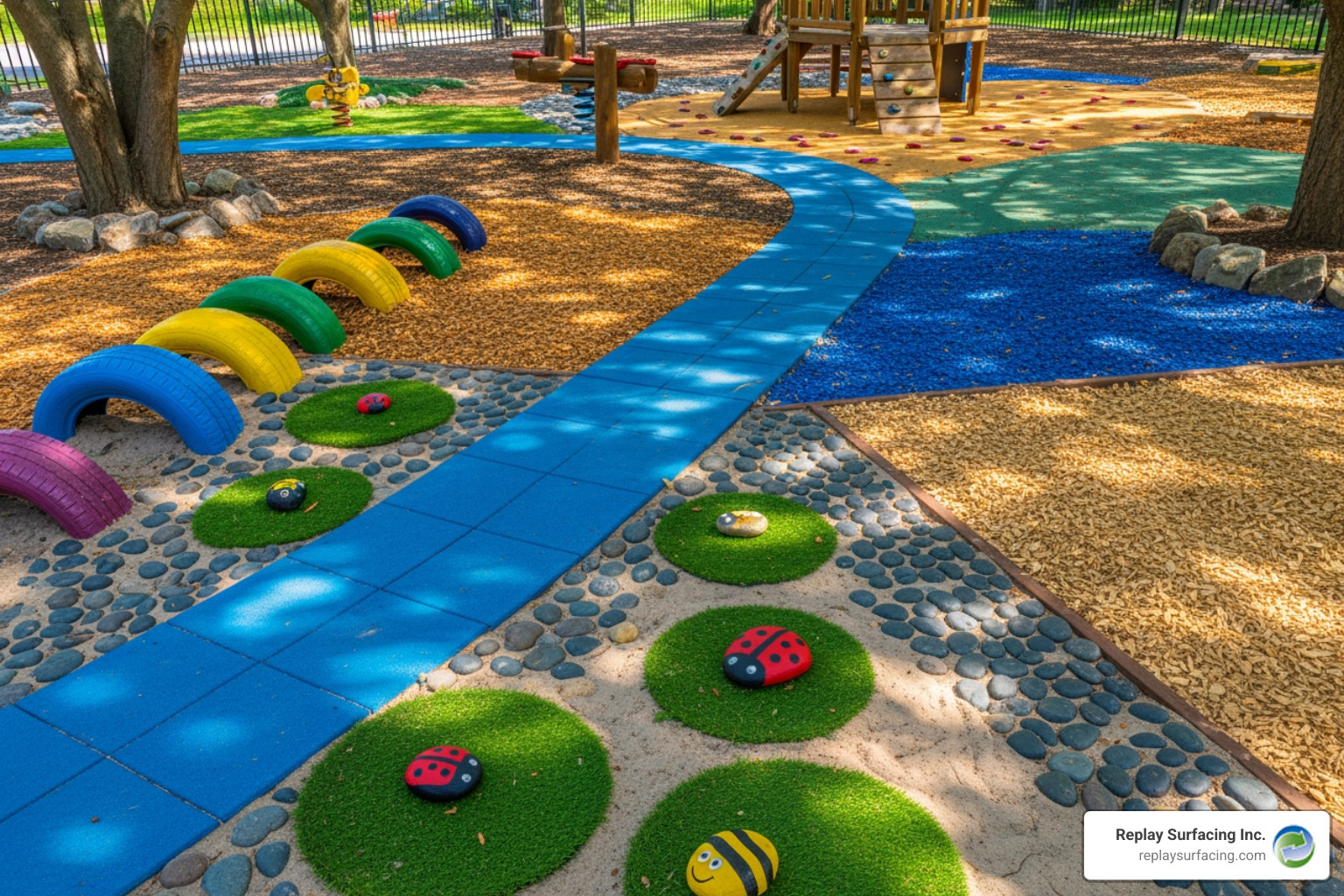
Choosing Your Material: Rubber Mulch vs. Rubber Tiles
For your playground flooring in Charlotte NC, selecting the right material is crucial for safety and aesthetics. We recommend two great options: rubber mulch and interlocking rubber tiles. Both are made from recycled tires, offering unique benefits. This comparison will help homeowners in Charlotte and the surrounding areas choose the best fit.
| Feature | Rubber Mulch | Rubber Tiles |
|---|---|---|
| Safety (Fall Height) | Excellent shock absorption, depth-dependent. 3-4 inches can cushion falls up to 6 feet, with thicker layers for taller equipment. | Superior, consistent shock absorption. Each tile has a specific fall height rating (e.g., 2.25″ for 4′ fall, 4.25″ for 10′ fall), ensuring uniform protection. |
| Cost | Generally lower upfront material cost per bag/cubic foot. Requires more material for adequate depth. | Higher upfront material cost per square foot. Less material needed overall due to specific thickness. |
| Installation Difficulty | Very DIY-friendly. Involves creating a border, laying fabric, and spreading/raking. Probably one of the more DIY-friendly installations. | DIY-friendly. Involves preparing a level base, interlocking tiles, and potentially cutting. Modular tiles can be placed without professionals. |
| Maintenance | Requires periodic raking to maintain even depth and topping up as needed due to displacement. Can hide debris. | Low maintenance. Easy to clean. Stays in place. Individual tiles can be replaced if damaged. |
| Durability | Very durable, resistant to decomposition, fading, and pests. | Extremely durable, designed for heavy traffic and all-weather conditions. UV-resistant. |
| Aesthetics | Natural, loose-fill look. Available in various colors to mimic wood chips or add vibrant hues. | Modern, uniform surface. Allows for custom designs, patterns, and color blocking. |
| Accessibility | Can be challenging for wheelchairs and mobility devices due to loose nature. | Can be ADA compliant, offering a firm, stable, and slip-resistant surface. |
Rubber Mulch: The Loose-Fill Solution
Rubber mulch is a great choice for a DIY playground floor, combining a natural look with superior safety. Made from our Recycled Tires Playgrounds Guide, this loose-fill material offers excellent shock absorption to reduce fall injuries. Its safety depends on depth; we recommend at least four inches for proper cushioning.
Rubber mulch is also incredibly DIY-friendly; just pour and spread it after ground prep. This makes it a quick project for homeowners in the Charlotte area. It offers excellent drainage, meaning less standing water and faster drying. Available in various colors, it allows for a custom look. Learn more in our guide to the Best Rubber Mulch for Playground.
Rubber Tiles: The Unitary Surface Option
For a uniform and structured playground floor, interlocking rubber tiles are an excellent solution. They create a stable surface, ideal for play areas in Charlotte, Raleigh NC, or Sanford NC. Our PlaySafe Interlocking Tiles Ultimate Guide details their benefits.
The interlocking design makes installation straightforward, as tiles fit together like puzzle pieces. This creates a uniform surface with consistent shock absorption. As a unitary surface, it can also be ADA accessible, providing a firm, stable path for mobility devices, unlike most loose-fill materials.
Rubber tiles are extremely durable, withstanding heavy traffic, weather, and UV exposure. They are low maintenance, requiring only simple cleaning. You can create custom patterns with Colored Rubber Surfaces for Playgrounds for vibrant designs. We also ensure our tiles are Non Toxic Playground Tiles, giving parents peace of mind.
Prep Work: Setting the Stage for a Safe Playground
Before you can enjoy your new playground flooring, proper site preparation is critical for safety and longevity. Whether you’re in Charlotte or elsewhere in the Carolinas, these steps are universal for success.
Tools and Materials Checklist
To get started on your DIY playground flooring project, gather the following:
- Shovel and Rake: For clearing and leveling the ground.
- Level (spirit or laser): To ensure a perfectly flat or graded surface.
- Tape Measure: For accurate area measurements and material calculations.
- Utility Knife (with extra blades) and possibly a disposable bread knife: Essential for cutting rubber tiles and landscape fabric.
- Wheelbarrow: For moving soil, gravel, or rubber mulch.
- Landscape Fabric: A crucial barrier against weeds.
- Edging/Border Material: Rubber timbers, plastic, or wood to contain loose-fill materials or frame tiles.
- Staples or Nails: For securing landscape fabric.
- Safety Gear: Gloves, eye protection, and sturdy shoes.
Ground Preparation for Your DIY Playground Floor
Proper ground preparation is the foundation for a safe and stable playground floor.
- Site Clearing: Begin by clearing the entire area, removing all obstacles like rocks, tree stumps, roots, and any existing debris.
- Removing Obstacles: Pay special attention to hidden rocks or stubborn roots that can create uneven spots or puncture your surfacing over time.
- Leveling the Ground: This is a critical step. For rubber tiles, a perfectly level surface is paramount. For rubber mulch, a level base ensures consistent depth. You may need to add or remove soil, or lay a compacted gravel and sand sub-base.
- Installing on Dirt vs. Concrete:
- Dirt: If installing over dirt, ensure it’s well-compacted and level. A layer of crushed gravel (4-6 inches) followed by an inch of sand can create an excellent permeable base.
- Concrete: Installing over concrete requires a clean, dry, and crack-free surface. Adhesives may be needed for a permanent installation. Drainage is also key, as concrete is impermeable.
For more in-depth guidance, refer to our DIY Playground Flooring guide.
Ensuring Proper Drainage
Effective drainage is vital for the longevity and safety of your playground flooring, preventing a muddy, waterlogged play area.
- Creating a Slight Grade: For loose-fill materials like rubber mulch, level the ground with a slight grade—about a one-inch drop for every 10 feet—to encourage water runoff.
- Porous Nature: Rubber mulch and many rubber tiles are porous, allowing water to drain through. However, the sub-base must also drain well. For areas with poor natural drainage, consider a simple drain tile system. Our Loose Fill Playground Surfacing options are designed for good drainage.
Weed and Pest Prevention
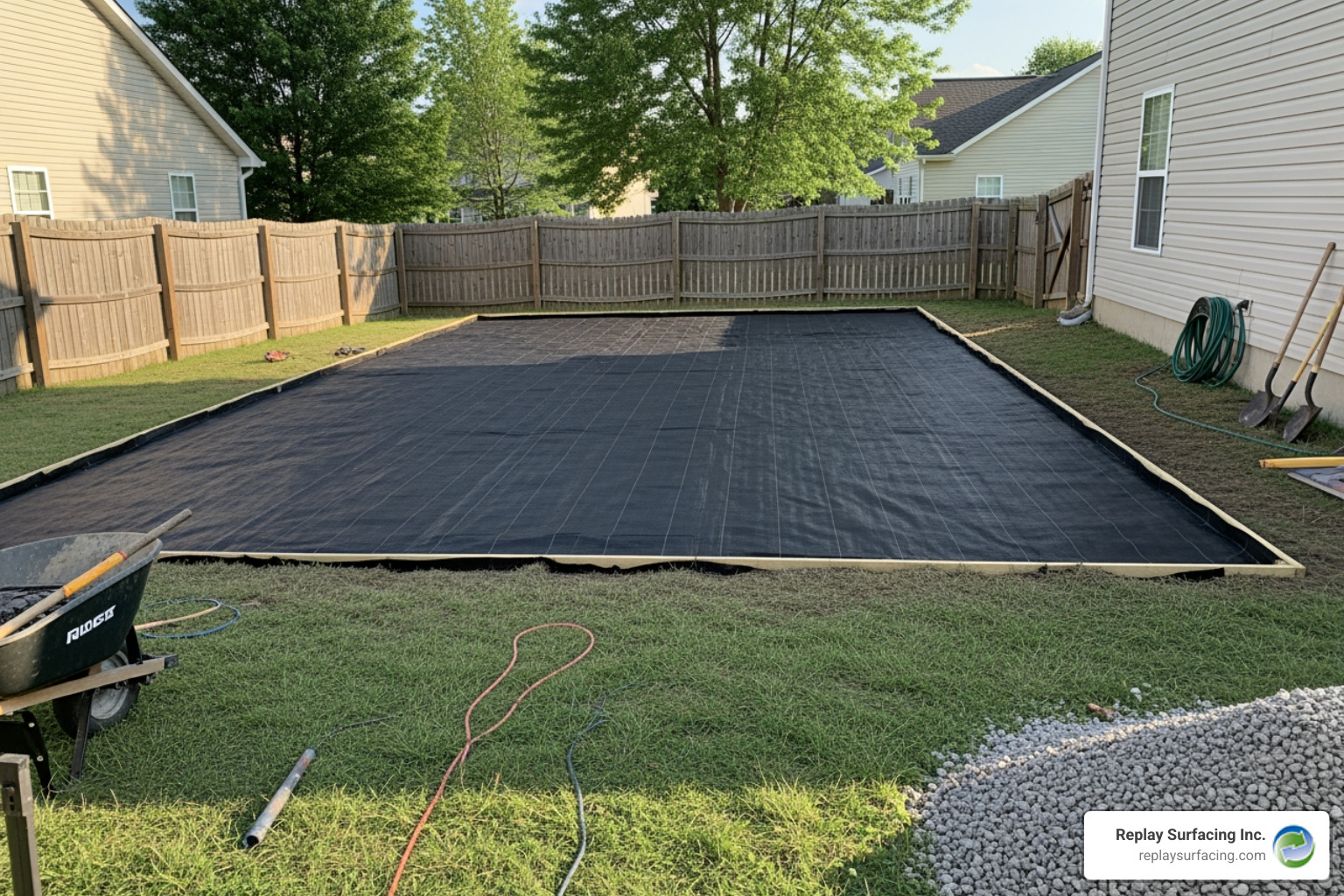
To prevent weeds from sprouting through your new playground, use landscaping fabric.
- Landscaping Fabric Installation: After leveling, lay heavy-duty landscaping fabric across the entire area. Overlap edges by at least 6-12 inches to prevent weeds from finding a path through.
- Securing Fabric Edges: Use landscape staples or nails every few inches along the perimeter and seams to securely fasten the fabric to the ground.
- Benefits of Rubber vs. Organic Mulch: Unlike organic mulches that can harbor insects, rubber mulch is inorganic and resistant to pests and decomposition, making it a better choice for weed and pest prevention.
Step-by-Step Installation Guide for Your DIY Playground Flooring
With the ground prepped, it’s time to install your playground flooring. This guide covers rubber mulch and interlocking rubber tiles for a successful installation in backyards across Charlotte and the Carolinas.
How to Install Rubber Mulch
Installing rubber mulch is one of the most DIY-friendly playground flooring options. It’s a straightforward process that yields fantastic safety benefits.
- Installing Containment Border: First, define your play area and install a containment border of rubber timbers, plastic edging, or treated wood. This is crucial for keeping your rubber mulch in place and maintaining its depth.
- Laying Down Landscape Fabric: As discussed, ensure your leveled ground is completely covered with heavy-duty landscape fabric, secured with staples or nails.
- Calculating Required Depth: The depth of your rubber mulch is paramount for safety. For a 6-foot fall height, a minimum of 3 inches is recommended, but we advise at least 4 inches for robust protection. Our Rubber Mulch for Playset guide can help with calculations.
- Pouring and Spreading Rubber Chips: Begin pouring the rubber mulch into your contained area. Use a wheelbarrow to transport it, then start spreading it evenly.
- Raking for Even Coverage: Use a rake to spread the Rubber Chips for Playgrounds Guide to a consistent depth. Focus on high-impact zones like under swings and slides. Lightly compact the mulch to ensure it settles, then trim any excess landscape fabric for a clean finish.
How to Install Interlocking Rubber Tiles
Interlocking rubber tiles create a uniform, durable, and low-maintenance playground floor. Their installation is also very manageable for the average homeowner.
- Starting from a Corner: Begin your tile installation in one corner of your prepared play area. If installing against a structure, leave a 1/2-inch expansion gap for temperature changes.
- Connecting Tiles: Our Installing Playground Tiles are designed to interlock like puzzle pieces. Align the connecting edges and press them firmly together. For added security, you can use connector pins or quad blocks to join the tiles.
- Leaving Expansion Gaps: A 1/2-inch expansion gap is needed if your tiles are butting up against a solid structure. This is not necessary for freestanding areas.
- Cutting Tiles to Fit Edges and Obstacles: You’ll likely need to cut tiles to fit the perimeter or around equipment posts. A sharp utility knife and straightedge work well; for thicker tiles, a disposable bread knife is effective. Score the tile multiple times with the utility knife before cutting through.
- Installing Ramps: For accessibility and to prevent tripping hazards, install ramps around the perimeter. These typically interlock with the main tiles. Our Interlocking Outdoor Playground Tiles are often designed with compatible ramp systems. A seam sealer can be applied for a permanent installation.
Safety, Standards, and Maintenance
The primary goal of any DIY playground flooring project is safety. Creating a fun space is important, but ensuring it meets critical safety standards and is properly maintained is paramount. We want children in places like Charlotte and Raleigh NC to play safely and freely.
Meeting Critical Safety Standards
Falls are the leading cause of playground injuries. The surface beneath the equipment is the biggest determining factor in reducing the severity of these injuries.
- Fall Height Ratings Explained: This is a crucial concept. Fall height is the maximum height from which a child can safely fall onto a surface without sustaining a critical injury. Our Shock Absorbing Playground Surfaces are specifically engineered and tested to meet these ratings. For example, a 2.25-inch thick tile might be rated for a 4-foot fall, while a 4.25-inch tile could protect from a 10-foot fall. For rubber mulch, the depth directly correlates to the fall height rating (e.g., 3 inches for a 6-foot fall).
- CPSC Guidelines: The United States Consumer Product Safety Commission (CPSC) provides essential guidelines for playground safety. They highlight that over 200,000 children are treated in emergency rooms each year across the nation due to playground injuries, with more than half resulting from contact with hard ground. Always ensure your chosen material and its installation meet or exceed these recommendations.
- Use Zone Requirements: Safety surfacing should extend beyond the footprint of the equipment. We recommend that safety surfacing extends at least six feet in all directions from the edge of stationary equipment. For swings, this zone extends twice the height of the swing in front and behind. This ensures that when a child falls, they land on the protective surface. For more information on creating a soft landing, see our Soft Fall Playground resources.
Long-Term Care for Your DIY Playground Floor
Maintaining your DIY playground flooring is simple but essential to ensure its continued safety and longevity.
- Routine Cleaning: For both rubber mulch and tiles, routine cleaning is straightforward. A blower can remove leaves and light debris. For rubber tiles, a garden hose or broom is often sufficient. For more stubborn dirt or for commercial applications (like a community park in Charlotte), a power washer (not exceeding 2000 psi) with a mild, non-petroleum-based detergent can be used. Avoid harsh solvents or oil-based cleaners, as these can degrade the rubber over time.
- Raking and Topping Up Rubber Mulch: Rubber mulch may shift over time, especially in high-traffic areas like under swings or at slide exits. Periodically rake the mulch to ensure an even depth across the entire play area. You may need to top up the mulch every few years to maintain the critical fall height rating.
- Inspecting Tiles for Damage: For rubber tiles, conduct regular visual inspections. Check for any loose interlocks, lifting edges, or signs of damage. Individual tiles can often be replaced easily if they become damaged, maintaining the integrity of the entire surface.
- Removing Debris: Regularly remove any foreign objects like rocks, glass, or sharp items that might find their way onto the play surface. This is easier on a smooth tiled surface than in loose mulch, but vigilance is key for both. Consistent care helps to Enhance Safety with Rubber Playground Mats and other rubber surfaces.
Frequently Asked Questions about DIY Playground Flooring in Charlotte NC
We often hear similar questions from homeowners in Charlotte NC and the surrounding areas looking to install a DIY playground floor.
How much does a DIY playground floor cost?
The cost of your DIY playground flooring can vary significantly based on the material you choose and the size of your play area. Generally, you can expect playground flooring materials to range from under $2 per square foot to over $10 per square foot.
- Rubber Mulch: This is often the more budget-friendly option initially. While a 40-pound bag might cost less than $10, you’ll need a significant volume to achieve the recommended depth (e.g., 3-4 inches). This means the cost adds up, but it’s typically still less per square foot for material than tiles.
- Rubber Tiles: These usually have a higher upfront material cost per square foot. Individual playground mats can range from $50 to $150 each, with popular options around $5.50 to $8.11 per square foot. However, they offer a more permanent, lower-maintenance solution that can be more cost-effective in the long run.
Your cost will primarily be for materials and shipping, as you’re saving on professional installation fees. For a detailed breakdown, please consult our Rubber Playground Flooring Price Complete Guide.
Can I install rubber flooring over my existing concrete patio or grass?
Yes, you can often install rubber flooring over existing concrete or grass, but there are specific considerations for each:
- Over Concrete:
- Preparation: Ensure the concrete is clean, dry, and free of significant cracks or unevenness. Any major imperfections will show through the rubber and could create tripping hazards.
- Drainage: Concrete is impermeable, so you’ll need to ensure any water that gets on or under the rubber can drain away. Perforated tiles are excellent for this, allowing water to pass through. If using solid tiles, ensure there’s a slight slope to the concrete or channels for water to escape the edges. Adhesives can be used for a more permanent bond.
- Over Grass/Dirt:
- Preparation: This is a common scenario. You’ll need to thoroughly clear the area of grass, weeds, and roots. Leveling the ground is crucial, and adding a compacted sub-base of gravel and sand (as detailed in our “Prep Work” section) is highly recommended for stability and drainage.
- Weed Barrier: Always lay down heavy-duty landscape fabric to prevent weeds from growing through your new playground flooring.
- Drainage: Natural drainage through the soil is usually good, but ensure you still create a slight grade to prevent pooling.
Is recycled rubber mulch safe for my kids and pets?
This is a very common and important question, and we’re happy to reassure you. Our recycled rubber mulch is designed with safety in mind for both children and pets.
- Addressing Safety Concerns: We understand that some people have concerns about recycled materials. However, our rubber mulch undergoes rigorous processing to ensure it’s a safe and beneficial product.
- Non-Toxic Properties: Our rubber mulch is Non Toxic Rubber Mulch. It doesn’t contain hazardous chemicals that can leach into the environment or be harmful to children or animals who might come into contact with it. This is a significant advantage over some other loose-fill options.
- Wire-Free Certification: We ensure our rubber mulch is 99.9% wire-free. This means the recycled tires are processed to remove steel belts and other contaminants, creating a clean, safe product for play.
For more detailed information, please read our dedicated article: Is Rubber Mulch a Safe Surface for Your Child’s Playground? We pride ourselves on changing environmental hazards (old tires) into sustainable, safe play surfaces.
Conclusion
Creating a safe and engaging play space for children is one of the most rewarding home improvement projects. As we’ve explored, a DIY playground flooring project offers incredible benefits, from significant cost savings to the deep satisfaction of building something with your own hands. Whether you choose the natural aesthetic and robust cushioning of rubber mulch or the uniform, low-maintenance appeal of interlocking rubber tiles, you’re investing in a safer, more enjoyable play experience for years to come.
We’ve guided you through the critical steps: understanding the benefits of DIY, choosing between our excellent rubber options, carefully preparing your site, and finally, installing your chosen material. We’ve also emphasized the paramount importance of safety standards, like fall height ratings, and provided practical tips for maintaining your new surface. For families in places like Charlotte NC and Raleigh NC, starting on this project means peace of mind knowing your children are playing on a surface designed for their protection.
At Replay Surfacing, we’re committed to changing environmental hazards—discarded tires—into sustainable, customizable, and durable playground surfaces. We believe that every child deserves a safe place to play, and we’re here to empower you to create that space. Your DIY playground flooring journey is an exciting one, and with the right information and materials, you’re set for success.
Ready to start planning your perfect play area? Explore our full range of playground surfacing options and let us help you bring your vision to life.