
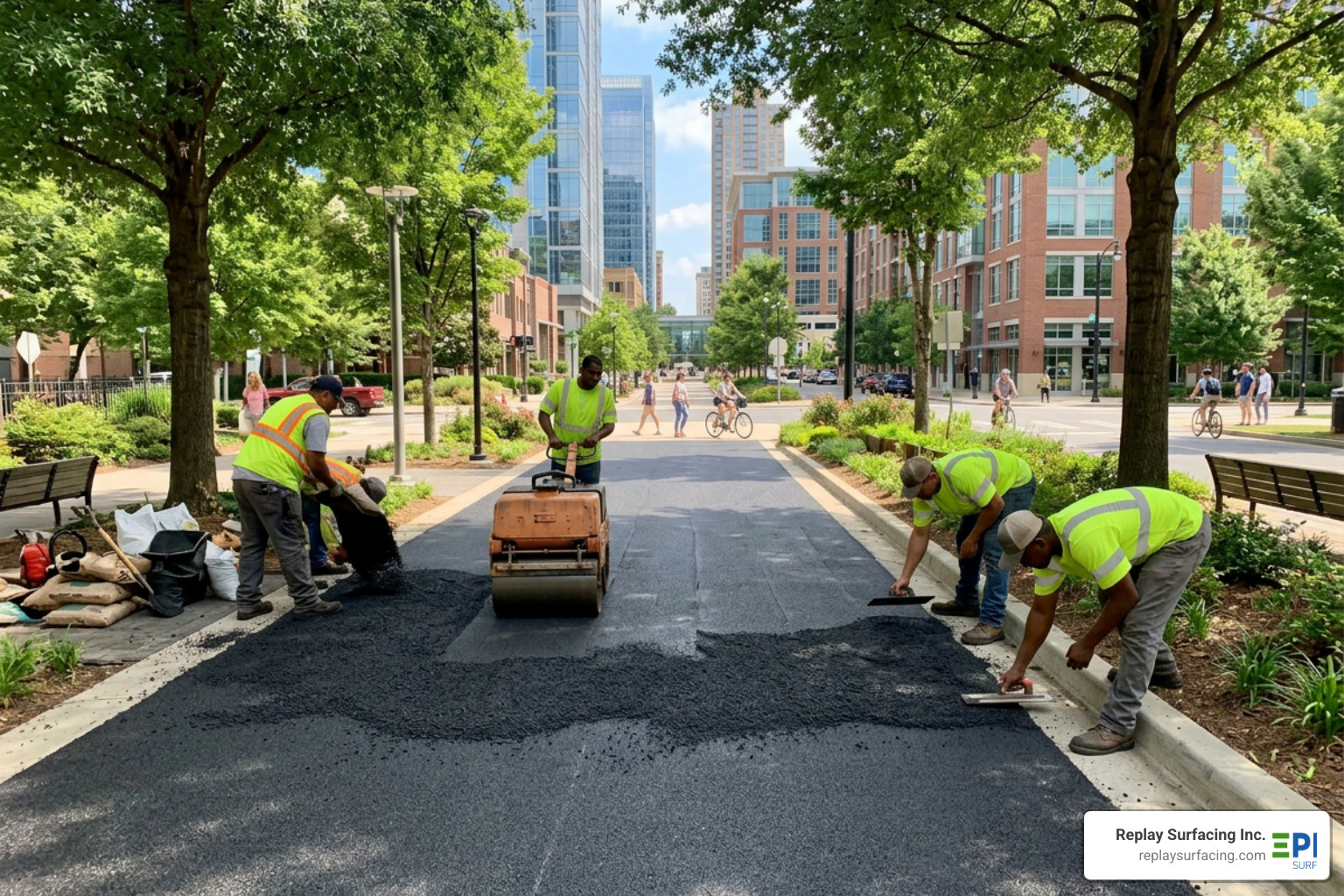
Why Rubber Pavement in Charlotte NC Is Changing the Way We Think About Sustainable Surfaces
Rubber pavement in Charlotte NC is a poured-in-place surfacing material made from recycled tire crumb and a polyurethane binder — and it’s quickly becoming one of the most practical, eco-friendly alternatives to concrete and asphalt available today.
Here’s a quick snapshot of what you need to know:
| Feature | Details |
|---|---|
| What it is | Recycled crumb rubber + polyurethane binder, poured and troweled in place |
| Main types | Pervious rubber, rubberized asphalt, porous elastic road surfaces |
| Key benefits | Drains up to 2,000 gal/sq ft, 25+ year lifespan, slip-resistant, freeze-thaw resistant |
| Best uses | Sidewalks, playgrounds, trails, driveways, parking lots, running tracks |
| Environmental impact | Diverts ~10 tires per 100 sq ft from landfills, eligible for LEED credits |
| Load capacity | Up to 80,000 lbs with stone aggregate reinforcement |
Traditional paving materials like concrete crack under tree roots, flood during heavy rain, and wear down faster than most facility managers expect. Choosing rubber pavement in Charlotte NC solves several of those problems at once — while also giving scrap tires a second life instead of a landfill.
I’m Landon Olson, operator of Replay Surfacing and a mechanical engineer with an MBA, and I’ve spent my career turning recycled rubber into high-performance rubber pavement in Charlotte NC solutions for playgrounds, sports courts, and commercial facilities across the Carolinas and Tennessee. In this guide, I’ll walk you through everything you need to know to choose the right system for your project.
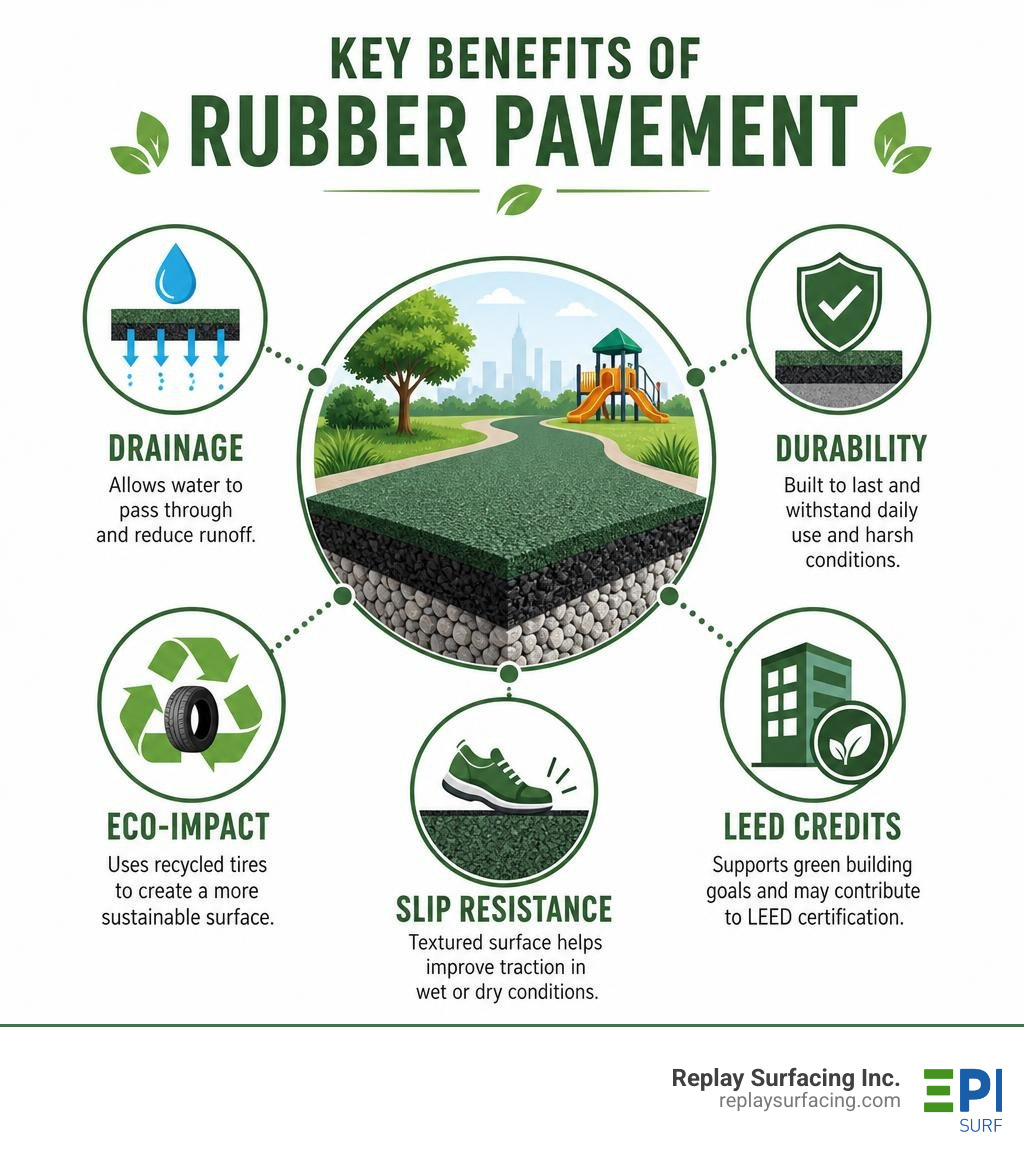
Rubber pavement terms to remember:
What is Rubber Pavement and What Are the Main Types?
When we talk about sustainable design in our key service areas like Charlotte, NC, we are often asked: what exactly is rubber pavement? At its core, it is a highly durable, flexible, and porous alternative to traditional asphalt and concrete. It is built using recycled tires and specialized binders that lock the materials together, creating a surface that can bend without breaking and absorb impact while managing heavy water runoff.
This modern paving technology represents a major leap forward in sustainable design, allowing us to turn millions of scrap tires into valuable community infrastructure.
Primary Components of a Rubber Pavement System
A standard rubber pavement system relies on three primary ingredients:
- Crumb Rubber: Sourced from recycled post-consumer tires, these rubber particles are processed to be 3/8 inch or smaller. The size of the rubber “sieve” (bits, granules, or crumb) is carefully selected based on the specific texture and load requirements of the project.
- Polyurethane Binder: A high-strength, non-toxic polyurethane binder acts as the glue. For premium or lighter-colored surfaces, we use a clear, UV-stabilized binder to prevent the surface from yellowing under the sun. Standard applications can use an amber-hue binder.
- EPDM Granules: Ethylene Propylene Diene Monomer (EPDM) is a virgin synthetic rubber used primarily for the top wear layer. Because the color is solid throughout the granule, it resists fading over time.
These components are mixed on-site and applied in varying system thicknesses. A standard single-layer system is typically 1.5 to 2 inches thick, but we can customize the thickness depending on the sub-base and performance needs. If you want to explore more about how these components come together, check out this guide on rubberised paving.
Pervious and Porous Rubber Pavement
Pervious rubber pavement is specifically engineered for maximum stormwater management. Because the rubber granules create an open-grid structure, water does not pool on top. Instead, it drains directly through the surface to facilitate natural groundwater recharge.
This makes it an exceptional choice for sidewalks, fitness trails, playgrounds, and running tracks in places like Columbia, SC, where heavy rain can quickly overwhelm traditional storm drains. In fact, standard pervious configurations can handle incredible drainage rates of up to 2,000 gallons per square foot.
For projects requiring high barefoot comfort (like pool surrounds or splash pads), we can omit stone aggregates entirely to create a lightweight, soft surface. If you are designing walkways that need to wrap around mature trees, you can explore porches and walkways with Replay’s rubber paving to see how this flexibility prevents root damage.
Additionally, researchers are constantly finding new ways to integrate these materials into rigid infrastructure; you can read more in this scientific research on rubber-modified concrete, which highlights how incorporating crumb rubber aggregate replacements creates more sustainable rigid pavements.
Rubberized Asphalt and Porous Elastic Road Surfaces (PERS)
On a larger scale, crumb rubber modifier is used to upgrade civil highway infrastructure. In places like Sanford, NC, rubberized asphalt is created by blending ground tire rubber (GTR) directly into hot mix asphalt binders (typically 5% to 15% rubber by weight). This process improves the pavement’s elasticity, making it highly resistant to rutting and cracking.
Another advanced variation is the Porous Elastic Road Surface (PERS). By incorporating voids and channels directly into the rubberized asphalt, PERS dramatically improves highway safety and provides significant noise reduction. If you are interested in the molecular science behind these mixtures, you can review this scientific research on devulcanized rubber asphalt. For a broader look at how rubberized mixtures are changing civil construction, read our resource on rubber concrete.
Performance, Durability, and Environmental Benefits
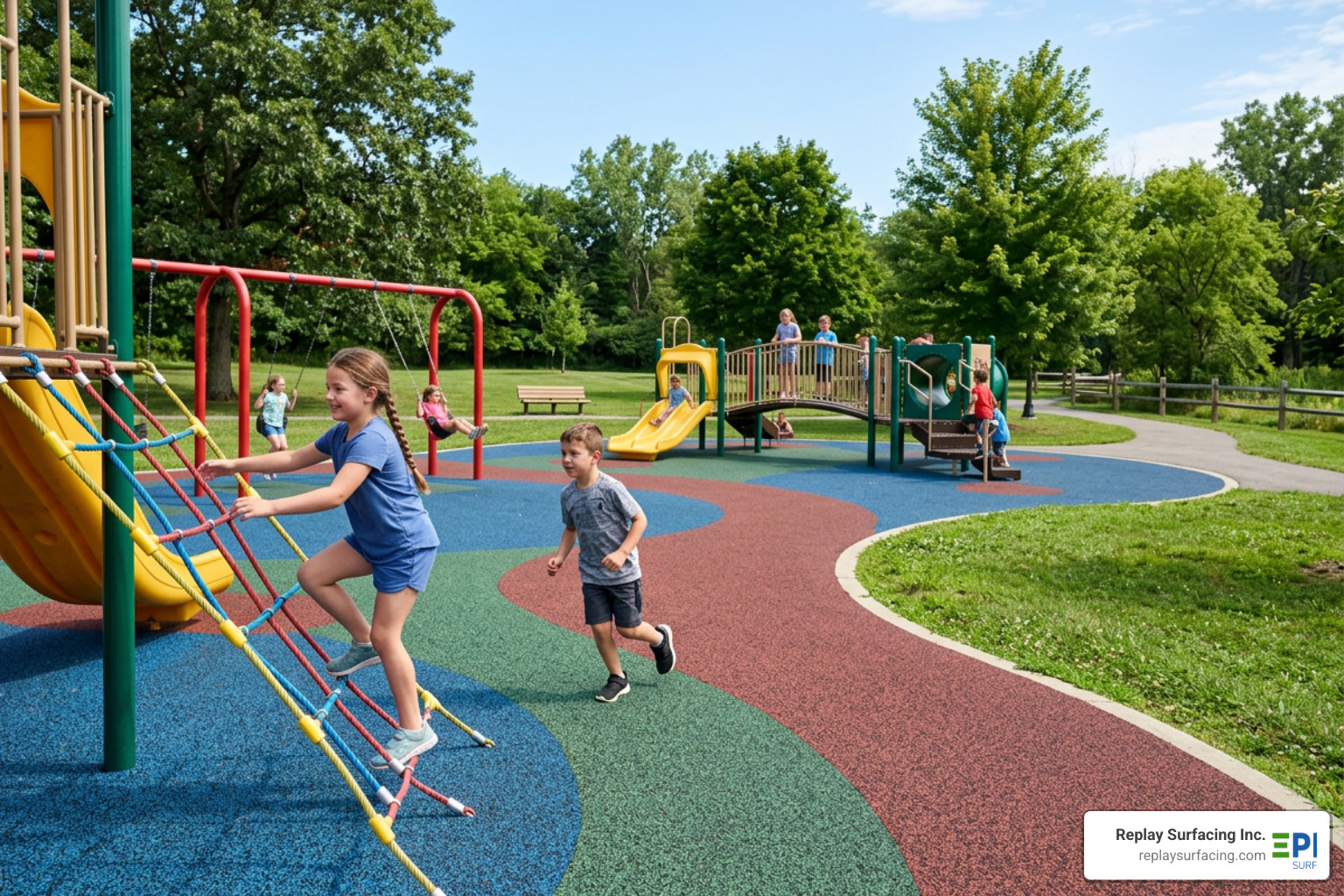
Whether we are installing a playground in Tucson, AZ, or a commercial walkway in Connecticut, the performance characteristics of rubber pavement consistently outperform traditional materials. Its natural elasticity allows it to absorb heavy impacts, resist extreme weather, and keep pedestrians safe.
Durability, Slip Resistance, and Noise Reduction
One of the greatest safety features of rubber surfacing is its high slip resistance. For example, a standard rubber sidewalk has a dry coefficient of friction of 0.94 and a wet coefficient of friction of 0.79, making it incredibly safe to walk on even during heavy downpours.
In terms of acoustics, rubberized pavements are highly effective at absorbing sound. Standard asphalt-rubber overlays on highways can reduce road noise by up to 12 decibels, with a typical reduction of 7 to 9 decibels. This acoustic benefit is often enough to eliminate the need for expensive highway sound walls.
Furthermore, because rubber is naturally flexible, it expands and contracts without cracking during freeze-thaw cycles. In cold climates like Indiana, water passing through the porous pores of the pavement will not cause micro-frost expansion damage.
For safety-critical areas like playgrounds, a 2-inch thick rubber system using a soft urethane binder can offer a 4-foot Critical Fall Height rating, protecting children from serious injuries. To learn more about how we design these systems for public walkways, read about our rubber sidewalks. You can also explore how these mixtures behave in cold climates through this scientific research on rubberized asphalt in cold regions.
Environmental Impact and LEED Certification
Using rubber pavement is one of the most effective ways to support waste tire diversion. The paving industry consumes an estimated 220,000,000 pounds (100,000,000 kg) of ground rubber annually in the US alone — which is approximately 12 million tires. On a local level, installing rubber paving eliminates the need to landfill approximately 10 tires per 100 square feet of surface area.
These systems are also highly valued in green building and can help projects earn several LEED credits:
- Stormwater Design: High water transmission rates (such as 6 gallons per minute per square foot) manage runoff on-site, satisfying LEED credits for stormwater design.
- Heat Island Effect: Using lighter colors (like light gray or beige) provides a higher Solar Reflective Index (SRI), reducing the urban heat island effect.
- Recycled Content: Systems typically contain 66% to 75% recycled material content, directly contributing to Materials and Resources credits.
- Regional Materials: By sourcing tires and manufacturing binders locally in regions like North Carolina and Tennessee, projects can secure regional material credits.
Installation, Maintenance, and Cost Considerations
Installing rubber pavement is a specialized process that requires professional precision to ensure the binder and rubber granules cure into a seamless, durable surface.
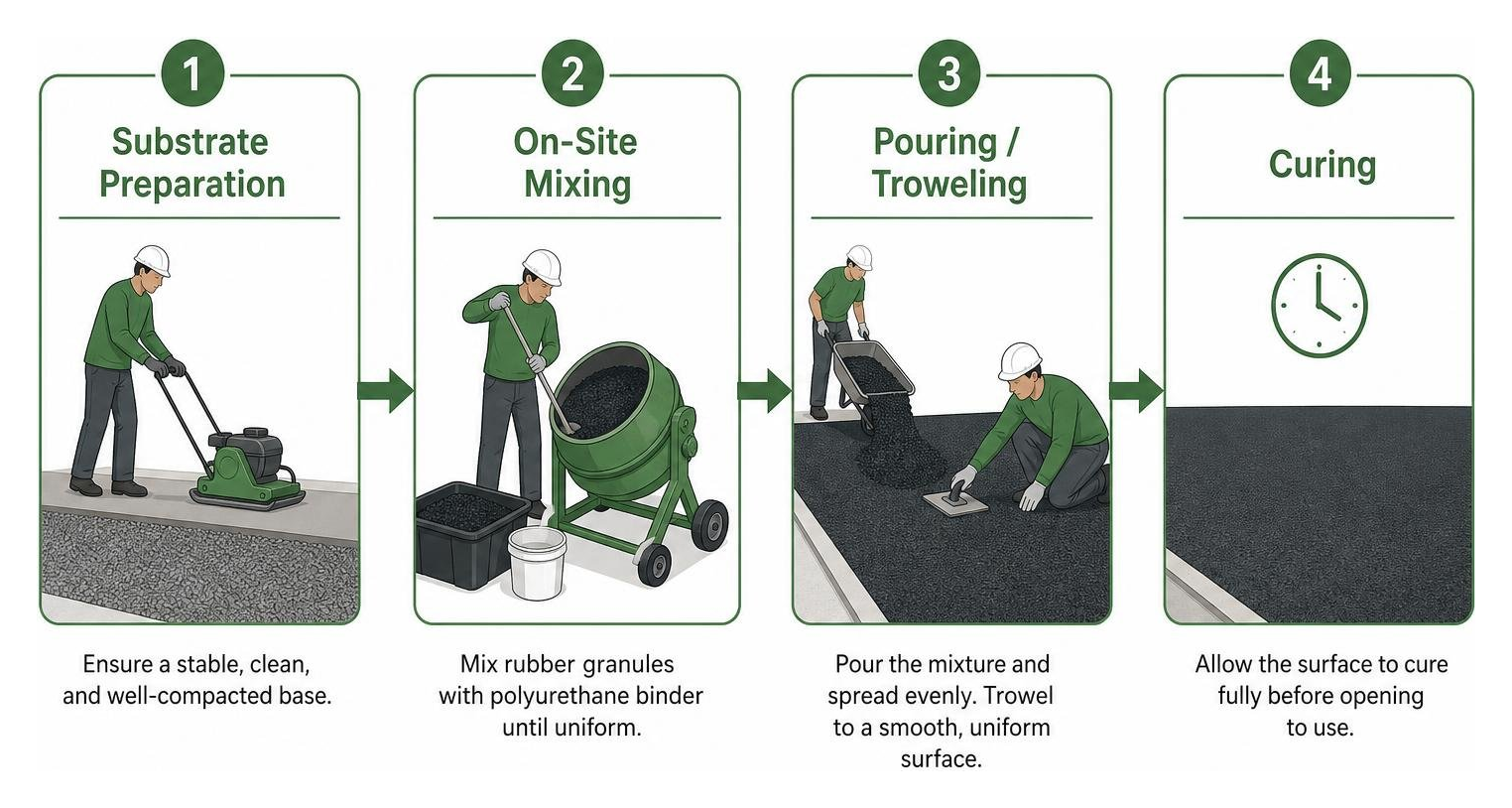
The Installation Process and Substrate Preparation
Before any rubber can be poured, proper sub-base preparation is essential. The substrate must be stable and well-compacted. Rubber paving can be applied directly over concrete, asphalt, compacted gravel, or even stable wood surfaces (provided the wood is waterproofed first to prevent rot).
Once the base is ready, the installation process follows these steps:
- Mixing: The crumb rubber, EPDM granules, and polyurethane binders are mixed on-site in a specialized mechanical mixer to ensure even binder encapsulation.
- Pouring and Troweling: The wet mixture is poured onto the substrate and hand-troweled or applied with a paving machine to ensure a uniform thickness (typically 1 to 2 inches).
- Curing: The surface must be protected from rain and freezing temperatures while it cures. It typically takes 24 hours before it is safe for foot traffic, 72 hours for standard vehicles, and up to one week before parking heavy trucks.
For detailed steps on specific product types, you can read our guide on how to install rubber pavers. If you are resurfacing a residential driveway, we also recommend reading this external guide on preparing driveways for rubber coating.
Lifespan, Maintenance, and Cost Comparison
With minimal care, professional rubber paving has an estimated lifespan of at least 25 years. Maintenance is incredibly simple: light debris can be cleared with a leaf blower, while a residential-grade pressure washer can be used for deep spring cleaning. If oil stains occur, simple degreasing dish soap is usually all that is required.
While the upfront cost of rubber paving can be higher than traditional concrete or asphalt, the long-term value is unmatched. Because it does not crack under tree roots or freeze-thaw cycles, you avoid the ongoing patch-and-repair costs associated with traditional pavements. For a deeper look at pricing, refer to our rubber surfacing cost ultimate guide and our comparison of why a rubber stone driveway beats traditional asphalt.
| Feature | Rubber Pavement | Traditional Concrete | Standard Asphalt |
|---|---|---|---|
| Lifespan | 25+ Years | 20-30 Years (prone to cracking) | 15-20 Years (requires sealing) |
| Maintenance | Low (pressure wash/blow) | Medium (crack sealing) | High (sealcoating every 2-3 years) |
| Flexibility | High (bends with roots/frost) | None (rigid and cracks) | Low (susceptible to ruts) |
| Permeability | High (up to 2,000 gal/sq ft) | None (unless pervious mix used) | None |
Frequently Asked Questions About Rubber Surfacing
We receive many questions from homeowners and municipal planners across South Carolina, North Carolina, and Tennessee regarding performance expectations. Here are the facts.
Can rubber pavement support heavy vehicular traffic?
Yes, but it depends on the system design. Standard 100% rubber systems are designed for pedestrian use. However, when we combine stone aggregate with recycled rubber (such as a 50/50 blend) and a high-strength binder, the pavement can support weight loads up to 80,000 lbs. This makes it fully capable of handling residential driveways, RV parking pads, and commercial parking lots. To explore your options, read through our driveway resurfacing options.
How does rubber pavement perform in freezing winter conditions?
Excellently. Because rubber is naturally elastic, it does not crack when the ground shifts during freeze-thaw cycles. For snow removal, we recommend using a plastic shovel or ensuring that snow blowers and plows have plastic or Teflon shields to prevent scratching the surface. Standard de-icing salts will not damage the rubber or the polyurethane binder.
How much water can pervious rubber pavement drain?
Pervious rubber pavement has a massive rainfall capacity. Standard systems can achieve drainage rates of up to 2,000 gallons per square foot. Even high-density pedestrian systems (like a standard rubber sidewalk) boast a water transmission rate of 6 gallons per minute per square foot, making puddles and standing water a thing of the past.
Conclusion
At Replay Surfacing Inc., we believe in transforming environmental hazards into beautiful, sustainable, and highly durable surfaces. Whether you are looking to install a safe playground, a durable sports court, or a porous splash pad in Charlotte, Raleigh, Columbia, Nashville, or Tucson, rubber pavement offers an innovative solution that stands the test of time.
Ready to start your next project? Contact our rubber paving company today to speak with our regional specialists and get a custom quote for your facility.